


Altamura
In 1993, inside the Lamalunga limestone quarry a few kilometres from the town centre, a skeleton of Homo neanderthalensis dating back approximately 150,000 years was brought to light — one of the most complete ever found in Europe. That discovery changed the perception of Altamura, transforming it from a bread-making town into a site of […]
Discover Altamura
In 1993, inside the Lamalunga limestone quarry a few kilometres from the town centre, a skeleton of Homo neanderthalensis dating back approximately 150,000 years was brought to light — one of the most complete ever found in Europe. That discovery changed the perception of Altamura, transforming it from a bread-making town into a site of worldwide palaeontological significance.
Today, anyone wondering what to see in Altamura will find a rare layering of history: prehistoric remains, a thirteenth-century cathedral commissioned by Frederick II, and a radial-plan old town where the claustri — communal courtyards — still preserve neighbourhood life. At 467 metres above sea level, on the Murgia plateau in the province of Bari, this city of nearly 70,000 inhabitants sits at a crossroads of geology, medieval history and farming tradition.
History and origins of Altamura
The name Altamura derives from the Latin Altum Murus, literally “high wall”, referring to the massive megalithic walls that enclosed the settlement as early as the pre-Roman period. Traces of these Pelasgian fortifications are still visible along certain stretches of the urban perimeter, especially near Porta Bari. The area was inhabited from the Neolithic onwards, as shown by the numerous artefacts recovered from the Pulo di Altamura — a large karst sinkhole over 75 metres deep — and the dinosaur footprints discovered in the Pontrelli quarry, dated to the Late Cretaceous, roughly 80 million years ago.
The territory therefore preserves a geological and anthropological record that long predates the founding of the actual urban settlement.
The turning point in the city’s history came in 1232, when Emperor Frederick II of Swabia ordered the reconstruction of Altamura and the building of the Cathedral of Santa Maria Assunta, granting the community fiscal and juridical privileges to attract new residents. Frederick II intended to make it a royal city, free from feudal control, and imposed a radiocentric urban plan that still defines the layout of the old town today: the alleyways radiate from the cathedral like the spokes of a wheel, interconnected by the claustri, semi-public courtyards where families shared the oven, the well and daily life. This urban structure survives virtually intact and represents one of the most legible examples of Frederician town planning in southern Italy.
Over the centuries, Altamura was the stage for significant events. In 1648 it took part in the anti-Spanish revolt in the wake of Masaniello’s uprising. In 1799, during the brief season of the Neapolitan Republic, the city held out for days against the siege by Cardinal Ruffo’s Sanfedist troops, ultimately suffering a brutal sacking that passed into history as the “Sack of Altamura”.
Among the city’s illustrious sons are Saverio Mercadante, the nineteenth-century opera composer who directed the Naples Conservatory for over thirty years, and the Enlightenment philosopher Luca de Samuele Cagnazzi, a pioneer of statistics in Italy. From the nineteenth century to the present day, Altamura has experienced steady population growth, consolidating an economy based on cereal farming, the upholstered furniture industry and, of course, bread production.
What to see in Altamura: 5 essential attractions
1. Cathedral of Santa Maria Assunta
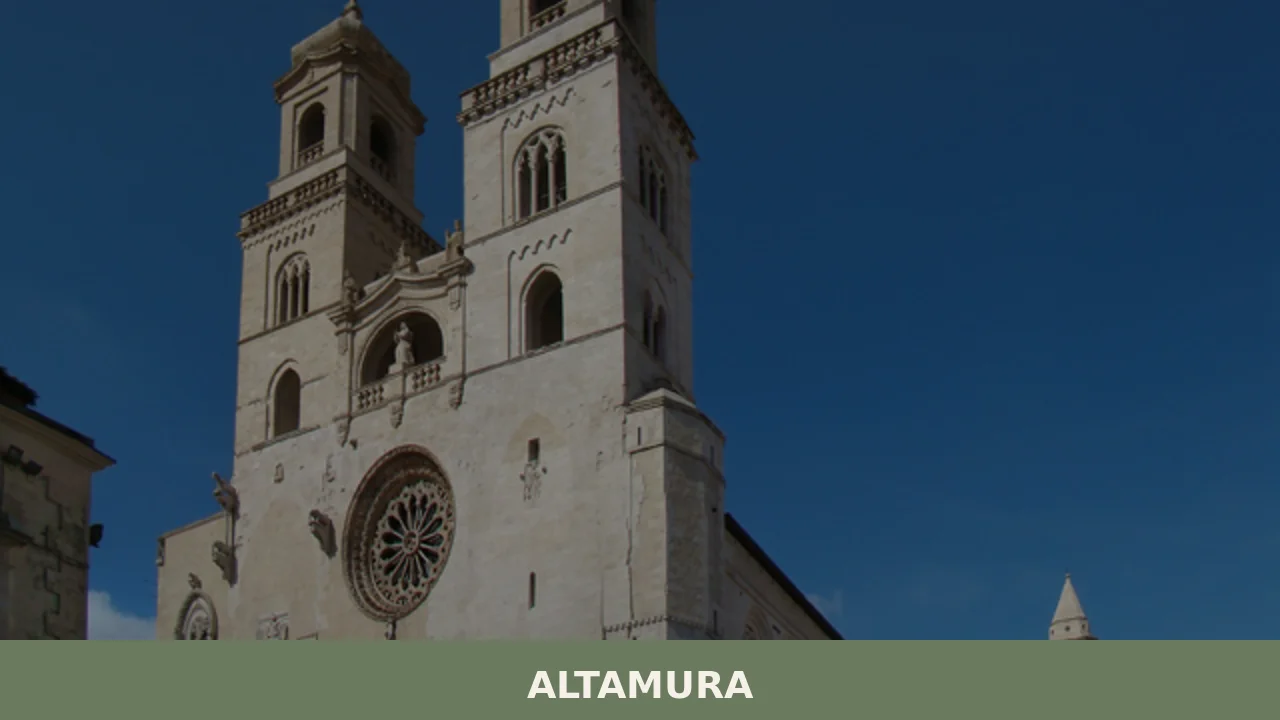
Founded by order of Frederick II in 1232 and rebuilt after the earthquake of 1316, the cathedral dominates the highest point of the old town with its richly carved fourteenth-century portal, which depicts scenes from the life of Christ and the Virgin within a pointed archivolted surround. The twin bell towers — one Angevin, the other Aragonese — visually mark the transition between the successive powers that ruled the city. The three-aisled interior houses a sixteenth-century polychrome stone Nativity scene and a carved wooden choir. The most distinctive element is the fifteen-rayed rose window on the façade, which in size and decorative detail rivals those of the Apulian Romanesque cathedrals of Ruvo and Bitonto.
2. Pulo di Altamura
This is a large karst sinkhole roughly 500 metres in diameter and over 75 metres deep, located a few kilometres north of the town centre. The vertical walls contain caves inhabited since the Neolithic: excavations have yielded ceramics, flint tools and bone remains documenting thousands of years of human presence. Mediterranean vegetation grows on the floor, including holm oak, fragno oak and wild orchids. The site is accessible via an equipped trail and is a point of interest for both geology and archaeology. The University of Bari periodically conducts research campaigns here, and educational panels along the path explain the formation of the Murgia karst phenomenon.
3. Altamura Man and the Lamalunga cave
Discovered in 1993 in the Lamalunga cave, the Homo neanderthalensis skeleton remained encased in limestone concretions for approximately 150,000 years, which prevented its extraction but ensured exceptional preservation. Direct access to the cave is not open to the public, but the Museo Nazionale Archeologico di Altamura (MNAA), housed in Palazzo Baldassarre on Via Santeramo, displays a faithful reconstruction of the skeleton and documents the discovery with multimedia materials. This find has contributed to studies on ancient Neanderthal DNA and has established Altamura as a reference point in European palaeoanthropological research.
4. The old town and the claustri
The medieval core of Altamura retains the radiocentric urban layout imposed by Frederick II. The claustri — over one hundred internal courtyards opening onto narrow alleyways — were originally spaces of shared social life, where families baked bread in a communal oven and drew water from a collective well. Each claustro bears a name linked to a family, a trade or a saint. Walking along Via Corte d’Appello, Via De Angelis and the streets around the cathedral, you pass through these structures, many of which are still inhabited. The limestone doorways display carved coats of arms and dates. The claustri system is considered one of the best-preserved examples of medieval communal urbanism in southern Italy.
5. Dinosaur Quarry (Pontrelli)
In the disused Pontrelli quarry, along the provincial road leading to Santeramo in Colle, approximately 30,000 dinosaur footprints dating to the Late Cretaceous — between 70 and 80 million years ago — were discovered in 1999. It is one of the most extensive ichnological sites in the world. The tracks, belonging to several species of both herbivorous and carnivorous dinosaurs, are impressed on limestone slabs tilted at roughly 60 degrees from their original plane. The site can be visited by booking through local associations that run guided tours.
The scientific importance of the location has led to a museumification and protection project that is still underway.
What to eat in Altamura: local cuisine and regional products
Altamura’s cuisine is a direct expression of the Murgia landscape: a limestone plateau devoted to cereal cultivation, where durum wheat dominates the fields and sheep farming marks the seasonal rhythms. The gastronomic tradition reflects a peasant economy that transformed a few raw materials — flour, wild greens, lamb — into substantial dishes designed to sustain work in the fields. The calcium-rich water of the Murgia, baking in wood-fired ovens fuelled with oak, and re-milled durum wheat semolina give the baked goods a character that cannot be replicated elsewhere.
The most representative product is the Pane di Altamura DOP, made exclusively from durum wheat semolina of local varieties (Appulo, Simeto, Duilio), kneaded with sourdough starter and baked in a wood-fired oven. The crust is thick and crunchy, dark amber in colour; the straw-yellow crumb stays soft for days thanks to the long natural fermentation. Alongside bread, the tradition includes stuffed focaccias with onions, tomato and olives, and onion calzoni, folded into half-moons and fried or oven-baked. Acquasale (PAT) is a recovery dish from the peasant kitchen: stale bread soaked in hot water, dressed with fresh tomato, raw onion, oregano and a drizzle of extra virgin olive oil, sometimes enriched with an egg.
Among the products certified as Traditional Agri-Food Products by the Puglia Region, the Altamura area is linked to several preparations common across the Murgia and the province of Bari.
Agnello al forno con patate alla leccese (PAT), also known as Auniceddhru allu furnu, is a celebratory main course in which lamb is slow-rooked with potatoes, cherry tomatoes, grated pecorino and lampascioni (wild hyacinth bulbs). Agnello alla gravinese (PAT), stewed with seasonal vegetables, represents a variant of the pastoral cuisine of the interior. Wild asparagus (PAT) is gathered in spring on the Murgia and served in frittatas or simply boiled with oil and lemon; preserving it in oil is another traditional preparation listed as Asparagi sott’olio (PAT).
The Festa del Pane (Bread Festival), held every year in September in the old town, is the city’s main gastronomic event: historic bakeries open their doors to visitors, tastings of freshly baked DOP bread are organised, and cultural associations set up sourdough breadmaking workshops. The Tuesday weekly market, in Piazza Zanardelli and the surrounding streets, is the place to buy pecorino cheeses, ricotta forte, lampascioni and produce from the Murgia’s vegetable gardens.
Food shops along Corso Federico II di Svevia sell naturally leavened bread, oil-glazed taralli and artisanal preserves.
On the drinks side, the Altamura territory falls within the production zone of Gioia del Colle DOC, a denomination that includes pure Primitivo and rosé wines from Primitivo and Negroamaro grapes. The vineyards grow on calcareous-clay soils between 300 and 500 metres in altitude, conditions that encourage a marked temperature range and slow grape ripening. Some wineries in the area also produce Minutolo, an indigenous white grape variety rediscovered in recent decades, which yields aromatic, mineral wines suited to accompany fish dishes and the raw vegetables of the Apulian table.
When to visit Altamura: the best time of year
Spring, from April to June, is the ideal season to visit Altamura: temperatures range between 15 and 25 degrees, the Murgia is carpeted with wildflowers, and the long days allow you to combine visits to the old town with excursions to the Pulo or the Dinosaur Quarry. On 5 May, the feast of the patron saint Santa Irene da Lecce is celebrated with a procession through the old town, illuminations and market stalls along the main street.
In summer, July and August bring temperatures that often exceed 35 degrees, making walks through the shadeless alleyways more taxing; however, summer evenings enliven the squares and claustri with concerts and cultural programmes.
Autumn is the season of the Festa del Pane in September and the olive harvest between October and November: those visiting Altamura during these weeks can watch the milling in the olive presses and take part in tastings of new-season oil. Winter, from December to February, is cold by Apulian standards — lows drop to 2–3 degrees and snow is not uncommon at this altitude — but offers a quiet atmosphere, with few tourists and the bakeries in full swing. Those who prefer to avoid crowds should choose weekdays in May or the first half of October, when the weather is mild and the city moves at its everyday pace without the pressure of events.
How to get to Altamura
By car, Altamura is reached from the A14 Bologna–Taranto motorway by exiting at Bari Sud and continuing along the SS96 towards Matera for about 45 km (50 minutes). From Matera the distance is just 19 km along the SS99, covered in 25 minutes. From Taranto, take the SS7 and then the SS171, a journey of about 65 km in just over an hour. The city has a railway station on the Ferrovie Appulo Lucane (FAL) line, which connects Altamura to Bari in about 90 minutes and to Matera in 30 minutes, with frequent services throughout the day.
The nearest airport is Karol Wojtyła at Bari-Palese, approximately 60 km away and reachable in one hour by car.
There are no direct connections from the airport to Altamura, but you can take the shuttle bus to Bari’s central station and from there the FAL line. Alternatively, Brindisi airport is about 150 km away. For those arriving without a car, the SITA intercity bus service connects Altamura with the main towns in the province of Bari and with Matera. Within the city, the main attractions of the old town are reachable on foot from the FAL station in about 15 minutes. Free parking is available near Piazza Zanardelli and along Viale Martiri del 1799.
Other towns to discover in Puglia
Visitors to Altamura can build a wider itinerary by including other Apulian towns that round out the picture of the region. Heading north, about 140 km away in just under two hours, San Giovanni Rotondo offers a different experience: the Sanctuary of San Pio da Pietrelcina, designed by Renzo Piano, and its position at the foot of the Gargano allow you to combine pilgrimage and nature. The road climbing towards the Gargano promontory crosses the flat plains of Puglia, with the landscape changing dramatically from the Murgia to the Umbra forests.
For those heading towards the Tavoliere plain, the small town of Carapelle, in the province of Foggia, is an example of rural Puglia less frequented by tourism, where the agricultural economy still dictates the social calendar.
Reachable in about an hour and a half from Altamura via the SS96 and then the SS655, Carapelle offers the chance to observe Puglia’s cereal-growing plain from a perspective very different from that of the Murgia plateau. The combined Altamura–Matera itinerary (19 km), with a detour to Gravina in Puglia (just 12 km), allows you in three days to traverse the geology and architecture of the entire Murgia arc, from dinosaurs to the Baroque.
In Apulia More villages to discover
Carapelle (Italia)
Carapelle sits on the open Tavoliere plain near Foggia, a small agricultural town where daily rhythms and grain-growing traditions reveal an unmediated southern Italy.
Accadia
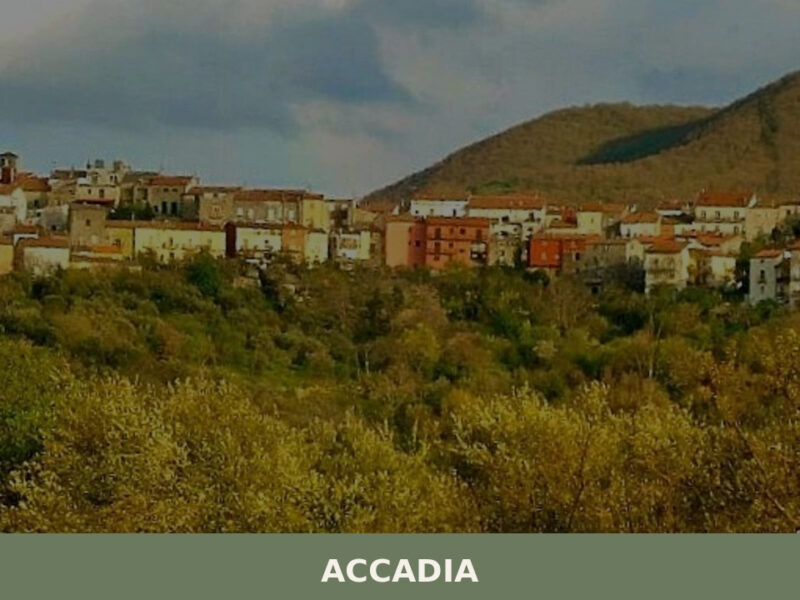
Perched at 650 metres above sea level on the western edge of Puglia’s Subappennino Dauno, the small village of Accadia feels like a secret whispered between mountains and sky. Home to just over 2,200 inhabitants, this ancient hilltop settlement in the province of Foggia rewards visitors with crumbling medieval ruins, sweeping panoramas, and a fierce […]
Troia (Italy)
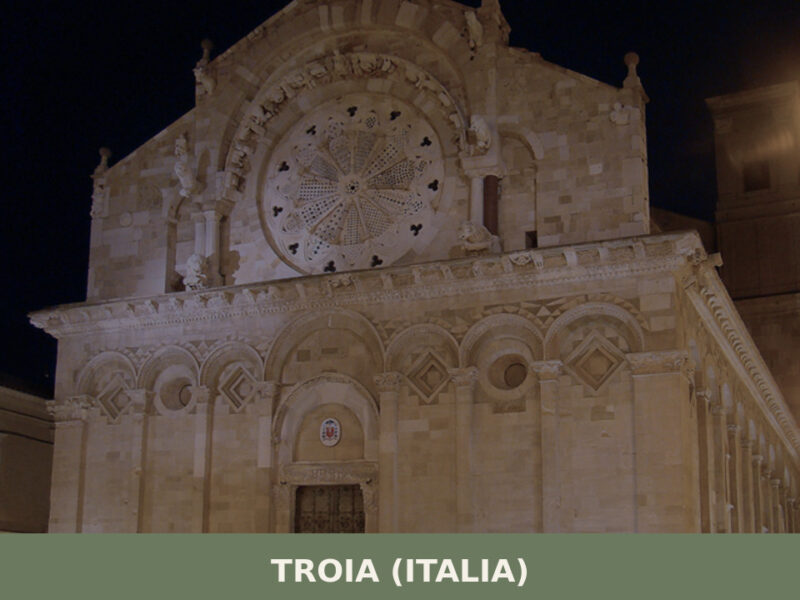
Are you ready to discover one of the most fascinating villages of Troia Puglia? Hidden among the gentle hills of the Dauno Sub-Apennines, this medieval jewel will amaze you with its historical, architectural and cultural richness. Troia Puglia is not just a tourist destination, but a true journey through time that will take you back […]


📝 Incorrect information or updates?
Help us keep the Altamura page accurate and up to date.