


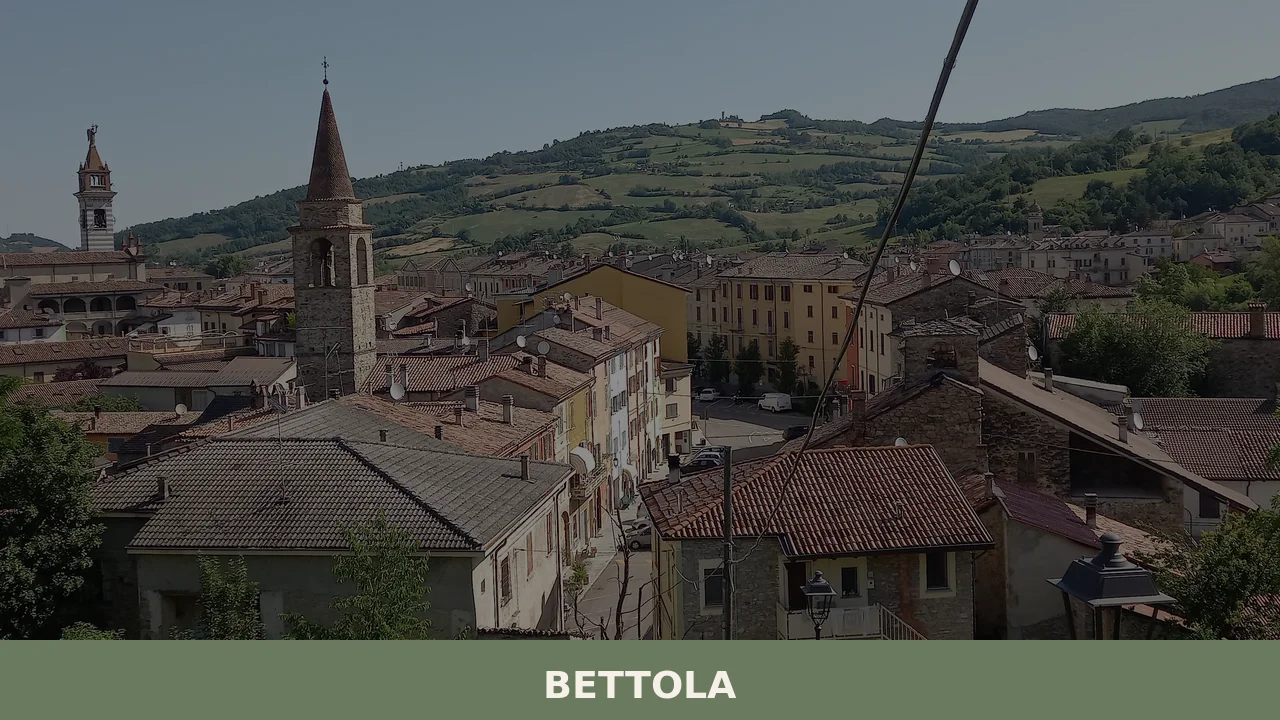
Bettola
What to see in Bettola: a Val Nure village at 329 m with 2,983 residents. Discover the Sanctuary of the Madonna della Quercia, Piacenza DOP cured meats and how to get there.
Discover Bettola
At 329 metres above sea level, in the Piacenza Apennines, Bettola has a population of 2,983 and extends along the Val Nure valley, just over 25 kilometres from Piacenza.
The main town of its municipality, Bettola occupies a strategic position that for centuries has made it the principal reference point for villages in the upper valley.
Travellers planning a trip to this area often ask what to see in Bettola: the answer lies in significant religious buildings, a well-preserved historical heritage, and a hilly landscape that accompanies every journey through the surrounding territory.
History and Origins of Bettola
The earliest documented evidence of settlement dates to the medieval period, when the Val Nure territory was contested between local powers and the Bishopric of Piacenza.
According to historical research, the name “Bettola” derives from a Latin root suggesting a place of rest or meeting — consistent with the role the village played as a road junction along routes connecting the Po Plain to the Apennines.
Its position on the River Nure made it, from the outset, a transit point for merchants and travellers heading towards the inland valleys.
During the late Middle Ages, Bettola came within the orbit of the noble families who controlled the Piacenza territory, among them the Landi, a feudal dynasty of considerable influence in the Emilian Apennines between the 13th and 16th centuries.
The Landi exercised significant control over much of the Val Nure, and their presence left its mark on the organisation of the territory and on local defensive architecture.
This period shaped the village into the form that can still be partly recognised in the urban fabric of the historic centre today.
With the annexation to the Duchy of Parma and Piacenza in the 16th century, Bettola entered a phase of relative administrative stability that encouraged the growth of commercial and craft activities. The village gradually took on the role of the main centre of the upper Val Nure, a function it retained through the Napoleonic period and into post-unification Italy.
In the twentieth century, like many Apennine settlements, Bettola faced depopulation driven by the industrialisation of the plain, while still maintaining a rooted and active community.
What to See in Bettola: Main Attractions
Sanctuary of the Madonna della Quercia
The Sanctuary of the Madonna della Quercia is the most important religious landmark in both the village and the wider valley.
Dedicated to the town’s patron, the Madonna della Quercia, the sanctuary has been a documented site of popular devotion for centuries and forms the spiritual focal point of the local community. The building preserves architectural elements of considerable interest and houses votive works that attest to the continuity of the cult over time.
The patron saint’s feast, celebrated every year on the first Sunday of September, draws worshippers and visitors from across the province of Piacenza.
Parish Church of Bettola
The parish church stands at the centre of Bettola’s urban fabric and is one of the main architectural reference points for anyone exploring what to see in Bettola during a visit to the historic centre.
The building, reconstructed and enlarged over the centuries, retains decorative elements and religious artworks from several different periods.
The façade and bell tower engage with the square in front of them, forming one of the most recognisable views in the village.
Historic Centre and Main Square
Bettola’s historic centre retains an urban layout that reflects its medieval origins, with a compact arrangement around the main square. The buildings lining the square display architectural features typical of Piacenza Apennine villages: low porticoes, stone and brick façades, and loggias that once housed markets and commercial activities. Walking through this area allows you to read the historical layering of the village directly, from Renaissance noble palaces to interventions from the modern era.
Val Nure and the River Landscape
The River Nure runs through the municipal territory and offers natural scenery of considerable interest for hiking and nature enthusiasts.
The riverbanks, easily reached from the village centre, lend themselves to walks and footpaths connecting Bettola to the surrounding villages.
The river landscape changes with the seasons: in spring the Nure runs high with snowmelt from the Apennines, while in summer the lower water levels reveal gravel beds popular with families with children.
Views over the Piacenza Apennines
Bettola’s position at 329 metres, on a natural terrace overlooking the confluence of secondary valleys into the Val Nure, provides notable viewpoints accessible on foot from the village centre.
It is worth climbing to the highest points along the village perimeter to take in the Apennine ridge line to the south — with peaks exceeding 1,000 metres — and the Po Plain opening to the north towards Piacenza.
These panoramic spots are among the landscape features that make a visit worthwhile even for those without specific historical or artistic interests.
Local Cuisine and Products of Bettola
The cuisine of the Val Nure and the Bettola area belongs to the broader gastronomic tradition of Piacenza, one of the most solid and distinctive food cultures in Emilia-Romagna.
The village’s geographic position, halfway between the plain and the Apennines, has historically encouraged a kitchen that combines the products of mountain livestock farming with those of agriculture from the lower valley.
Pork, cured meats, fresh pasta and mountain cheeses are the pillars of a culinary tradition passed down through families and found in local restaurants and taverns.
Among the dishes most frequently encountered in the trattorias of the area, pisarei e fasò hold a central place in the Piacenza tradition: small bread-and-flour dumplings dressed with a borlotti bean ragù, a dish humble in origin but full of flavour.
Bomba di riso is another preparation documented in Piacenza cooking — a rice timbale filled with braised meat and baked in the oven.
Filled pastas, in particular anolini in broth, appear on festive tables and represent one of the most recognisable expressions of local gastronomy.
As for cured meats, the Piacenza territory as a whole is known for three European-recognised quality productions: Coppa Piacentina PDO, Salame Piacentino PDO and Pancetta Piacentina PDO. These products are found throughout the province and are regularly available in food shops and delicatessens in the village.
Mountain cheeses and blue cheeses produced in the high-altitude farms of the upper Val Nure complete the range of dairy products that characterise the area’s food offering.
The best opportunity for direct contact with local production is the first Sunday of September, during the patron saint’s feast, when the village fills with market stalls and food stands showcasing products from the territory.
In the autumn months, festivals in nearby villages offer further chances to sample dishes featuring porcini mushrooms, chestnuts and game — ingredients that the Piacenza mountains supply in abundance during the colder season.
Festivals, Events and Traditions of Bettola
The most significant event in the local calendar is the feast in honour of the Madonna della Quercia, patron of the municipality, celebrated every year on the first Sunday of September.
The occasion includes a religious procession with the statue of the patron carried through the streets of the historic centre, followed by liturgical services in the sanctuary dedicated to her. Each year the feast draws participants from across the Val Nure and from the city of Piacenza, confirming the role of the Marian cult as a fundamental element of identity for the Bettola community.
Alongside the patron saint’s feast, the Val Nure calendar includes events tied to the seasonal cycles of agriculture and mountain life.
Autumn is the richest period for initiatives linked to woodland and livestock products, with events involving the municipalities of the upper valley.
Traditions connected to rural life — such as the winter pig butchering and the preparation of cured meats — remain living practices in many families in the area, even if they have gradually shifted from everyday necessity to social occasions and opportunities for passing cultural knowledge between generations.
When to Visit Bettola and How to Get There
Spring and early autumn are the most suitable periods to visit Bettola.
From April to June the Apennine landscape is green and temperatures are mild, ideal for excursions along the Nure and the secondary roads of the valley. September is the month of the patron saint’s feast and also marks the beginning of mushroom season, which draws hikers and nature lovers from across the region. Those who prefer to avoid the crowds can opt for May or October, when the village is quieter and the colours of the landscape are particularly vivid.
For up-to-date information on local events and services, the Bettola Municipal Council website provides institutional news and contact details for local offices.
If you are travelling by car, the most direct route from Piacenza follows Provincial Road 654 through the Val Nure southward for approximately 25 kilometres: the road is straightforward and well signposted.
From the A1 motorway, the Piacenza Sud exit is the most convenient access point, from which it is around 30 kilometres to the valley. Those travelling by train should note that Bettola has no railway station of its own: the nearest stop is Piacenza, from where SETA regional buses serve the Val Nure. For those arriving by air, Bologna Airport is approximately 100 kilometres away and is connected to Piacenza by motorway in under an hour.
Where to Stay in Bettola
The Bettola and Val Nure area offers several accommodation options for those wishing to stay in the zone.
The most common type is the agriturismo, with establishments that combine rural hospitality with the opportunity to eat meals made from their own or locally sourced produce. A number of holiday rentals and B&Bs are available in the village and in neighbouring municipalities, aimed primarily at hikers and those looking for a base to explore the Piacenza Apennines over several days.
For those who prefer more structured accommodation, the city of Piacenza offers a full range of hotels around 25 kilometres from the village.
Other Villages to Explore in Emilia-Romagna
Emilia-Romagna offers a variety of historic centres and hill villages well suited to itineraries combined with a visit to Bettola.
Those who appreciate Apennine villages will find in Castel d’Aiano, in the Bologna area, an upland village with similar characteristics in terms of geographic position and landscape, well suited to those wanting to cross several Apennine valleys in a single trip.
Moving towards the plain, Castel Guelfo di Bologna offers an example of a lowland village with a different but equally well-documented history, tied to the medieval events of the Bologna territory.
For those wishing to combine a visit to Bettola with a major art city, Bologna is reachable in about an hour and a half by car and is one of the culturally richest centres in Italy, with museums, medieval architecture and a gastronomic tradition that complements that of Piacenza.
Those who prefer to explore Romagna can head towards Imola, a city with a well-preserved Visconti castle and a strategic position between Bologna and the Adriatic coast, which allows you to build a varied and complete regional itinerary.
In Emilia-Romagna More villages to discover
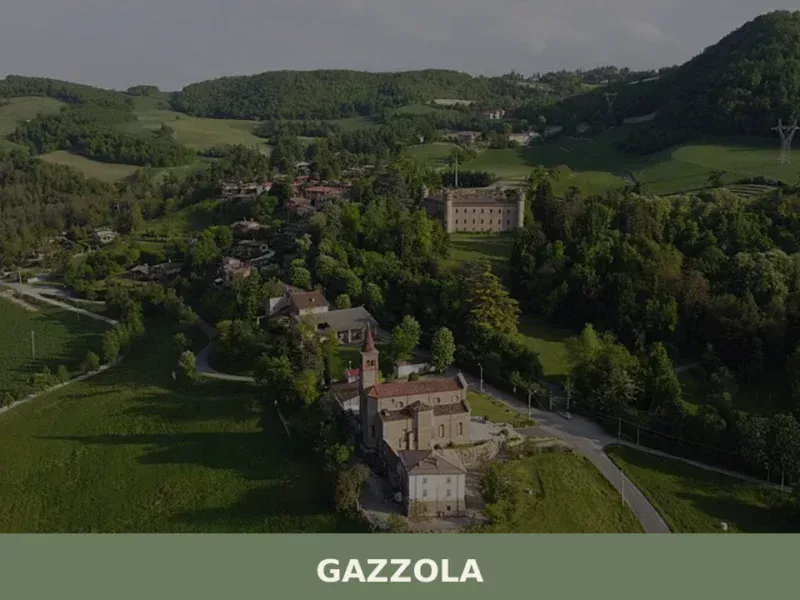
Gazzola
What to see in Gazzola, a Piacenza hill village at 146 m with 2,050 residents. Explore Rivalta Castle, the Luretta valley and Colli Piacentini DOC wines. Plan your visit.
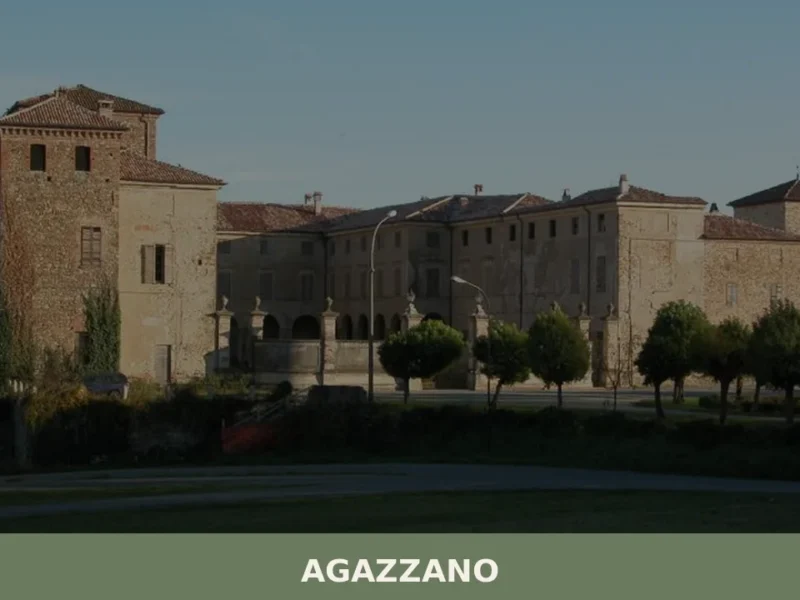
Agazzano
What to see in Agazzano, a village at 187 m in Piacenza province with 2,054 residents. Explore the medieval castle, Santa Maria Assunta church and Val Luretta. Plan your visit.
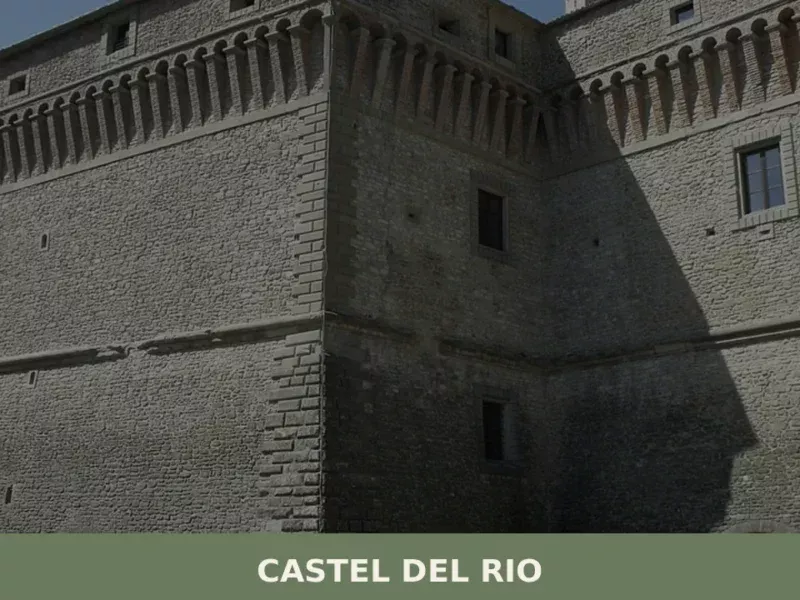
Castel del Rio
In 1290, the Alidosi family obtained imperial control over a fortified outpost in the Santerno valley, a transit point between Romagna and Tuscany. That stronghold, which over the following centuries became a fortress, a village and eventually an autonomous municipality, is now Castel del Rio: 1,215 inhabitants at 215 metres above sea level, in the […]
📝 Incorrect information or updates?
Help us keep the Bettola page accurate and up to date.