


Borgone Susa
 Mountain
Borgone Susa offers 5 remarkable attractions including a 14th-century fortified tower and a mysterious Roman rock carving. A compact Val di Susa gem worth exploring.
Borgone Susa Piemonte: History, Monuments and Travel Tips
Stone and silence greet you at the foot of the Alps. A medieval tower watches from its rocky spur above terracotta rooftops, the Dora Riparia glints silver through the valley floor, and a forest hides a carved deity that has puzzled scholars for nearly two thousand years. This is a place where Roman legionaries once marched, pilgrims rested their feet, and local families built strongholds against a world that was rarely peaceful.
Borgone Susa Piemonte sits at 394 metres above sea level in the heart of the Val di Susa, roughly 30 kilometres west of Turin, and draws visitors with two experiences that are genuinely hard to replicate: walking a surviving stretch of the medieval Via Francigena pilgrim route and standing face to face with the enigmatic rock relief known locally as il Maometto. A community of around 2,154 people, it rewards slow, attentive travel.
History and Origins of Borgone Susa Piemonte
The name itself tells a story of migration and conquest. Linguists trace Borgone to a Germanic personal name, Burgo or Burgonis, carried into the western Alps by the Lombard and Frankish populations who reshaped northern Italy after the fall of Rome. The suffix attached to the place name simply anchored the settlement geographically within the Val di Susa. You can still hear that layered linguistic past when locals speak: in Piedmontese the village is called Borgon, in Franco-Provençal it becomes Burgùn, and in French, Bourgon — three living dialects reflecting the crossroads culture of this Alpine corridor.
Long before any medieval lord raised a tower here, the valley floor was a very different landscape. For centuries, the land around what is now the village centre was marshy and fever-prone. That persistent waterlogged quality is not forgotten: the municipal coat of arms, granted by presidential decree on 27 June 1962, incorporates water flowers as a direct reference to those centuries of difficult, boggy terrain. The shield also features a crenellated wall and a keep drawn from the silhouette of the Castlàs tower, and its upper section echoes the heraldic cap of France — a golden lily on blue — testifying to the long political shadow that the French crown cast over this part of Piedmont. The banner of the municipality, meanwhile, is divided horizontally in red and yellow.
By the thirteenth century, written records confirm the existence of a settlement here, with a document from 1277 mentioning what would become the nucleus of the later village. In the late medieval period the community was actually organised as two distinct nuclei: Villa Nova and Villa Vetula — the new town and the old town — a dual structure common to many growing Alpine settlements of the era. The fortified tower that still overlooks the village appears in the historical record only from the fourteenth century onward; nothing survives to tell us who commissioned it or who first inhabited it before 1426. What the ruins do make clear is that this was never a simple watchtower. The extent of collapsed masonry indicates a complex of horizontal buildings ranged around the central keep, suggesting a minor but real local lordship. Borgone also sat astride the Mont Cenis branch of the Via Francigena, giving it a strategic and commercial role that stretched well beyond its modest size. Pilgrims, merchants, and armies all passed through, shaping a community that learned, over centuries, to live at the intersection of routes.
The Latin inscription once associated with the mysterious rock relief near Borgone read Votum Solvit Libens Merito — “He willingly and deservedly fulfilled his vow” — a formula used by Roman soldiers to honour a protective deity after surviving the perils of Alpine campaigning.
What to See in Borgone Susa: Top Attractions
The Castlàs: Medieval Fortified Tower
Rising from a rocky promontory directly above the old village centre, the Castlàs is the visual emblem of Borgone Susa. The structure dates to the fourteenth century and belongs to a recognisable type of Alpine fortified house: a central masonry tower surrounded by lower ancillary buildings, all designed to serve as both residence and defensive stronghold for a local ruling family. By the time eighteenth-century cartographers recorded it as Castellazzo, the complex was already ruinous. Today the surviving stonework is still impressive from a distance, its silhouette sharp against the mountain backdrop. Historians debate its original function — some argue it formed part of a signalling network linking the valley’s fortified points, while others read it as a simple but effective control post on local routes. Either way, reaching the tower involves a short uphill walk that rewards you with panoramic views across the Val di Susa.
Il Maometto: Ancient Rock Carving
Tucked inside a forest a short distance from the village centre, this low-relief rock carving is one of the most intriguing ancient monuments in the entire valley. Scholars date it to around the second century of the Common Era. The most widely cited interpretation identifies the figure as Jupiter Dolichenus, an eastern deity adopted by Roman soldiers, whose veneration here is supported by the Latin votive inscription — Votum Solvit Libens Merito — once associated with a small shrine at the site. Other researchers have proposed Vertumnus, god of agriculture, or Silvanus, protector of forests. The popular name il Maometto — the Prophet Muhammad — has nothing to do with Islam; it reflects a longstanding folk habit of attributing unexplained artworks to the Saracen raids that swept through Piedmont during the tenth century. The carving is accessible on foot and offers a genuine encounter with the valley’s deep pre-Christian past.
The Romanesque Chapel of San Valeriano
In the hamlet of San Valeriano, a small Romanesque chapel stands as quiet proof that Borgone’s religious landscape took shape well before the Gothic era. The building dates to the twelfth century and preserves the compact, solid proportions characteristic of Alpine Romanesque architecture: thick stone walls, minimal decoration, and a spatial logic that centres everything on the act of prayer rather than architectural spectacle. Visiting the chapel requires a short detour from the main village, but the walk through the surrounding countryside adds its own reward, particularly in spring and autumn when the hillside vegetation softens the stone with colour. If you plan to visit the interior, checking local opening hours in advance saves unnecessary disappointment.
The Parish Church of San Nicolao
The main parish church of Borgone is dedicated to San Nicolao — Saint Nicholas of Bari, the village’s patron saint, whose feast anchors the local liturgical calendar. The building occupies a central position in the historic fabric of the village and has been modified over successive centuries, making it a layered record of changing tastes and needs. The dedication to Nicholas of Bari was widespread across medieval Piedmont, partly because the saint was the protector of travellers — an apt choice for a community that lived beside one of Europe’s great pilgrim roads. The church interior holds local artistic works worth examining at a measured pace rather than a quick glance.
The Via Francigena, Mont Cenis Branch
Borgone lies on the Mont Cenis branch of the Via Francigena, one of medieval Europe’s principal pilgrim and trade routes linking Canterbury to Rome. This particular section of the road descends from the Mont Cenis pass and continues northeast toward Sant’Antonino di Susa before joining the main valley corridor. Walking even a short section here gives a visceral sense of what it meant to travel in the Middle Ages: the scale of the mountains, the intimacy of the valley, the reason why small communities like Borgone held real strategic value. The route is well-marked and connects naturally to the wider network of Alpine walking paths. Visitors interested in the broader pilgrim landscape of the region might also explore Novalesa, whose celebrated Benedictine abbey served as a major rest station on the same road.
Food and Local Products of Borgone Susa
The Val di Susa has always been a corridor of exchange rather than an enclosed agricultural pocket, and its food culture reflects that openness. Borgone sits at a point where Piedmontese mountain traditions meet influences from France and the Franco-Provençal-speaking communities of the high valleys. The result is a table that prizes substance over decoration: hearty first courses, preserved meats, aged cheeses, and slow-cooked preparations built around whatever the valley’s smallholders and herders produced season by season.
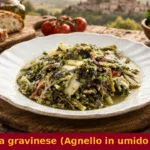
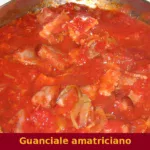
Polenta remains a cornerstone of the local diet, served either as a soft accompaniment to stewed meats — particularly braised beef and slow-cooked pork — or left to solidify and then griddled until the exterior crisps and the inside stays yielding. Alongside it, tajarin, the thin egg-yolk pasta that is one of Piedmont’s most celebrated contributions to Italian cooking, appears regularly on local menus dressed with butter and white truffle when the season and the budget allow, or with a ragù of mixed meats when they do not. The valley also produces a range of cured meats in the tradition common to the Alpine arc: lardo seasoned with mountain herbs, salami with a firm texture and a clean pork flavour, and various preparations of offal that reflect an older, nothing-wasted approach to the pig.
Cheese is another serious subject in this part of Piedmont. The pastures of the upper Val di Susa and its lateral valleys produce milk that local cheesemakers turn into toma — a semi-firm, washed-rind cheese with a gentle acidity — and smaller fresh cheeses that pair well with local honey and chestnut preserves. Local bakeries still make grissini in the rustic style, thicker and more irregular than the commercial variety, and bread baked with rye flour from highland fields has been making a quiet comeback. If you want to bring something home, artisan honey from beekeepers working the valley’s wildflower meadows travels well and captures the scent of the landscape in concentrated form. The broader agricultural identity of the area also connects Borgone to the food traditions celebrated in nearby communities like Almese and Avigliana, both within easy reach for a longer gastronomic itinerary through the valley.
When to Visit Borgone Susa and How to Get There
Spring and autumn are the most rewarding seasons for a visit. Between April and June the valley turns vivid green, the light is clear, temperatures are mild for walking, and the historic sites are easy to access without summer crowds. September and October bring the harvest atmosphere that suits the local food culture particularly well, and the lower-angle light makes the stonework of the Castlàs and the Romanesque chapel photograph beautifully. Summer is perfectly viable — the altitude keeps the heat manageable compared to the Turin plain — but July and August attract more visitors to the broader Val di Susa corridor. Winter visits are quiet and atmospheric if you are drawn to mountain light and empty lanes, though some smaller attractions may have restricted access.
Getting to Borgone Susa is straightforward. By train, the Turin–Susa railway line serves the village with frequent departures: trains run every hour in both directions, with half-hourly services during morning and evening peaks. The journey from Turin takes approximately 47 minutes. By car from Turin, the A32 motorway toward Fréjus brings you to the valley in around 30 minutes under normal traffic conditions. The village also connects naturally to walking routes linking it with communities throughout the Val di Susa. Travellers who arrive by rail and want to extend their stay in the area might consider Caselette at the valley entrance or the high-altitude drama of Balme for contrast.
| Departure | Distance | Time by Car |
|---|---|---|
| Turin (Torino) | approx. 38 km | approx. 30 min |
| Avigliana | approx. 14 km | approx. 15 min |
| Susa | approx. 13 km | approx. 12 min |
| Milan (Milano) | approx. 155 km | approx. 1 h 35 min |
For current opening hours, local events, and municipal notices, the official resource is the Comune di Borgone Susa website. The patron saint’s feast of San Nicola di Bari falls on 6 December, and while winter celebrations in a small Alpine village are low-key by urban standards, they carry an authenticity that more touristed destinations rarely match.
Frequently asked questions about Borgone Susa
Come si raggiunge Borgone Susa in auto o in treno?
In auto, si percorre l'autostrada A32 Torino–Bardonecchia uscendo al casello di Borgone Susa, a circa 30 km da Torino. In treno, la stazione di Borgone Susa si trova sulla linea Torino–Modane (Torino Porta Susa–Bardonecchia), con collegamenti frequenti da Torino in circa 35–40 minuti. La stazione è raggiungibile a piedi dal centro del paese.
Quando si festeggia il patrono di Borgone Susa?
Il patrono è San Nicola di Bari, la cui festa liturgica cade il 6 dicembre. Come in molti comuni piemontesi, i festeggiamenti locali possono essere spostati al periodo estivo per favorire la partecipazione. Si consiglia di verificare il calendario preciso presso il Comune di Borgone Susa o la parrocchia locale prima della visita.
Ci sono sentieri CAI o percorsi escursionistici documentati nei dintorni?
Il territorio di Borgone Susa rientra nella rete escursionistica della Val di Susa, gestita in parte dal CAI sezione di Susa. Il fondovalle è attraversato da tratti documentati della Via Francigena, percorribile a piedi. La zona è inoltre collegata ai sentieri che salgono verso il Monte Musine, meta classica per escursionisti con vista panoramica sulla pianura torinese e sulla valle.
Quanto tempo è necessario per visitare Borgone Susa?
Una visita completa del borgo, comprendente la torre medievale, il tratto di Via Francigena e il rilievo rupestre noto come il Maometto, richiede indicativamente mezza giornata. Chi desidera combinare la visita con un'escursione sui sentieri circostanti o esplorare i comuni vicini della Val di Susa, come Susa o Sant'Ambrogio, può pianificare una giornata intera.
📷 Photo Gallery — Borgone Susa


🏡 Know Borgone Susa better than we do?
If you’re a local or have been there, your knowledge matters: add what’s missing or fix a detail on this page.