


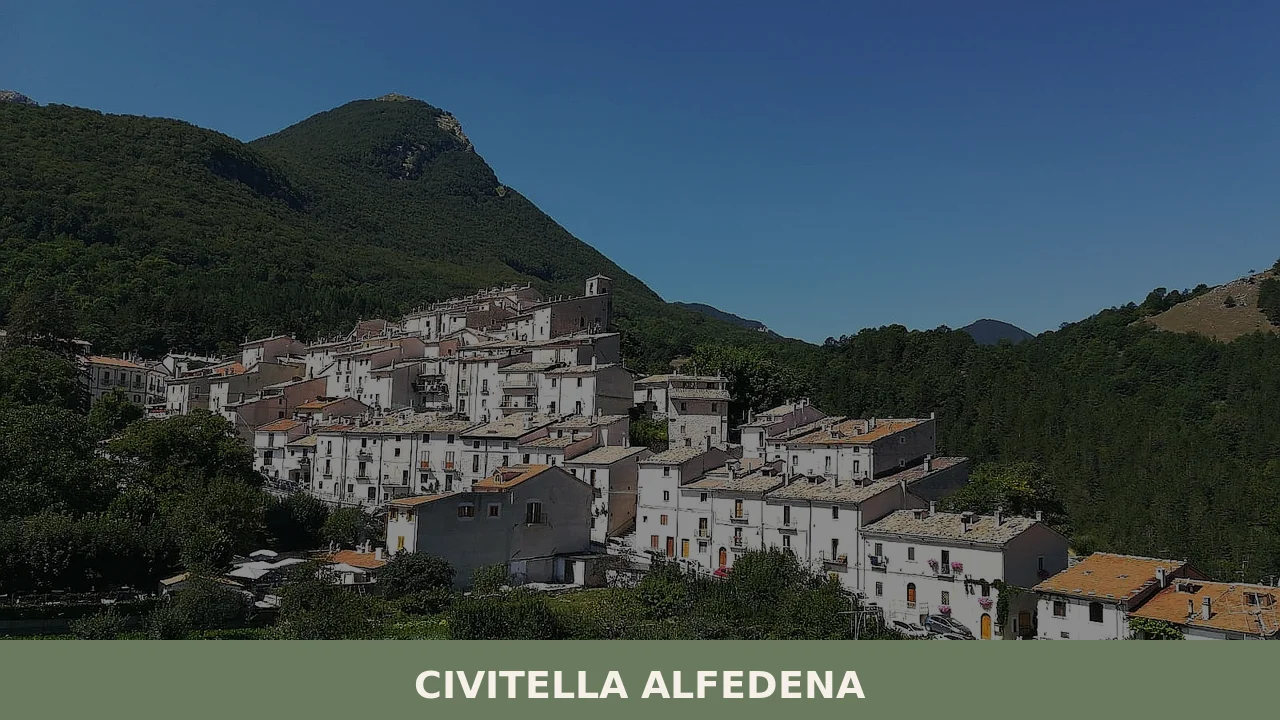
Civitella Alfedena
At 1123 metres above sea level, on the southern slopes of the Abruzzo, Lazio and Molise National Park, Civitella Alfedena is home to just 285 residents — fewer than a single apartment block in Rome — spread along an urban core that retains its medieval defensive layout, complete with stone portals and covered passageways. Asking […]
Discover Civitella Alfedena
At 1123 metres above sea level, on the southern slopes of the Abruzzo, Lazio and Molise National Park, Civitella Alfedena is home to just 285 residents — fewer than a single apartment block in Rome — spread along an urban core that retains its medieval defensive layout, complete with stone portals and covered passageways. Asking what to see in Civitella Alfedena means engaging with a village where the density of wildlife exceeds that of humans: the Apennine wolf, the Abruzzo chamois and the Marsican brown bear roam the slopes surrounding the settlement, sometimes venturing right up to its doorstep.
History and origins of Civitella Alfedena
The place name first appears in 11th-century documents linked to the diocese of Valva and Sulmona. The first element, “Civitella”, derives from the Latin civitas in its diminutive form — a small fortified town. “Alfedena” recalls the Samnite centre of Aufidena, present-day Alfedena, just a few kilometres away, with which the village shared its belonging to the territory of the Samnite Pentri before the Roman conquest. The settlement arose as a lookout post over the Sangro valley, at a point where the still-young river flows through narrow gorges before widening into the plain of Castel di Sangro.
During the medieval period, Civitella fell within the Norman-Swabian feudal system and passed through the hands of several noble families of southern Italy. The D’Aquino, the Caldora and later the Borrello held possession at different times. The village suffered severe damage during the Marsica earthquake of 1915, which struck the entire Aquila area with great force. Reconstruction and the depopulation of the 20th century progressively reduced the population, which at the start of the century had exceeded a thousand. The establishment of the National Park in 1922 — one of the oldest in Italy — changed the village’s economic trajectory, shifting the focus from transhumant pastoralism to environmental conservation and, later, to nature-based tourism. Today the municipality administers a territory that is vast relative to its population, encompassing significant portions of the protected area.
The patron saint’s feast, dedicated to Saint Lucy of Syracuse, is celebrated on the second Sunday of July — an unusual summer date for a saint whose liturgical feast traditionally falls on 13 December. The shift is a practical one: in winter, at 1123 metres, weather conditions and the absence of many residents would make the celebration all but deserted.
What to see in Civitella Alfedena: 5 main attractions
1. Apennine Wolf Museum
Managed by the Park authority, the museum documents the biology and ethology of Canis lupus italicus through bone specimens, den reconstructions and panels on the historical conflict between wolves and pastoralism. An adjacent wildlife enclosure houses wolf specimens that cannot be released back into the wild, observable at close range from an elevated walkway.
2. Abruzzo Chamois Wildlife Area
On the eastern edge of the village, an enclosure of approximately four hectares holds several specimens of Rupicapra pyrenaica ornata, a subspecies endemic to the central Apennines that in the 1970s numbered fewer than thirty individuals. The visitor trail allows observation of the animals on rocky terrain that replicates their natural habitat along the ridges of the Camosciara.
3. The Camosciara — Strict Nature Reserve
Accessible via an unpaved road that starts below the village, the Camosciara is the most strictly protected core of the Park. The Ninfe and Tre Cannelle waterfalls mark the route along the Scerto stream. The trails — from the shortest at forty minutes to five-hour hikes — pass through old-growth beech forests and limestone cliffs where golden eagles nest.
4. Church of San Nicola di Bari
The parish church, in the upper part of the historic centre, retains a late-medieval structure with post-earthquake rebuilding. Inside, a holy water font in local stone and a wooden statue of the Madonna dating to the 17th century. The plain, unadorned façade opens onto a paved small square that serves as a natural viewpoint over the Sangro valley.
5. Lake Barrea and the lakeside path
The artificial Lake Barrea, created in the 1950s by damming the Sangro river, stretches for approximately three kilometres at the foot of Civitella Alfedena. A flat path runs along the southern shore and connects the village to Barrea and Villetta Barrea. The waters, a dark green that mirrors the surrounding beech forests, are frequented by grey herons and mallards.
Food and local produce
The cooking of Civitella Alfedena reflects the pastoral tradition of the upper Sangro valley, built on a limited repertoire of ingredients available at altitude. Sagne e fagioli — irregularly shaped fresh pasta cut by hand with white beans slow-cooked in a clay pot — is the cornerstone dish. Maccheroni alla chitarra, made by pressing a sheet of dough over a frame of steel wires, are dressed with a mutton ragù or, in the humbler version, with a tomato and sweet chilli sauce. Arrosticini, skewers of diced sheep meat grilled over a furnacella (an elongated brazier), feature at every festival and food stand in the area. In winter, polenta rognosa appears, dressed with crumbled sausage and cheese, alongside lentil soup — the lentils from nearby Santo Stefano di Sessanio have earned Slow Food Presidium status. Locally produced pecorino is aged in cellars at a constant temperature; the younger wheels are paired with mountain honey, while the more mature ones are grated over pasta.
Among the area’s notable products are Zafferano dell’Aquila DOP (L’Aquila Saffron PDO), cultivated on the Navelli plain about an hour’s drive away but present in the local festive cooking, and Montepulciano d’Abruzzo DOC, which accompanies meat dishes. Confetti di Sulmona, produced just a few kilometres away in the Peligna valley, appear at every local ceremony. Ferratelle (or pizzelle), thin wafers cooked in a double-plate iron and flavoured with anise, close out celebration meals. In summer, on the second Sunday of July during the feast of Saint Lucy, food stalls along the main street offer porchetta, pallotte cace e ove (cheese and egg fritters fried in tomato sauce) and scrippelle — thin crêpes served in hen broth or stuffed with cheese and rolled up. The village’s Wikipedia page provides further details on the cultural and gastronomic heritage of the municipality.
When to visit Civitella Alfedena: the best time
Summer — from mid-June to mid-September — offers the most favourable conditions for hiking. Daytime temperatures rarely exceed 28 °C, and evenings call for a jacket. July concentrates the main events: the feast of Saint Lucy on the second Sunday of the month brings a procession, music and market stalls to the historic centre. August is the busiest month, with emigrated residents returning and the Park’s trails at their most frequented. Those who prefer to avoid the crowds will find a better balance between good weather and calm in June and the first half of September.
Autumn, between October and November, turns the beech forests into a colour gradient ranging from yellow to deep red — this is the season of the red deer rut, audible at dusk in the valleys around the Camosciara. Winter brings heavy snowfall and night-time temperatures that regularly drop below -10 °C; some accommodation closes, but the village maintains essential services. High-altitude trails require snowshoes or crampons from December to March. Spring arrives late: in May the beeches are still bare at the highest elevations, and the meadows do not bloom until June.
How to reach Civitella Alfedena
By car, from the A25 Rome–Pescara motorway, exit at Pescina or Cocullo and continue on the SS83 Marsicana road via the Forca d’Acero pass or through Pescasseroli and Villetta Barrea. From Rome the distance is approximately 180 kilometres, reachable in about two and a half hours. From Naples, the most direct route takes the A1 motorway to Caianello, then the SS85 towards Isernia and the SS17 to Castel di Sangro, from where you head up the Sangro valley for about 25 kilometres: the total is roughly 200 kilometres in three hours. From Pescara, allow approximately 130 kilometres in two hours via the A25 and the Marsicana road.
The nearest railway station is Castel di Sangro, served by the Sulmona–Carpinone line with limited frequency — during the summer months the Trans-Siberian of Italy, a heritage train run by Fondazione FS, covers the scenic Sulmona–Roccaraso route with selected special services. From Castel di Sangro to Civitella Alfedena there is no regular public transport connection: you will need your own car or a taxi. The nearest airport is Pescara (Abruzzo Airport), approximately 150 kilometres away; Rome Fiumicino is 210 kilometres.
Other villages to discover in Abruzzo
Inland Abruzzo is a network of smaller centres linked by mountain roads and high plateaus. To the north-west of Civitella Alfedena, in the Marsica area, Celano commands the Fucino plain with its Piccolomini Castle, one of the best-preserved fortresses in the region, which houses the Museum of Sacred Art of the Marsica and the Torlonia Collection of antiquities. Celano’s position — at 860 metres, overlooking the ancient lake that was drained in the 19th century — offers a different perspective on mountain Abruzzo, one more closely tied to feudal history and land reclamation than to wildlife.
Towards the south-east, in the province of Chieti, Carunchio belongs to a different Abruzzo: the hilly Vastese, where altitudes drop and the landscape shifts from beech woods to olive groves. The village preserves a compact layout with medieval entrance gates and a documented olive-oil tradition. Travelling from Civitella Alfedena towards the Adriatic, you cross in just a few hours a remarkable gradient in both landscape and culture — from the mountain of the wolf to the hills of olive oil — making the region one of the most layered territories along the Apennines.
Getting there
Via Nazionale, 67030 Civitella Alfedena (AQ)
Nearby Villages near Civitella Alfedena
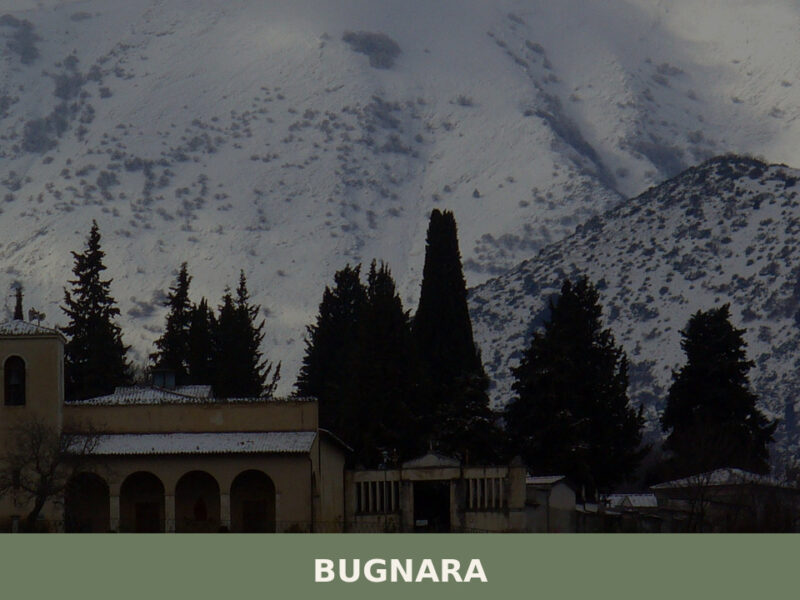
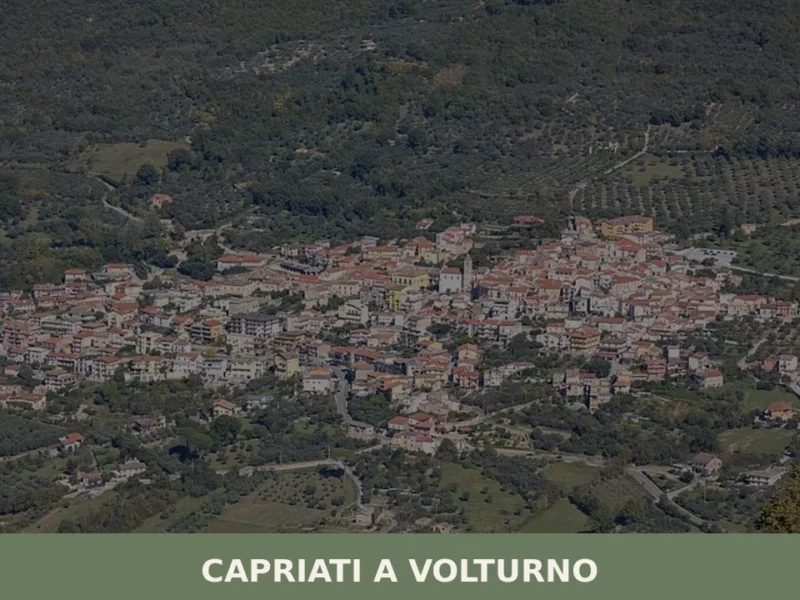
In Abruzzo More villages to discover
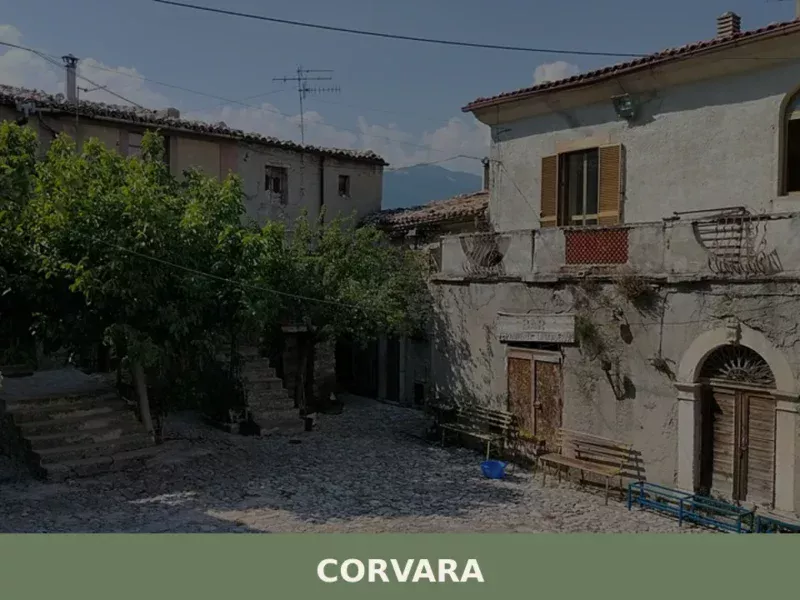
Corvara
Corvara, a municipality of 210 inhabitants in the province of Pescara, is located 625 meters above sea level in the Pescara valley. Its territory, documented as early as the medieval period, shows traces of settlements dating back to the Neolithic, highlighting a continuous habitation linked to its strategic position. For those wondering what to see […]
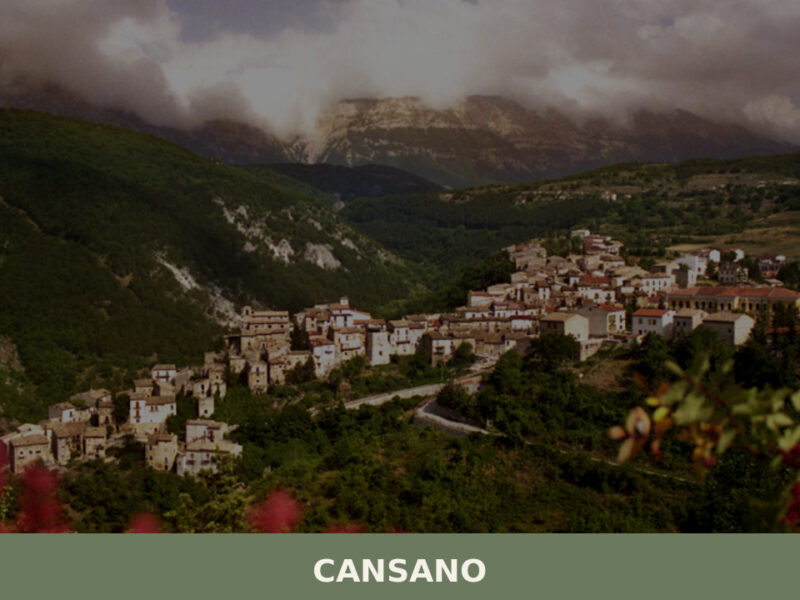
Cansano
A guide to Cansano in Abruzzo — its Roman archaeological site of Ocriticum, medieval stone centre, Majella trails, and pastoral food traditions at 835 metres.
Arsita
Until 1905, this village was called Bacucco, a name likely derived from the Latin bacuca, which referred to olives that had fallen to the ground — a direct reference to the agricultural character of the area. Situated at 470 metres above sea level on the hills of the Teramo province, Arsita and its 733 inhabitants […]





📝 Incorrect information or updates?
Help us keep the Civitella Alfedena page accurate and up to date.