


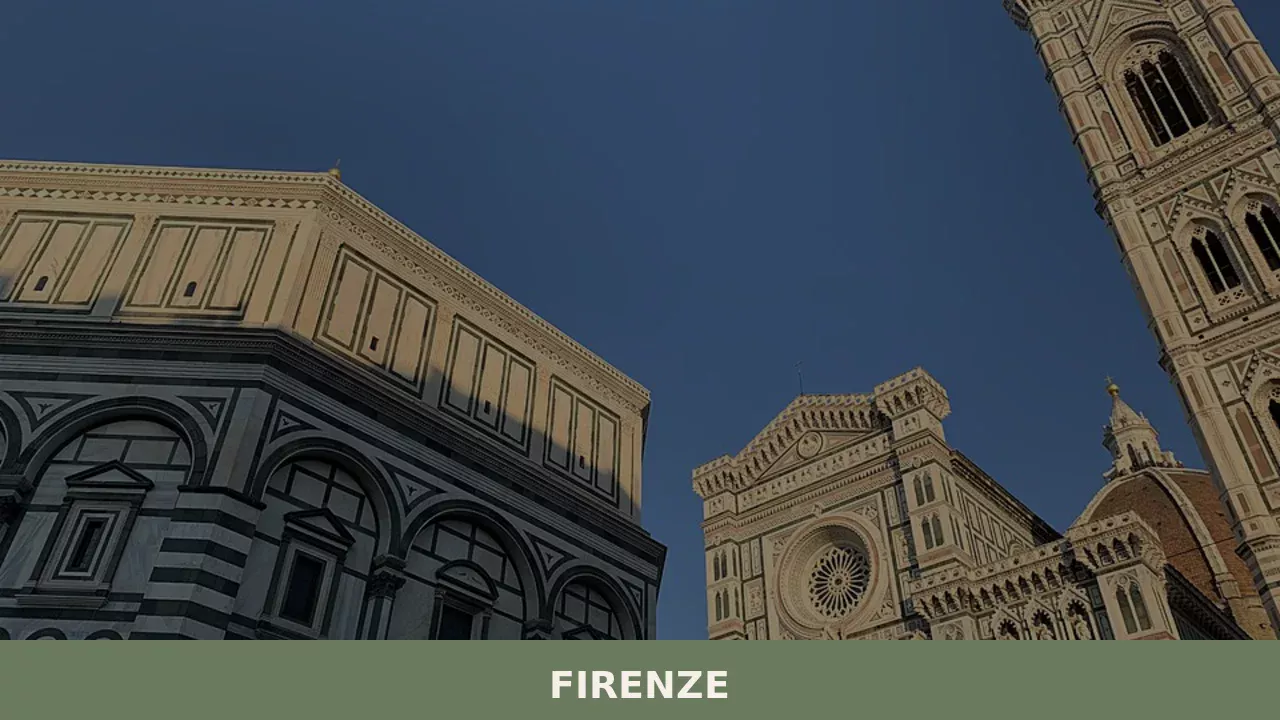
Firenze
Founded by the Romans as a military colony around 59 BC under the name Florentia, the city we know today as Florence has passed through nearly two millennia of history without ever ceasing to reinvent itself. The regional capital of Tuscany, it sits 50 metres above sea level along the banks of the Arno, with […]
Discover Firenze
Founded by the Romans as a military colony around 59 BC under the name Florentia, the city we know today as Florence has passed through nearly two millennia of history without ever ceasing to reinvent itself.
The regional capital of Tuscany, it sits 50 metres above sea level along the banks of the Arno, with a population of 366,039 making it one of the most significant urban centres on the Italian peninsula.
For those wondering what to see in Firenze, the answer goes well beyond a list of monuments: the city offers a layering of eras, styles and narratives that overlap at every turn, from the UNESCO World Heritage historic centre to the neighbourhoods rarely reached by mass tourism circuits.
History and Origins of Florence
The founding of Florentia dates to 59 BC, when veterans of Julius Caesar’s Roman legions were assigned land along the Arno as part of the agrarian colonisation policies of the first century BC.
The city was built to the orthogonal plan typical of Roman settlements, with the forum positioned in the area now occupied by Piazza della Repubblica. This original urban layout is still partly readable in the street pattern of the historic centre, where the main axes follow the routes of the ancient consular roads.
Over the centuries that followed, Florentia passed through Roman rule, then Lombard, then Carolingian, until communal authority began to take hold during the eleventh century.
The medieval period marked a decisive turning point for Florence.
Between the twelfth and fourteenth centuries, the city established itself as one of the most powerful economic and financial centres in Europe, driven by the wool industry and the great banking dynasties — the Bardi, the Peruzzi, the Medici — who lent money to kings and popes from Naples to London. The Medici family, which took political control of the city from 1434 under Cosimo the Elder, transformed Florence into a magnet for artists, writers and philosophers from across Europe. It was under Medici patronage that Filippo Brunelleschi, Leon Battista Alberti, Sandro Botticelli and Leonardo da Vinci worked, among others, making Florence the principal workshop of the Italian Renaissance.
In 1865, following Italian unification, Florence became the capital of the newly formed Kingdom of Italy for a brief period, a role it held until 1871, when Rome permanently assumed that function.
This five-year period brought significant urban changes, including the demolition of the medieval city walls and the construction of the ring boulevards.
In the twentieth century, the city sustained damage during the Second World War — almost all the bridges over the Arno were blown up by retreating German forces in 1944, with the sole exception of the Ponte Vecchio — and was struck by the devastating flood of 4 November 1966, which caused incalculable damage to the city’s artistic and archival heritage.
The international wave of solidarity that followed gave rise to the “Angels of the Mud” movement, volunteers who arrived from around the world to recover artworks and documents submerged beneath the Arno’s floodwaters. Anyone who wants to understand what to see in Firenze must reckon with this historical layering, which makes every palace, every church and every museum part of a continuous and well-documented narrative.
What to See in Firenze: Main Attractions
Florence Cathedral and Brunelleschi’s Dome
The Cathedral of Santa Maria del Fiore dominates the historic centre with its façade in white, green and red marble and the celebrated dome designed by Filippo Brunelleschi, completed in 1436. At 114.5 metres from base to lantern, the dome remains the largest brick masonry dome ever built. Construction of the cathedral began in 1296 to a design by Arnolfo di Cambio and continued for nearly two centuries.
The adjacent campanile, begun by Giotto in 1334, reaches 84.7 metres.
The interior contains frescoes, sculptures and the notable liturgical clock painted by Paolo Uccello in 1443.
Uffizi Gallery
The Uffizi Gallery is one of the most visited museums in the world and holds one of the most significant collections of Renaissance art in existence.
Founded by the Medici and opened to the public in 1765 at the behest of the last heir of the dynasty, Anna Maria Luisa de’ Medici, it brings together works by Botticelli — including the Birth of Venus and Primavera — alongside Leonardo da Vinci, Michelangelo, Raphael, Titian and many others. The building that houses it was constructed by Giorgio Vasari from 1560 onwards as the administrative offices of the duchy.
Visiting the Uffizi is one of the primary reasons travellers choose Florence as a destination.
Ponte Vecchio
The Ponte Vecchio is the oldest bridge over the Arno still standing.
The current structure dates to 1345, built after a flood had destroyed the previous fourteenth-century bridge. The only Florentine bridge to survive the summer of 1944, when German forces blew up all the others, the Ponte Vecchio is defined by the shops that line both sides of the river. Originally occupied by butchers and tanners, they were reserved exclusively for goldsmiths from 1593 onwards by decree of Grand Duke Ferdinando I.
Running above the shops is the Vasari Corridor, built in 1565 to connect Palazzo Vecchio to Palazzo Pitti without the Medici having to descend to street level.
Basilica of Santa Croce
The Basilica of Santa Croce, built by Franciscan friars from 1294 onwards, is known as the “temple of the Italians” for the many funerary monuments and cenotaphs it contains.
Michelangelo Buonarroti, Galileo Galilei, Niccolò Machiavelli, Gioachino Rossini and Ugo Foscolo are among those buried or commemorated here.
The walls of the right nave preserve frescoes by Giotto in the Bardi and Peruzzi Chapels, dated to around 1325. The Neo-Gothic façade in white and green marble was not added until 1863. The complex also includes a Renaissance cloister and the Pazzi Chapel, one of Brunelleschi’s finest works.
Palazzo Pitti and the Boboli Gardens
Built from 1458 at the initiative of the banker Luca Pitti, Palazzo Pitti became the principal residence of the Grand Dukes of Tuscany in 1549 following its purchase by Eleonora di Toledo, wife of Cosimo I de’ Medici. The palace today houses several museums, including the Palatine Gallery with works by Raphael, Titian and Rubens.
The rear of the building opens onto the Boboli Gardens, a formal park of 45,000 square metres laid out from 1550 to a design by Niccolò Tribolo.
The garden, organised across terraces and tree-lined avenues, is enriched by fountains, statues and an extensive collection of exotic plants introduced over the subsequent centuries.
Traditional Food and Products of Florence
Florentine cuisine has its roots in the peasant and artisan traditions of Tuscany, with a strong preference for local ingredients and straightforward preparation.
Shaped over the centuries by the Medici court kitchen — which, according to historical sources, helped spread certain food preparation techniques across Europe — the local gastronomic tradition nonetheless retains a sober, direct character, well removed from excess.
The territory of the province of Florence, with its olive-covered hills and the vineyards of Chianti, provides the agricultural foundation on which this tradition rests.
Among the most representative dishes of the Florentine table, the bistecca alla fiorentina holds an unrivalled position: it is a loin cut including both the fillet and sirloin, separated by a T-bone, taken from Chianina cattle and cooked over a high-heat grill for a short time, keeping the interior almost raw. Traditional preparation guidelines specify a minimum thickness of three fingers and a weight ranging from 600 grams to one kilogram.
Ribollita is a soup of stale bread, cavolo nero, cannellini beans and winter vegetables, reheated in a pan the day after its initial preparation — hence the name, which refers precisely to this second round of cooking.
Pappa al pomodoro, made with unsalted Tuscan bread, fresh tomatoes, garlic and basil, is another dish of peasant origin now found in restaurants throughout the city.
Equally deep-rooted is lampredotto — boiled beef offal served in a bread roll with salsa verde — a street food still very much alive at the stalls of the Mercato Centrale di San Lorenzo.
On the wine front, the Florentine territory falls within the Chianti Classico production zone, the historic area for Sangiovese growing that stretches between Florence and Siena. Wine produced in this area carries a controlled and guaranteed designation of origin. Tuscan extra virgin olive oil is another key product of the territory, with native cultivars including Frantoio, Moraiolo and Leccino.
Regarding the specific certifications of individual products, readers are directed to the relevant institutional sources, as designations vary by production regulations and growing zone, and attributing certifications without direct verification from official sources is not possible.
The Mercato Centrale di San Lorenzo, an iron-and-glass structure inaugurated in 1874 to a design by Giuseppe Mengoni, remains the main food supply hub of the historic centre.
On the ground floor are stalls selling meat, fish, cheeses and cured meats; on the first floor, renovated and reopened in 2014, artisan workshops and street food counters have taken up residence.
Those visiting Florence in autumn can also take part in harvest festivals in the hilltop municipalities surrounding the city, where wineries open their doors for tastings and tours.
Festivals, Events and Traditions of Florence
The most important event in Florence’s civic and religious calendar is the Feast of San Giovanni, celebrated on 24 June in honour of the city’s patron saint, Saint John the Baptist.
The day is marked by several ritual moments: in the morning, a solemn Mass is held in the Baptistery of San Giovanni, while the afternoon hosts the Calcio Storico Fiorentino, a form of team sport played in sixteenth-century costume in Piazza Santa Croce, between the four representatives of the historic quarters — the Whites of Santo Spirito, the Blues of Santa Croce, the Reds of Santa Maria Novella and the Greens of San Giovanni.
The evening of 24 June closes with a fireworks display over the Arno, visible from Piazzale Michelangelo and the riverside embankments.
The Calcio Storico is documented from at least the sixteenth century and is considered one of the oldest and most rigorously observed historical re-enactment events in Italy.
Among the other significant events, the Scoppio del Carro takes place on Easter morning in Piazza del Duomo: an ornamental cart drawn by oxen in traditional costume is positioned in front of the Cathedral, and during the solemn Mass a dove-shaped rocket — known as the “colombina” — is launched from the high altar along a wire running the full length of the nave, igniting the fireworks on the cart outside.
The tradition is documented with continuity from at least the eleventh century, though its current form developed in later centuries.
The Maggio Musicale Fiorentino, an international festival of opera, ballet and symphonic music established in 1933, takes place each year between April and June at the Teatro del Maggio, a venue inaugurated in 2014 with a main auditorium seating 1,800.
When to Visit Florence and How to Get There
Spring, between April and June, offers particularly favourable conditions for those who want to explore what to see in Firenze at a measured pace. Temperatures stay between 15 and 25 degrees, the days are long, and tourist pressure, while considerable, is lower than during July and August, when the humid heat of the Arno plain can make touring the historic centre uncomfortable during the middle of the day.
September and October are a solid alternative, with milder temperatures, the grape harvest under way in the Chianti hills, and a city that settles into a calmer rhythm.
Those who prefer winter will find Florence less crowded between November and February, with museums and churches accessible without long waits, though frequent rain and fog across the plain should be expected.
Florence is reachable by car via the A1 Autostrada del Sole, with the exits of Firenze Nord, Firenze Scandicci or Firenze Sud depending on your point of origin and destination within the city.
The distance from Bologna is approximately 100 km, and from Rome around 280 km. Rail services are operated by Trenitalia and connect Florence with the main Italian cities via Santa Maria Novella station, a high-speed rail terminus that reaches Roma Termini in just over an hour and a half and Bologna Centrale in around 37 minutes.
For those arriving from abroad or from greater distances, Florence Peretola “Amerigo Vespucci” Airport is around 5 km from the city centre and serves the main European cities; Pisa Galileo Galilei Airport is around 80 km away and has a direct rail connection to Florence’s main station.
The City of Florence website provides up-to-date information on car parks, restricted traffic zones and urban public transport.
Those planning a broader Tuscan itinerary may consider extending their trip to the villages of the Lunigiana, an area historically connected to the communication routes between northern and central Italy.
Pontremoli, the main centre of the Lunigiana, preserves a medieval heritage of considerable interest and lies along the Via Francigena, the ancient route that medieval pilgrims followed between Canterbury and Rome.
In the same direction, Filattiera and Casola in Lunigiana offer an interesting contrast to the metropolitan city, revealing a side of Tuscany that sits well outside the main tourist circuits.
Podenzana, known for its local production of testaroli, is also a worthwhile stop on an itinerary heading north along the Via Aurelia.
Where to Stay in Florence
Florence’s accommodation offer is among the most varied in Italy, with options covering every price range and every type of stay.
The historic centre is home to long-established hotels of considerable tradition, many of them set within Renaissance palaces or architecturally notable buildings, alongside bed and breakfasts, guesthouses and short-term rental apartments. The Oltrarno neighbourhoods — south of the Arno, near Palazzo Pitti — provide quieter accommodation than the area around the Duomo or Santa Croce, with direct access to artisan workshops and local markets. Those who prefer the countryside will find farm stays in the surrounding hills, in the Chianti area and on the ridges north of the city, with rooms and apartments available among the vineyards.
In Tuscany More villages to discover
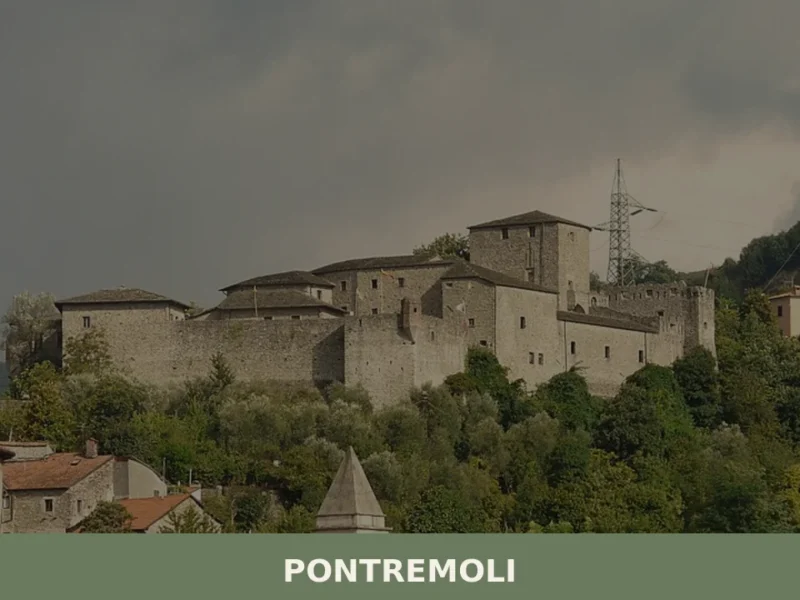
Pontremoli
Pontremoli has a current population of 7,593 and sits at an elevation of 236 metres in the valley of the River Magra, in the province of Massa and Carrara. The central hub of historic Lunigiana, the town is crossed by the route of the Via Francigena — stop number 28 on the itinerary of Sigeric, […]
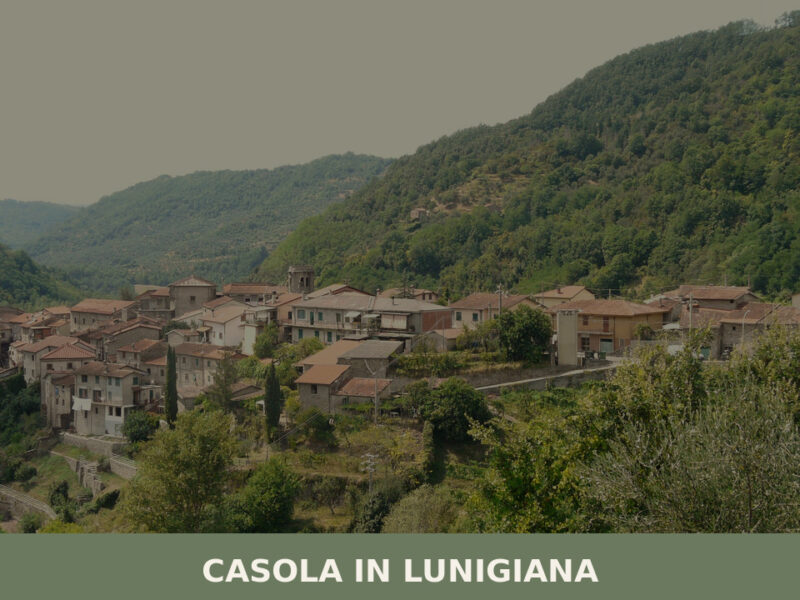
Casola in Lunigiana
Morning fog lifts slowly from the Aulella valley, revealing stone walls the colour of dried clay and a bell tower that has marked the hours here for centuries. The air carries woodsmoke and the faint mineral scent of chestnut groves climbing the surrounding slopes. With roughly one thousand inhabitants, Casola in Lunigiana remains one of […]
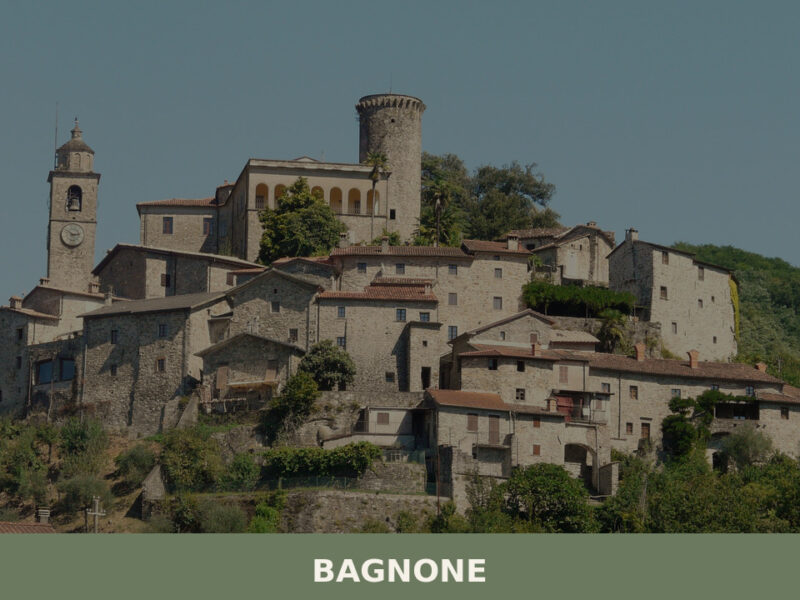
Bagnone
Morning mist lifts off the Bagnone creek and thins against stone walls that have stood since the eleventh century. The sound of water — always water — fills the narrow lanes, running beneath bridges and alongside houses built directly into the rock. With fewer than two thousand residents, this small settlement in the Massa e […]

📝 Incorrect information or updates?
Help us keep the Firenze page accurate and up to date.