


Podenzana
 Hills
Hills
The panigaccio — a disc of unleavened dough cooked between red-hot terracotta moulds — is listed as a Traditional Agri-Food Product of Tuscany and bears the name of Podenzana in the regional specification. Anyone looking into what to see in Podenzana will find a scattered municipality at 350 metres above sea level in eastern Lunigiana, […]
Discover Podenzana
The panigaccio — a disc of unleavened dough cooked between red-hot terracotta moulds — is listed as a Traditional Agri-Food Product of Tuscany and bears the name of Podenzana in the regional specification. Anyone looking into what to see in Podenzana will find a scattered municipality at 350 metres above sea level in eastern Lunigiana, province of Massa and Carrara: 2,150 inhabitants spread across the main settlement and around ten hamlets linked by roads that cut through chestnut woods and terraces planted with vines and olive trees. The patronal feast of the Madonna della Neve, on 5 August, remains the cornerstone of the civic calendar.
History and origins of Podenzana
The place name Podenzana appears for the first time in a document from the year 998, when Marquis Oberto of the Obertenghi confirmed his family’s holdings along the middle Magra valley. The Latin root Potentiana, derived from a Roman personal name, places the original settlement within the system of late-antique villae that controlled the routes between the Ligurian coast and the Apennine passes leading to the Po plain. During the twelfth and thirteenth centuries the territory came under the control of the Malaspina, the feudal dynasty that dominated Lunigiana by fragmenting it into dozens of small marquisates.
In 1416 Podenzana was ceded to the Campofregoso, doges of Genoa, and in 1469 it fell into the orbit of the Fieschi. The struggles between Ligurian feudal families and the expansion of Florence marked the following centuries: the territory changed jurisdiction several times before being absorbed into the Grand Duchy of Tuscany and then, with Italian unification, into the province of Massa and Carrara. The current administrative boundaries of the municipality — established in 1946 after being separated from Aulla — still reflect the medieval distribution of settlements, with hamlets several kilometres apart and connected by mule tracks that were widened into carriage roads after the Second World War.
The scattered settlement pattern is the most significant feature for anyone studying the area: there is no single compact historic centre, but rather a network of clusters — Montedivalli, Bagone, Castagnetola, Tendola — each with its own church and its own core of sandstone houses. This model mirrors the early-medieval manorial organisation and sets Podenzana apart from many other municipalities in the area.
What to see in Podenzana: 5 main attractions
1. Castle of Podenzana
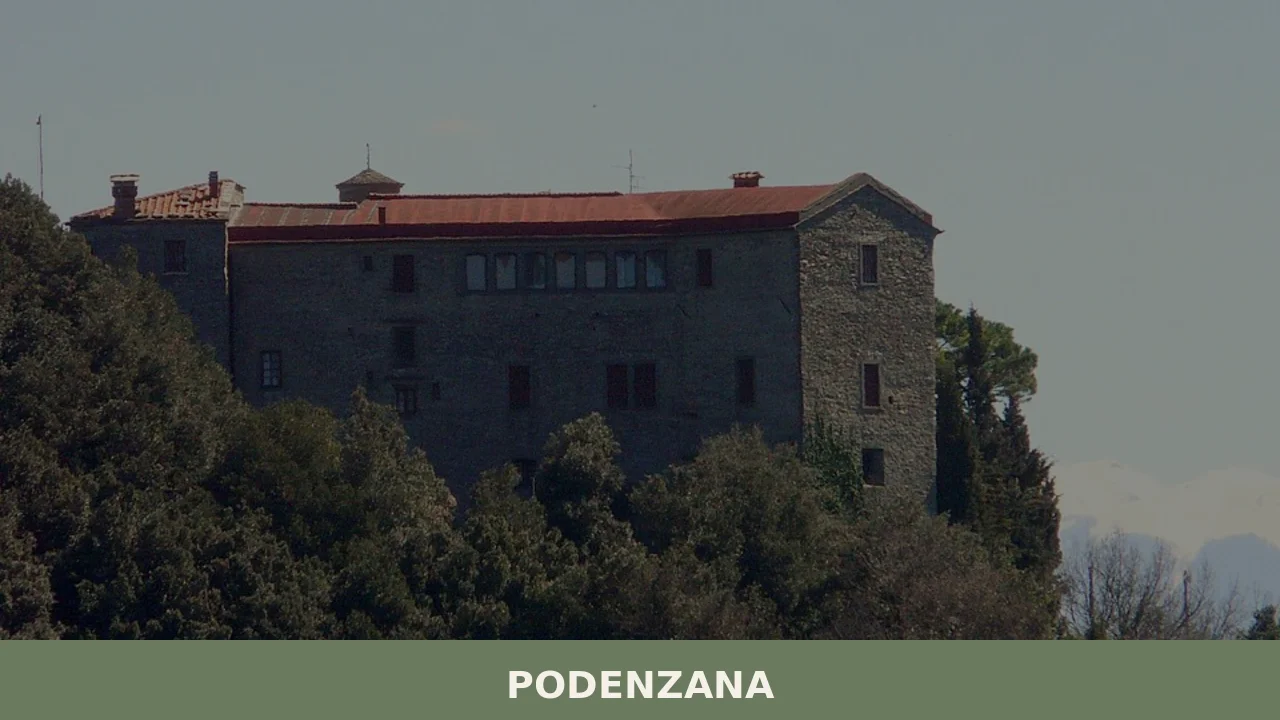
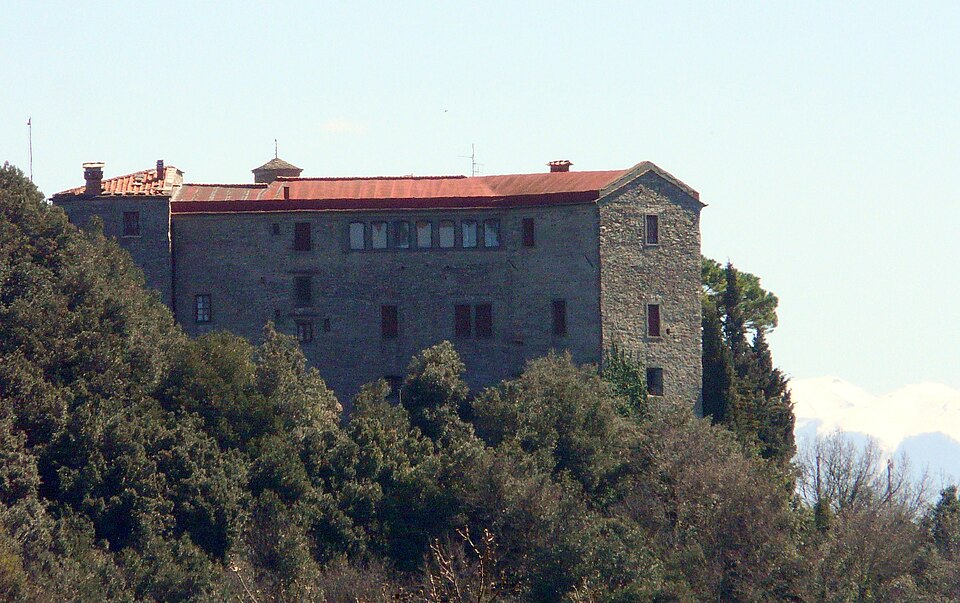
The fortified structure, visible from the provincial road, retains a quadrangular tower datable to the twelfth–thirteenth century and stretches of sandstone perimeter walls. Altered on several occasions, the complex served as a residence for the Malaspina and later the Campofregoso. Access is restricted, but the exterior and the setting — a ridge overlooking the confluence of the Teglia torrent and the Magra — are well worth the climb on foot from the car park below.
2. Parish church of Sant’Andrea in Montedivalli
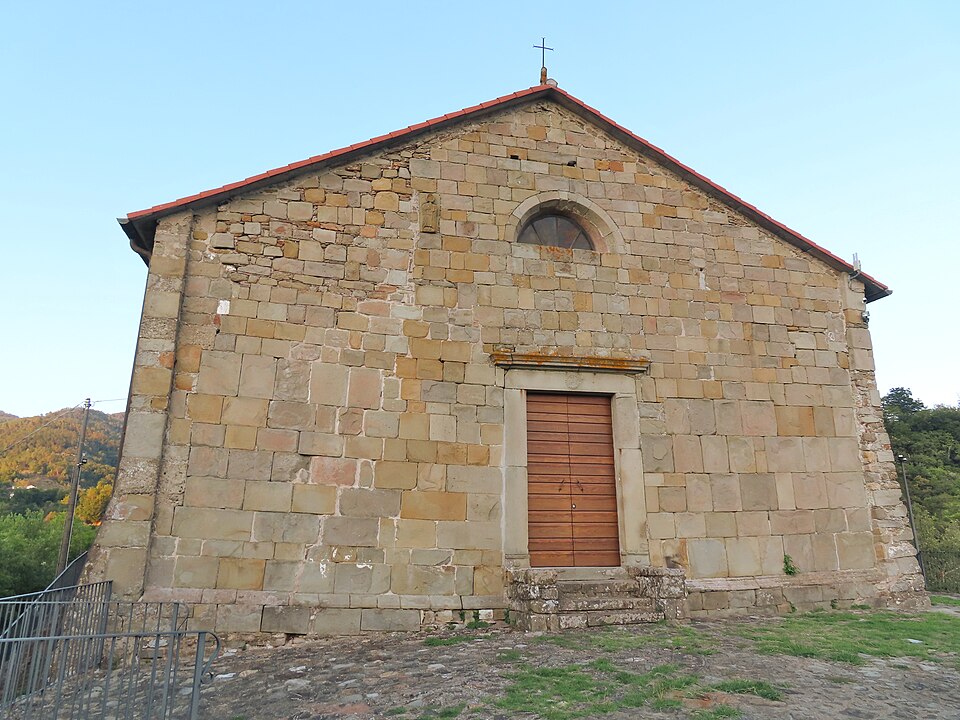
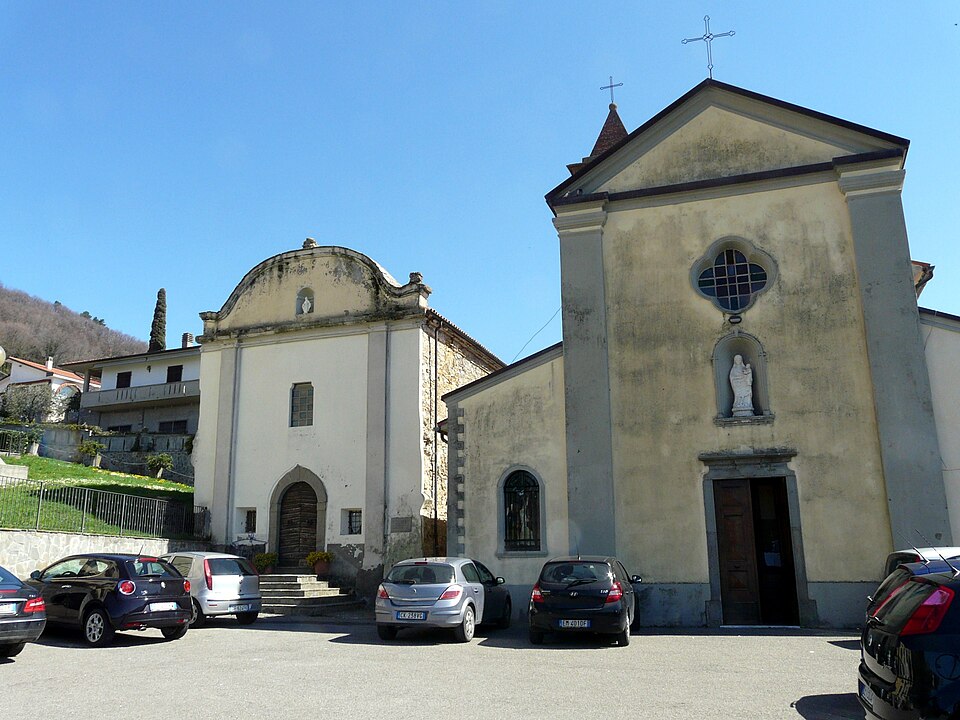
Documented from the eleventh century, the parish church preserves a semicircular apse built of regular ashlar blocks and a portal with a carved architrave. The single-nave interior houses a marble baptismal font and traces of frescoes datable to the fourteenth–fifteenth century. Its position, on an isolated knoll among fields and oaks, corresponds to the model of rural Lunigiana parish churches built along medieval road routes.
3. Church of the Madonna della Neve
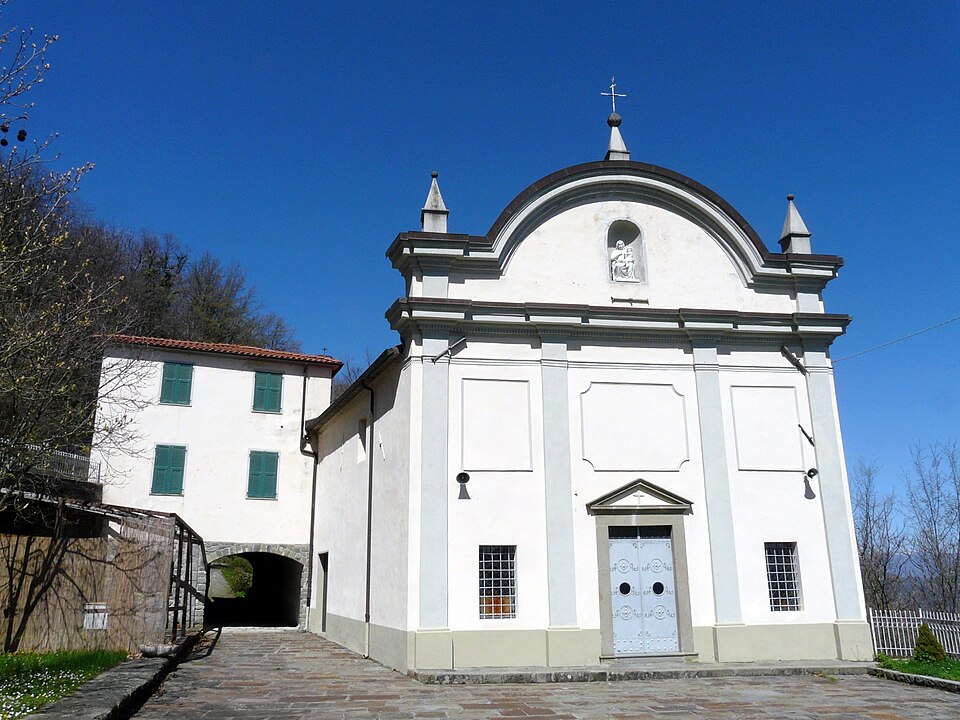
Dedicated to the patron of the municipality, the church is the focal point of the 5 August feast. The present building, reconstructed in the eighteenth century, has a plain façade and an interior with a high altar in local marble. During the patronal celebration the statue of the Virgin is carried in procession along the village streets, followed by the lighting of bonfires and the distribution of panigacci.
4. Chestnut trail to Bagone
A route of approximately 4 kilometres connects the main settlement to the hamlet of Bagone through an ancient chestnut grove. The trees, some with trunks exceeding two metres in diameter, were the basis of the local economy until the 1950s: chestnut flour was used for everyday bread and for making necci. The trail is walkable year-round, though care is needed in the winter months due to the slippery surface.
5. Hamlets of Tendola and Castagnetola
Tendola, at roughly 500 metres above sea level, preserves a cluster of stone houses with dated portals and a small parish church. Castagnetola, lower down, offers a panoramic viewpoint over the Magra valley and the ridgeline separating Lunigiana from the Val di Vara. Both hamlets document Lunigiana’s rural architecture: dry-stone walls, roofs of sandstone slabs (the so-called piagne), and external stone staircases.
Local cuisine and regional products
The panigaccio of Podenzana, included in the list of Traditional Agri-Food Products of the Tuscany Region, is the dish that identifies this municipality beyond any doubt. It consists of a disc of unleavened dough — water, soft-wheat flour and salt — cooked in terracotta moulds heated over an open fire. The moulds, stacked one on top of another, reach high temperatures and cook the batter in just a few minutes. Panigaccio is served hot, filled with stracchino cheese, Genoese pesto or cured meats, or dressed with Lunigiana extra-virgin olive oil. The Panigaccio Festival, organised annually during the summer, is the municipality’s main food event and draws visitors from across the province. Alongside panigaccio, the local table features testaroli — another Tuscan TAP, also cooked in terracotta moulds but with a thinner batter and then briefly boiled — dressed with basil pesto or porcini mushroom ragù. Lunigiana DOP chestnut flour, produced from the chestnut groves surrounding the hamlets, goes into the making of necci (thin crêpes filled with ricotta) and castagnaccio.
Toscano IGP extra-virgin olive oil — Lunigiana geographical designation — comes from olive groves cultivated on south-facing terraces. Lunigiana DOP honey, in acacia and chestnut varieties, is another certified product of the area. Among cured meats, the spalletta di Podenzana, a pork sausage aged for several months, appears in local traditional-product registers. Local viticulture produces Colli di Luni DOC, in particular white Vermentino, grown in the lower-lying parts of the municipality. Restaurants and trattorias in the area also serve torte d’erbi — savoury preparations based on wild greens, eggs and cheese, enclosed between paper-thin layers of pastry — and spelt soups with pulses, dishes that define Lunigiana’s peasant cooking tradition.
When to visit Podenzana: the best time of year
The 5th of August, the feast day of the Madonna della Neve, is the date with the greatest concentration of events: religious procession, bonfires, food distribution in the squares. The Panigaccio Festival, usually scheduled between July and August, is the other key summer appointment. Those who prefer to avoid the heat of lower Lunigiana — temperatures at 350 metres can exceed 30°C in July — may choose the first half of October, when the chestnut harvest enlivens the higher hamlets and the woods take on shades of copper and ochre.
Spring, from April to June, offers the best conditions for walking the trails between hamlets: mild temperatures, long days and vegetation in full bloom. Winter is the least-visited period, with short days and possible snowfall above 500 metres, but the low number of visitors makes it easy to see the churches and historic clusters without any parking or access difficulties. For up-to-date information on events and opening times, the official website of the Municipality of Podenzana publishes the events calendar.
How to reach Podenzana
By car, the most convenient motorway exit is Aulla on the A15 (Parma–La Spezia): from there Podenzana is about 8 kilometres along the provincial road that climbs the hill to the north-east. Travellers coming from the Tyrrhenian coast can exit at Sarzana on the A12 (Genoa–Livorno) and continue for around 25 kilometres through the lower Magra valley. The nearest railway station is Aulla Lunigiana, on the Pontremolese line (Parma–La Spezia), also reachable from Florence with a change at Parma or La Spezia. From Aulla, the connection to Podenzana is by CTT Nord bus services, which run on a limited schedule: it is advisable to check timetables in advance. The closest airport is Pisa-Galileo Galilei, approximately 110 kilometres away. From Milan the drive takes around 2 hours and 30 minutes via the A15; from Florence about 2 hours via the A11 and A15; from Genoa roughly 1 hour and 30 minutes via the A12 and A15. As a geographical reference, the dedicated page on Lunigiana on Wikipedia provides the territorial context for the area.
What to see in Podenzana and in the nearby villages of Lunigiana
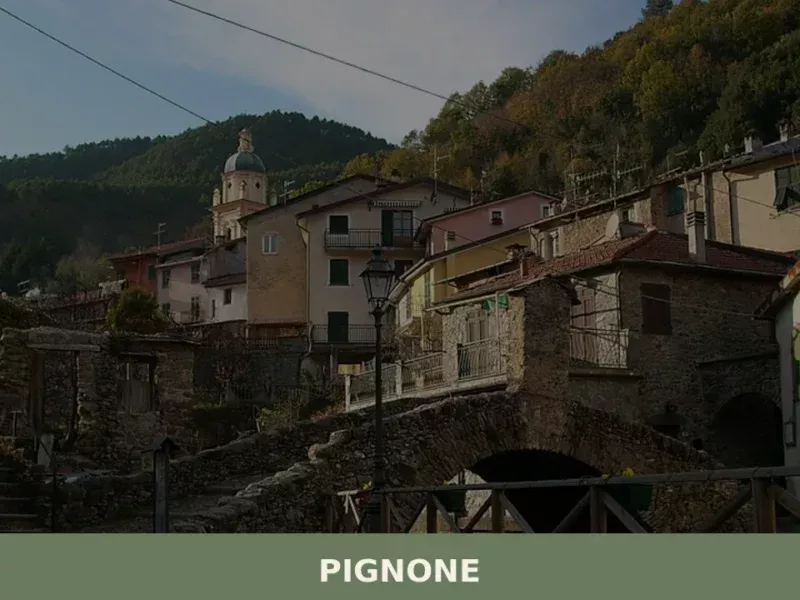
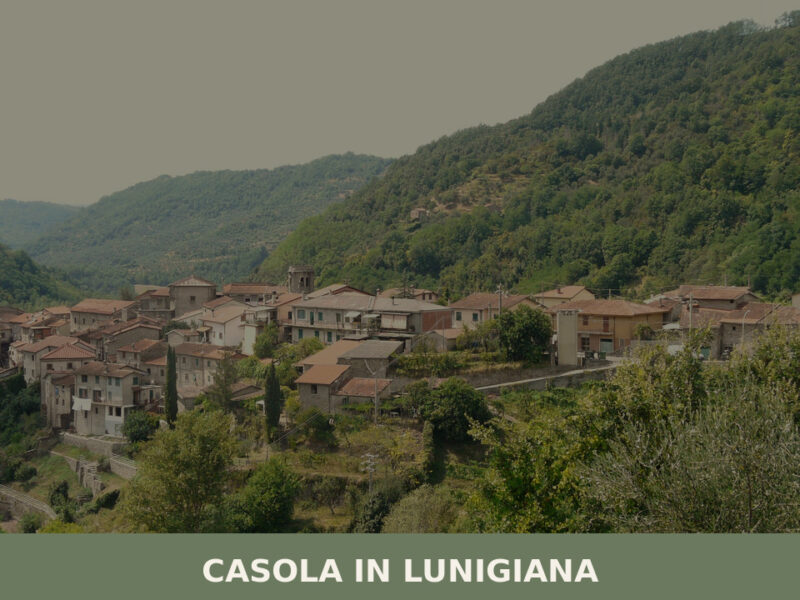
Podenzana’s position on the right bank of the Magra places it at the centre of a network of Lunigiana villages reachable in less than half an hour by car. To the north-west, heading up the Aulella torrent valley, you reach Casola in Lunigiana, a municipality known for its compact historic centre, its medieval bridge over the torrent and its production of marocca, a chestnut bread listed among the Tuscan TAPs. The distance — around 20 kilometres — is covered on mountain roads that pass through limestone gorges and mixed woods of downy oak and hop hornbeam.
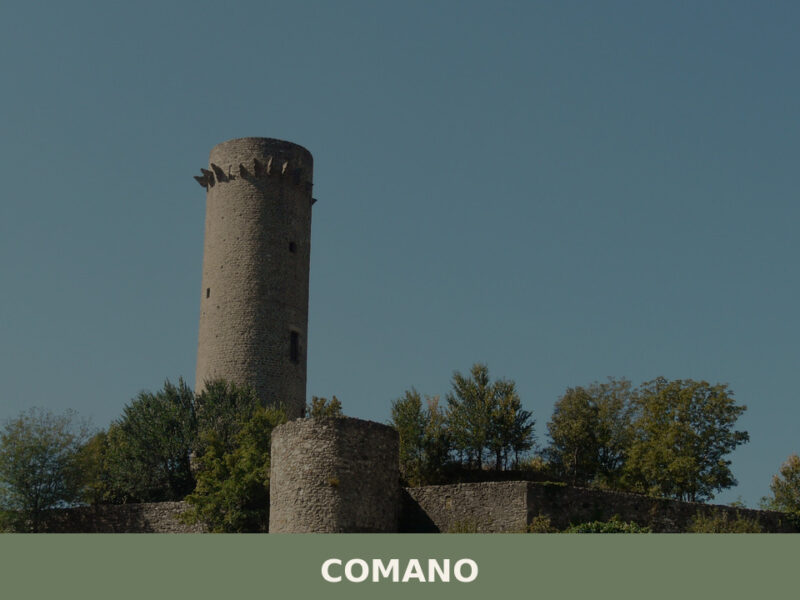
Heading north, crossing the Magra valley floor and climbing towards the Apennine ridge, you find Comano, a scattered municipality straddling Lunigiana and the Parma uplands. The territory of Comano includes several hamlets with Romanesque churches and Malaspina castles, and offers a network of hiking trails that lead all the way to the ridges of the Tuscan-Emilian Apennines. Together, Podenzana, Casola and Comano form a coherent itinerary for anyone wishing to explore inland Lunigiana beyond the more frequented circuits of Pontremoli and Fivizzano.
Frequently asked questions about Podenzana
What is the best time to visit Podenzana?
The peak event of the year is 5 August, the feast of the Madonna della Neve: religious procession, bonfires and panigacci distributed in the squares. The Panigaccio Festival, held in summer between July and August, is the main food event. Spring (April–June) is ideal for walking the trails between hamlets in mild temperatures. Early October brings the chestnut harvest, with the woods turning copper and ochre. Winter is quiet and uncrowded, perfect for visiting churches and stone hamlets at your own pace, though snowfall is possible above 500 metres.
What are the historical origins of Podenzana?
The toponym Podenzana first appears in a document dated 998, when Marquis Oberto of the Obertenghi confirmed family holdings along the Magra valley. The Latin root Potentiana derives from a Roman personal name, linking the site to late-antique villae controlling Apennine routes. In the 12th–13th centuries the Malaspina held the territory. In 1416 it passed to the Campofregoso doges of Genoa, then to the Fieschi in 1469, before being absorbed into the Grand Duchy of Tuscany and, after unification, into the province of Massa and Carrara. The current municipal boundaries were set in 1946, following separation from Aulla.
What to see in Podenzana? Main monuments and landmarks
The five key sites are: the medieval Castle of Podenzana (12th–13th-century quadrangular tower, exterior and ridge viewpoint freely accessible on foot); the Parish Church of Sant'Andrea in Montedivalli (11th-century, Romanesque apse, carved portal, 14th–15th-century frescoes); the Church of the Madonna della Neve (18th-century, focal point of the 5 August feast); the chestnut trail to Bagone (4 km through centuries-old chestnut groves); and the hamlets of Tendola and Castagnetola, with dated stone portals, piagne slate roofs and panoramic views over the Magra valley.
What are the main natural or scenic attractions of Podenzana?
The chestnut trail connecting the main village to the hamlet of Bagone (approximately 4 km) passes through an ancient grove with trunks exceeding two metres in diameter and is walkable year-round. The hamlet of Castagnetola offers a documented panoramic viewpoint over the Magra valley and the ridge dividing Lunigiana from the Val di Vara. Terraced olive groves and vineyards on south-facing slopes characterise the lower parts of the municipality, while chestnut woods and Apennine ridgelines define the landscape above 400 metres.
Where to take the best photos in Podenzana?
Three spots stand out: the ridge below the Castle of Podenzana, which frames the confluence of the Teglia torrent and the Magra river; the isolated knoll of Sant'Andrea in Montedivalli, with the Romanesque church set against oaks and open fields; and the panoramic viewpoint at Castagnetola, overlooking the full width of the Magra valley and the Lunigiana–Val di Vara ridgeline. In early October the chestnut trail to Bagone adds strong autumnal colour, with oversized trunks and a canopy of copper and ochre.
Are there museums, churches or historic buildings to visit in Podenzana?
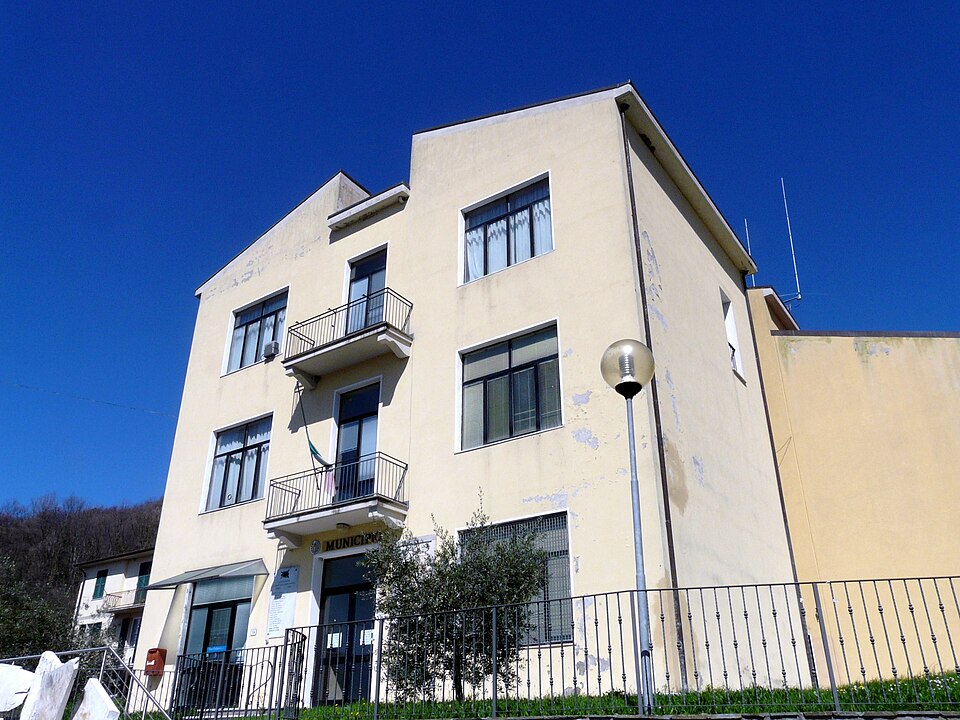
The main historic buildings are the Castle of Podenzana (exterior freely visible, interior access restricted), the Parish Church of Sant'Andrea in Montedivalli (11th-century Romanesque, marble baptismal font, traces of medieval frescoes) and the Church of the Madonna della Neve (18th-century, local marble high altar). Each of the main hamlets — Tendola, Castagnetola, Bagone, Montedivalli — also preserves a small parish church. For current opening times it is advisable to check directly with the Municipality of Podenzana or the local pro loco, as no fixed public schedules are published.
What can you do in Podenzana? Activities and experiences
Walking is the main outdoor activity: the chestnut trail to Bagone (4 km) and the mule-track network linking the hamlets are the core routes. Food experiences centre on the Panigaccio Festival (summer), where visitors can taste panigacci cooked in the traditional red-hot terracotta moulds and filled with pesto, stracchino or cured meats. The 5 August patronal feast adds a cultural dimension with a religious procession and bonfires. In October, the chestnut harvest in the higher hamlets is a seasonal experience, and the landscape is particularly suited to photography and slow tourism.
Who is Podenzana suitable for? Families, couples, hikers, solo travellers?
Podenzana suits slow travellers and food enthusiasts drawn to the panigaccio tradition and Lunigiana's peasant cuisine. Hikers of moderate ability will appreciate the chestnut trail network and the mule-track connections between hamlets. Couples and cultural visitors will find the Romanesque churches, stone hamlets and Magra valley panoramas rewarding. Families can enjoy the Panigaccio Festival and the 5 August feast in a small-community atmosphere. The village is less suited to travellers without a car, given the limited public transport from Aulla, and offers no seaside or spa infrastructure.
What to eat in Podenzana? Local products and specialties
Podenzana is identified above all with the panigaccio (Traditional Agri-Food Product of Tuscany), an unleavened disc cooked in stacked terracotta moulds and served with pesto, stracchino or cured meats. Testaroli, another Tuscan TAP cooked in terracotta and dressed with pesto or porcini ragù, also feature on local menus. Lunigiana DOP chestnut flour goes into necci (ricotta-filled crêpes) and castagnaccio. Certified area products include Lunigiana DOP honey (acacia and chestnut), Toscano IGP extra-virgin olive oil, and Colli di Luni DOC Vermentino. The spalletta di Podenzana, an aged pork sausage, appears in local traditional-product registers.
📷 Photo Gallery — Podenzana
Nearby Villages near Podenzana
In Tuscany More villages to discover
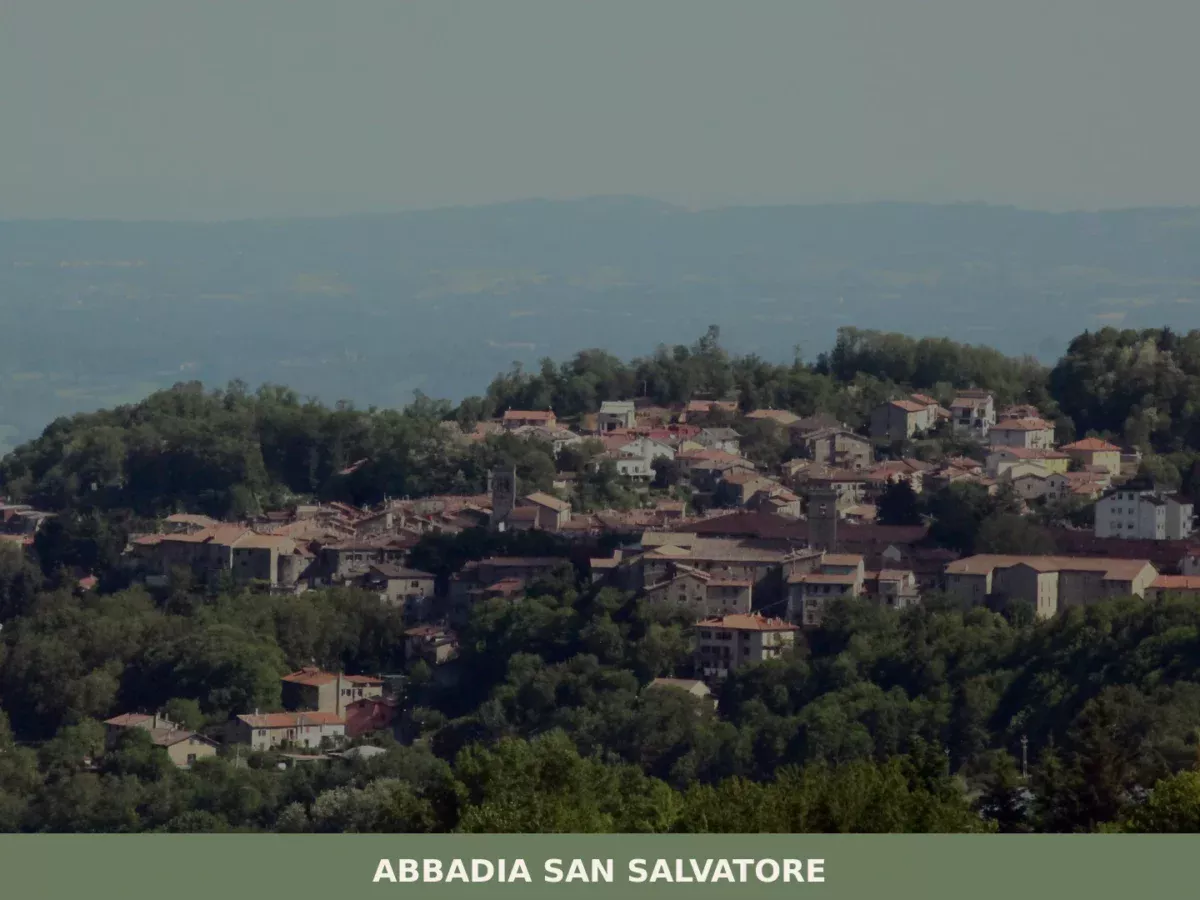
Abbadia San Salvatore
 Mountain
Discover what to see in Abbadia San Salvatore: the Lombard abbey, medieval borgo, mercury mining museum and Monte Amiata. Practical travel guide for Siena province.
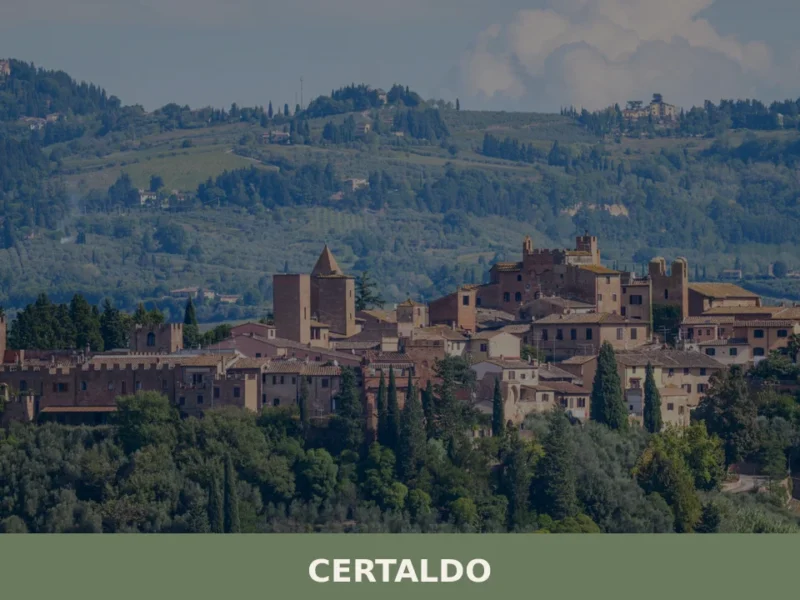
Certaldo
 Plains
Red brick rises above the Valdelsa in distinct horizontal courses, the same fired clay that built the house where Giovanni Boccaccio is documented to have died in 1375. The upper town, Certaldo Alto, sits at 67 m (220 ft) above sea level on a ridge that divides the valley floor from the surrounding hills, its […]

San Giovanni Valdarno
Hills
Founded in 1296 as a Florentine frontier town, San Giovanni Valdarno preserves a medieval grid layout, masterpieces by Beato Angelico, and the legendary miracle of Monna Tancia.
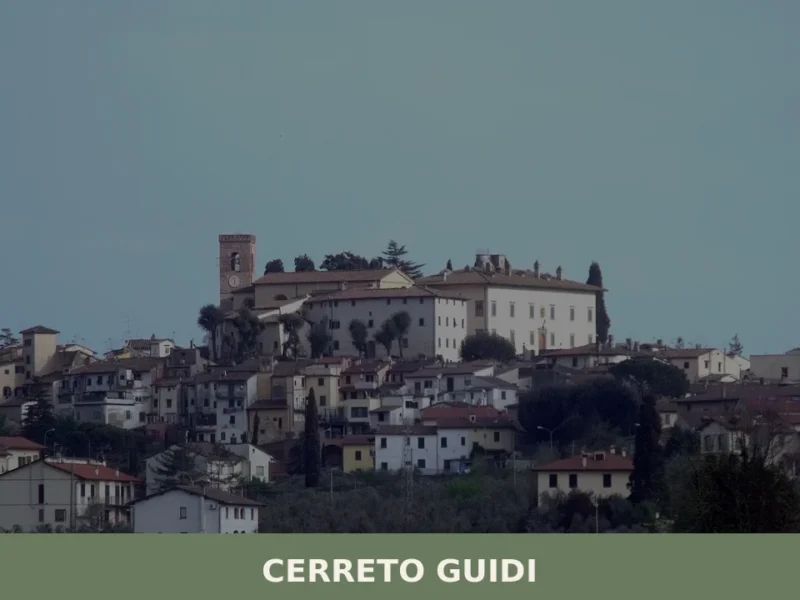
Cerreto Guidi
Plains
A low plain spreads west of Florence, and at 30 kilometres (19 mi) from the city the land rises just enough — to 123 metres (404 feet) above sea level — for a cluster of terracotta rooftops to stand out against the Tuscan sky. The municipality borders Empoli, Fucecchio, Vinci, and Lamporecchio, placing it at […]
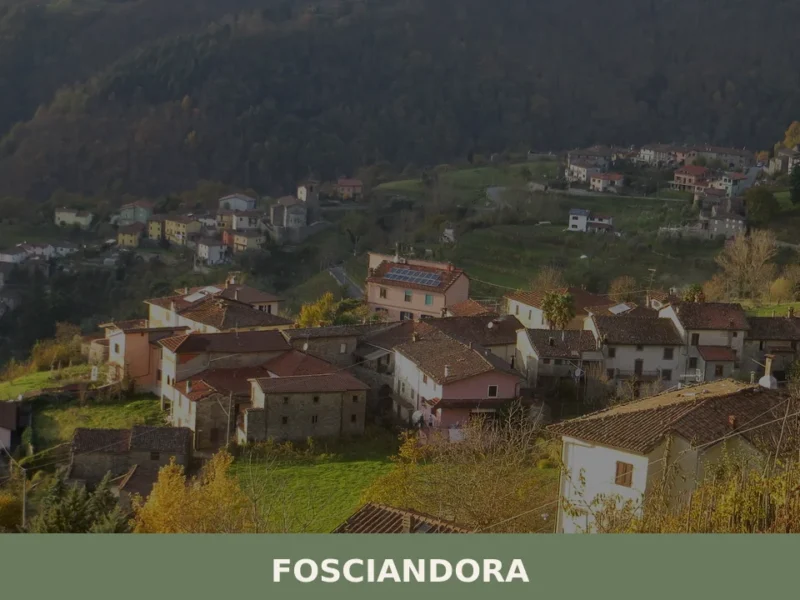
Fosciandora
Hills
What to see in Fosciandora, Italy: 9 churches, a medieval mill, local Garfagnana cuisine and the feast of San Sebastiano. Explore this Lucca province village at 390 m.
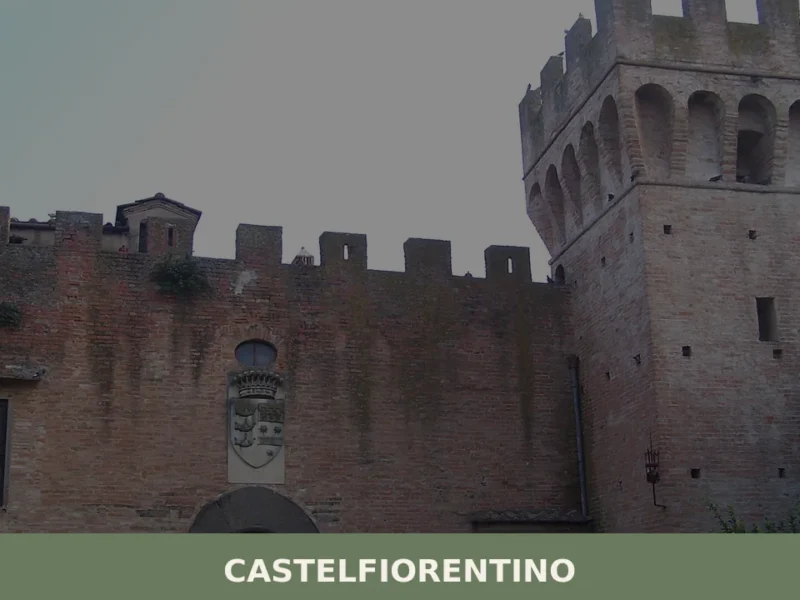
Castelfiorentino
Plains
What to see in Castelfiorentino, Italy: 6 top attractions, history from 1149, the Sanctuary of Santa Verdiana and a crucifix by Giovanni Pisano. Discover now.

Vicchio
Hills
A Florentine village of 8,000 souls in the Mugello Valley, Vicchio gave the world two painters who transformed Italian art. Medieval towers, sacred art museums and Etruscan archaeology define its landscape.
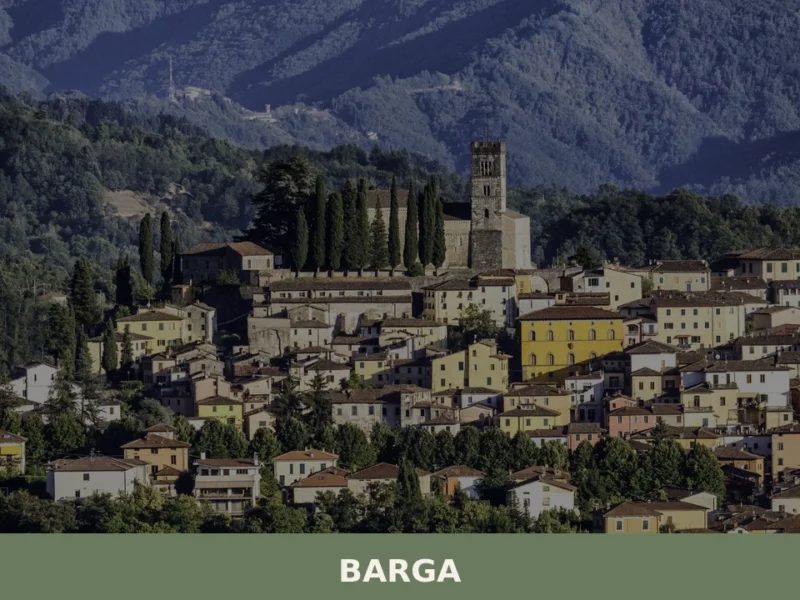
Barga
Hills
what to see a Barga, village toscano a 410 m s.l.m.: Duomo di San Cristoforo, Teatro dei Differenti, cuisine della Garfagnana. guide pratica con consigli su quando andare e how to get there.
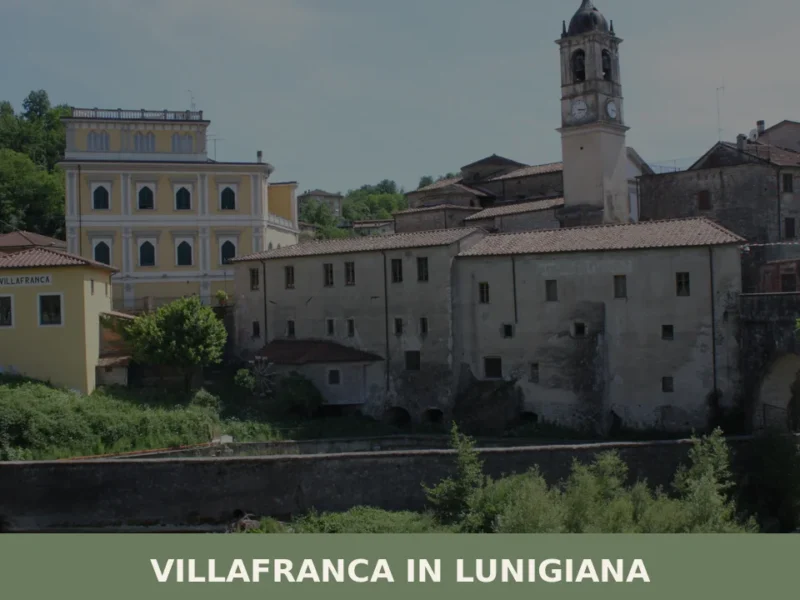
Villafranca in Lunigiana
Plains
What to see in Villafranca in Lunigiana: explore the Via Francigena, medieval churches and local cuisine in Toscana, Italy. Population 4,803. Discover it now.
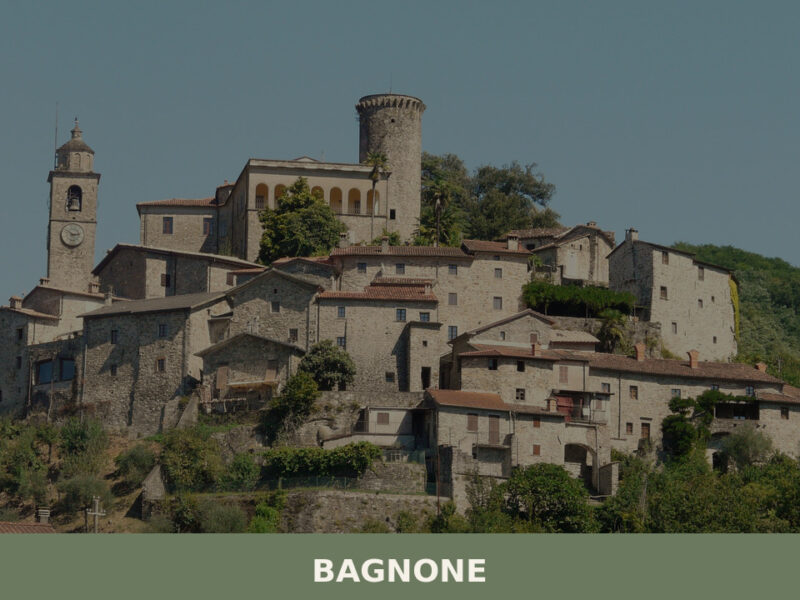
Bagnone
Hills
Morning mist lifts off the Bagnone creek and thins against stone walls that have stood since the eleventh century. The sound of water — always water — fills the narrow lanes, running beneath bridges and alongside houses built directly into the rock. With fewer than two thousand residents, this small settlement in the Massa e […]




🏡 Know Podenzana better than we do?
If you’re a local or have been there, your knowledge matters: add what’s missing or fix a detail on this page.