


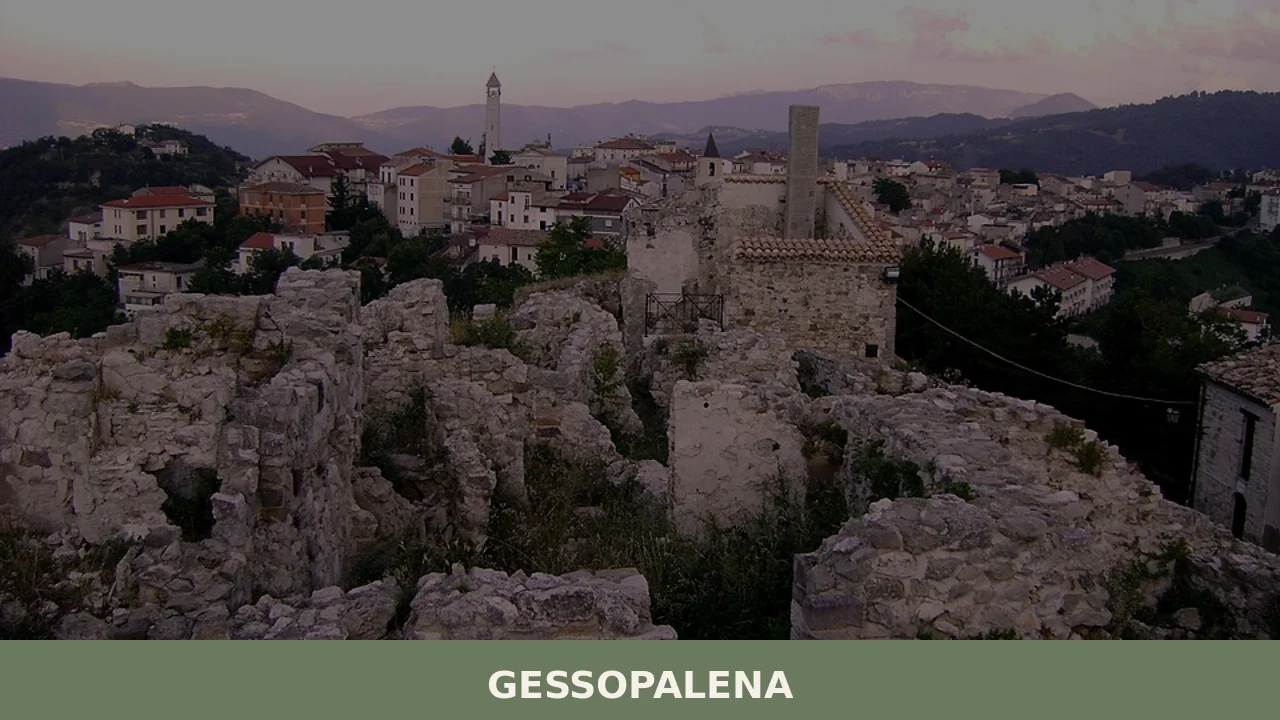
Gessopalena
In 1943, retreating German troops dynamited the entire historic core of Gessopalena, reducing to rubble a settlement that for centuries had exploited the geological peculiarity of its terrain: gypsum. That whitish mineral, quarried and worked since Roman times, had given the village its name and shaped its houses, its walls, even the foundations of its […]
Discover Gessopalena
In 1943, retreating German troops dynamited the entire historic core of Gessopalena, reducing to rubble a settlement that for centuries had exploited the geological peculiarity of its terrain: gypsum. That whitish mineral, quarried and worked since Roman times, had given the village its name and shaped its houses, its walls, even the foundations of its churches. Today, anyone driving up the winding provincial road to an altitude of 654 metres is confronted with a dual reality: the town rebuilt after the war and, a short distance away, the skeleton of the old village, with walls of alabaster gypsum emerging from the hillside like fossilised bones. Understanding what to see in Gessopalena means crossing that threshold between destruction and endurance, between geology and memory, in the heart of the province of Chieti.
History and origins of Gessopalena
The place name combines two transparent elements: gesso (gypsum), from the Latin gypsum, and Palena, a reference to the nearby mountain settlement or, according to an alternative hypothesis, to the root palena derived from the Latin Palaena, the name of an ancient Italic settlement. The earliest traces of human activity in the area date back to the Bronze Age, as documented by finds of ceramic and lithic artefacts in the eastern Maiella area. In Roman times the territory fell under the jurisdiction of the Carricini, one of the Samnite tribes settled between the Sangro and Aventino valleys. The geological formation — a massive outcrop of selenite gypsum — made the site strategically important: the mineral was quarried for the production of construction binders and ornamental sculpture, an activity that continued without interruption until the 20th century.
In the medieval period Gessopalena appeared in documents as a Norman fief. In the Catalogus Baronum of 1150–1168, compiled under William I of Sicily, the settlement was recorded as enfeoffed to local lords obliged to supply armed knights to the crown. It subsequently passed under Angevin and then Aragonese rule, following the fortunes of the Kingdom of Naples. In the 15th century the fief belonged to the Caldora family, powerful Abruzzese condottieri, and later to the d’Aquino and Colonna families. The layout of the old village, built against the gypsum ridge, took shape over these centuries: dwellings were partly carved into the gypsum rock, with load-bearing walls fashioned from the very material of the hillside — a rare construction technique in Italy and now the subject of vernacular architecture studies.
The event that irreversibly marked the history of Gessopalena was the Second World War. The village lay on the Gustav Line, the German defensive system that cut across the peninsula from Ortona to the Garigliano. Between autumn 1943 and spring 1944, the civilian population endured round-ups, deportations and killings; on 3 and 4 December 1943 German soldiers massacred several inhabitants. Before withdrawing, Wehrmacht troops systematically mined the old village, destroying nearly all of its structures. Reconstruction took place further downhill, following a modern urban plan, and the ruins of the historic centre were left as an open-air memorial. In 2014 Gessopalena was awarded the Gold Medal for Civil Merit in recognition of the sacrifices made by its population during the conflict. The village today has 1,208 inhabitants, keepers of a memory that permeates every aspect of local life.
What to see in Gessopalena: 5 key attractions
1. The Ruined Old Village (Borgo di Gesso)
The original core of Gessopalena, abandoned after the destruction of 1943, is now an archaeological and memorial site that can be visited along a marked route. The house walls, built from blocks of selenite gypsum, reveal the unique stratigraphy of this settlement: domestic rooms, cellars, cisterns and stretches of the medieval defensive wall are all distinguishable. The raking afternoon light makes the exposed gypsum crystals glitter, producing a visual effect that no photograph fully captures. Access is free and the route is pedestrian; closed footwear is recommended due to the uneven terrain. The site is the most eloquent record of gypsum architecture in the entire central Apennines.
2. Church of Santa Maria dei Raccomandati
Located in the upper part of the modern town, this church preserves architectural elements salvaged after the war and a reconstructed façade that echoes the lines of the original building. Inside are wooden statues of Abruzzese craftsmanship dating from the 17th and 18th centuries, along with a baptismal font in local stone. The church is the venue for celebrations honouring the patron saint, Saint Valentine of Terni, marked on 14 February with a solemn liturgy and procession. Opening hours follow the schedule of religious services; for visits outside these times it is possible to contact the parish. The single nave has remarkable acoustics, put to use during sacred music concerts in the Christmas period.
3. Museum of Gypsum and Memory
Housed in municipal premises, the museum documents the dual identity of Gessopalena: its gypsum-quarrying tradition and its wartime tragedy. The geological section displays samples of selenite, alabaster and saccharoid gypsum from local quarries, with panels illustrating the extraction and processing techniques used until the mid-20th century. The historical section gathers period photographs, archival documents, recorded oral testimonies and everyday objects recovered from the rubble of the old village. A visit lasts around forty minutes. For up-to-date opening hours it is advisable to check the official municipal website.
4. Lago di Serranella Regional Nature Reserve
A few kilometres from the town, at the confluence of the Sangro and Aventino rivers, lies this protected area established in 1990. It does not fall within the municipal boundaries of Gessopalena in the strict sense, but it is the most accessible nature destination for anyone staying in the village. The wetland hosts over one hundred and fifty bird species, both resident and migratory — grey herons, black-winged stilts, kingfishers — observable from equipped hides along the trails. The paths are flat and suitable for families. The reserve is open all year round and admission is free. In spring the flowering of wild orchids along the banks draws botanists and photographers.
5. Panoramic view of the Maiella and the Vallone di Santo Spirito
From the highest point of the settlement, near the cemetery and the ruins of the old village, the view opens towards the eastern ridge of the Maiella, the massif that dominates Gessopalena’s western horizon with Monte Amaro at 2,793 metres. On clear winter days, when snow covers the crests, the contrast between the white of the peaks and the white of the gypsum ruins in the foreground creates a scene of rare intensity. To the east, the Adriatic coastline is visible. The viewpoint can be reached on foot in ten minutes from the centre of the village and requires no special equipment. It is the best place to grasp the geographical position of Gessopalena: a natural balcony between sea and mountain.
Local cuisine and regional products
The table in Gessopalena follows the register of the pastoral and peasant cooking of the eastern Maiella, with a strong seasonal imprint. The most representative dish is sagne a pezze, broad lasagne sheets made with flour and water — no egg — dressed with tomato sauce, garlic, extra virgin olive oil and chilli pepper, sometimes enriched with borlotti beans. In winter, legume soups predominate: the savoury cicerchiata based on grass peas — an ancient legume and a Slow Food presidium in some parts of Abruzzo — and lentils grown on the nearby plateaux. A typical second course is agnello cacio e ova, pieces of lamb seared in a pan and bound at the end of cooking with a mixture of beaten eggs and grated pecorino, a dish that recurs at Easter lunches and village feasts.
Among local products, Colline Teatine DOP extra virgin olive oil stands out, produced predominantly from Gentile di Chieti and Leccino cultivars in the lower-altitude zones of the municipal territory. Abruzzese pecorino, made from the milk of Sopravissana and Gentile di Puglia sheep raised on Maiella pastures, accompanies every meal — fresh in summer, aged in tufa caves during the cold months. Ventricina vastese, a cured meat made from coarsely cut pork seasoned with sweet and hot ground pepper, is available in local butchers’ shops and recognised as a Traditional Agri-Food Product (PAT) of the Abruzzo Region. The fiadone — a thin pastry shell filled with fresh cheese, eggs and sometimes lemon zest, baked in the oven — is also an identity marker of local pastry-making, unfailingly present during Easter celebrations.
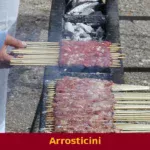
There is no nationally renowned food festival in Gessopalena, but the patron saint’s feast on 14 February, dedicated to Saint Valentine of Terni, traditionally includes a communal lunch featuring dishes from the local tradition, and in summer the pro loco organises food evenings with arrosticini — skewers of small-cut sheep meat grilled over charcoal — and pallotte cacio e ova, fritters of stale bread, eggs and pecorino fried in oil and served in tomato sauce. As for dining, the village has a few family-run trattorie where the menu changes with the day’s market and the season; it is good practice to phone ahead, especially outside the summer months, to check whether they are open.
When to visit Gessopalena: the best time of year
Gessopalena’s climate is that of a mid-mountain Apennine location, with cold winters — January lows frequently drop below zero — and mild summers, with highs rarely exceeding 30 degrees in July and August. Spring, from April to June, is the most suitable period for those who want to explore the ruins of the old village and the surrounding trails: daylight hours are long, temperatures pleasant, and vegetation in full bloom makes the views towards the Maiella especially sharp after the April rains. Autumn, particularly October and November, offers intense colours in the oak and beech woods on the surrounding hills, but the days grow shorter and fog can close off the view.
14 February, the feast of Saint Valentine, is the date that most defines the local calendar: the procession and solemn mass in the parish church draw both residents and former inhabitants who have emigrated elsewhere. In summer, between July and August, food-and-wine evenings and small musical events organised by the pro loco enliven the squares. Those who choose winter can combine a visit with a day on the ski slopes of Passo Lanciano-Maielletta, about 40 minutes away by car, or with snowshoe walks in the woods on the eastern flank of the Maiella. In every season it is advisable to check the condition of the paths leading to the old village, especially after heavy rainfall that can make the gypsum terrain slippery.
How to get to Gessopalena
By car, those coming from the A14 Adriatica motorway can exit at the Val di Sangro junction and follow the state road 652 Fondovalle Sangro westwards, then turn off onto the provincial road climbing to Gessopalena: the distance from the junction is about 25 kilometres, covered in around thirty minutes. From Rome the distance is approximately 210 kilometres via the A25 to Bussi sul Tirino and then through the Maiella’s internal road network, with a driving time of about two and a half hours. From Pescara it takes roughly sixty minutes along the SS 81 and provincial roads.
The nearest railway station is Archi-Perano on the Sangritana line, about 15 kilometres away; the connection to Gessopalena, however, requires a private vehicle or a local bus service. Abruzzo Airport in Pescara is approximately 75 kilometres away, reachable in just over an hour by car. Rome Fiumicino Airport is about 250 kilometres distant. Free parking is available in the village near the town hall, a starting point for visiting the centre and the ruins on foot.
Other villages to discover in Abruzzo
Visitors to Gessopalena are well placed to extend their exploration to other settlements in the province of Chieti that share the interplay between mountain landscape, wartime history and agro-pastoral traditions. About fifty kilometres to the south, climbing towards the ridge that separates the Sangro valley from the Trigno valley, you reach Castiglione Messer Marino, a mountain village at over one thousand metres of altitude, known for its wool-working tradition and the feast of Sant’Emidio in August, which keeps alive a collective ritual of very ancient origin. The road connecting the two centres crosses the upper Sangro area, through pastures, drove roads and beech forests: an itinerary that on its own is worth half a day of unhurried driving.
In the opposite direction, heading down towards the coast, the landscape changes quickly: clay hills replace gypsum ridges and the terrain opens into expanses of vineyards and olive groves. Frisa, a small settlement about 35 kilometres from Gessopalena, represents this transition between inland Abruzzo and the coastal strip. It too was severely scarred by the war — the Canadian War Cemetery on its territory commemorates the fighting along the Sangro in December 1943 — and Frisa allows visitors to complete a thematic itinerary on the memory of the Second World War in Abruzzo, linking the ruins of Gessopalena with the sites of the Battle of the Sangro. The two villages, different in altitude and vocation, together compose a coherent account of the relationship between community, territory and reconstruction.
In Abruzzo More villages to discover
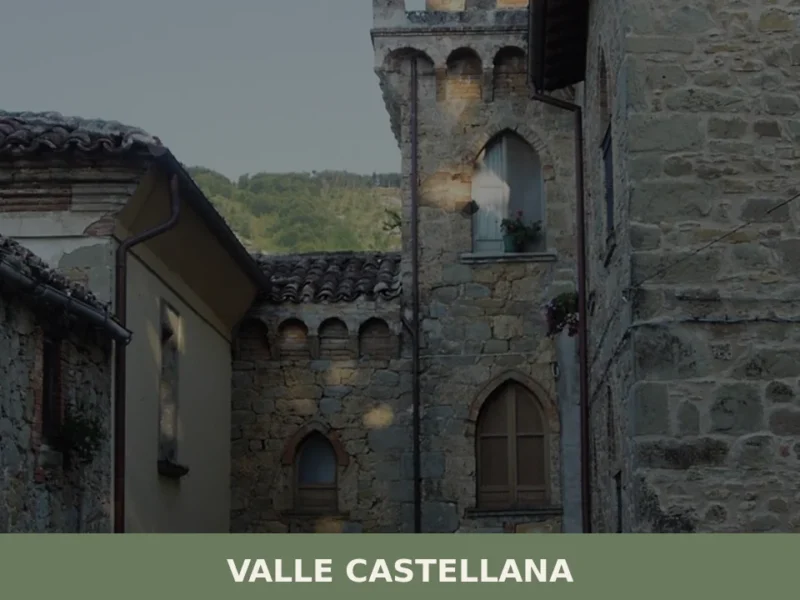
Valle Castellana
The municipality of Valle Castellana has 872 inhabitants spread across a territory fragmented into more than seventy hamlets, scattered between 300 and 1800 metres above sea level along the slopes of the Monti della Laga, in the province of Teramo. Anyone wondering what to see in Valle Castellana should be prepared for a rugged landscape, […]
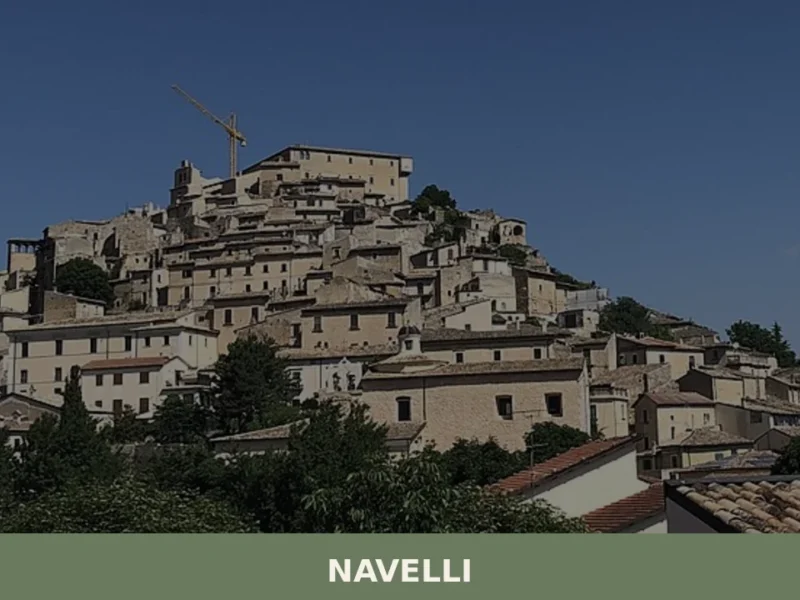
Navelli
Navelli has a current population of 537 and occupies a plateau at 760 metres above sea level on the homonymous highland, in the province of L’Aquila. Saffron cultivation in this area has been documented since at least the 13th century, when the spice became a trade commodity destined for the markets of Milan, Venice and […]
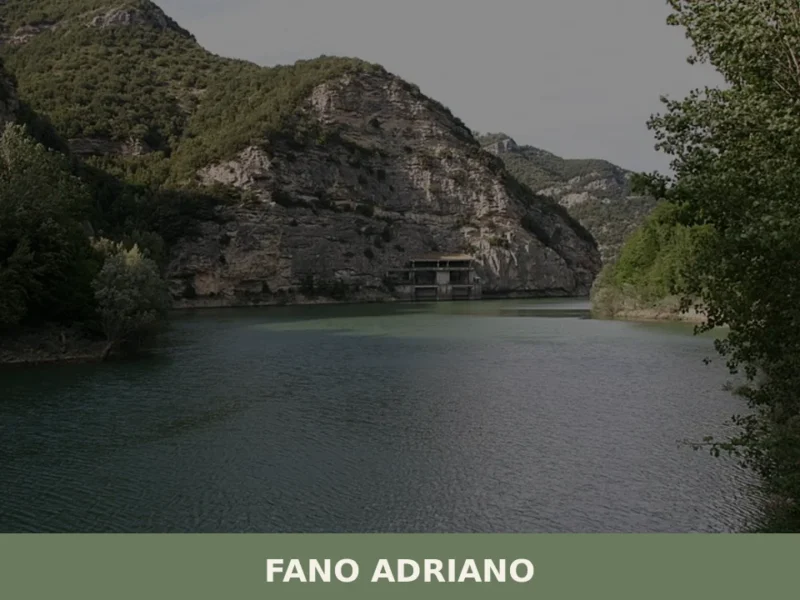
Fano Adriano
Fano Adriano, 750 meters above sea level in the province of Teramo, appears as an alpine settlement in the heart of mountainous Abruzzo, with a current population of 249 inhabitants. Its core, developed along the ridges leading to the Gran Sasso massif, documents centuries of human presence in a geographical context that has influenced its […]


📝 Incorrect information or updates?
Help us keep the Gessopalena page accurate and up to date.