


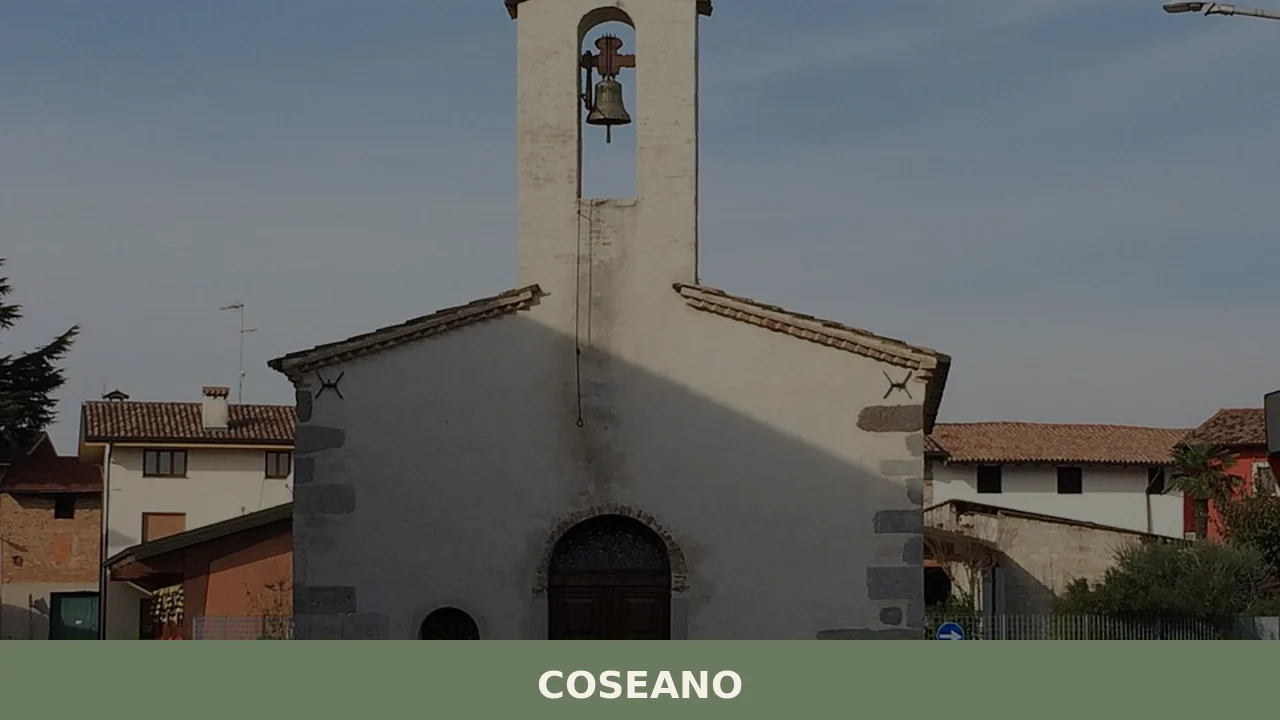
Coseano
 Plains
In 1275, a document from the Patriarchate of Aquileia records the name Cosean among the communities subject to feudal jurisdiction in the Udine hill area. Seven centuries later, the municipality retains its rural layout, spread across the main settlement and the hamlets of Cisterna, Barazzetto, Muscletto and Nogaredo di Coseano, scattered over flat terrain at […]
Discover Coseano
In 1275, a document from the Patriarchate of Aquileia records the name Cosean among the communities subject to feudal jurisdiction in the Udine hill area. Seven centuries later, the municipality retains its rural layout, spread across the main settlement and the hamlets of Cisterna, Barazzetto, Muscletto and Nogaredo di Coseano, scattered over flat terrain at 121 metres above sea level looking towards the Carnic Pre-Alps. Anyone wondering what to see in Coseano will find a network of votive churches, a castle documented since the 13th century, and fields of maize and vineyards that define the agricultural landscape of the central Friulian plain.
Today, 2,262 residents keep this community in the province of Udine alive.
History and origins of Coseano
The place name Coseano most likely derives from the Latin personal name Cossius or Cosseanus, following a naming pattern common in Friuli, where many place names trace back to the owner of the agricultural estate in Roman times. The suffix -anum indicates land ownership, as is the case for dozens of other settlements on the Udine plain. As early as late antiquity, the area was part of the communication routes between Aquileia and Noricum: its position along the middle course of the Corno stream facilitated the transit of goods and people towards the eastern Alpine passes.
During the Middle Ages, Coseano came under the influence of the Patriarchate of Aquileia, a temporal and spiritual power that governed much of Friuli until 1420. The castle of Coseano, mentioned in patriarchal documents from the 13th century, served as a garrison to control the surrounding territory. With the Venetian conquest of Friuli in 1420, the village passed under the Serenissima and experienced a long period of administrative stability. The feudal structure was gradually dismantled, but local noble families retained rights and land holdings until the fall of the Republic of Venice in 1797. The arrival of Napoleon, followed by the transition to the Habsburg Empire, brought further territorial reorganisations that also affected Coseano.
With the annexation of Friuli to the Kingdom of Italy in 1866, the municipality took on its current administrative configuration, encompassing the hamlets that still make up its residential fabric today.
During the First World War, the proximity to the Isonzo front led to the partial evacuation of the population and the passage of troops, especially after the rout of Caporetto in October 1917. In the post-Second World War period, emigration towards the industrial areas of the northern Triangle significantly reduced the population, which dropped from around 3,500 residents in the 1950s to the current 2,262 inhabitants. The Friuli earthquake of 6 May 1976, with its epicentre in the foothill area, also caused damage in Coseano, making restoration work necessary on several religious and civic buildings. The reconstruction strengthened the community’s sense of belonging and led to the recovery of historic structures that now form the village’s visitable heritage.
What to see in Coseano: 5 essential attractions
1. Castle of Coseano
Located on a gentle rise in the centre of the main settlement, the Castle of Coseano is documented from the 13th century in the records of the Patriarchate of Aquileia. The original structure served defensive and administrative functions, controlling the communication routes between the Udine plain and the pre-Alpine valleys. Over the centuries it underwent significant transformations, evolving from a medieval fortress into a noble residence. Portions of the oldest walls remain visible in the lower section of the building, while its current form reflects later modifications from the Venetian period and the 19th century. The position offers a privileged vantage point over the surrounding countryside, with views that on clear days reach the peaks of the Carnic Pre-Alps.
2. Parish Church of San Giacomo Apostolo
Dedicated to the patron saint of the municipality, Saint James the Greater, the parish church stands in the central core of Coseano. The current building is the result of alterations carried out at different times, with a layout recalling the late-Renaissance forms typical of Friulian country churches. Inside, it preserves liturgical furnishings and paintings by local workshops, including altarpieces attributed to studios active in the Diocese of Udine between the 17th and 18th centuries. The sober façade, punctuated by pilaster strips, overlooks a square that serves as a gathering point for the community, especially during the patron saint’s feast day on 25 July. Following the 1976 earthquake, the structure underwent a thorough programme of structural consolidation.
3. Church of Sant’Andrea in Cisterna
In the hamlet of Cisterna, about two kilometres from the main settlement, the Church of Sant’Andrea is one of the most interesting sacred buildings in the municipality. Its foundation dates to the medieval period, although its current appearance is the result of restorations and expansions carried out in later centuries.
The single-nave interior preserves fragmentary frescoes that some scholars date to between the 14th and 15th centuries, connected to the Friulian painting tradition influenced by Aquileian models. The church’s position, at the edge of the small settlement of Cisterna, confirms the typical distribution of rural parish churches in the territory between the Tagliamento and the Torre rivers. The building deserves attention for its carved stone portal and its square-plan bell tower.
4. Villa Gallici Deciani in Cisterna
Among the most notable civic buildings in the municipal territory, Villa Gallici Deciani stands out — a noble residence linked to one of the most prominent families in Friulian history. The complex, which includes the main house, agricultural outbuildings and a large park, documents the Venetian villa model adapted to the Friulian countryside. The Deciani family — the most famous member being Tiberio Deciani, a 16th-century jurist active at the University of Padua — played a significant role in the political and cultural life of the region. The villa is a concrete example of how the Venetian economic system took root in the countryside through the direct management of landed estates. Access to the park and interiors is subject to availability, as it is private property.
5. Rural landscape and cycling routes of the central plain
Beyond the built-up area, the territory of Coseano offers a cross-section of the central Friulian plain still legible in its traditional agrarian structure. Maize fields, rows of vines, drainage ditches and irrigation channels form a grid that follows the land division of Venetian origin. Several cycling routes and unpaved roads allow visitors to cross this flat landscape at a constant elevation, connecting Coseano to its hamlets and neighbouring municipalities. The route along the Corno stream is particularly suited to easy cycling excursions, with virtually no elevation change. In spring and autumn, the raking light of early morning brings out the colours of the crops, creating ideal conditions for landscape photography.
What to eat in Coseano: local cuisine and regional products
The cuisine of Coseano is a direct expression of the Friulian farming tradition, a repertoire built over centuries around the availability of plain-grown harvests and the dietary needs of a life governed by agricultural rhythms. Maize, introduced to Friuli during the 17th century, revolutionised the local diet as it did across the rest of the region, becoming the basis for everyday preparations. The influence of Venetian rule can be read in the use of spices and the presence of baccalà, while the border with the German-speaking area left traces in sauerkraut-based dishes and meat smoking techniques.
At the centre of the Friulian table one often finds polenta, prepared with stone-ground maize flour and cooked slowly in a copper pot.
In Coseano, as across much of the Udine plain, polenta accompanies aged cheeses, mushrooms, game and the traditional frico, a dish made with Montasio cheese melted with potatoes and butter, crisp on the outside and soft on the inside. Musét, a spiced pork sausage that is boiled before serving, is traditionally eaten during the winter months, often paired with brovada — turnips macerated in grape marc, then grated and slow-cooked. These preparations are tied to the cold months, when the slaughter of the pig provided protein for the entire winter.
Friuli Venezia Giulia boasts several products with official recognition, and some of these also appear on the table in Coseano. Montasio DOP, a cooked-curd cheese produced from cow’s milk according to specifications rooted in the dairy traditions of the Carnic and Julian mountain pastures, is the key ingredient in frico and is also eaten sliced as an appetiser or main course. Prosciutto di San Daniele DOP, aged in the nearby town of San Daniele del Friuli — roughly fifteen kilometres away as the crow flies — is perhaps the best-known product of the area, and its presence in local dishes is constant, from crostini to summer pairings with melon or figs.
During the summer months, the hamlets of the municipality host village festivals where these specialities can be sampled.
The patron saint’s feast on 25 July, dedicated to Saint James the Greater, traditionally features food stalls serving dishes from the local kitchen. In the autumn months, village festivals focus on harvest products: pumpkins, beans, potatoes and grapes. For purchasing fresh produce, the weekly markets of nearby towns — Codroipo, San Daniele del Friuli, Fagagna — offer stalls with locally produced cheeses, cured meats, fruit and vegetables.
The territory around Coseano falls within the production area of the Friuli Colli Orientali DOC and the Friuli Grave DOC, designations that include white wines such as Friulano (once called Tocai), Pinot Grigio and Sauvignon, as well as reds like Refosco dal Peduncolo Rosso and Merlot. The wineries in the area, often family-run, practise direct sales, making it possible to combine a visit to the village with a tasting of wines produced just a few kilometres away. Ramandolo DOCG, a passito wine made from Verduzzo Friulano grapes, represents one of the region’s finest wine-making achievements, produced in the foothill zone not far from Coseano.
When to visit Coseano: the best time of year
Spring, from April to June, is the most favourable period to visit Coseano.
Temperatures are mild — between 15 and 25 degrees — and the countryside is in full growth, with green fields and flowering vine rows. It is the ideal season for cycling excursions along the routes of the plain and for visiting the villas and churches, without the heat that can make summer travel tiring. Summer brings the patron saint’s feast on 25 July, which represents the liveliest moment for the village, with events in the square and outdoor dining. July and August, however, often see temperatures exceeding 30 degrees and the high humidity typical of the Friulian plain.
Autumn, from September to November, offers a second favourable window: village festivals, grape harvests and the maize harvest paint a lively picture of agricultural life. October is the month when the landscape takes on distinctive tones, as the vineyard leaves turn yellow and red. Winter is the quietest period, with short days and frequent lowland fog, but the winter cuisine — with musét, brovada and polenta served by the fogolâr (the traditional Friulian hearth) — provides a solid gastronomic reason for a visit.
Those seeking calm and direct contact with the local community will find in the winter months a more intimate and unhurried dimension.
How to get to Coseano
Coseano is accessible by car from the A23 Palmanova-Tarvisio motorway, exiting at the Udine Nord junction and continuing westward along the regional road towards Codroipo for about 15 kilometres. From the city of Udine, the distance is approximately 20 kilometres, reachable in 25 minutes. From Trieste, allow around 90 minutes following the A4 to Palmanova and then the A23 northward. From Venice, the motorway route via the A4 and A23 takes about two hours for the total 150 kilometres.
The nearest railway station is Codroipo, on the Venice-Udine-Tarvisio line, located about 8 kilometres from the centre of Coseano. From Codroipo it is possible to reach the village by bus on the local public transport service run by TPL FVG, although frequencies are limited and it is advisable to check timetables in advance. The nearest airport is Trieste Airport at Ronchi dei Legionari, about 70 kilometres away and reachable in one hour by car.
Venice Marco Polo Airport, approximately 140 kilometres away, is an alternative for those arriving from further afield. The official website of the Municipality of Coseano provides updated directions on how to get there.
Other villages to explore in Friuli Venezia Giulia
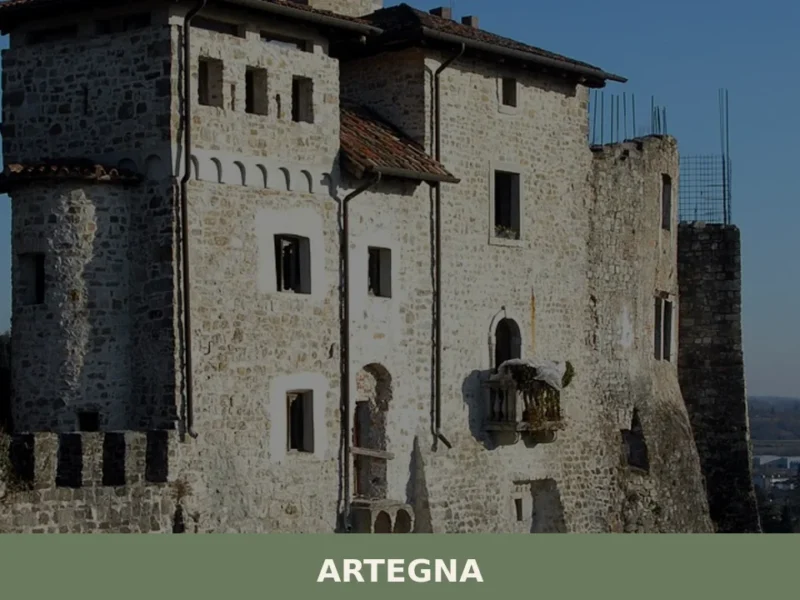
Visitors to Coseano can build an itinerary that includes other centres in the region, all reachable within short travel times. About 35 kilometres to the north-east, Artegna overlooks the Friulian plain from the first ridges of the Julian Pre-Alps: its castle, restored after the 1976 earthquake, commands a panorama stretching from the plain to the mountains. The distance from Coseano can be covered in about 40 minutes by car, making a combined visit feasible within a single day. Artegna offers an interesting contrast to the lowland setting of Coseano, with a higher altitude and a markedly defensive architectural profile.
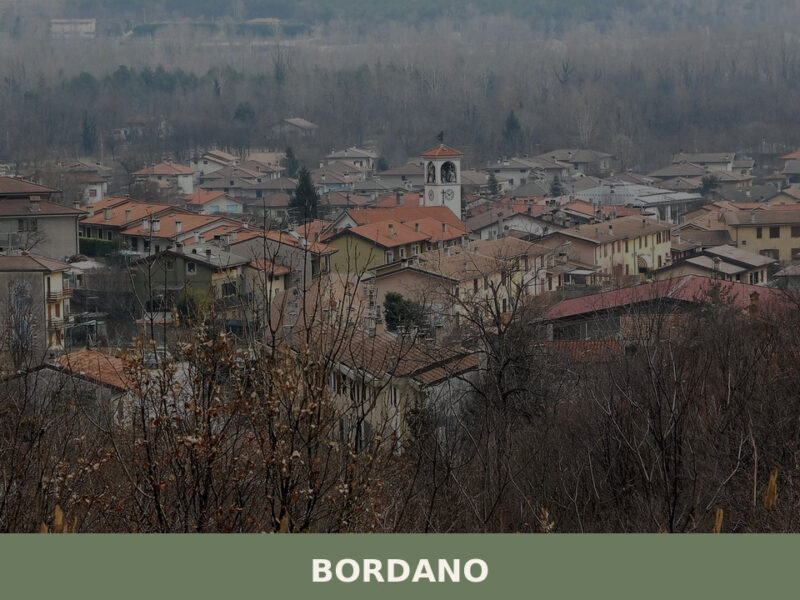
Further north, about 45 kilometres away, Bordano is known as the village of butterflies thanks to the Casa delle Farfalle, a facility housing tropical and native lepidoptera in a controlled environment.
The village, situated on the shores of Lake Cavazzo, combines naturalistic interest with landscape appeal, offering opportunities for lakeside and mountain excursions. Linking Coseano, Artegna and Bordano in a two- or three-day route allows travellers to cross the main environments of Friuli — plain, hill and mountain — observing how architecture, cuisine and traditions change noticeably within just a few kilometres. For a deeper understanding of the area, the page dedicated to Coseano on Wikipedia provides additional historical and bibliographic references.
Frequently asked questions about Coseano
What is the best time to visit Coseano?
Spring (April–May) and early autumn (September–October) offer the most pleasant conditions for exploring Coseano: mild temperatures, clear skies and the raking light that best reveals the colours of the Friulian plain. The patron saint's feast of San Giacomo Apostolo on 25 July is the village's most important annual event, with community celebrations, food stalls serving local specialities and a lively atmosphere across the central square. Summer village festivals in the hamlets also provide good opportunities to sample traditional cuisine in an informal setting.
What are the historical origins of Coseano?
The place name Coseano derives from the Latin personal name Cossius or Cosseanus, following the common Friulian pattern of settlements named after the owner of a Roman agricultural estate, with the suffix -anum indicating land possession. The village is documented as Cosean in a 1275 Patriarchate of Aquileia record. It passed under Venetian rule in 1420, then to the Habsburg Empire after 1797, and was finally annexed to the Kingdom of Italy in 1866. The 1976 Friuli earthquake caused structural damage requiring significant restoration work.
What to see in Coseano? Main monuments and landmarks
The main sites include: the Castle of Coseano, documented since the 13th century and located on a central rise with views towards the Carnic Pre-Alps; the Parish Church of San Giacomo Apostolo, featuring 17th–18th century altarpieces and a recently consolidated structure; the Church of Sant'Andrea in Cisterna, with fragmentary 14th–15th century frescoes and a carved stone portal; and Villa Gallici Deciani in Cisterna, a noble Venetian-style residence linked to jurist Tiberio Deciani. The villa is private property — access to park and interiors depends on availability.
What are the main natural or scenic attractions of Coseano?
The territory of Coseano preserves a largely intact example of the central Friulian agrarian plain, with maize fields, vineyards, drainage ditches and land divisions of Venetian origin. The route along the Corno stream is particularly suited to easy cycling with virtually no elevation change, connecting the main settlement to the hamlets of Cisterna, Barazzetto, Muscletto and Nogaredo di Coseano. Several unpaved roads link Coseano to neighbouring municipalities across flat terrain, offering an accessible cross-section of the traditional rural landscape at 121 metres above sea level.
Where to take the best photos in Coseano?
The most rewarding photographic spots in Coseano are the countryside surrounding the Corno stream, where spring and autumn morning light creates strong contrasts across maize fields and vine rows, and the elevated position of the Castle of Coseano, which offers a clear vantage point over the plain with the Carnic Pre-Alps visible on clear days. The square in front of the Parish Church of San Giacomo Apostolo provides classic village architecture, while the medieval portal and bell tower of the Church of Sant'Andrea in Cisterna offer detailed architectural subjects.
Are there museums, churches or historic buildings to visit in Coseano?
Coseano has several documented historic buildings worth visiting. The Parish Church of San Giacomo Apostolo in the village centre preserves 17th–18th century liturgical paintings and underwent structural consolidation after the 1976 earthquake. The Church of Sant'Andrea in Cisterna contains fragmentary medieval frescoes attributed to the 14th–15th century Friulian tradition. The Castle of Coseano retains portions of its original medieval walls. Villa Gallici Deciani in Cisterna, connected to the Deciani noble family, is private property; access to its park and interiors is subject to availability. Specific opening hours are not publicly listed.
What can you do in Coseano? Activities and experiences
Coseano is well suited to slow, low-impact tourism. Cycling along the Corno stream and the network of unpaved rural roads connecting the hamlets requires no special equipment and suits all fitness levels. The flat terrain makes the area ideal for landscape photography, especially in spring and autumn. The patron saint's feast on 25 July and summer village festivals in the hamlets offer opportunities to taste local cuisine including frico, polenta, musét with brovada, and Prosciutto di San Daniele DOP, produced roughly fifteen kilometres away in San Daniele del Friuli.
Who is Coseano suitable for? Families, couples, hikers, solo travellers?
Coseano is best suited to visitors seeking a quiet, authentic experience of rural Friuli away from mass tourism. The flat terrain and easy cycling routes make it accessible for families with children and older travellers. Couples interested in food, wine and slow travel will appreciate the proximity to San Daniele del Friuli and the village festival atmosphere on feast days. History enthusiasts will find value in the castle, medieval churches and the legacy of Tiberio Deciani. It is not a destination for challenging hiking or nightlife, but rewards those drawn to landscape, heritage and local gastronomy.
What to eat in Coseano? Local products and specialties
The table in Coseano reflects the Friulian farming tradition. Key dishes include frico — Montasio DOP cheese melted with potatoes and butter — polenta with stone-ground maize flour, musét (spiced boiled pork sausage) paired with brovada (turnips macerated in grape marc). Recognised local products include Montasio DOP cheese and Prosciutto di San Daniele DOP, produced in San Daniele del Friuli approximately fifteen kilometres away. These specialities can be sampled at the patron saint's feast on 25 July and at the summer village festivals held in the hamlets throughout the warm months.
Nearby Villages near Coseano
In Friuli-Venezia Giulia More villages to discover
Bordano
 Hills
Hills
Bordano, the Village of Butterflies in Friuli Venezia Giulia, pairs over 100 painted murals with genuine alpine biodiversity. A guide to its trails, lake, food, and art.
Arba
Plains
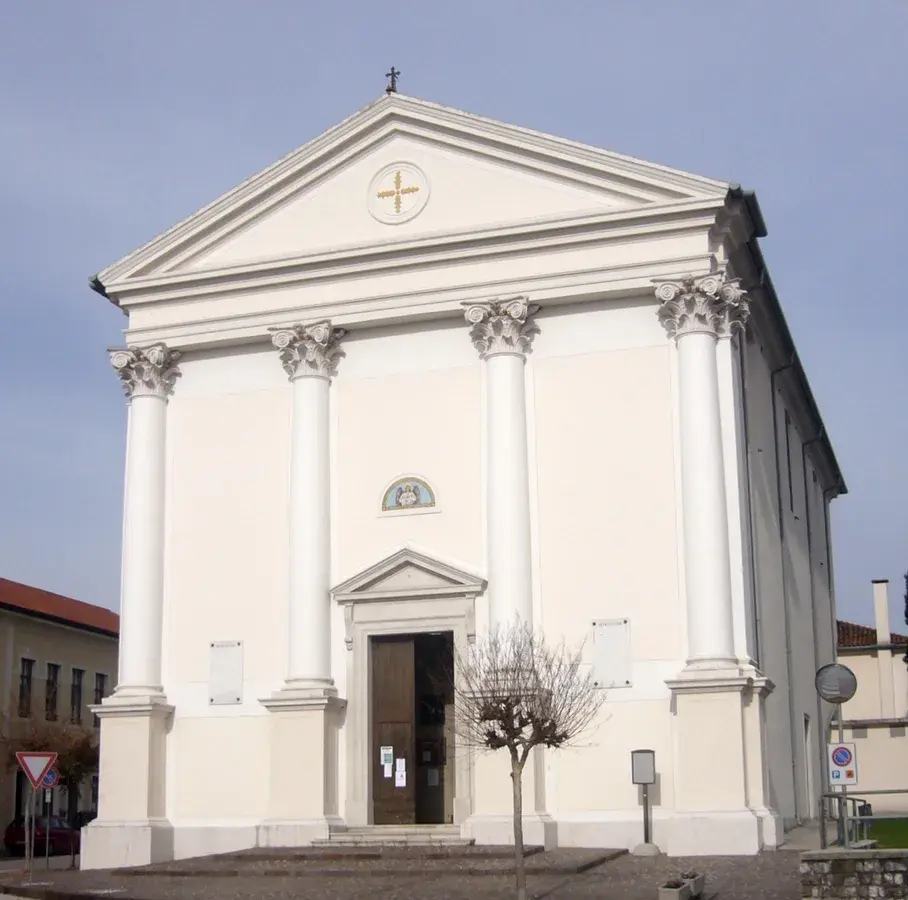
What to see in Arba: Explore Italy's Arba, a village at 210 meters altitude. Discover its historic church and vibrant patron saint festival on September 29. Read more.
Basiliano
Plains
In 1309, a notarial deed drawn up in Udine recorded the transfer of certain feudal rights relating to the territory of Basiliano, confirming the existence of a settlement already organised along the route connecting Udine to Codroipo. Today that route partly coincides with regional road 464, and anyone travelling along it crosses a plain where […]
Chiopris-Viscone
Plains
Two hamlets, two bell towers, two patron saints — and a single road running through both, the provincial route from Palmanova towards the Slovenian border. Anyone arriving in Chiopris-Viscone for the first time immediately notices this duality: the municipality, created in 1928 through the administrative merger of two distinct settlements, still retains a twin-centre layout, […]
Camino al Tagliamento
Plains
A guide to Camino al Tagliamento in Friuli Venezia Giulia — its medieval parish church, the Tagliamento riverbed, rural hamlets, and Friulian food traditions.
Cavasso Nuovo
Hills
What to see in Cavasso Nuovo, Italy? Explore this Friuli-Venezia Giulia village at 280 m (919 ft) altitude. Discover its 15th-century church and the birthplace of Louis Francescon.
Carlino
Plains
The first thing you notice arriving in Carlino is the industrious silence of the Friulian plain, broken only by the rustle of water flowing through the drainage canals that cross the municipal territory. We are in the Bassa Friulana, province of Udine, just a few kilometres from the Marano Lagoon, in a land where agriculture […]
Latisana
Plains
Latisana shaped medieval trade along the Tagliamento River for centuries. Visit for its Venetian architecture, ancient port history, and the lagoon at Aprilia Marittima.
Buja
Hills
In 1976, two earthquakes devastated Friuli, and Buja was among the hardest-hit municipalities: more than seventy per cent of its buildings suffered serious damage. The reconstruction, which lasted nearly two decades, reshaped the appearance of this hilltop settlement without erasing the scattered layout of hamlets and small villages that has defined it since the Middle […]
Buttrio
Plains
In 1031 a document issued by Emperor Conrad II mentioned for the first time the name Butrium, referring to a hilltop settlement where grapevines had already been cultivated for centuries. Today that nucleus has become a municipality of 4,040 inhabitants in the province of Udine, standing at 79 metres above sea level and surrounded by […]
🏡 Know Coseano better than we do?
If you’re a local or have been there, your knowledge matters: add what’s missing or fix a detail on this page.