


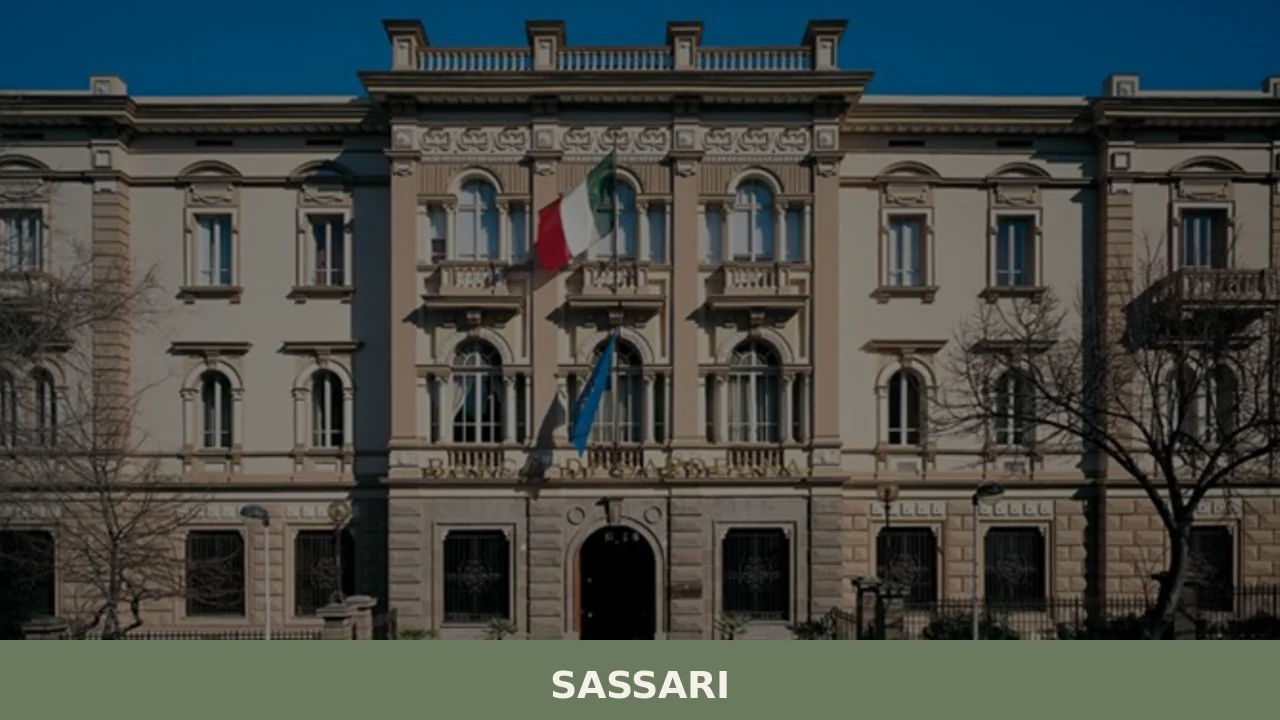
Sassari
Discover Sassari, a captivating village in Sardegna, Italy. Explore its rich history, vibrant culture, stunning architecture, and authentic Italian charm.
Discover Sassari
Sassari is Sardinia’s second-largest city by population, with 125,672 inhabitants, situated at 225 metres above sea level in the north of the island. Those wondering what to see in Sassari will find an urban centre marked by dense layers of history, from the giudicale period through Aragonese rule to the modern era.
The historic centre preserves a cathedral of national significance, one of Sardinia’s most important museums, and an urban fabric that documents centuries of political and cultural change.
The city is the capital of the province of the same name and serves as a reference point for a wide territory that includes villages, coastal landscapes and inland areas of considerable interest.
History and Origins of Sassari
The origins of Sassari are tied to the gradual decline of the Roman port of Turris Libisonis — present-day Porto Torres — during the early Middle Ages.
As port infrastructure deteriorated and coastal areas became increasingly unsafe, the population moved progressively inland, forming a more sheltered settlement. The name “Sassari” appears in documentary sources from the twelfth century onwards, in Latinised forms such as Sassari or Saxari, likely derived from a Sardinian term referring to rocky ground or the stony nature of the terrain on which the settlement developed.
During the thirteenth century, Sassari took on the character of an autonomous commune and drew up its own statutes.
The Sassari Statutes, written in the Logudorese vernacular around 1316, are among the oldest and most significant medieval legal documents in Sardinia, demonstrating a level of civic organisation that was advanced for the time. The city was contested between the maritime republics of Pisa and Genoa, both of which exercised influence over it at various points during the thirteenth and fourteenth centuries.
The Genoese, in particular through the Doria family, maintained considerable control over the city before the arrival of the Crown of Aragon.
With the Aragonese conquest, begun in 1323 and consolidated throughout the fourteenth and fifteenth centuries, Sassari came under the Spanish Crown, which profoundly shaped the city’s urban, religious and cultural identity.
In 1562, the University of Sassari was founded — one of the oldest in Italy — through the initiative of the Jesuits and with the support of local authorities.
This institution confirmed Sassari’s role as the intellectual centre of northern Sardinia. In subsequent centuries the city passed through Savoyard rule, Italian unification and the twentieth century, emerging as a primary administrative, cultural and commercial hub for the entire island. This historical trajectory shares certain parallels with other northern Sardinian centres such as Aggius, which was also shaped by medieval rule and a strong Logudorese identity.
What to See in Sassari: Main Attractions
Cathedral of San Nicola
The Cathedral of San Nicola is Sassari’s principal religious monument, located in the heart of the historic centre on Piazza del Duomo.
Its façade in Spanish Baroque style, completed in the eighteenth century, is regarded as one of the most elaborate examples of this architectural language in Sardinia: the entire surface is covered with sculptural decoration including statues, bas-reliefs and floral motifs.
The original structural layout dates to the thirteenth and fourteenth centuries, when it was built in Romanesque-Gothic forms. Inside, the cathedral preserves paintings and furnishings of considerable quality.
It is dedicated to San Nicola di Bari, patron saint of the city, whose feast day falls on 6 December.
Museo Nazionale Sanna
The Museo Nazionale Giovanni Antonio Sanna is the most important museum in northern Sardinia and one of the most significant on the island.
Founded in the late nineteenth century and named after Senator Giovanni Antonio Sanna, who donated his collection to the state, the museum holds artefacts spanning an extensive chronological range: from the Nuragic prehistoric period through the Phoenician-Punic, Roman, medieval and modern eras. The Nuragic section is particularly notable, featuring bronze figurines, weapons and ceramics. The museum also houses an art gallery and an ethnographic section dedicated to traditional Sardinian costumes.
It is located on Via Roma, in a nineteenth-century building.
Piazza d’Italia
Piazza d’Italia is Sassari’s civic centrepiece, created in the second half of the nineteenth century as part of the city’s urban expansion plan in the post-unification era. At its centre stands a bronze statue of Vittorio Emanuele II, inaugurated in 1899. The square is lined with neoclassical and Umbertine-era buildings, including the Palazzo della Provincia.
It forms the connecting point between the historic city and the nineteenth-century expansion districts. Visitors to Sassari will find this square the most representative expression of the city’s modern civic identity, and a natural starting point for exploring the centre.
Fontana di Rosello
The Fontana di Rosello is Sassari’s most recognisable symbol and one of the city’s most photographed monuments.
Built in black and white marble in 1606 in late Renaissance style with Spanish and Genoese influences, it stands near the Rosello district, outside the medieval walls.
The structure has multiple tiers: the lower section features twelve spouts representing the months of the year, while the upper section is crowned by a statue of San Gavino, a Sardinian martyr. The fountain was originally the city’s main public water source and continues to carry strong symbolic importance for the people of Sassari.
Church of Santa Maria di Betlem
The Church of Santa Maria di Betlem is one of the oldest religious buildings in Sassari, with an original layout dating to the thirteenth century.
It stands in the square of the same name, in the popular Betlem district. The Romanesque-Gothic façade retains architectural elements of considerable interest, despite later alterations.
Inside, the church houses the Candelieri — large votive wooden structures carried in procession during the Faradda de li Candareri, the descent of the Candelieri, held every year on 14 August.
This celebration is inscribed on the UNESCO heritage list and makes the church an essential point of reference for anyone seeking to understand what to see in Sassari within the context of its living traditions.
Traditional Cuisine and Local Products of Sassari
Sassari’s cuisine reflects the city’s geographical position, at the crossroads between the influences of Sardinia’s agropastoral interior and the coastal traditions of the north of the island.
Proximity to Porto Torres and the Nurra plain has brought fish products to the table, while historical ties with Corsica and the maritime cities of Genoa and Pisa have left their mark on baked goods and the preparation of legumes.
Sassarese cooking differs from Cagliari’s culinary tradition partly through its own gastronomic vocabulary, drawing on Sassarese, a Romance dialect distinct from Logudorese Sardinian.
Among the most documented dishes of the local tradition is farinata, known in dialect as fainè sassarese: a savoury flat cake made from chickpea flour, water, olive oil and salt, baked in copper pans. Its presence in Sassari is recorded from at least the nineteenth century and points to the city’s Genoese influence. Another dish firmly rooted in local tradition is zuppa gallurese, widespread across northern Sardinia, made with stale bread, meat broth and aged pecorino cheese, gratinated in the oven.
Seadas, or sebadas — fried pastries filled with slightly acidic fresh cheese and drizzled with honey — also feature in Sassarese pastry-making, though they are found throughout Sardinia.
The provincial territory produces sheep’s milk cheeses of varying maturation, including pecorino sardo in its fresh and aged forms, made using traditional methods documented across the island.
Extra-virgin Sardinian olive oil is another product widely present in local cooking, used in main dishes as well as in the preparation of fainè.
No DOP or IGP certifications attributable exclusively to the municipal territory of Sassari were found in the sources consulted; reference is therefore made to provincial agropastoral production in general terms.
Those interested in similar local products may also consider visiting Benetutti, in the Sassari hinterland, where cheesemaking traditions are well documented.
The city is home to a historic civic market, the Mercato Civico di Sassari, where it is possible to find fresh local produce: vegetables, cheeses, traditional breads such as civraxiu and spianata sarda, cured meats and local sweets. The market offers a direct window onto the eating habits of the city and its province.
In autumn, as the season of festivals and food fairs in the surrounding municipalities gets under way, the gastronomic offer expands further, with events dedicated to mushrooms, legumes and wines from the Sassari hinterland.
Festivals, Events and Traditions of Sassari
Sassari’s most celebrated festival is the Faradda de li Candareri, the descent of the Candelieri, held every year on 14 August. The event is medieval in origin: tradition traces the vow made by the artisan guilds to the Madonna of the Assumption back to a plague epidemic in the sixteenth century.
During the procession, representatives of the trade corporations carry enormous wooden candelieri on their shoulders — structures several metres tall and weighing up to four hundred kilograms — through the streets of the historic centre to the church of Santa Maria di Betlem.
The Faradda de li Candareri was inscribed in 2013 on the UNESCO Representative List of the Intangible Cultural Heritage of Humanity, together with similar celebrations held in other Sardinian municipalities.
The patron saint’s feast in honour of San Nicola di Bari falls on 6 December, with religious services in the cathedral, while a further celebration in honour of the patron saint takes place on the last Sunday of May, with a procession and broad participation from the local community.
Sassari also hosts the Cavalcata Sarda, one of the largest parades of traditional costumes in Sardinia, usually held on the second Sunday of May. The event brings together folk groups from dozens of municipalities across the island, who parade in traditional dress through the streets of the city centre.
The Cavalcata Sarda has been documented since the nineteenth century and is a key event for the promotion of Sardinia’s ethnographic heritage.
On the cultural front, the city organises theatrical seasons, university events and festivals linked to Sardinian music and literature throughout the year, reinforcing Sassari’s role as the cultural hub of northern Sardinia.
When to Visit Sassari and How to Get There
The best time to visit Sassari runs from spring through to early autumn.
Spring, between April and June, offers mild temperatures and a city not yet affected by summer crowds, with the Cavalcata Sarda in May as a particular draw. Summer, though hot, concentrates most cultural events, with the Faradda de li Candareri in mid-August as the highlight of the season. Those who prefer to avoid the heat can opt for September and October, when temperatures drop to more comfortable levels and the gastronomic offer in the surrounding area reaches its peak with the autumn festival season.
Winter is mild by continental standards, though some facilities and activities operate on a reduced basis.
Sassari is well connected to Sardinia’s main transport routes.
By car, the city is reached via the Strada Statale 131 Carlo Felice, the island’s main road artery linking Cagliari to Porto Torres through Sassari. The distance from Cagliari is approximately 210 km. The nearest airport is Alghero-Fertilia (Aeroporto Riviera del Corallo), around 30 km from the city, with domestic and international connections.
The Olbia Costa Smeralda airport is approximately 130 km away. For those travelling by train, Sassari station is served by the Trenitalia network with connections to Cagliari, Porto Torres and Olbia.
Further official information about the city is available on the official website of the Municipality of Sassari.
Those planning to explore the surrounding area will find a number of worthwhile destinations near Sassari.
The village of Banari, in the Meilogu district, is a short distance away and preserves a rural landscape quite different from the urban environment of Sassari, with its country church and hilly terrain. Further east, Alà dei Sardi is a further stop for those wishing to explore the Sardinian interior, offering a territory rich in Nuragic remains and a well-documented craft tradition.
In Sardinia More villages to discover
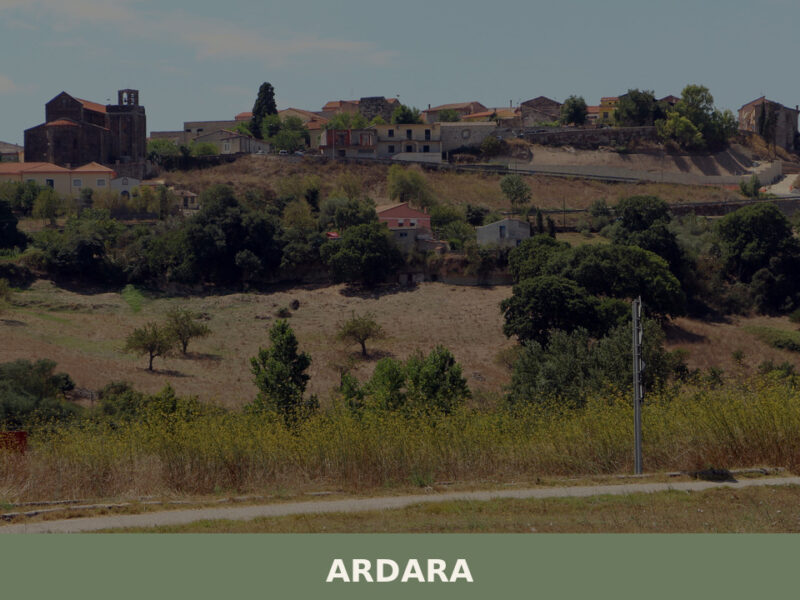
Ardara
Morning light strikes the dark basalt walls of an old church, turning the stone the colour of wet coal. A rooster calls from somewhere behind the municipio. Ardara sits on a low rise at 296 metres above sea level in the province of Sassari, a village of 729 people that once served as the capital […]
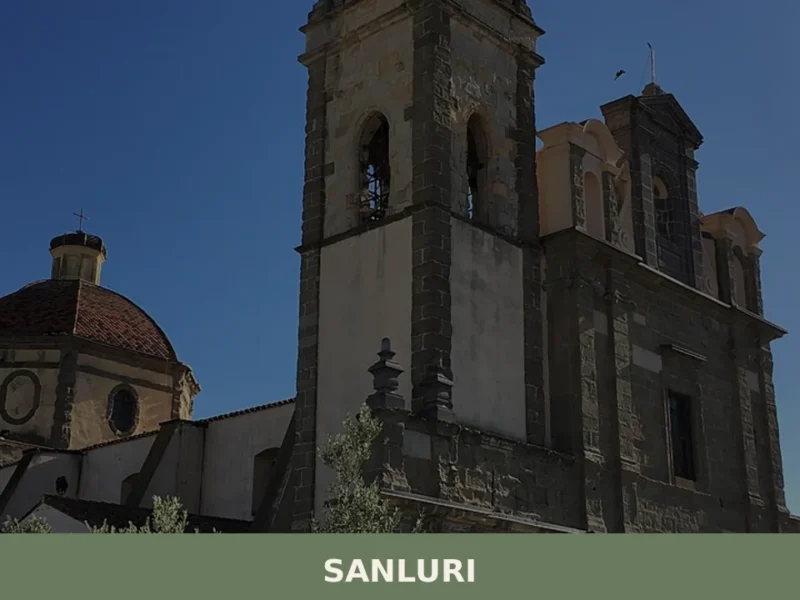
Sanluri
Discover Sanluri, a charming village in Sardegna, Italy, rich in history, culture, and stunning landscapes. Plan your visit today!
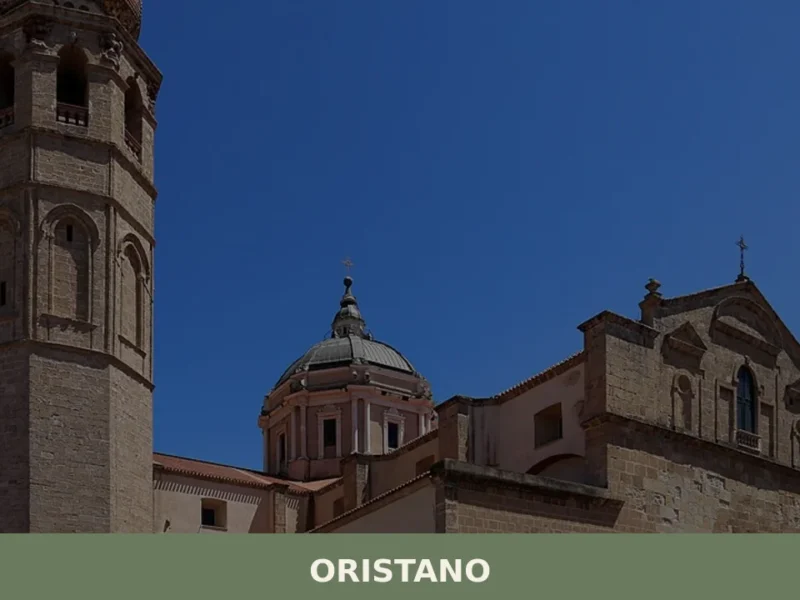
Oristano
What to see in Oristano: 31,095 inhabitants, medieval Giudicato history, the Sartiglia festival and Cabras bottarga. Discover towers, museums and the cathedral. Plan your visit now.

📝 Incorrect information or updates?
Help us keep the Sassari page accurate and up to date.