


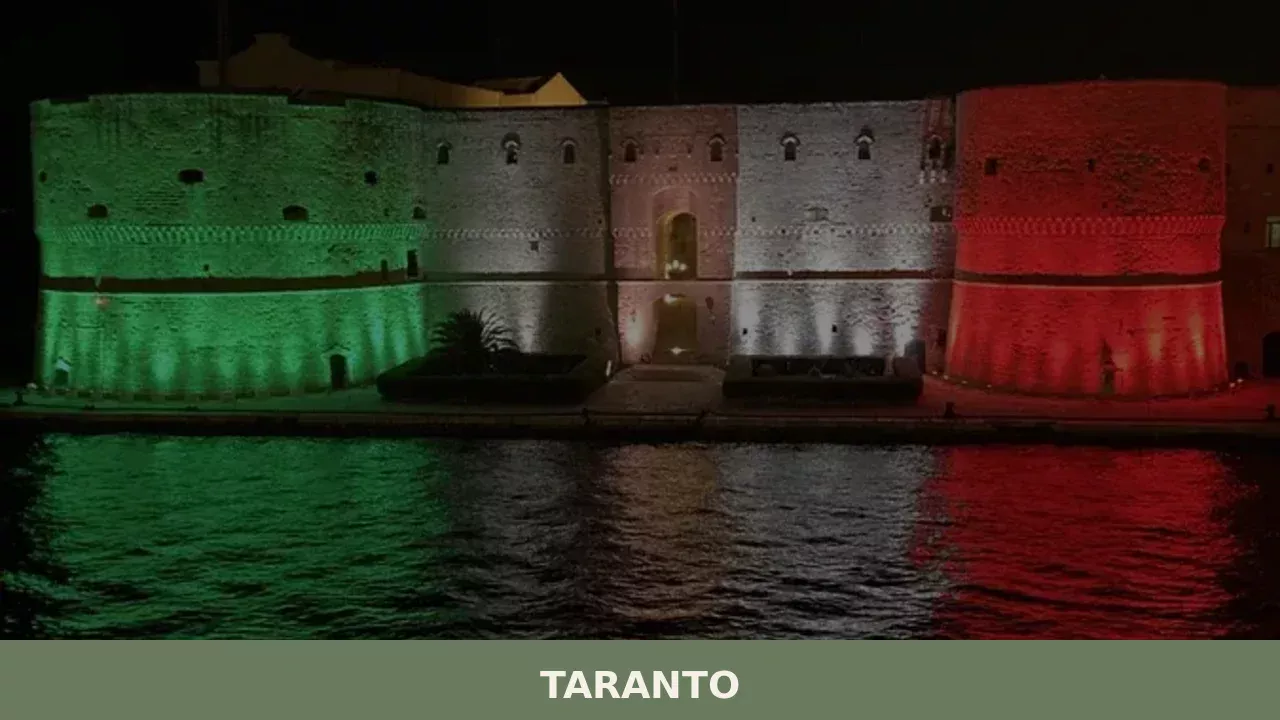
Taranto
In 706 BC, a group of Spartan colonists led by Phalanthus landed along the Ionian coast of Puglia and founded Taras, one of the most powerful poleis of Magna Graecia. Today that same city — Taranto — stretches across two seas, the Mar Grande and the Mar Piccolo, connected by a navigable canal that cuts […]
Discover Taranto
In 706 BC, a group of Spartan colonists led by Phalanthus landed along the Ionian coast of Puglia and founded Taras, one of the most powerful poleis of Magna Graecia. Today that same city — Taranto — stretches across two seas, the Mar Grande and the Mar Piccolo, connected by a navigable canal that cuts the urban core in two. The Ponte Girevole (Swing Bridge), inaugurated in 1887 and rebuilt in 1958, still rotates to let military vessels through on their way to the Arsenal. Anyone wondering what to see in Taranto should be ready for dense layers of history: Doric temples beneath eighteenth-century palazzi, underground chambers carved into calcarenite rock, one of Italy’s most important archaeological museums, and a seafront looking out toward the Cheradi Islands.
History and origins of Taranto
The name Taranto derives from the ancient Greek Τάρας (Taras), a mythological figure linked to Poseidon and the nymph Satyria.
The Spartan founding in 706 BC is documented by Strabo and Eusebius of Caesarea, who place it within the context of the Doric colonisation of southern Italy. Taras grew rapidly to become the most populous city in Magna Graecia during the 4th century BC, a period when it had approximately 300,000 inhabitants and dominated a vast area stretching from Basilicata to the Salento. During those years the philosopher and mathematician Archytas of Tarentum — a pupil of the Pythagorean school — governed the polis for seven consecutive terms, developing a political model that combined scientific rigour with public administration.
After its defeat in the war against Rome in 272 BC, Taranto lost its autonomy and became a Roman municipium under the name Tarentum. The city nonetheless retained a strategic role as a military and commercial port. In 927 AD the Saracens destroyed it almost entirely: the population shrank to a few thousand inhabitants concentrated on the island that today corresponds to the Città Vecchia (Old Town). Reconstruction took place under the Byzantines and then the Normans: in 1071 Robert Guiscard conquered Taranto, and in 1088 Archbishop Drogo began construction of the Cathedral of San Cataldo, which still stands in the centre of the old town. The Principality of Taranto, established in 1088, remained active until 1465, when it was absorbed by the Aragonese Crown.
The modern era brought a long period of demographic decline: by the end of the eighteenth century the population had fallen to around 18,000.
The turning point came in 1869, when the unified Italian government chose Taranto as the site of the main Italian Navy Arsenal, transforming the city into an industrial and military hub. The population surged: 60,000 inhabitants in 1901, 170,000 in 1961, with a peak exceeding 244,000 in 1981. The most recent census records 188,098 residents, a figure reflecting a contraction that began in the 1990s linked to the crisis in the steel industry. The construction of the large steelworks — now ex-Ilva — in 1965 radically altered both the economic fabric and the urban landscape, sparking an environmental debate that continues to define the city’s contemporary identity.
What to see in Taranto: 5 key attractions
1. MArTA – National Archaeological Museum of Taranto
Founded in 1887 and housed in the former convent of the Alcantarine Friars on Via Cavour, the MArTA holds one of the world’s most extensive collections of Magna Graecia art. Its galleries contain the Gold of Taranto — diadems, earrings and crowns in gold filigree dating from the 4th to the 2nd century BC — displayed in a dedicated section that alone justifies the visit.
The enthroned statue of Zeus, over two metres tall, and the floor mosaics from Roman domus in the historic centre complete an exhibition itinerary spanning from prehistory to the medieval period. The museum was redesigned in 2016 using contemporary museographic criteria, and a full-price ticket costs 10 euros. For anyone looking into what to see in Taranto, this is the essential starting point.
2. The Cathedral of San Cataldo
Built from 1071 onwards on the remains of a Byzantine place of worship, the Cathedral of San Cataldo is the oldest church in Puglia and one of the oldest cathedrals in southern Italy. The Baroque façade, added in the 18th century, conceals a Romanesque three-nave structure with spolia columns taken from Roman buildings. The Cappellone di San Cataldo, decorated between 1658 and 1713, is a profusion of polychrome marbles, frescoes and gilded stucco dedicated to the patron saint — a 7th-century Irish monk who, according to tradition, arrived in Taranto on his return from the Holy Land. The coffered ceiling of the central nave, dated 1713, retains its original gilding.
3. The Aragonese Castle
Built on the orders of Ferdinand II of Aragon between 1487 and 1492 to a design by the Sienese architect Francesco di Giorgio Martini, the Aragonese Castle commands the entrance to the navigable canal between the Mar Grande and the Mar Piccolo. Its cylindrical towers — Torre San Cristoforo, Torre di San Lorenzo and Torre del Vento — were designed to withstand artillery, following the principles of the new Renaissance military architecture. For centuries a Navy headquarters, the castle has been open to the public since 2003 with free guided tours that allow visitors to explore the underground galleries, the Chapel of San Leonardo and the walkways with views over both seas. Access is from the Ponte Girevole, on the eastern side.
4. The Doric Columns of the Temple of Poseidon
In Piazza Castello, a few steps from the Aragonese Castle, stand two Doric columns 8.47 metres tall, the remains of a Doric temple dated to 560–530 BC and traditionally attributed to Poseidon, although recent studies suggest a dedication to Artemis or a female deity. They are the only columns still standing from a sacred building that measured approximately 20 by 40 metres, and they constitute the oldest architectural monument of Magna Graecia visible in situ. The capitals, in local calcarenite, display the flattened echinus typical of the archaic Doric style. Around the columns, excavations carried out between 1970 and 2015 brought to light portions of the foundation platform and fragments of architectural terracottas now held at the MArTA.
5. The Old Town and the underground chambers
The island of the Città Vecchia measures just 400 by 800 metres and contains a labyrinth of alleys, courtyards and over 80 churches from various periods, many currently being restored. The building fabric rests on a network of underground chambers carved into the calcarenite bedrock — subterranean spaces used as cisterns, olive presses, funerary crypts and storage rooms from the Greek period through to the 19th century. The Ipogeo De Beaumont-Bonelli, beneath Palazzo Pantaleo on Via Duomo, is open to visitors and reveals a stratigraphic cross-section spanning over 2,500 years. Walking along Via Duomo and Via di Mezzo means crossing an active construction site: since 2014 an urban regeneration plan has launched the recovery of dozens of abandoned buildings, and new cultural and residential spaces are slowly reshaping the face of the old town.
What to eat in Taranto: local cuisine and regional products
Taranto’s cuisine is shaped by two elements that define its character: the sea and the clay soil of the Ionian hinterland. The Mar Piccolo, with its underwater freshwater springs called citri, has sustained a mussel-farming tradition dating back at least to the Aragonese period. The fishing families of the Città Vecchia have passed down a repertoire of dishes in which fresh fish, shellfish and above all Taranto mussels sit alongside pulses, wild greens and stale bread.
This is not an elaborate cuisine, but one built on precise raw ingredients, handled with few steps and quick cooking times.
The dish that defines Taranto is the tiella di riso, patate e cozze — a baked casserole cooked in a terracotta dish where alternating layers of rice, thinly sliced potatoes, raw shucked mussels, cherry tomatoes, onion and grated pecorino cook slowly in their own liquid, with no added broth. The traditional method requires the mussels to be opened raw and placed flesh-side down. Another signature dish is Acquasale, recognised as a traditional agri-food product (PAT): a peasant soup made with stale bread soaked in hot water, dressed with fresh tomato, raw onion, oregano, extra virgin olive oil and sometimes a beaten egg. It originated as a meal for farm labourers and fishermen, eaten in the morning before work.
Among the PAT-certified products of Puglian tradition found in the Taranto area are the Africani, shortcrust pastry sweets filled with custard cream and coated in dark chocolate, originating from Taranto itself and sold in the city-centre pastry shops — the name is thought to derive from the dark colour of the coating. Wild asparagus (PAT) is gathered in the countryside between Taranto and the Murgia from March to May, and is served in frittata or boiled with oil and lemon.
Asparagus preserved in oil (PAT) represents the traditional method of conserving this seasonal product. Oven-roasted lamb with potatoes alla leccese (PAT), widespread across the Ionian and Salento area, is the Easter feast dish: locally raised lamb cut into pieces, roasted with potatoes, cherry tomatoes, lampascioni (wild hyacinth bulbs) and pecorino.
Taranto’s gastronomic calendar revolves around the Feast of San Cataldo (10 May), during which street stalls along the Lungomare Vittorio Emanuele sell raw mussels, sea urchins and mixed fried fish. In December, for the feast of the 8th, pastry shops display the Africani alongside cartellate al vincotto, a fried Christmas sweet. The covered market on Via Anfiteatro, in the Città Vecchia, operates every morning and sells fresh fish directly from the fishermen of the Mar Piccolo.
For products from the hinterland — cheeses, olive oil, pulses — the neighbourhood market on Via Oberdan in the Borgo Nuovo is the main reference point.
The Taranto area falls within the Primitivo di Manduria DOC designation, whose production regulations cover an area extending from Taranto southward to Manduria and Sava. Primitivo, a black-skinned grape variety with early ripening (hence the name), produces full-bodied red wines with alcohol levels that often exceed 14 degrees. There is also the Primitivo di Manduria Dolce Naturale DOCG version, a dessert wine made from overripe grapes. In the wine shops of the centre you can also find single-varietal Negroamaro and Fiano labels, produced by wineries in the province.
When to visit Taranto: the best time
Its coastal position at 15 metres above sea level ensures mild winters — the average January temperature is 9°C — and hot summers tempered by the sea breeze. The most suitable period to visit the city runs from April to June and from September to October, when temperatures range between 18 and 28 degrees and visitor numbers remain manageable.
Holy Week is a time of particular interest: the processions of the Perdoni and the Addolorata, with hooded confraternity members advancing at an extremely slow pace through the streets of the Città Vecchia, draw visitors from across Italy between the Thursday and Saturday before Easter. The Feast of San Cataldo, on 10 May, features a maritime procession with the patron saint’s statue carried on a fishing boat across the Mar Grande.
High summer — July and August — brings temperatures exceeding 35°C and a concentration of beach-going tourists on the eastern coastal strip and the Cheradi Islands. Those who prefer a slower pace will find in November and February a quiet city, with near-empty museums and restaurants filled with locals.
The 8th of December, the patronal feast dedicated to the Immaculate Conception, coincides with the lighting of the Christmas illuminations in the Borgo Nuovo and provides an opportunity to combine a cultural visit with the winter pastry-making tradition.
How to reach Taranto
By car, Taranto is accessible via the A14 Bologna–Taranto motorway, which terminates right at the northern outskirts of the city, and via the SS 7 Via Appia state road, which connects it to Brindisi (72 km, about 1 hour) and to Matera (80 km, 1 hour and 15 minutes). From Bari the route covers approximately 90 km along the SS 100, with a travel time of one hour and fifteen minutes. From Lecce, the SS 7ter covers 100 km, taking roughly an hour and a half.
Taranto railway station, located in the Borgo Nuovo 500 metres from the Ponte Girevole, is served by Trenitalia regional and Intercity trains with direct connections to Bari (1 hour and 40 minutes), Rome (approximately 5 hours with a change in Bari or a direct overnight train) and Reggio Calabria. The nearest airport is Karol Wojtyła Airport in Bari-Palese, 95 km away and reachable by car in about an hour and fifteen minutes.
From Bari Centrale station, regional trains connect to Taranto at near-hourly frequency. For those arriving from greater distances, Brindisi-Casale airport (75 km) is a valid alternative, especially during the summer months when low-cost flights operate from numerous European cities.
Other villages to discover in Puglia
Puglia is a region with a long and varied geography, and a trip starting from Taranto can extend toward areas less frequented by mass tourism. To the north, in the province of Foggia, the small municipality of Chieuti sits on a hill overlooking the Tavoliere plain and is home to an Arbëreshë community — of Albanian origin — that preserves its own language, Byzantine rite and distinct traditions.
From Taranto it can be reached in about three hours via the A14 heading north: an itinerary that allows you to cross the entire region and observe the shift from the Ionian coast to the cereal-growing plains of the Capitanata.
In the opposite direction from the sea, toward the border with Campania and Basilicata, Rocchetta Sant’Antonio lies in the inland Daunia, at over 600 metres of altitude — a stark contrast with Taranto’s 15 metres above sea level. The village preserves a ducal castle and an intact medieval urban layout, and offers a landscape of hills, woods and watercourses that has nothing in common with the Ionian coastal plain. Combining a visit to Taranto with a stop at Rocchetta and Chieuti means building an itinerary that crosses Puglia in its entirety — from the deep Mediterranean to the Apennine highlands — covering approximately 250 km and three distinct ecosystems: coast, plain and mountain.
In Apulia More villages to discover
Casalnuovo Monterotaro
A hilltop village of 1,357 inhabitants in the Province of Foggia. Explore Casalnuovo Monterotaro's stone lanes, rural landscape, and the traditions of inland Puglia.
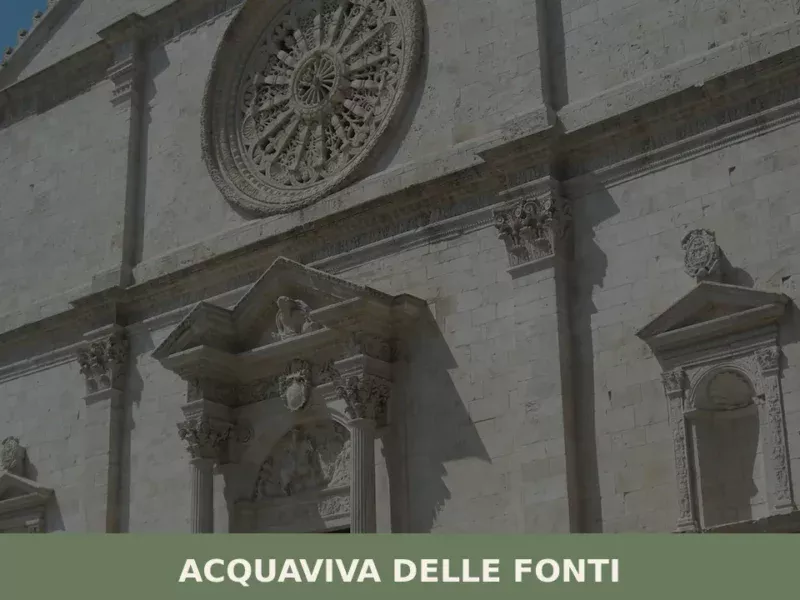
Acquaviva delle Fonti
Beneath the main square of Acquaviva delle Fonti, water still flows. This is not a figure of speech: a network of underground aquifers runs through the limestone subsoil of this town in the Murge hills near Bari, feeding cisterns and wells that for centuries determined both the wealth and the very name of the town. […]
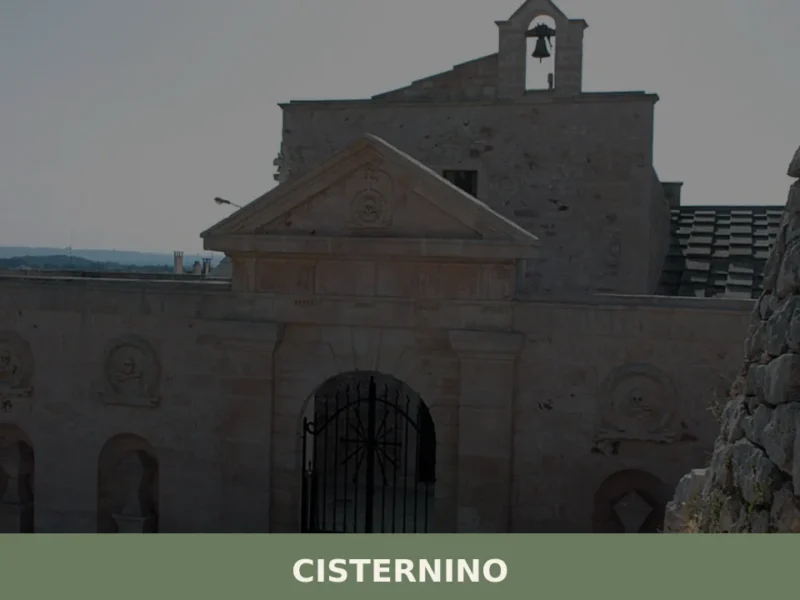
Cisternino
At 394 meters above sea level, in the heart of the Itria Valley, Cisternino features a compact urban layout, characterized by white lime buildings that line a network of narrow streets. This architecture, typical of Puglia’s “white village” style, reflects centuries of adaptation to the climate and terrain. Its elevated position offers a wide view […]

📝 Incorrect information or updates?
Help us keep the Taranto page accurate and up to date.