


Trieste
What to see in Trieste, a city with over 200,000 inhabitants? Discover 5 main attractions and savor local cuisine like Jota and Presnitz. Explore its unique history.
Discover Trieste
Trieste, a border city and crossroads of cultures, offers a rich and layered travel experience. With a population of 201,148 inhabitants and situated at an altitude of 20672 m a.s.l., this locality in Friuli Venezia Giulia stands out for its complex history and strategic position.
Visitors wondering what to see in Trieste will find an architectural heritage that reflects Roman, Habsburg, and Central European influences, bearing witness to a glorious past as an imperial port.
The city, capital of the eponymous province, boasts an elegant waterfront and majestic squares overlooking the Adriatic, inviting exploration of its historic districts and attractions.
From Roman ruins to nineteenth-century palaces, every corner tells a part of its identity.
The patron saint’s feast day, dedicated to Saint Justus the Martyr, is celebrated on November 3rd, an opportunity to discover local traditions and the community’s deep connection to its history.
History and Origins of Trieste
Trieste’s roots go back to ancient times, with the first records of an Illyrian settlement, known as Tergeste, meaning “market”.
Its importance grew during the Roman era, when it became an important colony and port, particularly after its conquest by Rome in 177 BC.
Under Julius Caesar, Tergestum was elevated to the rank of a colony, benefiting from its strategic position along the Empire’s commercial and military routes.
After the fall of the Western Roman Empire, Trieste came under various dominations, including the Goths, Byzantines, and Lombards, before becoming part of the Holy Roman Empire in the 10th century.
In the 12th century, the city gained increasing autonomy, becoming a free commune and maintaining complex relations with the nearby Republic of Venice.
This phase saw the development of its civic institutions and an initial urban expansion, laying the groundwork for its future prosperity.
A turning point for Trieste came in 1382, when it voluntarily submitted to the protection of the Habsburgs, ushering in a long period of Austrian rule that would last for over five centuries.
Under the Habsburgs, and particularly with Empress Maria Theresa of Austria and Emperor Charles VI, Trieste was declared a free port in 1719, transforming it into one of the main commercial emporiums of the Austro-Hungarian Empire.
This status fostered enormous economic and demographic growth, attracting merchants and populations from all over Europe and creating a unique cultural melting pot that still characterizes the city today.
What to see in Trieste: main attractions
Those who wish to discover what to see in Trieste will encounter a rich historical and cultural heritage, ranging from imposing squares to fairytale castles, from ancient cathedrals to modern monuments.
Each attraction offers a different perspective on the complexity and beauty of this border city, a witness to centuries of history and a crossroads of civilizations.
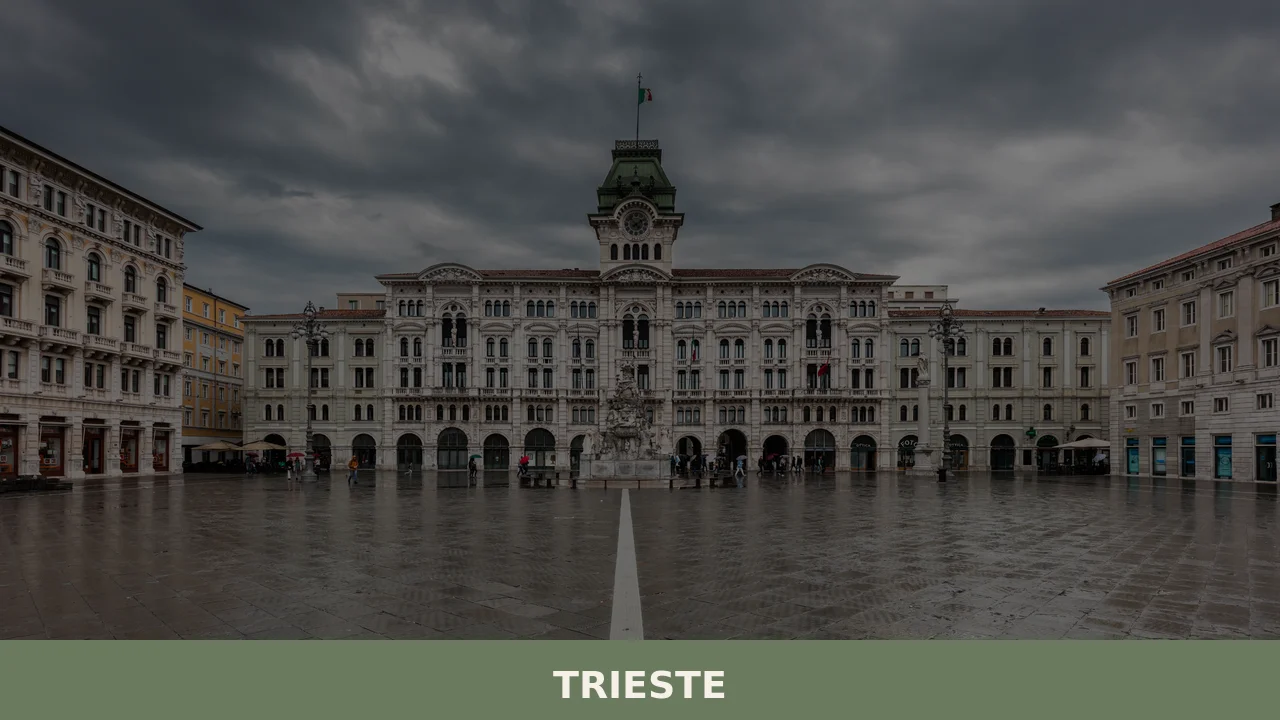
Piazza Unità d’Italia
Piazza Unità d’Italia is the beating heart of Trieste and represents the largest square in Europe directly overlooking the sea.
Designed to be the city’s drawing-room, it is surrounded by imposing historic palaces that reflect 19th-century Habsburg architecture.
Among these stand out the Palazzo del Governo, with its mosaics and turrets, the Palazzo del Municipio, the seat of the municipality, and the Palazzo del Lloyd Triestino, a testament to the city’s maritime and commercial past.
A visit to the square allows one to admire the Fountain of the Four Continents, a symbol of the trade routes that converged in Trieste, and the two columns with statues of Maximilian and the Lion of Saint Mark.
Miramare Castle
Miramare Castle, situated on a rocky promontory a few kilometers from the center of Trieste, is a princely residence built between 1856 and 1860 at the behest of Archduke Ferdinand Maximilian of Habsburg and his wife Charlotte of Belgium.
Designed by architect Carl Junker, the building features an eclectic style combining Gothic, medieval, and Renaissance elements, surrounded by a vast 22-hectare park.
The park hosts a rich botanical variety, with exotic and Mediterranean species, panoramic paths, and small constructions like the Castelletto. Inside the castle, the rooms preserve the original furnishings and personal belongings of its illustrious inhabitants, offering a glimpse into 19th-century aristocratic life and the tragic history of its first owners.
Visitors can explore the private rooms, the state rooms, and enjoy the breathtaking view of the Gulf of Trieste.
Cathedral of San Giusto
The Cathedral of San Giusto, dedicated to the city’s patron saint, is Trieste’s main Catholic place of worship and a symbol of its millennial history.
The current basilica is the result of the union of two pre-existing churches, that of Santa Maria and that of San Giusto, which occurred between the 13th and 14th centuries.
The facade is characterized by a large Gothic rose window and a bell tower that incorporates remains of a Roman temple from the 1st century AD, visible at its base.
Inside, the cathedral houses precious Byzantine mosaics in the apse basin, depicting Christ between Saints Giusto and Servolo, and medieval frescoes.
The various construction phases and artistic influences make the cathedral an architectural complex of great interest, where Romanesque, Gothic elements, and fragments from even more remote eras can be observed.
A visit allows one to appreciate the historical stratification of the place and the artworks that enrich its interiors.
Victory Lighthouse
The Victory Lighthouse stands majestically on the Gretta promontory, dominating the Gulf of Trieste and offering a landmark visible from a great distance.
Built between 1923 and 1927 to a design by architect Arduino Berlam, this commemorative monument is dedicated to the sailors who fell during the First World War.
Its imposing structure, 68 meters high, is crowned by a bronze statue of winged Victory and adorned with the anchor of the torpedo boat Audace, the first Italian ship to enter the port of Trieste in 1918.
The lighthouse is not only an important guide for navigation, but also a symbol of Trieste’s history and its connection to the sea.
Climbing to its base allows one to enjoy a spectacular panorama of the city, the Karst, and the entire gulf, making it one of the most evocative destinations for those seeking privileged viewpoints.
Risiera di San Sabba
The Risiera di San Sabba is a national monument and a place of memory of fundamental historical importance, located in the southeastern outskirts of Trieste.
Originally a rice husking plant, during the Second World War it was transformed by the Nazi occupation forces into a camp for prisoners, sorting, detention, and extermination.
It was the only extermination camp in Italy equipped with a crematorium, active between 1943 and 1945.
Today, the complex has been converted into a museum and a memorial, documenting the atrocities committed and paying homage to the victims. A visit to the Risiera di San Sabba is a poignant and necessary experience to understand one of the most painful pages in Italian and European history.
The exhibition path includes the detention cells, the hall of crosses, and the remains of the crematorium, offering an opportunity for deep reflection on historical memory and the values of peace.
Typical cuisine and products of Trieste
Triestine cuisine is a reflection of its geographical position and history, a meeting of flavors that blends Central European influences, particularly Austrian and Slavic, with Mediterranean ones.
This fusion has given rise to robust and savory dishes, often based on meat and vegetables, but also with an important component linked to the sea.
The local gastronomic tradition has developed over centuries, welcoming ingredients and techniques from the peoples who have inhabited and traded in this border city, making it unique in the Italian culinary landscape.
Among the most representative dishes of Triestine tradition, Jota stands out, a dense and nutritious soup based on sauerkraut, beans, potatoes, and pork, often smoked.
Another dish of clear Austro-Hungarian origin is Goulash, a beef stew with paprika, traditionally served with potatoes or polenta.
For fish lovers, Sardoni in saor are a classic: fried anchovies then marinated in vinegar with onions, raisins, and pine nuts, a dish that evokes Venetian and Istrian seafaring traditions.
Those visiting Trieste can also discover local cured meats, such as in Carlino, where the pork butchery tradition is equally rooted.
Regarding typical products, it is important to note that no products with DOP, IGP, or PAT certifications have been registered in the database for this area.
However, the city is renowned for its excellence in the coffee sector, with a long tradition of historic roasteries and a deeply rooted coffee culture. Trieste is considered one of Europe’s coffee capitals, thanks to its history as a port of arrival for beans from all over the world, and hosts important companies in the sector.
Local pastries offer elaborate sweets, often linked to festivities or Central European traditions, which represent a delicious conclusion to any meal.
Among the desserts, Presnitz is a puff pastry roll filled with walnuts, almonds, raisins, dried figs, and citrus zest, often prepared for holidays.
Similar is Putizza, another leavened cake with a rich and aromatic filling. These desserts, along with others like Pinza pasquale (Easter Pinza), are expressions of the richness and variety of Triestine pastry, which keeps recipes handed down from generation to generation.
The tradition of local markets, such as Mercato di Ponterosso, offers the opportunity to buy fresh products and regional specialties, allowing visitors to take home a piece of Triestine gastronomy.
Festivals, events, and traditions of Trieste
Trieste is a city that celebrates its traditions with events reflecting its history and multicultural identity, attracting visitors from all over.
The most significant celebration is dedicated to its patron saint, Saint Justus the Martyr, celebrated annually on November 3rd.
On this day, the city comes alive with religious celebrations, processions, and civil manifestations involving the community, often culminating in cultural and gastronomic events that allow visitors to savor local specialties.
Beyond the patron saint’s festival, Trieste is internationally renowned for the Barcolana, one of the world’s largest and most participated sailing regattas, held annually on the second Sunday of October.
Thousands of boats, from professionals to amateurs, gather in the Gulf of Trieste for a competition that is also a grand celebration at sea.
The event transforms the city into a vibrant hub of maritime activities, with a rich calendar of collateral events, concerts, and markets, making it an ideal time for those who want to discover what to see in Trieste and experience something unique.
Even the mountain villages of Friuli Venezia Giulia, such as Comeglians and Ampezzo, have their own traditions, often linked to agricultural or religious customs that are worth exploring.
When to visit Trieste and how to get there
The best time to visit Trieste is spring (April-June) and autumn (September-October), when the climate is mild and the city offers a particularly pleasant atmosphere.
In spring, nature awakens, and the gardens of Miramare Castle are in full bloom, while autumn brings warm colors and the opportunity to participate in internationally renowned events like the Barcolana, which attracts thousands of sailors and spectators.
Summer can be hot and crowded, while winter, although sometimes characterized by the bora wind, offers a more intimate atmosphere and the chance to explore the numerous museums and historic cafes with greater tranquility.
To reach Trieste, several transport options can be considered.
By car, the city is well connected via the A4 motorway, which crosses Friuli Venezia Giulia, with dedicated exits for Trieste.
Those arriving from Piacenza, for example, can continue towards Chiopris-Viscone, just a few kilometers from the main junctions. For those who prefer the train, Trieste Centrale station is an important railway hub, connected to major Italian and European cities.
It is advisable to consult the Trenitalia website for updated timetables and tickets.
The nearest airport is Trieste-Ronchi dei Legionari Airport (TRS), located approximately 33 kilometers from the city center, well served by national and international flights. From the terminal, it is possible to reach Trieste by bus or taxi service.
For detailed information on connections and timetables, you can refer to the official website of Trieste Airport.
Here is a summary table for travel times:
| Starting Point | Distance | Estimated Time |
|---|---|---|
| Venice | approx. 150 km | 1 hour and 45 minutes |
| Milan | approx.
400 km |
4 hours and 30 minutes |
| Rome | approx.
600 km |
6 hours and 30 minutes |
Where to stay in Trieste
Trieste, as a city of considerable size and an important tourist destination, offers a wide range of accommodation solutions, suitable for every need and budget.
The historic center and the area surrounding Piazza Unità d’Italia are ideal for those who wish to stay in the heart of the city, a few steps from the main attractions, historic cafes, and vibrant nightlife.
Here you will find numerous hotels, from the most luxurious to the most accessible, many of which are housed in elegant period buildings.
For those looking for a more authentic experience or an alternative to hotels, the city also offers a growing selection of bed & breakfasts, apartments, and holiday homes, distributed in various areas. Those who prefer tranquility and proximity to the sea can opt for accommodations in neighboring coastal areas, such as Barcola or the Miramare Castle area, which offer striking views and a more relaxed atmosphere. It is always advisable to consult the official website of the Municipality of Trieste for accommodation options and updated tourist information: comune.trieste.it.
Photo Gallery of Trieste
Do you have photos of Trieste?
Share your photos of the village: the best ones will be added to the official gallery, with your credit.
Send your photosIn Friuli Venezia Giulia More villages to discover
Udine
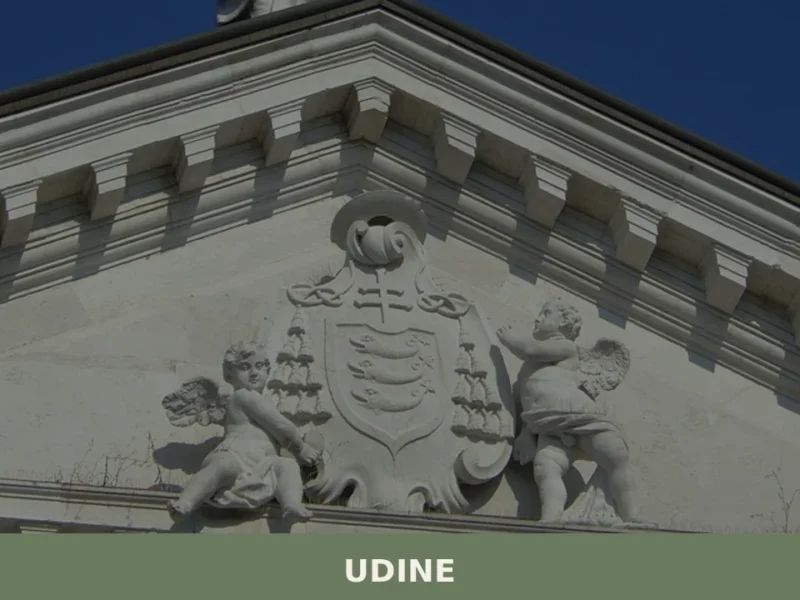
what to see in udine, home to 98,780 residents. Discover the historic Castle, Piazza della Libertu00e0, and Tiepolo Galleries. Explore its rich heritage.
Gorizia
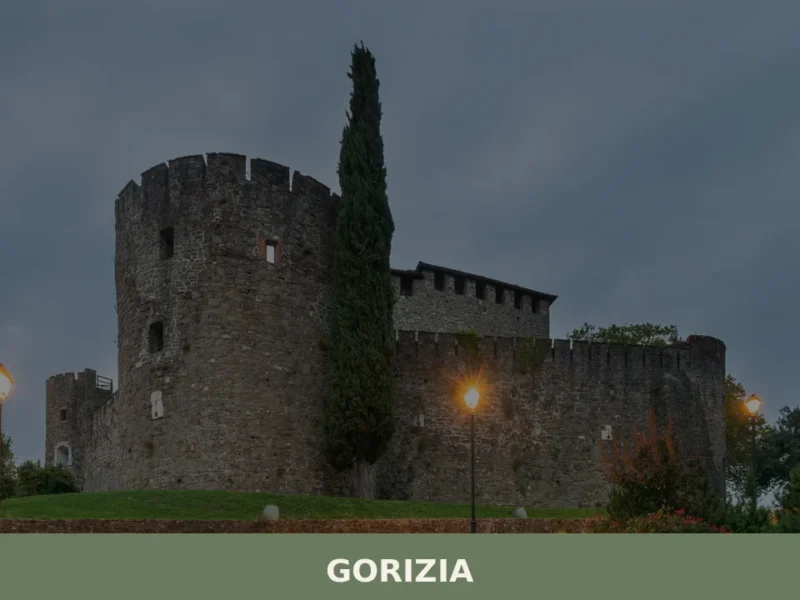
What to see in Gorizia, located at 84m. Discover 5 historic attractions, including its iconic Castle, and savor typical local cuisine. Explore your trip!


📝 Incorrect information or updates?
Help us keep the Trieste page accurate and up to date.