
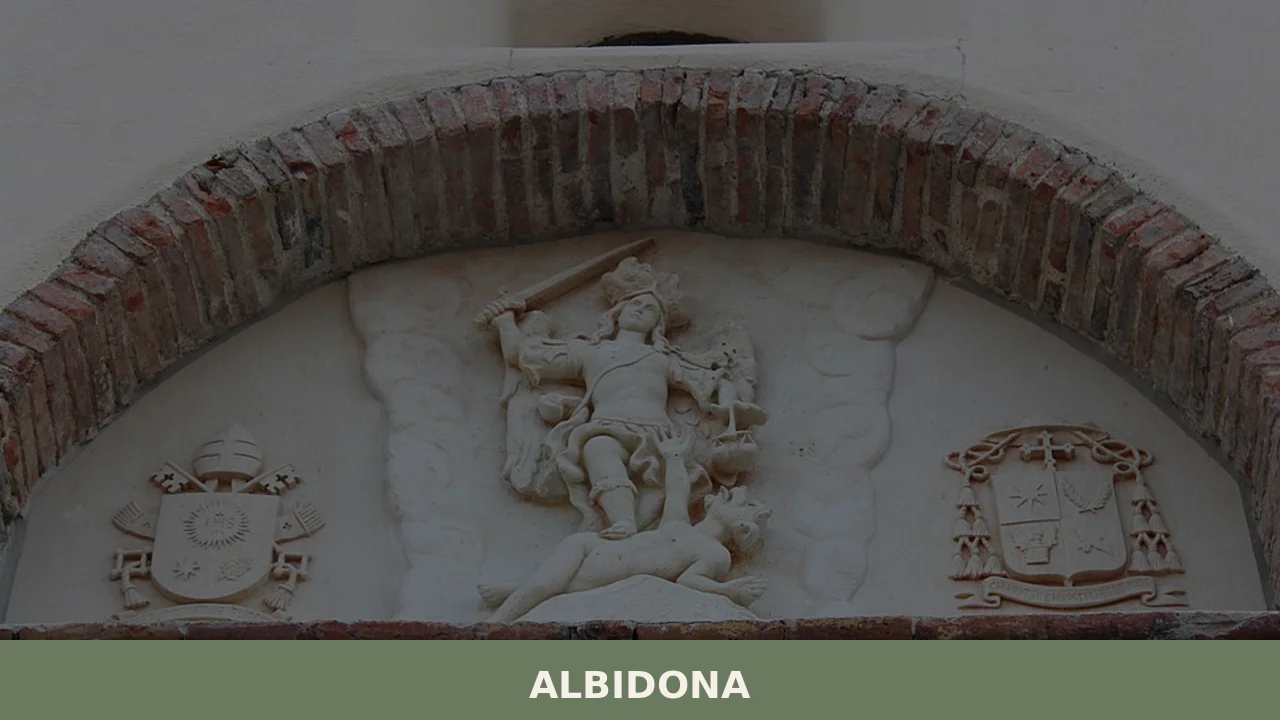
Albidona
Albidona has 1,142 inhabitants and sits at 810 metres above sea level on the eastern slope of the Pollino massif, in the province of Cosenza. The old town preserves an urban layout arranged in parallel bands, developed along the ridge that separates the Saraceno stream valley from the Caldanello valley. Asking what to see in […]
Discover Albidona
Albidona has 1,142 inhabitants and sits at 810 metres above sea level on the eastern slope of the Pollino massif, in the province of Cosenza. The old town preserves an urban layout arranged in parallel bands, developed along the ridge that separates the Saraceno stream valley from the Caldanello valley. Asking what to see in Albidona means engaging with a borderland territory, squeezed between the Lucanian-Calabrian mountains and the Ionian coast of the upper Tyrrhenian side, where the Arbëreshë language coexisted for centuries with the southern Calabrian dialect.
History and origins of Albidona
The place name appears for the first time in Norman documents from the 12th century, in the form Albidonum, probably derived from the Latin albidus — light, whitish — referring to the colour of the limestone outcrops on the northern side of the settlement. Some local historians have proposed a Greek origin linked to the term elbìs (hope), but solid documentary evidence is lacking. During the Norman-Swabian period, the village was incorporated into the feudal system of the County of Chiaromonte and passed through several noble families, including the Sanseverino, who controlled much of the Pollino area between the 14th and 15th centuries.
In the 16th century, Albidona was affected by the waves of Albanian migration that swept across the entire Ionian strip of the Cosenza province. Unlike other centres such as Civita or Frascineto, the Arbëreshë community here never became predominant, but it left traces in rural place names and in certain dialectal forms still recorded in linguistics studies at the University of Calabria. The village suffered the earthquake of 1693 and the more devastating one of 1783, which damaged part of its religious building heritage. The 19th century brought post-unification brigandage: the surrounding mountains were the scene of operations by Carmine Crocco’s band, which operated between Basilicata and northern Calabria.
In the 20th century, emigration progressively emptied the town. Albidona lost over two-thirds of its population between 1951 and 2001, dropping from around 3,800 residents to the current 1,142. This demographic fact is legible in the very architecture of the old town, where numerous dwellings in local stone remain uninhabited yet structurally intact, forming an urban landscape of rare material density. The official website of the Municipality of Albidona documents the restoration projects currently underway.
What to see in Albidona: 5 main attractions
1. Mother Church of San Michele Arcangelo
Dedicated to the patron saint, the church dates in its current structure to the 17th century, rebuilt after earthquake damage. The single-nave interior houses a polychrome marble high altar and a wooden statue of Saint Michael datable to the 18th century. The façade in local limestone features a portal with a round arch. The patronal celebrations are held on 29 September.
2. Remains of the feudal castle
In the upper part of the settlement, the ruins of a tower and several wall structures document the presence of a medieval fortress, attributable to the Norman-Swabian period. The position commanded the two valleys below and the route towards the Ionian coast. The remaining masonry, built from irregular limestone blocks, reaches heights of up to four metres in some sections.
3. Old town and the Terra quarter
The oldest nucleus, known as “la Terra”, extends across the uppermost part of the ridge. The houses are built from local stone with clay-tile roofs, linked by external staircases and covered passageways called catùsi. Several carved stone portals, datable between the 16th and 18th centuries, bear inscriptions with dates and artisan symbols.
4. Fontana Vecchia
Located along the road connecting the old town to the lower part of the village, this multi-spout stone fountain served as the main water supply point. The current structure dates to the 19th century, but oral tradition places an older source at the same site. The water comes from a mountain spring that is still active.
5. Trails to Monte Sparviere (1,713 m)
Hiking paths depart from the municipal territory and reach Monte Sparviere, the highest peak of the eastern coastal chain of the Pollino in the province of Cosenza. The main trail covers approximately 8 kilometres with an elevation gain of 900 metres. The beech forest covering the slope hosts specimens of Bosnian pine at higher altitudes and a stable Apennine wolf population documented by the Pollino National Park.
Local cuisine and regional products
Albidona’s cuisine reflects its condition as a mountain agro-pastoral centre. The main dishes revolve around handmade pasta — lagane e ciciari (lagane with chickpeas), rascatelli dressed with goat sauce, maccarruni shaped on a metal rod with pork ragù. Bread is traditionally prepared with local durum wheat flour and baked in wood-fired ovens still in use in some houses of the old town. Oven-roasted kid with potatoes is the dish of major celebrations, prepared during the feast of San Michele and at Easter.
Among the local products are raw-milk sheep and goat cheeses, processed in the small dairies of local livestock farms. Caciocavallo silano DOP, produced in the Pollino area, is the designated-origin cheese of reference. The peperone crusco — dried and fried in extra-virgin olive oil — accompanies many dishes. Chestnuts, gathered in the woods between September and November, are ground into flour for the preparation of winter desserts. The wine comes from the Ionian strip of the Cosenza province, with a prevalence of Gaglioppo and Magliocco grapes under the Terre di Cosenza DOC designation.
When to visit Albidona: the best time
The altitude of 810 metres produces a mountain climate with cold, snowy winters — January temperatures regularly drop below zero — and cool summers, with highs that rarely exceed 28 degrees in July. The most suitable period for hiking runs from May to October, with the best window between June and September for the trails to Monte Sparviere. In autumn, the chestnut harvest and pig slaughter mark the rural calendar.
The patronal feast of San Michele Arcangelo, on 29 September, is the main event: it includes a procession through the streets of the old town, fireworks, and itinerant brass bands. In summer the village hosts initiatives promoted by local associations and by the emigrant community, which returns in large numbers in August. For up-to-date information on events, the dedicated page on Wikipedia — Albidona can be consulted.
How to reach Albidona
Albidona can be reached from the A2 Motorway of the Mediterranean (formerly the A3 Salerno–Reggio Calabria), Frascineto-Castrovillari exit, continuing for approximately 50 kilometres along provincial roads that cross the eastern slope of the Pollino. From Cosenza the distance is around 130 kilometres, with a travel time of two and a half hours. From Bari it can be reached in three hours via the SS 106 Jonica and then inland roads.
The nearest railway station is Sibari, on the Ionian line, approximately 60 kilometres away. The reference airport is Lamezia Terme (180 km), but for those coming from the north-east, Bari-Palese airport (220 km) is more convenient. Frequent public transport connections do not exist: a car is essential. The access roads are narrow and winding in the final stretch, with significant gradients — it is advisable to avoid the winter months without suitable tyres.
Related villages in the Calabrian Pollino area
The eastern slope of the Cosenza side of the Pollino presents a constellation of mountain centres with characteristics similar to those of Albidona. A few kilometres to the north-west lies Civita, an Arbëreshë centre overlooking the Raganello Gorges, where the Italo-Albanian community has maintained the Byzantine rite and the Shqip language. The linguistic and religious difference between the two centres — Latin Albidona, Albanian Civita — has been documented since the 16th century and represents one of the sharpest cases of cultural frontier in southern Italy.
To the south, following the Ionian coast and then heading inland, Rossano offers a different context: a Byzantine centre on the coastal plain, home to the Codex Purpureus Rossanensis (a UNESCO heritage item), with an urban and commercial tradition that contrasts with Albidona’s agro-pastoral economy. Comparing the two centres reveals the complexity of the Cosenza territory, where within just a few dozen kilometres one moves from 810 metres of altitude to sea level, and from a mountain subsistence economy to a Mediterranean trade network.
Getting there
Vico II Principe Umberto, 87070 Albidona (CS)
Photo Gallery of Albidona
Do you have photos of Albidona?
Share your photos of the village: the best ones will be added to the official gallery, with your credit.
Send your photosNearby Villages near Albidona
In Calabria More villages to discover
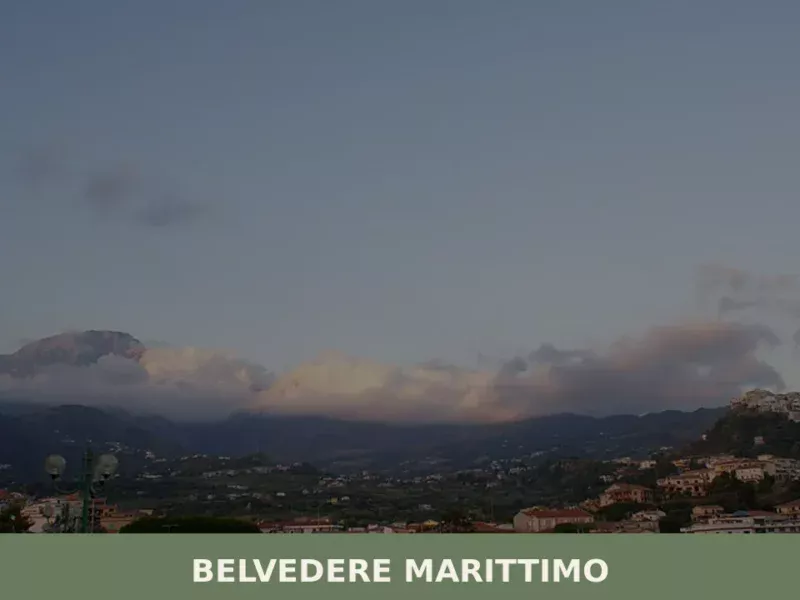
Belvedere Marittimo
Belvedere Marittimo, a village in the province of Cosenza, stands at 150 meters above sea level and has a population of 9,292 inhabitants. This Calabrian location, classified among the lowland villages, offers a view of the Cosenza Tyrrhenian coast, combining historical elements with its proximity to the coast. Its geographical position has shaped its identity […]
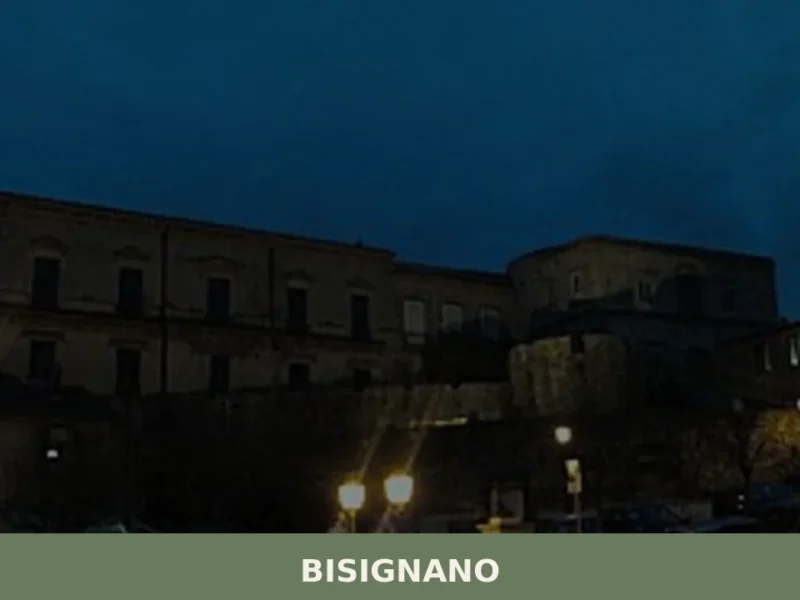
Bisignano
What to see in Bisignano: Discover 5 top attractions. This village (pop. 9,501) features the Ducal Castle and Sant'Umile Sanctuary for rich history.
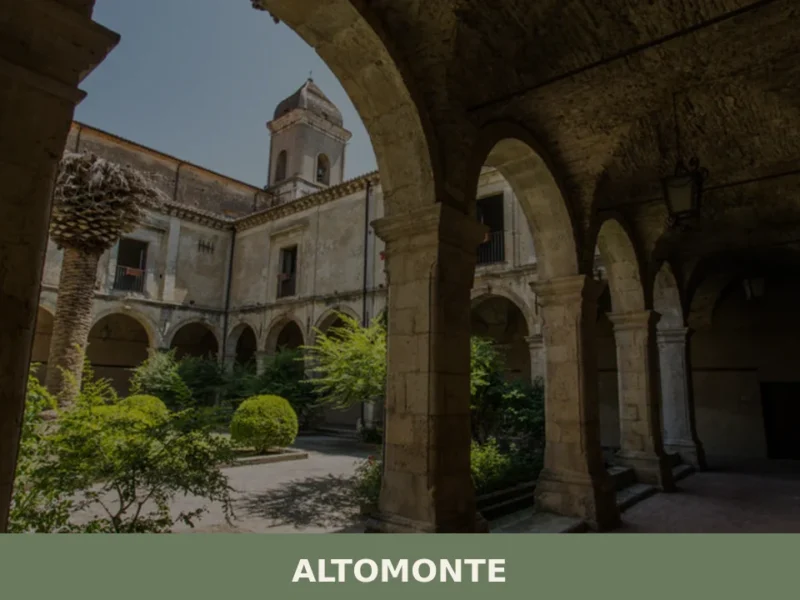
Altomonte
What to see in Altomonte: a hill village at 455m in Calabria with a 14th-century Gothic church, Civic Museum and medieval castle. Plan your visit today.

📝 Incorrect information or updates?
Help us keep the Albidona page accurate and up to date.