


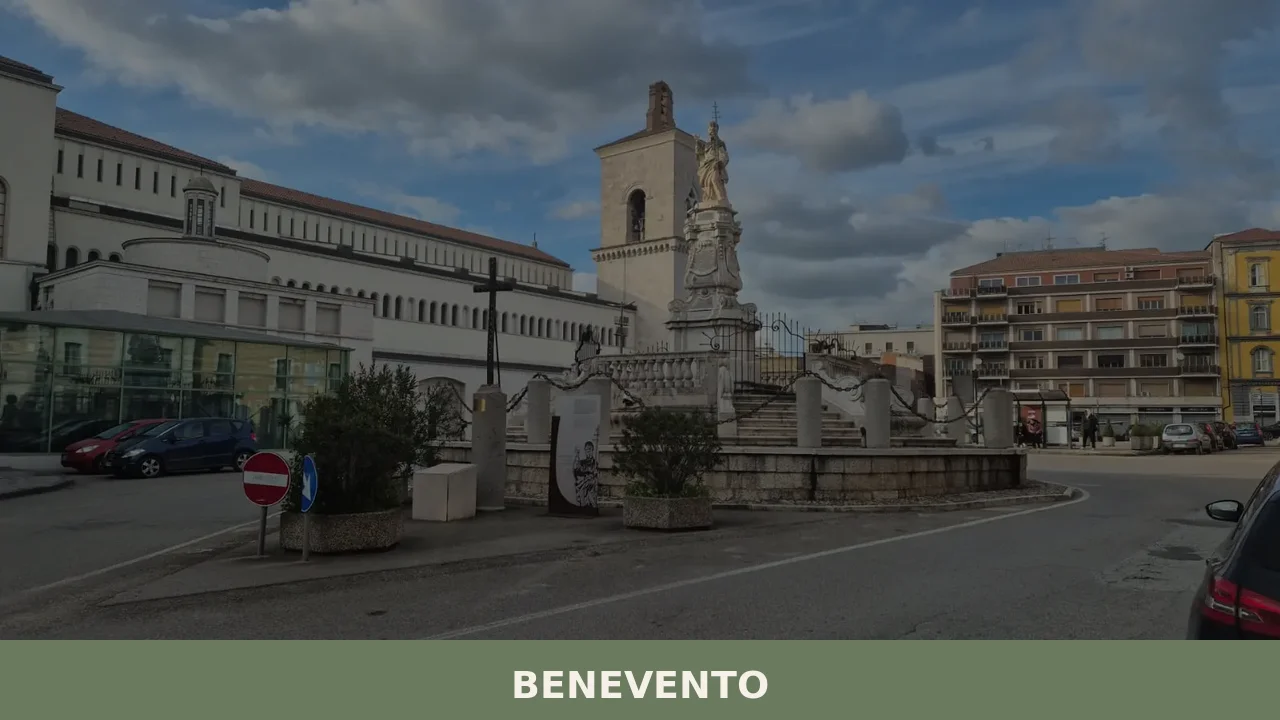
Benevento
Uncover the rich history and beautiful landscapes of the village of Benevento in Campania, Italy. Plan your visit to this charming Italian gem today!
Discover Benevento
With a population of 60,797 and an elevation of 135 metres above sea level, at the heart of the Sannio region in Campania, Benevento is one of the oldest cities in southern Italy, with over two thousand years of history layered into every stone and every square.
Anyone wondering what to see in Benevento will find a catalogue of monuments, archaeological sites and food traditions that are rarely concentrated in such an accessible urban space.
The city is the capital of the province of the same name, sits at the confluence of the Calore and Sabato rivers, and preserves traces of Samnite, Roman, Lombard and medieval civilisation — all clearly readable in the urban landscape.
History and Origins of Benevento
According to historical sources, the name Benevento derives from the ancient Latin toponym Beneventum, itself an adaptation of the earlier Oscan-Samnite Maloenton or Maleventum, which the Romans reshaped into an auspicious form following their victory at the Battle of 275 BC against Pyrrhus, King of Epirus.
That battle, fought near the city, marked the end of Greek ambitions in southern Italy and established Benevento as a place of strategic importance to Rome.
The founding of a Roman colony dates to 268 BC, the year the city was officially incorporated into Rome’s system of control over the peninsula.
During the imperial period, Benevento entered a phase of considerable prosperity. The Emperor Trajan commissioned the celebrated triumphal arch, inaugurated in 114 AD, which still stands intact in the historic centre today. The city lay along the Via Appia, the main artery connecting Rome to Brindisi, and served as a commercial and military hub of the first order. Numerous public buildings, temples and hydraulic infrastructure reflect the vitality of that era, documented further by inscriptions and artefacts held in the Museo del Sannio.
After the fall of the Western Roman Empire, Benevento became the capital of the Lombard Duchy of Benevento, founded in 571 AD by Zottone.
The duchy — later a principality — maintained its autonomy for several centuries, resisting pressure from the Franks and Byzantines.
In 1077 the city passed under papal control and remained part of the Papal States until Italian unification in 1861, when it joined the Kingdom of Italy.
This long period under the Church explains the presence of significant ecclesiastical buildings and the particular cultural layering that still defines the city’s heritage today. Those wishing to explore the Lombard history of the inner Sannio can compare Benevento with the villages of the province, such as Prata Sannita, which shares historical roots closely tied to that period.
What to See in Benevento: Main Attractions
Arch of Trajan
The Arch of Trajan is the city’s most representative Roman monument and one of the best-preserved from the entire ancient world. Inaugurated in 114 AD to mark the completion of the Via Traiana, the arch stands approximately 15 metres tall and is entirely clad in white marble, decorated with bas-reliefs depicting scenes of war, sacrifice and civic life from the imperial age. It stands in the heart of the historic centre, at the site of the ancient city entrance.
The narrative density of the reliefs makes it a historical document as much as a work of art: each panel records a specific episode of Trajanic policy in Italy and the eastern provinces.
It is well worth spending time to read the bas-reliefs in sequence.
Roman Theatre
The Roman Theatre of Benevento, built under Emperor Hadrian in the second century AD and later enlarged, is one of the best-preserved performance venues in southern Italy.
The cavea could originally hold up to 10,000 spectators. Partially excavated in the post-war years and progressively freed from the medieval structures that had incorporated it, the theatre today presents a clear picture of its original scale. It is located in the Santa Restituta district of the historic centre. During the summer it hosts theatre performances and concerts as part of the Benevento Città Spettacolo programme, a cultural festival that uses the site as an open-air stage.
Museo del Sannio
The Museo del Sannio, founded in 1873 and housed in the convent complex of Santa Sofia, is the province’s principal museum.
Its collections include artefacts from the Samnite, Roman, Lombard and medieval periods: inscriptions, sculptures, mosaics, coins, ceramics and bronze objects. The twelfth-century Romanesque cloister inside the complex is itself a monument deserving careful attention, with its interlaced arches resting on columns of varying provenance.
The museum is recognised as a leading scholarly institution for the history of Sannio and also houses a picture gallery with works ranging from the fourteenth to the nineteenth century.
Church of Santa Sofia
The Church of Santa Sofia, built in 760 AD by the Lombard prince Arechi II, is one of the most complete Lombard buildings to survive in Italy.
Its star-shaped circular plan — unique in the landscape of early medieval Italian architecture — was declared part of the UNESCO World Heritage Site in 2011, as part of the serial site “Longobards in Italy.
Places of the Power (568–774 AD)”. The original structure was partially altered by the earthquake of 1688, but the ground plan and portions of the medieval frescoes remain clearly legible.
The church stands in Piazza Matteotti and, alongside the Arch of Trajan, represents the most widely recognised element of the city’s monumental heritage.
Rocca dei Rettori
The Rocca dei Rettori, which overlooks Piazza IV Novembre, was built in the fourteenth century as the residence of the city’s papal governors and subsequently enlarged. The current structure combines Gothic and Renaissance elements layered over medieval foundations.
For many centuries the seat of civil and military power in papal Benevento, the Rocca today houses the Provincial Heraldic Museum and the offices of the Prefecture. The square-based bell tower, visible from many points across the city, is its most recognisable architectural feature.
Anyone exploring the upper city — where much of what to see in Benevento is concentrated — will inevitably pass by this building, which defines the entire main square.
Traditional Food and Products of Benevento
Beneventan gastronomy is rooted in the farming and pastoral traditions of Sannio, an inland sub-region of Campania with a diverse agricultural output: cereals, pulses, vegetables, wine and olive oil.
Lombard influence, followed by papal and later Bourbon rule, contributed to forming a solid, unfussy cuisine built on a small number of ingredients prepared using techniques passed down through generations.
The city’s geographical position — far from the sea but surrounded by fertile hills — explains the predominance of dishes based on fresh pasta, sheep and pork, pulses and seasonal vegetables.
Among the traditional local dishes, pasta e fagioli con le cotiche (pasta and beans with pork rind) is perhaps the most representative of the winter repertoire, while struffoli — small fried dough balls coated in honey — are the most widespread Christmas sweet across Campania, with Benevento claiming its own historical version. Benevento torrone, made with honey, sugar, egg white and almonds or hazelnuts, is the city’s best-known confectionery product at a national level: some producing families have been active in the city for over a century.
The Sannio hazelnut, a key ingredient in many local preparations, is grown in the surrounding countryside and used in pastry-making and liqueur production.
Several certified products from the Benevento and Campania area are recognised at a national level. ‘Ndunderi (PAT) — municipalities: Benevento — are ricotta gnocchi, one of the oldest documented pasta formats in southern Italy.
‘Nfrennula (PAT) — municipalities: Benevento — is a traditional pork preparation tied to the winter slaughtering season.
Aceto di Fico Bianco (PAT) — municipalities: Benevento — is a distinctive and rare product obtained by fermenting the local white fig. Acqua di pomodoro (PAT) — municipalities: Benevento — is a product of tomato processing typical of Campanian domestic preserves.
Aglio dell’Ufita (PAT) — municipalities: Benevento — is a variety of garlic grown in the Ufita valley, valued for its size and distinct aromatic profile. The local food tradition extends to nearby villages as well: at Valle Agricola, in the Matese area of Caserta province, fresh pasta preparations and seasonal preserves reflect the same Samnite cultural roots.
The most rewarding time to buy local products is autumn, when fairs dedicated to torrone and hazelnuts take place.
The Fiera del Torrone, usually held in November, draws producers from across the province and offers the chance to compare artisan versions of the product directly. The neighbourhood markets in the historic centre, open on weekday mornings, are the place to find fresh vegetables, local pecorino cheeses and aged cured meats from the Sannio tradition.
Festivals, Events and Traditions of Benevento
The patron saint of Benevento is Saint Bartholomew the Apostle, whose feast is celebrated on 24 August.
The occasion is one of the most deeply felt in the city and involves a solemn procession through the streets of the historic centre, attended by civil and religious authorities, accompanied by liturgical rites in the cathedral.
Devotion to Saint Bartholomew is documented from the early Middle Ages: according to tradition, the apostle’s relics were brought to Benevento in 839 AD by Emperor Sicard, and their presence helped establish the city as an important medieval pilgrimage centre.
The cathedral, dedicated to the apostle, still preserves some of these venerated relics today.
Alongside the patronal feast, Benevento hosts a calendar of events throughout the year spanning music, theatre, historical re-enactments and food and wine festivals. The already-mentioned Benevento Città Spettacolo, held in summer at the Roman Theatre, is one of the longest-running cultural programmes in southern Italy.
The city is also known for Settembre al Parco, a series of summer concerts, and for several initiatives connected to the promotion of its UNESCO heritage.
The legend of the witches of Benevento — linked to the walnut tree of Benevento cited in medieval sources and carried forward in popular tradition — has given rise to a local mythology that is celebrated and explored in various cultural events throughout the year, with particular intensity in October.
When to Visit Benevento and How to Get There
The most balanced time to visit Benevento is spring, between April and June, when temperatures are mild, the days are long and most monuments are accessible without summer crowds.
Autumn, from September to November, is equally worthwhile: the surrounding countryside changes colour, the Fiera del Torrone draws closer in November, and the city regains momentum after the summer pause.
Summer, though warm, offers the opportunity to attend performances at the Roman Theatre.
Those looking for a quieter visit with fewer visitors will find winter well suited to exploring museums and churches at a relaxed pace. For anyone focused on what to see in Benevento in a single day, the route from the Arch of Trajan to the Roman Theatre, Santa Sofia and the Rocca dei Rettori can be covered on foot in under two hours.
By car, Benevento is accessible from the A16 Naples–Canosa motorway, exit Benevento, approximately 60 kilometres from Naples.
Travellers coming from Rome take the A1 to Caserta Sud, then continue along the SS265 and SS7 towards Benevento. The city has its own railway station, Benevento Centrale, connected to Naples by Trenitalia regional trains running approximately once an hour, with a journey time of around one hour and twenty minutes: timetables and bookings are available on the Trenitalia website.
The nearest airport is Naples Capodichino, about 70 kilometres away, from which onward travel to the city is possible by car or road transport services.
For information on the local area and municipal services, the official reference is the Benevento Municipality website.
Those arriving from the north, via the province of Caserta, may consider a stop at Presenzano, a medieval settlement along the motorway route, before heading south into Sannio.
Where to Stay in Benevento
Benevento offers a range of accommodation options in the historic centre and the immediate urban outskirts. These include mid-range hotels, bed and breakfasts in historic buildings in the centre, and agriturismo properties in the surrounding countryside along the routes towards the Calore and Ufita valleys.
For those who prefer the agriturismo format with the option of tasting local products directly on site, the farmland to the east and north of the city offers several choices.
Visitors wishing to combine a stay in the city with an excursion into rural Sannio may also consider nearby villages: Capriati a Volturno, in the Caserta area, is reachable in under an hour and has accommodation in a natural setting that contrasts considerably with the urban fabric of Benevento, providing an alternative base for exploring the wider area.
In Campania More villages to discover
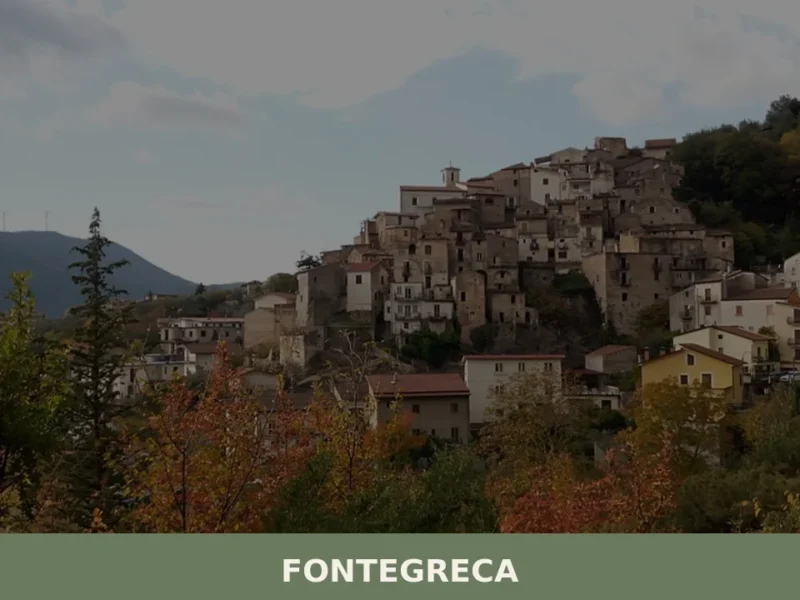
Fontegreca
Fontegreca, a municipality in the province of Caserta, is home to the Cipresseta, a protected natural area recognized for its size and for the presence of centuries-old cypress trees, a distinctive feature of the local landscape. With a population of 834 inhabitants and situated 320 meters above sea level, this hill village develops on a […]
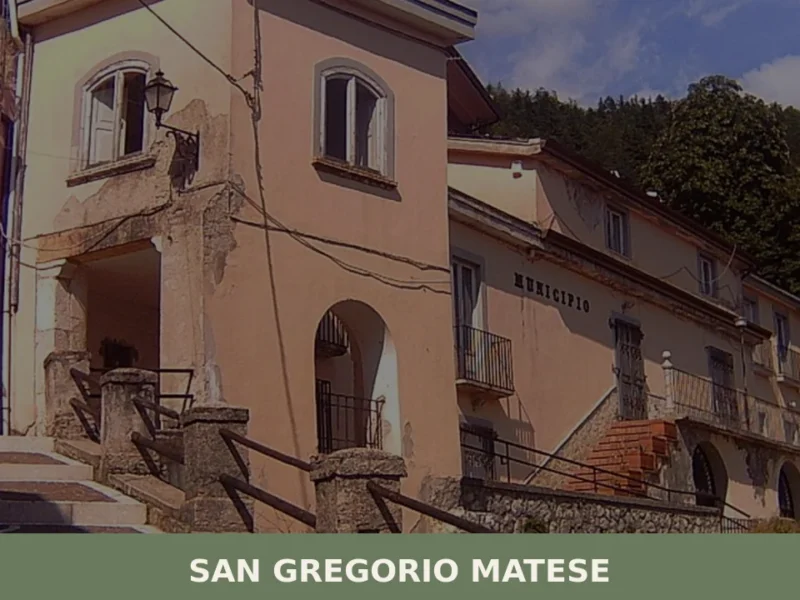
San Gregorio Matese
At 765 meters above sea level, San Gregorio Matese stands as one of the highest municipalities in the province of Caserta, a settlement with just over a thousand inhabitants. Its foundation is historically attributed to the cult of Pope Gregory I, from whom it takes its name. For those wondering what to see in San […]
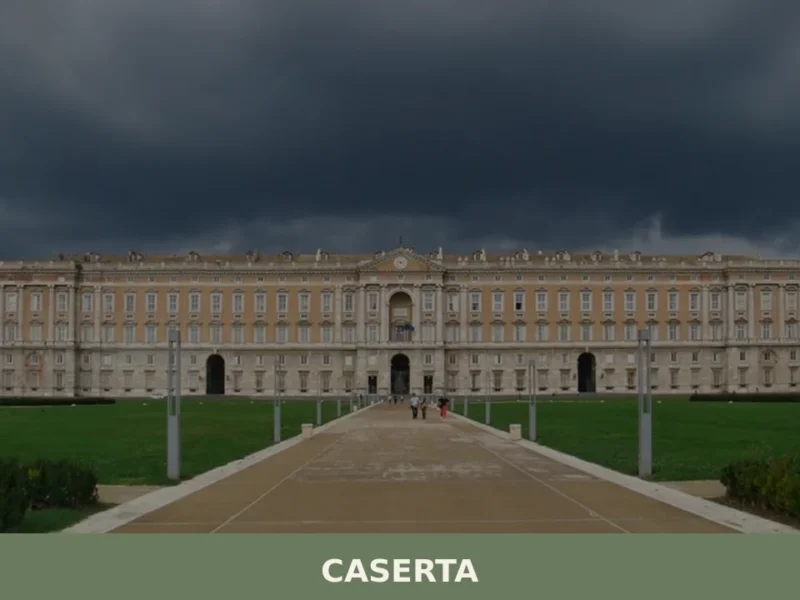
Caserta
What to see in Caserta: UNESCO Royal Palace, Casertavecchia and certified PAT products. City of 74,000 at 68m above sea level. Plan your visit with our complete guide.



📝 Incorrect information or updates?
Help us keep the Benevento page accurate and up to date.