


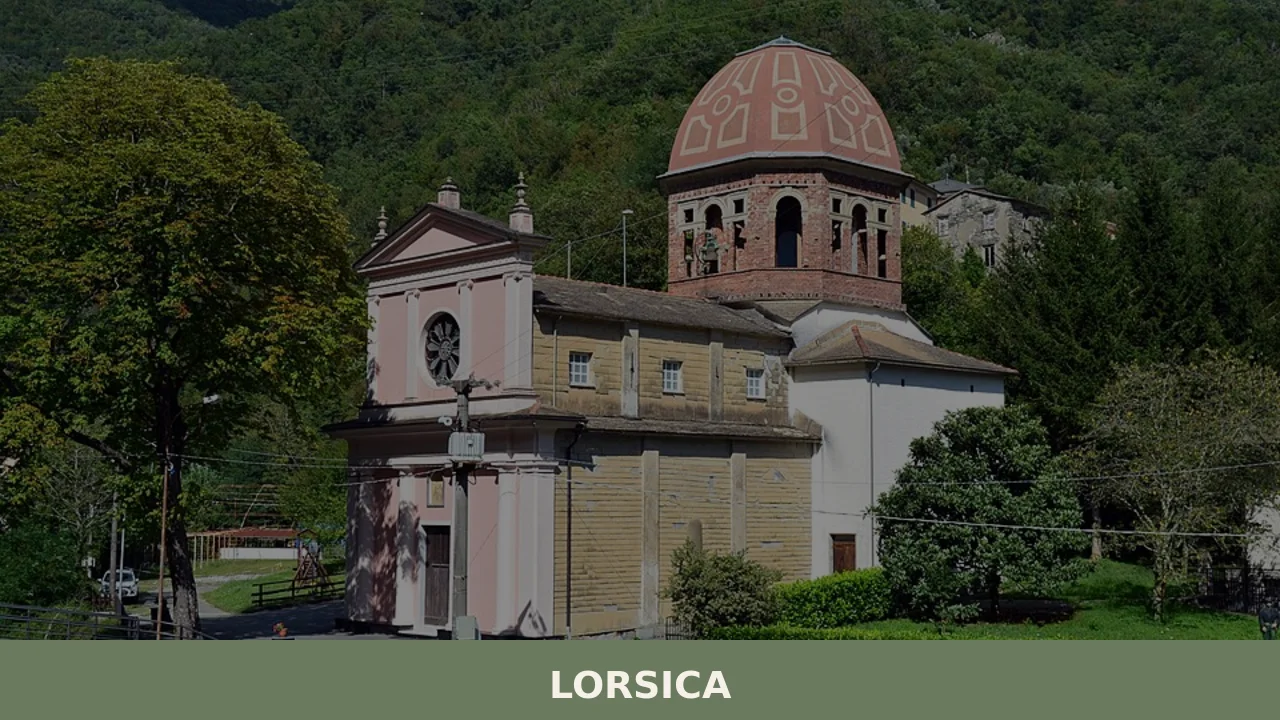
Lorsica
What to see in Lorsica: a Ligurian village at 343 m with 395 residents. Explore historic churches, Val Sturla trails and local food. Plan your visit today.
Discover Lorsica
Lorsica sits at 343 metres above sea level in the inland area of the eastern Ligurian Riviera, in the province of Genoa, with a current population of 395 residents spread across the main village and several smaller hamlets. For those looking into what to see in Lorsica, the village offers an itinerary that takes in historic churches, rural architecture and a hilly landscape shaped over centuries by farming and livestock rearing.
The area lies within the valley of the Sturla stream, a short distance from the Fontanabuona, a natural corridor that has long connected the Genoese coast with the Ligurian Apennines.
The community has preserved its own distinct identity rooted in hill-country life, clearly visible in the fabric of its buildings and the network of parish churches.
History and Origins of Lorsica
Lorsica’s origins go back to the medieval period, when the Ligurian hinterland was criss-crossed by commercial and religious routes linking Genoa with the Apennine territories. The place name has no single confirmed etymology in the available sources, but it fits within a broader set of Ligurian toponyms that reflect the presence of early medieval rural settlements, often tied to landholdings or specific features of the terrain.
The village belonged to that network of hill communities that fell within the sphere of influence of the Republic of Genoa, which maintained control over vast areas of the hinterland through local podesteries and fiefdoms.
Through the late Middle Ages and into the early modern period, Lorsica followed the same trajectory as many villages in the Val Sturla: periods of relative prosperity, sustained by agricultural activity and trade in local goods, alternated with phases of demographic decline caused by the epidemics and famines that repeatedly struck Liguria between the fourteenth and seventeenth centuries.
The presence of churches and oratories across the territory reflects an intense religious life organised around the parish and the confraternities — institutions that, in Ligurian rural communities, served social and economic functions alongside spiritual ones.
As noted on the Wikipedia page for Lorsica, the municipality belongs to the Metropolitan City of Genoa and falls within the geographical area known as Fontanabuona.
Between the nineteenth and twentieth centuries, the village underwent the same transition that affected the entire Ligurian uplands: a gradual drift of population towards the coast and towards Genoa significantly reduced resident numbers, turning what had once been a denser agricultural landscape into one where abandoned terraces alternate with those still under cultivation.
The establishment of an autonomous municipality has ensured administrative continuity for the village, which today falls within the broader programmes for developing the Ligurian hinterland promoted by the Metropolitan City of Genoa. The built heritage retains buildings of ancient plan, particularly in the historic core of the main village, where stone houses reflect the construction methods of the Ligurian rural tradition.
What to See in Lorsica: Main Attractions
1. Parish Church of Santa Caterina da Genova
The church dedicated to Santa Caterina da Genova, patron saint of the municipality, is the village’s principal spiritual and architectural point of reference.
The building stands at the heart of the settlement and retains the layout typical of Ligurian rural churches, with a local stone façade and a single-nave interior. The dedication to this Genoese saint, whose feast day falls on 22 March, ties Lorsica to a figure of considerable importance in Ligurian religious history. A visit allows you to examine the interior decorative elements at close range and to appreciate the central role the parish has always played in the life of this hill community.
2. Historic Core of the Main Village
The historic centre of Lorsica follows the settlement pattern typical of mid-slope Ligurian villages: houses built directly against one another, covered passageways and narrow pedestrian lanes connecting the different levels of the village. The buildings are constructed predominantly in local stone, with roofing in slate — a material historically quarried across much of the Val Fontanabuona. Walking through the inhabited core on foot allows you to read the village’s historical layering, where medieval elements sit alongside renovations from the nineteenth and twentieth centuries. The worked stone doorways that distinguish several buildings in the centre are particularly worth a pause.
3. Oratories and Votive Chapels
As in many municipalities across the Genoese hinterland, the territory of Lorsica is dotted with oratories and small votive chapels that document centuries of popular devotion. These structures, often built by local confraternities between the seventeenth and eighteenth centuries, are found in the main village, in the hamlets and along the paths that once connected the various inhabited nuclei. Ligurian oratories typically feature façades decorated with frescoes or stucco work, and interiors that retain paintings, wooden statues and liturgical furnishings of local artisan manufacture. Those who walk the paths across the territory may come across these small religious buildings, often placed at panoramic points or at the crossings of historic mule tracks.
4. Terraced Hillside Landscape
The municipal territory is defined by terraces built over the centuries to create cultivable surfaces on the hillsides. These dry-stone structures, known as fasce in Ligurian dialect, are a fundamental element of the agricultural landscape of the Val Sturla and the Fontanabuona. Some terraces are still active, supporting vegetable gardens and small olive groves; others, abandoned in the post-war decades, are gradually returning to a natural state. The altitude of 343 metres provides open viewpoints across the valley and towards the surrounding Apennine ridges.
Walking up to the paths along the crests gives a complete perspective on the historic organisation of the agricultural territory.
5. Val Sturla Trail Network
Lorsica is crossed by a network of paths connecting to the wider hiking routes of the Val Sturla and the eastern Ligurian Apennines. The trails, some of which follow old mule tracks, link the main village with its hamlets and with neighbouring municipalities, offering walks of varying difficulty and length. Those looking for outdoor activity can plan hikes through chestnut woods and the grassy ridges of the area, with views reaching as far as the sea on clear days.
The connection with the metropolitan trail network of Genoa makes this area accessible even to city-based walkers.
Local Food and Produce of Lorsica
The cuisine of the Ligurian hinterland, to which Lorsica belongs, developed historically within a mountain rural economy — distinct from the cooking of the coast, yet closely connected to it through trade and seasonal migration. The Val Fontanabuona and the Val Sturla share a culinary repertoire built on local ingredients: wild herbs, mushrooms, chestnuts, vegetables from terraced gardens and farmed meats.
The Genoese influence is constant and recognisable, filtered through the particular variations of the mountain zone, where the availability of produce differs from that of the coast.
Among the dishes that define the tradition of these valleys, torta di verdura holds a central place — prepared with wild herbs or chard, eggs, cheese and thin pastry, following a well-established technique in Ligurian home cooking. Farinata di ceci, baked in the oven on copper trays, is another element common across the entire Genoese area, traditionally eaten as a quick, filling meal. In the autumn months, porcini mushrooms gathered from the chestnut and beech woods are cooked in stews, sautéed or paired with fresh pasta.
Chestnut soup, made with chestnut flour and pulses, is one of the oldest dishes in the Ligurian mountain tradition and remains a feature of domestic cooking in the area.
Regarding certified products, no DOP, IGP, PAT, DOC or DOCG designations appear to be specifically attributed to the municipality of Lorsica according to the data available in the institutional sources consulted.
The Val Fontanabuona area is, however, historically associated with the production of extra-virgin olive oil, made from olives grown on the lower-lying slopes of the zone, and with the artisan production of chestnut honey and wildflower honey — a tradition widespread throughout the Genoese hinterland. These products, while lacking a certification specific to Lorsica, are regularly available at local markets and directly from producers in the valley.
The agricultural markets of the Fontanabuona and Val Sturla municipalities, active particularly in spring and summer, are the main opportunity to source local produce. In autumn, chestnut festivals organised by municipalities across the Genoese hinterland attract visitors interested in the gastronomic traditions of the Ligurian uplands. Those in the area between October and November can look out for these events by checking the updated calendar with neighbouring municipalities or the tourist associations of the province of Genoa.
Festivals, Events and Traditions of Lorsica
Lorsica’s patron saint festival is dedicated to Santa Caterina da Genova and is celebrated on 22 March, the date tied to the saint’s liturgical calendar.
Santa Caterina Fieschi Adorno, born in Genoa in 1447 and died in 1510, is a figure of considerable importance in Ligurian religious history: a mystic, spiritual writer and tireless charitable worker, she was canonised in 1737.
The village’s dedication to this Genoese saint reflects the historic bond between Lorsica and the city of Genoa — a bond that expressed itself not only in religious terms but also in administrative and economic ones. The 22 March celebration includes a solemn Mass in the parish church and, following the custom of Ligurian villages, moments of community gathering that involve residents from the hamlets.
The religious traditions of Lorsica fit within the liturgical calendar typical of Catholic communities in the Ligurian hinterland, which marks the year with processions, blessings and rites connected to the farming seasons. The confraternities, historically active in many parishes in the area, played a centuries-long role in organising and funding public ceremonies. Today the community of 395 inhabitants keeps this calendar alive, adapting it to the village’s smaller scale and working with neighbouring municipalities on events that involve the wider valley.
When to Visit Lorsica and How to Get There
The best time to visit Lorsica runs from spring through to late autumn.
In spring, between April and May, the hillside landscape is in full growth and temperatures make for comfortable walking on the local paths without summer heat.
Summer, warmer but tempered by the 343-metre altitude, suits those who want to combine a visit to the village with excursions into the Val Sturla. Autumn is the season for mushrooms and chestnuts, when the woods draw foragers and local markets offer the season’s typical produce. Those who prefer to avoid crowds can opt for September and October, when coastal tourism has already wound down but the weather remains favourable.
To reach Lorsica by car, the most direct route involves leaving the motorway at the Lavagna exit on the A12 Genoa–Livorno, followed by a drive of roughly 20–25 kilometres inland through the Val Fontanabuona and then towards the Val Sturla. Alternatively, the Rapallo exit is also a viable option for those coming from the west.
There is no railway station in the village; the nearest is Chiavari station on the Tyrrhenian coastal line, from where onward travel requires local transport or a car.
The nearest airport is Genoa Cristoforo Colombo, approximately 50–60 kilometres away. For up-to-date information on municipal services, local routes and events, visit the official website of the Municipality of Lorsica.
Other Villages to Explore in Liguria
The Ligurian hinterland offers a number of villages that share with Lorsica the same hillside position, stone architecture and ties to the Genoese rural tradition. Davagna, located in the Val Bisagno to the east of Genoa, is a hill municipality that preserves an agricultural landscape similar to that of the Val Sturla, with terraces and woodland surrounding the main settlement.
Moving towards the eastern Ligurian Riviera, Coreglia Ligure is a small Apennine centre that has kept its medieval settlement structure intact and offers views across the Tigullio hinterland.
For those wishing to extend their itinerary towards the Levante, Borghetto di Vara is a notable stop in the Val di Vara, with its characteristic stone buildings and a still-active agricultural tradition.
Those who prefer to frame a visit to Lorsica within a longer stay in the region can start from Genoa, the regional capital less than an hour’s drive away, and build an itinerary that alternates the port city with the inland villages — taking in the variety of landscapes and cultures that the province of Genoa contains within a relatively compact area.
In Liguria More villages to discover
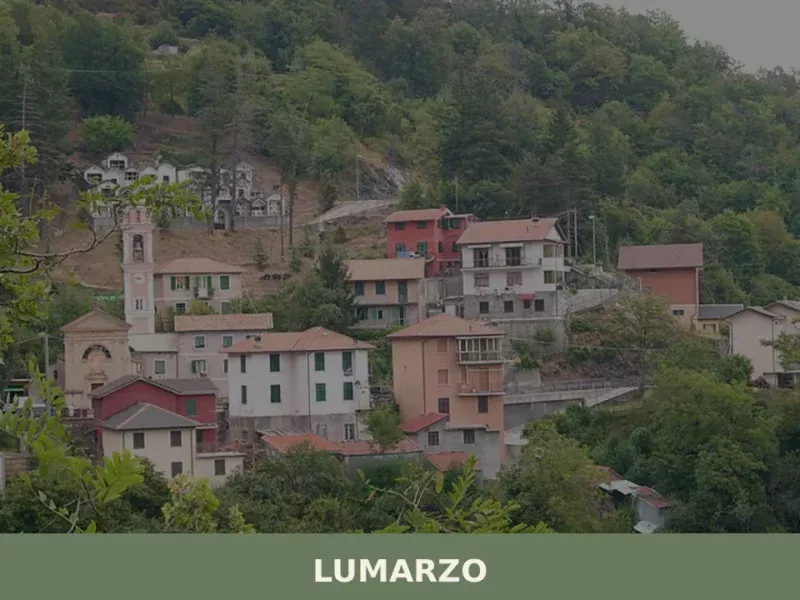
Lumarzo
What to see in Lumarzo: a Ligurian village at 228m with 1,419 residents, historic oratories, Fontanabuona valley trails and the Saint Camillus feast. Plan your visit now.
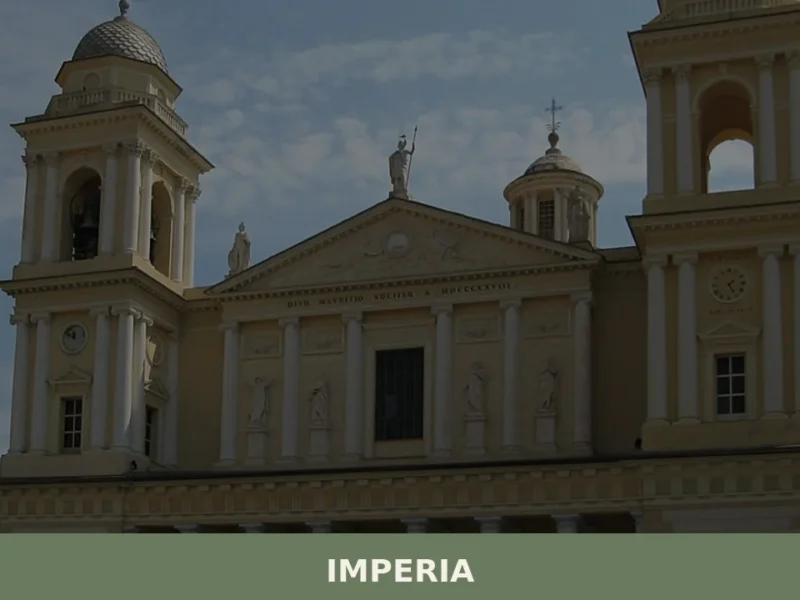
Imperia
What to see in Imperia: dual city rising to 534 m in Liguria. Explore the Parasio, the free Olive Museum and sardenaira. Plan your visit now.
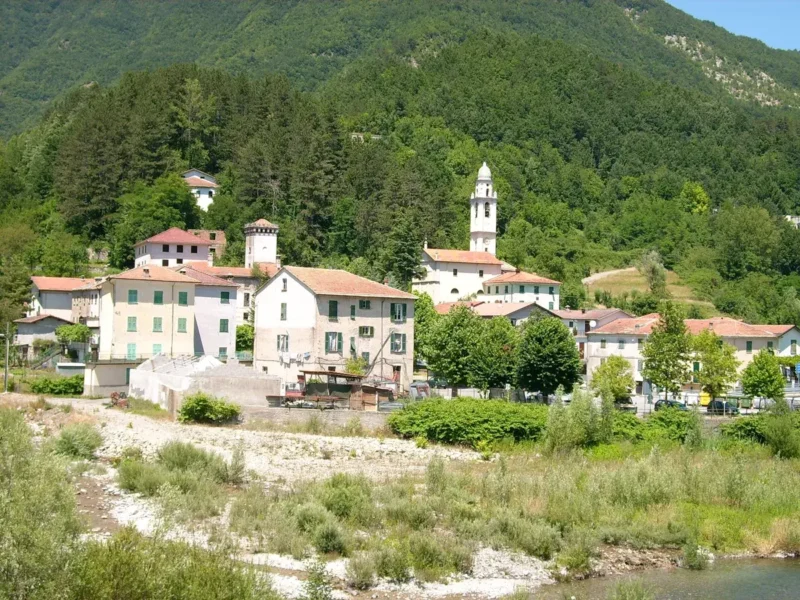
Gorreto
Gorreto: Complete Editorial Guide The stone bridge over the Trebbia, with its centuries-old arches, marks the entrance to Gorreto, a village that reveals itself with the discretion of a place that has watched the passage of people and goods for centuries. At 533 metres above sea level, in the province of Genova, this settlement of […]
🧀 Italian traditional products

📝 Incorrect information or updates?
Help us keep the Lorsica page accurate and up to date.