


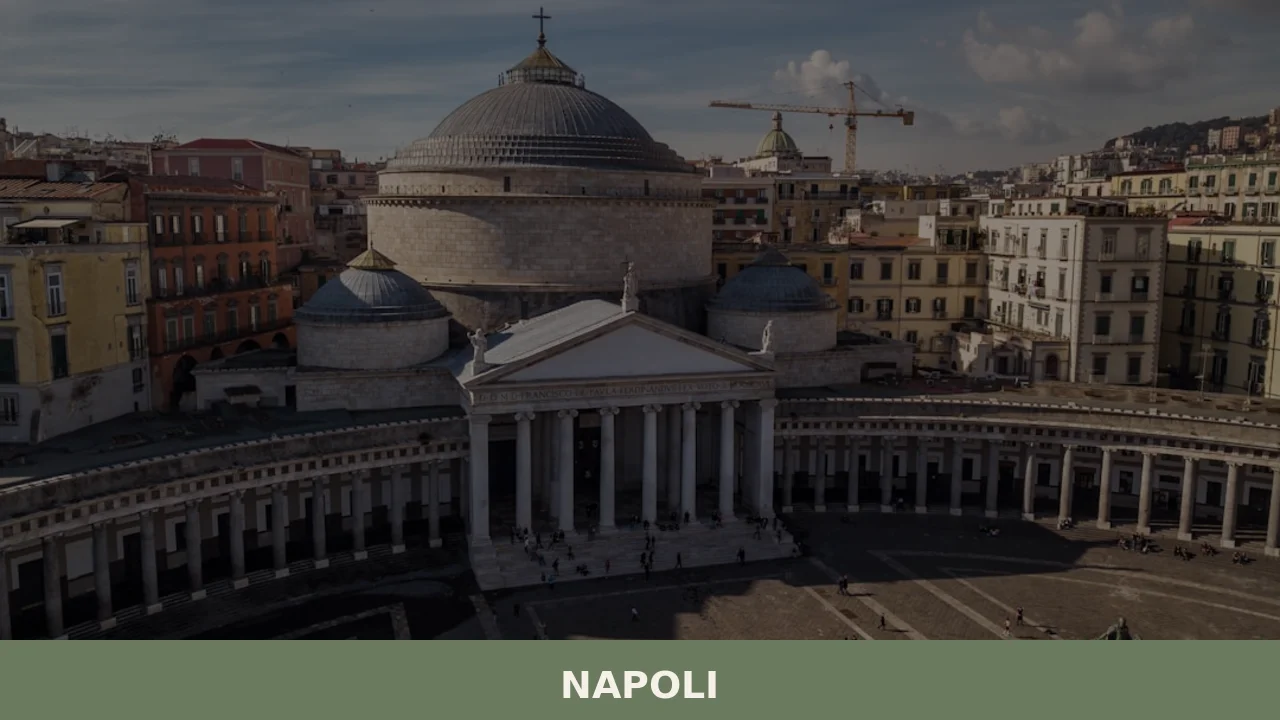
Napoli
What to see in Napoli: 959,052 residents, UNESCO historic centre and Teatro San Carlo (1737). Discover the National Archaeological Museum, Neapolitan pizza and the 19 September San Gennaro feast.
Discover Napoli
Founded by Cumaean settlers in the 8th century BC under the name Parthenope, and later re-established by the Greeks as Neápolis — meaning “new city” — Naples carries its ancient origins in its very name. With a population of 959,052 and an elevation of just 17 metres above sea level, it is the third most populous city in Italy and the cultural, artistic and gastronomic centre of Campania.
Anyone exploring what to see in Napoli will find one of the most concentrated urban heritage sites in Europe: baroque churches, world-class museums, historic squares and a city centre declared a UNESCO World Heritage Site in 1995.
History and Origins of Naples
The roots of Naples reach back to the archaic Greek period.
Around the 8th century BC, settlers from Cumae established a first coastal settlement called Parthenope, on the hill of Pizzofalcone.
Later, around 470 BC, the Cumaeans and inhabitants of Syracuse founded a new urban centre further east, named Neápolis. The city grew rapidly thanks to its strategic port location, becoming one of the most prosperous Hellenic centres in the western Mediterranean.
The Hippodamian urban grid, with three parallel decumani — still identifiable today in Via Anticaglia, Via Tribunali and Via San Biagio dei Librai — shaped the lower city in a way that has endured two thousand years of transformation.
Following the Roman conquest in 326 BC, Naples retained the privileged status of an allied city, preserving the Greek language and institutions for centuries. During the imperial era it became a favoured residence for figures such as Virgil, who died there in 19 BC and was buried in the city. After the fall of the Western Roman Empire, Naples passed under the control of the autonomous Duchy of Naples (763–1139), before being conquered by the Normans and incorporated into the Kingdom of Sicily in 1139.
Under the Swabians — particularly under Frederick II, who founded the University of Naples in 1224, the oldest state university in the world — the city gained European political and intellectual prominence.
The Angevins, who took control in 1266, made Naples the capital of the kingdom and launched major architectural works: Castel Nuovo, known as the Maschio Angioino, was built during this period, from 1279 onwards.
Visitors exploring Campania who wish to understand how the medieval feudal system operated across the region may find useful parallels at Arpaise, a small centre in the Benevento area that retains traces of the same Norman-Swabian system of territorial control.
Aragonese rule, beginning in 1442 under Alfonso V of Aragon, marked a further period of cultural flourishing. Naples became one of the largest cities in Europe, with a population exceeding 100,000 in the 16th century.
In 1503 the Spanish Viceroyalty absorbed the kingdom, and for two centuries the city was governed by the viceroys of Madrid.
In 1734, Charles of Bourbon conquered Naples and established an autonomous kingdom: under Bourbon rule came the Royal Palace of Caserta, the Teatro San Carlo (1737, among the oldest opera houses still in operation in the world), and the launch of excavations at Herculaneum and Pompeii.
With Italian unification in 1861, Naples was absorbed into the new state, losing its role as capital while remaining the principal demographic centre of southern Italy.
What to See in Napoli: Main Attractions
UNESCO Historic Centre and Spaccanapoli
The historic centre of Naples, inscribed on the UNESCO World Heritage List in 1995, is one of the largest continuously inhabited urban settlements in Europe.
The Spaccanapoli axis — the long straight street that cuts through the lower city along the ancient lower decumanus — passes in sequence through churches, aristocratic palaces, artisan workshops and markets.
Along this route stand the Chiesa del Gesù Nuovo (with its rusticated facade of 1470, originally the Sanseverino palace), the Basilica of Santa Chiara with its celebrated 18th-century Majolica Cloister, and the Cappella Sansevero, which houses the Veiled Christ by Giuseppe Sanmartino (1753), a marble sculpture of extraordinary technical complexity.
Anyone considering what to see in Napoli in a single day will find this itinerary difficult to bypass.
Castel Nuovo (Maschio Angioino)
Castel Nuovo, known as the Maschio Angioino, stands on the Naples waterfront and is one of the city’s most recognisable civic buildings. Built from 1279 on the orders of Charles I of Anjou to a design by architect Pierre de Chaule, it was later extended and modified by the Aragonese in the 15th century. The main entrance is marked by the Triumphal Arch in white marble (1443–1471), erected to celebrate the entry of Alfonso V of Aragon.
Inside, the Palatine Chapel preserves frescoes attributed to Giotto.
The castle today houses the Civic Museum, with collections of sculpture, painting and bronzes spanning the 14th to the 19th century.
National Archaeological Museum of Naples
The National Archaeological Museum of Naples (MANN), founded in 1777 by Ferdinand IV of Bourbon, is one of the most significant antiquity museums in the world.
It holds the Farnese collection — acquired by the Bourbons through inheritance from the Farnese family — comprising Greek and Roman sculptures of exceptional quality, including the Farnese Bull and the Farnese Hercules. The museum also contains the largest corpus of finds from the excavations of Pompeii and Herculaneum: mosaics, frescoes, everyday objects and the celebrated Battle of Alexander (a mosaic from the 1st century BC).
The museum is located in Piazza Museo, in the Decumani quarter.
Teatro San Carlo
The Teatro di San Carlo, inaugurated on 4 November 1737 at the behest of Charles of Bourbon, is the oldest opera house continuously in operation in the world, predating both La Scala in Milan and La Fenice in Venice.
The original design was entrusted to architect Giovanni Antonio Medrano. The current structure, with its horseshoe-shaped auditorium seating 1,386, dates from the reconstruction of 1816 following a fire. Composers including Rossini, Donizetti and Verdi all had premieres on the San Carlo stage.
The theatre stands in Piazza del Plebiscito in the historic centre and fits naturally into any itinerary on what to see in Napoli.
Certosa and Museum of San Martino
The Certosa di San Martino, founded in 1325 on the Vomero hill, is one of the most elaborate monastic complexes in southern Italy.
Between the 17th and 18th centuries it was extensively remodelled by architects including Cosimo Fanzago, who oversaw the baroque decoration of the church and cloisters.
Suppressed in 1799 during the Neapolitan Republic, it became a museum in 1866. The National Museum of San Martino now holds collections of Neapolitan painting, sculpture, historic nativity scenes — including the celebrated Cuciniello crib — and documents relating to the history of the city. From the panoramic terrace, the entire Gulf of Naples spreads out below.
Traditional Food and Products of Naples
Neapolitan culinary tradition developed through centuries of layered influences: Greek, Roman, Arab — transmitted via Norman and Swabian rule in southern Italy — Spanish and Bourbon.
The cuisine of Naples is historically a popular one, capable of producing elaborate dishes from modest ingredients.
Proximity to the sea, the fertile volcanic soil of Vesuvius, and access to products such as San Marzano tomatoes — introduced to Europe after 1492 but systematically cultivated in the Neapolitan area from the 18th century — have shaped a gastronomic repertoire recognised worldwide.
The most emblematic dish is undoubtedly Neapolitan pizza, recognised by UNESCO in 2017 as an intangible cultural heritage of humanity in its form as the artisanal tradition of the Neapolitan pizzaiuoli.
The dough requires flour, water, salt and yeast; the canonical variants are the Margherita — with tomato, buffalo mozzarella and basil — and the Marinara — with tomato, garlic, oregano and oil. Equally embedded in the urban fabric are Neapolitan ragù, a slow-cooked meat sauce simmered in tomato for many hours, pasta e fagioli, vermicelli alle vongole and fried baccalà.
Among the desserts, pastiera napoletana — traditionally prepared for Easter with cooked wheat, ricotta, eggs and orange blossom water — and babà al rum, introduced in the 18th century by the Bourbon court.
The database of certified traditional agri-food products (PAT) linked to this territory includes several noteworthy examples that reflect the variety of local and regional production.
‘Ndunderi (PAT) — municipalities: Minori — is a form of ricotta pasta considered among the oldest in Italy. ‘Nfrennula (PAT) — municipalities: Campania — is a dry baked confection with rural origins. Salt-cured anchovies (PAT) — municipalities: Cetara — come from the fishing village of the same name on the Amalfi Coast, long known for the traditional processing of blue fish.
White Fig Vinegar (PAT) — municipalities: Campania — is a condiment produced by fermenting white figs. Acqua di pomodoro (PAT) — municipalities: Campania — is an extract obtained by cold-pressing tomatoes, used as a base condiment.
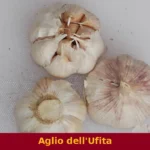
Aglio dell’Ufita (PAT) — municipalities: Ariano Irpino, Grottaminarda, Melito Irpino, Fontanarosa, Villamaina — is a garlic variety cultivated in the Alta Irpinia, with white-pink bulbs and a persistent aroma.
For those wishing to buy fresh local produce directly, Naples’ historic markets offer a hands-on shopping experience.
The Pignasecca market, in the Montesanto quarter, operates every morning and sells fruit, vegetables, fish and dairy products. The Christmas Fair of San Gregorio Armeno — the celebrated street of nativity craftsmen — runs from November to January and draws visitors from across Italy for handmade figurines and Christmas ornaments.
Festivals, Events and Traditions of Naples
The patron saint of Naples is San Gennaro, Bishop of Benevento martyred around 305 AD during the persecutions of Diocletian.
The patron feast is celebrated on 19 September, when the rite of the liquefaction of the blood takes place in the Naples Cathedral (Duomo di Santa Maria Assunta, Via Duomo). The blood of San Gennaro, preserved in two 14th-century silver ampoules, liquefies according to a long-established popular belief: the city follows this event with collective anticipation.
The phenomenon is repeated on the Saturday before the first Sunday of May — marking the anniversary of the translation of the relics — and on 16 December.
The ceremony is open to the public and can be attended through the Cathedral.
Among other documented traditions, the Neapolitan Christmas carries a specific cultural significance: the making of the nativity scene is a centuries-old practice that in Naples produced a genuine artisanal school, centred on Via San Gregorio Armeno. The tradition of the Neapolitan nativity scene dates to the 15th century and reached its greatest elaboration in the 18th, when noble families competed over the opulence of their displays. In terms of music, the classical Neapolitan song — with pieces such as “‘O sole mio” (1898) and “Funiculì Funiculà” (1880) — is an internationally recognised heritage with roots in the Renaissance tradition of the villanelle.
When to Visit Naples and How to Get There
The best time to visit Naples runs from April to June and from September to October.
In spring, temperatures range between 14 and 22 degrees, rainfall is lower than in winter, and the main sites are accessible without the queues of summer. September coincides with the feast of San Gennaro, offering the chance to attend the patron saint’s rite. Summer, with peaks of 30–32 degrees, significantly increases tourist pressure on the historic centre, making museum visits without advance booking more difficult.
Winter is mild — rarely dropping below 7–8 degrees — and allows a more relaxed visit to churches and indoor sites, with the added atmosphere of the San Gregorio Armeno Christmas season.
Naples is well connected on all fronts.
By car, the main access motorways are the A1 (Autostrada del Sole), with exits at Napoli Nord or Caserta Sud from the north, and the A3 Napoli–Salerno from the south; the internal ring road connects the peripheral toll gates to the city centre. By train, Naples Central Station (Piazza Garibaldi) is served by high-speed Frecciarossa and Frecciabianca services with direct connections from Rome (around 70 minutes), Milan, Turin and Venice; timetables and tickets are available at Trenitalia.
By air, Naples Capodichino International Airport — approximately 7 km from the city centre — can be reached by taxi (around 25 minutes) or by the Alibus shuttle running directly to Central Station. For flight information, the official reference site is Naples Airport.
Those planning a regional itinerary may wish to include a stop at Caianello, a municipality in the Caserta area along the A1 corridor and a gateway to northern Campania.
Where to Stay in Naples
The accommodation offer in Naples is among the most varied in southern Italy.
The UNESCO historic centre has numerous bed and breakfasts and boutique hotels housed in historic palaces, often overlooking internal courtyards or with views across the gulf. The Chiaia district and the seafront promenade offer mid-to-upper-range hotels. For those preferring more independent options, holiday rentals and short-let apartments are widely available throughout the centre.
The official website of the Municipality of Naples provides information on registered accommodation and the city’s official tourist services.
Those wishing to extend their stay beyond the city and explore smaller villages with documented historical interest can look towards San Pietro Infine, in the province of Caserta, known for its role in the Second World War and its open-air museum system, or towards Raviscanina, in the Matese area, which offers a mountain landscape setting reachable in under two hours by car from Naples.
Both fit within Campania itineraries that build on what the regional capital already has to offer, complementing any exploration of what to see in Napoli and the surrounding region.
In Campania More villages to discover
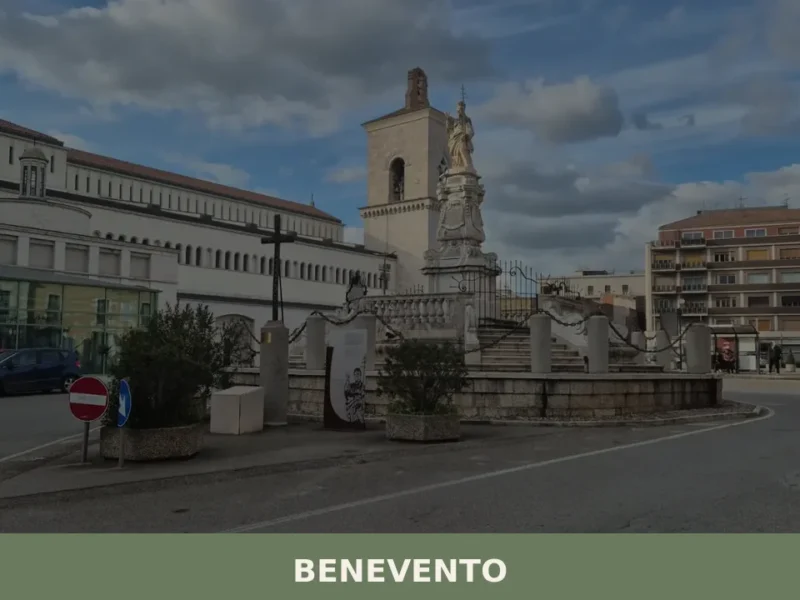
Benevento
Uncover the rich history and beautiful landscapes of the village of Benevento in Campania, Italy. Plan your visit to this charming Italian gem today!
Castel di Sasso
Castel di Sasso, a small municipality in the province of Caserta with 1,051 inhabitants, has historical roots documented since the 10th century, when it was already attested as a fortified settlement in the fertile Terra di Lavoro. At 200 meters above sea level, the village developed on the Caserta plain, a location that influenced both […]
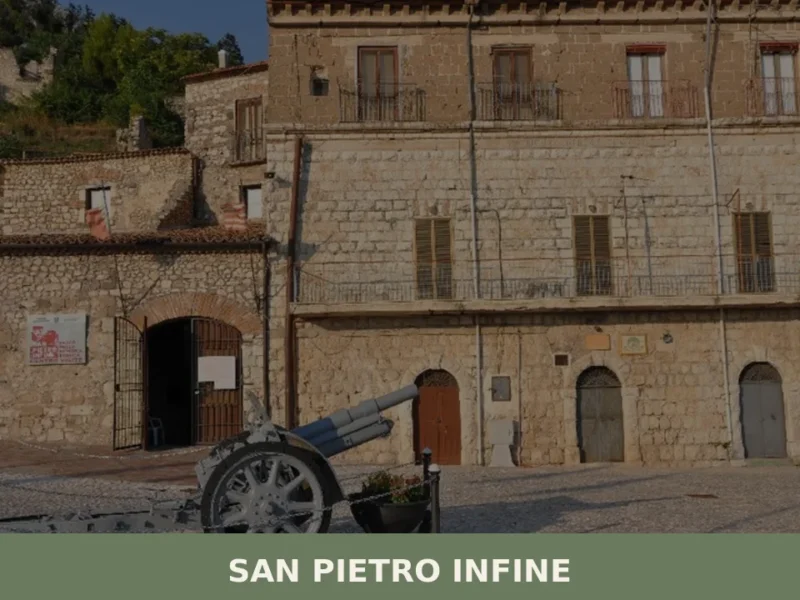
San Pietro Infine
In December 1943, San Pietro Infine was the scene of one of the bloodiest battles of the Italian Campaign, an event that saw the town almost completely razed to the ground and subsequently rebuilt. This historical memory deeply defines the identity of the village, located 140 meters above sea level in the province of Caserta, […]




📝 Incorrect information or updates?
Help us keep the Napoli page accurate and up to date.