


Albinea
 Plains
What to see in Albinea, Italy: explore 8,882 inhabitants, medieval history since 980 AD, Apennine foothills landscape and local food. Discover the full guide.
Discover Albinea
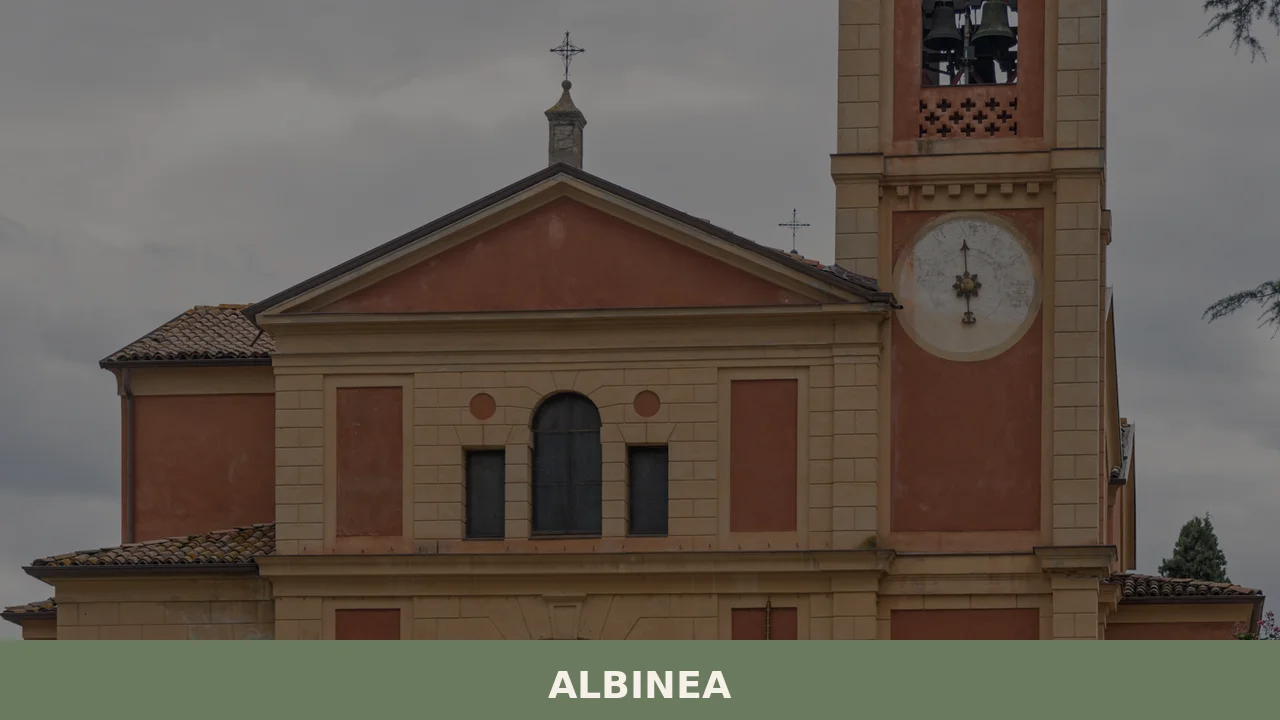
The document is precise: in 980 AD, Holy Roman Emperor Otto II put his seal to a text recognising the existence and rights of the ancient pieve — the rural parish church that served scattered farming communities across the hills — of Albinea.
That single act of imperial administration fixed a place on the map that had already existed long enough to require formal recognition.
At 166 m (544 ft) above sea level, the municipality sits exactly where the flatness of the Po plain begins to corrugate into the lowest ridges of the northern Apennines, with Reggio Emilia visible to the northeast and the higher peaks climbing southward behind.
For those planning a visit, what to see in Albinea ranges from the medieval ecclesiastical landscape to the rolling hillside terrain that marks the transition between two distinct geographies.
The municipality covers the border zone between plains and foothills, offering visitors an immediate reading of the Emilian landscape without requiring long mountain detours.
With a resident population of 8,882 and a position just 10 km (6.2 mi) from Reggio Emilia, Albinea functions as both a self-contained destination and a practical base for exploring this part of the Comune di Albinea province.
History of Albinea
The name Albinea appears in its local Reggiano dialect as Albinèa or, colloquially, La Fôla.
The earliest verified reference to the settlement dates to 980 AD, when Otto II issued the document confirming the standing of the local pieve. This act was not a founding gesture but a recognition of existing structures, which means the community and its parish organisation predated the year 980 by an undetermined period.
The imperial document placed Albinea within the web of ecclesiastical and political authority that characterised the late Ottonian era in northern Italy.
From 1070 onward, the bishops of Reggio assumed direct possession of Albinea, holding both territorial rights and a physical residence in the municipality.
This episcopal phase lasted for several centuries and left a clear imprint on the settlement’s layout and its relationship to the surrounding contado, the rural hinterland administered from Reggio Emilia. In 1412 the political status of Albinea changed again when it passed into the hands of the Manfredi family as a feudal fief.
The Manfredi, a prominent dynasty with strongholds across the Emilia-Romagna region, retained control of Albinea until 1730, a period of more than three centuries during which the village’s agricultural and administrative character solidified.
Visitors interested in comparable patterns of medieval feudal control in the wider Apennine zone may find it useful to read about Castel di Casio, another Emilian community whose history was shaped by successive overlords across the same centuries.
After 1730, when Manfredi feudal authority ended, Albinea continued on the trajectory that had defined most of its existence: a rural village organised around agriculture, positioned close enough to Reggio Emilia to participate in the economic life of the city while retaining its own distinct identity.
The short distance from the provincial capital — consistently around 10 km (6.2 mi) — meant that Albinea developed in parallel with Reggio rather than in isolation from it.
Today that relationship persists in a practical form, with a significant share of residents commuting daily to Reggio Emilia for work. Since 1997, Albinea has maintained a formal twin-town relationship with Treptow-Köpenick, a district in eastern Germany, reflecting the post-unification municipal partnerships common across European local governments of that decade.
What to see in Albinea, Emilia-Romagna: top attractions
The Ancient Pieve of Albinea
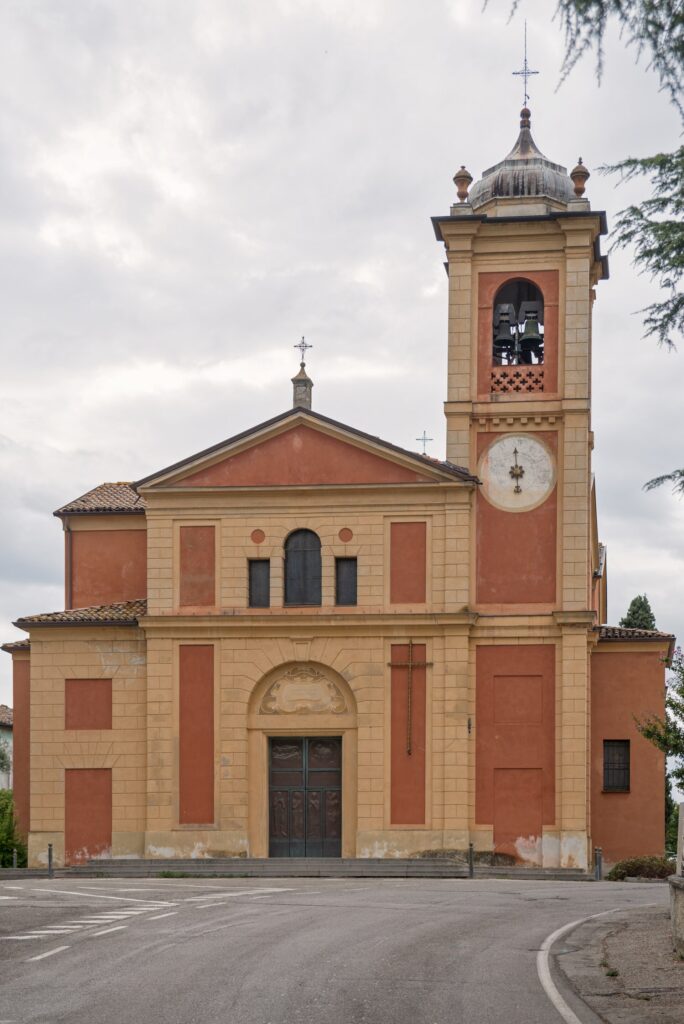
The oldest documented institution in the territory, the pieve of Albinea appears by name in the 980 imperial decree of Otto II.
A pieve in medieval Italy was not simply a church but a baptismal centre with jurisdiction over a wide area of scattered hamlets, making it the administrative and spiritual anchor of the entire settlement. Standing before the structure today, visitors can read the building as the physical continuation of an ecclesiastical function that predates any other verified element of the village’s biography.
The building’s role as a territorial reference point explains why it required imperial documentation in the first place — it was already significant enough to protect.
The Apennine Foothills Landscape of Albinea
At 166 m (544 ft), Albinea occupies the transition zone between the flat agricultural Po plain to the north and the ascending ridges of the northern Apennines to the south.
This dual geography is readable within the municipality’s own boundaries: the terrain tilts perceptibly, fields give way to vineyard rows and scattered woodland, and the horizon shifts from open flatness to layered ridgelines.
The municipality borders five other comuni — Quattro Castella, Reggio Emilia, Scandiano, Vezzano sul Crostolo and Viano — each representing a slightly different expression of this foothills landscape.
The best period to observe the countryside’s full colour range runs from late September through November, when the vine leaves turn and the light sits low over the plain.
The Municipal Territory Bordering Quattro Castella
The northern border of Albinea meets the municipality of Quattro Castella, whose name — meaning “four castles” — records the medieval fortification system that controlled this stretch of the Emilian foothills.
Walking or driving the boundary zone between the two municipalities reveals a layered defensive landscape where each elevated point once served a surveillance or military function. The terrain between the two comuni remains largely agricultural, with scattered farmhouses that in many cases occupy positions continuous with older settlement patterns.
For visitors building an itinerary in this part of the Province of Reggio Emilia, the Quattro Castella direction from Albinea provides a clear visual introduction to the medieval territorial logic of the area.
The Village Centre of Albinea
The built fabric of Albinea reflects its long history as a commuter and service village for Reggio Emilia, with a centre that mixes older agricultural-era buildings with mid-twentieth-century residential expansion.
The documents current civic services and local events, providing a practical index of the village’s present-day infrastructure.
The main public spaces give access to local commerce, administrative offices and the kinds of everyday services that distinguish a functioning comune from a purely rural settlement. Visiting the centre on a weekday morning, when the rhythms of local life are most visible, gives a clearer picture of how 8,882 residents organise daily life at the foot of the Apennines.
The Cross-Border Countryside Toward Scandiano and Viano
The eastern and southern boundaries of Albinea touch Scandiano and Viano respectively, two municipalities that extend the hillside landscape deeper into the Apennine foothills. The Scandiano direction opens toward ceramic-producing territory, while the Viano boundary marks the beginning of more elevated terrain.
Roads connecting Albinea to these neighbours pass through a sequence of agricultural holdings, small hamlets and vineyard blocks that represent the working productive landscape of the Reggio Emilia province.
Visitors who explore what to see in Albinea often extend their routes along these secondary roads, which carry limited traffic and run through countryside that shifts in character over relatively short distances of 5–12 km (3.1–7.5 mi).
Local food and typical products of Albinea
Albinea sits squarely within one of Italy’s most precisely defined food-production zones.
The Province of Reggio Emilia is one of the five provinces — alongside Parma, Modena, Mantua and Bologna — authorised to produce Parmigiano Reggiano, the hard granular cheese aged a minimum of 12 months under its protected designation of origin.
The territory around Albinea, positioned at the base of the Apennines where the climate moderates slightly compared to the open plain, has historically supported the dairy farming that feeds the caseifici, the specialist cheese dairies, operating in the wider province.
The Reggiano gastronomic tradition is one of the most codified in Italy, and Albinea, as part of that province, participates directly in it.
The table in this part of Emilia-Romagna centres on a small number of preparations made with high-quality primary ingredients. Tortelli d’erbetta — fresh egg pasta squares filled with ricotta and Swiss chard, seasoned with Parmigiano Reggiano and butter — represents the most locally distinctive first course, distinguishing Reggiano cooking from the pumpkin-filled tortelli of Mantua immediately to the north.
Erbazzone, a flat savoury tart of Swiss chard, pancetta, garlic and onion baked between two layers of short pastry, is sold by the slice in local bakeries and eaten as a midday snack or a light meal.
Cappelletti in broth, smaller than tortellini and filled with a meat-and-cheese mixture, appear consistently at formal Sunday meals and during the winter festival season.
Among certified products, the area participates in the production of Parmigiano Reggiano (PDO — Protected Designation of Origin), produced across the municipalities of the Province of Reggio Emilia, including Albinea, Reggio Emilia, Scandiano, Quattro Castella and the broader provincial territory.
Lambrusco Reggiano (DOC — Denominazione di Origine Controllata) is the red sparkling wine produced from Lambrusco grape varieties in the Reggio Emilia province; its effervescent, relatively low-alcohol profile makes it the standard table wine pairing for the fatty cured meats and egg pasta of the local kitchen.
Aceto Balsamico Tradizionale di Reggio Emilia (PDO) is produced in small batches from cooked grape must aged in progressively smaller barrels over a minimum of 12 years, with select batches reaching 25 years and beyond; production is centred in Reggio Emilia and its surrounding municipalities.
Local food markets in the Province of Reggio Emilia operate on a weekly cycle across the smaller comuni, with Albinea’s proximity to Reggio Emilia giving residents and visitors access to the city’s larger weekly market, typically held on Wednesday and Saturday mornings in the central squares.
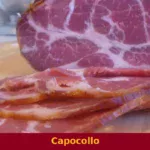
Cured meats — particularly salame and coppa produced by local butchers — are available from specialist salumerie in the village and in Reggio Emilia.
The autumn months, from October through November, coincide with the new wine release period for Lambrusco and with local food events across the province.
Festivals, events and traditions of Albinea
The patron saint of Albinea is San Gaetano di Thiene, a sixteenth-century Italian religious reformer and co-founder of the Theatine order, whose feast day falls on 7 August.
The celebration of the patron saint’s day is the primary fixed point in Albinea’s religious and civic calendar. In Italian villages of this size and tradition, the feast of the patron typically involves a solemn Mass in the main parish church, a public procession through the village streets carrying the image or statue of the saint, and an evening programme that may include local music and communal gathering in the main square.
The August timing places the feast within the peak of the Italian summer, when many residents return to their home village and the community is at its largest.
The feast of San Gaetano on 7 August also provides the occasion for informal food gatherings and local market activity that accompany the religious ceremonies.
In the broader context of Emilian village life, the patron saint’s day functions as an annual reference point that structures the local social calendar. Albinea’s position close to Reggio Emilia means that provincial-level events and fairs — including the autumn agricultural fairs and food festivals that mark the harvest season across the province — are within easy reach for residents and visitors based in the village.
When to visit Albinea, Italy and how to get there
The best time to visit Albinea and the surrounding Reggio Emilia province falls between late April and early June, and again from mid-September through October.
Spring brings mild temperatures across the Emilian foothills, with the hillside vegetation at full growth and the risk of summer heat not yet established.
Autumn offers cooler conditions, harvest-season food activity across the province, and a clear quality of light that makes the transition between plain and hill particularly readable.
The summer months from July through August are warm and can be humid on the plain, though Albinea’s slight elevation provides some moderation relative to Reggio Emilia itself. Winter visits are feasible but the landscape is at its least varied, and some local businesses reduce hours between January and February.
Albinea sits approximately 10 km (6.2 mi) southwest of Reggio Emilia and about 60 km (37 mi) west of Bologna, making it straightforward to reach from either city. From Bologna, the A1 motorway connects to the A22 toward Reggio Emilia, with the Reggio Emilia exit providing the most direct access; from the exit, Albinea is reachable in roughly 15–20 minutes by road heading southwest.
If you arrive by car on the A1/E35 corridor from Milan — approximately 130 km (81 mi) to the northwest — the same Reggio Emilia junction applies.
The nearest major rail hub is Reggio Emilia, served by Trenitalia with frequent connections to Bologna (approximately 30 minutes on fast services) and Milan (approximately 50–60 minutes on high-speed services).
From Reggio Emilia station, local bus services and taxis cover the 10 km (6.2 mi) to Albinea. The nearest airport with international connections is Bologna Guglielmo Marconi Airport, located approximately 65 km (40 mi) from Albinea; a transfer by train to Reggio Emilia and then by local transport to Albinea takes approximately 75–90 minutes in total.
International visitors should be aware that English is not widely spoken in smaller local shops and services; carrying Euros in cash is advisable for purchases in village establishments and at local markets.
For those planning a day trip from Bologna, Albinea fits naturally into a route that takes in Reggio Emilia in the morning and uses Albinea and its surrounding countryside as an afternoon destination, returning to Bologna by early evening on one of the frequent rail services.
Visitors building a longer itinerary through Emilia-Romagna can combine Albinea with the wider provincial territory; the village of Grizzana Morandi, set in the Apennine hills south of Bologna, offers a contrasting experience of the mountain landscape within the same regional context and is reachable as part of an extended Emilia-Romagna circuit.
Visitors to Albinea who wish to extend their exploration further across the region may also consider Ferrara, the Este dynasty city to the northeast, which represents a contrasting model of Emilian urban history and is connected to the regional rail network with direct links from Reggio Emilia.
Those drawn specifically to the Apennine foothills can extend the journey south and west to Zerba, a small municipality in the higher Apennine zone that shows a markedly different landscape and settlement pattern from Albinea’s borderline position between plain and hill.
Knowing what to see in Albinea is ultimately about understanding its geography: a municipality that reads two landscapes at once and sits within one of Italy’s most productive and historically documented food and wine regions.
Frequently asked questions about Albinea
What is the best time to visit Albinea?
Late September through November is ideal for experiencing Albinea's countryside at its most vivid, when vine leaves turn golden and the light stretches low across the Po plain. Summer visitors should note the feast day of patron saint San Gaetano di Thiene on 7 August, which brings local celebrations to the village centre. Spring offers pleasant temperatures for exploring the foothills borderland. Winter is quieter but well-suited to food-focused visits, when cappelletti in broth and aged Parmigiano Reggiano are at their most prominent on local tables.
What are the historical origins of Albinea?
Albinea's earliest documented reference dates to 980 AD, when Holy Roman Emperor Otto II issued a decree recognising the existing pieve — a rural baptismal parish — already established in the territory. This was a formal recognition, not a founding act, meaning the settlement predated 980 by an unknown period. From 1070, the bishops of Reggio held direct possession. In 1412 the Manfredi family took feudal control, retaining it until 1730. The village's local dialect names are Albinèa and, colloquially, La Fôla.
What to see in Albinea? Main monuments and landmarks
The primary documented landmark is the ancient pieve of Albinea, a rural baptismal church recorded by name in Otto II's imperial decree of 980 AD. As the oldest verified institution in the territory, it served as the spiritual and administrative anchor for the surrounding hamlets throughout the medieval period. The village centre preserves older agricultural-era buildings alongside more recent structures. The boundary zone toward Quattro Castella, whose name records four medieval castles, offers a readable introduction to the fortified defensive landscape of the Emilian foothills.
What are the main natural or scenic attractions of Albinea?
Albinea occupies the transition zone between the flat Po plain to the north and the ascending northern Apennine ridges to the south, all within a single municipality at 166 m above sea level. The terrain shifts noticeably within the communal boundaries: open agricultural fields give way to vineyard rows and scattered woodland as the land tilts southward. The municipality borders five comuni — Quattro Castella, Reggio Emilia, Scandiano, Vezzano sul Crostolo and Viano — each accessible via secondary roads that pass through working agricultural and vineyard landscapes over distances of 5–12 km.
Where to take the best photos in Albinea?
The most rewarding photographic perspectives are found along the southern and eastern approaches of the municipality, where the dual geography — flat Po plain to the north, ascending Apennine ridgelines to the south — is simultaneously visible. The boundary roads toward Quattro Castella reveal elevated points once used for medieval surveillance, offering views across layered hillside terrain. Late September to November provides the strongest light conditions and vine colour. The countryside toward Viano marks the start of more elevated terrain and adds depth to southward-facing compositions.
What can you do in Albinea? Activities and experiences
Albinea is well-suited to food and wine exploration within the Parmigiano Reggiano and Lambrusco Reggiano production zone. Driving or cycling the secondary roads connecting Albinea to neighbouring comuni — Scandiano to the east, Viano to the south, Quattro Castella to the north — passes through vineyard blocks, farmhouses and hamlets representing the active agricultural landscape of Reggio Emilia province. The village also functions as a practical base for day trips to Reggio Emilia, 10 km to the northeast, and onward to Scandiano's ceramic-producing territory.
Who is Albinea suitable for?
Albinea suits visitors with an interest in rural Emilian landscape, food culture and medieval ecclesiastical history. Couples and independent travellers who prefer authentic small-town rhythms over tourist infrastructure will find the village's proximity to Reggio Emilia convenient without sacrificing a genuine local atmosphere. Food enthusiasts focused on Parmigiano Reggiano, Lambrusco and traditional Reggiano cuisine will find the territory directly productive. Families looking for a relaxed countryside base within easy reach of a provincial city are also well served by Albinea's position just 10 km from Reggio Emilia.
What to eat in Albinea? Local products and specialties
Albinea falls within the certified production zone for Parmigiano Reggiano PDO, aged a minimum of 12 months, and Aceto Balsamico Tradizionale di Reggio Emilia PDO, produced from cooked grape must aged at least 12 years. Lambrusco Reggiano DOC is the local sparkling red wine. Traditional dishes include tortelli d'erbetta — egg pasta filled with ricotta and Swiss chard — and erbazzone, a savoury tart of Swiss chard, pancetta and garlic sold by the slice in local bakeries. Cappelletti in broth appears at Sunday meals and winter festivals throughout the province.
📷 Photo Gallery — Albinea
Nearby Villages near Albinea
In Emilia-Romagna More villages to discover
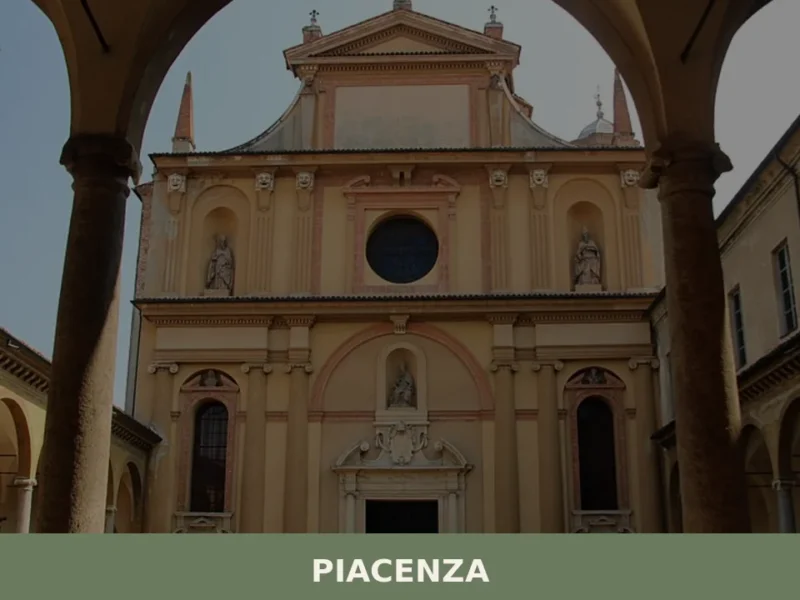
Piacenza
Plains
Piacenza, with its 100,843 inhabitants and an altitude of 62 m a.s.l., presents itself as a significant urban center in the heart of Emilia-Romagna, strategically positioned among the communication routes connecting Northern Italy. In this article History and Origins of Piacenza What to see in Piacenza: main attractions Typical cuisine and products of Piacenza Festivals, […]
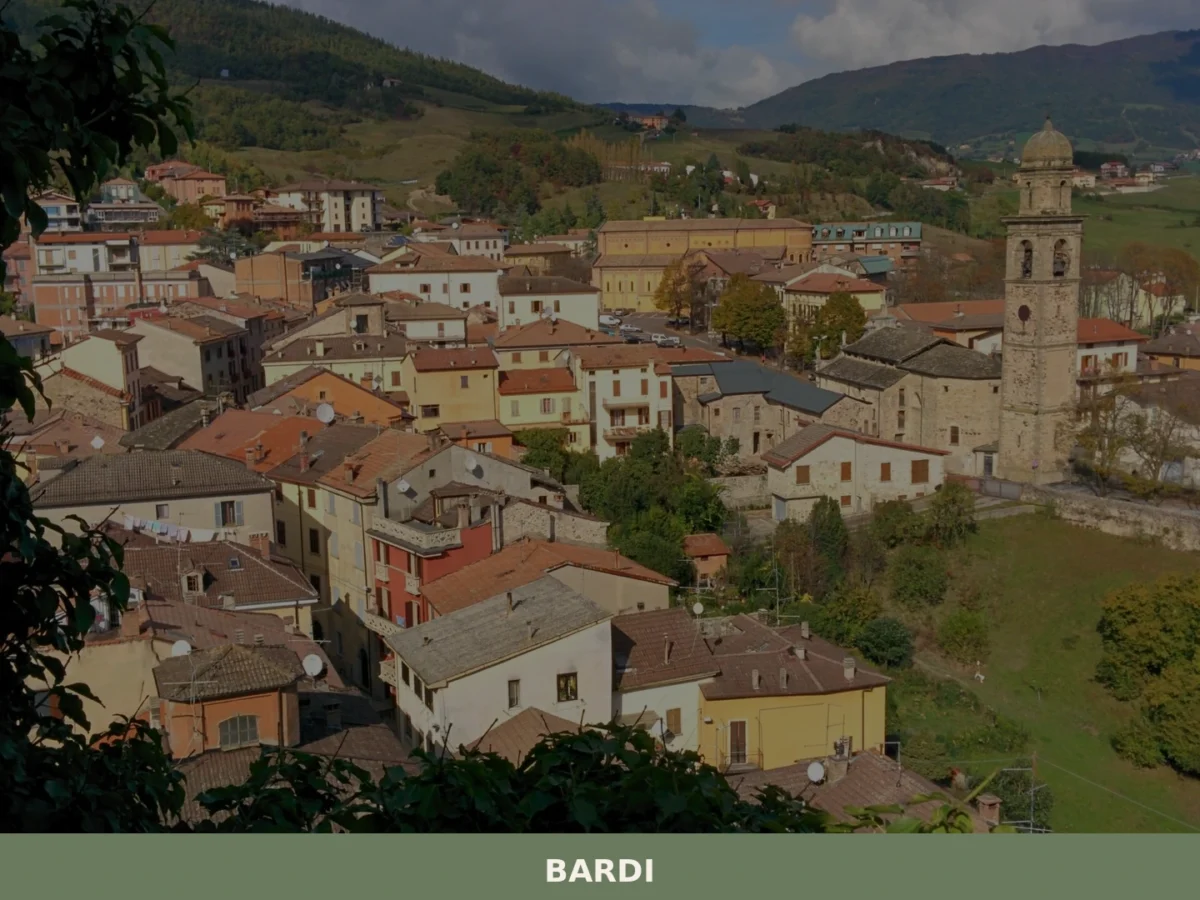
Bardi
 Mountain
What to see in Bardi, Italy: Explore the Landi Castle and its 13th-century Oratory at 625 m altitude. Discover this mountain village in Emilia-Romagna.
Castell’Arquato
 Hills
Hills
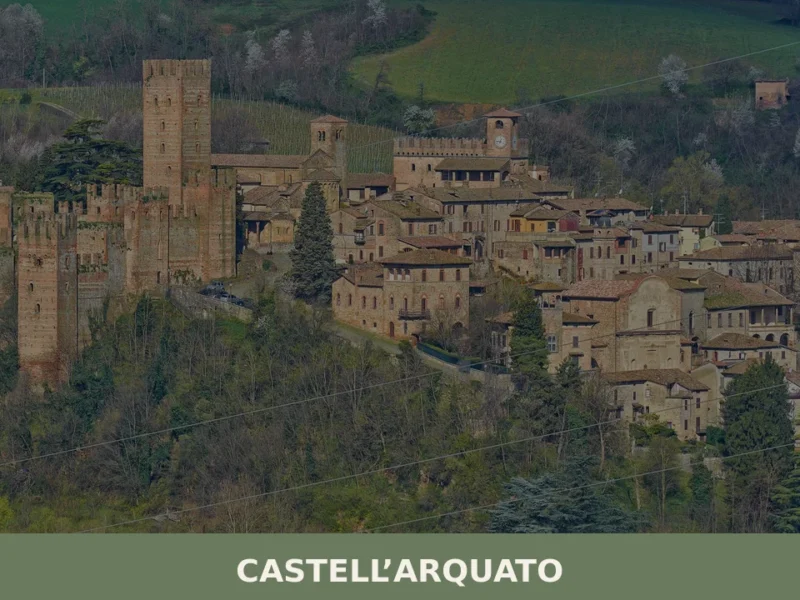
In the upper Val d’Arda valley, at around 150 metres above sea level, Castell’Arquato is one of the best-preserved medieval villages in the province of Piacenza. In this article History and Origins of Castell'Arquato What to See in Castell'Arquato: Main Attractions Local Cuisine and Products of Castell'Arquato Festivals, Events and Traditions of Castell'Arquato When to […]
Campegine
Plains
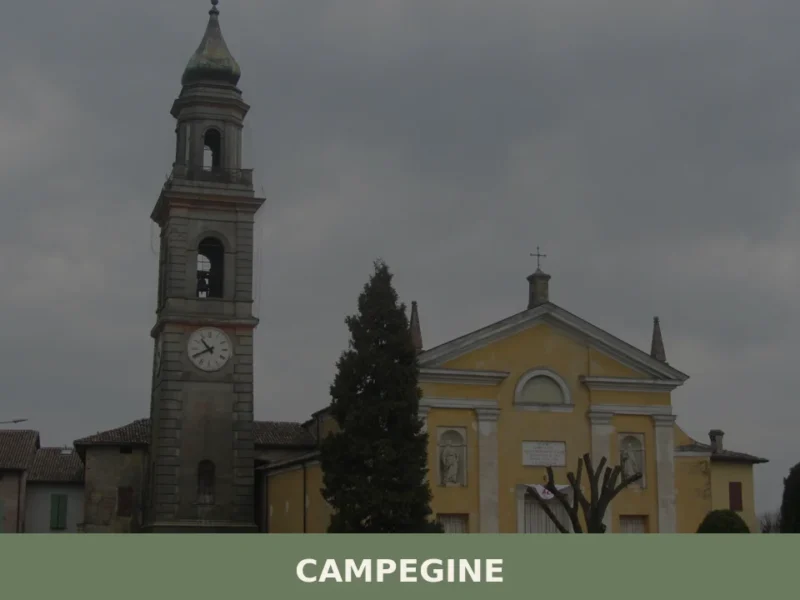
What to see in Campegine, Emilia-Romagna, Italy: explore the hometown of the Cervi Brothers, local food traditions and festivals. Population 5,078. Discover now.
San Pietro in Cerro
Plains
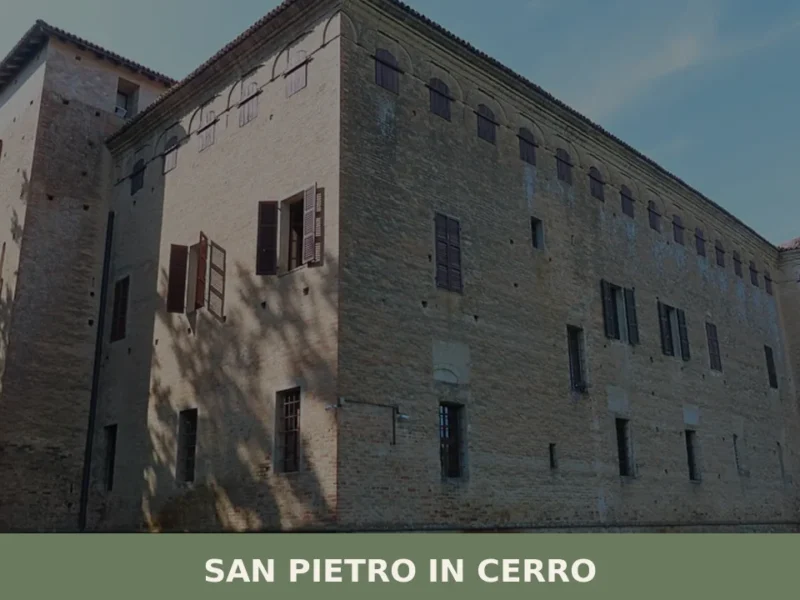
With its 769 inhabitants and an elevation of just 44 metres above sea level, San Pietro in Cerro is one of the smallest municipalities in the province of Piacenza, spread across the alluvial plain between the Arda torrent and the Po river. The fifteenth-century castle of the Barattieri counts, still standing today with its square-plan […]
Gazzola
Plains
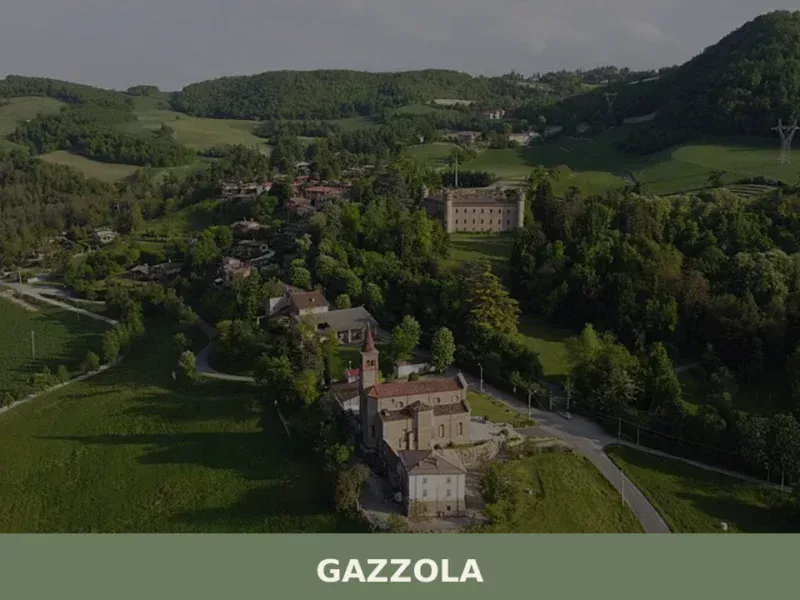
What to see in Gazzola, a Piacenza hill village at 146 m with 2,050 residents. Explore Rivalta Castle, the Luretta valley and Colli Piacentini DOC wines. Plan your visit.
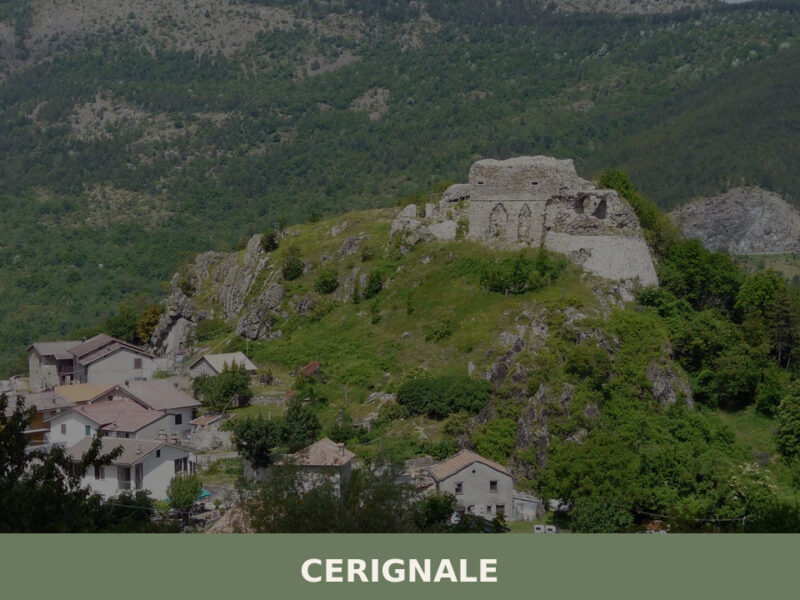
Cerignale
Mountain
Cerignale, a 117-resident village at 725 metres in the Piacenza Apennines, holds medieval ruins, a geological elephant, and the silence of the upper Val Trebbia.
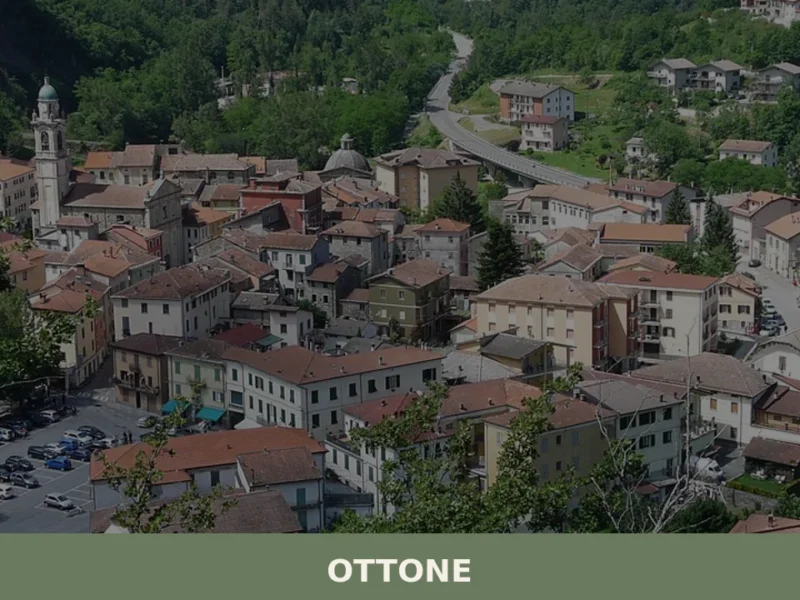
Ottone
Hills
Discover what to see in Ottone, the village at 510m above sea level in Val Trebbia. Explore the Church of San Marziano and the castle ruins. Plan your visit!
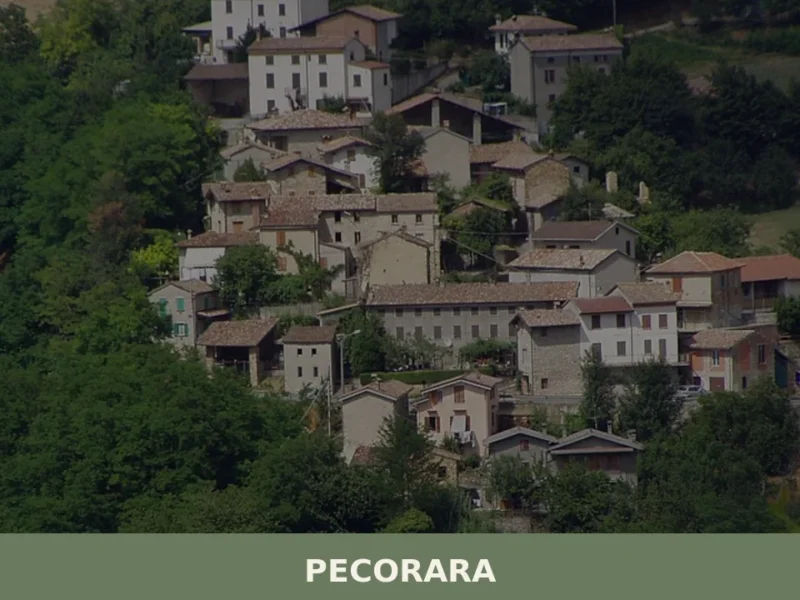
Pecorara
Hills
What to see in Pecorara? Discover 5 must-see attractions in this Emilia-Romagna village. Read the full guide and plan your visit!
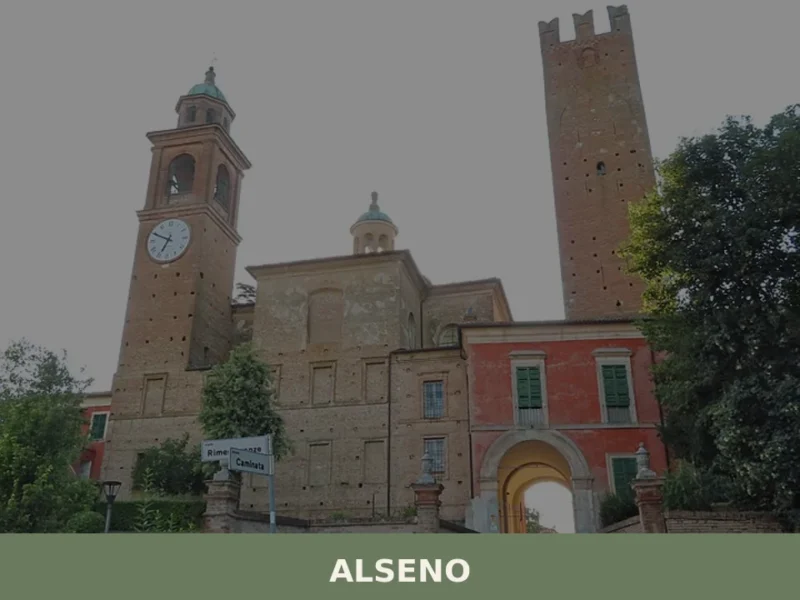
Alseno
Plains
Alseno sits at 79 metres above sea level in the province of Piacenza, on the plain crossed by the Ongina stream, a tributary of the Po. In this article History and Origins of Alseno What to See in Alseno: Main Attractions Local Food and Products of Alseno Festivals, Events and Traditions of Alseno When to […]
🏡 Know Albinea better than we do?
If you’re a local or have been there, your knowledge matters: add what’s missing or fix a detail on this page.