


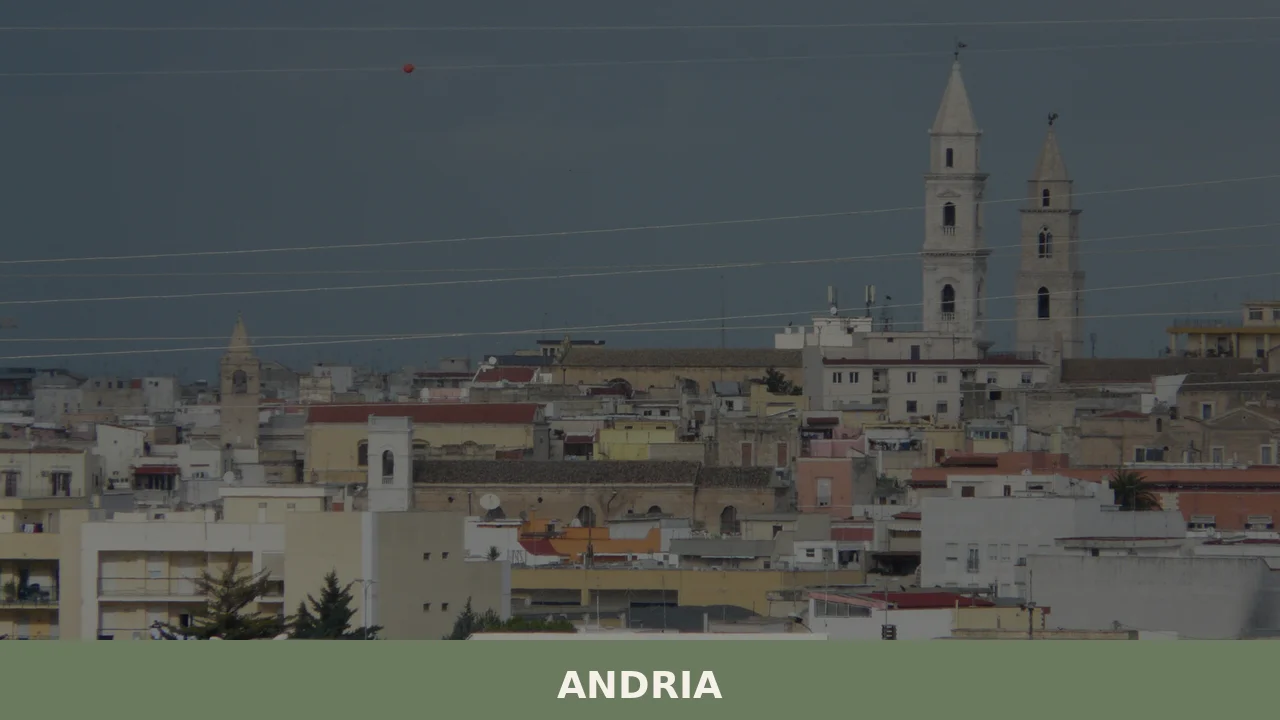
Andria
 Plains
What to see in Andria, Puglia, Italy: explore Castel del Monte UNESCO site, the Cathedral crypt, and local products. Population 97,146. Discover the complete guide.
Discover Andria
Limestone dust settles on the octagonal towers of Castel del Monte on still summer mornings, and the surrounding Murge plateau rolls away in every direction without interruption — a plateau of grey-white rock, olive groves, and almond trees that the 13th-century poet Cesare Malpica described as seeming to flee as you pass by. At 151 m (495 ft) above sea level, the city sits 10 km (6.2 mi) from the Adriatic coast and from the town of Barletta, far enough inland that the sea breeze arrives already dried by the plateau wind.
The Murge is not soft countryside; it is exposed, demanding, and historically strategic.
Deciding what to see in Andria means navigating nearly three thousand years of continuous settlement, from Neolithic obsidian tools found in the local territory to a UNESCO World Heritage castle that Frederick II ordered built in the 13th century.
With a population of 97,146 inhabitants, Andria is the largest municipality in the province of Barletta-Andria-Trani and the fourth-largest city in Puglia after Bari, Taranto, and Foggia. Visitors to Andria find a layered urban fabric where Norman gates stand alongside Baroque church facades, and where the Cathedral shelters a royal crypt that few guides properly explain.
History of Andria
The earliest confirmed human presence in the territory of Andria dates to the Neolithic period, documented by finds of obsidian knives and flint weapons. During the subsequent Eneolithic period, people carved cave dwellings into the local tuff, and by the Bronze Age they were constructing cylindrical buildings with cone-shaped roofs structurally similar to the trulli of later Puglian tradition. Burial mounds built with rough stones — tumuli — have been identified in the districts of Santa Barbara, Santa Lucia, and Castel del Monte.
Around 1000 BC, the Iapygians occupied the broader Apulian territory, followed in the 8th century BC by the Peucetians.
The first urban settlement is associated with Greek colonisation: a city named Netium arose near present-day Andria, mentioned by the geographer Strabo in his Geographica. Survivors of the Battle of Cannae in 216 BC — the catastrophic Roman defeat of the Second Punic War — took refuge in Netium. The city declined following the civil conflicts between Marius and Sulla around 88 BC, and part of its population is recorded as having moved southward to the coast, founding what became present-day Giovinazzo.
The medieval chapter of Andria opens in 1046, when the Norman captain Peter took the city from Byzantine rule, elevating it to the rank of civitas — a fortified urban centre — with twelve towers, three gates, and a citadel at its highest point. His son Peter II was recognised as Count in 1073.
The 13th century brought the city its defining moment: loyal to Swabian rule, Andria became a favoured residence of the Holy Roman Emperor Frederick II, who ordered the construction of Castel del Monte on the site of a previous Norman Benedictine abbey.
Frederick’s son Conrad IV was born in Andria in 1228; his mother, Yolanda of Brienne, Queen of Jerusalem, died at sixteen following childbirth and was buried in the crypt of the city’s cathedral. Returning from the Sixth Crusade, Frederick II had an inscription carved on the Norman Porta Sant’Andrea — “Andria fidelis, nostri affixa medullis” — attesting to the bond between emperor and city.
Under Angevin rule, the city passed to the del Balzo family, and in 1438 an event of considerable local consequence occurred: the body of the city’s patron saint, Richard of England, which had been secretly hidden in the Cathedral during the Hungarian siege of 1350 by a priest named Oliviero Matusi, was finally rediscovered. To mark the occasion, a fair was established — the Fiera d’Aprile — held from April 23 to 30, still running nearly 600 years later.
In 1503, the plain between Andria and Corato was the site of the Disfida di Barletta, the famous challenge in which thirteen Italian knights led by Ettore Fieramosca faced thirteen French knights; that morning the Italian contingent prayed in the chapel of Andria’s cathedral.
The city later passed through the hands of the Gonzalo Fernández de Córdoba and then, in 1552, to Fabrizio Carafa, 1st Duke of Andria, who substantially restored the Ducal Palace. The Carafa dynasty remained dominant into the 18th century, marked by recurring conflicts with the local bishop and cathedral chapter over land ownership, and by the plague epidemic of 1656 that severely reduced the population.
What to see in Andria, Puglia: top attractions
Castel del Monte
The castle’s eight octagonal towers rise from a bare limestone ridge at approximately 540 m (1,772 ft) above sea level, with no moat, no drawbridge, and no stables — an architectural composition that has resisted simple classification since Frederick II ordered its construction in the 13th century.
Elected a UNESCO World Heritage Site, it stands on the site of a previous Norman Benedictine abbey and incorporates mathematical ratios and astronomical alignments that scholars have studied for decades without reaching consensus.
Standing at the entrance portal, carved in classical Roman marble against the local limestone body, the precision of the stonework is immediately legible. The castle is located approximately 18 km (11.2 mi) from the centre of Andria and is accessible by road; the site is managed as a public monument with defined visiting hours.
Cathedral of Andria and the Royal Crypt
The Cathedral of Andria holds in its crypt the remains of Yolanda of Brienne, Queen of Jerusalem, who died in 1228 at the age of sixteen after giving birth to Conrad IV — a fact that places this relatively understated space in direct contact with the imperial history of the Swabian dynasty. The crypt also held, at various points, the body of Saint Richard of Andria, the city’s patron saint, hidden here by the priest Oliviero Matusi during the Hungarian siege of 1350 to prevent its seizure. The cathedral fabric reflects interventions across several centuries, and the Norman Porta Sant’Andrea — bearing Frederick II’s inscription — stands in the immediate vicinity.
Visiting in the morning provides the best light for reading the carved stone details.
Basilica of Santa Maria dei Miracoli
The Basilica of Santa Maria dei Miracoli owes its existence to a specific event: the discovery in 1576 of an icon deemed miraculous by the local population, after which Duke Fabrizio Carafa ordered the construction of both the basilica and an adjoining Benedictine monastery.
The building that resulted combines late-Renaissance structural logic with Baroque decorative additions layered in over the following centuries, producing an interior where the original spatial geometry is still legible beneath the ornamentation. The icon that triggered the construction remains the focus of the basilica’s devotional life. The complex is located within the urban centre and can be visited on foot from the cathedral district, making it a natural pairing with the historic core for those spending a full day exploring what to see in Andria.
Porta Sant’Andrea and the Medieval Gates
Of the three original gates that defined the Norman-period fortified city, Porta Sant’Andrea retains the greatest historical charge: Frederick II had his farewell inscription carved here upon leaving the city after the Sixth Crusade, reading “Andria fidelis, nostri affixa medullis; absit, quod Federicus sit tui muneris iners, Andria, vale, felix omnisque gravaminos expers”. The gate thus functions as a primary document of the medieval relationship between emperor and city, not merely as a structural survival.
The Norman fortification system of 1046 originally comprised twelve towers and three gates; walking the perimeter of the old city centre gives a clear sense of the original defensive logic, even where later urban expansion has absorbed or modified sections of the walls.
Ducal Palace
The Ducal Palace of Andria acquired its current form under Fabrizio Carafa, 1st Duke of Andria, who undertook a major restoration after purchasing the city in 1552 from Fernando Consalvo II, nephew of the Spanish Gran Capitano Gonzalo Fernández de Córdoba.
The building had already accumulated centuries of use and modification before that point, and successive Carafa dukes continued to adapt it through the 17th and 18th centuries. In 1806, the heirs of the Carafa family sold the palace to the Spagnoletti Zeuli family, marking the end of its role as a feudal seat. The palace facade fronts directly onto one of the city’s main streets, and its structural mass conveys the scale of aristocratic power that once organised the city’s social and economic life. It remains a fixed point of reference when tracing what to see in Andria’s historic centre.
Local food and typical products of Andria
Andria’s agricultural identity is rooted in three crops that have defined the Murge plateau economy for centuries: olives, almonds, and wine grapes.
Cesare Malpica’s 19th-century description of the city — “with beautiful almonds, with beautiful olives” — was not poetic licence but an accurate account of what dominated the surrounding land. The city’s position inland, on a plateau with thin, well-drained soils and sharp temperature contrasts between day and night, produces agricultural conditions that shape the flavour of everything grown there. The abolition of the feudal latifundium system in the early 19th century led to the growth of a landowning agricultural bourgeoisie, which in turn promoted specialised cultivation and a developed craft sector.
The most widely recognised local speciality is burrata, a fresh cheese produced by hand from cow’s milk with a thin outer layer of pasta filata — stretched-curd — enclosing a soft filling of cream and stracciatella.
Andria is considered the city where this format originated, and local dairies continue to produce it daily; the texture of a properly made burrata from this area should yield cleanly at the knife, releasing cream that has not been adulterated with thickeners.
Focaccia barese, in the regional variant made with locally pressed olive oil, semolina flour, and cherry tomatoes pressed into the surface before baking, is available at most local bakeries. Cartellate, a fried pastry twisted into rose shapes and finished with vincotto — grape must reduced by long cooking — appear in their full production cycle in the weeks before Christmas.
The territory around Andria falls within the production zone of the Castel del Monte DOC wine designation, which covers several grape varieties including Nero di Troia, Bombino Nero, and Bombino Bianco. The Nero di Troia in particular produces structured red wines with evident tannins and dark fruit, suited to the long-cooked meat and legume dishes of the Murge tradition.
Olive cultivation supports production associated with the Terra di Bari DOP olive oil designation, one of the protected designations of origin covering Puglia’s central olive belt.
Almonds from the Andria area, consumed raw, toasted, or ground into the almond paste used in local pastry, represent the third pillar of the local agricultural economy.
The Fiera d’Aprile, established in 1438 to mark the rediscovery of Saint Richard’s remains, runs from April 23 to 30 each year and functions historically as both a religious fair and a commercial market. It remains an active event and provides an opportunity to find locally produced food items, including preserved olives, almond-based sweets, and artisan cheeses, in a market setting that has persisted for nearly six centuries.
Festivals, events and traditions of Andria
The patron saint of Andria is Riccardo di Andria — Saint Richard of Andria — whose feast is celebrated on the third Sunday of September. The festival is the city’s primary civic and religious event of the autumn calendar, involving a solemn procession through the historic centre during which the saint’s relics are carried through the streets.
The story of Saint Richard’s disappearance during the Hungarian siege of 1350, his secret preservation by the priest Oliviero Matusi, and his rediscovery in 1438 is embedded in the city’s collective memory and gives the annual celebration an additional historical resonance beyond standard liturgical observance.
The Fiera d’Aprile is the city’s second major recurring tradition, documented since 1438 and running annually from April 23 to 30.
Established to commemorate the recovery of Saint Richard’s body after nearly ninety years of concealment, the fair has evolved across the centuries without losing its calendrical continuity. For visitors, April offers the combined advantage of mild plateau temperatures — before the intense heat of the Puglian summer — and the activity of the fair, which makes it one of the more practical windows in which to plan a visit to Andria, Puglia, Italy.
When to visit Andria, Italy and how to get there
The Murge plateau has a continental-influenced climate that moderates the Puglian summer heat somewhat compared to the coastal towns, but July and August remain hot and dry, with temperatures regularly exceeding 35°C (95°F).
The most practical seasons for visiting are spring — particularly April and May, when the Fiera d’Aprile runs and the countryside is green before the summer drought — and early autumn, when the September patron saint festival takes place and the light on the limestone plateau is sharp and clear.
Travellers interested in the coastal villages of Puglia such as Peschici, to the north on the Gargano promontory, can usefully combine an inland stop at Andria with a longer regional itinerary. Winter visits are feasible but the plateau can be cold and occasionally sees snow, while many smaller businesses reduce their hours.
Andria is accessible by car via the A14 Bologna-Taranto motorway, exiting at the Andria-Barletta junction and travelling approximately 12 km (7.5 mi) into the city.
If you arrive by car from Bari — located approximately 55 km (34 mi) to the southeast — the SS170 provincial road provides a direct route across the Murge. The city is served by the Trenitalia regional rail network; the nearest major rail hub is Bari Centrale, from which regional trains reach Barletta, 10 km (6.2 mi) from Andria, in approximately 50 minutes.
The nearest international airport is Bari Karol Wojtyła Airport, located roughly 60 km (37 mi) from Andria by road, with a travel time of approximately 50 minutes by car. For those arriving from Rome, the distance by road is approximately 440 km (273 mi), making Andria viable as part of a multi-day southern Italy circuit rather than a single-day return trip from the capital. International visitors should note that English is not widely spoken in smaller shops and local bars; carrying euro cash is practical, as card acceptance is inconsistent in the historic centre’s smaller establishments.
Visitors who want to extend their time in the province of Barletta-Andria-Trani will find that the day-trip radius from Andria is well-structured: Barletta to the north, Trani with its waterfront Norman cathedral to the northeast, and Corato to the south are all within 20 km (12.4 mi).
Those travelling further south into the Bari metropolitan area may find it worth stopping at Capurso, which sits approximately 45 km (28 mi) southeast of Andria and shares the broader cultural context of inland Puglia’s religious and agricultural traditions.
Where to stay near Andria
Andria itself, as a city of nearly 100,000 inhabitants and the largest municipality in its province, offers a range of accommodation options including hotels in the urban centre and agriturismi — farm-stay establishments — on the surrounding Murge plateau.
Stays in the agricultural hinterland place visitors closer to Castel del Monte and provide direct contact with the olive and almond groves that define the local landscape.
The official municipality of Andria website carries updated information on local services. Visitors planning a longer stay in Puglia who want to combine inland and coastal experiences may consider Polignano a Mare, on the Adriatic coast approximately 70 km (43.5 mi) southeast of Andria, as a complementary base for days oriented toward the sea.
Frequently asked questions about Andria
What is the best time to visit Andria?
Spring (April–May) and early autumn (September–October) are the ideal seasons to visit Andria. Temperatures are mild, the Murge plateau is at its most scenic, and key events animate the city. The patron saint feast of San Riccardo di Andria falls on the third Sunday of September, with religious processions and local celebrations in the historic centre. The Fiera d'Aprile, held April 23–30, is one of southern Italy's oldest markets, running for nearly 600 years. Summer is hot and dry on the plateau; winter is cool with occasional frost but rarely severe.
What are the historical origins of Andria?
Andria's territory shows human presence from the Neolithic period, with obsidian tools and tuff cave dwellings. Around 1000 BC the Iapygians settled the area, followed by the Peucetians. Greek colonisation produced the nearby city of Netium, mentioned by the geographer Strabo. Survivors of the Battle of Cannae (216 BC) sought refuge there. The medieval city was founded in 1046 when the Norman captain Peter captured it from the Byzantines, establishing a fortified civitas with twelve towers and three gates. Andria rose to imperial prominence under Frederick II in the 13th century, becoming one of his favourite residences.
What to see in Andria? Main monuments and landmarks
The unmissable sight is Castel del Monte, a UNESCO World Heritage Site approximately 18 km from the city centre, open to visitors with defined admission hours — check the official site for current schedules. In the city itself, the Cathedral and its Royal Crypt (burial place of Yolanda of Brienne, Queen of Jerusalem) is a historically significant stop. The Basilica of Santa Maria dei Miracoli, the Norman gate Porta Sant'Andrea bearing Frederick II's farewell inscription, and the Ducal Palace of the Carafa family complete the essential circuit of the historic centre, all reachable on foot.
What are the main natural or scenic attractions of Andria?
Andria sits at 151 m above sea level on the Murge plateau, a stark limestone landscape of olive groves, almond orchards, and dry-stone walls stretching toward the Adriatic, visible on clear days from elevated points. The ridge on which Castel del Monte stands, at approximately 540 m, offers panoramic views over the entire plateau and toward the coast. The Alta Murgia National Park, which encompasses much of the surrounding territory, provides opportunities for walking and cycling through one of Puglia's most distinctive and least-altered landscapes.
Where to take the best photos in Andria?
The approach road to Castel del Monte at dawn or dusk — when limestone dust and low light sharpen the contrast of the eight octagonal towers against the open plateau — provides the most iconic photograph in the area. Within the city, the Norman gate Porta Sant'Andrea and the Cathedral facade in the historic centre offer well-framed architectural subjects. For landscape photography, the elevated ridge of Castel del Monte at approximately 540 m gives an unobstructed 360-degree view over the Murge and, on clear days, toward the Adriatic coast.
Are there museums, churches or historic buildings to visit in Andria?
Andria's principal historic buildings include the Cathedral (with its multi-century fabric and royal crypt), the Basilica of Santa Maria dei Miracoli (founded 1576 on the site of a miraculous icon discovery, with Baroque layering over a late-Renaissance structure), the Ducal Palace (substantially restored by Fabrizio Carafa in 1552, sold to the Spagnoletti Zeuli family in 1806), and Porta Sant'Andrea. Castel del Monte, 18 km away, is the most visited monument and operates as a publicly managed site with ticketed entry. Verify current opening hours directly with site operators before visiting.
What can you do in Andria? Activities and experiences
Andria offers a range of experiences rooted in its history and landscape. Visiting Castel del Monte is the primary cultural excursion. The historic centre rewards a half-day walking tour through the Norman gates, cathedral district, and Ducal Palace. The Fiera d'Aprile (April 23–30), one of Puglia's oldest continuous fairs, is a distinct local experience. The surrounding Alta Murgia plateau is suited to hiking and cycling. Olive oil and Burrata di Andria tastings can be organised through local producers, and the city's proximity to Barletta and Trani makes it a practical base for exploring the broader BAT province.
Who is Andria suitable for?
Andria suits a broad range of travellers. History enthusiasts and architecture lovers will find the combination of Castel del Monte and the Norman-Swabian-Baroque city centre exceptionally rich. Couples seeking off-the-beaten-track Puglia will appreciate the city's authenticity and lack of mass tourism compared to the coast. Families with older children benefit from the UNESCO castle visit and the open Murge landscape. Food and wine travellers can focus on Burrata di Andria, local olive oil, and almonds. Hikers and cyclists have access to the Alta Murgia National Park. It is less suited to beach-focused visitors, as the sea is 10 km away.
What to eat in Andria? Local products and specialties
Andria is the recognised home of Burrata di Andria IGP, a fresh cheese made from cow's milk with a characteristic creamy stracciatella filling, produced by local dairies and consumed throughout Italy and abroad. The city's surrounding territory produces extra virgin olive oil from centuries-old groves on the Murge plateau. Almonds — historically dominant in local agriculture — appear in confectionery, including the local paste di mandorla. The broader Puglia wine DOC zone encompasses the area, with Nero di Troia as the principal red variety. Local restaurants typically feature orecchiette and other handmade pasta in meat-based sauces.
Nearby Villages near Andria

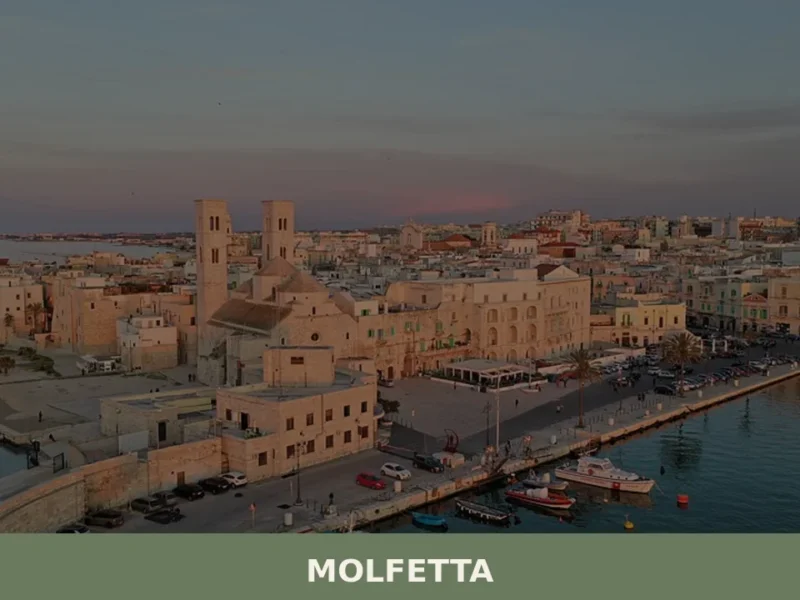
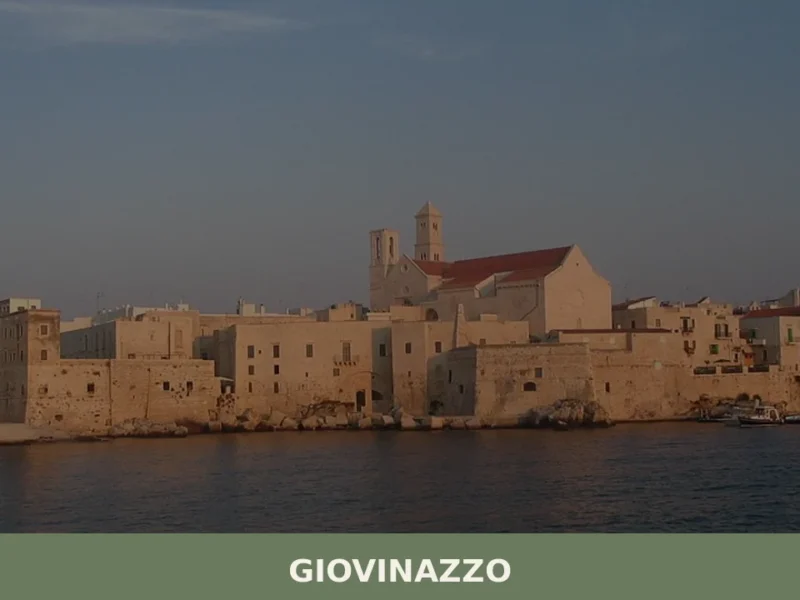
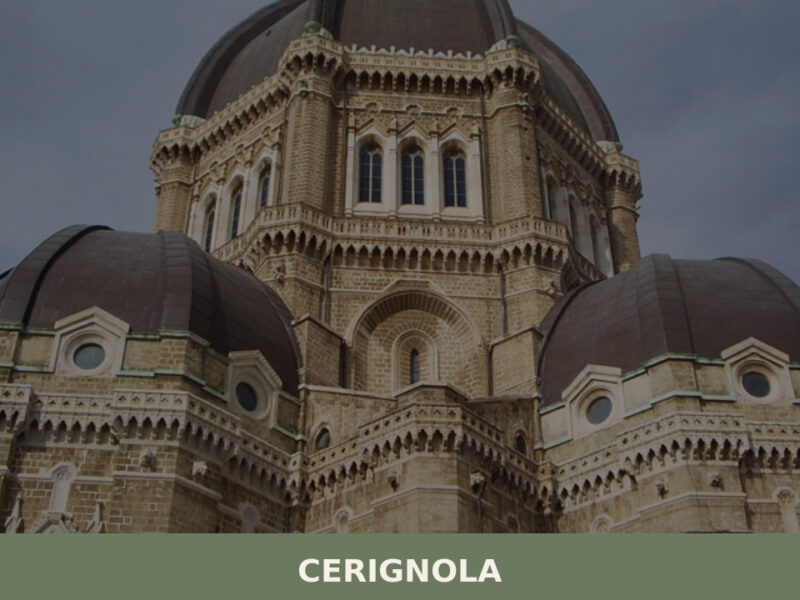
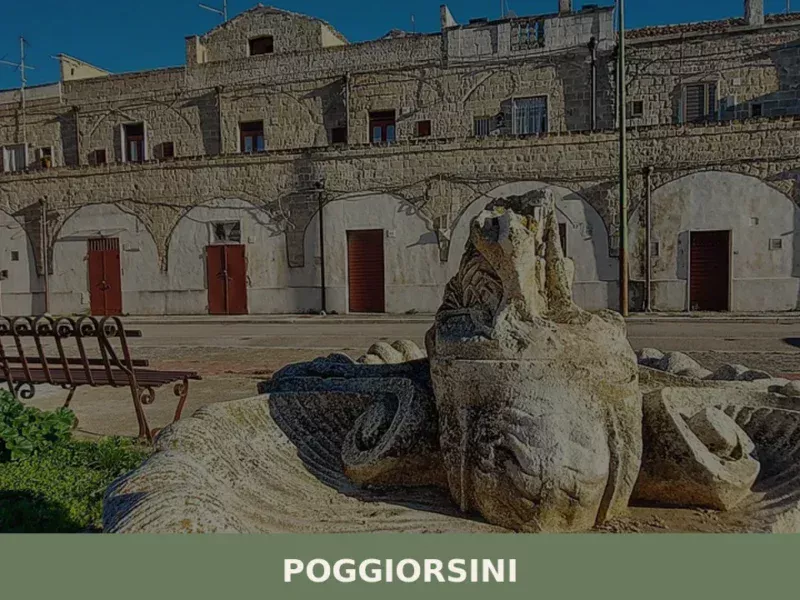
In Apulia More villages to discover
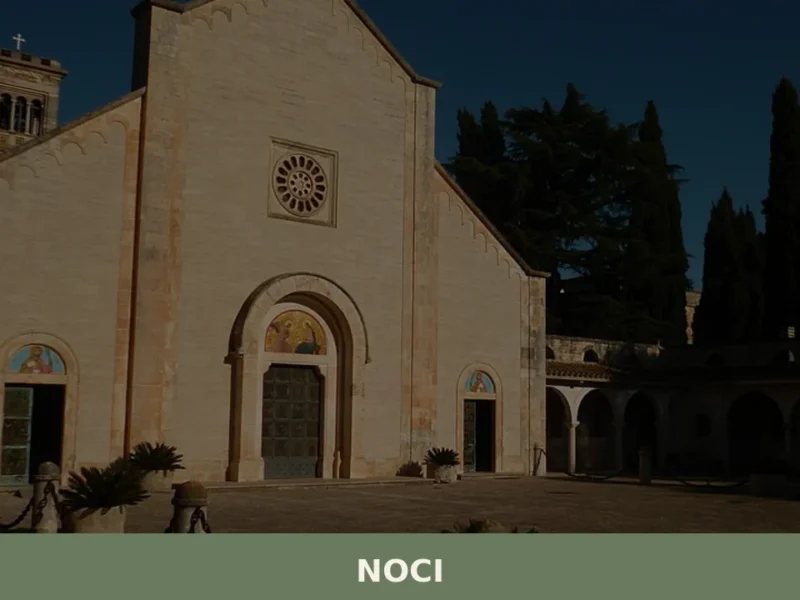
Noci
 Hills
Hills
What to see in Noci, a village at 420 m on the Murge plateau. 5 attractions, medieval gnostre, Acquasale PAT, sagre and patron feasts. Plan your visit now.
Castelluccio dei Sauri
Hills
A hilltop village of 2,024 inhabitants overlooking Puglia's Tavoliere plain. Castelluccio dei Sauri offers ancient tratturi routes, quiet stone lanes, and the deep agricultural traditions of the Capitanata.
San Marco la Catola
 Mountain
A quiet hill village at 683 metres in the Daunia mountains of Puglia. Discover what to see in San Marco la Catola, from its medieval core to the Fortore valley.
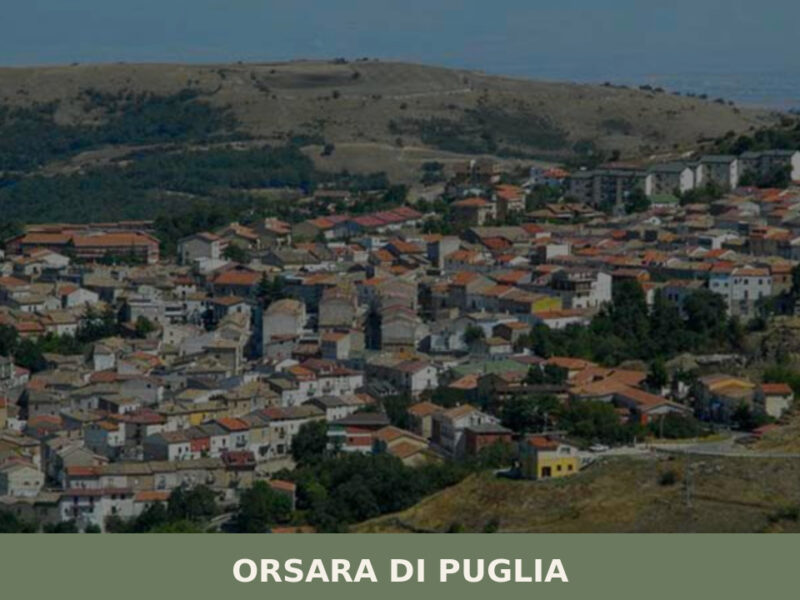
Orsara di Puglia
Mountain
A mountain village of 2,507 people in the Foggia province, Orsara di Puglia holds sacred grottoes, medieval stonework, and one of southern Italy's most distinctive culinary traditions.
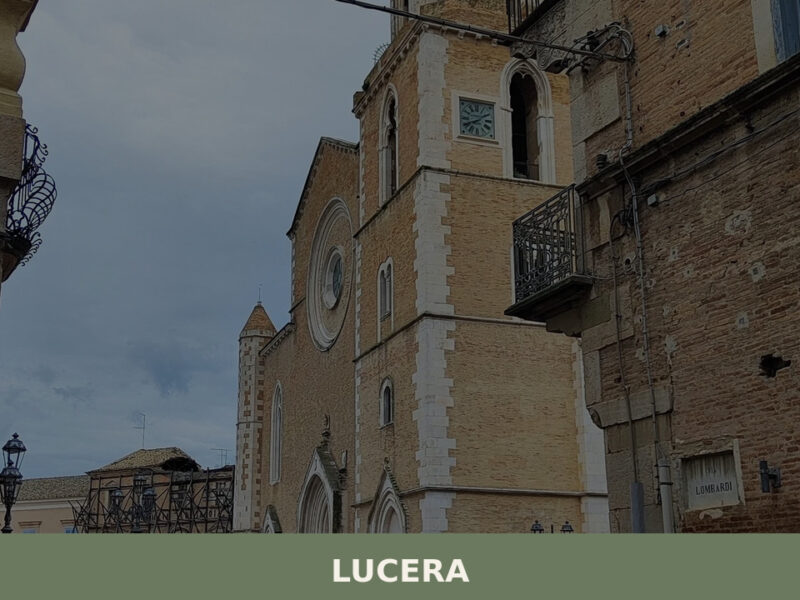
Lucera
Hills
Discover Lucera, a historic hilltop city in Puglia where Roman ruins, a Saracen past, and Angevin grandeur converge amid the sun-drenched Tavoliere plain.
Rodi Garganico
 Sea
Sea
A coastal village of 3,302 inhabitants on the Gargano promontory, Rodi Garganico offers a medieval centre, IGP citrus groves, and an authentic Adriatic harbour life.
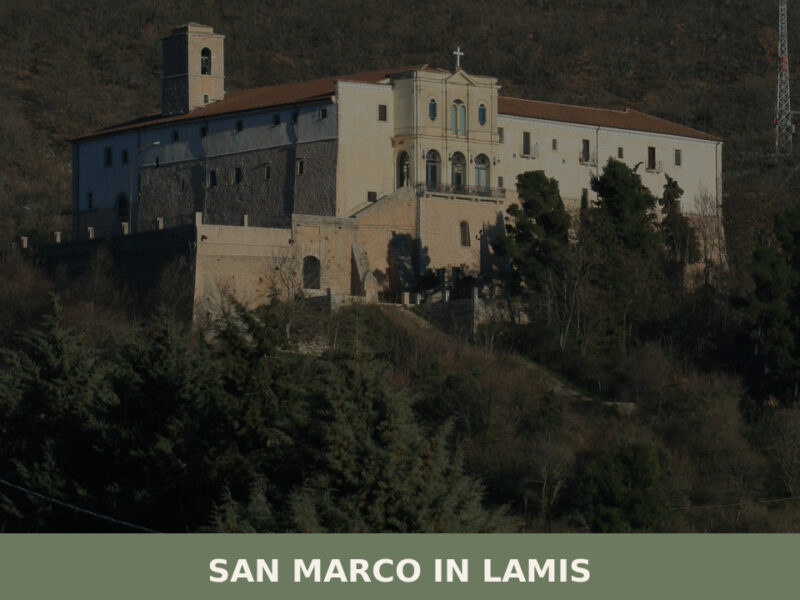
San Marco in Lamis
Hills
A highland town on the western Gargano, San Marco in Lamis holds ancient monasteries, a dramatic Good Friday fire procession, and the quiet intensity of inland Puglia.
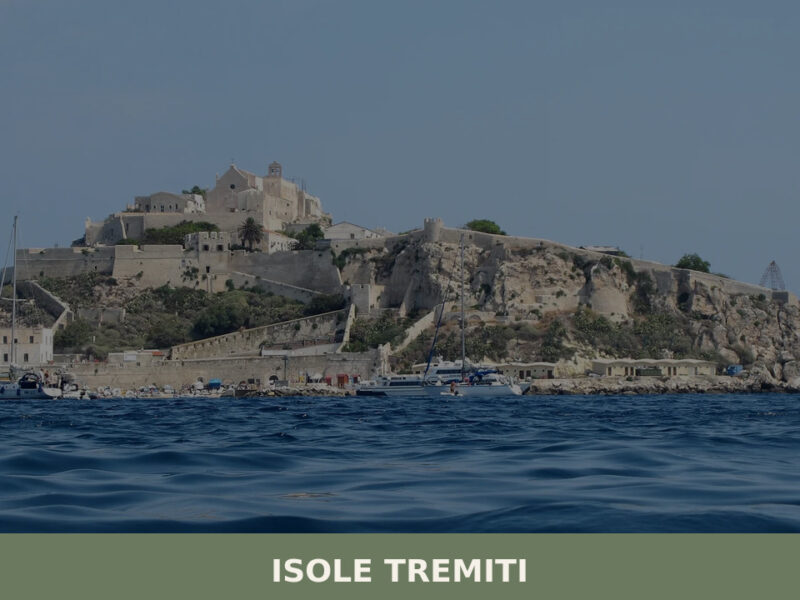
Isole Tremiti
Sea
A 481-resident archipelago off Puglia's Gargano coast, the Tremiti Islands compress monastic history, Adriatic wildlife, and sea caves into three inhabited islands.
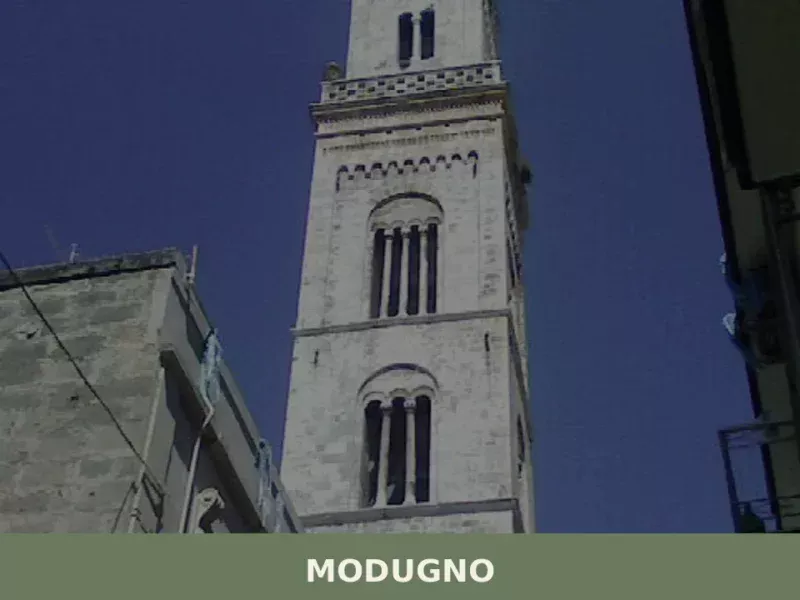
Modugno
Plains
In 1316, King Robert of Anjou confirmed Modugno’s privilege of holding a free fair, recognising this community on the Bari plain as a commercial hub that few centres of similar size could claim. Today, first-time visitors find a compact old town, gathered around Romanesque churches and noble palaces, surrounded by the orderly expanse of olive […]
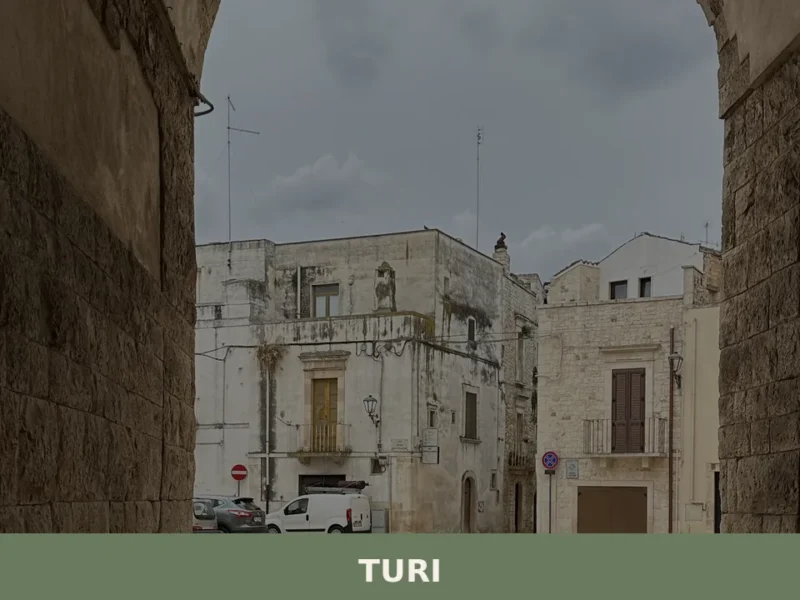
Turi
Hills
What to see in Turi? Discover 5 attractions, including the Mother Church and Norman Castle. Visit Turi for an unforgettable experience!

🏡 Know Andria better than we do?
If you’re a local or have been there, your knowledge matters: add what’s missing or fix a detail on this page.