


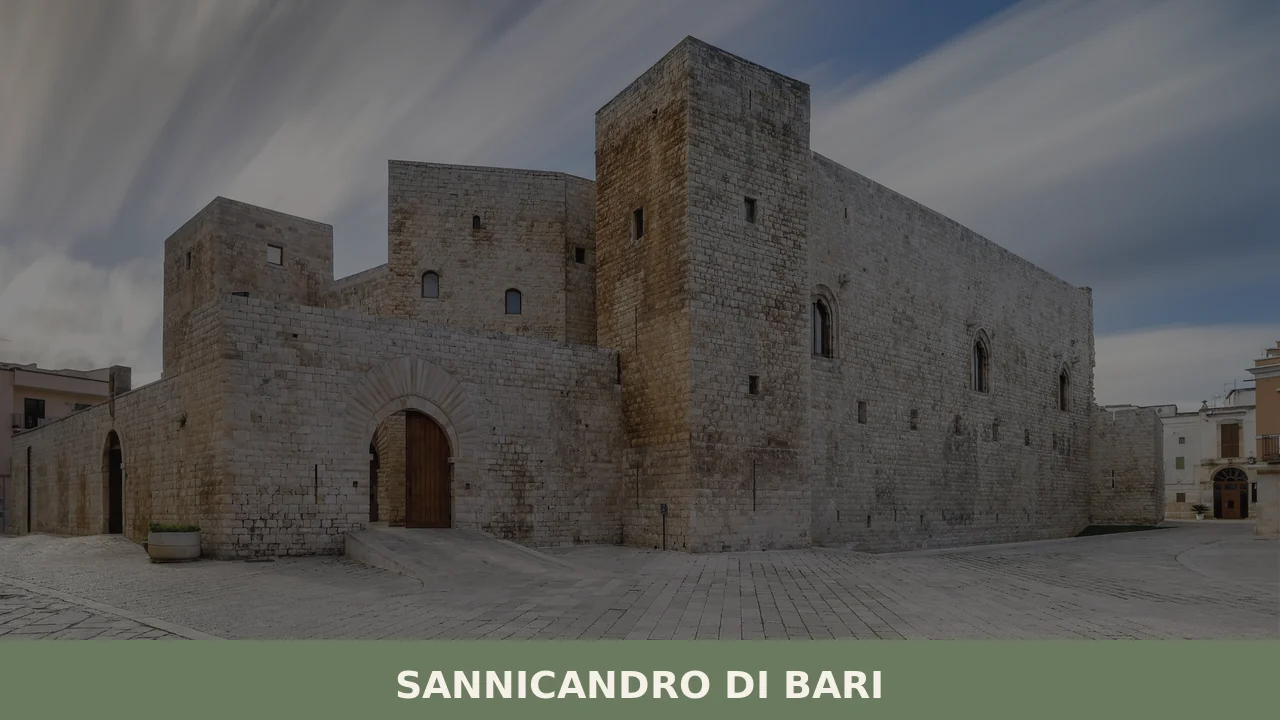

Sannicandro di Bari is an inland hill town in the Metropolitan City of Bari, Puglia, with documented roots stretching back to Peucetian times and a Norman castle that gave the settlement its modern na
Discover Sannicandro di Bari
Sannicandro di Bari is a hilltop comune of roughly 9,555 residents, set at 183 metres above sea level in the inland hills of the Metropolitan City of Bari, Puglia, covering a municipal area of about 56 square kilometres. Its recorded past stretches back to pre-Norman times, with archaeological evidence of Peucetian and Magna-Graecian presence in the territory from around the sixth and seventh centuries BC, and the earliest written mention of the site — under the Arabic-rooted place name in locum ziziro — appearing in a document dated 958, now preserved at the Abbey of Cava de’ Tirreni.
Visitors who make their way to the Sannicandro di Bari village in Apulia will find a settlement shaped by successive waves of influence — Lombard, Byzantine, Saracen, and then Norman — each leaving its mark on the territory’s history. The Norman presence is documented from 1119, when a charter connected to Emma d’Altavilla recorded a donation of tithes from the local fief to the Abbey of San Michele Arcangelo at Montescaglioso. Today the community gathers each year around its patron saint, San Giuseppe, celebrated on the last Sunday of June, while two churches — Santa Maria Assunta and Maria Santissima del Carmine — remain the principal places of worship in the town.
Sannicandro di Bari village in Apulia: history and origins
Sannicandro di Bari is a settlement whose roots reach back to around the sixth and seventh centuries BC, when the territory was already inhabited by Peucetian and Magna-Graecian communities, as confirmed by archaeological finds recovered in the area. Before the arrival of the Normans, the site was drawn into the prolonged struggles between the Lombard and Byzantine worlds, with periodic Saracen interference. The earliest written record linking the territory to a place name dates to 958, preserved in a document held at the Abbey of Cava de’ Tirreni, in which a certain Cristoforo sold a plot of land described as being in locum ziziro. The Arabic root of that name — Ziz, meaning roughly “splendid” or “pleasant” — connects it to the period of the Emirate of Bari, which lasted from 847 to 871.
The Norman chapter in the village’s history is documented from 1119 onward, when a charter issued by Emma d’Altavilla — drawn up while she was staying in Santa Severina — records a donation of the tithes of the Sannicandro di Bari fief to the abbot Guarino of the Abbey of San Michele Arcangelo at Montescaglioso. That document also attests the recent construction of a chapel dedicated to San Nicola inside the castle. It was the Norman lords of the Altavilla family who gave the castle and gradually the entire surrounding settlement the name San Nicandro, drawn from their own place of origin. By around the last decades of the eleventh century they had rebuilt the fortification on the ruins of an earlier, already collapsed structure, a quadrilateral plan with four circular corner towers. By the mid-twelfth century the castle had grown to eight towers with an enclosing curtain wall and a moat, and the older place name Siziro had been entirely replaced by San Nicandro in the episcopal records of the diocese of Bari by 1172.
In the early thirteenth century the castle underwent further expansion, acquiring a new palace, stables, storehouses, and additional gates, functioning as a logistical base — a grangia — for the supply of Crusaders heading overseas. During the Angevin period the castle passed through a succession of custodians until 1 November 1304, when King Charles II donated the entire complex to the Basilica of San Nicola di Bari. The chapter of San Nicola retained ownership for several centuries, until 1967, when the Municipality of Sannicandro di Bari acquired the structure for the sum of 10,500,000 lire.
Castle, Churches and Medieval Fabric of Sannicandro di Bari
Sannicandro di Bari preserves a Norman-Swabian castle at the centre of its historic quarter, together with two named churches — the church of Maria Santissima del Carmine and the church of Santa Maria Assunta — set among the lanes and surviving medieval street features of the old town.
The Norman-Swabian Castle
The castle stands at the heart of the medieval centre. Its present form developed from an earlier ruined structure whose remains, according to documentary sources, already included a rectangular perimeter with four circular corner towers. The Norman occupants rebuilt on those foundations, and by the mid-twelfth century the fortification had grown to eight towers with an irregular quadrilateral curtain wall and a moat. Within the enclosure a chapel dedicated to San Nicola was constructed; a document of 1119 records its existence. The castle gave its name — San Nicandro — first to the stronghold itself and then progressively to the surrounding settlement.
Church of Maria Santissima del Carmine
One of the two named places of worship in the town.
Church of Santa Maria Assunta
The second of the two named churches in Sannicandro di Bari.
Flavours of Sannicandro di Bari and Its Murgia Territory
The farmland around Sannicandro di Bari is shaped above all by olive groves — particularly the coratina variety — alongside vineyards producing both table grapes and primitivo, plus almond orchards and a range of fruit trees including fig, cherry, pomegranate, quince and peach.
This agricultural identity sits within a broader provincial and regional food tradition of considerable depth. The Bari area contributes to several certified products worth seeking out at local markets and trattorias. Cheeses with protected status include Mozzarella di Gioia del Colle DOP, Canestrato Pugliese DOP and Caciocavallo Silano DOP, while the prized Burrata di Andria IGP is another hallmark of the province. For pulses, the Lenticchia di Altamura IGP comes from nearby Murgia territory, and Olio di Puglia IGP reflects the dominant crop of the countryside here.
On the wine front, the territory falls within reach of several appellations. The three Castel del Monte DOCG designations — Bombino Nero, Nero di Troia Riserva and Rosso Riserva — represent the most prestigious reds and rosés of the area, while Aleatico di Puglia DOC offers a distinctive sweet red. Broader IGT labels such as Murgia and Puglia cover much of the local table wine production.
Getting to Sannicandro di Bari: Timing, Routes and What to Plan
Sannicandro di Bari is most comfortably reached by car from Bari, roughly 20 km to the east-southeast, via provincial roads that cross the first ridge of the Murgia — a journey of around 25 to 30 minutes under normal conditions; the Mediterranean climate means spring and early autumn offer the most pleasant conditions for visiting, with mild temperatures and the landscape at its most productive.
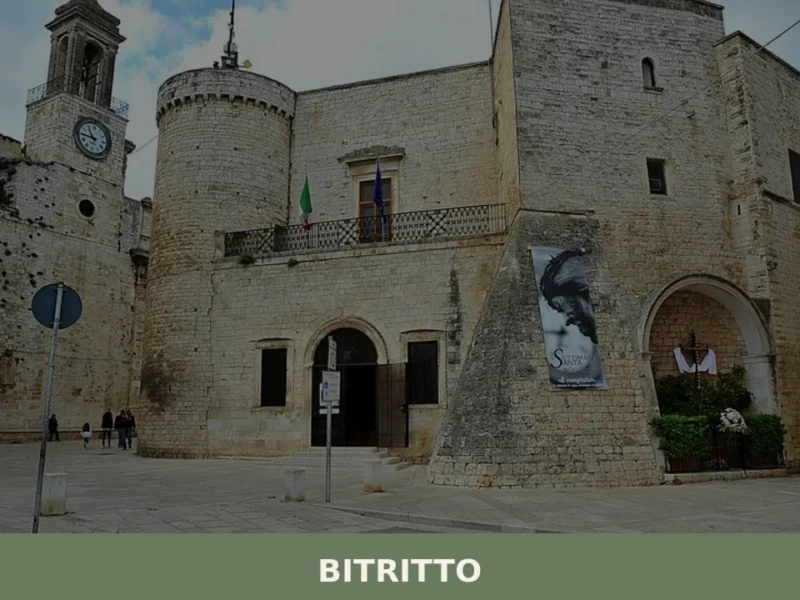
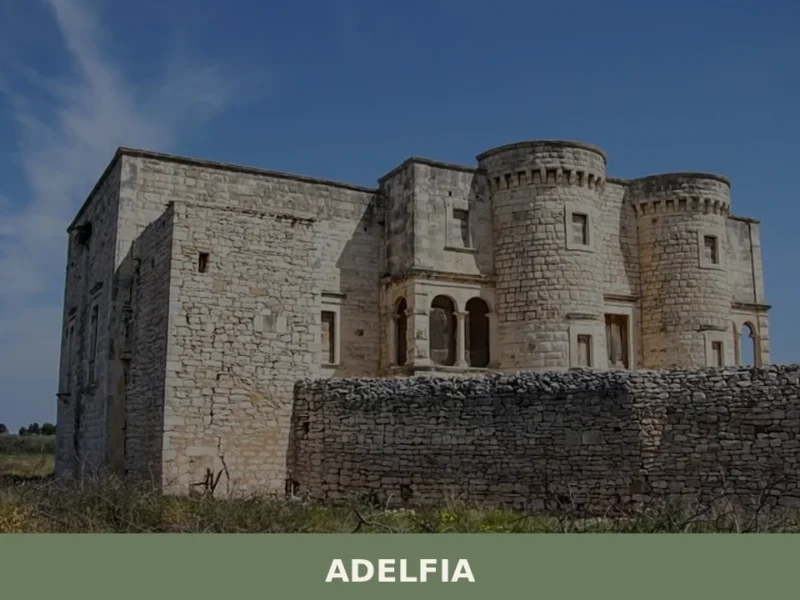
The village sits at around 183 metres on the inner hill zone known as the Murgia Barese, historically a crossroads between Bari, Matera and Gravina di Puglia. This position made it a waypoint on routes that once connected the Adriatic coast to inland Basilicata, and the same geography makes it easy today to combine a visit with neighbouring communities. The small comune of Bitritto lies close by along the same ridge, while Bitetto and Adelfia are within easy reach for those planning a half-day or full-day circuit of these Murgia-edge villages.
| Departure | Distance | Time |
|---|---|---|
| Bari | approx. 20 km | approx. 20 min |
| Bitritto | approx. 7 km | approx. 10 min |
| Bitetto | approx. 10 km | approx. 15 min |
| Adelfia | approx. 12 km | approx. 15 min |
| Aeroporto di Bari-Karol Wojtyła | approx. 25 km | approx. 25 min |
The feast of San Giuseppe, celebrated on the last Sunday of June, is the main civic and religious event of the local calendar and adds a particular reason to time a visit to the summer opening.
Frequently asked questions about Sannicandro di Bari
How do I get to Sannicandro di Bari by car or public transport?
By car, take the A14 Bologna–Taranto motorway and exit at Bari Nord, then follow the SS96 and local roads south-east toward Sannicandro di Bari, roughly 20 kilometres from Bari city centre. By train, the nearest mainline station is Bari Centrale; from there, local buses operated by STP Bari connect to Sannicandro di Bari on regular weekday schedules. Journey time by bus is approximately 30–40 minutes depending on the route taken.
When is the best time to visit Sannicandro di Bari?
Spring (April–June) and early autumn (September–October) offer the most pleasant temperatures for exploring the inland Murgia hills. Two key dates to plan around are the feast of patron saint San Giuseppe, celebrated on the last Sunday of June, and the repeat celebration on the last Sunday of September. Both occasions bring religious processions, local music, and traditional food stalls to the village streets, giving visitors an authentic glimpse of Apulian community life.
How long should I plan for a visit to Sannicandro di Bari?
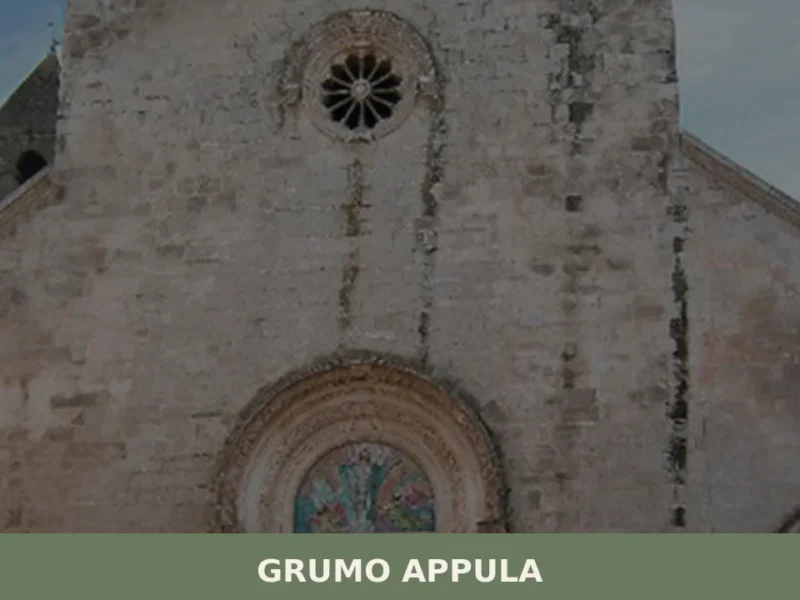
A focused half-day (three to four hours) is enough to walk the historic centre, visit the main churches of Santa Maria Assunta and Maria Santissima del Carmine, and explore the medieval urban fabric. Extending to a full day allows time for lunch featuring local Murgia produce — olive oil, taralli, and aged cheeses — and a short drive into the surrounding countryside. Combining Sannicandro with nearby Grumo Appula or Binetto makes a rewarding full-day itinerary from Bari.
Are there any outdoor or cycling routes near Sannicandro di Bari?
The Murgia plateau surrounding Sannicandro di Bari offers unsurfaced white roads — strade bianche — popular with gravel cyclists and hikers. The Alta Murgia National Park, accessible within roughly 20–30 kilometres, contains documented CAI-marked trails crossing karst landscapes, sheepfolds, and centuries-old drove roads known as tratturi. Local cycling associations occasionally organise guided rides through the olive groves and cereal fields that characterise the flat and gently rolling terrain around the village.
Where can I stay near Sannicandro di Bari?
Accommodation options in and around Sannicandro di Bari include small B&Bs in the historic centre and agriturismos in the surrounding countryside offering rooms alongside farm-to-table meals based on Murgia products. For a wider choice of hotels, Bari city centre is only about 20 kilometres away and well connected by road. Booking in advance is advisable during the patron saint festivities in late June and late September, when local demand rises noticeably.
Nearby Villages near Sannicandro di Bari
In Apulia More villages to discover
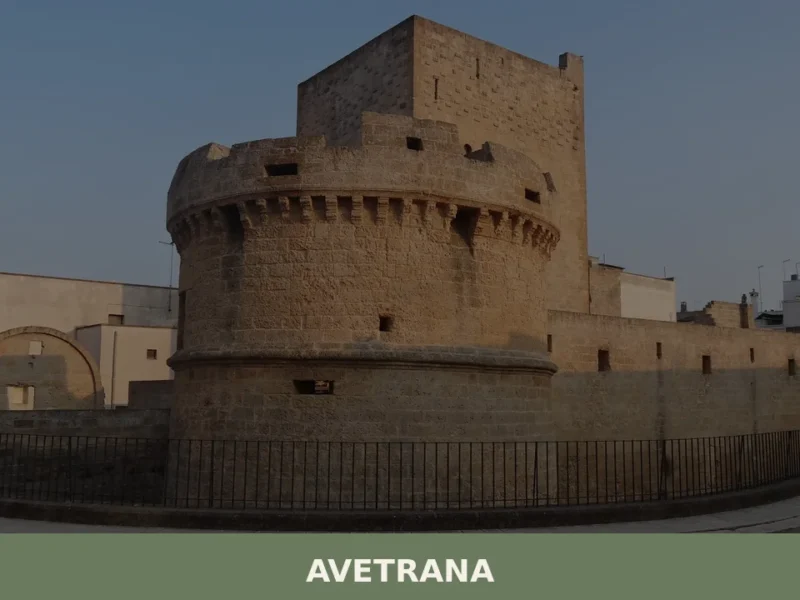
Avetrana
 Plains
Avetrana is a historic town of 6,160 inhabitants in the province of Taranto, Puglia, with Neolithic origins, a medieval castle and a maritime vocation on the Salento plain.
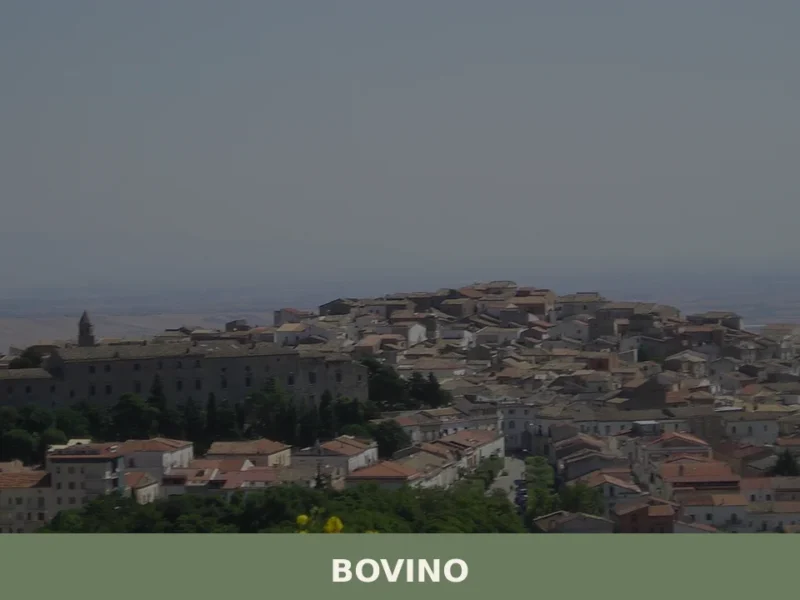
Bovino
 Mountain
Bovino is a hilltop comune of 2,881 residents at 624 metres in the Daunia mountains of Puglia, with a history stretching from an ancient Oscan-Samnite settlement to a living Norman castle and a mediev
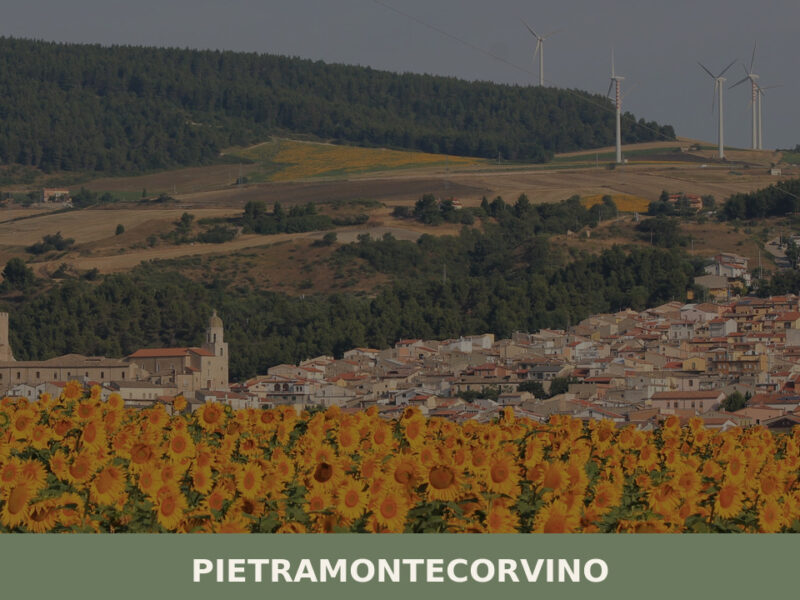
Pietramontecorvino
 Hills
Hills
A medieval hill village at 456 metres above the Tavoliere plain, Pietramontecorvino preserves a rock-carved old quarter, Norman tower, and the quiet rhythms of Daunia's agricultural past.
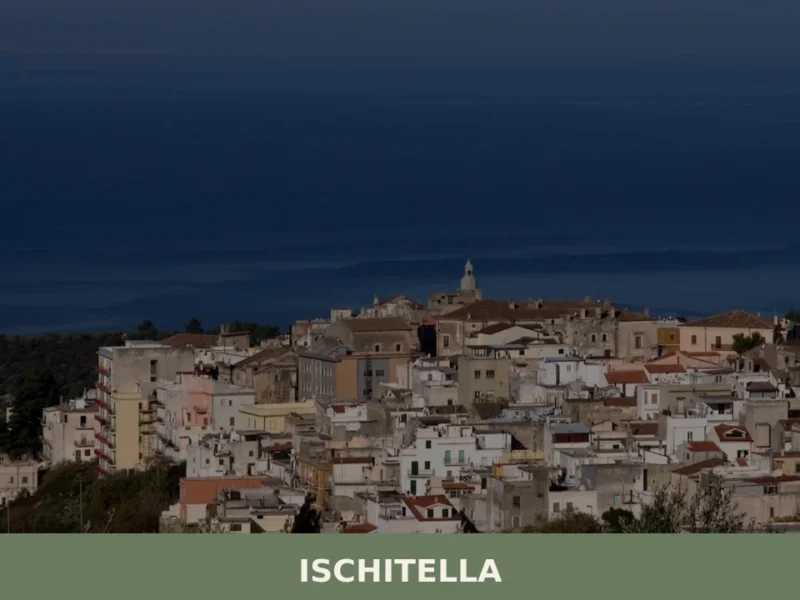
Ischitella
 Lake
Lake
 Sea
Sea
A ridge-top village on the Gargano promontory, Ischitella offers Norman walls, Baroque churches, ancient olive groves, and access to the Foresta Umbra.
Stornarella
Plains
A working agricultural village on the Tavoliere plain near Foggia, Stornarella offers wheat-field panoramas, rural chapels, and the elemental cuisine of northern Puglia.
Gioia del Colle
Hills
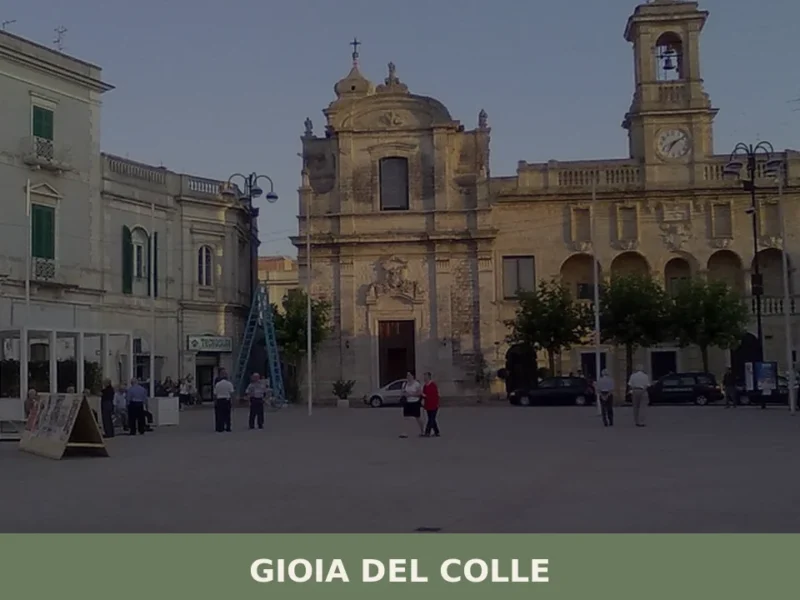
What to see in Gioia del Colle: hilltop town at 362m on the Murgia. Explore the Swabian castle, Monte Sannace park, Primitivo DOC wines and local PAT dishes.
Acquaviva delle Fonti
Hills
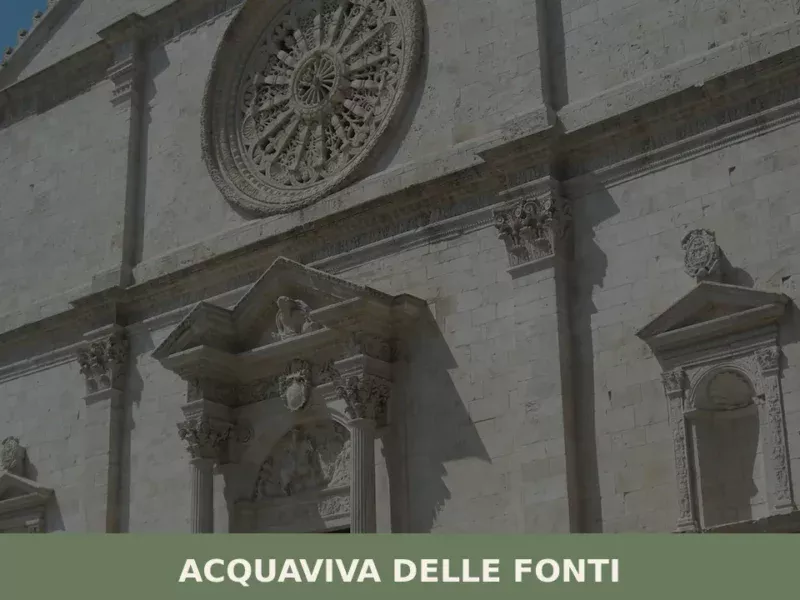
Beneath the main square of Acquaviva delle Fonti, water still flows. This is not a figure of speech: a network of underground aquifers runs through the limestone subsoil of this town in the Murge hills near Bari, feeding cisterns and wells that for centuries determined both the wealth and the very name of the town. […]
San Marco in Lamis
Hills
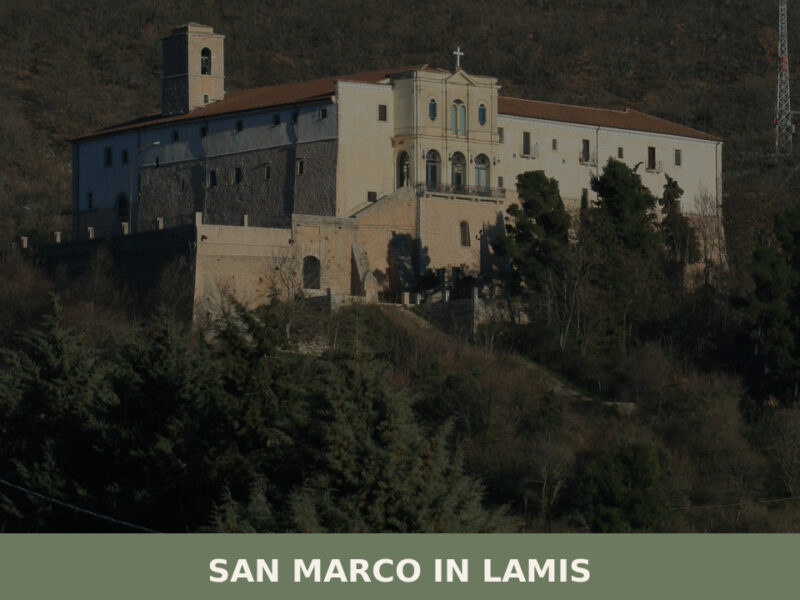
A highland town on the western Gargano, San Marco in Lamis holds ancient monasteries, a dramatic Good Friday fire procession, and the quiet intensity of inland Puglia.
Bitetto
Plains
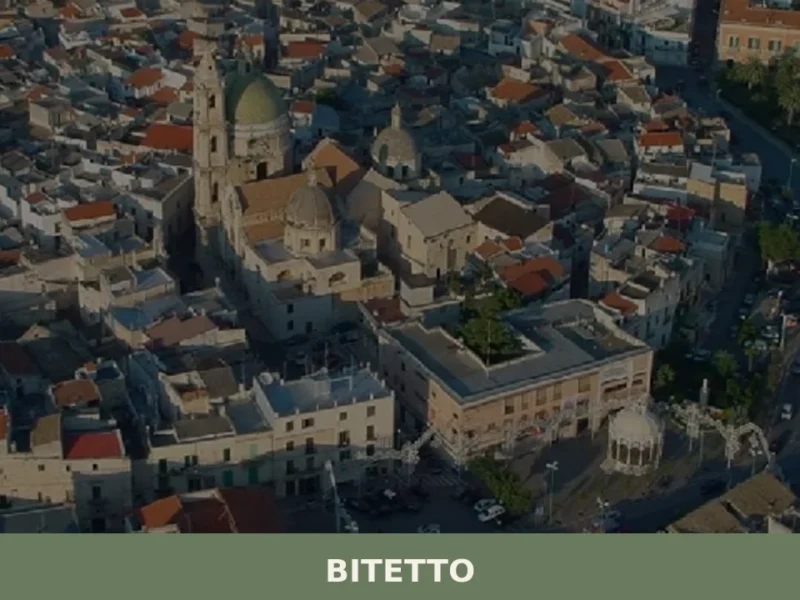
What to see in Bitetto, Italy: Discover its 14th-century cathedral and the legacy of Blessed James. Explore this Puglian village, 139 m above sea level, for a rich historical journey.
Orta Nova
Plains
Orta Nova, nella piana di Foggia, offre una storia agraria profonda e tradizioni radicate nella cultura pugliese.




🏡 Know Sannicandro di Bari better than we do?
If you’re a local or have been there, your knowledge matters: add what’s missing or fix a detail on this page.