


Anzio
 Sea
Sea
What to see in Anzio, Lazio, Italy: from WWII cemeteries to Roman ruins 51 km from Rome. Discover top attractions, local seafood, and how to get there.
Discover Anzio
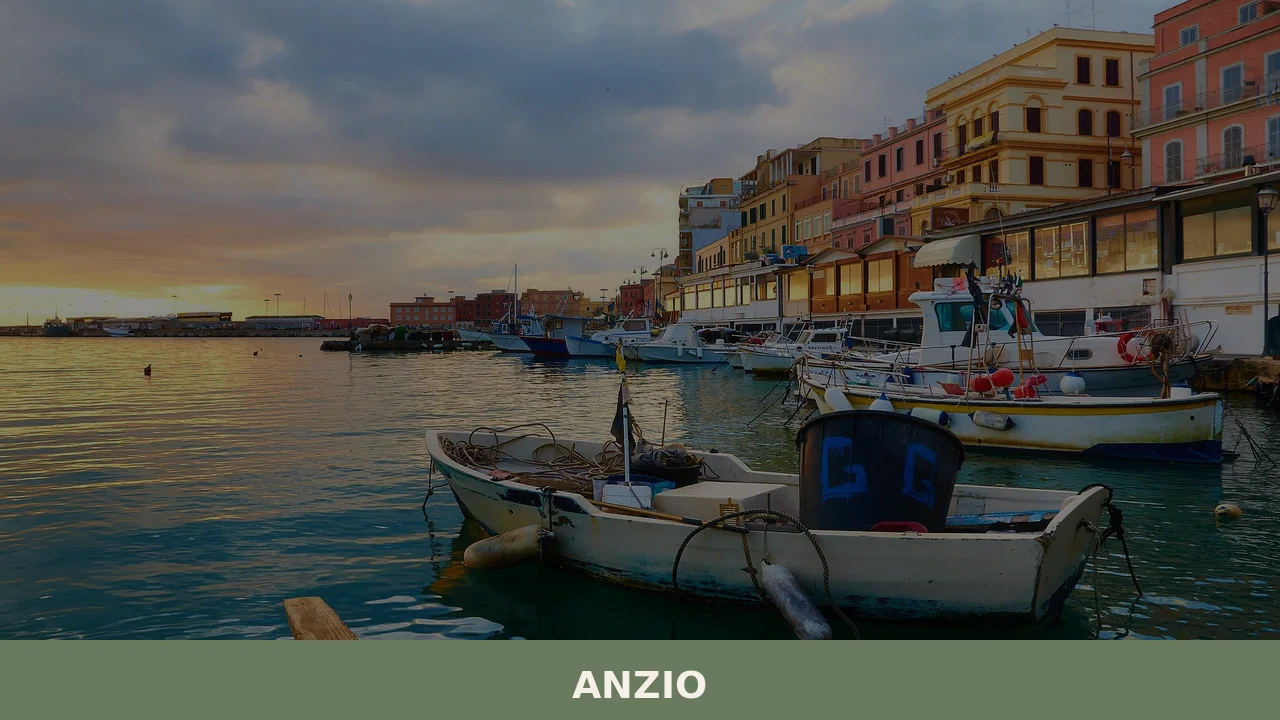
The port of Anzio faces southeast, and on clear mornings the fishing boats return before the tourist traffic begins.
The harbour has a depth of about 5 metres (16 ft), a limitation that has defined the town’s relationship with the sea since Pope Innocent XII ordered its reconstruction in the late seventeenth century — not on the site of Nero’s Roman port, but slightly to the east of it, a positioning that has caused it to silt up repeatedly over the centuries.
The low coastline, sitting at just 3 m (10 ft) above sea level, stretches in both directions, lined with the remains of Roman villas and backed by pine groves.
Deciding what to see in Anzio is easier with a sense of the town’s scale: a coastal comune of 50,789 inhabitants in the Province of Roma, located 51 km (32 mi) south of the capital.
Visitors to Anzio find a working port, two significant World War II cemeteries, the ruins of villas associated with Roman emperors, a WWF nature reserve 8 km (5 mi) to the north, and direct ferry connections to the Pontine Islands.
The town’s history stretches from the ancient city of Antium through a papal restructuring period and one of the most consequential Allied landings of the Second World War.
History of Anzio
The territory of modern Anzio occupies a substantial portion of what was once the ancient city of Antium, the Latin settlement whose symbolic deity was the goddess Fortuna. Both the emperor Caligula and Nero were born in Antium, and the area contained multiple villas belonging to the gens Iulia, the Julian family at the centre of Rome’s early imperial dynasty.
The archaeologist Giuseppe Lugli identified the zone around Capo d’Anzio as the nucleus of the ancient settlement, and the correspondence between ancient Antium’s territory and modern Anzio — along with neighbouring Nettuno — remains one of the clearest examples of Roman urban continuity along the Lazio coast.
During the Middle Ages, Antium was effectively abandoned in favour of Nettuno, and it was not until the late sixteenth century that Anzio began its re-emergence as a distinct settlement.
Pope Clement VIII, having acquired lordship over Nettuno for the Apostolic Chamber, instructed Monsignor Bartolomeo Cesi to protect what remained of Anzio’s built heritage.
A century later, Pope Innocent XII ordered the construction of a new harbour, completed in 1700, which triggered a period of economic recovery that continued into the eighteenth century. The Roman aristocracy followed, establishing the area as a resort, and in 1857 Pope Pius IX formally founded the modern municipality — though it carried the official name Porto d’Anzio until 1885.
By the end of the nineteenth century, the town had developed into a recognised seaside resort. Then, in 1925, Anzio entered a different kind of history: on 16 March of that year, a submarine telegraph cable station was inaugurated in the town, establishing the first direct telecommunication link between Italy and New York, with further cables subsequently connecting Italy to Argentina, Brazil, and Uruguay through the same station.
The most consequential chapter in Anzio’s modern history opened on 22 January 1944, when Allied forces landed on the beaches in what became known as Operation Shingle, a key action in the Italian Campaign of World War II.
From 1940 to 1945, Anzio had been administratively merged with Nettuno under the single municipality of Nettunia. The fighting that followed the landing was brutal and prolonged. In February 1944, American soldiers of the U.S.
Fifth Army were surrounded by German forces in the caves of Pozzoli for a week, suffering heavy casualties.
On 18 February 1944, the British light cruiser HMS Penelope was struck by two torpedoes off the coast and sank, with the loss of 417 crew members. Among those who died in the broader campaign was Lieutenant Eric Fletcher Waters of the 8th Battalion, Royal Fusiliers, serving with the 56th (London) Infantry Division.
His son Roger Waters later became the bassist and chief lyricist of Pink Floyd; the song “The Fletcher Memorial Home” was written in his father’s memory, the title taken from Eric Waters’ mother’s maiden name.
What to see in Anzio, Lazio: top attractions
Anzio War Cemetery and Beachhead Museum
The Anzio War Cemetery occupies a formal, geometric site close to the town’s communal cemetery, its rows of headstones set in a maintained lawn that contrasts with the surrounding coastal vegetation. The cemetery is directly connected to the events of Operation Shingle in January 1944, one of the defining engagements of the Italian Campaign. The adjacent Beachhead Museum contextualises the landing with period documents, photographs, and military artefacts. A second burial ground, the Beach Head War Cemetery, lies 5 km (3.1 mi) north on road No.
207.
Both sites are maintained and accessible on foot; visiting both in a single morning is straightforward for anyone arriving by car or train.
Domus Neroniana and Roman Villa Ruins
The coastline around Anzio preserves the visible remains of several Roman villas, the most significant of which is the Domus Neroniana, identified by archaeologists as a residence of the emperor Nero, who was born in Antium.
The villa was subsequently enlarged by the emperors Domitian, Hadrian, and Septimius Severus, making it a layered record of imperial construction across roughly two centuries. Separately, the ruins of a villa associated with Cicero are also traceable in the same coastal zone. The remains sit in scenic proximity to the beach, and the military sanatorium designed by architect Florestano Di Fausto between 1930 and 1933 stands nearby — one of Di Fausto’s most documented works and now part of the Italian Army’s estate.
Tor Caldara WWF Nature Reserve
About 8 km (5 mi) north of central Anzio, the Tor Caldara reserve belongs to the WWF network and combines a natural sulphur spring environment with the ruins of a medieval tower. The vegetation here follows the coastal Mediterranean pattern, with the sulphur springs creating a microhabitat distinct from the drier stretches further south. The tower itself is a structural landmark visible from a distance and provides a reference point for walkers exploring the reserve’s paths.
For those making a day trip from Rome, the reserve adds a different register to a visit otherwise dominated by archaeology and wartime history.
Access from Anzio is straightforward along the coastal road heading northwest.
The Port and Fish Restaurants
Anzio’s working port is the functional centre of the town’s identity as a fishing community, a ferry hub, and a departure point for the Pontine Islands.
Hydrofoils and ferries connect the port to Ponza, Palmarola, and Ventotene, the main inhabited islands of the Pontine archipelago. The port area is also where the town’s fish restaurants are concentrated, with a direct supply line from the boats that dock a few metres away. The catch varies by season, but the proximity of the kitchen to the water is a consistent feature.
Ferries to Ponza typically run throughout the summer months, and the crossing provides a practical extension for visitors spending more than one day on this stretch of the Lazio coast.
Art Nouveau Houses and the Former Casino Paradiso sul Mare
In the southern section of Anzio, close to the administrative boundary with Nettuno, a concentration of early twentieth-century houses in the Italian Liberty style — the Italian term for Art Nouveau — survives along the residential streets.
These buildings date from the period of Anzio’s development as a seaside resort in the late nineteenth and early twentieth centuries, and their decorated facades stand at a visible remove from the town’s older fabric.
The former Casino Paradiso sul Mare, once a functioning gambling establishment, is now used for cultural events; the name translates directly as “Paradise on the Sea.” It is worth walking this southern district specifically to see the Liberty architecture, which represents a distinct episode in the town’s building history and is not replicated elsewhere along the immediate coastline.
Local food and typical products of Anzio
Anzio’s position as a fishing port shapes its food culture more than any other single factor.
The town sits on a stretch of the Tyrrhenian coast that has supported commercial fishing continuously for centuries, and the restaurants concentrated around the port work with what the local fleet brings in daily. The culinary tradition here is not one of elaborate preparation but of proximity: the shorter the distance between the sea and the plate, the more the quality of the raw ingredient drives the result.
This is a pattern common to the Lazio coastal strip between Rome and the Pontine zone, but Anzio’s working port gives it a more direct and less touristic character than many comparable towns.
The central ingredient across most of the port’s restaurant menus is fresh fish and shellfish, prepared according to methods documented in the local fishing tradition.
Spaghetti alle vongole — pasta with clams cooked in white wine, garlic, olive oil, and flat-leaf parsley — appears on virtually every menu and relies on clams pulled from the local coastal shallows.
Zuppa di pesce, a dense fish soup built from whatever the day’s catch yields — typically including scorpionfish, gurnard, and mantis shrimp — is assembled with a tomato base, olive oil, and grilled bread rubbed with garlic. Alici marinate, fresh anchovies cured in lemon juice with olive oil and chilli, represent the simpler end of the repertoire, served as a starter in most port-side establishments.
The cooking technique across all three dishes prioritises short preparation times and unmasked flavour rather than slow reduction or heavy sauce.
No certified DOP or IGP products are formally registered to the municipality of Anzio in the available data. The town’s food identity is therefore carried by its fishing tradition and the quality of its daily catch rather than by formally protected designations.
Visitors looking for local produce beyond restaurants can explore the covered market near the town centre, where vendors sell fish directly from the port alongside seasonal vegetables from the agricultural land that stretches inland toward the Via Nettunense corridor.
The fish market at the port operates in the early morning hours on days when the boats return, typically from Tuesday through Sunday during the main fishing season.
Late spring and early summer — from April through June — represent the period when the variety of available species is broadest, before the summer heat and peak tourist pressure raise demand and reduce some of the more perishable options.
Visitors arriving outside the summer season will find the port restaurants less crowded and the market more representative of the working town’s daily rhythm.
Festivals, events and traditions of Anzio
The principal religious event in the town’s calendar is the feast of Sant’Antonio di Padova, celebrated on 13 June each year.
Sant’Antonio is the patron saint of Anzio, and the feast follows the pattern common to coastal Lazio towns: a religious procession through the streets of the town, with the statue of the saint carried by members of the local confraternity, followed by an evening programme that includes music and fireworks. The date in mid-June places the feast at the opening of the summer season, when the population of the town begins to increase with visitors from Rome and the wider Lazio region.
Beyond the patron saint feast, Anzio’s calendar is marked by the arrival of the summer season, which concentrates cultural events in the former Casino Paradiso sul Mare and along the seafront.
The anniversary commemorations of the January 1944 Allied landing draw international visitors — particularly from the United Kingdom, the United States, and Canada — in late January each year, with official ceremonies held at the Anzio War Cemetery and the Beach Head War Cemetery.
These commemorations are not local festivals in the traditional sense but are organised civic events with diplomatic participation, and they represent one of the most consistent points of international contact in the town’s annual life.
When to visit Anzio, Italy and how to get there
The best time to visit Anzio for most international travellers is the period between late April and mid-June. During these weeks, the weather along the Lazio coast is settled — temperatures typically reach 20–25°C (68–77°F) — the beaches are accessible without the density of summer crowds, and the fishing port operates at full capacity.
July and August bring significant heat and a large influx of day-trippers and holidaymakers from Rome, which increases pressure on restaurants and parking.
September is a viable alternative: the sea remains warm, school season reduces family tourism, and the port restaurants return to something closer to their off-season rhythm. For visitors specifically interested in the World War II commemorations, late January is the relevant period, though the weather is cool and wet. The terrain of Anzio is flat throughout — the town sits at 3 m (10 ft) above sea level — making it accessible and easy to navigate on foot for visitors with mobility requirements.
Anzio, Lazio, Italy is directly connected to Rome by the Trenitalia Roma–Nettuno railway line, which runs from Roma Termini to Anzio in approximately one hour.
The line also serves a series of intermediate stations along the coast — Padiglione, Lido di Lavinio, Villa Claudia, Marechiaro, and Anzio Colonia — making it accessible from multiple points north of the town.
For those arriving by car, the Via Nettunense (SS207) and the Via Ardeatina (SS601) both connect Anzio to Rome, covering the 51 km (32 mi) in around 45 to 60 minutes depending on traffic.
The nearest major international airport is Rome Fiumicino (Leonardo da Vinci International), approximately 70 km (43 mi) from Anzio; from the airport, the most practical route combines a train to Roma Termini and then the direct coastal service south. International visitors should be aware that English is not widely spoken in smaller port-side shops and the daily market, and carrying euros in cash remains useful for market purchases and some smaller restaurants.
For travellers planning a longer itinerary through rural Lazio, the region inland from Anzio offers distinct contrasts to the coastal experience.
Visitors with time to extend their stay northward through the province might consider a stop at Celleno, a tufa-built hilltop settlement in northern Lazio, which represents a completely different register of the region’s landscape and building tradition.
Further north into the Sabine hills, Cantalupo in Sabina sits at a markedly higher elevation and offers a counterpoint to the flat coastal geography of the Anzio area.
Where to stay near Anzio
Anzio’s status as an established seaside resort since the late nineteenth century means that accommodation options exist across several categories within and immediately around the town.
The seafront and port areas hold a range of hotels oriented toward summer visitors, while the residential districts developed during the resort period also contain smaller guesthouses and holiday rental properties.
The town’s direct rail connection to Rome — approximately one hour on the Roma–Nettuno line — makes it equally viable as a base for day trips to the capital or as an overnight stop for visitors whose primary destination is Rome itself. Booking in advance is advisable for July and August, when demand from Roman holiday-makers is at its highest.
Frequently asked questions about Anzio
What is the best time to visit Anzio?
Late spring and early autumn — May, June, and September — offer the best balance of warm weather, manageable crowds, and full ferry service to the Pontine Islands. July and August are peak season: beaches fill quickly and port restaurants get busy. The feast of the patron saint Sant'Antonio di Padova on 13 June falls at a pleasant moment in the calendar and adds a local event to a visit. Winter is quiet but mild; the port and war cemeteries remain accessible year-round.
What are the historical origins of Anzio?
Anzio occupies the site of ancient Antium, a Latin city whose symbolic deity was the goddess Fortuna. Both emperors Caligula and Nero were born here. During the Middle Ages the settlement was largely abandoned in favour of neighbouring Nettuno. Pope Innocent XII ordered a new harbour, completed in 1700, which revived the town. Pope Pius IX formally founded the modern municipality in 1857; it was called Porto d'Anzio until 1885. On 22 January 1944, Allied forces landed here in Operation Shingle, one of the defining engagements of the Italian Campaign in World War II.
What to see in Anzio? Main monuments and landmarks
Key sites include the Anzio War Cemetery and adjacent Beachhead Museum near the town cemetery, with a second burial ground — Beach Head War Cemetery — 5 km north on road No. 207. The coastal ruins of the Domus Neroniana, a residence enlarged by Nero, Domitian, Hadrian, and Septimius Severus, are visible near the beach. The Liberty-style houses and former Casino Paradiso sul Mare in the southern district near Nettuno represent early twentieth-century resort architecture. The working port is the town's living landmark. All sites are accessible on foot or by car; the war cemeteries are free to enter.
What are the main natural or scenic attractions of Anzio?
The Tor Caldara WWF Nature Reserve lies approximately 8 km north of central Anzio along the coastal road. It combines a coastal Mediterranean habitat with natural sulphur springs that create a distinct microhabitat, and the ruins of a medieval tower visible from the reserve's walking paths. The low coastline backed by pine groves stretches in both directions from the port. Anzio also serves as the main departure point on the southern Lazio coast for ferries and hydrofoils to Ponza, Palmarola, and Ventotene in the Pontine archipelago.
Where to take the best photos in Anzio?
The port at early morning, before tourist traffic begins, offers the most authentic shots of returning fishing boats against a southeast-facing harbour. The coastal ruins of the Domus Neroniana, set directly against the beach, provide a combination of Roman stonework and sea. The Liberty-style facades in the southern district near the Nettuno boundary are photogenic at any time of day. The formal rows of headstones at the Anzio War Cemetery, set against maintained lawn and coastal vegetation, create a stark and memorable image.
Are there museums, churches or historic buildings to visit in Anzio?
The Beachhead Museum, adjacent to the Anzio War Cemetery, documents Operation Shingle through period photographs, documents, and military artefacts. The former Casino Paradiso sul Mare, a Liberty-style building in the southern part of town, now hosts cultural events. The military sanatorium designed by architect Florestano Di Fausto between 1930 and 1933 stands near the Roman villa ruins and is considered one of his most documented works; it is currently part of the Italian Army's estate. Specific opening hours for these sites should be verified locally before visiting.
What can you do in Anzio? Activities and experiences
Anzio offers ferry and hydrofoil connections from its port to Ponza, Palmarola, and Ventotene throughout the summer — a practical island extension from the mainland. Walking the Tor Caldara WWF Nature Reserve's paths north of town provides a half-day outdoor excursion. Visiting both war cemeteries and the Beachhead Museum in a single morning is feasible on foot or by car. The port's fish restaurants allow a direct farm-to-table — or rather sea-to-table — dining experience. The Liberty architecture district in the southern quarter makes for a focused architectural walk near the Nettuno boundary.
Who is Anzio suitable for? Families, couples, hikers, solo travelers?
Anzio suits a wide range of visitors. History travellers, particularly those interested in World War II or Roman antiquity, will find substantial material here. Families benefit from the beach, the port atmosphere, and the accessible ferry routes to the Pontine Islands. Food-focused travellers will appreciate the port's fish restaurants with direct daily supply from local boats. The Tor Caldara nature reserve appeals to walkers and nature enthusiasts. The town's scale — a working port rather than a polished resort — makes it more engaging for independent travellers than for those seeking a packaged beach holiday.
What to eat in Anzio? Local products and specialties
Anzio's food culture is built on its working fishing port. Spaghetti alle vongole — pasta with clams from local coastal shallows, cooked with white wine, garlic, olive oil, and flat-leaf parsley — appears on virtually every port-area menu. Zuppa di pesce, a dense fish soup built from the daily catch, is another staple. The proximity of restaurants to the docking boats means the menu follows the season and what the fleet brings in. The Tyrrhenian coastal zone around Anzio supports continuous commercial fishing, giving the local table a direct and unmediated character.
Nearby Villages near Anzio
In Lazio More villages to discover
Casalattico
 Hills
Hills
What to see in Casalattico, Lazio, Italy: a village at 420 m with a Norman tower, a Benedictine monastery from 780 AD and an Irish festival. Discover it now.
Acquafondata
 Mountain
What to see in Acquafondata: discover 5 attractions in this Lazio village, from historic churches to views over the Aurunci Mountains. Plan your visit.
Castelnuovo di Farfa
Hills
What to see in Castelnuovo di Farfa: 1,032 inhabitants at 358 m in the Sabina. Explore the medieval castle, San Nicola church and PDO cacio fiore. Plan your visit now.
Acquapendente
Hills
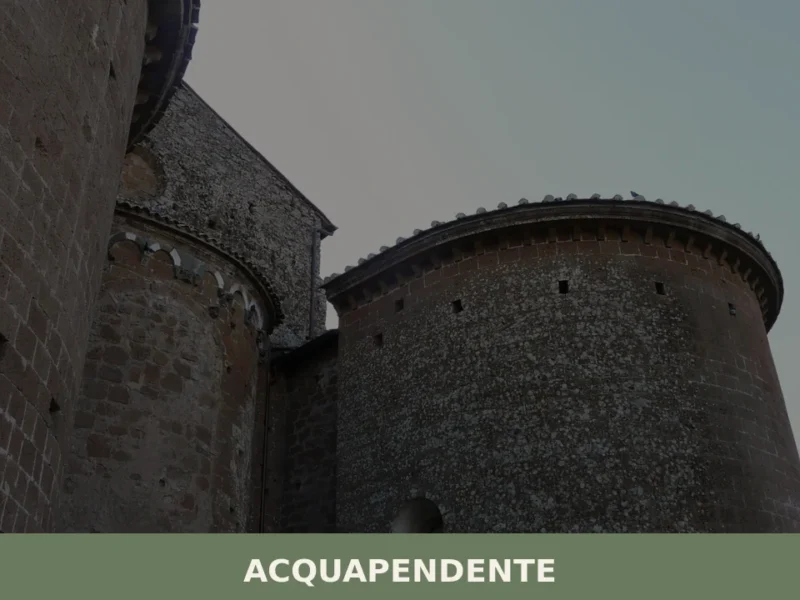
What to see in Acquapendente, Lazio, Italy: cathedral dating to 1149, Monte Rufeno Reserve and local pottery. Population 5,619. Discover the full travel guide.

Artena
Hills
What to see in Artena, Lazio, Italy: cyclopean walls from the 5th century BC, Palazzo Borghese, and 4 historic churches. Discover how to get there from Rome.

Roma
Sea
The capital of Italy and the Lazio region, Roma encompasses 1287 km² and 2.7 million inhabitants, making it Europe's largest commune and a global center of political, religious and cultural influence.

Sutri
Hills
A village of 6,707 inhabitants built on a dramatic tufo ridge above the ancient Cassia road. Medieval churches, Roman monuments and Etruscan archaeology define its character.
Canino
Hills
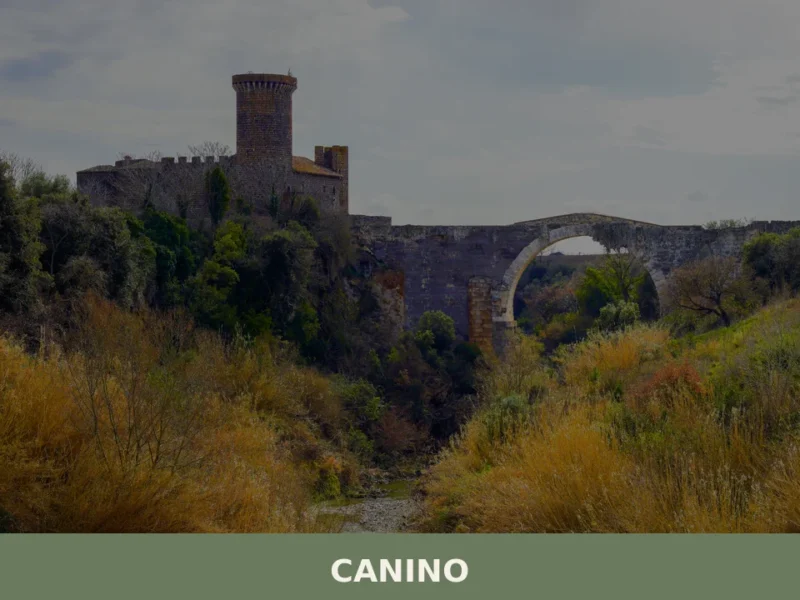
What to see in Canino: from historic monuments to traditional cuisine. Discover the main attractions and how to get to this village in Lazio.
Bolsena
Hills
 Lake
Lake
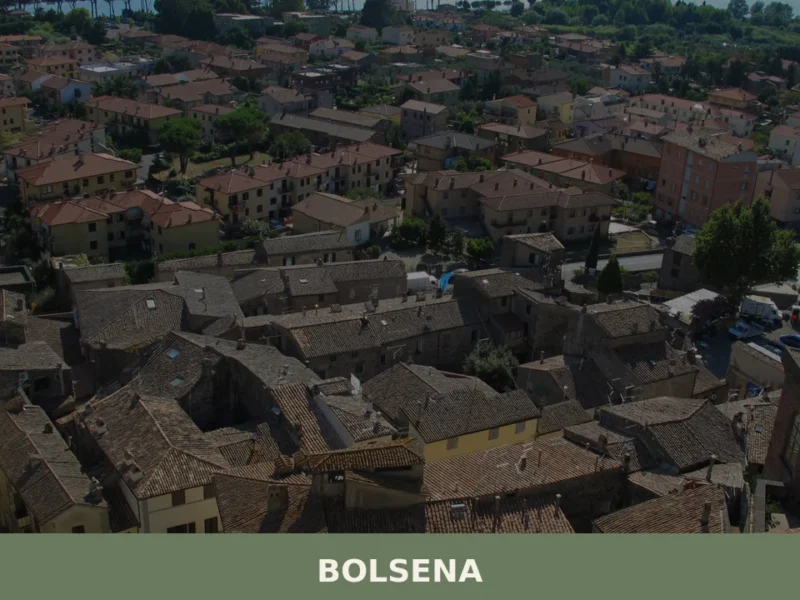
What to see in Bolsena, Lazio, Italy: the 1263 Eucharistic Miracle, Basilica of Santa Cristina, Lake Bolsena at 350 m. Discover history, food and how to get there.
Alvito
Mountain
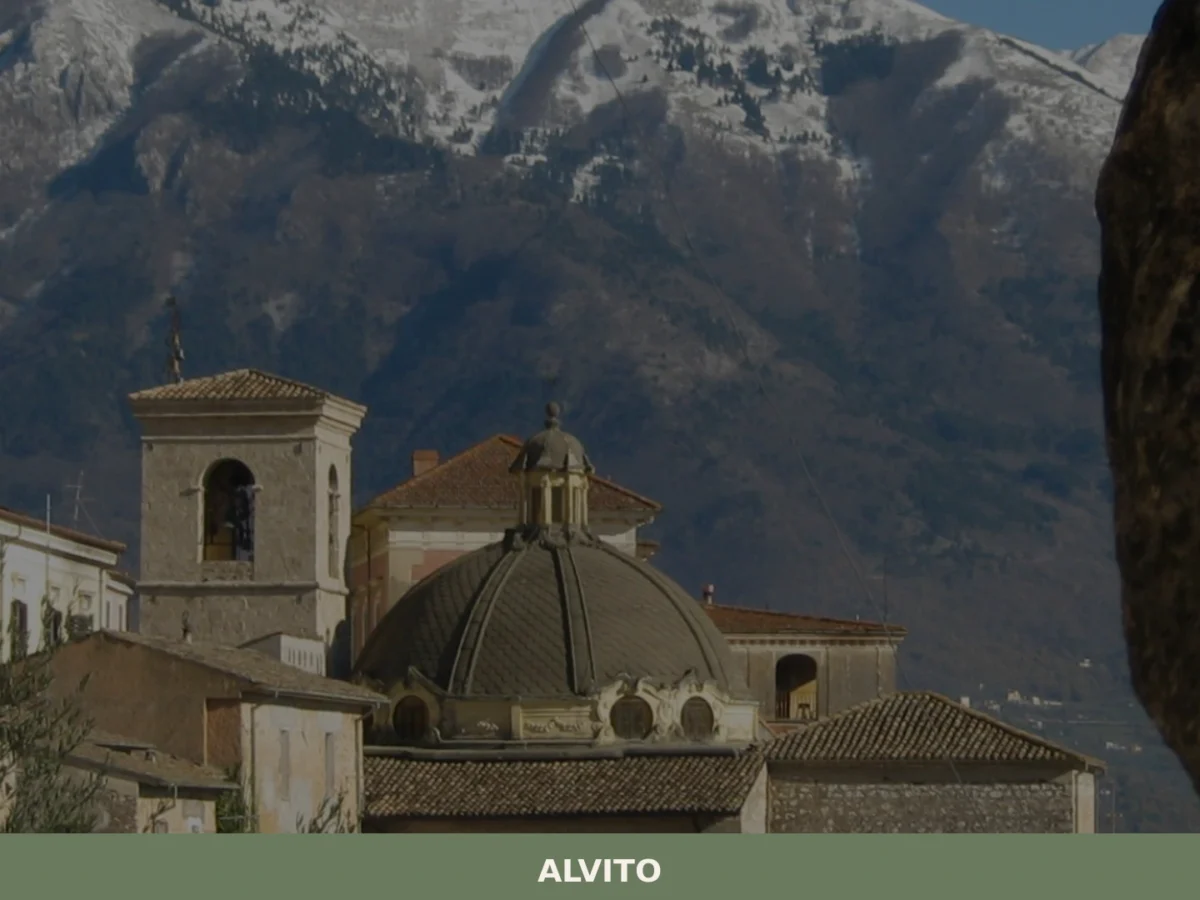
What to see in Alvito: discover the 5 top attractions in this Lazio village, from the castle to the Cathedral. Plan your visit with this complete guide.
🧀 Italian traditional products



🏡 Know Anzio better than we do?
If you’re a local or have been there, your knowledge matters: add what’s missing or fix a detail on this page.