


Bassano Romano
 Hills
Hills
What to see in Bassano Romano, Italy: Palazzo Giustiniani, maiolica heritage, and the feast of San Gratiliano. 4,980 inhabitants at 360 m. Discover it now.
Discover Bassano Romano
A fortified residence built in 1160 at the top of a hillside slope in the Monti Sabatini grew, over five centuries, into a princely palace decorated by three of the most technically accomplished painters of the Italian Baroque.
The stone bridge called Ponte delle Vaschie still crosses the local watercourse, and the church of San Vincenzo stands where the Giustiniani lords ordered it built in the early seventeenth century.
At 360 m (1,181 ft) above sea level, the town commands a clear view across the volcanic hills of northern Lazio, with the Roman Campagna visible on clear days to the south.
Deciding what to see in Bassano Romano means engaging with a place that changed ownership four times between popes, and whose population of 4,980 inhabitants still lives within a street plan largely unchanged since the Giustiniani marchesato — marquisate — was elevated to a principality in 1644.
Visitors to Bassano Romano find a concentration of fresco cycles, a documented maiolica manufacturing tradition transferred here in 1735, and a patronal feast on 12 August that draws the whole commune together around the figure of San Gratiliano.
The comune sits in the province of Viterbo, roughly 50 km (31 mi) north of Rome.
History of Bassano Romano
The settlement’s origins reach back to around the year 1000, when it functioned as an agricultural hamlet dependent on Sutri, then an important episcopal centre in northern Lazio. The place was known as Bassano di Sutri, a name that recorded both its topographic position — lower ground relative to the surrounding ridge — and its administrative subordination.
That subordination ended definitively in 1160, when a wealthy landowner named Enotrio Serco began constructing a fortified residence at the summit of the slope, an act that shifted the hamlet from an agricultural appendage into a seigneurial centre with its own defensive identity.
In 1482, Pope Sixtus IV assigned the Foedus Bassani — the feudal rights over Bassano — to the Anguillara, a family of Roman patricians with extensive holdings across Lazio.
The decisive turning point came in 1565, when Pope Clement VIII reassigned the signory to the Giustiniani, merchants of Genoese origin long established in Rome.
Under Giustiniani control the commune expanded rapidly: a hunting lodge known as La Rocca was constructed, along with granaries, the stone Ponte delle Vaschie, and the church of San Vincenzo. The family also commissioned major fresco cycles from Francesco Albani, Domenico Zampieri — universally known as Domenichino — and Antonio Tempesta. In 1605 the signory was formally raised to a marquessate, and in 1644 a papal bull of Innocent X elevated the marchese of Bassano to the rank of prince.
The reformed status attracted visitors of considerable standing: James Stuart, claimant to the thrones of England and Scotland, was among those recorded at the palace. In 1735 the Giustiniani brought the maiolica manufactory of the ceramicist Bartolomeo Terchi from Siena, establishing a production centre that introduced refined tin-glazed earthenware techniques to the area.
Like other hill towns in the region, Bassano suffered epidemic outbreaks in 1709, 1770, and 1786, and in 1799 French forces under Napoleon attacked the town on four separate occasions.
The Giustiniani line at Bassano ended in 1854, when the fief passed to the Odescalchi family. The comune retained the name Bassano in Sabina for much of the nineteenth and twentieth centuries, then adopted its current official designation, Bassano Romano, in 1964. That renaming distinguished it from other Italian towns sharing the same root toponym and anchored its identity explicitly within the Roman cultural sphere of northern Lazio.
During the Second World War the area was the site of several armed conflicts, a chapter that left no major monuments but is documented in local memory and municipal records.
The Comune di Bassano Romano today administers a territory of approximately 60 km² (23 sq mi) in the hills of the Monti Sabatini, with the Viterbo provincial capital 30 km (18.6 mi) to the north-west.
What to see in Bassano Romano, Lazio: top attractions
Palazzo Giustiniani
The palace occupies the elevated core of the historic centre, its external walls in squared tufa blocks that have darkened with age to a deep ochre.
Construction began in 1160 as a fortified residence and continued across several centuries as successive owners expanded and embellished the structure.
The interior rooms contain fresco cycles commissioned by the Giustiniani after 1565: documented artists include Francesco Albani, whose work is characterised by soft atmospheric landscapes, Domenichino, one of the most technically precise draughtsmen of the Roman Baroque, and Antonio Tempesta, known for large-scale hunting scenes.
Access to specific rooms may be limited depending on current conservation conditions; it is worth contacting the municipality in advance to confirm which areas are open to visitors.
Church of San Vincenzo
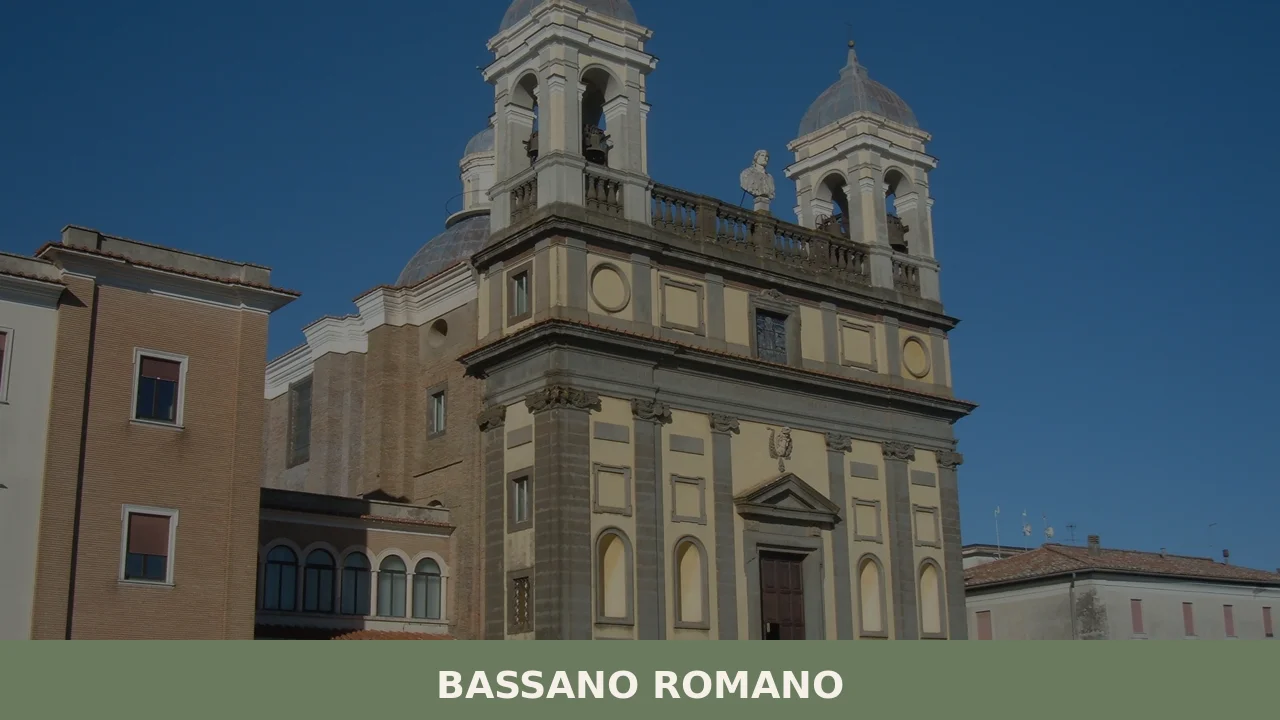
The church stands on a position chosen by the Giustiniani lords in the early seventeenth century, its façade oriented towards the main square that the family systematically reorganised after 1605.
The building serves as the primary record of the commune’s Counter-Reformation religious programme, ordered at the same moment as the casina di caccia and the granaries — a coordinated act of territorial planning.
Inside, the proportions follow the single-nave plan typical of smaller Lazio hill-town churches, with lateral chapels that would have housed private Giustiniani devotional images.
The church remains in active liturgical use, making early morning or late afternoon visits the most practical for those who want unhurried time inside.
Ponte delle Vaschie
The stone bridge crosses a local watercourse at the edge of the historic settlement and dates to the period of Giustiniani investment in the early seventeenth century.
Its name — literally “bridge of the basins” — refers to the wash-basins that once flanked the structure and were used for communal laundering, a detail that locates the bridge within the productive daily life of the commune rather than purely in the realm of noble patronage. The stonework is in local volcanic material, and the arch shows the low-rise profile typical of bridge engineering in this part of Lazio.
Walking down from the historic centre to the bridge takes less than ten minutes and provides a clear view of the hillside geology: alternating layers of tufa and harder volcanic rock.
Maiolica Heritage of Bartolomeo Terchi
In 1735 the Giustiniani transferred the ceramic workshop of Bartolomeo Terchi from Siena to Bassano Romano, establishing a manifattura di maiolica — a tin-glazed earthenware manufactory — in the town.
Terchi’s production used techniques developed in the Sienese tradition, including the application of metallic oxide pigments to a white tin-oxide glaze before a second firing, which produced the characteristic opaque finish and vivid colour range associated with Italian maiolica of the period.
Surviving pieces attributed to the Bassano Romano workshop are documented in specialist ceramic collections. The transfer of the manufactory is historically significant because it brought an established central-Italian craft tradition into a northern Lazio context that had no equivalent prior production.
Monti Sabatini Hill Landscape and Town Walls
The town sits at 360 m (1,181 ft) in the Monti Sabatini, a volcanic massif whose soils derive from the same eruptive activity that formed Lake Bracciano, visible approximately 15 km (9.3 mi) to the south-east.
The perimeter of the historic centre still follows the line of the original fortification, with sections of the defensive wall visible between later residential buildings.
Walking the outer circuit — a route of roughly 800 m (0.5 mi) — gives a clear sense of how the 1160 fortified nucleus was structured: the steep natural drop on two sides served as the primary defensive element, reducing the length of wall that required active construction and maintenance.
Spring, when the surrounding hillside carries flowering broom, is the most visually rewarding season for this circuit.
Local food and typical products of Bassano Romano
The food culture of Bassano Romano belongs to the broader culinary tradition of the Viterbo hill country, a zone where volcanic soils produce legumes, leafy vegetables, and grain crops with a flavour profile shaped by the mineral-rich substrate.
The Giustiniani period brought a degree of courtly refinement — the palace maintained formal kitchens for a household that received noble and papal guests — but the everyday cooking of the commune remained rooted in the practical, ingredient-led approach shared across northern Lazio.
Proximity to Rome, roughly 50 km (31 mi) to the south, historically meant that products from the Monti Sabatini area fed both the local population and the urban market of the capital.
Among the dishes associated with this part of the Viterbo province, acquacotta is representative: a bread-thickened vegetable broth built on seasonal greens, onion, and tomato, finished with a poached egg and served over stale unsalted bread.
The use of unsalted bread — pane sciocco in local usage — reflects a central Italian tradition that distinguishes this area from the salted-bread zones further north.
Pasta all’amatriciana and its simpler relative pasta alla gricia, made with guanciale (cured pork cheek), pecorino cheese, and black pepper, appear regularly in the trattorias of the Viterbo hill towns.
Wild mushrooms gathered from the Monti Sabatini forests, particularly porcini in autumn, feature in sauces and as a side dish across the region.
The Monti Sabatini area, including the communes around Bassano Romano, is part of the broader production zone for Olio extravergine di oliva Tuscia (DOP), a denomination of protected origin covering extra-virgin olive oil from a defined area of the province of Viterbo.
The oil is produced primarily from Caninese, Frantoio, Leccino, and Moraiolo olive varieties, with the Caninese cultivar being the most distinctively local.
Cold extraction and a maximum oleic acidity of 0.5 percent are among the production parameters specified by the denomination’s disciplinary code.
The result is an oil with a medium-intensity fruitiness and a clean bitter finish that suits raw application on bread or legume dishes rather than high-heat cooking.
Local food can be sampled at the trattorias and family-run restaurants within the historic centre, several of which operate seasonally and may reduce hours outside the summer months. The period around the patronal feast of San Gratiliano on 12 August reliably sees the highest concentration of food activity, with outdoor eating areas and market stalls extending into the main square.
Autumn, from late September through November, is the season for local mushrooms and pressed olive oil, and some producers offer direct sales from the frantoio — the oil mill — during the harvest period.
Festivals, events and traditions of Bassano Romano
The central event in Bassano Romano’s annual calendar is the feast of San Gratiliano, patron saint of the commune, celebrated on 12 August. The date falls in the height of summer, when many residents who have moved to Rome or other cities return to the village, making the feast both a religious observance and a social reunion with practical demographic weight.
The liturgical programme centres on a solemn Mass and a procession through the streets of the historic centre, during which the image of the saint is carried by members of the local confraternity. Evening celebrations traditionally include music in the main square, and fireworks conclude the feast after nightfall.
Beyond the patronal feast, Bassano Romano shares the agricultural and religious calendar common to the Viterbo hill country.
The summer months bring outdoor markets and informal food gatherings tied to seasonal produce.
The Giustiniani-era tradition of the town as a place that attracted external visitors — documented from the seventeenth century onwards — has left a civic culture accustomed to events that combine the religious with the convivial.
International visitors attending the 12 August feast should note that accommodation in the village itself is limited and that booking well in advance or staying in Viterbo or the surrounding area is the more practical approach.
Nearby Casperia, a hill village in the Sabina area of Lazio, holds its own patronal and seasonal events that can be combined with a visit to Bassano Romano.
When to visit Bassano Romano, Italy and how to get there
The best time to visit Bassano Romano falls between April and June and again in September and October. In spring, the Monti Sabatini hillsides carry flowering vegetation and temperatures at 360 m (1,181 ft) remain comfortable for walking the outer circuit of the town walls and moving between the historic sites.
July and August are hot and dry across northern Lazio, with midday temperatures regularly above 32°C (90°F); however, the week around 12 August draws the largest number of visitors and local residents, making it the most socially active period of the year despite the heat.
Autumn offers cooler temperatures, the mushroom and olive oil seasons, and considerably fewer visitors than the summer peak.
Winter is quiet, with some restaurants and accommodation operating on reduced schedules.
Bassano Romano is located approximately 50 km (31 mi) north of Rome, placing it within comfortable day-trip range from the capital. By car, the fastest route uses the A1 motorway northbound from Rome, exiting at Magliano Romano and continuing on the SP4 provincial road towards Bassano Romano — a total journey of around 50 minutes under normal traffic conditions. Alternatively, the Via Cassia (SS2) runs north-west from Rome through the Monti Sabatini area and passes within a short drive of the town.
For those travelling without a car, Trenitalia regional services connect Rome Termini to Viterbo via the FL3 line, stopping at Capranica-Sutri station, which is approximately 10 km (6.2 mi) from Bassano Romano; a local bus or taxi covers the final leg.
The nearest international airport is Rome Fiumicino (Leonardo da Vinci), 75 km (46.6 mi) to the south, with a driving time of approximately one hour.
International visitors should be aware that English is not widely spoken in smaller local shops and restaurants, and carrying cash in euros is advisable as card payment terminals are not universal in smaller establishments.
The terrain of the historic centre is moderately steep, with several narrow streets on gradients that require reasonable mobility. The outer walking circuit is on mixed surfaces including compacted earth and uneven stone.
Visitors who are also planning stops in the broader Viterbo province can combine Bassano Romano with the nearby village of Onano, another hill settlement in the province of Viterbo that shares the volcanic geology of the Monti Sabatini area.
Those approaching from the south may also consider a brief stop at Belmonte in Sabina, situated in the Sabina hills on the eastern side of the Tiber valley, which lies along one of the longer scenic routes from Rome into northern Lazio.
Frequently asked questions about Bassano Romano
What is the best time to visit Bassano Romano?
Spring (April–June) is ideal: the Monti Sabatini hillsides bloom with flowering broom and temperatures at 360 m are mild. Autumn brings porcini mushroom season and softer light on the tufa stonework. The patronal feast of San Gratiliano on 12 August draws the entire commune together and offers a vivid glimpse of local tradition, though August heat can be intense. Winter is quiet but allows unhurried visits to Palazzo Giustiniani and the Church of San Vincenzo without crowds.
What are the historical origins of Bassano Romano?
The settlement dates to around 1000 AD as an agricultural hamlet subordinate to the episcopal centre of Sutri, known then as Bassano di Sutri. In 1160 Enotrio Serco built a fortified residence at the summit, transforming it into a seigneurial centre. Papal reassignments followed — to the Anguillara in 1482 and the Giustiniani in 1565 — who elevated it to a marquessate (1605) and then a principality (1644). The town adopted its current name, Bassano Romano, in 1964.
What to see in Bassano Romano? Main monuments and landmarks
The key attraction is Palazzo Giustiniani, a fortified residence begun in 1160 and later decorated with fresco cycles by Albani, Domenichino and Tempesta — contact the municipality in advance to confirm access to specific rooms. The 17th-century Church of San Vincenzo faces the main square and is still in liturgical use (best visited early morning or late afternoon). The medieval Ponte delle Vaschie, a stone arch bridge in local volcanic material, is a ten-minute walk downhill from the historic centre.
What are the main natural or scenic attractions of Bassano Romano?
Bassano Romano sits at 360 m in the Monti Sabatini, a volcanic massif whose soils are linked to the same eruptive history that formed Lake Bracciano, visible roughly 15 km to the south-east on clear days. The Roman Campagna is visible to the south on clear days. Walking the outer circuit of the historic fortification walls — approximately 800 m — reveals the hillside geology of alternating tufa and harder volcanic rock, and spring is the most visually rewarding season for this route.
Where to take the best photos in Bassano Romano?
The outer circuit of the town walls offers the clearest views over the Monti Sabatini volcanic landscape and, on clear days, southward toward the Roman Campagna. The Ponte delle Vaschie, framed by the hillside geology, is a strong foreground subject. The main square in front of the Church of San Vincenzo, reorganised by the Giustiniani after 1605, provides a composed historic streetscape. Morning light suits the tufa facades of Palazzo Giustiniani, whose ochre stonework deepens in direct sun.
Are there museums, churches or historic buildings to visit in Bassano Romano?
Palazzo Giustiniani is the principal historic building, housing Baroque fresco cycles by Albani, Domenichino and Tempesta; access to interior rooms should be confirmed with the Comune di Bassano Romano before visiting. The Church of San Vincenzo, built in the early 17th century on Giustiniani commission, is in active use and open for visits outside liturgical hours. The maiolica heritage of Bartolomeo Terchi's 1735 workshop is documented in specialist ceramic collections, though no dedicated on-site museum is currently confirmed in available sources.
What can you do in Bassano Romano? Activities and experiences
Walking the 800 m outer circuit of the historic fortification walls combines light exercise with views over the Monti Sabatini. The Ponte delle Vaschie and the historic centre are accessible on foot within minutes of each other, making the village well suited to a half-day self-guided tour. Autumn visits can be paired with mushroom and food markets typical of the Viterbo hill-town circuit. The patronal feast of San Gratiliano on 12 August provides a direct experience of local communal tradition.
Who is Bassano Romano suitable for? Families, couples, hikers, solo travelers?
Bassano Romano suits culturally focused visitors — couples and solo travellers drawn to Baroque art, historic palaces and the layered history of a former princely estate. Art historians and fresco enthusiasts will find the Palazzo Giustiniani cycles by Albani, Domenichino and Tempesta of serious interest. The compact historic centre and short walking distances make it manageable for families with older children. It also appeals to food and ceramics enthusiasts interested in the Terchi maiolica tradition and the broader Viterbo hill-town culinary circuit.
What to eat in Bassano Romano? Local products and specialties
The local table belongs to the Viterbo volcanic-hill tradition. Acquacotta — a bread-thickened broth of seasonal greens, onion and tomato, finished with a poached egg over stale unsalted bread — is the most representative dish of the area. Pasta alla gricia and all'amatriciana, made with guanciale, pecorino and black pepper, appear regularly in local trattorias. Porcini mushrooms gathered from the Monti Sabatini forests are a key autumn ingredient. Unsalted bread (pane sciocco) is the standard accompaniment, reflecting central Italian tradition.
Nearby Villages near Bassano Romano
In Lazio More villages to discover
Castelnuovo di Farfa
Hills
What to see in Castelnuovo di Farfa: 1,032 inhabitants at 358 m in the Sabina. Explore the medieval castle, San Nicola church and PDO cacio fiore. Plan your visit now.
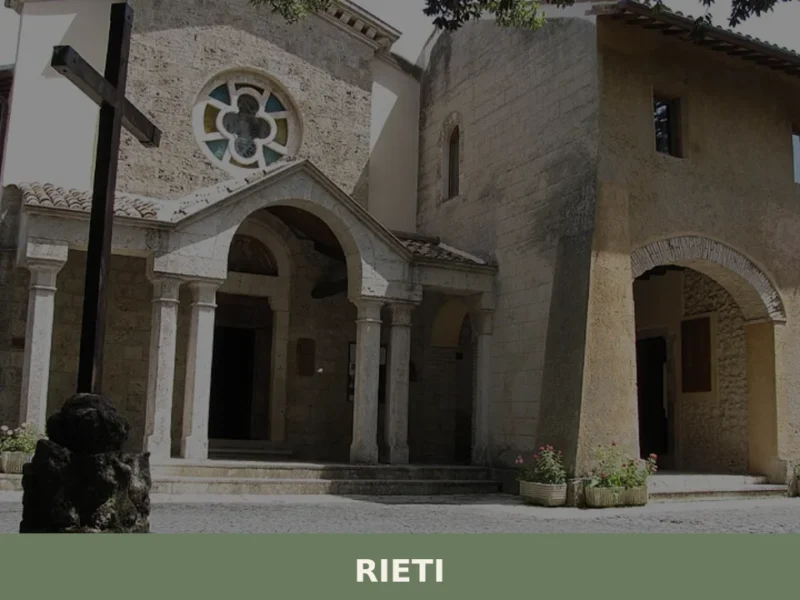
Rieti
Hills
What to see in Rieti: from the medieval walls to the Cathedral, discover the top 5 attractions. Complete guide to visiting Rieti in one day.
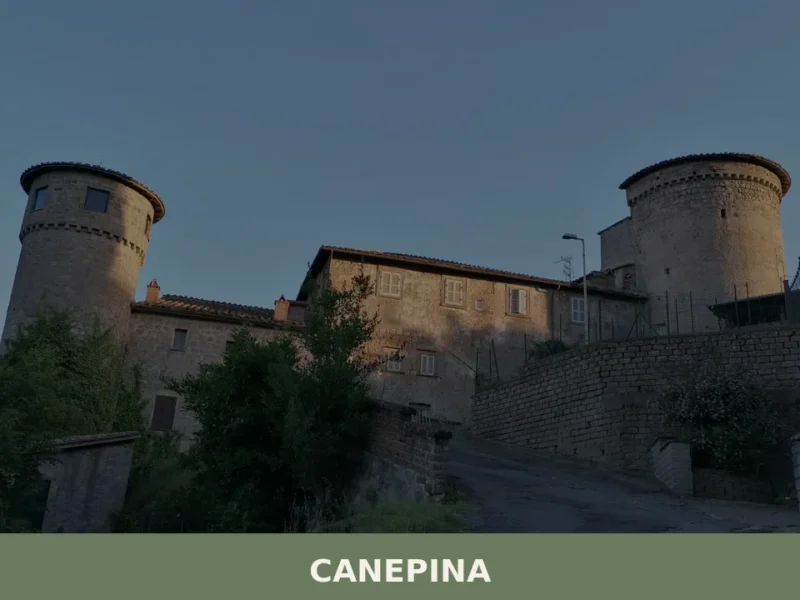
Canepina
Hills
What to see in Canepina, Lazio, Italy: explore this 3,127-inhabitant hill village 60 km from Rome. Discover its hemp heritage, patron saint feast and local cuisine.
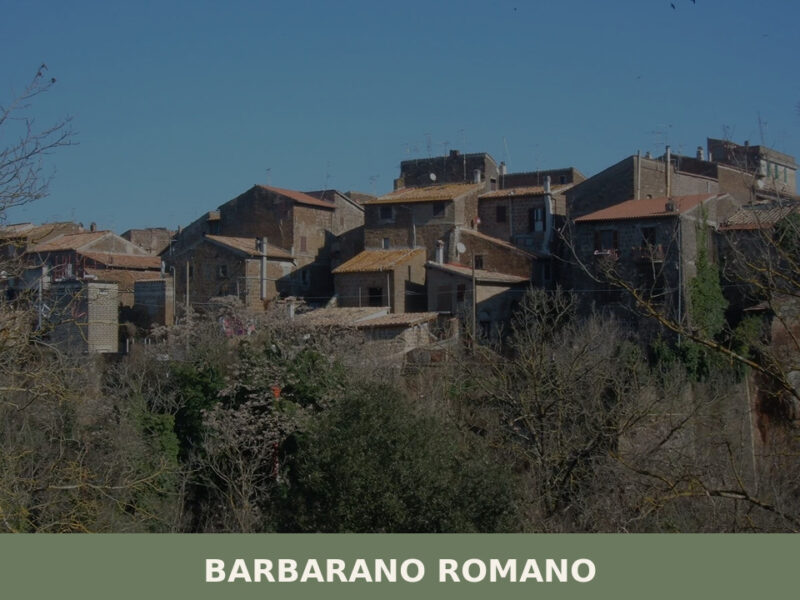
Barbarano Romano
Hills
Morning light catches the volcanic tufa in shades of ochre and rust, and the only sound rising from the gorge below is the intermittent call of a jay echoing off ancient rock. Barbarano Romano sits on a plateau in the province of Viterbo, a settlement of barely a thousand souls whose streets still follow the […]
Ascrea
 Lake
Lake
 Mountain
What to see in Ascrea: a mountain village at 757 m in the province of Rieti with 261 residents. Discover the church of San Nicola, PAT-certified products and how to get there.
Albano Laziale
Hills
Lake
What to see in Albano Laziale, Italy: Lake Albano, Roman catacombs, and the Cathedral of St. Pancras at 400 m. Explore 38,983-inhabitant Lazio hill town. Discover now.
Tessennano
Hills
In the heart of Viterbo’s Tuscia region, 302 meters above sea level, lies Tessennano, a settlement with 284 residents. Its hillside location, distant from major thoroughfares, has defined its profile through the centuries. For those wondering what to see in Tessennano, the village presents a historical layering perceptible in its architecture. The settlement develops around […]
Arcinazzo Romano
Mountain
What to see in Arcinazzo Romano, Lazio, Italy: explore Trajan's Villa ruins at 831 m altitude, the plateau landscape and local traditions. Discover the complete guide.

Terracina
 Sea
Sea
44,000 residents, one ancient temple on a cliff, and centuries of Roman, medieval and papal history waiting along the Tyrrhenian coast.
Capodimonte
Hills
Lake
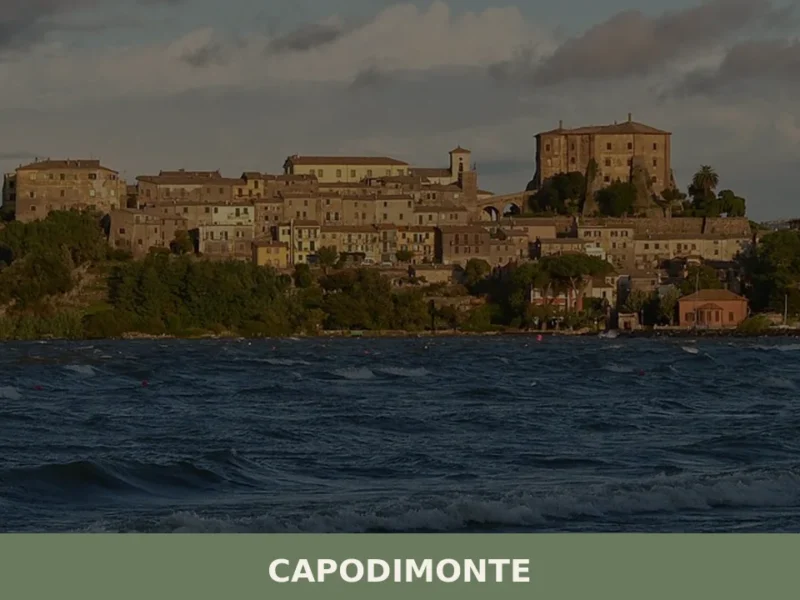
What to see in Capodimonte, Italy: Discover this village of 1,667 inhabitants on Lake Bolsena's shore. Explore its unique headland and historic core. Read our guide!



🏡 Know Bassano Romano better than we do?
If you’re a local or have been there, your knowledge matters: add what’s missing or fix a detail on this page.