


Barletta
 Sea
Sea
What to see in Barletta, Puglia, Italy: the Colossus, a Norman castle, and the 1503 Disfida. Population 94,700. Discover top attractions and how to get there.
Discover Barletta
A bronze figure stands on the corner of a Barletta street, just over 4 metres (13 ft) tall, staring toward the Adriatic. Local inhabitants have called it Eraclio for centuries.
The statue is the largest surviving bronze from the late Roman Empire, and it does not stand inside a museum: it occupies the pavement beside the Basilica of the Holy Sepulchre, exposed to salt wind off the Gulf of Manfredonia, its surface weathered to a dark green patina that no photograph quite reproduces.
Deciding what to see in Barletta means navigating a city of around 94,700 inhabitants set at 15 m (49 ft) above sea level on the Adriatic coast of Puglia, Italy, where Norman fortifications, a Roman-era colossus, and a sandy coastline covering both sides of a commercial port compete for a visitor’s attention.
The Barletta highlights include a castle rebuilt by Frederick II, an archaeological site linked to one of antiquity’s most decisive battles, and a Baroque pinacoteca housing the paintings of Impressionist Giuseppe De Nittis. Visitors to Barletta find a city that has accumulated monuments across more than two millennia without arranging them for convenience.
History of Barletta
Greeks and Romans knew the settlement respectively as Bardulos and Barulum long before the comune took its present name.
The coastal position on the south-western edge of the Gulf of Manfredonia made it a natural stop along the Adriatic route, and the mouth of the Ofanto river — which today lies 5 km (3 mi) north-west of the city centre — shaped both its agricultural hinterland and its relationship with the fertile plain of the Tavoliere to the north. In the Middle Ages, Barletta became a stronghold for Normans and Lombards, and its port served as a staging post for Crusaders, the Teutonic Knights, the Templars, and the Knights of St John departing for the Holy Land.
The city reached its greatest political weight under the Hohenstaufen king Frederick II and then under the Angevin kings of Naples. Frederick II undertook a substantial reconstruction of the castle between 1225 and 1228, using it as the launch point for the Sixth Crusade.
The Archbishops of Nazareth, displaced by the Muslim conquest of the Holy Land, settled permanently in Barletta in 1327, reinforcing the city’s role as a refuge for ecclesiastical institutions from the eastern Mediterranean.
On 13 February 1503, the city entered Italian literary history when thirteen knights led by condottiere Ettore Fieramosca — a commander of mercenary troops — defeated an equal number of French knights in a joust held near Andria, an episode that Massimo d’Azeglio documented in his 1833 novel Ettore Fieramosca o la Disfida di Barletta. At that moment the city was occupied by the Spanish army of Gonzalo de Córdoba, loosely besieged by French forces contesting control of southern Italy. The nearby city of Foggia, roughly 60 km (37 mi) to the north-east, sat within the same contested theatre of Franco-Spanish conflict during this period.
The modern era brought further upheaval. During World War I, the Italian cacciatorpediniere — destroyer — Turbine was sunk off Barletta on 24 May 1915 by the Austro-Hungarian light cruiser Helgoland and three accompanying destroyers.
In September 1943, the city became the site of one of the first armed Italian confrontations with German troops, when a battalion of Fallschirmjäger (parachutists) was dispatched from Foggia to destroy the port before the advancing British Eighth Army could reach it.
The Italian garrison surrendered after a brief engagement, and the city subsequently earned both the Gold Medal of Military Valour and the Gold Medal of Civilian Merit. Barletta was later the capital of its administrative district for 120 years between 1806 and 1927, and today it shares the seat of the Province of Barletta-Andria-Trani with Andria and Trani.
What to see in Barletta, Puglia: top attractions
Colossus of Barletta
The statue occupies a street corner adjacent to the Basilica of the Holy Sepulchre, its bronze surface roughly 4 m (13 ft) from base to crown. It represents a Roman emperor — scholars have proposed Theodosius II among other candidates — and it remains the largest surviving bronze figure from the late Roman Empire after Constantine. The figure stands outdoors and is accessible at any hour, which means the quality of observation changes considerably between the midday glare and the low evening light of a western Adriatic sunset.
Look at the casting details on the drapery and the position of the arms: these mark it as a product of imperial court workshops, not a provincial commission.
The Norman-Hohenstaufen Castle
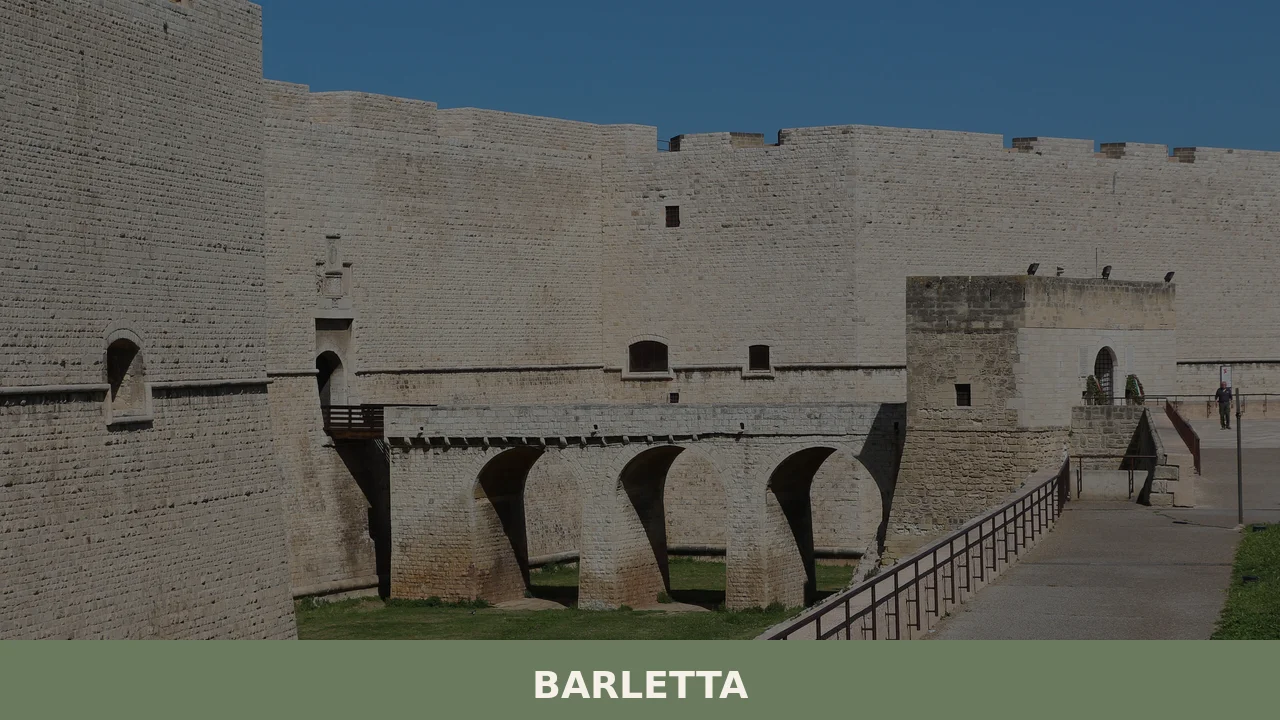
The castle’s earliest structure dates to the 10th century, when Norman builders raised a typical motte-and-bailey fortification on the Adriatic shoreline.
Frederick II ordered a thorough reconstruction between 1225 and 1228, converting the military lodging point into a proper royal fortress. The four massive angular bastions visible today were added in 1527 under Charles V, giving the building its current plan. In September 1943 the castle served as the setting for the Italian military defence against German troops.
The interior now functions as a museum space; the exterior walls, directly on the seafront, repay a slow circuit on foot to appreciate the shift from Norman to Aragonese-Spanish construction techniques.
Basilica of the Holy Sepulchre
Built in the 12th century, the Basilica di San Sepolcro served as the headquarters of the Knights of Malta outside the city walls and stood alongside a hospital for pilgrims travelling to the Holy Land. The building’s Romanesque structure carries visible Oriental inflections drawn from Jerusalem, particularly in the carved detailing around the portal and in the internal proportions. The façade was later reworked in Baroque style, creating an unusual layering of two distinct architectural phases on a single street front.
The Colossus of Barletta stands immediately beside it, so both sites are effectively one stop for any visit to what to see in Barletta.
Cathedral of Santa Maria Maggiore
The cathedral occupies the former site of a Roman temple of Neptune, and excavations have exposed grotticelle — small rock-cut tombs — from the 3rd century BC beneath the present floor. Above those, a Paleo-Christian basilica from the 6th century AD was built, followed by a 9th-century addition.
The current Romanesque structure was consecrated in 1267 and then renovated in Gothic style during the 14th century, leaving the interior as a stratified record of roughly 1,500 years of religious use on a single site. The fusion of Gothic pointed arches with Romanesque columns is visible in the nave and makes the building a reference point for understanding the architectural transitions of medieval Apulia.
Canne della Battaglia Archaeological Site
The archaeological area of Cannae lies within the territory of Barletta and preserves the site of the Battle of Cannae, fought in 216 BC, in which Hannibal’s Carthaginian forces inflicted one of the most complete defeats in Roman military history. The settlement of Cannae flourished through the Roman period before a succession of Saracen attacks weakened it; the Normans finally destroyed it, and it was abandoned in the early Middle Ages.
The site was recognised as a città d’arte of Apulia in 2005 for its architectural heritage.
For visitors interested in ancient military history, the site provides both the landscape context — a flat plain near the Ofanto river — and excavated remains that illustrate the urban fabric of the pre-battle settlement. The town of Ascoli Satriano, located further inland in the Ofanto valley, shares this same stretch of ancient Roman road network and complements a visit to the Cannae site.
Local food and typical products of Barletta
Barletta’s position at the point where the Murgia plateau meets the Tavoliere plain creates an agricultural context that has determined local cooking for centuries. The Ofanto river valley supplies the surrounding countryside with fertile alluvial soil, which supports the two dominant crops of the area: grapes and olives. These are not marginal products: together they define the agricultural economy of the entire agro — the farmed hinterland — and their processing traditions have been continuous since at least the Roman occupation of the region.
The olive harvest, concentrated in autumn, produces oils pressed from varieties typical of northern Puglia, with a flavour profile that tends toward low acidity and a grassy finish when processed from early-harvested fruit.
Orecchiette al ragù di agnello — the ear-shaped pasta typical of Apulia, dressed with a slow-cooked lamb sauce — appears across the province, and Barletta’s version draws on the sheep-farming traditions of the Murgia hills immediately to the south-west.
Focaccia barese, baked with local olive oil and topped with fresh tomatoes, is sold in bakeries throughout the city and functions as both a street food and a household staple. Pasta dishes dressed with cime di rapa — turnip tops, blanched and sautéed with garlic, chilli, and anchovy — represent the bitter-green flavour profile that distinguishes Apulian cooking from the tomato-heavy traditions further north in Italy.
The grape harvest feeds both table wine production and the local tradition of vino cotto, a grape must cooked down to a syrup used in pastry-making and as a condiment. While no DOC or DOP designation specific exclusively to Barletta appears in the available data, the broader Puglia wine production zone covers the territory, and local cantine — wine cellars — sell directly to visitors during and after the harvest in September and October.
Street markets in Barletta operate on a weekly basis in the older districts of the city and carry seasonal produce: in summer, the stalls carry figs, almonds, and the small, intensely sweet tomatoes grown on the coastal plain.
In winter the offer shifts to citrus, root vegetables, and preserved olives.
Visitors who arrive between late September and November will find the period when both the olive pressing and the grape harvest overlap, making this the most productive time to explore the city’s food economy at close range.
Festivals, events and traditions of Barletta
The city’s principal religious celebration honours two patron figures: San Ruggero di Canne — Roger of Cannae, bishop and saint who lived from 1060 to 1121 — and the Madonna dello Sterpeto.
The feast falls on the second Sunday of July and draws the city into a programme of processions through the main streets of the historic centre, with the images of the patron saints carried through the crowd.
The Adriatic summer heat at this time of year — rainfall is minimal between mid-June and mid-August — means that the evening processions, which extend into the late hours, are the most attended part of the celebration. The atmosphere along the seafront during the July feast is structured around the convergence of the religious calendar and the summer season, when the coastal population swells.
The Disfida di Barletta — the Challenge of Barletta, commemorating the 1503 joust between Italian and French knights — is re-enacted periodically in the city in the form of historical pageants that involve costumed processions and theatrical reconstructions of the original event. The episode, centred on the figure of Ettore Fieramosca, remains the most internationally recognised chapter of Barletta’s history and gives the city a distinct identity within the broader context of Apulian historical commemoration.
The Palazzo della Marra, now housing the Pinacoteca Giuseppe De Nittis, also hosts cultural events linked to the legacy of the Impressionist painter Giuseppe De Nittis (1846–1884), who was born in Barletta.
When to visit Barletta, Italy and how to get there
The climate of Barletta is moderated by the Adriatic Sea, with annual rainfall of 500 mm (19.7 in) concentrated in autumn and winter.
Rain is minimal between mid-June and mid-August, and winds tend to arrive from the south. The best time to visit Barletta for those who prioritise outdoor exploration and beach access is late May through June or September through early October: temperatures are lower than peak summer, the coast is accessible without the crowds of August, and the archaeological site at Cannae is more comfortable to visit in moderate heat. Travellers interested in the patron saint celebrations should plan specifically for the second Sunday of July. For the food harvest season, late September to November offers direct access to olive pressing facilities and the end of the grape harvest.
Getting to Barletta is straightforward by multiple routes.
By car from Bari — the regional capital, 55 km (34 mi) to the south-east — take the A14 motorway and exit at Andria-Barletta or Canosa, or follow the SS16 coastal highway directly north. The drive from Bari takes approximately 45 minutes in normal traffic. Trenitalia operates services to Barletta railway station on the Adriatic main line, making it reachable from Bari in under an hour and from further afield along the eastern Italian coast. The Ferrovie del Nord Barese also connects Barletta with Bari on a separate regional line, with a second FNB station within the city.
The nearest airport is Bari Airport, located 50 km (31 mi) east of Barletta; transfer by car or taxi takes roughly 40 to 50 minutes. There is no commercial airport in Barletta itself, and the city has no direct sea passenger connections, though ferry services across the Adriatic operate from Bari. International visitors planning a day trip from Bari will find Barletta accessible and complete as a full-day itinerary.
Those arriving from further north — Rome is approximately 450 km (280 mi) to the north-west — can reach Barletta by high-speed train to Bari followed by a regional connection. A practical note for international visitors: English is not widely spoken in smaller shops and local markets, and carrying cash in Euros is advisable for purchases at street stalls, bakeries, and the weekly market.
The coastal city of Giovinazzo, located along the same Adriatic coastline south of Barletta, shares the Norman architectural heritage and the fishing port culture that characterise much of this stretch of Puglia, and it rewards a stop when travelling between Barletta and Bari by the SS16 coastal road.
Visitors extending their time in the Province of Barletta-Andria-Trani may also consider Casalnuovo Monterotaro, a smaller inland comune in the Foggia sub-Apennine area that reflects the agricultural and pastoral traditions of the northern Puglia interior, offering a different perspective on the same regional landscape that what to see in Barletta introduces from the coast.
Frequently asked questions about Barletta
What is the best time to visit Barletta?
The best time to visit Barletta is late spring (May–June) and early autumn (September–October), when temperatures are mild, the Adriatic beaches are uncrowded, and the city's monuments are easier to explore on foot. Summer (July–August) brings peak heat and beach tourism. The second Sunday of July is the feast of the city's patron saints, San Ruggero di Canne and the Madonna dello Sterpeto, a significant local celebration worth planning around. February 13 marks the anniversary of the Disfida di Barletta, commemorated with historical re-enactments in the city centre.
What are the historical origins of Barletta?
Barletta was known to the Greeks as Bardulos and to the Romans as Barulum. Its Adriatic coastal position made it a key stop on ancient trade routes. In the Middle Ages it became a Norman stronghold and a Crusader embarkation port, hosting the Teutonic Knights, Templars, and Knights of St John. Frederick II rebuilt its castle between 1225 and 1228. In 1503 it entered Italian cultural history through the Disfida di Barletta, a jousting challenge between Italian and French knights, later immortalised in Massimo d'Azeglio's 1833 novel.
What to see in Barletta? Main monuments and landmarks
Top sights include: the Colossus of Barletta, the largest surviving late Roman bronze statue, standing outdoors beside the Basilica of the Holy Sepulchre and freely accessible at any hour; the Norman-Hohenstaufen Castle on the seafront, today a museum; the Basilica di San Sepolcro, a 12th-century Romanesque church with Baroque additions; the Cathedral of Santa Maria Maggiore, built over a Roman temple of Neptune with stratified layers from the 3rd century BC to the 14th century AD; and the Canne della Battaglia archaeological site, scene of Hannibal's decisive 216 BC victory over Rome.
What are the main natural or scenic attractions of Barletta?
Barletta's coastline on the Gulf of Manfredonia is the primary natural draw, with sandy beaches extending on both sides of the commercial port. The mouth of the Ofanto river, roughly 5 km north-west of the city centre, marks the edge of a fertile alluvial plain that transitions toward the Murgia plateau and the Tavoliere to the north. The flat terrain near the Ofanto also forms the landscape context of the Canne della Battaglia archaeological area, offering open countryside views typical of northern Puglia.
Where to take the best photos in Barletta?
The Colossus of Barletta offers a uniquely photogenic subject at any hour, but low evening light from the west best picks out the dark green patina of the bronze. The castle's seafront exterior, best photographed from the waterfront promenade, presents the full Norman-to-Aragonese architectural sequence. The portal of the Basilica di San Sepolcro rewards close-up detail shots of the Romanesque carving. The flat plain of Canne della Battaglia at sunrise or sunset provides wide landscape compositions against the Ofanto valley.
Are there museums, churches or historic buildings to visit in Barletta?
The Norman-Hohenstaufen Castle functions as a museum space inside its 16th-century Aragonese walls. The Pinacoteca Giuseppe De Nittis, housed in a Baroque palazzo, holds works by the Barletta-born Impressionist painter. The Basilica di San Sepolcro and the Cathedral of Santa Maria Maggiore are both open to visitors; the cathedral preserves rock-cut tombs from the 3rd century BC in its subfloor. The Canne della Battaglia archaeological site, recognised as a città d'arte of Apulia in 2005, includes excavated urban remains and a dedicated museum.
What can you do in Barletta? Activities and experiences
Visitors can swim and sunbathe on the Adriatic beaches on either side of the port, explore the archaeological landscape of Canne della Battaglia on foot, and follow the city's medieval street plan between the castle, the cathedral, and the Colossus on a self-guided walking itinerary. Wine and olive oil tasting in the surrounding agro is practical given Barletta's position between the Murgia and the Tavoliere, both significant production zones. The Disfida di Barletta anniversary on 13 February draws historical re-enactment events in the city centre.
Who is Barletta suitable for? Families, couples, hikers, solo travelers?
Barletta suits a wide range of visitors. History and archaeology enthusiasts will find exceptional layered heritage from the Bronze Age to the Baroque. Families benefit from flat, accessible beaches and an open-air colossus that needs no ticket or booking. Couples and cultural travellers will appreciate the Pinacoteca De Nittis, the atmospheric castle seafront, and the evening passeggiata along the waterfront. Solo travellers with an interest in military history have two distinct sites: the 216 BC Cannae battlefield and the September 1943 Italian resistance episode centred on the castle.
What to eat in Barletta? Local products and specialties
Barletta's cooking draws on the agricultural resources of the Ofanto valley and the Murgia plateau. Key dishes include orecchiette al ragù di agnello (ear-shaped pasta with slow-cooked lamb), pasta with cime di rapa (turnip tops with garlic, chilli, and anchovy), and focaccia barese baked with local olive oil and fresh tomatoes. Olive oil from northern Puglia, characterised by low acidity and a grassy finish when cold-pressed from early-harvested fruit, is a central local product. Vino cotto, a cooked grape must used in traditional pastry-making, is a documented regional speciality.
📷 Photo Gallery — Barletta
Getting there
Corso Vittorio Emanuele, 76121 Barletta (BT)
Nearby Villages near Barletta

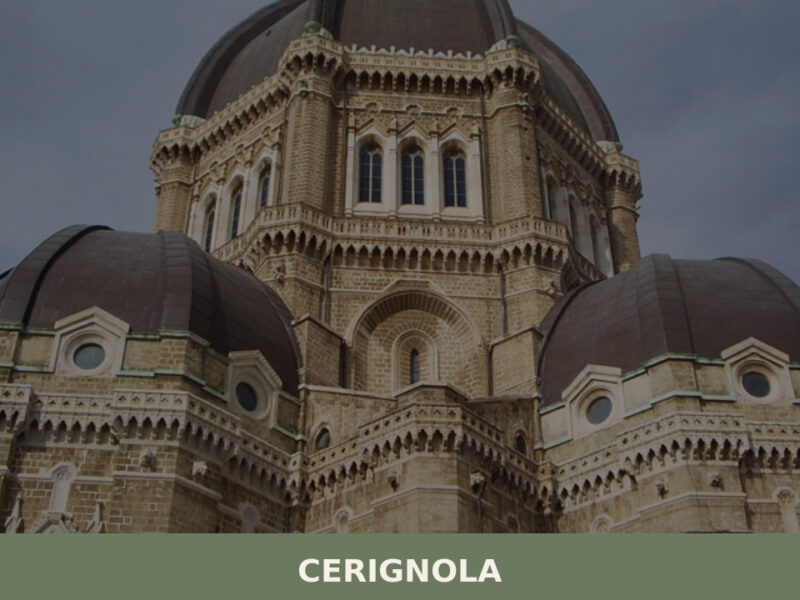
In Apulia More villages to discover
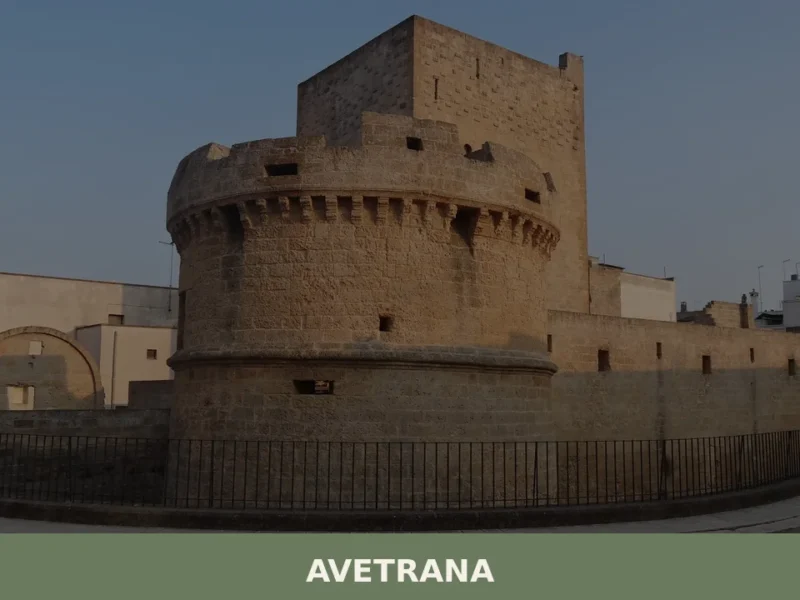
Avetrana
 Plains
What to see in Avetrana, Italy: explore a 13th-century castle, the Chiesa Madre and Palazzo Imperiali. Population 6,277. Discover festivals, food and how to get there.
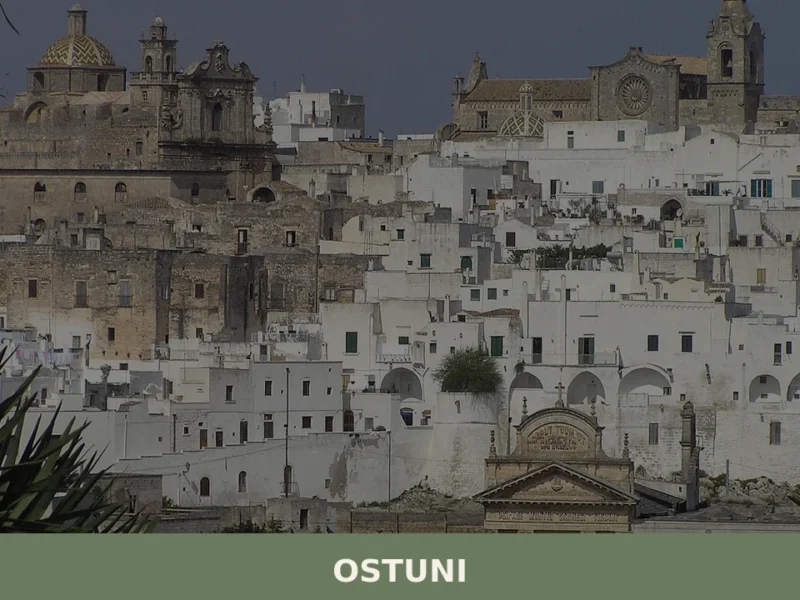
Ostuni
Sea
What to see in Ostuni, Italy: Discover the 'White Town' with its 30,143 residents and explore 5 key historical sights. Read our guide for top attractions and travel tips.
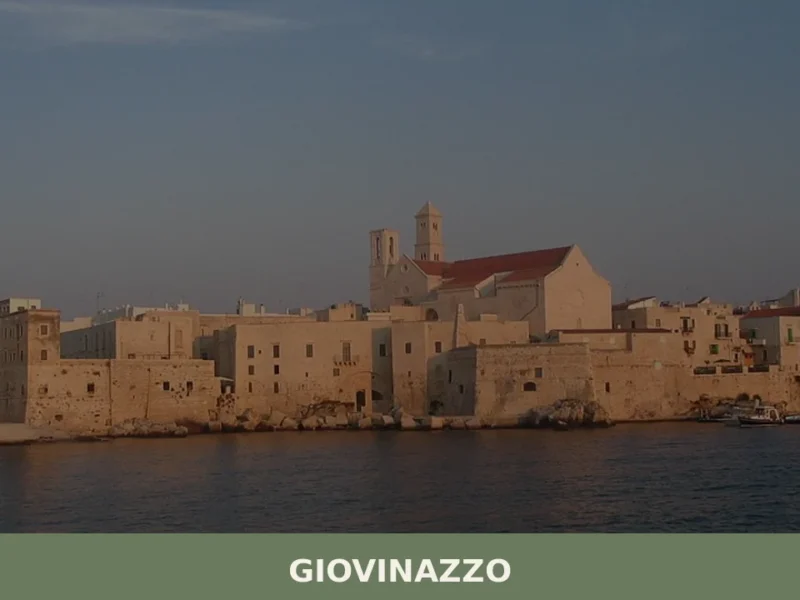
Giovinazzo
Sea
The walls of Giovinazzo’s old port form an irregular semicircle jutting out into the Adriatic Sea, visible from the SS16 state road that runs along the Bari coastline. This small city of 19,366 inhabitants, sitting at just 7 metres above sea level, retains a compact medieval historic centre, still partly surrounded by the original city […]

Caprarica di Lecce
Plains
2,250 residents and a living Griko heritage make Caprarica di Lecce a village where language, stone and landscape form a coherent, unbroken identity.
Monopoli
Sea
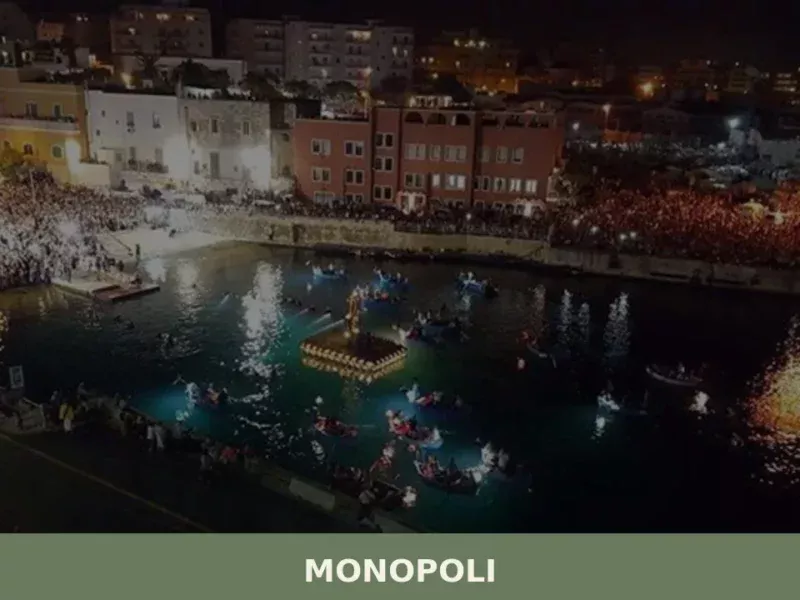
From the promontory where the Castle of Charles V stands, the view sweeps across the Adriatic, a horizon of waters that have shaped Monopoli’s identity for centuries. This port city, whose name evokes the idea of a “unique city,” reveals itself through its architecture, which tells of historical layers, from Messapian walls to Spanish fortifications. […]
Bisceglie
Sea
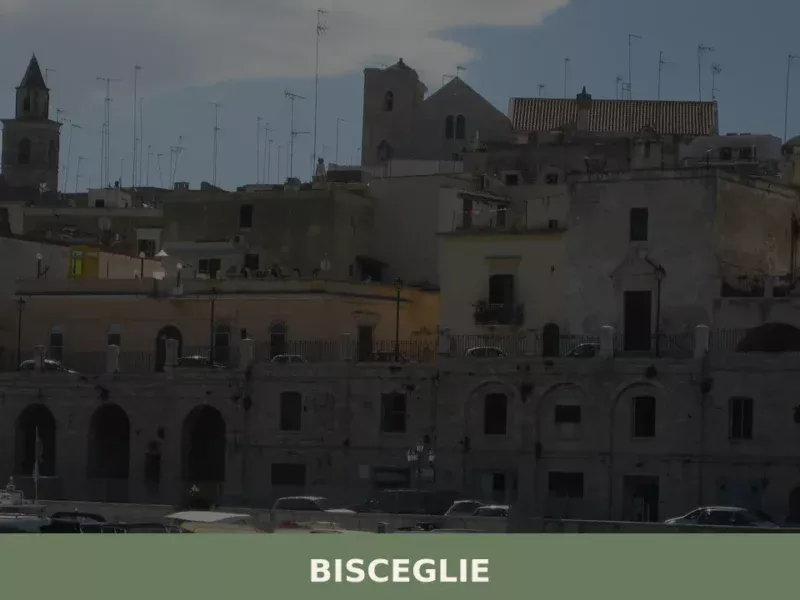
Discover what to see in Bisceglie, Puglia: Bronze Age dolmens, a Norman cathedral, Swabian castle, local food and practical travel tips for the Adriatic coast.
Carovigno
Sea
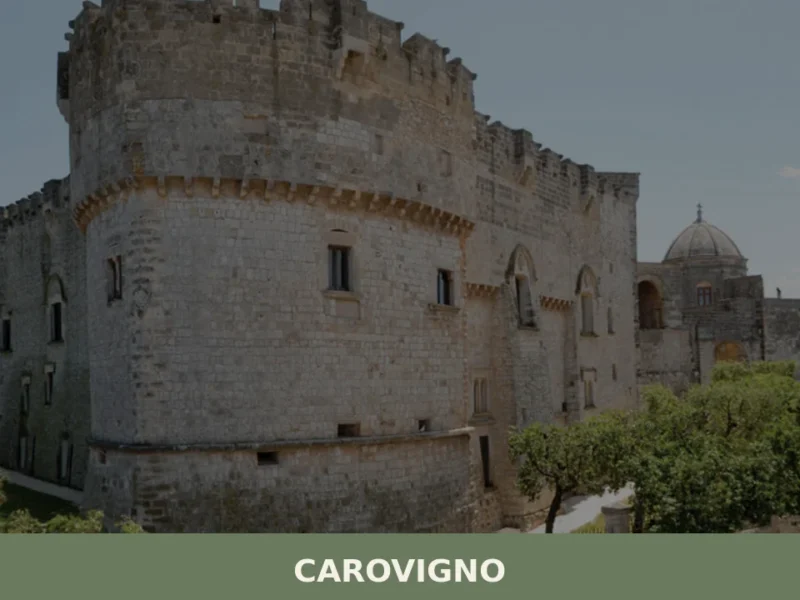
Discover what to see in Carovigno, Puglia: medieval castle, rupestrian churches, Torre Guaceto nature reserve, olive oil traditions and practical travel tips.
Roseto Valfortore
 Mountain
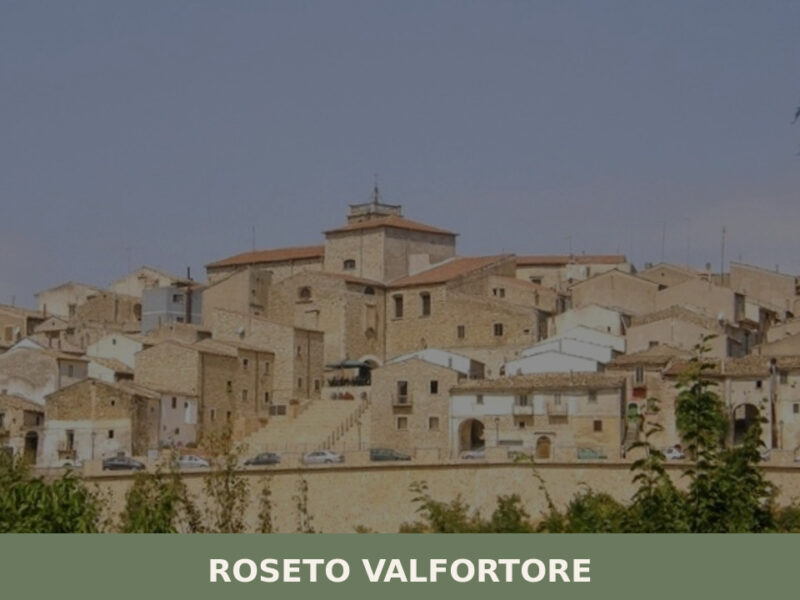
A stone village of 993 inhabitants at 658 metres in the Fortore valley. Roseto Valfortore preserves medieval architecture, mountain cooking traditions, and the quiet of inland Puglia.
Casalvecchio di Puglia
 Hills
Hills
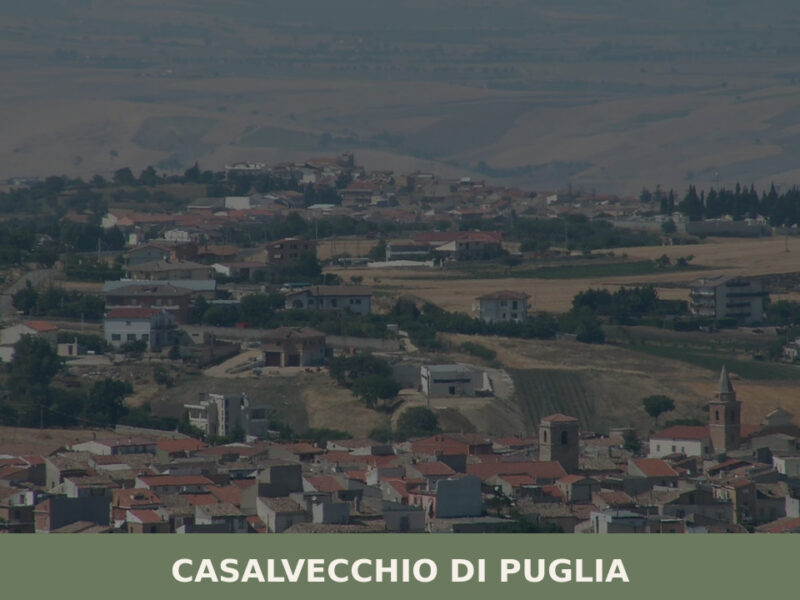
An Arbëreshë village of 1,689 inhabitants perched at 465 metres in the Daunia hills. A guide to its historic centre, rural paths, and slow-paced southern Italian life.
Locorotondo
Hills
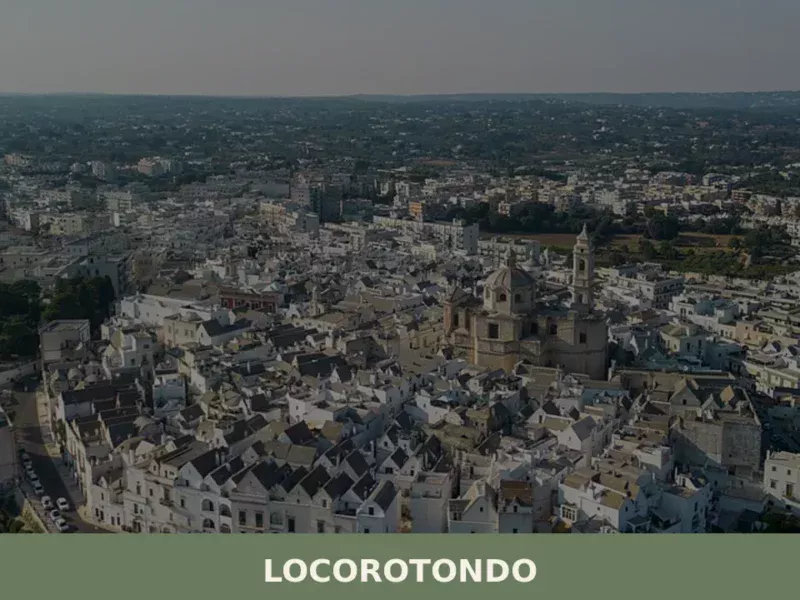
The toponym Locorotondo, documented as early as the 12th century as “Luogo Rotondo” (Round Place), derives from the concentric configuration of its historic center, an urban feature that still distinguishes it within the Itria Valley landscape. Located 410 meters above sea level, this municipality in the province of Bari has 14,258 inhabitants and presents a […]
🧀 Italian traditional products





🏡 Know Barletta better than we do?
If you’re a local or have been there, your knowledge matters: add what’s missing or fix a detail on this page.