


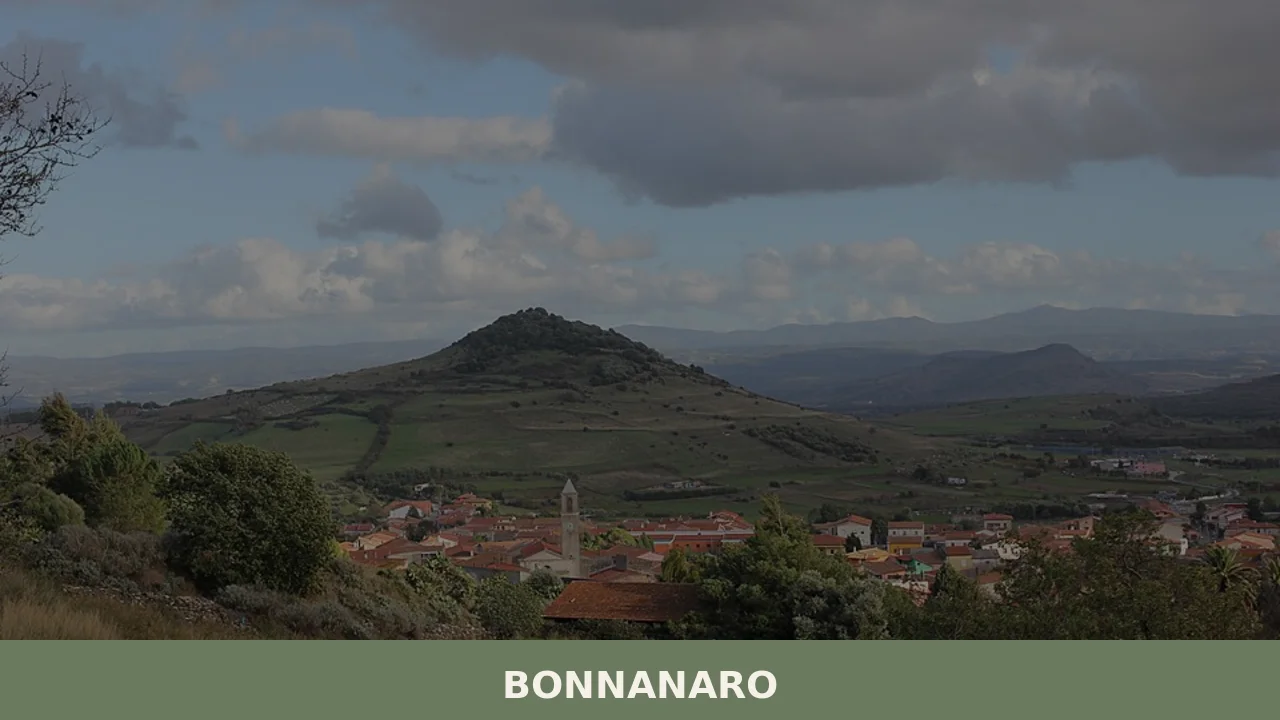
Bonnanaro
In 1388, when representatives of the Sardinian villages signed the peace treaty with the Crown of Aragon, among the signatories was the village of Bonnanaro, an agricultural centre already known for the fertility of its volcanic soils on the slopes of Monte Pelao. Today this village of 921 inhabitants, situated at 405 metres above sea […]
Discover Bonnanaro
In 1388, when representatives of the Sardinian villages signed the peace treaty with the Crown of Aragon, among the signatories was the village of Bonnanaro, an agricultural centre already known for the fertility of its volcanic soils on the slopes of Monte Pelao. Today this village of 921 inhabitants, situated at 405 metres above sea level in the province of Sassari, preserves a compact urban layout of trachytic stone houses and inner courtyards opening onto the Logudoro-Meilogu countryside. Asking what to see in Bonnanaro means preparing for a route through sober religious architecture, pre-Nuragic archaeological remains and a winemaking tradition with documented roots going back at least to the eighteenth century.
History and origins of Bonnanaro
The etymology of the name Bonnanaro remains a matter of debate among linguists.
According to some hypotheses, it derives from the Latin bonus combined with a pre-Roman suffix, indicating a territory with good agricultural yields. Other interpretations trace the toponym to a Paleo-Sardinian root linked to the physical shape of the place. The earliest written attestations date back to the medieval condaghes, the property registers of Sardinian monasteries, where the village appears under the spelling “Bonnanaru”. Human presence in the area, however, goes much further back: within the municipal territory there are remains of domus de janas — rock-cut hypogeal tombs — attributable to the Late Neolithic, between the fourth and third millennia BC, evidence of a stable settlement already in prehistoric times.
During the Middle Ages, Bonnanaro fell within the curatoria of Meilogu, one of the administrative subdivisions of the Giudicato di Torres, the kingdom that governed north-western Sardinia until 1259. After the dissolution of the giudicato, the village passed under the control of various feudal families, entering the orbit of the Crown of Aragon and later the Spanish Crown. In 1421 it was incorporated into the Marquisate of Bonnanaro, which remained active until the abolition of the feudal system in Sardinia in 1839, when fiefs were redeemed under the Savoyard Kingdom of Sardinia.
Throughout the feudal period, the village maintained an economy based on cereal cultivation and sheep farming, with significant wine production destined for local markets.
Among the natives of Bonnanaro, the most prominent historical figure is Giovanni Maria Angioy (1751–1808), a magistrate and revolutionary who led the attempted anti-Piedmontese revolt of 1796, marching from Sassari towards Cagliari with the support of part of the rural Sardinian population. Defeated politically, Angioy died in exile in Paris. His story remains one of the most studied episodes in modern Sardinian history and constitutes a strong element of identity for Bonnanaro: his birthplace is still visible in the old town centre. In demographic terms, the village has experienced a steady decline during the second half of the twentieth century, falling from over two thousand inhabitants in the 1950s to the current 921, following a trend common to many inland centres on the island.
What to see in Bonnanaro: 5 key attractions
1. Church of San Giorgio Martire
The parish church of San Giorgio, dedicated to the patron saint of the village, stands in the upper part of the old town and is the main religious building in Bonnanaro. The current structure dates from seventeenth- and eighteenth-century interventions, with a façade in local trachytic stone and a square-shaft bell tower visible from several points in the village. The interior, with a single nave and side chapels, houses wooden furnishings and processional statues linked to the cult of the saint, celebrated every 23 April. The building is the starting point of the patron saint’s procession, during which the statue of the knight slaying the dragon is carried through the streets of the village.
2.
Birthplace of Giovanni Maria Angioy
On Via Angioy, in the historic core of the village, stands the birthplace of Giovanni Maria Angioy, recognisable by a commemorative plaque on the façade. The building, constructed in trachytic stone according to the Logudorese residential typology of the eighteenth century, features the classic inner courtyard layout with a loggia. Although it is not permanently open to the public as a museum, the house is a significant historical reference point: Angioy is considered one of the earliest protagonists of Sardinian autonomist thought, and his figure is studied as a precursor of the Italian Risorgimento movements. Over the years, the municipality has promoted initiatives to honour his memory.
3. Domus de janas in the municipal territory
The territory of Bonnanaro hosts several domus de janas, the hypogeal burials characteristic of pre-Nuragic Sardinia, carved into the volcanic rock of the area. These collective tombs, dating to the Ozieri culture and the subsequent phases of the Late Neolithic and Chalcolithic (fourth to third millennia BC), feature multiple chambers connected by corridors, sometimes bearing traces of carved decorations. The Meilogu area is particularly rich in these funerary structures, and those of Bonnanaro offer a tangible opportunity to observe prehistoric building techniques up close. The so-called “Bonnanaro culture”, dated to the Early Bronze Age (approximately 1800–1500 BC), takes its name precisely from finds made in this area.
4.
Church of Santa Maria di Mesumundu
In the countryside surrounding the settlement lies the rural church of Santa Maria, associated with the Roman bath complex of Mesumundu, a site known to archaeologists for the superimposition of building layers spanning from the imperial Roman period to the early Byzantine Middle Ages. The church, built by reusing pre-existing structures, documents the continuity of settlement in the Bonnanaro territory across the centuries. Excavation campaigns, conducted in various phases during the twentieth century, have brought to light ceramic and structural materials of great interest. The site is reached along a dirt road that crosses cultivated fields and pastures, through a hilly landscape opening towards the Logudoro plain.
5. Old town centre and traditional urban fabric
The old town centre of Bonnanaro preserves a compact urban layout, with grey and pink trachytic stone houses lining narrow, straight streets. Traditional dwellings feature carved stone doorways, inner courtyards with wells and first-floor loggias, following a typology widespread in the Logudoro and Meilogu areas. Walking through the village allows you to observe local building materials and the organisational logic of Sardinian rural space: the larger houses belonged to landowners, while the smaller structures were linked to labourer families.
Some buildings still show traces of former artisan workshops, with dated lintels that place their construction between the seventeenth and nineteenth centuries.
What to eat in Bonnanaro: local cuisine and regional products
The gastronomic tradition of Bonnanaro fits within the broader culinary framework of the Logudoro-Meilogu, an inland region of north-western Sardinia where the historical diet revolved around three pillars: durum wheat, sheep farming and viticulture. The distance from the sea oriented the local diet towards products of the land and pastoral farming, with a strongly seasonal cuisine that made use of the resources available throughout the agricultural year. The hilly climate, with cool winters and dry summers, has favoured the cultivation of vegetables, legumes and fruit over the centuries, alongside cereals destined for bread-making.
Among the traditional dishes of Bonnanaro are preparations common to inland Sardinian cooking. Culurgiones, ravioli stuffed with potatoes, pecorino and mint, represent one of the most widespread forms of fresh pasta on the island, with local variations in the wheat-ear crimping. Favata, a winter dish made with dried broad beans, lard, wild fennel and cabbage, was the main meal during the cold months and was slow-cooked in earthenware pots. Bread, a central element of the table, was prepared in various forms: pane carasau — thin and crispy, baked twice in a wood-fired oven — and pane ‘e fresa, thicker and softer, suitable for soaking in mutton broth.
The product that most characterises the territory of Bonnanaro and the wider Meilogu is Sardinian pecorino cheese, made from the milk of flocks that graze on the surrounding hills.
Sardinia is the Italian region with the strongest sheep-milk cheese-making tradition, and pecorino — in its fresh, semi-cooked and aged varieties — accompanies every meal. Olive oil, produced from olive groves within the municipal territory, is used both raw and in cooking. Also worth noting is the local production of honey, particularly asphodel and thistle varieties, flowers that grow abundantly in the Mediterranean scrubland covering the uncultivated areas of the municipality.
Bonnanaro hosts in December a festival dedicated to new wine, which draws visitors from neighbouring towns and provides an occasion to taste local products. During the feast of San Giorgio, on 23 April, families prepare traditional Sardinian sweets such as seadas — discs of pastry filled with fresh cheese, fried and drizzled with honey — and papassini, biscuits with raisins, walnuts and spices.
To purchase local products, the reference points are the farms in the territory and the small dairies of the Meilogu area, where artisanal pecorino and ricotta can be found.
The territory of Bonnanaro falls within the production area of the DOC Sardegna, the regional denomination covering the entire island, and is located in the Logudoro wine sub-zone. Local viticulture has a documented tradition: the most widespread grape variety in the area is Cannonau, which yields a full-bodied red, alongside Cagnulari, an indigenous variety from north-western Sardinia, and Vermentino, a dry white cultivated across the island. Production is predominantly family-run or from small wineries, with limited yields that reflect the hilly terrain and volcanic soils of the vineyards.
When to visit Bonnanaro: the best time of year
Its hilltop position at 405 metres of altitude makes Bonnanaro a village with a relatively mild climate in spring and autumn, the two seasons best suited for a visit. The month of April coincides with the patron saint’s feast of San Giorgio on the 23rd, and with the flowering of the surrounding countryside: it is the ideal period for those who want to combine a visit to the village with excursions into the Meilogu countryside, when the meadows are still green and temperatures range between 12 and 20 degrees.
Autumn, particularly October and November, offers the colours of the grape harvest and the chance to take part in new wine events in December.
The Sardinian summer, from June to September, brings temperatures that in the interior often exceed 30 degrees: visiting is possible but advisable during the morning and evening hours. Winter is the quietest period, with very few visitors and a village absorbed in its daily rhythm — suited to those seeking a slow, observational experience of the Sardinian rural fabric. It is worth bearing in mind that some sites in the countryside, such as the domus de janas and the church of Mesumundu, are more easily accessible during the dry months, when the dirt roads are in good condition.
How to get to Bonnanaro
Bonnanaro is located in the north-western interior of Sardinia, connected to the main road network via the strada statale 131 (Carlo Felice), the arterial road linking Sassari to Cagliari. The nearest exit is Bonnanaro-Torralba, from which the village centre is approximately 5 kilometres away. From Sassari the journey is about 45 kilometres, covered in around 40 minutes. From Alghero, where Fertilia airport is located, the distance is approximately 65 kilometres, reachable in just under an hour along the SS 291 and then the SS 131.
The nearest airport is therefore Alghero-Fertilia, served by domestic flights and some seasonal European routes.
Olbia-Costa Smeralda airport is approximately 130 kilometres away (about one hour and forty minutes by car), while Cagliari-Elmas airport is around 190 kilometres away. The nearest railway station is Torralba, on the Sassari–Cagliari line operated by Ferrovie della Sardegna (ARST), situated approximately 6 kilometres from the village. Bus connections via ARST from Torralba station are limited: to explore the area freely, having a car is recommended, as is the case for most of the Sardinian interior. Further logistical information is available on the official website of the Municipality of Bonnanaro.
Other villages to discover in Sardinia
Approximately 30 kilometres from Bonnanaro, following the SS 131 towards Sassari and turning east, you reach Ardara, the former capital of the Giudicato di Torres. The village preserves the basilica of Nostra Signora del Regno, one of the most important Romanesque buildings in Sardinia, housing a sixteenth-century altarpiece of exceptional dimensions. A combined visit to Bonnanaro and Ardara allows you to cross the core of the Logudoro-Meilogu, touching two centres that played distinct but complementary roles in medieval Sardinian history: Ardara as the seat of giudicale power, Bonnanaro as an agricultural village within its territory. The drive takes approximately 30–35 minutes.
Heading east, approximately 60 kilometres away, lies Benetutti, in the Goceano area, known for the thermal springs of San Saturnino and for a territory rich in nuraghi and rural churches.
Benetutti offers an interesting contrast to Bonnanaro: while the latter is a village on open hills overlooking the plain, Benetutti sits in a more enclosed river valley at the foot of the Goceano mountain chain. A two- or three-day itinerary linking Bonnanaro, Ardara and Benetutti allows you to explore three different facets of the northern Sardinian interior — cereal-growing countryside, Romanesque heritage and thermal landscapes — covering short distances and passing through scenery that changes rapidly. To learn more about the history of Bonnanaro and the Meilogu, you can consult the dedicated Wikipedia page and the resources of the Touring Club Italiano.
Getting there
Via Giuseppe Garibaldi, 7043 Bonnanaro (SS)
Nearby Villages near Bonnanaro
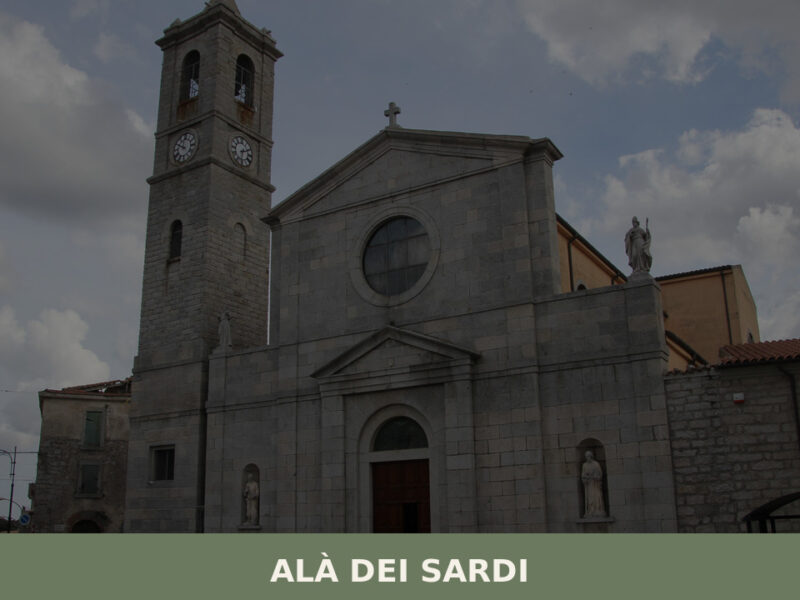
In Sardinia More villages to discover
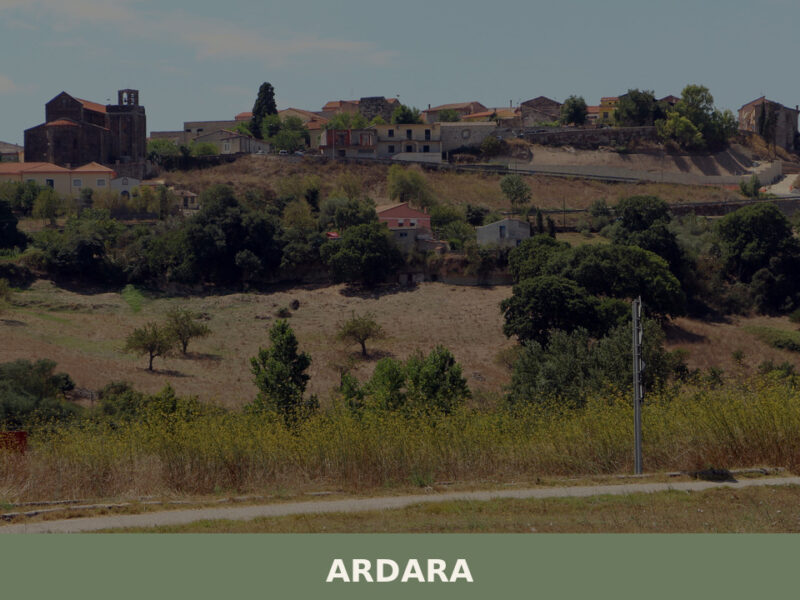
Ardara
Morning light strikes the dark basalt walls of an old church, turning the stone the colour of wet coal. A rooster calls from somewhere behind the municipio. Ardara sits on a low rise at 296 metres above sea level in the province of Sassari, a village of 729 people that once served as the capital […]
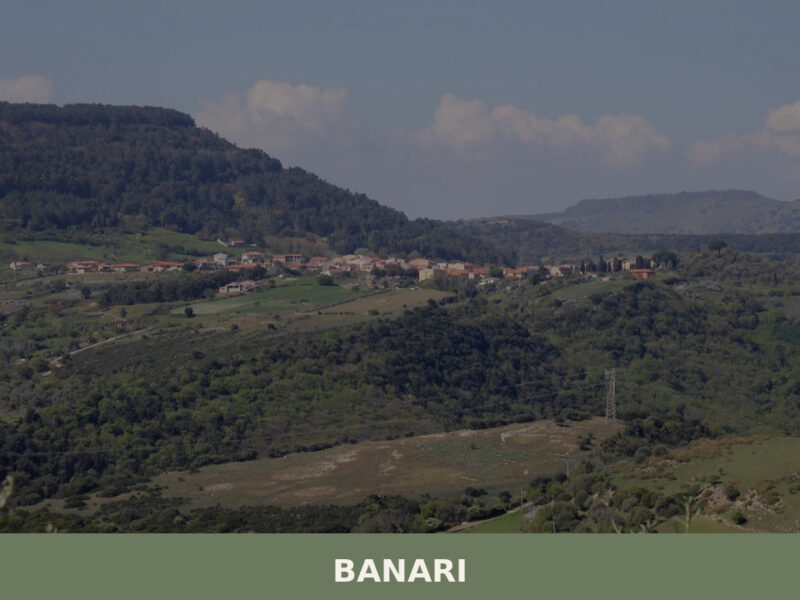
Banari
Morning light catches the limestone facades along Via Roma, turning them the colour of raw honey. A rooster calls from behind a courtyard wall. Somewhere below, the Meilogu plain stretches north toward Sassari, its patchwork of olive groves and grain fields still holding the night’s mist. Banari — population 516, perched at 419 metres above […]
Aggius
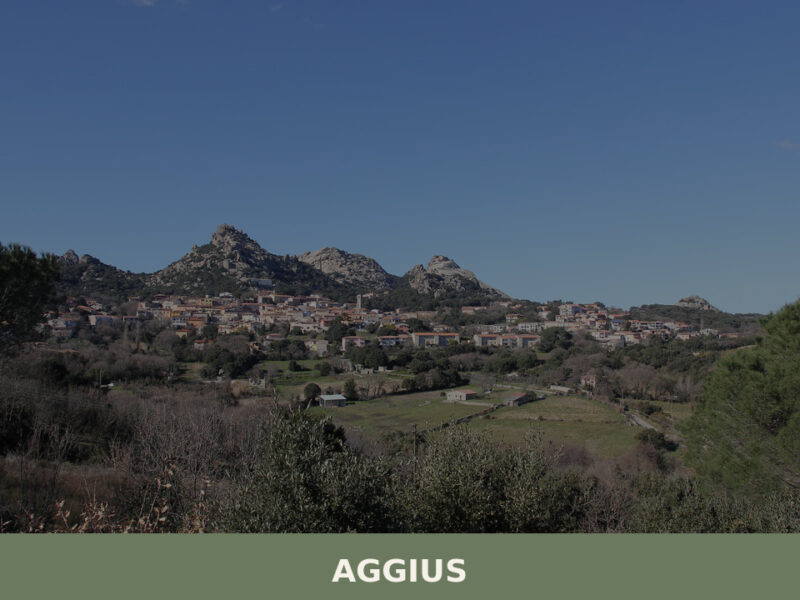
Granite boulders glow amber in the late afternoon, stacked like ancient sentinels across a valley floor that drops away toward the Gallura coast. Wind pushes through narrow lanes of grey stone houses, carrying the faint rhythm of a polyphonic chorus rehearsing behind closed shutters. At 514 metres above sea level, this village of just over […]

📝 Incorrect information or updates?
Help us keep the Bonnanaro page accurate and up to date.