


Campo di Giove
 Mountain
A mountain village at 1,064 metres beneath the Majella massif. Discover what to see in Campo di Giove — medieval stone houses, highland pastures, and quiet trails.
Discover Campo di Giove
Morning mist lifts off the Majella massif and settles in the narrow stone lanes where a handful of residents are already moving — a door unlatches, a dog crosses the piazza, the church bell counts seven. At 1,064 metres above sea level, Campo di Giove wakes slowly, wrapped in cold air that carries the scent of woodsmoke and damp limestone. With just 739 inhabitants, this mountain settlement in the province of L’Aquila rewards those who arrive without a checklist. Still, knowing what to see in Campo di Giove helps you read the layers of a place where medieval walls meet wild pastureland and the silence of the high Apennines.
History of Campo di Giove
The name itself is a declaration: Campus Jovis, the Field of Jupiter. The reference to the Roman god suggests an ancient sacred site, possibly a pre-Christian place of worship on this high plateau beneath the Majella. While definitive archaeological evidence of a Roman temple remains elusive, the toponym has persisted since at least the early medieval period, carried through Lombard and Norman administrative records as the village took shape around its defensive core.
During the Middle Ages, Campo di Giove passed through the hands of several feudal lords. The condottiero Braccio da Montone (Andrea Fortebraccio), the famed Perugian warlord who carved a personal domain across central Italy in the early fifteenth century, held sway over this territory. His campaigns reshaped power across the Abruzzi, and the village bore witness to the instability of the period — fortifications were reinforced, alliances shifted with the seasons.
Centuries later, the village found itself caught in a different kind of conflict. During the Second World War, the area around Campo di Giove and the Majella mountains became significant terrain along the German defensive positions. Field Marshal Albert Kesselring’s forces used the Apennine ridgeline as part of their broader defensive strategy in central Italy. The local population endured occupation, displacement, and the slow return to a peace measured not in treaties but in replanted fields and rebuilt walls.
What to see in Campo di Giove: 5 must-visit attractions
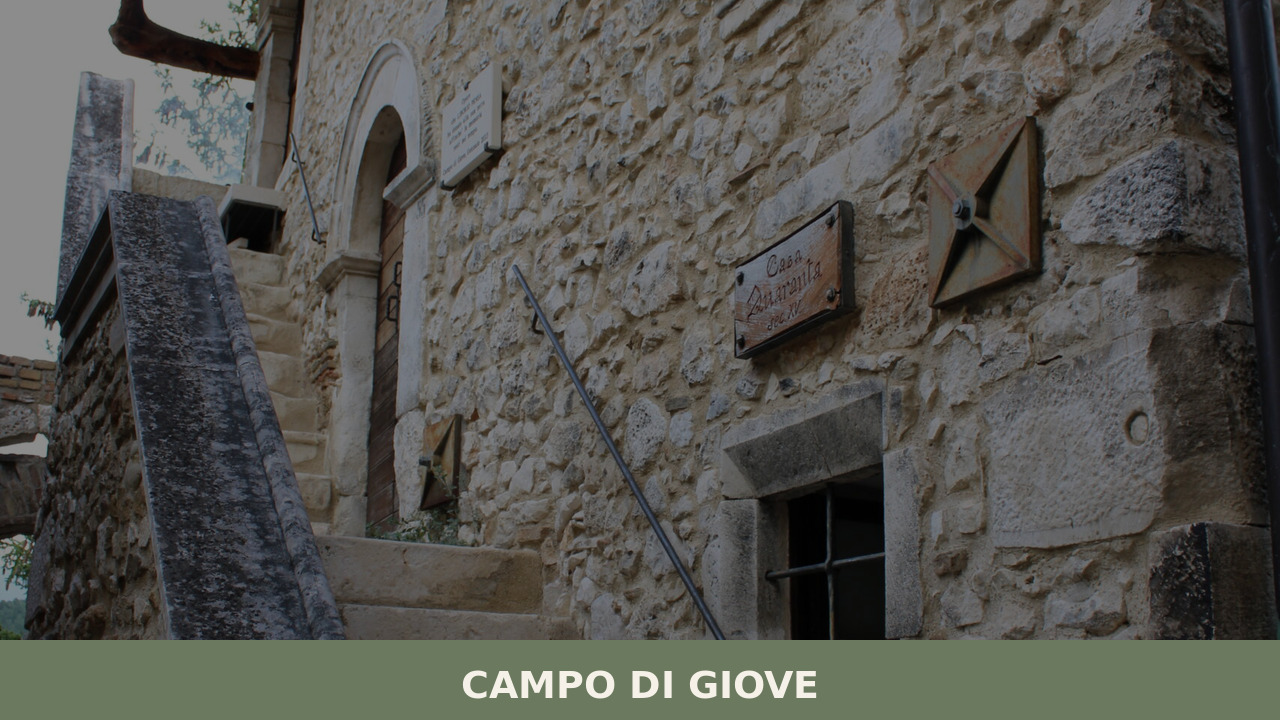
1. Casa Quaranta (15th century)
This fifteenth-century stone residence stands as one of the oldest surviving civil structures in the village. Its heavy masonry walls, small windows, and arched doorway reflect the practical architecture of mountain Abruzzo — built to keep cold out and heat in. Casa Quaranta speaks to the feudal period when local families consolidated modest wealth within fortified domestic spaces.
3. Baita degli Alpini and the village park
On the edge of the settlement, the Baita degli Alpini — a lodge built in the tradition of Italy’s mountain troops memorial structures — sits within a green area that serves as both public park and gathering point. Surrounded by conifers and open meadow, it is a quiet space used for local events and as a departure point for walks toward the higher ground of the Majella.
4. The Majella National Park gateway
Campo di Giove functions as one of the principal access points to the Majella National Park. The terrain rises steeply behind the village toward the Guado di Coccia pass and the summit of Monte Amaro at 2,793 metres. Trails lead through beech forests, open karst plateaux, and alpine grasslands where Apennine chamois and Marsican brown bears have been documented.
5. The pastoral landscape and highland pastures
Beyond the built environment, the working landscape of Campo di Giove defines the place as much as any church or palazzo. Cattle graze the high meadows in summer, continuing a transhumance tradition that once linked Abruzzo’s mountains to the plains of Puglia. The sight of livestock moving across open pasture against the Majella ridge is not scenery — it is an active, centuries-old economy.
Local food and typical products
Altitude and pastoral tradition dictate what arrives on the table. Lamb and mutton — arrosticini, the small skewered cubes of sheep meat grilled over embers — are elemental to this part of Abruzzo. Pasta shapes like sagne e fagioli (rough-cut pasta with beans) and maccheroni alla chitarra appear in most households and the village’s few trattorie. Mountain lentils, aged pecorino, and local honeys gathered from wildflower meadows round out a cuisine that is caloric by necessity, built for cold winters and physical labour.
The broader Majella area produces olio extravergine d’oliva at lower elevations and a range of cured meats — ventricina, salsiccia di fegato — that vary from village to village. In Campo di Giove itself, dining options are limited but genuine; a handful of small restaurants and agriturismi serve fixed menus that change with the season. This is not a place for culinary tourism in the contemporary sense — it is a place where food still follows the calendar and the altitude.
Best time to visit Campo di Giove
Winter transforms Campo di Giove into a base for skiing and snowshoeing, with the small ski area at Majelletta accessible from the village. Snow typically covers the ground from December through March, and temperatures regularly drop below freezing at night. For those interested in hiking and exploring the national park, the window between late May and October offers the most accessible conditions — trails clear of snow, longer daylight, and wildflowers colonising the karst terrain above 1,500 metres.
Summer brings a modest influx of Italian visitors escaping the coastal heat, but the village never feels crowded. The local festa patronale and seasonal food events — often centred on lamb, local cheeses, or mountain herbs — take place in summer and early autumn. September is arguably the finest month: warm days, cool evenings, the beech forests beginning their turn toward copper and gold, and the trails almost empty.
How to get to Campo di Giove
Campo di Giove sits along a secondary road that branches south from the A25 motorway (Roma–Pescara). Exit at Sulmona and follow the SS487 for approximately 18 kilometres south into the mountains. The drive from Rome takes about two hours (roughly 170 km); from Pescara, allow about 90 minutes (approximately 100 km). L’Aquila, the provincial capital, lies roughly 100 km to the northwest.
The village has its own station on the Sulmona–Carpinone railway line — a slow, scenic route that threads through the mountains and is itself considered one of the most notable rail journeys in southern Italy. Train frequency is limited, so check schedules in advance via Trenitalia. The nearest commercial airport is Pescara (Abruzzo Airport), with Rome Fiumicino offering the widest range of international connections.
More villages to discover in Abruzzo
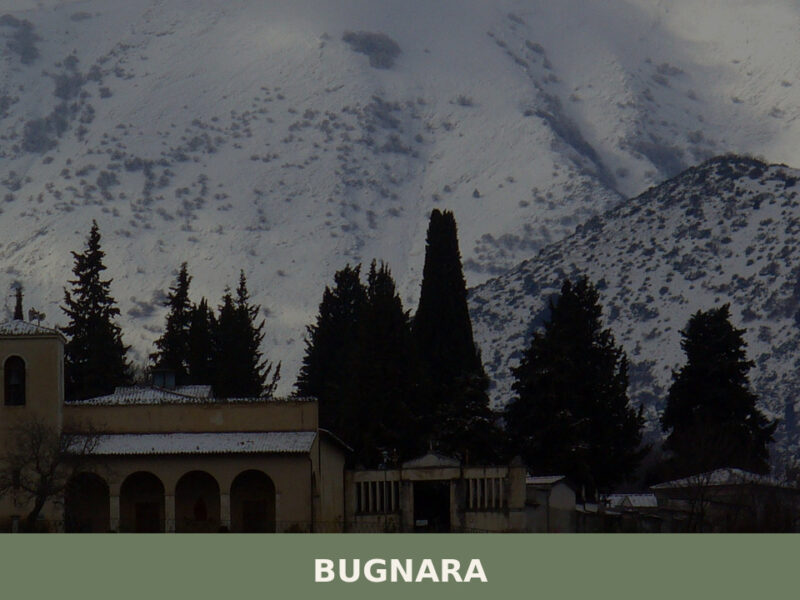
The Peligna Valley below Campo di Giove holds a constellation of small settlements, each with its own character. To the northwest, Bugnara rises above the valley floor with its layered medieval architecture and views across to the Majella. It is a quieter counterpart to Sulmona, carrying traces of Angevin rule and a church heritage that repays a slow morning’s exploration.
Further along the western edge of the Peligna basin, Aielli has gained recognition for its programme of large-scale murals that have transformed the walls of the old centre into an open-air gallery. At over 1,000 metres, it shares Campo di Giove’s elevation and exposure to the mountain climate, but its recent reinvention as a painted village offers a sharp contrast — contemporary art laid over the same ancient stone.
Frequently asked questions about Campo di Giove
What is the best time to visit Campo di Giove?
Late May to October is ideal for hiking the Majella National Park trails, with wildflowers and clear paths above 1,500 metres. September stands out: warm days, cool evenings, near-empty trails, and the beech forests turning copper and gold. The feast of Sant'Eustachio on 20 September adds a local cultural moment to an already appealing month. Winter (December–March) suits skiers and snowshoers using the Majelletta ski area. Summer draws Italian visitors escaping coastal heat, but the village never feels overcrowded.
What are the historical origins of Campo di Giove?
The name derives from Campus Jovis — Field of Jupiter — suggesting a possible pre-Christian sacred site on this high Apennine plateau. The toponym appears in early medieval Lombard and Norman records. During the fifteenth century the village fell under the domain of condottiero Braccio da Montone (Andrea Fortebraccio), the Perugian warlord who controlled much of central Italy. In the Second World War, the Majella mountains became part of German defensive positions under Field Marshal Kesselring, and the local population endured occupation before slowly rebuilding.
What to see in Campo di Giove? Main monuments and landmarks
The fifteenth-century Casa Quaranta is the oldest surviving civil building in the village, with heavy masonry walls and an arched doorway typical of mountain Abruzzo architecture. The Baita degli Alpini, a traditional Alpine troops lodge set within a small park of conifers and meadow, serves as a local gathering point and departure spot for walks toward the Majella. The village also functions as a gateway to the Majella National Park, with trails rising toward the Guado di Coccia pass and Monte Amaro (2,793 m).
What are the main natural or scenic attractions of Campo di Giove?
Campo di Giove sits at the edge of the Majella National Park, one of Italy's most significant Apennine protected areas. Trails from the village climb through beech forests and karst plateaux toward Monte Amaro at 2,793 metres, where Apennine chamois and Marsican brown bears have been documented. The high summer pastures surrounding the village — still actively grazed by cattle continuing a centuries-old transhumance tradition — offer an authentic working highland landscape. In winter, the Majelletta ski area is accessible from the village.
What can you do in Campo di Giove? Activities and experiences
Hiking in the Majella National Park is the primary activity, with trails accessible directly from the village toward alpine grasslands and the high karst plateau. In winter, skiing and snowshoeing at the Majelletta ski area are viable from Campo di Giove. The village's few trattorie and agriturismi offer seasonal fixed menus centred on lamb, pecorino, and mountain pasta. Local food events — often focused on lamb, cheeses, and mountain herbs — take place in summer and early autumn, coinciding with the Sant'Eustachio feast on 20 September.
Who is Campo di Giove suitable for? Families, couples, hikers, solo travelers?
Campo di Giove is best suited to hikers and nature lovers seeking direct access to the Majella National Park without the crowds of more touristic bases. Couples and solo travellers drawn to slow travel, mountain silence, and authentic local food will find the village rewarding. Winter visitors with an interest in skiing or snowshoeing also have a genuine reason to stay. It is less suited to families expecting structured tourist amenities, large restaurants, or entertainment infrastructure — dining options are limited and the pace is deliberately unhurried.
What to eat in Campo di Giove? Local products and specialties
The table in Campo di Giove follows altitude and pastoral tradition. Arrosticini — small skewers of grilled sheep meat — are the emblematic dish of this part of Abruzzo. Pasta shapes include sagne e fagioli (rough-cut pasta with beans) and maccheroni alla chitarra. Mountain lentils, aged pecorino, and wildflower honeys are local staples. The broader Majella area produces cured meats such as ventricina and salsiccia di fegato. Menus in the village's agriturismi and small restaurants change seasonally and reflect what the altitude and the farming calendar actually produce.
Nearby Villages near Campo di Giove
In Abruzzo More villages to discover
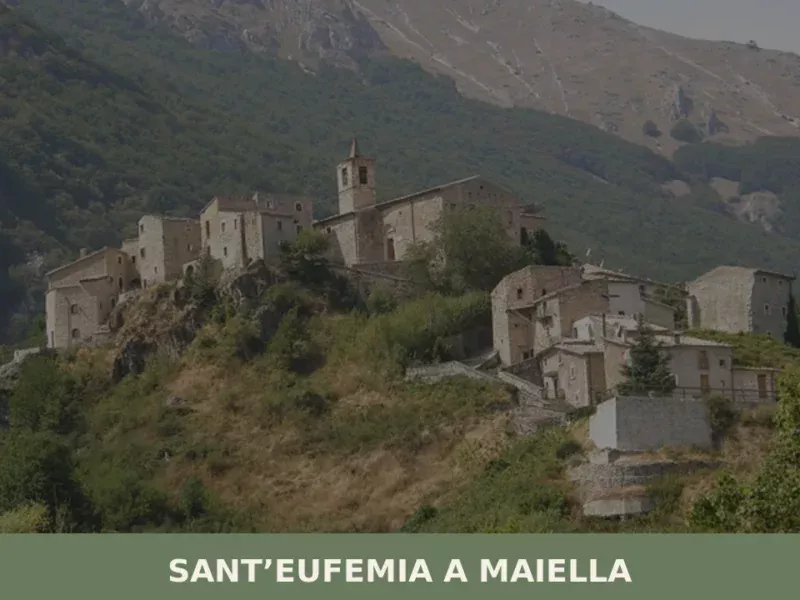
Sant’Eufemia a Maiella
Mountain
Scopri le 5 attrazioni imperdibili di Sant'Eufemia a Maiella, un pittoresco borgo dell'Abruzzo tra natura, storia e tradizioni montane.
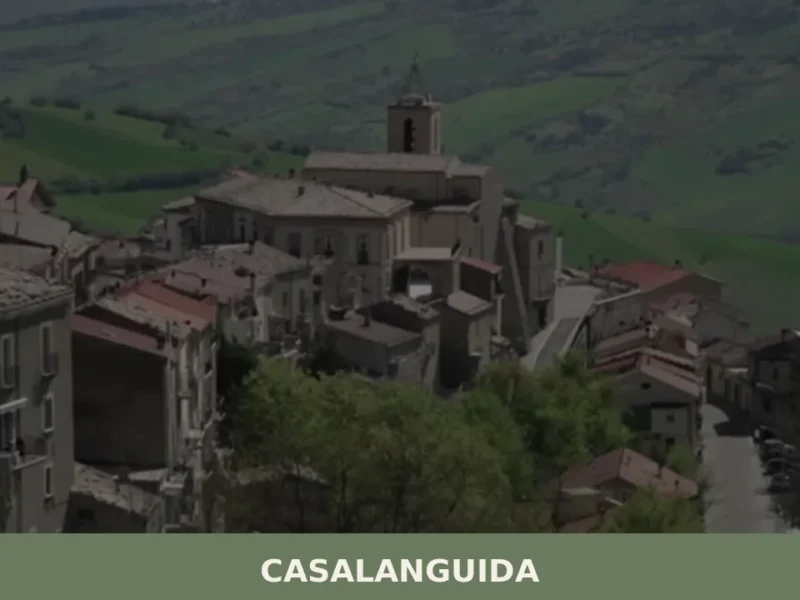
Casalanguida
 Hills
Hills
With its 818 registered inhabitants and an elevation of 470 metres above sea level, Casalanguida occupies a hilltop ridge in the middle Sinello valley, in the province of Chieti. The municipal territory extends across vineyards and olive groves that mark the landscape with regular geometric patterns, visible from the provincial road that climbs up from […]
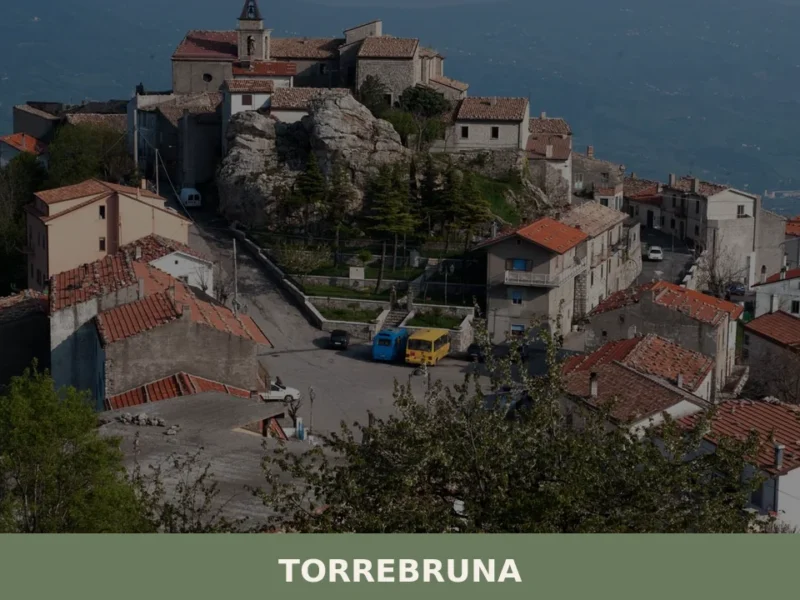
Torrebruna
Mountain
What to see in Torrebruna, Italy: 3 historic monuments, 879 inhabitants, fortified boroughs and a 17th-century church. Discover how to get there and when to visit.
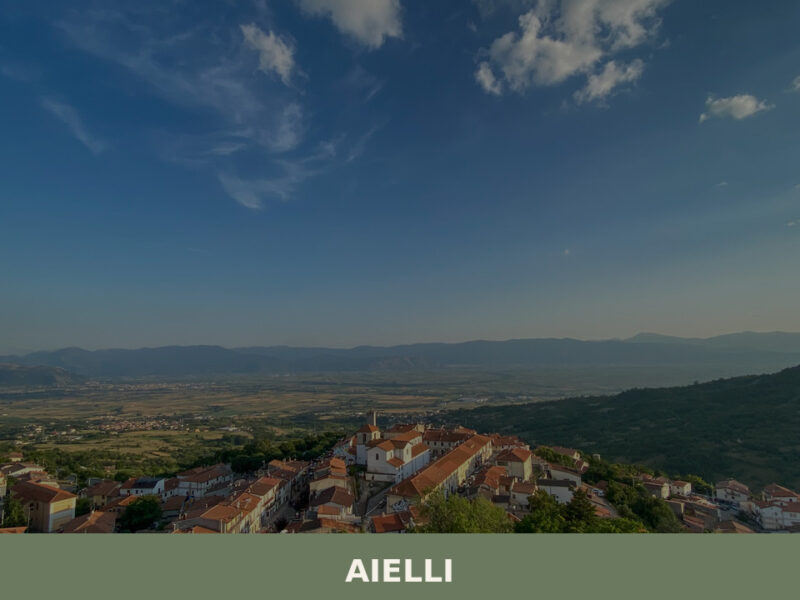
Aielli
Mountain
Morning light falls across a wall of painted figures three storeys tall, their colours sharp against old stone. A narrow street turns, and another mural appears — an astronomical chart, its constellations precise enough to navigate by. Aielli sits at over 1,000 metres on the Fucino plateau in the province of L’Aquila, a village of […]
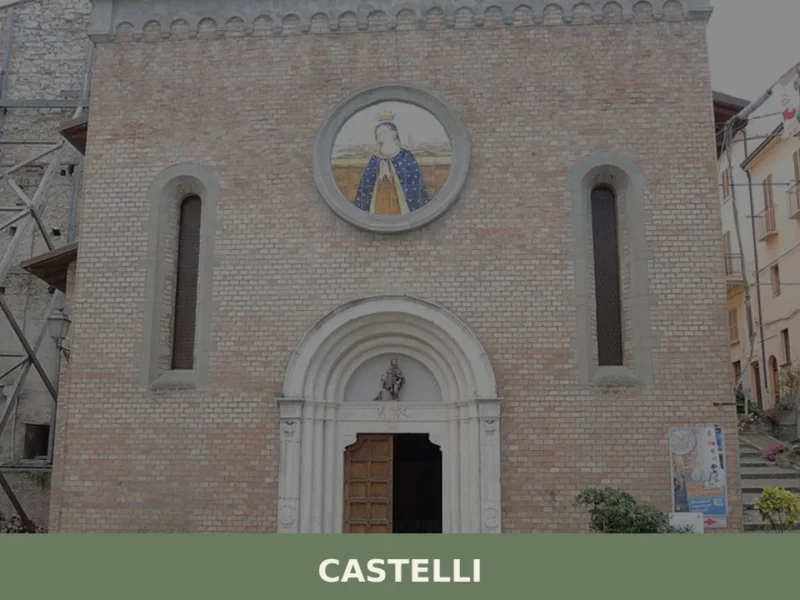
Castelli
Hills
Since the 14th century, Castelli has been recognized as one of Abruzzo’s most significant ceramic production centers, an art that has shaped the village’s identity and continues to define its image today. This small settlement, with its 976 inhabitants and an altitude of 497 meters above sea level in the province of Teramo, offers an […]
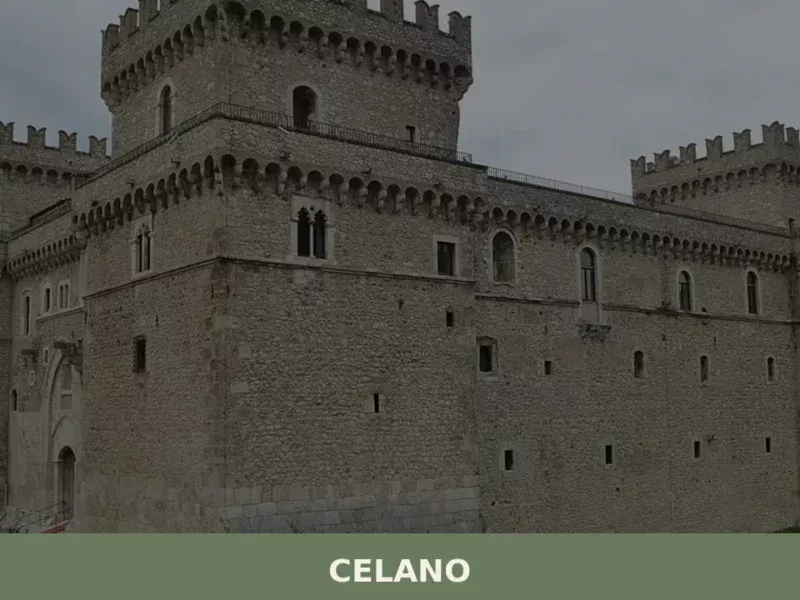
Celano
Mountain
The Castello Piccolomini in Celano, with its four corner towers and curtain wall enclosing a perimeter of over one hundred metres, commands the Fucino plain from an altitude of 840 metres. Anyone wondering what to see in Celano will find an unequivocal starting point here: a fortress that has endured six centuries of history, earthquakes […]
Castelvecchio Subequo
Hills
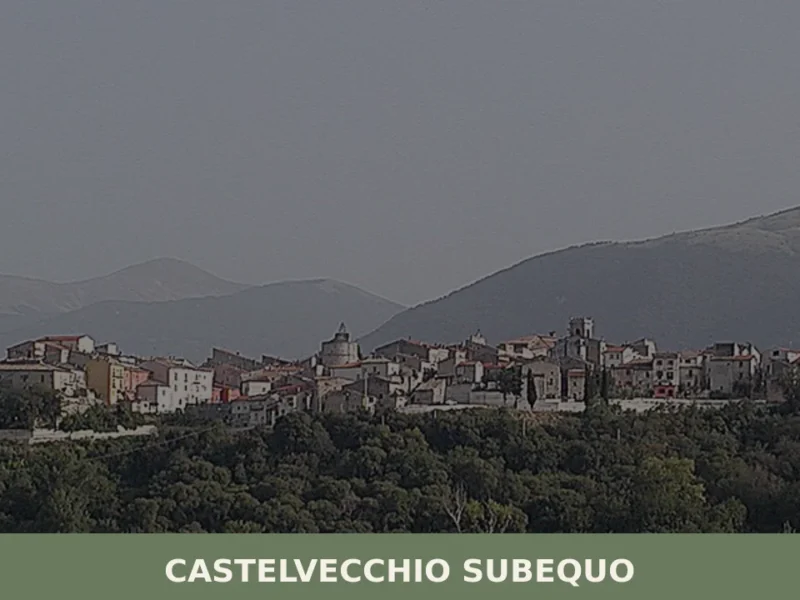
The convent of San Francesco in Castelvecchio Subequo preserves a cycle of fourteenth-century frescoes attributed to painters of the Giottesque school, among the few surviving examples in the central Apennine area. This fact alone is enough to justify a detour from the nearby A25 motorway towards a town of 832 inhabitants, at 490 metres above […]
Balsorano
Hills
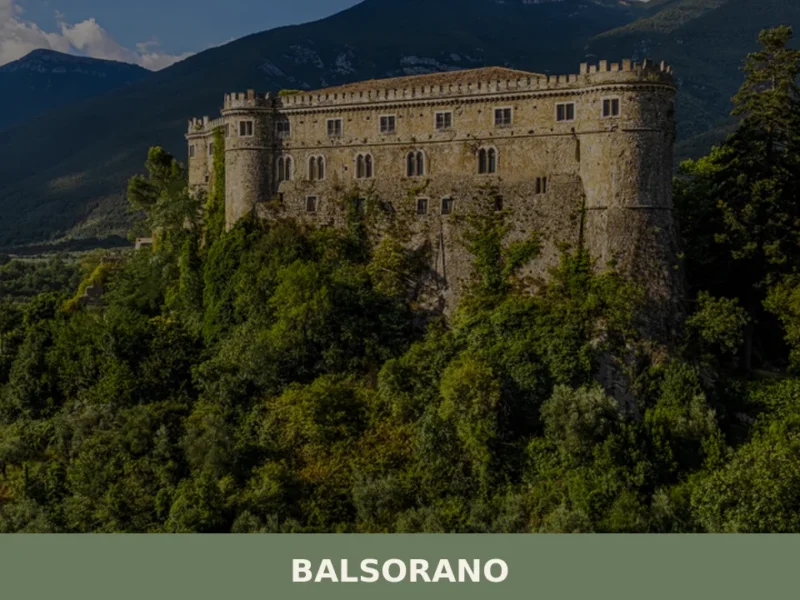
The Val Roveto divides southern Abruzzo from Lazio along a fault line that has determined earthquakes, migrations and feudal borders for over seven centuries. Balsorano occupies the valley floor and the hillside at 340 metres above sea level, with its 3,617 inhabitants spread between the upper historic centre — Balsorano Vecchio — and the modern […]
Cermignano
Hills
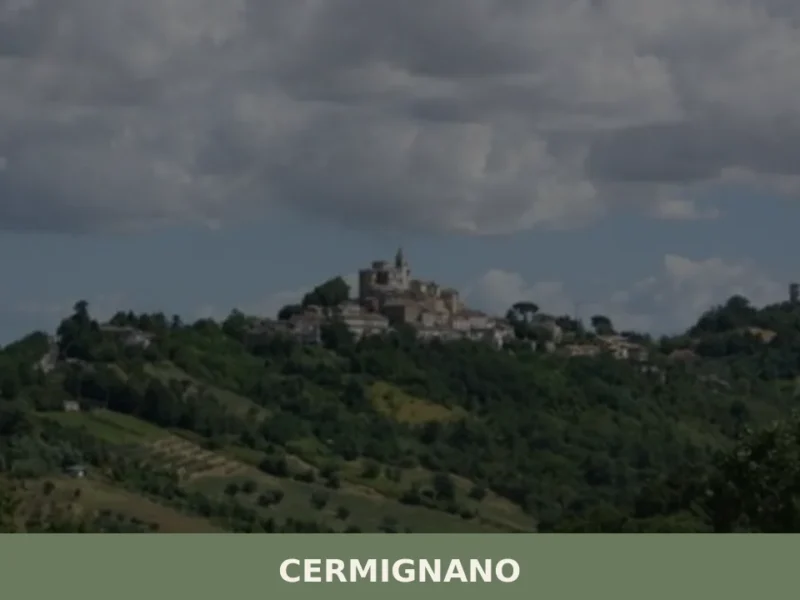
From the heights of Cermignano, at 563 meters above sea level, the gaze embraces the Abruzzese valleys, shaped by a succession of hills sloping down towards the Adriatic Sea. This small center, inhabited by 1,440 people, retains the typical appearance of the rural villages in the province of Teramo, where life still flows at rhythms […]
Ocre
Mountain
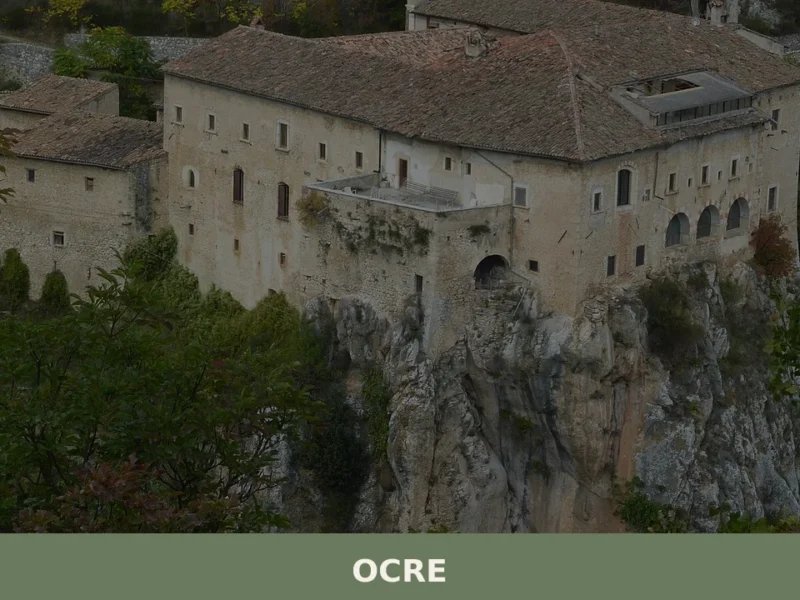
What to see in Ocre, Italy: discover historical landmarks and local festivals in this Abruzzo village of 1,133 inhabitants. Explore the castle ruins and traditional events.



🏡 Know Campo di Giove better than we do?
If you’re a local or have been there, your knowledge matters: add what’s missing or fix a detail on this page.