


Poggiofiorito
 Sea
Sea
What to see in Poggiofiorito: 5 attractions in this Abruzzo village, from the main church to the historic centre. Discover the complete visitor’s guide.
Discover Poggiofiorito
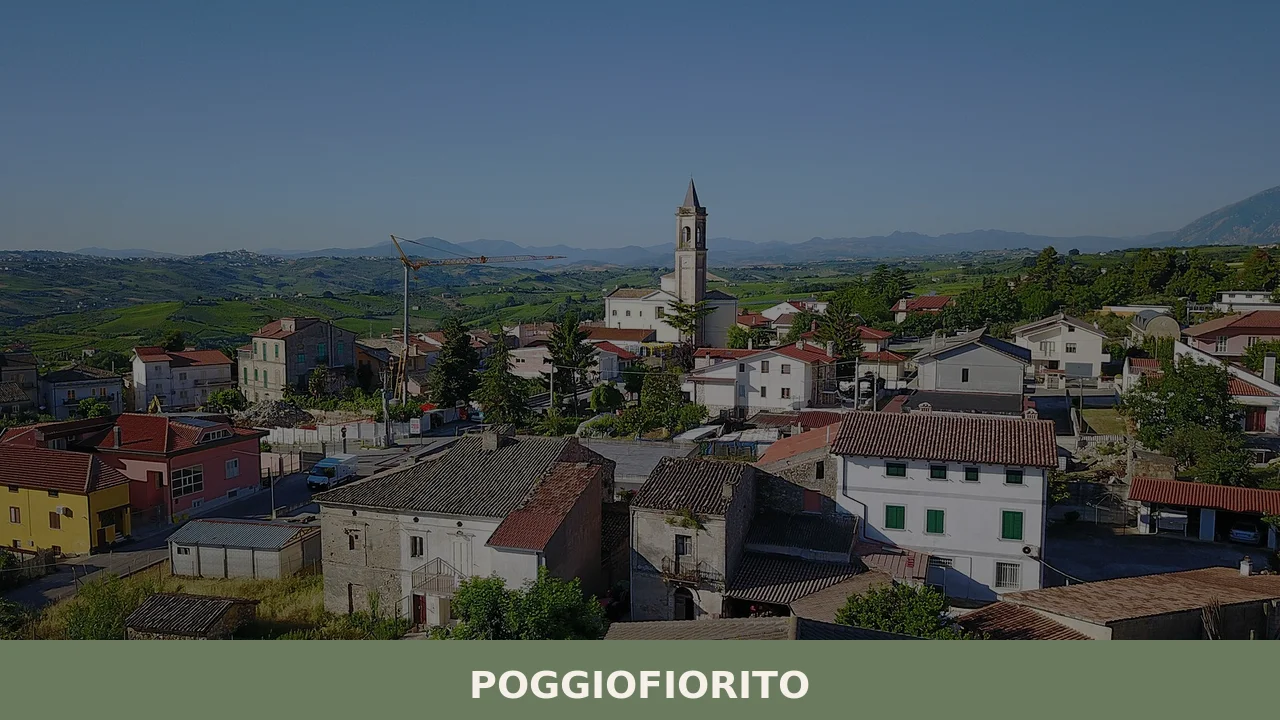
The provincial road climbs with tight bends, then the edge of the hill opens up suddenly: a cluster of limestone houses presses together around a bell tower that marks the skyline with an almost geometric precision. Here, in the province of Chieti, the hilly landscape of the Marrucina slopes eastward with open pastures and olive groves alternating with wheat fields.
Nine hundred and one inhabitants, streets that climb more than they descend, and a silence broken only by the wind carrying with it the scent of clay soil.
What to see in Poggiofiorito is the right question for those travelling through the province of Chieti in search of something different from coastal tourism.
At around 370 m above sea level, this Abruzzo municipality offers visitors an intact historic centre, the parish church, the hilly landscape of the Marrucina, and the remnants of a communal tradition that also found expression in the Union of Municipalities of which Poggiofiorito was once a member. Those who come here find an authentic village, far from the more well-trodden routes, where every element of the territory has a precise story to tell.
History and Origins of Poggiofiorito
The very name of the village tells us something about the landscape surrounding it: Poggiofiorito evokes the image of a flowering hillock, a knoll covered in wild vegetation in the heart of the Chieti hills. The settlement developed in a geographically strategic context for the Abruzzo hinterland, in that area historically known as Marrucina, named after the Italic people of the Marrucini who inhabited the territory between the Pescara river and the Adriatic coast before Romanisation.
These peoples built their centres on the heights, seeking natural defensive positions that the hilly terrain offered in abundance.
The same settlement logic that led the Marrucini to choose hilltop ridges guided, in subsequent centuries, the formation of small municipalities such as Poggiofiorito, where the elevated position guaranteed visual control over the surrounding territory.
In the medieval period the village consolidated around the religious and civic nucleus that still constitutes its centre today. Like many municipalities in the Chieti hinterland, Poggiofiorito passed through the typical phases of Abruzzo history: the Norman period, then Swabian, then Angevin, with the territory passing from one fief to another following the political fortunes of southern Italy. The compact structure of the village, with houses pressed against one another and narrow streets converging towards the church, reflects the settlement morphology of that era, when built space was organised for defensive reasons before aesthetic ones.
During the nineteenth century the village took on its modern administrative configuration as an autonomous municipality in the province of Chieti.
On an institutional level, Poggiofiorito was part of the Union of Municipalities of the Marrucina, a supra-municipal body that brought together several municipalities in the hilly Chieti area with the aim of sharing services and administrative resources.
The Union was dissolved in 2012, restoring full management autonomy to the individual municipalities that had been part of it. This transition marked a significant milestone in the administrative life of the village, which returned to operating in complete independence within the province of Chieti. The municipal territory, with its 901 inhabitants, today preserves the structure of a small rural municipality, where community life maintains rhythms and forms tied to the agricultural and artisanal tradition of the Marrucina.
A similar historical path, marked by inter-municipal aggregations and recovered autonomies, also characterises Calascio, an Abruzzo municipality that shares with Poggiofiorito its hillside position and its history of ancient settlement in the heart of the region.
What to See in Poggiofiorito: Main Attractions
The Parish Church of San Rocco
The external walls in local stone display the layering of interventions carried out over the course of several centuries, with a masonry facing that blends late-medieval elements and eighteenth-century restorations visible above all in the entrance portal. The church of San Rocco represents the religious and urban focal point of Poggiofiorito: its bell tower, which stands out on the village’s skyline even from a distance, still marks the rhythm of daily life for the community of 901 inhabitants.
Inside, the single nave houses a decorative ensemble that reflects Abruzzese popular devotion, with stucco side altars and canvases of sacred subjects attributable to the regional pictorial tradition of the seventeenth and eighteenth centuries.
San Rocco is the patron saint of the village, and the main celebrations of the local liturgical year are organised around his figure. Those visiting Poggiofiorito will find the church a natural starting point for reading the history of the town: the building occupies the highest position in the historic centre, and from its square a wide view opens over the hilly landscape of the Marrucina.
The Historic Centre and the Medieval Urban Fabric
The network of streets in the historic centre follows the morphology of the hill on which the village developed: the main thoroughfares run parallel to the contour lines, while the cross-lanes climb with steps in limestone that time has worn smooth at the centre and irregular at the edges. This compact urban fabric, characteristic of the hilltop villages of the province of Chieti, has preserved its original medieval structure despite the fact that earthquakes and nineteenth-century transformations modified some buildings.
The façades of the houses reveal traditional construction techniques: stone masonry with mortar joints, narrow openings and worked jambs, portals with round arches that in some cases still retain their original wrought-iron hinges.
Walking through the historic centre of Poggiofiorito means reading centuries of local building history through the materials and proportions of the buildings. The visit can be completed in less than an hour on foot, but it is worth slowing one’s pace to observe the architectural details that recount the layering of interventions over time.
The Hill Landscape of the Marrucina
From the edge of the village, where the last houses give way to olive groves, the landscape opens onto a panorama that embraces the entire hilly area between Chieti and the Adriatic coast. The Marrucina is one of the most clearly defined micro-regions of inland Abruzzo: a system of clay and limestone hills descending towards the sea with a gentle profile interrupted by badlands and small valleys.
In Poggiofiorito, situated at around 370 metres above sea level, this configuration of the territory is clearly perceptible.
Fields of wheat and olive groves alternate with pastures and patches of spontaneous vegetation, creating an agricultural landscape that has maintained its traditional structure. In spring, between April and May, the spontaneous flowering of the meadows covers the hillsides with colours that fully justify the village’s name. Those who travel on foot along the paths connecting the village to the surrounding hamlets will find a territory that offers privileged vantage points over the hilly system of the Chieti area.
The Main Square and the Civic Buildings
The central square of Poggiofiorito acts as a hinge between the religious and civic cores of the village: it is the space where public buildings are concentrated, where residents gather in the evening hours, and where the visitor can observe the daily life of the town without having to seek out specific attractions. The buildings facing the square display stone or plastered façades, with a variety of architectural solutions reflecting the interventions that followed one another between the eighteenth and twentieth centuries.
Some portals retain decorative elements in worked stone, with simple but precise mouldings attesting to the presence of specialised local craftsmen.
The square is also the starting point for reaching the main buildings of the historic centre on foot, at most a few hundred metres away. On market days or during the patron saint’s festivals, this space transforms into the beating heart of community life, recovering a social function that has been largely lost in cities.
The Hamlets and the Surrounding Agricultural Territory
Around the urban core of Poggiofiorito extends a municipal territory articulated into rural hamlets connected to the village by local roads and paths. This dispersed settlement system, typical of the hilltop municipalities of the Chieti hinterland, tells the history of a community that for centuries organised its work around the cultivation of olives, vines and cereals. The farmsteads and rural buildings scattered across the territory preserve in many cases traditional construction structures: stone masonry, te
The unpaved roads connecting the hamlets to the town also offer viewpoints over the hilly landscape that cannot be appreciated from the main road. The municipal territory extends over several square kilometres, and its morphological variety justifies a visit that goes beyond the perimeter of the built-up centre. Those who wish to compare this type of agricultural landscape with a harsher mountain setting can extend the itinerary towards Alfedena, an Abruzzo municipality that also preserves a historic centre of clear medieval character within a natural environment of great significance.
Traditional cuisine and products of Poggiofiorito
The cuisine of the province of Chieti, of which Poggiofiorito is a part, is rooted in a peasant and pastoral tradition that has shaped the flavours of the Abruzzo hinterland for centuries. The hilly territory of Marrucina, with its olive groves, vineyards and durum wheat fields, has historically provided the raw materials for a simple yet elaborate gastronomy, based on the skilful processing of local ingredients.
The influence of transhumance, a practice that for centuries connected inland Abruzzo with the plains of Puglia, brought a strong presence of sheep meat and aged cheeses into the kitchens of these villages, prepared according to techniques handed down within pastoral communities.
The position of Poggiofiorito, in the heart of the Chieti hills, places it in an area where these influences overlap with those of the agricultural traditions of the Val Pescara and the Adriatic coast.
Among the dishes that characterise the table of this part of Abruzzo, hand-made pasta holds a central place. Maccheroni alla chitarra — square-shaped pasta obtained by pressing the dough over an instrument with parallel strings called a chitarra — is the emblematic dish of Chieti cuisine. Dressed with lamb ragù or with tomato sauce and small meatballs, it is a preparation that requires both time and skill.
Pecora alla callara, a slow-cooked stew of sheep meat with local aromatic herbs, reflects instead the pastoral heritage of the territory.
Among dairy products, aged pecorino made from the milk of sheep raised on hillside pastures accompanies both first courses and mixed cheese boards, which in local trattorias constitute a customary starter. Extra virgin olive oil obtained from olives grown on the hillside slopes is another fundamental ingredient of local cuisine, used raw on pulses and on bruschetta made with homemade bread.
There are no products in the territory of Poggiofiorito with DOP, IGP or PAT certification registered specifically for this municipality. The local gastronomic tradition is nevertheless part of the broader framework of Abruzzo cuisine from the province of Chieti, which expresses a consistency of flavours and techniques recognisable from Lanciano to the inland hills.
Pulses — lentils, beans, grass peas — feature in many traditional preparations such as soups and broths, often enriched with local olive oil and stale bread.
Those visiting Poggiofiorito in the autumn months will find in local festivals and markets the best opportunity to taste these preparations in their most faithful form to tradition. A similar cuisine, sharing the same pastoral and peasant roots, can also be found in Magliano de’ Marsi, which shares with the villages of Marrucina the gastronomic heritage of the Abruzzo hinterland.
Festivals, events and traditions of Poggiofiorito
The patron saint’s feast of San Rocco, celebrated on 16 August, is the most significant moment of the liturgical and community year in Poggiofiorito. The occasion begins with a solemn mass in the parish church, followed by a procession through the streets of the historic centre with the statue of the saint carried on the shoulders of the faithful.
In Abruzzo tradition, these summer processions are accompanied by moments of civic celebration: music, evening fireworks and the return of fellow villagers who have emigrated and choose 16 August as the date to come back to the village.
The devotion to San Rocco, protector against plagues and diseases, is deeply rooted in the villages of the Chieti hinterland, where the figure of the saint is present in numerous churches and rural chapels.
Alongside the patron saint’s feast, the traditional calendar of the village reflects the rhythm of the agricultural seasons that for centuries have marked the life of the community. The celebrations linked to the Easter cycle, with the Good Friday processions and the Holy Week liturgies, still today involve a significant portion of the population. In autumn, the period of the olive harvest and grape harvest constitutes a moment of spontaneous gathering in the rural hamlets, where work in the fields interweaves with forms of collective conviviality.
These traditions do not have the formalised structure of a scheduled festival, but continue to characterise the social life of the village with the same regularity as the seasons.
When to Visit Poggiofiorito and How to Get There
The best time to visit Poggiofiorito is from spring to autumn. Between April and June the hilly landscape is at its finest, with flowering meadows and vegetation in full bloom. August sees the patron saint festival on the 16th and the return of emigrated residents, making the village livelier than usual. September and October bring the colours of the grape harvest and olive picking, with an atmosphere of fieldwork that characterises the entire territory.
Winter is the least suitable period for a tourist visit: the days are short, some businesses may be closed, and the hilly landscape loses some of its character. Those seeking absolute tranquillity and preferring the village without other visitors can choose May or September as the ideal compromise between climate, scenery, and local life.
To reach Poggiofiorito by car, the main reference point is the A14 motorway (Adriatica), with exits at the Lanciano or Chieti-Pescara toll gates, from which the village is approximately 20–25 km away along provincial roads, taking around 30 minutes.
The nearest railway station is Chieti, served by Trenitalia with connections from Pescara and Lanciano, from where you need to continue by car or local transport.
The closest airport is the Abruzzo International Airport in Pescara, approximately 40 km away. It is advisable to check timetables and availability of local public transport services directly with the relevant authorities, as frequencies may vary seasonally.
| Departure Point | Distance | Estimated Time |
|---|---|---|
| Chieti (city) | approx. 20 km | 25–30 minutes |
| Lanciano (A14 toll gate) | approx. 20 km | 25–30 minutes |
| Pescara (airport) | approx. 40 km | 40–50 minutes |
Those planning a broader itinerary through Adriatic Abruzzo can combine what to see in Poggiofiorito with a stop at Giulianova, a coastal town in the province of Teramo that preserves a medieval historic centre on a promontory overlooking the Adriatic, reachable in approximately one hour heading north. The combination of an inland hill village and a coastal town offers a more complete understanding of the Abruzzo territory, spanning both its hinterland and its coastline.
Frequently asked questions about Poggiofiorito
What is the best time to visit Poggiofiorito?
The ideal time to visit Poggiofiorito is in spring, particularly between April and May, when the surrounding Marrucina hills are covered in a vibrant spontaneous flowering, justifying the village's name. This period offers pleasant temperatures perfect for exploring. Autumn also provides a wonderful experience, with mild weather and the opportunity to participate in the Festa Patronale di San Matteo on September 21st, a significant community event. Visiting during these seasons allows you to appreciate both the natural beauty and the authentic local traditions.
What are the historical origins of Poggiofiorito?
Poggiofiorito's origins are deeply rooted in the history of the Marrucina region, named after the ancient Italic people, the Marrucini, who strategically settled on these hills. The village consolidated in the medieval period around its current religious and civic nucleus, experiencing various feudal dominations. Its name, meaning 'flowering hillock', evokes its natural setting. In the 19th century, it became an autonomous municipality, later joining and subsequently dissolving from the Union of Municipalities of the Marrucina, a testament to its evolving administrative and historical identity within the Chieti hinterland.
What to see in Poggiofiorito? Main monuments and landmarks
In Poggiofiorito, a visit should begin with the Parish Church of San Rocco, whose distinctive bell tower marks the village's skyline and whose interior reflects traditional Abruzzese devotion. Explore the intact Historic Centre, a compact medieval urban fabric with narrow streets and traditional stone houses, a walk that can be completed in less than an hour. The Main Square acts as the civic heart, offering a glimpse into daily life. For panoramic views, the surrounding Hill Landscape of the Marrucina provides stunning vistas of olive groves and wheat fields, particularly from the paths leading to the rural hamlets.
What are the main natural or scenic attractions of Poggiofiorito?
The primary natural attraction of Poggiofiorito is the picturesque Hill Landscape of the Marrucina. Situated at around 370 meters above sea level, this area presents a beautiful mosaic of cultivated fields, olive groves, pastures, and spontaneous vegetation, interspersed with gentle badlands. Visitors can enjoy sweeping panoramic views from the village's edge, where the houses meet the countryside. Exploring the unpaved roads and paths that connect the central village to its surrounding hamlets offers privileged vantage points over this traditional agricultural territory, especially vibrant with wildflowers in spring.
Where to take the best photos in Poggiofiorito?
For captivating photos in Poggiofiorito, focus on the iconic bell tower of the Parish Church of San Rocco, which stands out against the village skyline and the hilly backdrop. The square in front of the church also offers wide-angle views over the Marrucina landscape. Head to the edge of the village, where the last houses give way to olive groves, for expansive panoramas of the Chieti hills. Additionally, the unpaved roads connecting Poggiofiorito to its rural hamlets provide unique, less-frequented viewpoints to capture the authentic agricultural landscape and its seasonal colours.
Are there museums, churches or historic buildings to visit in Poggiofiorito?
Poggiofiorito features the Parish Church of San Rocco, a central religious and urban landmark whose stone exterior displays centuries of architectural layering and whose interior houses traditional sacred art. The entire Historic Centre serves as a living testament to local history, with its compact medieval urban fabric, traditional stone masonry houses, and narrow lanes that reflect ancient settlement patterns. The Main Square, framed by civic buildings, also showcases elements of local craftsmanship and historical development. No specific museums are mentioned within the village information provided.
What can you do in Poggiofiorito? Activities and experiences
In Poggiofiorito, visitors can immerse themselves in the authentic rhythm of a small rural community. Activities include leisurely walks through the intact historic centre to admire its medieval urban fabric and architectural details. Explore the unpaved roads and paths that connect the village to its agricultural hamlets, offering scenic viewpoints over the Marrucina hills. Experience local community life in the main square, especially during market days or the Festa Patronale di San Matteo on September 21st, which transforms the space into the beating heart of the village. The focus is on appreciating genuine village life and nature.
Who is Poggiofiorito suitable for? Families, couples, hikers, solo travelers?
Poggiofiorito is perfectly suited for travelers seeking an authentic Abruzzese village experience, away from more crowded tourist destinations. It appeals to those interested in history, traditional architecture, and quiet exploration. Nature lovers and hikers will appreciate the serene Hill Landscape of the Marrucina, with its olive groves and scenic paths ideal for gentle walks. It's an excellent choice for couples and solo travelers looking for a peaceful retreat, and for families wanting to discover genuine rural Italian life and history, offering a deep dive into the agricultural and community traditions of the Chieti hinterland.
📷 Photo Gallery — Poggiofiorito
Getting there
Corso Vittorio Emanuele III, 66030 Poggiofiorito (CH)
Nearby Villages near Poggiofiorito
In Abruzzo More villages to discover
Introdacqua
 Mountain
At 642 metres above sea level, at the exact point where three watercourses — the Gizio, the Nera and the San Callisto — converge in the Peligna valley, stands Introdacqua, whose Latin name Intro Acquas records this confluence of waters. The village has a current population of 2,117 and retains an urban layout reflecting at […]
Montelapiano
Mountain
What to see in Montelapiano, a village of 75 inhabitants at 740 m above sea level. Discover the Church of San Bonifacio and the Colle Belvedere. Plan your visit to Abruzzo!
Bellante
 Hills
Hills
The road into Bellante rises through a sequence of switchbacks that open, at the last bend, onto a compact hilltop settlement in the Teramo hills of Abruzzo. Stone buildings press close against one another along the ridge, and the Torre Civica — the civic tower at the center of the old settlement — marks the […]
Castel di Ieri
Hills
In Castel di Ieri, a village of 289 registered inhabitants at 519 metres above sea level in the Valle Subequana, the most significant feature lies underground: an Italic temple from the 1st century BC, unearthed during the 1980s, which redrew the archaeological map of inland Abruzzo. Anyone looking into what to see in Castel di […]
Catignano
Hills
Catignano has a current population of 1,227, spread across a hilly territory at 365 metres above sea level in the province of Pescara. The municipality extends along a ridge separating the Nora and Cigno valleys, two watercourses that flow into the Pescara river. Those looking for what to see in Catignano will find a rural […]
Pescasseroli
Mountain
What to see in Pescasseroli: from the Abruzzo National Park to Croce's birthplace, UNESCO beech forests, mountain cuisine and practical information for visiting the village.
Giuliano Teatino
Hills
Giuliano Teatino is a small village in Abruzzo, in the province of Chieti. Discover its origins, monuments and how to visit: a practical guide to plan your trip.
Palmoli
Mountain
What to see in Palmoli: explore the village at 727 meters above sea level. Discover the Marchesale Castle and the Church of San Valentino. Plan your visit today!
Serramonacesca
Hills
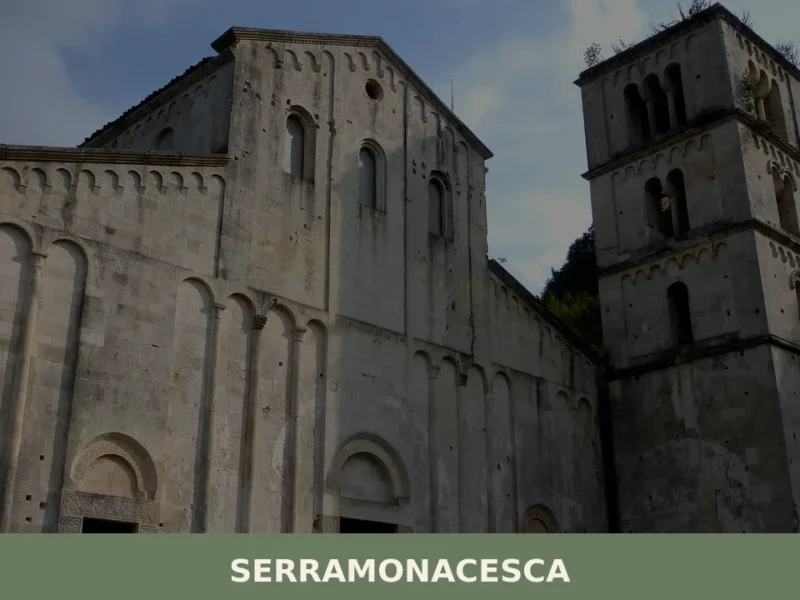
What to see in Serramonacesca, Abruzzo, Italy: discover 6 top attractions including the Abbey of San Liberatore, rock-cut tombs, and a medieval tower. Population 560.
Roccaspinalveti
Mountain
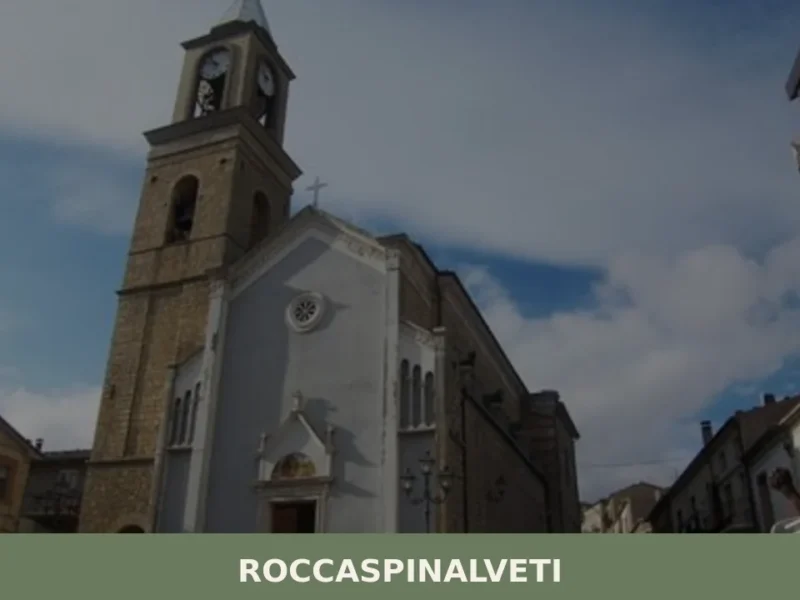
What to see in Roccaspinalveti? Discover 5 must-see attractions in this Abruzzese village. Guide covers things to do & how to get there. Plan your visit!




🏡 Know Poggiofiorito better than we do?
If you’re a local or have been there, your knowledge matters: add what’s missing or fix a detail on this page.