


Carapelle
 Plains
what to see a Carapelle: 5 attractions, prodotti PAT e festivals patronali a 62 m s.l.m. in the province of Foggia. Scopri history, cuisine e how to get there.
Discover Carapelle
Wheat grows flat to the horizon across the Tavoliere delle Puglie, and Carapelle emerges from the plain with the low profiles of its houses at 62 m above sea level, with no hills to precede or shelter it.
The plain here is not a scenic backdrop: it is the very reason for the settlement, the black and fertile land that has nourished generations of labourers and farmers, and that still shapes the rhythm of the village’s seasons today.
Around six thousand eight hundred inhabitants, a close-knit community in the province of Foggia.
Those who want to understand what to see in Carapelle will find a historic centre with the mother church dedicated to the patron saints, civil architecture from the early twentieth century, and a gastronomic fabric rooted in the farming tradition of the Tavoliere.
At 62 m above sea level and with 6,817 inhabitants, the village offers an authentic perspective on inland Puglia, far from the coastal circuits. The main attractions include religious buildings, historic public spaces and local cuisine featuring PAT-certified products: concrete reasons to include Carapelle in a Puglia itinerary heading into the Foggia hinterland.
History and origins of Carapelle
The name Carapelle most likely refers to the nearby stream of the same name — the Carapelle — a tributary of the Ofanto that marks part of the southern boundary of the Tavoliere.
Waterways have historically given their names to the settlements that grew up alongside them, and this village is no exception. The surrounding plain has been inhabited since the Bronze Age, as attested by finds across the Foggia plain, and Carapelle’s position along a natural route between the communication roads of the Puglia hinterland has favoured the continuity of human settlement across the centuries.
In the medieval period, the territory fell within the orbit of the feudal system that characterised the Capitanata, the great historic region corresponding to the present-day province of Foggia.
The fiefs of the Tavoliere passed through various dominions — Norman, Swabian, Angevin and Aragonese — each of which left traces in the settlement structures and in the organisation of the territory.
Carapelle, like many centres of the plain, experienced these transitions as part of an agricultural system revolving around cereal farming and transhumance, two economic pillars of the Capitanata for centuries.
The proximity to Lucera, a centre of primary medieval importance with its Frederician fortress, also influenced the political and administrative affairs of the smaller centres of the surrounding plain, Carapelle included.
With the Unification of Italy and the subsequent agrarian reform of the twentieth century, the village underwent profound social changes. The large estates that dominated the Tavoliere were progressively broken up, and Carapelle — like dozens of other Foggia centres — recorded significant migratory phenomena between the 1950s and 1960s, when many families moved to northern Italy and Europe.
This demographic movement, however, also consolidated a sense of local belonging that lives on in the religious festivals and culinary traditions still practised today.
The village has reached its current administrative configuration as an autonomous municipality of the province of Foggia, with boundaries that delimit a flat agricultural territory of considerable productivity.
What to See in Carapelle: Main Attractions
Carapelle Mother Church
The façade of the mother church opens onto the town’s main square with a plastered masonry elevation that reflects the reconstructions and alterations that followed one another between the 18th and 19th centuries, periods during which many religious buildings on the Foggia plain were enlarged or rebuilt on the foundations of earlier structures. The single-nave interior preserves decorative elements from the Baroque period, with lateral altars in carved stone and votive canvases that document local devotion over the centuries.
The church is dedicated to the town’s patron saints, Saint Francis of Paola and Our Lady of the Rosary, and the dual dedication reflects the layering of popular religiosity characteristic of rural centres in the Capitanata.
Those visiting Carapelle who want to understand the town’s devotional fabric will find here the most recognisable symbols of the local community.
Admission is free during worship opening hours; for up-to-date times it is best to check directly on the official website of the Municipality of Carapelle.
Main Square and Historic Centre
Carapelle’s central square serves as the focal point of the entire civic life of the town: around it stand the town hall, the mother church and the early twentieth-century historic buildings that document the phase of urban growth of the centre after Italian Unification. The oldest houses in the historic core display construction features typical of the Apulian plain: local tufa masonry, cornices in worked Lecce stone, portals with round arches.
Walking through the streets of the centre, in less than thirty minutes one can cross the entire historic urban layout, grasping the settlement logic of an agricultural town that developed along parallel road axes, without the labyrinthine complexity of hilltop villages.
The reading of the urban space is straightforward and immediately allows one to appreciate the difference between nineteenth-century buildings and the expansions of the post-war period.
Carapelle Stream and the Tavoliere Landscape
The Carapelle stream flows a short distance from the built-up area and gives the town its name: a torrent-regime watercourse, approximately 90 km long, that rises in the Daunian Apennines and flows into the Ofanto, crossing the Tavoliere from west to east.
In the peri-urban strip, the riparian vegetation along the stream banks creates a natural corridor that contrasts with the geometric monotony of the surrounding cultivated fields.
The Tavoliere landscape observable from this area is that of the great Apulian cereal plain: fields of durum wheat that change colour with the seasons, from winter green to the burnt yellow of June, interrupted by rows of olive trees and scattered farmsteads.
For those arriving from the coast or from the hilltop villages of the Gargano, this agricultural plain represents a radically different landscape dimension, with a spatial scale rarely found elsewhere in Puglia.
Historic Farmsteads of the Territory
The agricultural territory around Carapelle preserves several historic masserie — rural structures typical of Puglia that in the Tavoliere served as autonomous productive centres for cereal growing and livestock farming.
These buildings, some dating back to the 17th and 18th centuries, are recognisable by their closed square or rectangular plan, watchtower, vaulted storerooms and stables integrated into the defensive layout.
The Foggia-area masseria has a distinct morphology compared to those of the Valle d’Itria or the Salento: here the architecture responds to the needs of large latifundist landholdings, with spaces designed for dozens of seasonal workers during the harvest periods.
Some of these structures are still in active agricultural use, while others have been converted into agritourism farms.
Those exploring what to see in Carapelle by car can explore the network of farm tracks connecting the town to the surrounding countryside, where these rural architectures are still legible in the landscape.
Routes Along the Via Traiana and the Daunian Apennines
Carapelle’s position in the Tavoliere places it along the historic axis of the Via Traiana, the Roman road that connected Benevento to Brindisi across the Apulian plain, laid out by order of Emperor Trajan in the 2nd century AD as an alternative to the Via Appia. This road corridor structured movements throughout the Capitanata for centuries, and the centres that arose along it — including the villages of the Foggia plain — preserve in their geographical position the memory of that ancient infrastructure network.
To the west of Carapelle, the ridges of the Daunian Apennines can be reached in approximately 30–40 minutes by car and offer a sharp landscape contrast with the plain: hilltop villages, beech forests, high-altitude pastures.
Those organising a stay in the area can combine a visit to the Tavoliere with excursions towards the Daunian centres such as Bovino or Troia, entr
Typical cuisine and products of Carapelle
The cuisine of Carapelle belongs to the peasant tradition of the Tavoliere, a gastronomy built on the availability of cereal products and field vegetables, with a sparing use of meat that reflects the historical diet of agricultural labourers.
The culinary influences of the Capitanata are layered over centuries of rural culture: dishes based on wheat, legumes, wild herbs gathered in the fields and along irrigation canals. The extra virgin olive oil produced on the Foggia plain is the primary fat in almost all preparations, and its quality directly affects the final result even in the simplest recipes.
Among the most representative dishes of local cuisine is the Acquasale, an essential preparation that in its most basic form consists of stale bread moistened with salted water, extra virgin olive oil, fresh tomatoes and oregano.
What at first glance appears to be a simple way of using up leftover bread is in reality a dish that demands quality ingredients: the bread must be made from re-milled durum wheat semolina, the tomatoes ripe and fragrant, the oil generous.
Another element of the local table is wild field vegetables, eaten boiled and dressed or sautéed in a pan with garlic and oil.
The cuisine of Carapelle involves no complex preparations: its strength lies in the quality of the raw ingredients and the simplicity of the technique.
The territory is home to products certified as Traditional Agri-food Products (PAT) by the Ministry of Agriculture. Acquasale (PAT) is the symbolic dish of the Apulian peasant tradition, found throughout the province of Foggia. Wild asparagus (PAT) — municipalities: Foggia, Cerignola, Manfredonia, San Severo — is harvested between March and April in uncultivated fields and along the edges of rural roads, and is eaten in omelettes or as a pasta dressing.
Asparagus preserved in oil (PAT) — municipalities: Foggia, Cerignola, Manfredonia, San Severo — represents the traditional preservation of the fresh product, prepared with local extra virgin olive oil, vinegar and natural aromatics, making the flavour of wild asparagus available even out of season.
The months of September and October mark the liveliest period for purchasing local products, coinciding with the patron saint feast on the first Sunday of October.
The village’s weekly markets offer an overview of the season’s agricultural produce: grapes, autumn vegetables and locally produced fresh cheeses.
Those looking for packaged products to take home — preserves, oil, semolina pasta — can turn to the food shops in the town centre or to the farms in the surrounding countryside.
Festivals, events and traditions of Carapelle
The patron saint feast of Carapelle is celebrated on the first Sunday of October and is dedicated to Saint Francis of Paola and Our Lady of the Rosary, the village’s two patron saints.
The coming together of two devotions in a single celebration is characteristic of rural centres in southern Apulia, where the religious calendar has historically adapted to the needs of the agricultural cycle: October marks the end of the warm season and the beginning of autumn sowing, and is traditionally the time when the community gathers to give thanks for the harvest.
During the feast, processions take place through the village streets with the statues of the patron saints, accompanied by the brass band and the participation of the faithful from neighbouring towns as well.
Alongside the religious component, the patron saint feast brings with it an extraordinary market in the square, stalls selling food and craft products, and folk music that continues into the evening.
The musical tradition of the Capitanata, with the tammorra and the forms of peasant song tied to the agricultural cycle, is still present during the informal moments of the feast. Throughout the year, the village takes part in the events calendar of the province of Foggia, which includes food festivals dedicated to the typical products of the plain such as durum wheat and extra virgin olive oil. For the updated programme of events, the institutional reference is the .
When to visit Carapelle and how to get there
The best time to visit Carapelle is from April to June and from September to October. In spring, the fields of the Tavoliere are still green and temperatures remain between 15 and 22 degrees Celsius, ideal conditions for exploring the agricultural landscape and rural trails. In autumn, September and October bring the patron saint festival and the olive harvest: the town is more lively and local markets offer seasonal produce.
The months of July and August are hot and dry, with temperatures often exceeding 35 degrees on the plain: those arriving in summer are best advised to concentrate their visits in the early morning hours.
By car, Carapelle can be reached from the A14 Bologna-Taranto motorway by exiting at the Foggia junction, approximately 15 km from the town.
The SS16 Adriatica state road and the SS90 delle Puglie are the main alternatives for those coming from the north or from Benevento.
The nearest railway station with frequent connections is Foggia, served by Trenitalia with Intercity and regional trains; from Foggia the town can be reached by car in approximately 20 minutes. The main airport is Foggia “Gino Lisa”, about 12 km away, which offers seasonal connections to several domestic destinations; for intercontinental flights, the reference airport is Bari “Karol Wojtyla”, approximately 100 km away.
For up-to-date public transport timetables and fares, it is always advisable to check directly on Trenitalia or on the municipal website before travelling.
| Departure point | Distance | Estimated time |
|---|---|---|
| Foggia (A14 junction) | approximately 15 km | 20 minutes by car |
| Bari | approximately 100 km | 1 hour and 15 minutes by car |
| Naples | approximately 190 km | 2 hours by car via A16 |
| Foggia “Gino Lisa” Airport | approximately 12 km | 15 minutes by car |
Those exploring what to see in Carapelle and wishing to extend their itinerary through northern Puglia can continue towards Noci, a centre in the Bari Murgia with a well-documented gastronomic tradition and a medieval historic centre, reachable in approximately one hour and thirty minutes by car heading south-east.
For those who prefer to remain in the Capitanata area and the Foggia plain, Valenzano lies along the route towards Bari and can serve as an intermediate stop on a journey crossing the Apulian plain from west to east.
Those with an interest in the medieval history of the region will find in the nearby — less than 30 km from Carapelle — the Frederician fortress and the Gothic cathedral, two of the best-preserved structures from Norman and Swabian Puglia.
Frequently asked questions about Carapelle
What is the best time to visit Carapelle?
Spring (April–May) and early autumn (September–October) are the ideal seasons. In spring the Tavoliere plain turns vivid green with growing wheat, temperatures are mild and the countryside is at its most photogenic. In early October, the village celebrates its patron saints' feast — San Francesco da Paola and the Madonna del Rosario — on the first Sunday of October, making that weekend particularly lively with religious processions and local traditions. Summer is hot and dry on the Foggia plain, with temperatures regularly exceeding 35 °C, so early morning visits are advisable if travelling in July or August.
What are the historical origins of Carapelle?
Carapelle takes its name from the nearby Carapelle stream, a tributary of the Ofanto that crosses the Tavoliere from west to east. The surrounding plain has been inhabited since the Bronze Age, and in the medieval period the territory was part of the Capitanata feudal system, passing through Norman, Swabian, Angevin and Aragonese dominions. Its proximity to Lucera — the key Frederician stronghold of the region — influenced local administrative affairs. After Italian Unification, the break-up of the large latifondist estates and mid-twentieth-century emigration to northern Italy and Europe profoundly shaped the village's modern social fabric.
What to see in Carapelle? Main monuments and landmarks
The main point of interest is the Mother Church, dedicated to the patron saints San Francesco da Paola and the Madonna del Rosario, located on the central square. Its single-nave interior preserves Baroque decorative elements, carved stone altars and votive canvases. The central square itself, flanked by the town hall and early twentieth-century civic buildings, is the heart of village life and can be fully explored on foot in under thirty minutes. Outside the built-up area, the historic masserie — fortified rural estates dating to the 17th and 18th centuries — are visible along the network of farm tracks. Admission to the church is free during worship hours.
What are the main natural or scenic attractions of Carapelle?
The Carapelle stream flows close to the village and its riparian vegetation forms a natural green corridor through the otherwise open cereal plain. The Tavoliere landscape itself is a distinctive attraction: vast fields of durum wheat shift from winter green to burnt yellow in June, interrupted by olive groves and scattered farmsteads. Within 30–40 minutes by car to the west, the Daunian Apennine ridges offer a sharp contrast — hilltop villages, beech forests and high-altitude pastures. The hilltop centres of Bovino and Troia are accessible day-trip destinations that complement a stay on the plain.
Where to take the best photos in Carapelle?
The most evocative shots around Carapelle come from the open agricultural countryside rather than the village centre. The dirt farm tracks leading out of town offer unobstructed views across the Tavoliere, especially striking at sunrise and sunset when low light rakes across the wheat fields. The banks of the Carapelle stream, with their riparian vegetation set against the geometric plain, provide a natural foreground element. The central square, with the Mother Church façade and early-twentieth-century civic buildings, is the best urban subject and is most photogenic in the soft morning light before midday heat creates harsh shadows.
Are there museums, churches or historic buildings to visit in Carapelle?
The Mother Church on the central square is the main religious building, dedicated to San Francesco da Paola and the Madonna del Rosario. Its interior preserves Baroque lateral altars in carved stone and historical votive canvases reflecting centuries of local devotion. The town hall and surrounding early twentieth-century civic buildings document the village's post-Unification urban expansion and are visible from the square. For current church opening hours it is recommended to consult the official Municipality of Carapelle website directly, as worship timetables can vary seasonally. Admission to the church is free.
What can you do in Carapelle? Activities and experiences
Carapelle suits slow, rural tourism centred on the agricultural landscape of the Tavoliere. Visitors can explore the network of farm tracks by car or bicycle to observe the historic masserie and the open cereal plain. The first Sunday of October brings the patron saints' feast of San Francesco da Paola and the Madonna del Rosario, the year's main community event. The village also serves as a practical base for day trips: the Daunian hilltop centres of Bovino and Troia are reachable within 40 minutes, and the historic city of Foggia is close for urban and museum visits.
Who is Carapelle suitable for?
Carapelle is best suited to travellers seeking an authentic, unhurried experience of inland Puglia away from coastal tourism. Food and wine enthusiasts will appreciate the peasant gastronomy of the Tavoliere — acquasale, durum wheat dishes, field vegetables and local extra virgin olive oil. History-minded visitors interested in the agricultural and feudal heritage of the Capitanata will find genuine context here. The flat terrain makes the village and its surrounding countryside accessible for families and those who prefer easy walks or cycling. It is not a destination for beach tourism or nightlife, but rewards curious independent travellers.
What to eat in Carapelle? Local products and specialties
The local table is rooted in the peasant cuisine of the Capitanata. Acquasale — stale durum wheat bread moistened with salted water, extra virgin olive oil, ripe tomatoes and oregano — is the most emblematic dish, demanding quality ingredients over elaborate technique. Wild field vegetables, boiled and dressed or sautéed with garlic and oil, feature regularly. Pasta made from re-milled durum wheat semolina is the staple carbohydrate. Extra virgin olive oil from the Foggia plain underpins virtually every preparation. Durum wheat itself is a PAT-certified product of this agricultural territory and central to the local food identity.
Nearby Villages near Carapelle
In Apulia More villages to discover
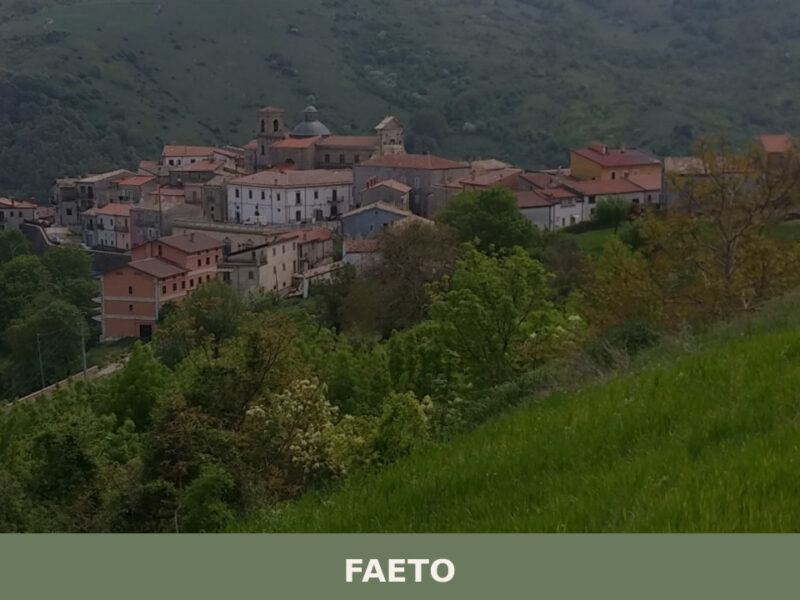
Faeto
 Mountain
A Franco-Provençal-speaking village of 616 inhabitants high in the Daunia mountains. Discover what to see in Faeto: ancient dialect, beech forests, and Puglia's highest peak.
Erchie
Plains
Discover what to see in Erchie, Puglia u2014 a village at the crossroads of three provinces, with Baroque churches, masserie, and authentic Salento cuisine.
Brindisi
 Sea
Sea
From the port of Brindisi, at a strategic point where the Adriatic opens towards the East, stands the Monument to the Italian Sailor, an imposing structure that since 1933 has watched over the city and its maritime routes. This city, overlooking a natural inlet that for centuries has welcomed fleets and trade, has historically been […]

Spinazzola
Mountain
What to see in Spinazzola, Puglia, Italy: birthplace of a Pope and a Jesuit sinologist, 70 km from Bari. Discover top attractions, local food and travel tips.
Anzano di Puglia
Mountain
A tiny hilltop village at 760 m in the Daunia Mountains, Anzano di Puglia enchants with stone lanes, sweeping panoramas, and authentic mountain cuisine.
Rodi Garganico
Sea
A coastal village of 3,302 inhabitants on the Gargano promontory, Rodi Garganico offers a medieval centre, IGP citrus groves, and an authentic Adriatic harbour life.
Toritto
 Hills
Hills
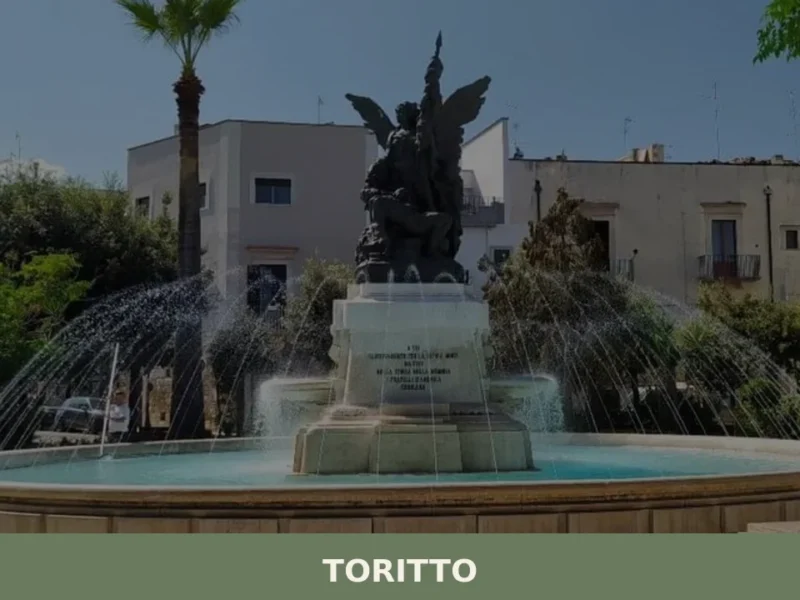
What to see in Toritto, Italy: Explore almond groves and the Chiesa Madre at 240 m. Discover vibrant festivals and indulge in local cuisine.
Celle di San Vito
Mountain
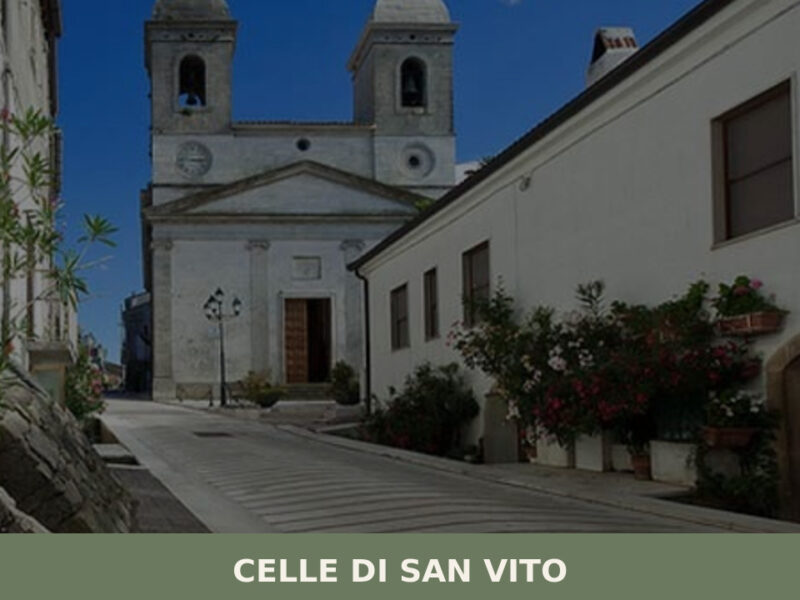
A 148-resident Franco-Provençal enclave at 726 metres in the Daunia sub-Apennines. Discover what to see in Celle di San Vito, from medieval stone lanes to linguistic heritage.
Monte Sant’Angelo
Mountain
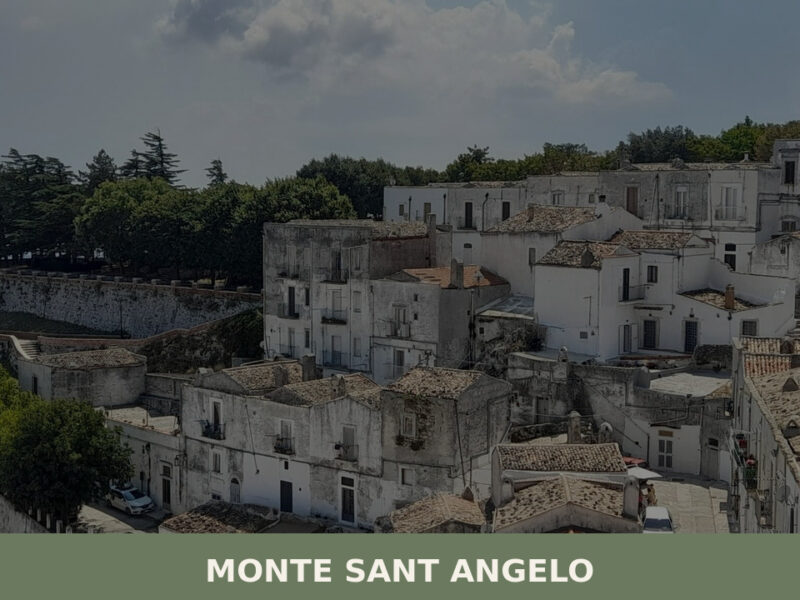
Discover what to see in Monte Sant'Angelo, Puglia: UNESCO sanctuary, Norman castle, Foresta Umbra and local food. Practical travel guide with tips.
Ceglie Messapica
Sea
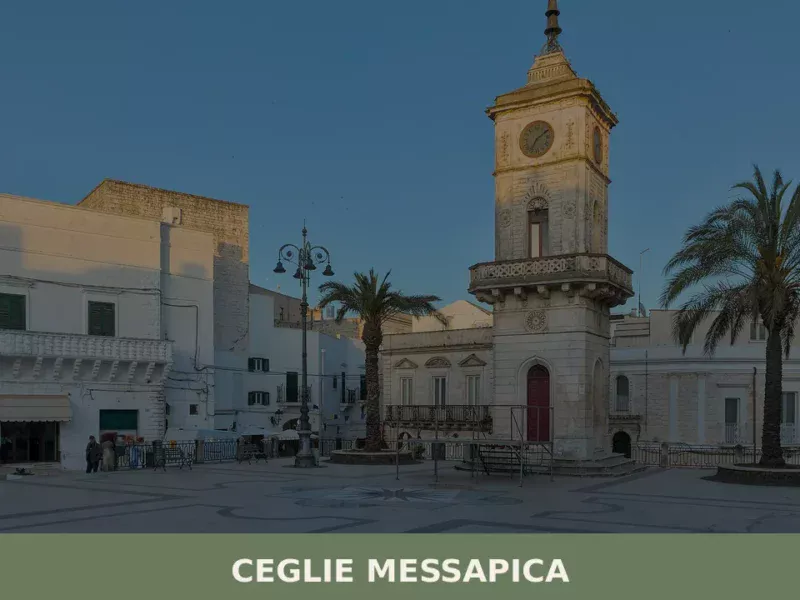
Discover what to see in Ceglie Messapica: the Ducal Castle, medieval chianche streets, ancient olive groves, karst caves and Puglia's finest local food.



🏡 Know Carapelle better than we do?
If you’re a local or have been there, your knowledge matters: add what’s missing or fix a detail on this page.