


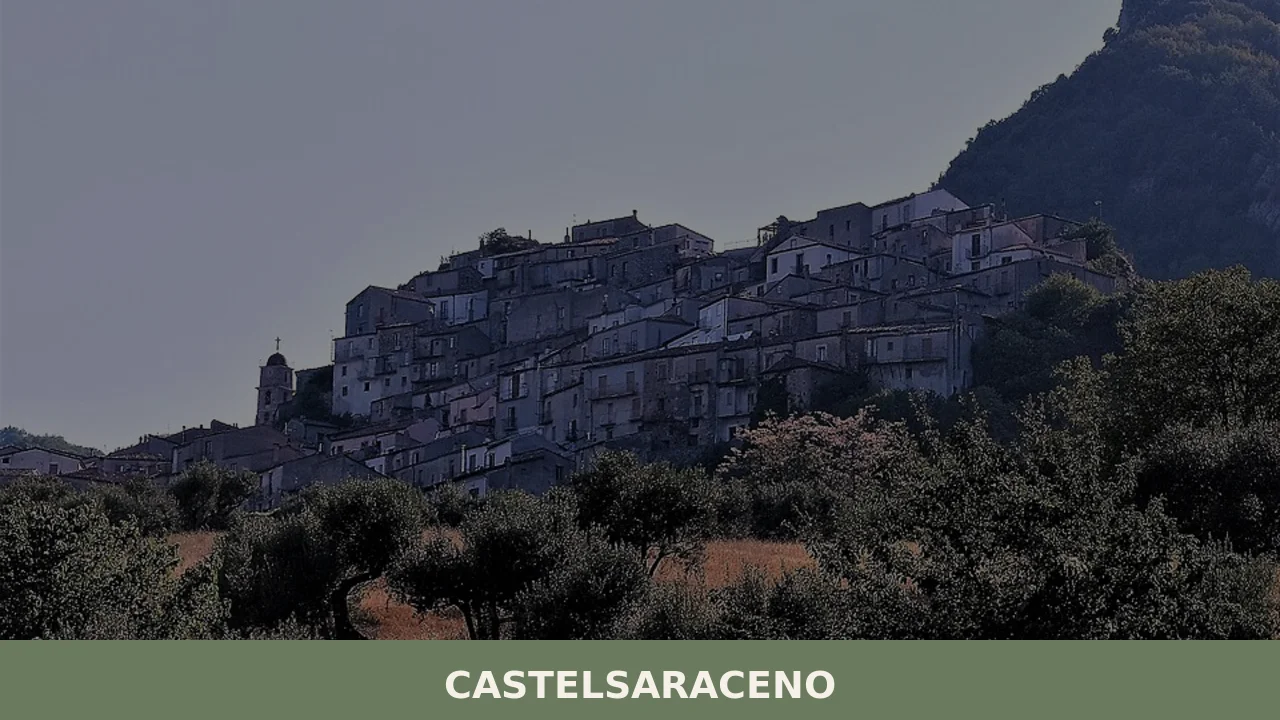
Castelsaraceno
Discover what to see in castelsaraceno, the Lucanian village known for the world’s longest Tibetan bridge. Complete guide to its history, attractions, cuisine, and how to get there.
Discover Castelsaraceno
At 916 meters above sea level, Castelsaraceno stands out among Lucanian villages for having the world’s longest Tibetan bridge, inaugurated in July 2021. This structure, which connects the two sides of the village above the Racanello valley, has become an architectural landmark and a driver of interest for those wishing to explore the lesser-known Basilicata.
For those wondering what to see in castelsaraceno, the village offers a layering of elements ranging from its urban layout, adapted to the mountainous terrain, to traces of a past that saw various dominations succeed one another.
History and origins of Castelsaraceno
The name “Castelsaraceno” originates from “Castrum Saracenum,” a reference to an ancient fortress or a Saracen presence in the territory. The first documented records date back to the 10th century, a period when the area was subject to incursions and territorial disputes. The strategic position of the village, between the Racanello and Frida river valleys, made it a natural control point, coveted by various feudal lordships.
During the Middle Ages, Castelsaraceno was part of the Vallo di Diano and was influenced by various noble families, including the Sanseverino and the Carafa. The historical events of the village are linked to the dynamics of the Kingdom of Naples and, subsequently, the Kingdom of the Two Sicilies, with periods of development alternating with phases of decline, often coinciding with seismic events or famines.
The community, primarily dedicated to agriculture and pastoralism, maintained a strong connection with its mountainous territory, adapting its activities to the surrounding natural resources.
What to see in Castelsaraceno: 5 essential attractions
The Tibetan Bridge
Inaugurated in 2021, Castelsaraceno’s Tibetan Bridge is a suspended structure approximately 586 meters long, connecting the two sides of the village. It offers a different perspective on the landscape below, allowing visitors to cross the Racanello valley at a considerable height. Its construction has enhanced the morphology of the area, creating an experiential path.
Mother Church of Saint Nicholas of Myra
The Mother Church, dedicated to Saint Nicholas of Myra, represents the main place of worship in the village. Its architecture features stratified elements, resulting from interventions and reconstructions over the centuries. Inside, sacred works and furnishings are preserved, which bear witness to the community’s devotion and local artistic craftsmanship.
Sanctuary of Our Lady of Carmine
Situated in an elevated position, the Sanctuary of Our Lady of Carmine is a place of worship and pilgrimage.
Its construction dates back to the 18th century, and the facade is distinguished by the simplicity of its architectural lines. From the churchyard, a view opens onto the surrounding landscape, which includes the valleys and peaks of the Pollino National Park.
The Historic Center
The oldest core of Castelsaraceno develops following the contours of the mountainous terrain. The stone buildings, often leaning against each other, form a compact urban fabric, with narrow passages and staircases that adapt to the slope. This setting offers a glimpse into traditional Lucanian mountain architecture.
The Pollino National Park
Castelsaraceno is located within the perimeter of the Pollino National Park, one of Italy’s largest protected areas.
The territory surrounding the village is characterized by beech and fir forests, waterways, and trails that allow for exploration of the local biodiversity, including endemic species such as the Bosnian pine.
Typical cuisine and local products
The cuisine of Castelsaraceno, like that of all mountainous Basilicata, is rooted in local produce and farming traditions. Among the fresh pastas are strascinati, cavatelli, and lagane, often seasoned with pork or lamb ragù, or with legumes. Fundamental ingredients include legumes such as Sarconi IGP beans, lentils, and grass peas, which are central to hearty soups and winter broths.
Pork products play a central role: from “pezzente della montagna,” a sausage with an intense flavor, to soppressata and capocollo, made from local meats and cured according to ancient techniques. Among the cheeses, pecorino and caciocavallo stand out, produced from the milk of pasture-raised sheep or cows. Vegetables like “peperoni cruschi,” dried and fried, are also present, lending a crispy and flavorful note to many dishes, as are “lampascioni,” wild hyacinth bulbs with a slightly bitter taste.
Sweets such as scarcelle or pasticciotti conclude meals, especially during festivities.
When to visit Castelsaraceno: the best time
The best time to visit Castelsaraceno depends on the traveler’s interests. Spring and autumn offer mild temperatures, ideal for excursions in the Pollino National Park, when the vegetation is in full bloom or displaying autumn colors. Summer, with its longer days, is the optimal time to experience the Tibetan Bridge and enjoy cooler temperatures compared to coastal areas.
A significant time to visit the village is June 13th, for the patron saint’s festival dedicated to Saint Anthony of Padua. During this observance, the community comes alive with religious celebrations and events that reflect local traditions. Winter, though colder and with possible snowfall, can offer evocative mountain scenery, but requires appropriate gear for exploration.
How to get to Castelsaraceno
To reach Castelsaraceno, located in the province of Potenza, using a car is advisable.
From the north and south, one can take the A2 Autostrada del Mediterraneo (Salerno-Reggio Calabria) and exit at Lauria Nord or Lauria Sud, then continue on provincial roads towards the village. The distance from Potenza is about 100 km, while from Matera it is about 140 km.
The closest train stations are in Sapri (about 40 km), on the Tyrrhenian line, or in Ferrandina (about 120 km), on the Taranto-Salerno line. The reference airports are Naples-Capodichino (about 180 km) and Bari-Palese (about 200 km), from which it is then necessary to rent a car or use road transport services to reach the village.
Other villages to discover in Basilicata
Basilicata, a land of mountains and traditions, offers numerous villages worth exploring, each with its own historical and landscape characteristics.
A short distance from Castelsaraceno, other places can be found that preserve a local authenticity. Among these is Anzi, also a mountain village, known for its fortifications and its panoramic position overlooking the Basento valley, offering another example of a settlement that has adapted to its orographic context.
Another example of a Lucanian village to consider is Calvera, a small center that develops on a ridge between the Sarmento and Agri valleys.
Calvera, like Castelsaraceno, also features a historic core with stone architecture and alleys that reflect a past linked to agricultural and pastoral activities, offering a further perspective on life in the inland villages of Basilicata.
For more information on the region and its villages, you can consult the official website of the municipality of Castelsaraceno: comune.castelsaraceno.pz.it, the Wikipedia page dedicated to Castelsaraceno: it.wikipedia.org, and the section dedicated to Basilicata on italia.it.
Photo Gallery of Castelsaraceno
Do you have photos of Castelsaraceno?
Share your photos of the village: the best ones will be added to the official gallery, with your credit.
Send your photosIn Basilicata More villages to discover
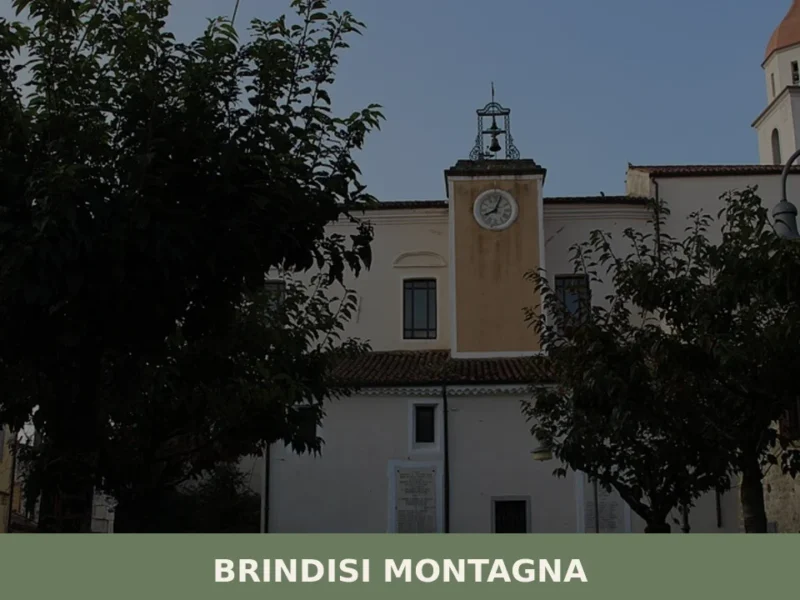
Brindisi Montagna
Discover Amaro, a picturesque village in Friuli Venezia Giulia, Italy. Explore its history, stunning Alpine scenery, and authentic Italian mountain culture.
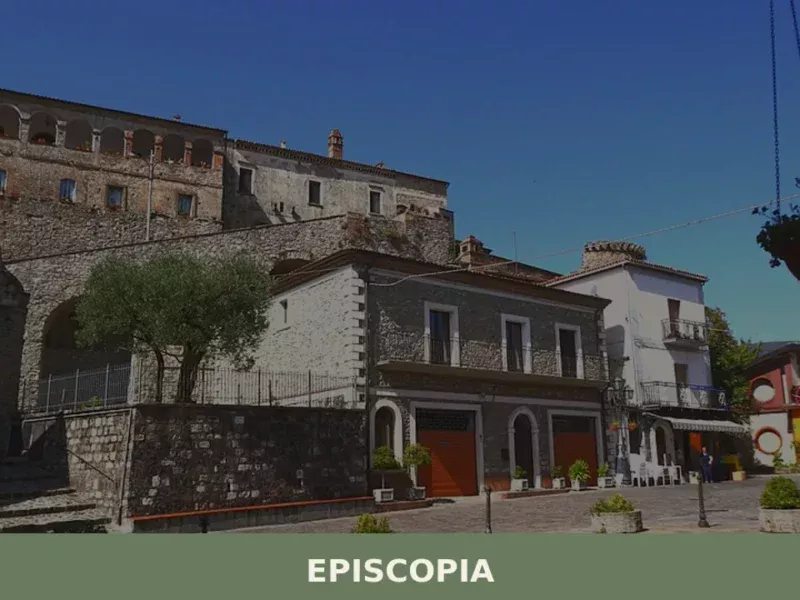
Episcopia
Episcopia, in Basilicata, stands at 530 meters above sea level, an altitude that influences its climate and its relationship with the surrounding landscape. Its name, of Greek origin, means “episcopal see,” suggesting an ecclesiastical importance established since the Byzantine era, a fact that traces its initial historical identity. For those wondering **what to see in […]
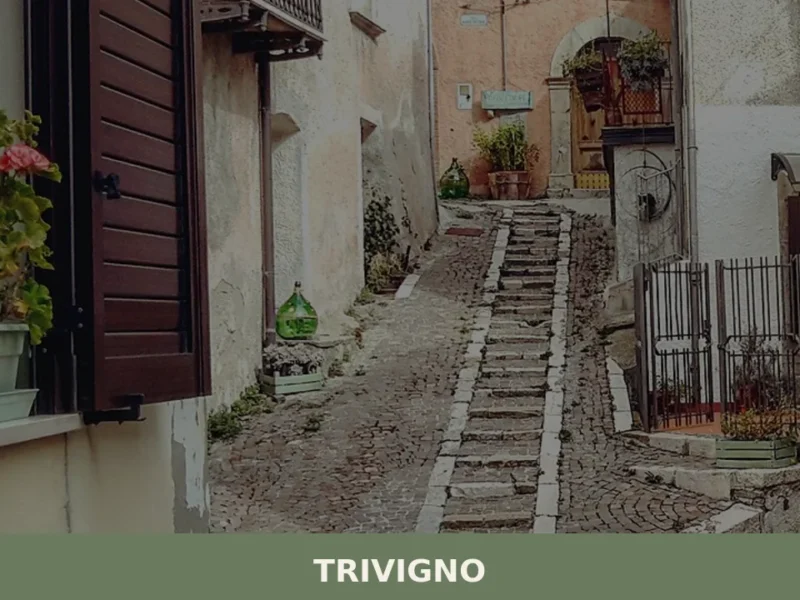
Trivigno
Trivigno has a current population of 570 and occupies a ridge at 725 metres above sea level in the middle Basento valley, in the province of Potenza. Its territory extends across fields of durum wheat and Turkey oak woods covering the eastern slopes up to the borders with neighbouring municipalities. Those looking for what to […]




📝 Incorrect information or updates?
Help us keep the Castelsaraceno page accurate and up to date.