


Cersosimo
Discover what to see in Cersosimo, an authentic village in Basilicata. From the Mother Church to the castle remains, explore the history and typical cuisine of this hilltop center in the province of Potenza.
Discover Cersosimo
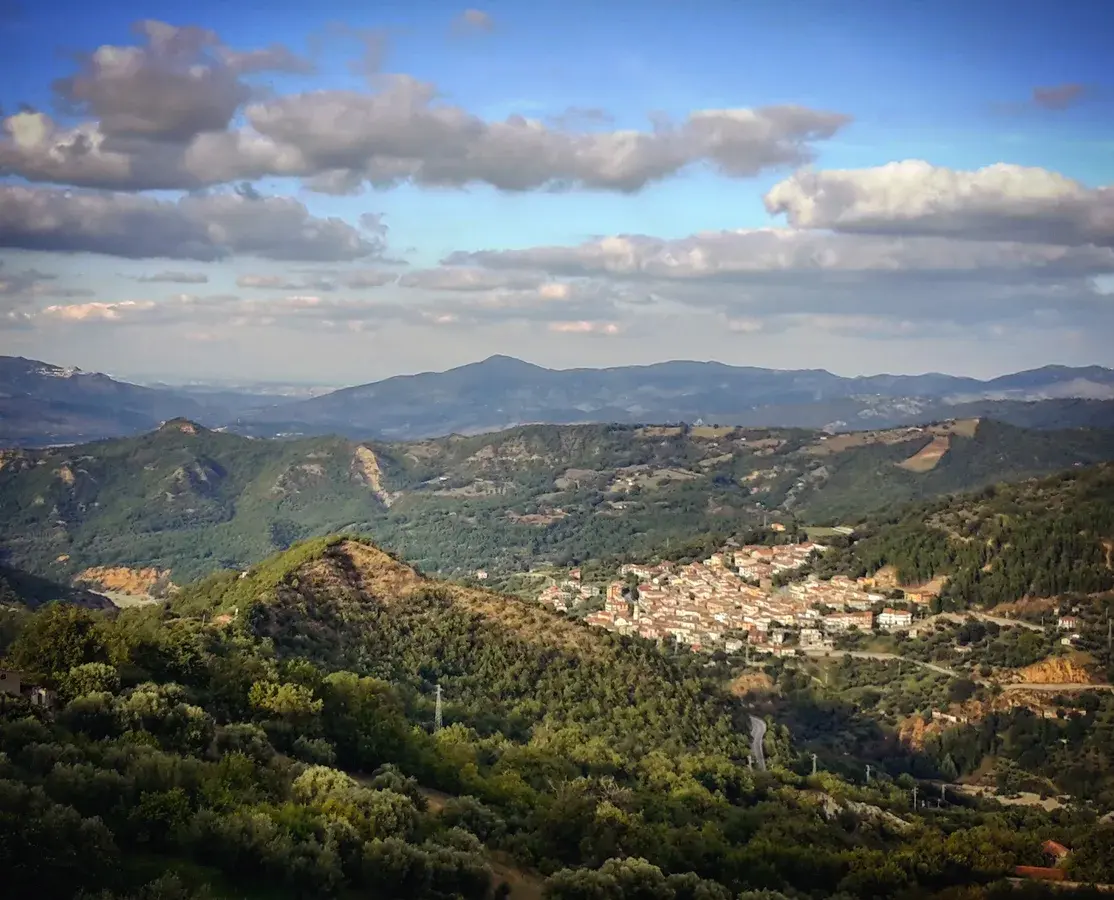
With its approximately 700 inhabitants, Cersosimo is a Lucanian settlement that retains the characteristics of a hilltop community at 548 meters above sea level, in the province of Potenza. Historical documentation indicates that the territory has been inhabited since the Bronze Age, as evidenced by archaeological finds in the Serrone area.For those wondering about what to see in cersosimo, the village offers an example of historical stratification and a connection with the landscape of inland Basilicata, away from major tourist flows, providing an experience of observing local life and its structures.
Its origins are often attributed to a Byzantine settlement, an influence still reflected today in the veneration of its Patron Saint.
History and Origins of Cersosimo
The name “Cersosimo” is believed to derive from the Latin “Quercus” (oak) or the Greek “Kersos” (arid land) with “Osymos” (oak), suggesting an area once characterized by extensive woodland formations. Human presence in the territory is documented from the Middle and Late Bronze Age, with artifacts found indicating continuous settlement.In the medieval period, the village developed around a fortified core, coming under the dominion of various feudal families, including the Sanseverino and Pignatelli.
The inhabited center, like many in Basilicata, experienced a succession of dominations that influenced its urban and social development. During the Angevin and Aragonese periods, Cersosimo was a locally significant fiefdom, controlling the connecting routes between the surrounding valleys. Traces of these eras are still discernible in the structure of the historic center, with its stone buildings and street layout.
The veneration of Mary of Constantinople, the village’s patron saint celebrated on May 16, is an element that links Cersosimo to its Byzantine heritage.
This devotion is a central aspect of the community’s identity and traditions, persisting through the centuries as a unifying element for the population.
What to see in Cersosimo: 5 essential attractions
For those wishing to understand the essence of this Lucanian center, here is a selection of places that offer an insight into its history and culture.
1. The Mother Church of Santa Maria di Costantinopoli
The main place of worship, the Mother Church is dedicated to the village’s Patron Saint. Its structure is the result of modifications and expansions that occurred over the centuries. Inside, one can observe architectural elements that bear witness to the different construction phases and sacred artworks that reflect local devotion.
2. The Historic Center
The oldest core of Cersosimo is characterized by narrow streets and local stone buildings.
Walking through these streets allows one to observe the spontaneous architecture of the village, the small squares, and the views that open onto the surrounding landscape. The houses often feature stone portals and wrought-iron balconies.
3. The Remains of the Castle
On the highest part of the village are the remains of the ancient medieval castle. Although much of the original structure has been lost or incorporated into subsequent buildings, the foundations and some wall portions allow one to imagine the complex’s former defensive function and its strategic position for controlling the territory.
4. The Baronial Palace
Once the residence of the feudal families who dominated Cersosimo, the Baronial Palace is a building notable for its size and certain architectural details. It represents an example of civil architecture that marked the life of the village, reflecting the power and presence of local lords throughout the centuries.
5. The Belvedere over the Sarmento Valley Landscape
From the village’s high points, observation spots open up onto the landscape of the Sarmento Valley and the surrounding hills.This allows one to appreciate the geophysical conformation of the territory, characterized by wooded reliefs and cultivated areas, offering a perspective on the relationship between human settlement and the natural environment.
Typical Cuisine and Local Products
The cuisine of Cersosimo, like that of much of Basilicata, is rooted in agro-pastoral traditions and the use of simple, genuine ingredients. Among the symbolic products of the Lucanian territory are the Peperoni Cruschi, sweet peppers dried and then quickly fried in oil, which become crispy and aromatic, used to enrich first courses, legumes, and baccalà.
Another distinctive element is homemade pasta, such as lagane, cavatelli, or orecchiette, often seasoned with sauces based on pork or lamb, or with legumes such as Sarconi Beans PGI.
The local dairy sector offers cheeses like Caciocavallo Podolico, produced with milk from Podolica cows, with an intense and persistent flavor.Traditional cured meats are also available, including Lucanian Sausage, prepared with pork and flavored with wild fennel and chili pepper. The patron saint’s festival of Mary of Constantinople is often an occasion to taste these specialties, prepared according to recipes handed down from generation to generation, which represent a fundamental aspect of the village’s cultural identity.
When to visit Cersosimo: the best period
Cersosimo’s climate is typically Mediterranean, with hot, dry summers and colder, sometimes snowy winters. The best period for a visit extends from late spring to early autumn, when temperatures are mild and longer days allow for exploring the village and the surrounding landscape with greater ease.
May, in particular, offers the opportunity to participate in the Festival of Mary of Constantinople, on May 16, an event that enlivens the village with religious celebrations and social gatherings, offering an authentic insight into community life.
The months of September and October can also be appealing, with pleasant temperatures and the colors of the foliage transforming the landscape, making it suitable for excursions and walks.During the summer months, evenings are often cool, a relief after the daytime heat, and some local activities might organize outdoor events.
How to get to Cersosimo
Cersosimo is primarily accessible by private transport, given its location in inland Basilicata.
- By car: Coming from the north, one can take the A3 Salerno-Reggio Calabria motorway, exiting at Lauria Nord and then continuing on State Road 653 “Sinnica” towards Matera, then following signs for Cersosimo. From the south, also on the A3, the recommended exit is Campotenese, then follow signs for SS 653 and Cersosimo.
It is advisable to consult the official website of the Municipality of Cersosimo for the most up-to-date directions.
- By train: The nearest railway stations are Policoro-Tursi or Ferrandina Scalo, both on the Taranto-Sibari line, but from there it is necessary to continue by local bus or taxi, with connections that may be limited.
- By plane: The most convenient airports are Bari-Palese Airport (approximately 180 km) or Lamezia Terme Airport (approximately 160 km), both with car rental services available.
Other villages to discover in Basilicata
Basilicata is a territory that preserves numerous settlements that maintain their historical and cultural characteristics intact.Beyond Cersosimo, exploration can continue towards other settlements that offer different perspectives on the Lucanian heritage. For example, Armento, also in the province of Potenza, is known for its significant archaeological finds from the Greek and Lucanian eras, which document the presence of ancient civilizations and a past of cultural exchange.
Another stop could be Cancellara, a village notable for its hilltop position and the fortified structures that have marked its history. These centers, despite their specificities, share the experience of a lesser-known Basilicata, where life unfolds according to rhythms set by nature and local traditions, offering visitors the opportunity for an immersion in an authentic context.
Photo Gallery of Cersosimo
Do you have photos of Cersosimo?
Share your photos of the village: the best ones will be added to the official gallery, with your credit.
Send your photosIn Basilicata More villages to discover
Castelmezzano
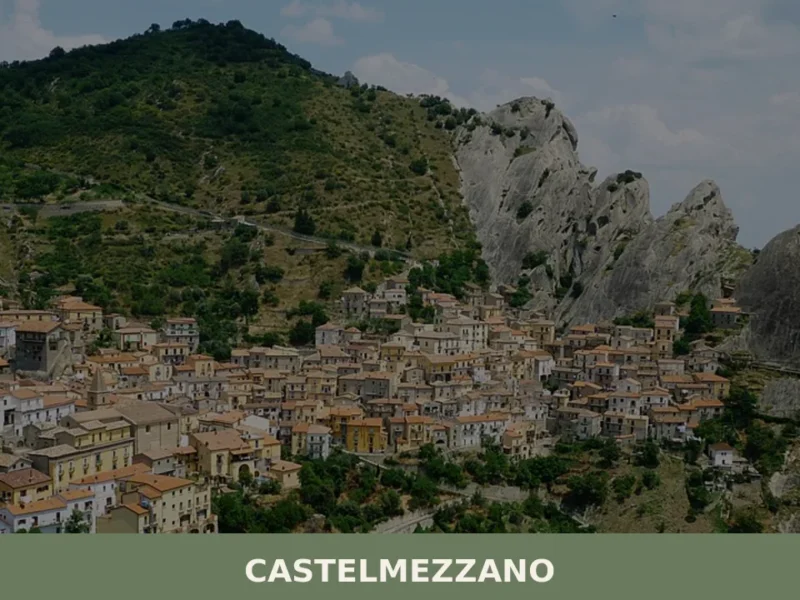
Castelmezzano, in Basilicata, has a population of 835 inhabitants and stands at 750 meters above sea level, in the province of Potenza. Its architecture unfolds among the rock formations of the Lucanian Dolomites, a mountain environment that defines the village’s character (for more information, consult the dedicated Wikipedia page). Probably founded in the Norman era, […]
Castelluccio Superiore
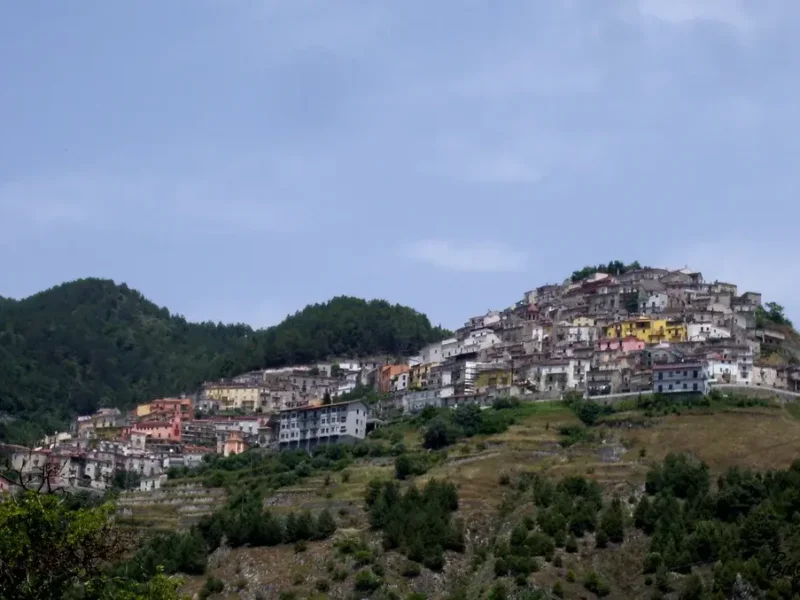
At 680 meters above sea level, with a population of 860 inhabitants, Castelluccio Superiore is located in the heart of the Lucanian Apennines, in the province of Potenza. This mountain village, whose history dates back to antiquity, offers visitors a journey through layers of memory and architectures that recount its evolution. For those wondering **what […]
Brindisi Montagna
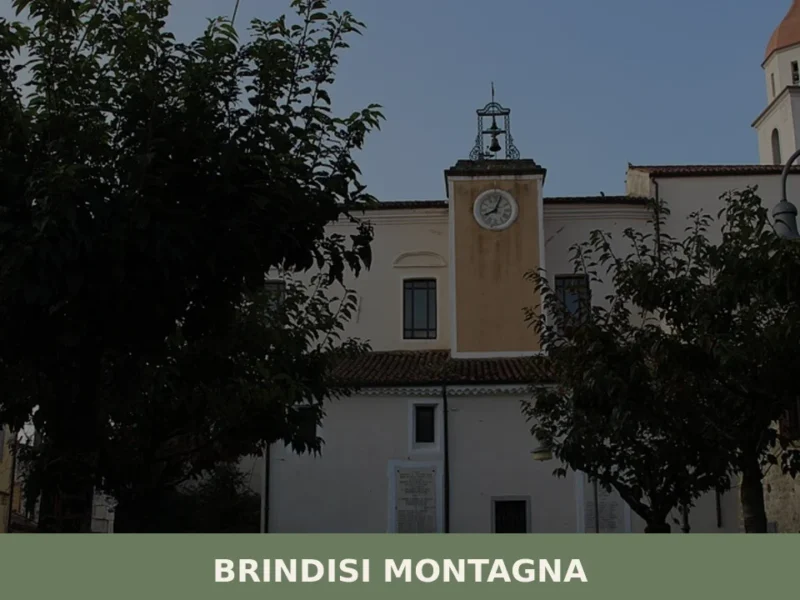
Discover Amaro, a picturesque village in Friuli Venezia Giulia, Italy. Explore its history, stunning Alpine scenery, and authentic Italian mountain culture.




📝 Incorrect information or updates?
Help us keep the Cersosimo page accurate and up to date.