


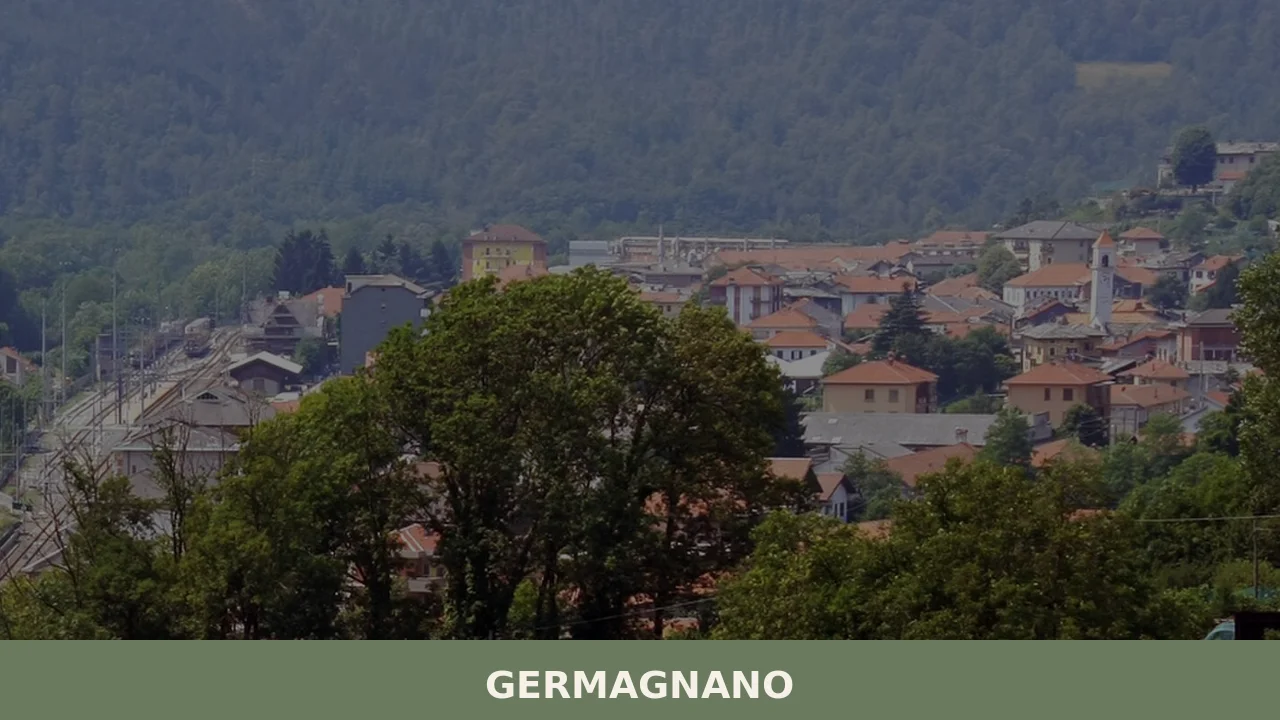
Germagnano
 Mountain
What to see in Germagnano, Italy: 30 km from Turin in the Valli di Lanzo. Discover the railway village, local cuisine and best times to visit. Read the guide.
Discover Germagnano
The Turin-Ceres railway line cuts through the lower Valli di Lanzo and stops at Germagnano, a small comune — the Italian term for a municipality — that sits at the point where the valley floor begins to narrow and the Alps start to assert themselves above the foothills.
The station platform, the stone buildings of the village centre, and the surrounding terrain of the Lanzo valleys form a geography that has oriented local life for well over a century.
Distances here are measured in valley segments, not urban blocks.
For travellers researching what to see in Germagnano, the answer begins with geography: the village lies about 30 km (19 mi) northwest of Turin in Piedmont’s Valli di Lanzo, within the Metropolitan City of Turin. Visitors to Germagnano find a settlement defined by its rail connection, its position at the mouth of a mountain valley system, and a local food culture rooted in Alpine Piedmontese tradition. The Germagnano highlights include its historic railway station, the surrounding valley landscape, and the nearby peaks that frame the horizon to the north and west.
History of Germagnano
The name Germagnano carries traces of Lombard settlement, a pattern common across the foothills of northwestern Piedmont.
The Lombard suffix -anum, appended to a personal name, typically indicated a landholding belonging to a specific individual or family, and the resulting place names survive across the Po plain and its mountain edges. In Piedmontese dialect the village is called Djermagnan, while in Arpitan — the Franco-Provençal language historically spoken in some alpine communities — it appears as Sen German, a form that points toward a possible earlier dedication or association with Saint Germain, though the precise origin of the toponym has not been definitively established in the historical record.
The Valli di Lanzo, the valley system in which Germagnano sits, were documented in medieval records as part of the territory controlled by the Savoy dynasty, whose expansion from their Alpine strongholds eventually consolidated the region that would become Piedmont.
Communities at the valley entrances served as transit and trade points between the Po plain and the higher Alpine passes, a function that gave even small settlements a degree of economic relevance.
Germagnano, positioned at the convergence of routes leading into the three Lanzo valleys — the Valle Grande, the Valle di Viù, and the Valle d’Ala — occupied a logistically significant location that shaped its development through the medieval and early modern periods.
The arrival of the railway transformed Germagnano’s role within the valley system. The Turin-Ceres line, which connects the city of Turin to the mountain town of Ceres, established a fixed infrastructure link that made Germagnano accessible to urban travellers and facilitated the movement of goods and people across what had previously been a more isolated territory.
This rail connection, which remains operational, distinguishes Germagnano from many comparable Piedmontese villages and has long influenced patterns of settlement, tourism, and daily commuting in the lower Valli di Lanzo. Alpette, a small comune higher up in the Canavese hills to the east, shares a similar history of gradual integration into Turin’s wider metropolitan orbit during the industrial era.
What to see in Germagnano, Piemonte: top attractions
The Turin-Ceres Railway Station
The station building at Germagnano is a functional structure that reflects the utilitarian architecture typical of late nineteenth-century Italian mountain railways.
The Trenitalia network still operates services along this line, making the station a working piece of infrastructure rather than a preserved relic.
Trains running between Turin and Ceres stop here, and the platform provides a direct view up the valley toward the higher mountains. For visitors travelling without a car, this station is the primary arrival point, situated in the lower section of the village approximately 30 km (19 mi) from Turin’s Porta Susa terminal. The frequency of services and the directness of the connection make it worth checking current timetables before planning a visit.
The Village Centre and Historic Buildings
The built fabric of Germagnano’s centre follows the compact layout characteristic of Piedmontese foothill villages: stone construction, narrow streets aligned with the valley orientation, and a central square that functions as a meeting point for residents.
The buildings use locally sourced stone, and the scale of construction reflects the modest but practical architecture of communities that relied on agricultural land and valley trade rather than courtly patronage. Walking the streets of the centre takes no more than twenty to thirty minutes, but the density of surviving pre-twentieth-century structures rewards careful observation.
Late afternoon light from the west, when it clears the ridge above the valley, falls directly onto the stone facades of the main street.
The Parish Church
The parish church, consistent with the ecclesiastical pattern across the Valli di Lanzo, occupies a prominent position within the village and dates its current structural form to renovations carried out during the baroque period, when the Catholic Church systematically upgraded rural chapels and parish buildings across Piedmont.
The interior follows the single-nave layout common in Alpine foothill parishes, with side chapels and votive objects accumulated over several generations of local use. The bell tower is the tallest structure in the village and visible from the railway approach. It is worth arriving at the church during morning hours when light enters through the south-facing windows and illuminates the decorative elements of the altar area.
The Valli di Lanzo Valley Landscape
The three valleys that converge near Germagnano — the Valle Grande, the Valle di Viù, and the Valle d’Ala — offer a gradient of terrain that ranges from cultivated valley floors at approximately 450 m (1,476 ft) above sea level to peaks exceeding 3,000 m (9,843 ft) along the watershed with France.
From the edges of the village, the visual range takes in both the flat corridor of the lower valley and the serrated ridgelines that define the horizon to the north.
The vegetation transition from broadleaf woodland to conifer forest is visible on the facing slopes and marks the altitude bands that govern land use in this part of the Alps. For those interested in what to see in Germagnano from a landscape perspective, the valley viewpoints accessible on foot from the village centre require no technical equipment and are suitable for walkers of moderate fitness.
The Surroundings: Day Walks and Valley Access
Germagnano functions as an entry point for the broader Valli di Lanzo network, which encompasses marked paths, mountain refuges, and several villages at higher elevations. The road and path system radiating from the village connects to destinations further up the valley within distances of 5 to 20 km (3.1 to 12.4 mi). The terrain rises steadily from the valley floor, and routes to higher elevations gain several hundred metres of altitude within the first few kilometres.
Spring and early autumn offer the most reliable conditions for walking, with reduced risk of summer thunderstorms and comfortable temperatures between 12°C and 22°C (54°F and 72°F).
Those arriving by train can cover the main valley-floor routes on foot without requiring a vehicle.
Local food and typical products of Germagnano
The culinary tradition of the Valli di Lanzo sits firmly within the Alpine variant of Piedmontese cooking, a cuisine shaped by altitude, seasonal availability, and the historical isolation of mountain communities during the winter months. The food culture here is not a tourist construction but a practical response to the local environment: preserved meats, aged cheeses, polenta, and slow-cooked preparations that make use of every part of the animal.
The influence of Turin, accessible by rail, has introduced some lowland products and urban preparation methods over the past century, but the core repertoire remains rooted in valley-specific ingredients.
Among the dishes associated with the Lanzo valley tradition, polenta concia — a preparation of cornmeal cooked with local butter and melted valley cheese until it forms a dense, fatty mass — represents the most direct expression of mountain cooking in this area. The cheese used is typically toma, a semi-firm cow’s milk cheese with a natural rind, which melts smoothly into the polenta and provides the characteristic savoury, slightly tangy depth of flavour.
Brasato al vino rosso, a slow braise of beef in local red wine, appears on tables throughout the colder months, cooked for several hours until the meat separates along its fibres and the braising liquid reduces to a dense, wine-dark sauce. Fritto misto alla piemontese, a mixed fry of both savoury and sweet elements — including veal, offal, vegetables, and semolina-based sweets battered and fried together — reflects the broader Piedmontese tradition that reaches into the valley towns.
The toma cheeses of the Piedmontese Alps fall under the protected designation framework of the European Union.
Toma Piemontese (DOP) is produced across a wide area of Piedmontese mountain territory, including communities in the provinces of Turin, Cuneo, Biella, Vercelli, Novara, and Verbano-Cusio-Ossola. The designation covers both a full-fat and a semi-fat version, with minimum ageing periods that vary by type.
This cheese, available in local shops and markets throughout the Lanzo valleys, is among the most consistent regional products accessible to visitors in the Germagnano area.
Local markets and small food shops in the valley stock seasonal products including wild mushrooms gathered from the surrounding forests in September and October, and chestnuts from lower-altitude woodland in the same period. Visitors looking to buy valley products directly are best advised to visit on weekday mornings, when local producers occasionally bring goods to market in the village and in nearby valley towns.
Carrying cash is practical, as smaller vendors and rural shops may not accept card payments.
Festivals, events and traditions of Germagnano
The patron saint of Germagnano follows the dedication implied by its Arpitan name Sen German, connecting the community to Saint Germain, whose feast day falls on 28 May. In the pattern common to small Piedmontese communities, the patron saint’s day is marked by a religious procession, a Mass in the parish church, and community gathering in the village square.
The format of such celebrations in the Lanzo valley area typically includes outdoor dining, local music, and the sale of traditional food products by village associations.
The wider calendar of the Valli di Lanzo includes a series of sagre — traditional local food festivals — distributed across the summer and early autumn months in different valley communes. These events rotate through the valley calendar and are organised around specific local products: mushrooms, chestnuts, polenta, and valley cheeses appear as central themes depending on the season.
Visitors spending more than a day in the area during September or October are likely to encounter at least one such event within a short distance of Germagnano.
When to visit Germagnano, Italy and how to get there
The best period to visit Germagnano and the surrounding Valli di Lanzo runs from late May through September, with the most consistent weather occurring in June and the first half of July before the risk of afternoon thunderstorms increases at altitude. Autumn — specifically September and October — offers a secondary window that suits visitors interested in valley walking and local food products, with chestnut and mushroom harvests adding seasonal interest to the landscape and local markets. Winter closes many higher routes but the valley floor and village remain accessible year-round by rail. For those researching the best time to visit Piemonte more broadly, the region’s mountain areas favour late spring and early autumn, while Turin and the lowland areas are accessible in all seasons.
Germagnano is straightforward to reach from Turin. By train, the Turin-Ceres line departs from Turin’s Porta Susa station and reaches Germagnano in approximately 40 to 50 minutes, covering the 30 km (19 mi) distance through the foothills and into the lower valley.
This makes Germagnano a practical day trip from Turin, requiring no car and no advance booking for regular services. By road, the A32 motorway serves the Susa valley to the south, but for the Lanzo valleys the most direct approach from Turin is via the SS460 state road, which follows the valley from the city outskirts directly to Germagnano and continues into the upper valleys.
Turin’s international airport, Turin Airport (Torino Caselle), lies approximately 20 km (12.4 mi) from the city centre and around 45 km (28 mi) from Germagnano by road, making it feasible to arrive in Italy and reach the village on the same day. International visitors should be aware that English is spoken in Turin’s airport and main hotels but may be limited in smaller valley shops; carrying euros in cash remains practical for rural purchases.
From other Italian cities, Turin is the natural hub for a visit to Germagnano. Milan is approximately 140 km (87 mi) from Turin by motorway, with high-speed rail services connecting Milan Centrale to Turin Porta Susa in under an hour, making the full journey from Milan to Germagnano feasible in a single morning.
Turin itself offers a full range of accommodation and services for visitors who prefer to base themselves in the city and make day trips into the surrounding valleys.
Visitors exploring the wider area around Germagnano, Piemonte, Italy, may find it useful to combine their visit with other Piedmontese destinations.
Alice Superiore, a small comune in the Canavese area east of Turin, shares the same metropolitan province and offers a comparable experience of rural Piedmontese settlement, making it a logical addition to a multi-day itinerary through the Turin hinterland. Those researching what to see in Germagnano as part of a broader Piedmont tour will find that the valley network here connects naturally with the hill and plain landscapes that characterise the rest of the region.
Frequently asked questions about Germagnano
What is the best time to visit Germagnano?
The ideal time to visit Germagnano, especially for outdoor activities, is during spring and early autumn. These seasons offer comfortable temperatures, typically between 12°C and 22°C (54°F and 72°F), and a reduced risk of summer thunderstorms, making them perfect for walking and exploring the Valli di Lanzo. While the patron saint, San Grato di Aosta, is traditionally celebrated in winter, local festivities might be scheduled in warmer months. Always check local event calendars closer to your travel dates for specific cultural events or village fairs, which often animate the area during spring, summer, or autumn.
What are the historical origins of Germagnano?
Germagnano's history is rooted in its strategic position at the confluence of the Valli di Lanzo. Its name suggests Lombard origins, common in the Piedmontese foothills, indicating an ancient landholding. During the medieval period, it was part of the Savoy dynasty's territory, functioning as a vital transit and trade point between the Po plain and the Alpine passes. The village's development was significantly shaped by the arrival of the Turin-Ceres railway in the late 19th century, transforming it into an accessible link within the valley system and connecting it more closely to Turin.
What to see in Germagnano? Main monuments and landmarks
In Germagnano, visitors can explore the historic Turin-Ceres Railway Station, a functional example of late 19th-century mountain railway architecture, offering views up the valley. The compact Village Centre features narrow streets and stone buildings, reflecting traditional Piedmontese foothill architecture, ideal for a twenty to thirty-minute walk. The Parish Church, with its Baroque renovations and prominent bell tower, stands as the tallest structure, best appreciated in morning light. Beyond the village, the stunning Valli di Lanzo Valley Landscape, with its diverse terrain and ridgelines, is a key attraction for nature lovers.
What are the main natural or scenic attractions of Germagnano?
Germagnano is primarily a gateway to the breathtaking Valli di Lanzo. The surrounding valley landscape offers a dramatic gradient from cultivated valley floors at 450m to peaks exceeding 3,000m. From the village edges, you can enjoy expansive views of the flat lower valley corridor transitioning into the serrated ridgelines of the Alps. The slopes display a visible shift from broadleaf to conifer forests. Accessible on foot from the village, numerous viewpoints and marked paths cater to walkers of moderate fitness, serving as an ideal starting point for exploring the wider mountain network.
Where to take the best photos in Germagnano?
For memorable photos in Germagnano, head to the Turin-Ceres Railway Station platform for direct views up the valley towards the majestic mountains. The village centre's main street, with its stone facades, is particularly picturesque in the late afternoon when the western light illuminates the historic buildings. The Parish Church's bell tower, the tallest structure, offers a striking subject from the railway approach, while its interior is best captured in the morning light entering through south-facing windows. Don't miss the panoramic views of the Valli di Lanzo ridgelines from the village outskirts.
Are there museums, churches or historic buildings to visit in Germagnano?
Yes, Germagnano offers several points of interest. The Parish Church, dating its current form to Baroque renovations, features a single-nave layout and a prominent bell tower. While specific opening hours are not fixed, it's generally accessible during services or by local inquiry. The Village Centre itself is a collection of historic stone buildings and narrow streets, perfect for a leisurely stroll to appreciate traditional Piedmontese architecture. Additionally, the Turin-Ceres Railway Station stands as a late 19th-century historic and functional building, central to the village's identity and a key arrival point.
What can you do in Germagnano? Activities and experiences
Germagnano is an excellent base for exploring the Valli di Lanzo. The primary activity is walking and hiking, with marked paths radiating from the village connecting to higher elevations and mountain refuges within 5 to 20 km. Routes are suitable for moderate fitness and can be accessed directly on foot from the village, even for those arriving by train. Beyond outdoor exploration, visitors can immerse themselves in the local food culture, sampling traditional Alpine Piedmontese dishes. A leisurely stroll through the historic village centre to appreciate its architecture is also a rewarding experience.
Who is Germagnano suitable for? Families, couples, hikers, solo travelers?
Germagnano is ideally suited for hikers, nature lovers, and those seeking a tranquil escape into the Piedmontese Alps. Its role as an entry point to the Valli di Lanzo makes it perfect for solo travelers or couples looking to explore marked mountain paths and discover stunning landscapes. Families with moderate fitness will also appreciate the accessible valley-floor walks. Food enthusiasts will enjoy the authentic Alpine Piedmontese cuisine. Its direct rail connection to Turin also makes it convenient for travelers preferring public transport and a peaceful, unhurried experience away from city bustle.
What to eat in Germagnano? Local products and specialties
In Germagnano, you can savor authentic Alpine Piedmontese cuisine. A must-try is *Polenta concia*, a hearty cornmeal dish enriched with local butter and melted *toma* cheese, a true expression of mountain cooking. Other traditional dishes include *Brasato al vino rosso*, a slow-braised beef, and *Fritto misto alla piemontese*, a mixed fry with both savory and sweet elements. The region is renowned for its cheeses, particularly *Toma Piemontese (DOP)*, a semi-firm cow's milk cheese available in local shops and markets, reflecting the area's rich dairy tradition.
📷 Photo Gallery — Germagnano
Nearby Villages near Germagnano
In Piedmont More villages to discover

San Bernardino Verbano
Mountain
San Bernardino Verbano unites 3 historic hamlets at 304 m above Lake Maggiore, offering Val Grande trails, partisan history, and genuine Piedmontese cuisine.

San Benedetto Belbo
 Hills
Hills
145 residents, one literary trail, one medieval monastery legacy. San Benedetto Belbo rewards slow travellers with Fenoglio's landscape and Langa hilltop views.
Avigliana
Hills
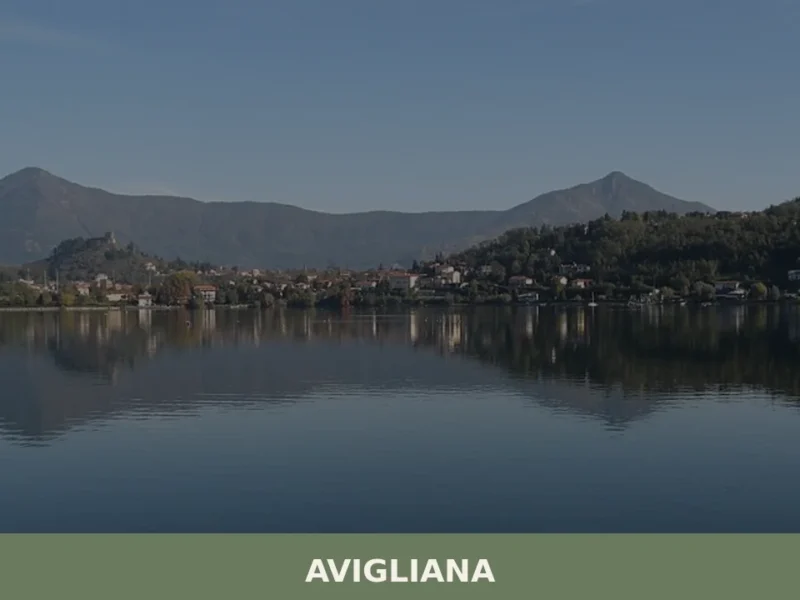
In 1092, a donation charter by Countess Adelaide of Susa mentioned for the first time the castrum Avillianae, a fortified settlement on the hill overlooking two moraine-origin lake basins in the lower Susa Valley. Anyone wondering what to see in Avigliana today will find an urban fabric preserving precise layers of history: thirteenth-century towers, Gothic […]

Beinasco
 Plains
Beinasco traces its roots to a Roman frontier post. Discover how this small town survived plague, warfare and transformation to anchor modern metropolitan Turin.
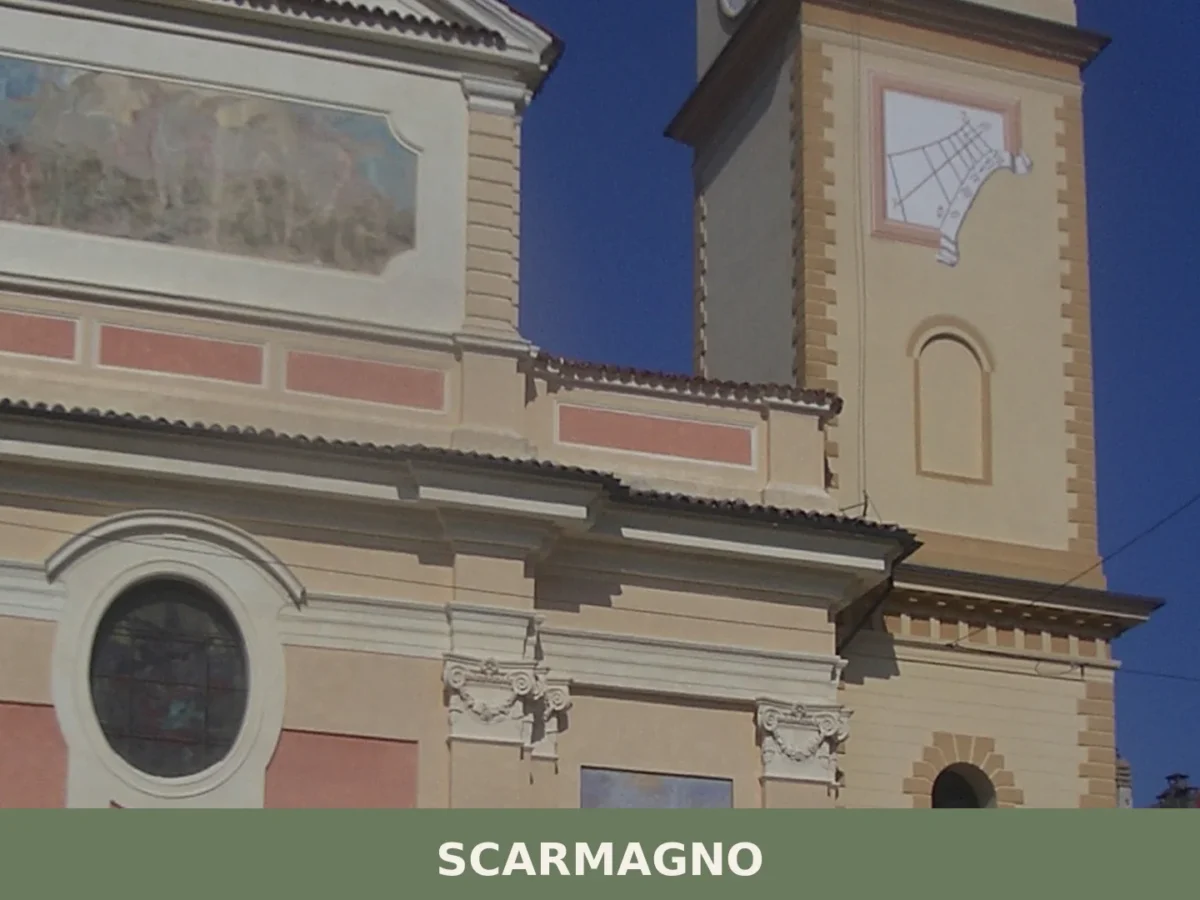
Scarmagno
Mountain
Population 796. A small Piedmontese comune where 10th-century stone chapels stand within sight of the automated Olivetti plant that once produced 200,000 computers annually.
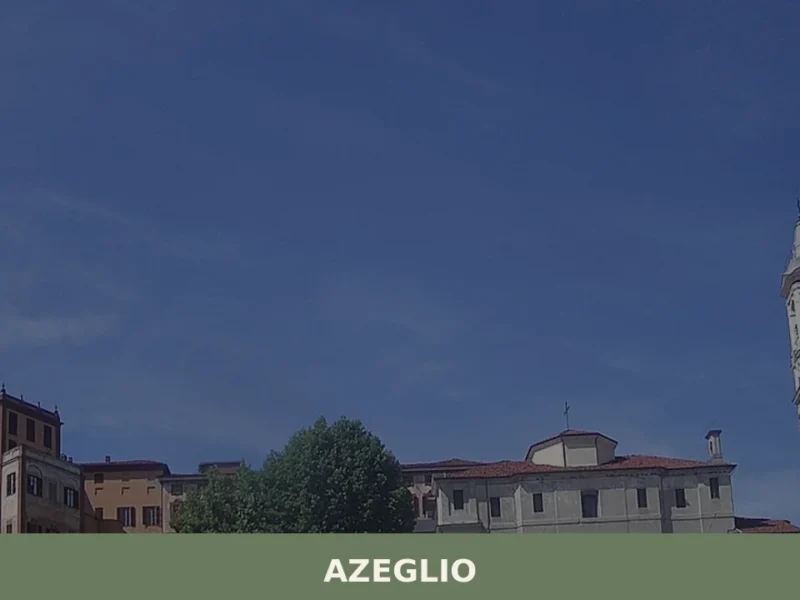
Azeglio
Hills
Azeglio, a small Piedmontese village on Lake Viverone: history, what to see and how to get there. Discover everything to plan your visit.

Pralormo
Hills
Population 1,852. A hilltop comune marked by its 13th-century castle, a 1930s parish church sheltering Renaissance art, and a medieval tower that once guarded Asti's trade routes.
Campiglione Fenile
Plains
Fifteen kilometres separate Campiglione Fenile from Pinerolo, and that distance is enough to create a perceptible shift: the noise of the city gives way to the compact silhouette of Piedmontese farmsteads, to the double-pitched roofs that cut across the Po Valley sky towards the Cottian Alps. In this article History and origins of Campiglione Fenile […]
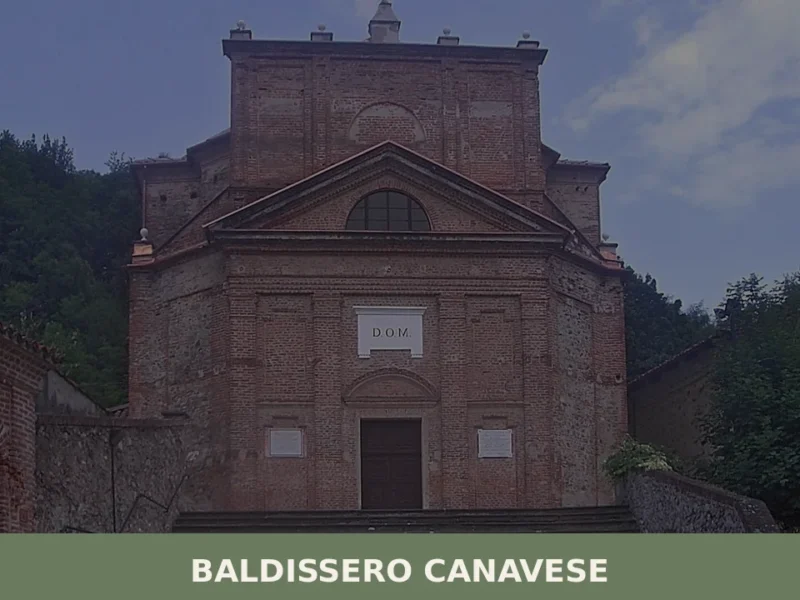
Baldissero Canavese
Hills
Baldissero Canavese has a population of 515 and stands at 392 metres on the hillside of the Canavese area, in the north-eastern corner of the Province of Turin, a short distance from the Piedmontese regional capital. The village is part of the Canavese settlement system, one of the historically densest areas in the region for […]
Bobbio Pellice
Mountain
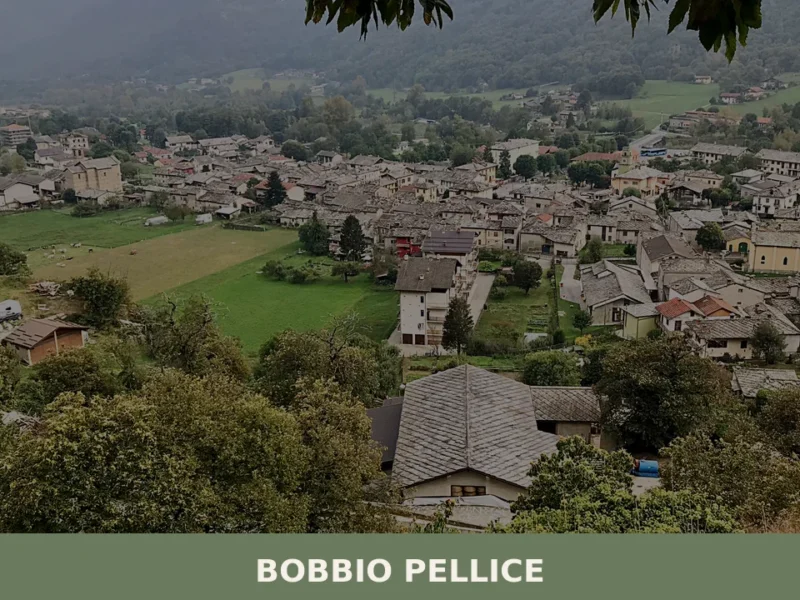
Bobbio Pellice has 536 inhabitants and lies in the Val Pellice, one of the Occitan and Waldensian valleys of southern Piedmont, in the Province of Turin. It is the highest municipality in the valley and the starting point for trails leading to the Colle Giulian and the Colle delle Traversette. Anyone looking to understand what […]



🏡 Know Germagnano better than we do?
If you’re a local or have been there, your knowledge matters: add what’s missing or fix a detail on this page.