


Quadri
 Mountain
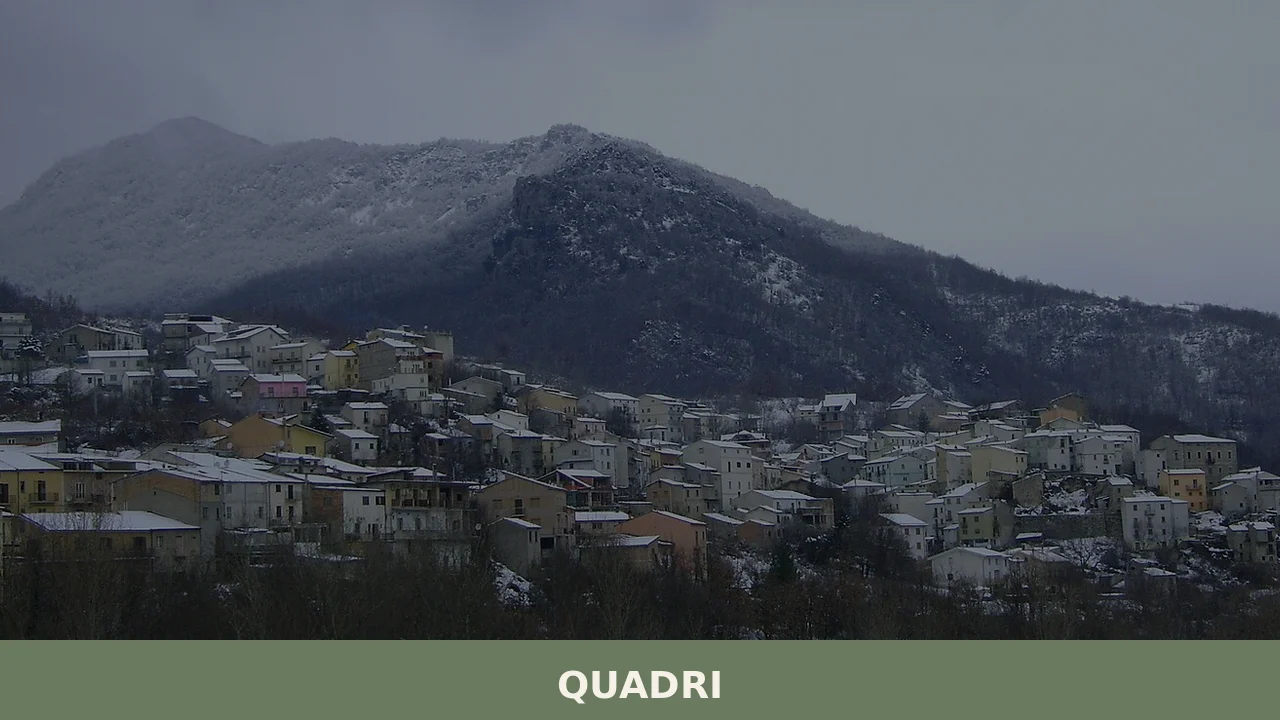
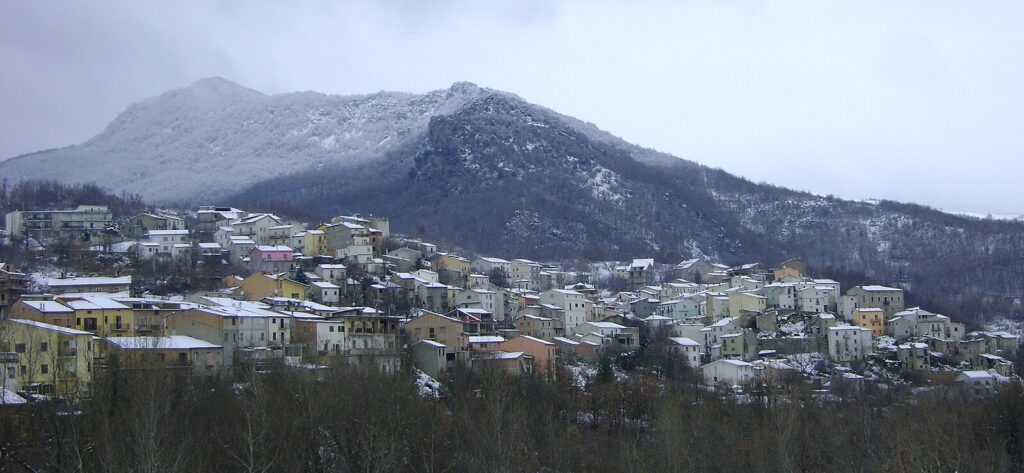
The limestone of the alleyways climbs straight up toward the ridge, and from up there the valley opens onto slopes where beech forests give way to pastures. Quadri belongs to the province of Chieti, in the heart of inland Abruzzo, at an altitude that isolates the village from the main transit routes and keeps it […]
Discover Quadri
The limestone of the alleyways climbs straight up toward the ridge, and from up there the valley opens onto slopes where beech forests give way to pastures.
Quadri belongs to the province of Chieti, in the heart of inland Abruzzo, at an altitude that isolates the village from the main transit routes and keeps it anchored to a precise measure of silence and stone.
The 844 inhabitants counted today — a figure that institutional sources update periodically — live in a territory where the agricultural economy and sheep farming have left concrete traces in the architecture, the road network, and the arrangement of the houses along the ridge.
What to see in Quadri is the right question to ask before setting out: the village offers a compact historic centre with religious buildings of medieval layout, a panoramic position over the province of Chieti, and nature trails that cross the Apennine landscape.
Those planning a stop in Quadri will find a territory where the distance from larger centres translates into direct contact with rural architecture and the cuisine of the Abruzzo hinterland.
The following sections analyse each attraction with precise data, indicate the best periods for a visit, and explain how to reach the village.
History and origins of Quadri
The first documented records of the settlement date back to the Middle Ages, when the village formed part of that hillside network of settlements that characterised the hinterland of the province of Chieti. The position on an elevated ridge responds to a defensive logic common to centres founded between the 10th and 13th centuries in this part of Abruzzo: visual control of the surrounding territory and the difficulty of access guaranteed protection to the rural communities that settled there.
The organisation of the village in clusters pressed against the slope, with dwellings that use the rock both as a foundation and as a building material, directly reflects this original function.
During the late Middle Ages and the early modern period, Quadri became part of the feudal dynamics typical of the Kingdom of Naples, to which most of southern Abruzzo belonged.
Local lords succeeded one another in controlling the territory, leaving traces in the urban layout and in the ecclesiastical heritage.
The main church of the village preserves elements that bear witness to layered architectural interventions between the 15th and 18th centuries, reflecting the changes in taste and patronage that this area underwent throughout the long period of Bourbon rule.
The royal road that connected the inland centres with the Adriatic coast passed at a distance from the village, helping to keep Quadri in a condition of relative isolation that has preserved the original built fabric.
With the Unification of Italy and the subsequent administrative reorganisation, Quadri was definitively assigned to the province of Chieti, in the district that today comprises the municipalities of the middle Sangro valley and the surrounding highlands.
The 20th century brought the waves of internal emigration that struck the entire central Apennines: the population, which had reached significantly higher numbers in the decades following Unification, gradually declined to the current 844 inhabitants.
This demographic process has had a paradoxical effect on the preservation of the built heritage: the reduced pressure for new construction has left intact many historic buildings that in more dynamic centres would have been demolished or transformed. Those who visit Quadri today move through an urban fabric that still clearly bears the stratification of centuries of local history, with a continuity of materials and proportions that is rare in contemporary Abruzzo.
What to See in Quadri: Main Attractions
The Historic Centre and the Medieval Urban Fabric
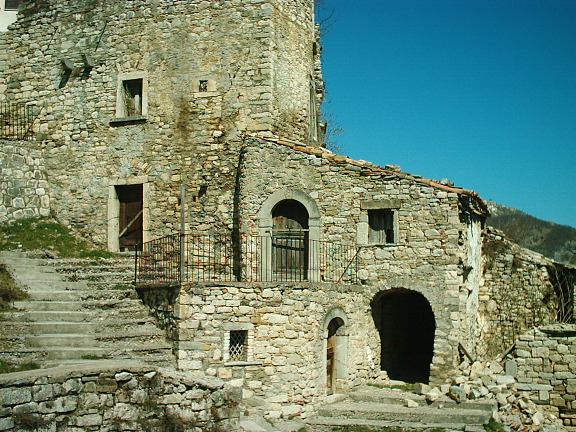
The streets of Quadri’s historic centre follow the natural profile of the ridge according to a logic that has undergone no substantial changes since its medieval layout.
The perimeter walls of the oldest buildings are constructed from blocks of local limestone, quarried directly from the municipal territory, with an average thickness exceeding seventy centimetres in the most ancient structures.
This building technique ensured thermal insulation and seismic resistance, and explains the survival of buildings datable to at least the fourteenth and fifteenth centuries.
Walking along the village’s main thoroughfare, one can observe stone doorways carved with round arches, moulded cornices and, in some cases, heraldic crests sculpted into the keystone blocks. A reading of the built fabric allows one to reconstruct the phases of the village’s expansion towards the valley, which presumably took place between the sixteenth and seventeenth centuries, when demographic growth pushed the community to build beyond the original defensive perimeter.
A walk along the edge of the historic centre offers views over the valley that reveal the relationship between the village and the surrounding agricultural landscape, with terraced fields rising up to the margins of the built area.
The Parish Church of Quadri
The village’s main religious building presents a limestone façade articulated by pilasters and a doorway datable to the Baroque period, with decorative elements that refer back to the architectural tradition of inland Abruzzo between the seventeenth and eighteenth centuries.
The single-nave interior preserves lateral altars in stucco and canvases of the Neapolitan school, a heritage that reflects the region’s cultural ties with the Kingdom of Naples during the modern age.
The bell tower, which dominates the village’s main square, is built from locally quarried stone blocks laid in regular courses and reaches a height visible from several points across the surrounding territory.
Particularly interesting is the decorative apparatus of the minor altars, where one finds iconographic elements typical of Abruzzese popular devotion: patron saints of livestock, votive images connected to mountain agriculture, and ex-votos datable between the nineteenth and twentieth centuries.
Before visiting the interior, it is advisable to check opening times with the municipality or the parish, as these may vary outside the main season.
The Panoramic Viewpoint over the Majella Massif
From the northern edge of the village, at approximately 850 metres above sea level, a sweeping view opens up over the mountain arc stretching from the Majella massif, with its peaks exceeding 2,700 metres, down to the hills descending towards the Sangro valley. This vantage point has not been developed as a formalised tourist attraction, yet it represents one of the most effective vantage points for reading the Apennine landscape of the province of Chieti.
On days of optimal visibility, which occur most frequently in spring and autumn following Atlantic weather fronts, the mountain chain stands out with a clarity that allows one to distinguish individual ridges and the beech forests covering the southern slopes of the Majella.
The village’s position on this ridge also explains its historical function as a road control point: from here, one has visual command over a significant stretch of the network of drove roads that connected the mountain pastures with the Adriatic coastal plains, along which transhumance was practised for centuries.
The Drove Road Territory and the Transhumance Routes
The territory of Quadri is crossed by sections of the drove road system that for centuries formed the fundamental infrastructure of the Abruzzese pastoral economy.
The tratturi — grassy roads of codified width, fixed by law in the Kingdom of Naples at 111 metres for the main routes — connected the mountains of the Apennines with the plains of the Tavoliere delle Puglie, and the stretch passing through this area of the province of Chieti belongs to one of the routes documented since medieval times.
Walking along these sections of tratturo means reading a landscape shaped by centuries of pastoral practice: the edges of the route are marked by dry-stone walls, watering troughs, and farmsteads that provided rest and provisions for passing flocks.
The best period for exploring these itineraries on foot is late spring, between May and June, when the grass vegetation reaches its fullest growth and the temperature allows for effortless excursions. A similar context to that found when travelling through the villages of the province of Teramo, such as Arsita, where the drove road routes likewise cross the hilly hinterland landscape of Abruzzo.
The Agricultural Landscape and the Woodlands of the Municipal Territory
The municipal territory of Quadri extends over several square kilometres beyond the perimeter of the village c
The beech forests occupying the higher slopes are part of that Apennine forest arc which, at altitudes above 900–1000 metres, characterizes a large part of inland Abruzzo and offers a habitat of considerable naturalistic interest. In autumn, between October and November, the change in leaf colour transforms these wooded expanses into a succession of yellows, oranges and reds that substantially alter the appearance of the landscape compared to the summer season.
The lower agricultural areas, devoted primarily to the cultivation of cereals, pulses and vegetables, retain a structure of narrow, elongated fields that reflects the traditional land division inherited from the sharecropping system. Those who walk the trails of the area in the early hours of the morning can observe the wildlife typical of the central Apennines, documented in the neighbouring protected areas and present with stable populations even in zones not formally subject to conservation restrictions.
Typical cuisine and products of Quadri
The cuisine of the Chieti hinterland, to which Quadri belongs, developed on an agricultural and pastoral foundation that determined precise choices of ingredients and techniques.
The geographic isolation of the village, far from major trade routes, fostered a food tradition based on local production: cereals grown in terraced fields, legumes, mountain vegetables, sheep and pork meat.
The influence of Neapolitan cuisine — a direct legacy of the centuries of domination by the Kingdom of Naples — can be felt in the use of certain spices and in methods of meat preservation, which involve salting and curing techniques widespread throughout the Apennine south.
Among the dishes of the local tradition, pasta alla chitarra holds a central place: this is an egg pasta cut with the traditional Abruzzese instrument — a wooden frame with parallel metal strings — and dressed with lamb ragù or sauces made from aged sheep meat.
Legume soup, prepared with locally grown beans, lentils and grass peas, is a long-standing winter dish, eaten with stale durum wheat bread.
Ventricine and pork cold cuts, made from animals raised on the farms of the area, represent the most robust part of the local gastronomic tradition: the curing process takes place in cool, well-ventilated environments, making use of the mountain climate that characterises this part of the province of Chieti.
Pizza rustica, made with local soft wheat flour, lard and a filling of eggs, cheese and cured meats, is a baked product tied to religious festivities and still found today on the tables of the village’s family households during traditional celebrations.
As regards cheeses, the historical presence of sheep farming in the area has produced a dairy tradition based on sheep’s milk, processed artisanally by local producers according to methods handed down within families.
No DOP, IGP or PAT certifications registered in the official databases of the Ministry of Agriculture have been identified for the local products of the Quadri area: those seeking certified products from inland Abruzzo will need to look to the consortia of denominations already recognised at regional level.
The local gastronomic tradition nonetheless remains concrete and practised, recognisable in the restaurants and trattorias of the Chieti hinterland that work with local suppliers.
The most favourable season for exploring the local gastronomy is autumn, between September and November, when the village festivals of the surrounding hamlets offer the opportunity to taste seasonal products — porcini mushrooms, chestnuts, black truffle — in informal and accessible settings.
Those following the itinerary of villages in the Chieti hinterland will often find similar gastronomic references also at Celano, a municipality in the province of L’Aquila where the tradition of mountain cheeses and cured meats is equally deeply rooted in the Apennine pastoral economy.
Festivals, events and traditions of Quadri
The available institutional sources do not precisely document the complete calendar of festivals in Quadri, nor do they provide confirmed dates for the village’s patron saint’s feast.
In general terms, the municipalities of the Chieti hinterland celebrate their patron saint with processions, solemn masses and moments of community gathering concentrated in the summer months, between June and August, when the presence of returning emigrants temporarily swells the resident population.
To verify the updated calendar of festivals and events, the correct reference is the official website of the Municipality of Quadri, where public notices and communications from the municipal council are published.
The traditions tied to the agricultural year cycle — the autumn sowing, the summer harvest, the winter pig slaughter — structured for centuries the rhythm of community life in Quadri and the surrounding villages.
Some of these practices survive in residual form, maintained by family units that continue to practise subsistence farming on the municipal territory.
The ritual of the pig slaughter, which traditionally took place between January and February and involved the entire extended family network, still constitutes today a moment of social cohesion documented in several municipalities of inland Abruzzo. The production of cold cuts and cured meats that results from it — sausages, sopressate, lonze — is consumed over the course of the following year and represents a significant part of the food supply for rural families.
When to Visit Quadri and How to Get There
The best time to visit Quadri depends on the traveller’s specific interests.
Spring, between April and June, offers mild temperatures, lush vegetation, and walkable trails after the winter snow has melted: it is the most suitable season for those who want to explore the tratturi and nature trails of the area. Autumn, between September and November, provides excellent visibility conditions for views of the Majella and allows visitors to take part in the food festivals held in the surrounding villages.
Summer brings moderate heat thanks to the altitude, but also a greater presence of visitors at weekends, while winter isolates the village and makes some secondary roads difficult to travel in the event of snow.
To reach Quadri by car, the most convenient route from the Adriatic coast follows the SS84 Frentana state road, which runs up the Sangro valley from the Lanciano motorway exit on the A14 Bologna-Taranto.
From Lanciano, the route inland covers approximately 50-60 kilometres of state and provincial roads, with journey times ranging between 60 and 80 minutes depending on traffic conditions. From Rome, the most direct route uses the A25 dei Parchi motorway to the Pescina exit, then continues along provincial roads towards the Sangro area; the total distance is approximately 200 kilometres with an estimated travel time of 2 hours and 30 minutes.
The nearest reference railway station is Castel di Sangro, served by the Sulmona-Isernia line; from there, the connection to Quadri is necessarily by road.
For those arriving by air, the closest airport is the Pescara International Airport of Abruzzo, approximately 100 kilometres away; from Pescara the journey takes around 90 minutes by car. For timetables and availability of public transport, it is always necessary to check up-to-date information on Trenitalia and on the websites of regional bus companies.
| Departure point | Distance | Estimated time |
|---|---|---|
| Lanciano (A14 exit) | approx. 55 km | 60-80 minutes |
| Rome (via A25) | approx. 200 km | 2 hours 30 minutes |
| Pescara (airport) | approx. 100 km | 90 minutes |
| Castel di Sangro (railway station) | approx. 25 km | 30 minutes |
Those planning an itinerary through inland Abruzzo can include Quadri as part of a broader route taking in the villages of the province of Chieti and those of the L’Aquila area.
To the north, along the Apennine ridge, Capitignano makes a natural stop in keeping with the same type of mountain landscape and with a medieval history similar to that of the ridge-top villages of central Abruzzo.
Those who prefer to conclude the itinerary towards the hilly coastal area of the province of Chieti can head to Canzano, which lies in a different geographical zone but offers an interesting comparison with the architecture of Abruzzo’s medieval hilltop villages.
Frequently asked questions about Quadri
What is the best time to visit Quadri?
The best times to visit Quadri are spring and autumn. In late spring, between May and June, the temperatures are ideal for exploring the ancient tratturi (drove roads) on foot, with lush green vegetation. Autumn, particularly October and November, offers spectacular foliage in the beech forests, transforming the landscape with vibrant yellows, oranges, and reds. Both seasons also provide optimal visibility from the panoramic viewpoint for breathtaking views of the Majella massif and the surrounding Apennine landscape. The village's serene atmosphere can be enjoyed year-round for those seeking quiet.
What to see in Quadri? Main monuments and landmarks
Quadri offers a compact historic centre with a well-preserved medieval urban fabric, characterized by buildings made of local limestone, ancient stone doorways, and occasional heraldic crests. The main landmark is the Parish Church, featuring a Baroque limestone façade from the 17th-18th centuries, a single-nave interior with Neapolitan school canvases, and a prominent bell tower dominating the main square. Visitors should check local opening times for the church. Additionally, a panoramic viewpoint on the northern edge of the village provides sweeping views of the Majella massif and the surrounding Apennine landscape.
What are the main natural or scenic attractions of Quadri?
Quadri's primary natural attractions include the stunning Panoramic Viewpoint over the Majella Massif, located at approximately 850 metres above sea level, offering extensive views of the mountain arc and Sangro valley, particularly clear in spring and autumn. The municipal territory is also crossed by ancient Drove Roads (tratturi), ideal for walks through a landscape shaped by centuries of pastoral practice, featuring dry-stone walls and historic farmsteads. Furthermore, the higher slopes are covered by extensive beech forests, which display spectacular autumn colours between October and November, providing a rich habitat for Apennine wildlife.
Where to take the best photos in Quadri?
For breathtaking landscape photography, head to the Panoramic Viewpoint on the northern edge of the village, offering expansive vistas of the Majella massif and the Apennine chain. Within the historic centre, the ancient limestone alleyways, stone doorways, and the impressive bell tower of the Parish Church provide excellent subjects for architectural and atmospheric shots. A walk along the edge of the historic centre also yields picturesque views of the village blending into the terraced agricultural landscape and the surrounding valley, capturing the unique relationship between the built environment and nature.
Are there museums, churches or historic buildings to visit in Quadri?
Yes, Quadri boasts significant historical and religious architecture. The main site is the Parish Church, an elegant religious building with a Baroque limestone façade, a single-nave interior adorned with Neapolitan school canvases, and a distinctive bell tower. It's advisable to verify opening times with the local municipality or parish before your visit. Beyond the church, the entire Historic Centre itself functions as an open-air museum, showcasing a remarkably preserved medieval urban fabric with buildings dating back to the 14th and 15th centuries, constructed from local limestone, featuring ancient doorways and, in some instances, heraldic crests.
What can you do in Quadri? Activities and experiences
Quadri offers a range of authentic experiences for visitors. You can explore the meticulously preserved medieval Historic Centre on foot, discovering its ancient stone architecture and panoramic views over the valley. Hiking enthusiasts will enjoy traversing sections of the ancient Drove Roads (tratturi), immersing themselves in a landscape shaped by centuries of transhumance and pastoral life. Additionally, the surrounding municipal territory provides numerous nature trails through beech forests and agricultural lands, perfect for observing local wildlife and enjoying the tranquility of the Abruzzese Apennines, especially during the vibrant autumn foliage season.
Who is Quadri suitable for? Families, couples, hikers, solo travelers?
Quadri is ideally suited for visitors seeking tranquility, historical immersion, and direct contact with nature. It's perfect for hikers and nature lovers eager to explore ancient drove roads and beech forests, especially those interested in Apennine landscapes. History enthusiasts will appreciate the well-preserved medieval urban fabric and rural architecture. Solo travelers and couples looking for an authentic, quiet escape, away from mass tourism, will find Quadri particularly appealing due to its serene atmosphere and connection to traditional Abruzzese life. Families who enjoy quiet villages and outdoor activities will also find it a charming destination.
📷 Photo Gallery — Quadri
Nearby Villages near Quadri
In Abruzzo More villages to discover
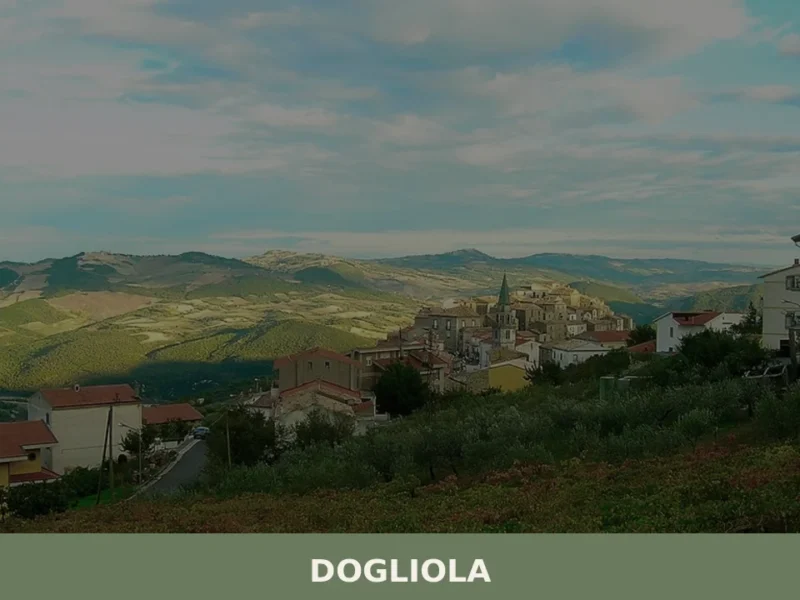
Dogliola
 Hills
Hills
what to see in dogliola, Italy: Discover the 445 m elevation, 311 residents, and San Rocco festival. Explore rich history and stunning landmarks.
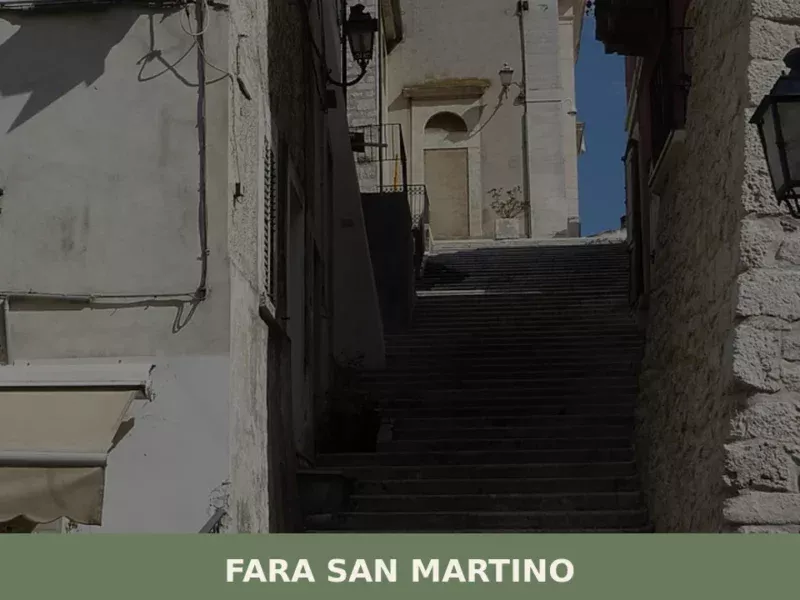
Fara San Martino
Hills
what to see in fara san martino, Italy. Explore its 440m altitude, the Abbey of San Martino in Valle, and its renowned pasta heritage. Discover Abruzzo now!
Castel Castagna
Hills
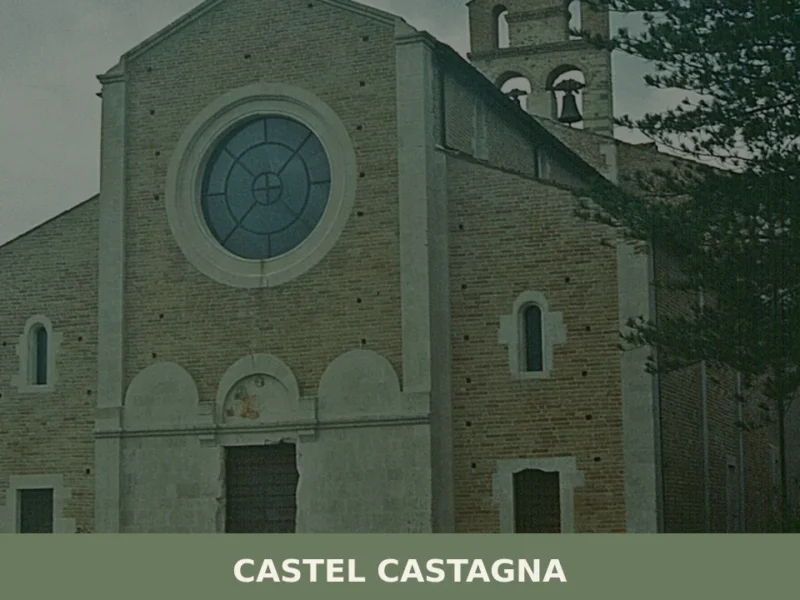
At 452 metres above sea level, on the eastern slope of the Gran Sasso, the municipality of Castel Castagna today counts 429 inhabitants spread between the main settlement and the hamlets scattered along the cultivated hillsides of the province of Teramo. Anyone wondering what to see in Castel Castagna will find answers in a territory […]
Bisegna
Mountain
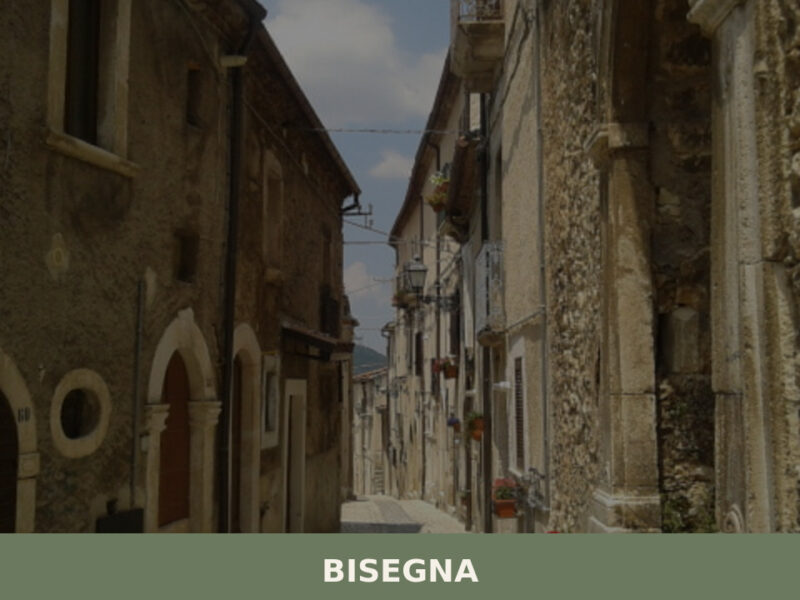
A mountain village of 217 inhabitants at 1,210 metres in Abruzzo's national park. Discover what to see in Bisegna: stone lanes, frescoes, and highland trails.
Borrello
Mountain
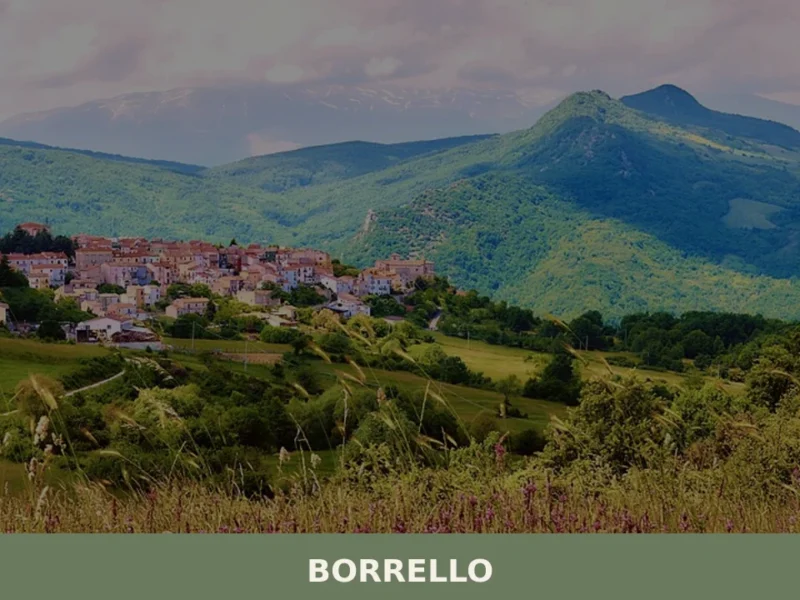
At 804 metres above sea level, on the eastern slope of the Majella massif, 338 inhabitants watch over a settlement that in the eighteenth century counted more than two thousand residents. Anyone looking into what to see in Borrello will find a territory shaped more by geology than by human hands: the Cascate del Verde, […]
Santa Maria Imbaro
 Sea
Sea
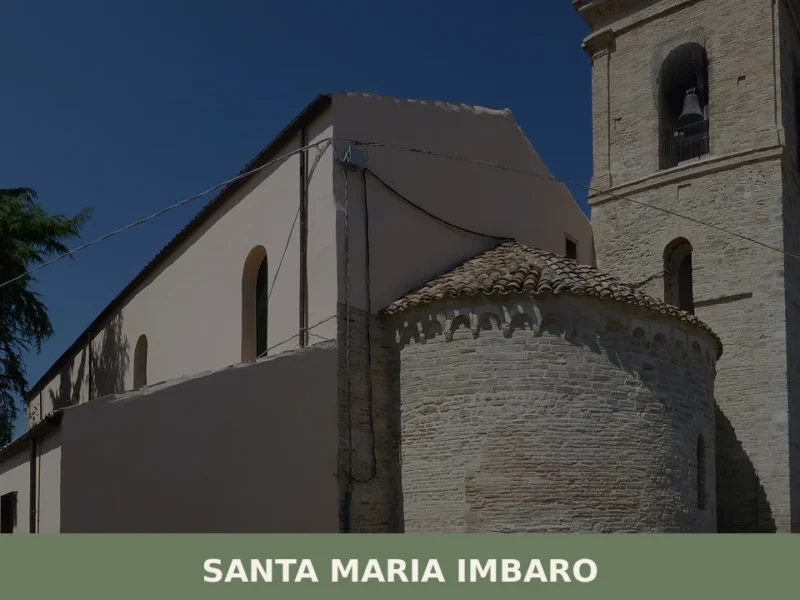
The hill that supports Santa Maria Imbaro stands out sharply against the outline of the Chieti countryside: the low rooftops, the local stone façades and the bell tower of the parish church form a compact silhouette that can be read from the provincial road, even before turning into the village. The local dialect calls it […]
Campli
Hills
What to see in Campli, Abruzzo, Italy: explore the Scala Santa, the Farnese archaeological museum, and the August porchetta festival in this village of 7,167 inhabitants. Discover it all.
Montelapiano
Mountain
What to see in Montelapiano, a village of 75 inhabitants at 740 m above sea level. Discover the Church of San Bonifacio and the Colle Belvedere. Plan your visit to Abruzzo!
Montebello di Bertona
Mountain
What to see in Montebello di Bertona, Italy: Discover a village of 994 inhabitants in Gran Sasso National Park. Explore historic sites and natural trails. Read our guide.
Civitella Messer Raimondo
Mountain
Civitella Messer Raimondo has 769 inhabitants and sits at 613 metres above sea level, on the eastern slope of the Maiella massif, in the province of Chieti. The village’s name still bears that of a medieval feudal lord — Raimondo — who shaped its political fortunes between the 13th and 14th centuries. Understanding what to […]

🏡 Know Quadri better than we do?
If you’re a local or have been there, your knowledge matters: add what’s missing or fix a detail on this page.