


Matera
 Hills
Hills
What to see in Matera, Italy: explore the UNESCO Sassi cave districts, a 52 m cathedral, and rupestrian churches. City of 60,009 in Basilicata. Discover how to get there.
Discover Matera
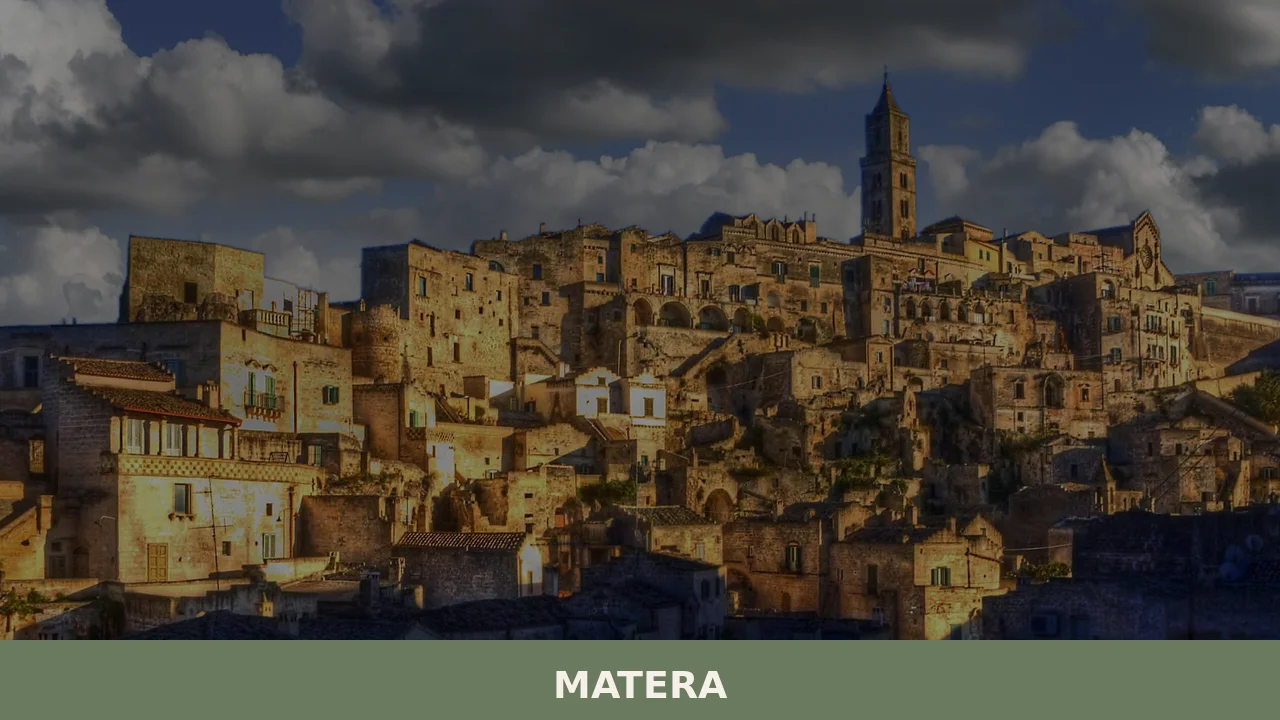
The limestone of the Gravina canyon drops almost vertically, and the rock face is not bare — it is inhabited.
Doorways, carved stairways, and the dark openings of cave rooms layer the cliff in a pattern that no planned city produces.
The two flanking ravines, called grabiglioni, split the slope into distinct zones: Sasso Barisano to the north and Sasso Caveoso to the south, with the high ground of Civita — carrying the cathedral and the administrative core — wedged between them at 401 m (1,316 ft) above sea level.
Deciding what to see in Matera is, above all, a question of depth: how far down the rock you are willing to go, and how far back in time you are prepared to look.
Matera, Basilicata, Italy, stands at a population of 60,009 and holds the status of a UNESCO World Heritage Site awarded in December 1993 for its twin cave districts — the Sassi — and the rupestrian churches cut into the far wall of the Gravina.
Visitors to Matera find a city that has been continuously occupied since at least the eighth millennium BC, one that served as a European Capital of Culture in 2019.
History of Matera
The settlement occupying the Gravina gorge predates written record by a considerable margin. The area was inhabited during the Palaeolithic period, potentially as far back as the tenth millennium BC, making it one of the oldest continuously occupied locations in the Italian peninsula. The formal urban structure, however, has a Roman anchor: the town was established by the Roman general Lucius Caecilius Metellus in 251 BC under the name Matheola.
In the centuries of Magna Graecia that preceded Roman consolidation, the territory maintained close commercial ties with the Greek colonies on the southern coast, functioning as a trade corridor that would persist through the Imperial period.
The medieval centuries brought a succession of ruling powers that left distinct administrative and architectural marks.
In AD 664 the Lombards conquered the city, incorporating it into the Duchy of Benevento.
The seventh and eighth centuries saw Benedictine and Basilian monastic communities carve their churches and meditation chambers directly into the calcarenite rock across the Gravina. Arab forces took the city after the fall of Bari in 840, and it was later reclaimed by Byzantine administration, whose judges and garrisons operated from Matera well into the eleventh century.
A cathedral dedicated to Saint Eustace was consecrated here in May 1082 — the same patron whose feast the city still marks on 20 September. On 25 January 982, the army of Otto II camped outside the walls during its march from Salerno toward Taranto. The Norman period began in 1042, when William Iron Arm was elected count of the city.
The early modern period introduced a sharper social geography.
On 1 October 1497 the city passed into the hands of Giancarlo Tramontano, whose oppressive rule ended violently when the population rebelled and killed Count Giovanni Carlo Tramontano in 1514. The Sassi — the cave districts that today define the city’s identity — were declared unfit for habitation at the turn of the twentieth century, and between 1952 and the 1970s the Italian government forcibly relocated all their residents to new housing on the Piano, the flat western extension of the city.
A law passed in 1986 reversed that policy and opened the Sassi to restoration and reoccupation.
In 1927 Matera became the capital of its own province.
The city’s designation as a European Capital of Culture for 2019, confirmed on 17 October 2014, completed a trajectory from forced evacuation to recognized urban heritage that took less than seventy years.
What to see in Matera, Basilicata: top attractions
The Sassi di Matera
The Sassi span approximately twelve vertical levels across a height of 380 m (1,247 ft), connected by a network of paths, stairways, and shared courtyards called vicinati. What the visitor walks through is not a ruin: it is a functioning urban fabric that grew continuously from prehistoric cave habitations into a complex of carved rooms, cisterns, and facades.
The calcareous rock, soft enough to cut but stable enough to support multiple floors, allowed structures to stack directly above one another — a street in one zone may run across the roof of the dwellings below.
The western approach to the city hides the Sassi entirely; the full scale of the settlement becomes visible only from the canyon rim.
Early morning, before tour groups arrive from the coast, gives the clearest view of the stratification.
Matera Cathedral
The cathedral stands on the Civita, the high promontory between the two Sassi zones, and its 52 m (171 ft) bell tower is the vertical reference point for the entire city. Built between 1268 and 1270 in the Apulian Romanesque style, the facade centres on a rose window divided by sixteen small columns; flanking the main portal stands a statue of the Madonna della Bruna accompanied by figures of Saints Peter and Paul.
The dedication to Santa Maria della Bruna dates to 1389.
Inside, the Latin-cross plan with nave and two aisles carries mainly Baroque decorative work from the eighteenth century, but a fourteenth-century Byzantine fresco depicting the Last Judgement was discovered during more recent restoration work.
The Comune di Matera lists the cathedral as one of the city’s primary cultural assets.
San Pietro Caveoso and San Pietro Barisano
Two churches dedicated to the Apostle Peter stand in the respective Sassi districts: San Pietro Caveoso in the southern Sasso Caveoso, and San Pietro Barisano in the northern Sasso Barisano. San Pietro Barisano underwent a major conservation project funded by American Express and carried out by the World Monuments Fund, which listed Matera’s rupestrian churches in its 1998 World Monuments Watch.
During that restoration, the main altar and interior frescoes were cleaned, and missing sections of mouldings and decorative reliefs were reconstructed using photographic archives and surviving fragments.
The simpler cave churches across the ravine — some reduced to a single altar and a weathered fresco — represent the monastic tradition of the Basilian and Benedictine communities that colonised these cliffs from the seventh century onward.
The Gravina Canyon and the Rupestrian Churches
The Gravina river canyon forms the physical and geological boundary between the hill country of Basilicata to the southwest and the Murgia plateau of Apulia to the northeast.
It was the canyon’s western limestone face that first attracted cave-dwellers and later monks, who carved entire complexes of underground chambers into the rock on the far side of the gorge, away from the inhabited Sassi. These rupestrian churches, cut into the calcarenite, are found across this wider zone and extend into the neighbouring region of Apulia.
They were included alongside the Sassi in UNESCO’s World Heritage designation of December 1993.
Reaching many of them requires descending into the ravine on foot; the terrain is steep and uneven, and appropriate footwear is necessary regardless of season. Visitors exploring Chiaromonte, a hill village in the southern part of Basilicata, encounter comparable rupestrian landscape features in the region’s broader geological context.
Castello Tramontano
The Castello Tramontano sits at the convergence point where the two grabiglioni — the streams that divide the Sassi districts — originate before descending toward the canyon.
The fortification is named for Giancarlo Tramontano, the count to whom the city was sold on 1 October 1497, and whose son Giovanni Carlo was killed by the population in the rebellion of 1514. The castle was never completed; construction halted with the count’s death, and today the structure remains in a state of partial ruin.
Its position on the high ground makes it a useful orientation point for understanding the topography of the Sassi below.
The unfinished walls and exposed construction phases make the medieval building sequence legible in a way that a restored monument rarely allows.
Local food and typical products of Matera
The food culture of the Matera area reflects the province’s position at the intersection of two distinct landscapes: the calcareous hills of Basilicata and the flatter grain-growing terrain of the Murgia plateau to the northeast.
This dual geography produced a kitchen built primarily on cereals, legumes, and sheep farming, with influences from the successive cultural presences — Byzantine, Norman, Aragonese — that governed the city across the medieval centuries. The peasant population that inhabited the Sassi until the forced relocations of the 1950s ate what the land and animals of the Gravina hinterland produced, and those ingredients have remained central to the province’s table.
Bread holds a specific place in Matera’s culinary identity. Pane di Matera is produced from durum wheat semolina, shaped into a form locally called cornetto or alto, with a thick golden crust and a dense, slightly irregular yellow crumb.
It is baked in wood-fired stone ovens and keeps well for several days, a quality that made it practical for rural households with limited access to daily markets.
Crapiata is a traditional legume and cereal soup, historically prepared on 1 August using the surplus grains and pulses of the harvest — wheat, chickpeas, broad beans, lentils, and dried corn — simmered together with minimal seasoning.
Peperoni cruschi, thin-fleshed dried sweet peppers from the Senise variety, are fried briefly in olive oil until they turn crisp and are served as a garnish over pasta or eaten alone as a dry snack. The texture is closer to a cracker than a cooked vegetable. Agnello al forno, oven-roasted lamb with potatoes and wild herbs, draws directly on the sheep-farming tradition of the Lucanian interior.
The province produces several items with certified geographic recognition. Olive oil from the Matera area, particularly varieties based on the Maiatica and Ogliarola cultivars, is part of the broader Basilicata oil tradition.
Pecorino cheeses produced from the milk of sheep grazing on the plateau’s pastures represent a pastoral continuity that extends across the entire region.
Visitors interested in tracing these products to their rural production contexts can reach the agricultural hinterland within 30 km (18.6 mi) of the city center, where smaller producers operate family-run farms.
The local market in Matera runs on weekday mornings and is the most practical setting for purchasing seasonal produce, dried legumes, and local cheeses directly from provincial suppliers.
The period from September through November corresponds both to the grape and olive harvest and to the availability of locally pressed oil, making it the most productive season for food-focused visitors. Several agriturismi — farm-stay operations with on-site restaurants — operate within the province and serve fixed menus based on what the farm produces in a given week.
Festivals, events and traditions of Matera
The central festival of Matera’s civic calendar is the Festa della Madonna della Bruna, held on 2 July in honour of the city’s patron.
The celebration involves a formal procession in which a decorated cart carrying the image of the Madonna is pulled through the streets of the city. At the end of the procession, the cart is ritually torn apart by the crowd — a tradition documented over several centuries and considered an integral part of the festival’s structure rather than a disruption of it.
The night ends with a fireworks display over the Gravina canyon.
The cathedral, dedicated to Santa Maria della Bruna since 1389, is the liturgical focus of the day.
The second patron saint, Eustachio (martire), is commemorated on 20 September, a date that corresponds to the original dedication of the cathedral of Saint Eustace consecrated in May 1082.
This feast draws a smaller public than the July celebration but maintains its liturgical observance. The designation of Matera as a European Capital of Culture in 2019 brought a significant expansion of the city’s events calendar that year, including concerts, art installations, and international cultural programming centred on the Sassi and the surrounding canyon landscape. The urban fabric of the cave districts served as the stage for much of that programming.
When to visit Matera, Italy and how to get there
The best time to visit Matera, Italy is the period from April to June and from September to October. Spring brings mild temperatures across the Basilicata hill country, and the canyon vegetation on the Gravina walls is at its fullest without the heat that July and August carry at 401 m (1,316 ft) elevation.
Autumn overlaps with the harvest season, which makes the local markets and farm operations more active.
July, while coinciding with the Madonna della Bruna festival on the 2nd, also marks the beginning of the most crowded and hottest weeks; visitors who prioritise the festival experience should book accommodation several months in advance.
Winter is quiet and occasionally cold, but the Sassi empty of tourist groups between December and February, which makes the topography easier to read without crowds.
Matera lies approximately 65 km (40.4 mi) from Taranto and around 230 km (143 mi) from Naples. From Rome, the distance by road is approximately 380 km (236 mi), making it feasible as an overnight stop rather than a strict day trip. For those travelling from the north, Bari — roughly 65 km (40.4 mi) to the northeast — is the most practical transit hub, served by high-speed rail connections from Milan, Rome, and Naples.
From Bari, Matera is reachable by the Ferrovie Appulo Lucane regional rail service, which runs between Bari Centrale and Matera Sud with a journey time of approximately 1 hour 30 minutes.
By car, the SS7 Appia and the SS99 provide the main road access from the Taranto and Bari directions respectively.
There is no motorway exit directly at Matera; the nearest access points are on the A14 Bologna–Taranto motorway, with the Taranto or Bari Sud exits followed by provincial roads. International visitors should note that English is not widely spoken in smaller shops and local cafes; carrying a supply of euros in cash remains practical for markets, smaller restaurants, and rural stops.
Where to stay near Matera
The Sassi themselves now contain a range of hotels, bed and breakfast establishments, and cave-room rentals carved directly into the calcarenite — accommodation types that did not exist before the 1986 restoration law. Staying within the Sasso Barisano or Sasso Caveoso places guests at walking distance from the main churches and the canyon rim, though the paths between cave levels are steep and uneven.
The Piano — the flat modern section of the city to the west — holds conventional hotels with easier vehicle access.
For visitors exploring the broader province, agriturismo facilities in the surrounding countryside offer an alternative base, particularly useful for those combining Matera with a tour of the Basilicata interior.
Visitors passing through the southern reaches of the region can extend their itinerary to include Castelgrande, a smaller hill settlement that offers a contrasting scale to the urban complexity of the Sassi.
The wider circuit of Basilicata hill villages rewards those with several days available. Travellers moving through the region may also find it worth combining a visit to Matera with a stop at Abriola, a small Lucanian comune at higher elevation in the Apennine foothills, or at Cersosimo, which sits in the Sinni valley in the southern section of the province. Both represent the quieter agricultural landscape that surrounds Matera’s more internationally known cave city — and that puts the scale of what to see in Matera itself in clearer regional perspective.
Frequently asked questions about Matera
What is the best time to visit Matera?
Spring (April–June) and early autumn (September–October) offer mild temperatures ideal for exploring the Sassi on foot. July 2 is unmissable: the Festa della Madonna della Bruna, Matera's most spectacular event, fills the Sassi with processions and fireworks. September 20 marks the feast of Sant'Eustachio, a quieter but historically significant celebration. August draws large crowds and heat can be intense. Winter visits reward those seeking the Sassi without queues, though some rupestrian churches may have reduced access.
What are the historical origins of Matera?
Matera is one of the oldest continuously occupied settlements in the world, with traces of Palaeolithic habitation dating potentially to the tenth millennium BC. The formal town was founded by Roman general Lucius Caecilius Metellus in 251 BC as Matheola. The city passed through Lombard, Arab, Byzantine, and Norman rule before the medieval period. In 1082 a cathedral dedicated to Saint Eustace was consecrated. Matera became a provincial capital in 1927 and received UNESCO World Heritage status in December 1993 for its Sassi cave districts.
What to see in Matera? Main monuments and landmarks
Top sights include the Sassi di Matera (Sasso Barisano and Sasso Caveoso), two UNESCO-listed cave districts spanning twelve vertical levels; the Cathedral on the Civita promontory, built 1268–1270 in Apulian Romanesque style with a 52 m bell tower; the rupestrian churches carved into the Gravina canyon walls; San Pietro Caveoso and San Pietro Barisano; and Castello Tramontano, the unfinished 15th-century fortress. Many rupestrian churches require a steep descent into the ravine — sturdy footwear is essential year-round.
What are the main natural or scenic attractions of Matera?
The Gravina canyon is Matera's defining natural feature: a dramatic limestone gorge forming the boundary between the Basilicata hill country and the Apulian Murgia plateau. The canyon walls host dozens of rupestrian churches carved into calcarenite rock, included in the 1993 UNESCO designation. Accessing the far canyon face requires descending on foot via steep, uneven terrain. The Murgia plateau across the gorge offers open views over the entire Sassi settlement, best reached via the strada panoramica on the plateau rim.
Where to take the best photos in Matera?
The canyon rim on the Murgia plateau side delivers the most complete panorama of the Sassi layered against the calcarenite cliff — this is the classic postcard viewpoint. Within the city, the Belvedere di Murgia Timone and the terrace near San Pietro Caveoso offer elevated angles over Sasso Caveoso and the ravine. Early morning light is recommended: the Sassi face east and catch the rising sun directly, while tour groups from the coast typically arrive mid-morning. The Cathedral bell tower serves as a fixed vertical reference in almost every composition.
Are there museums, churches or historic buildings to visit in Matera?
Matera's main religious and historic buildings include the Cathedral (1268–1270, Apulian Romanesque, with a 14th-century Byzantine fresco of the Last Judgement); San Pietro Barisano, which underwent a major restoration funded by American Express and the World Monuments Fund; and San Pietro Caveoso in the southern Sassi district. Castello Tramontano, never completed after Count Giovanni Carlo Tramontano's death in 1514, remains partly accessible on the high ground. The rupestrian churches across the Gravina represent Byzantine and Benedictine monastic heritage dating from the 7th century.
What can you do in Matera? Activities and experiences
Walking the Sassi via the network of stairways, paths, and shared vicinati courtyards is the core experience. Descending into the Gravina ravine on foot to reach rupestrian churches requires at least two to three hours and appropriate footwear. The city offers guided tours of cave dwellings, several converted into museums or hotels. Food experiences centre on local bakeries producing Pane di Matera from wood-fired ovens, and restaurants serving crapiata legume soup. The Festa della Madonna della Bruna on 2 July includes a chariot procession that draws visitors from across southern Italy.
Who is Matera suitable for? Families, couples, hikers, solo travelers?
Matera suits a wide range of visitors. Couples and cultural travellers are drawn by the UNESCO heritage status, the dramatic canyon scenery, and the cave hotels in the Sassi. History enthusiasts will find one of Europe's longest continuous occupation records, from Palaeolithic caves to a 2019 European Capital of Culture. Hikers can explore the Gravina ravine and the Murgia plateau trails. Families should note that the Sassi involve significant stair climbing and uneven surfaces, making access challenging with pushchairs. Solo travellers benefit from Matera's compact historic centre and well-developed tourism infrastructure.
What to eat in Matera? Local products and specialties
Pane di Matera is the city's most distinctive product: a durum wheat semolina loaf with a thick golden crust and dense yellow crumb, baked in wood-fired stone ovens and kept fresh for several days. Crapiata is a traditional legume and cereal soup — wheat, chickpeas, broad beans, lentils, and dried corn — historically prepared on 1 August from harvest surplus. The local kitchen reflects Basilicata's sheep-farming and cereal-growing heritage, with Byzantine, Norman, and Aragonese culinary influences accumulated across the medieval centuries of the city's history.
Nearby Villages near Matera
In Basilicata More villages to discover
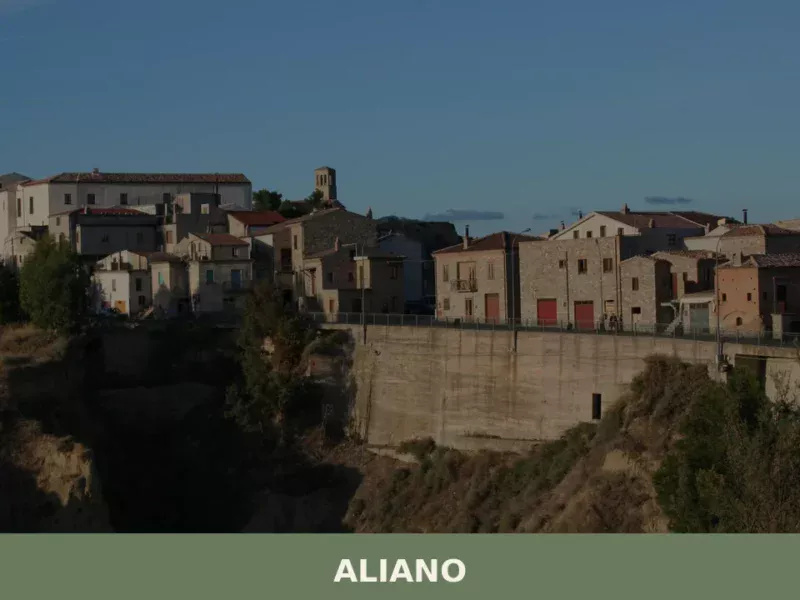
Aliano
Hills
Discover what to see in Aliano, Basilicata: Carlo Levi's exile house, the dramatic calanchi landscape, local olive oil culture and practical travel tips.
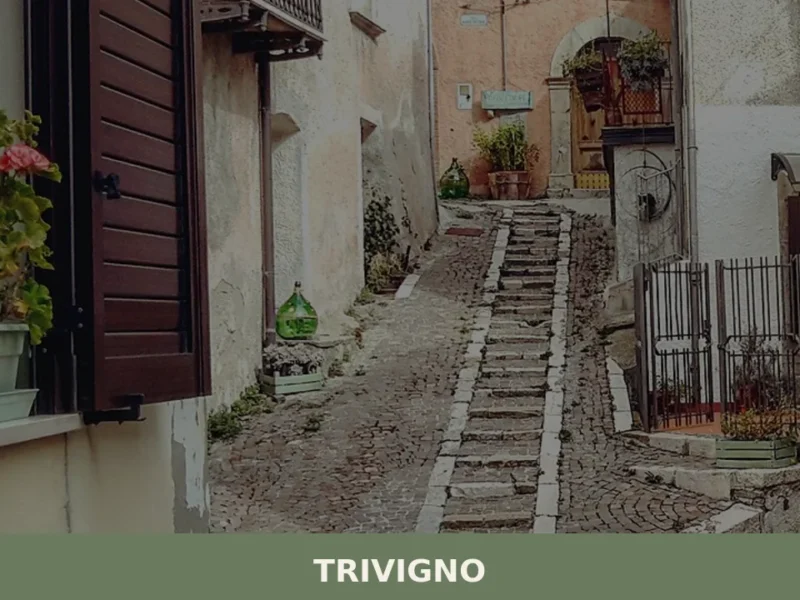
Trivigno
 Mountain
Trivigno has a current population of 570 and occupies a ridge at 725 metres above sea level in the middle Basento valley, in the province of Potenza. Its territory extends across fields of durum wheat and Turkey oak woods covering the eastern slopes up to the borders with neighbouring municipalities. Those looking for what to […]
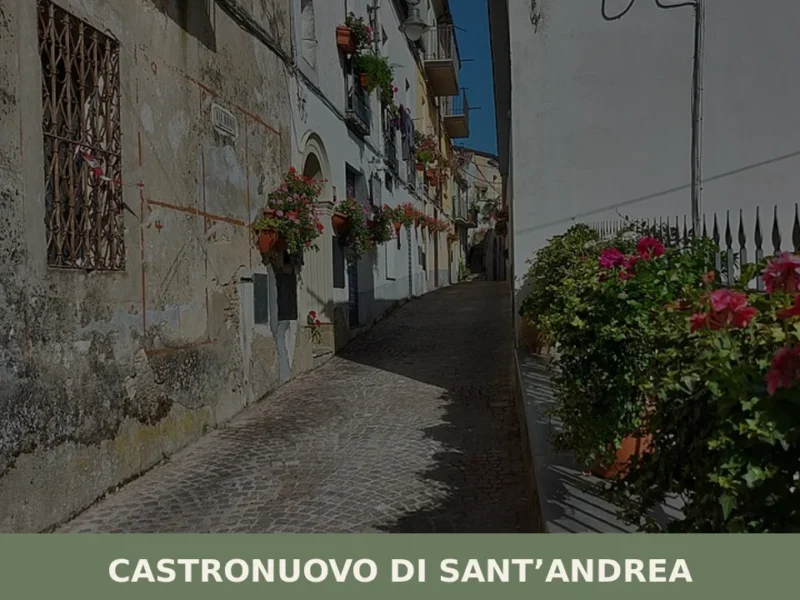
Castronuovo di Sant’Andrea
Mountain
With a population of 1,111 inhabitants, Castronuovo di Sant’Andrea is a Lucanian town located in the province of Potenza, in the heart of the southern Apennines. The settlement, whose origins are lost in the folds of history, presents an urban structure that reflects centuries of layers. For those wishing to understand the essence of this […]
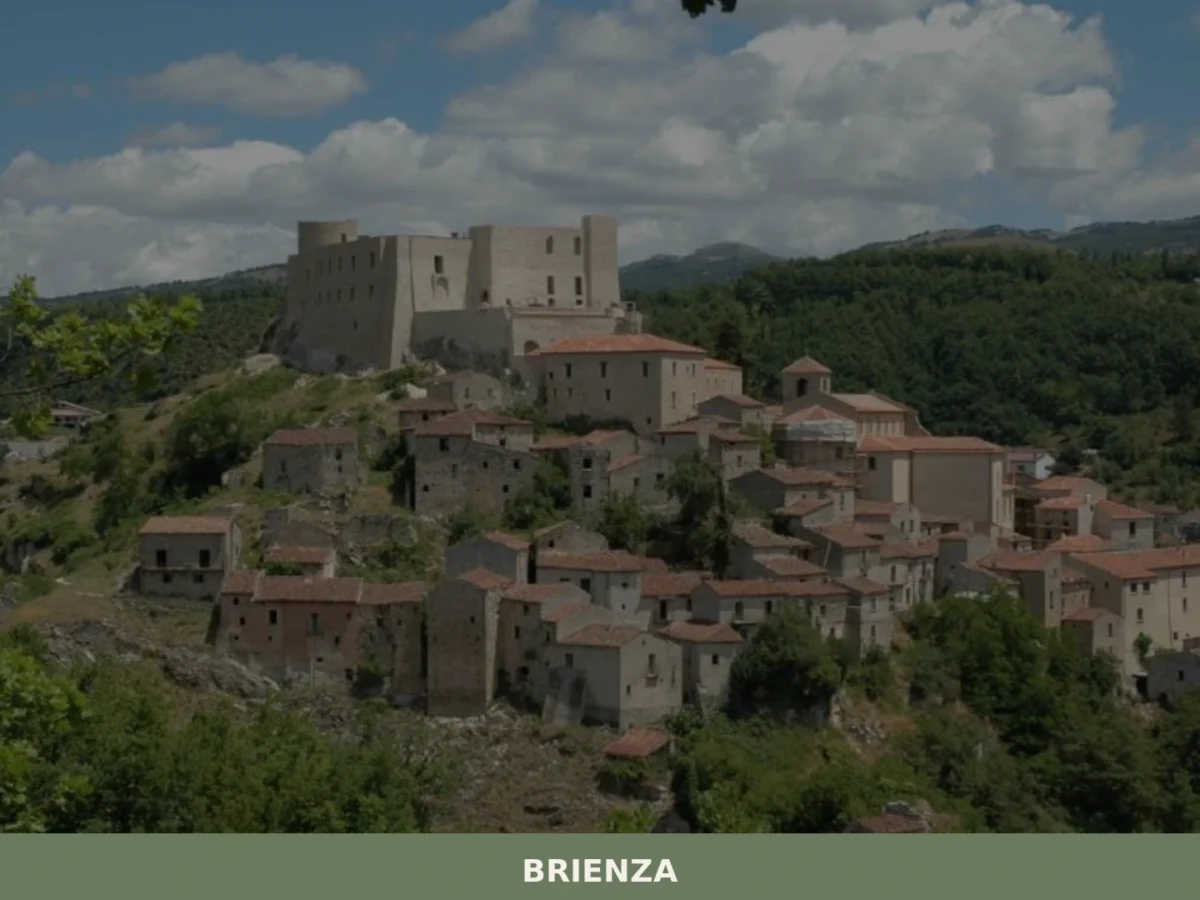
Brienza
Mountain
What to see in Brienza? Explore 5 historic points of interest in this Basilicata village. Discover Caracciolo Castle and ancient churches. Plan your visit!
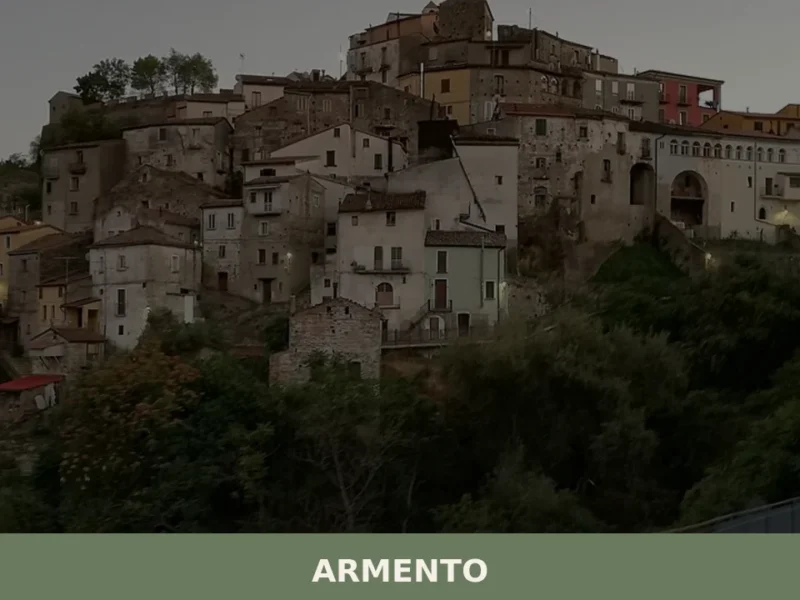
Armento
Mountain
In 1814, a farmer unearthed a Lucanian funerary assemblage dating to the 4th century BC in the countryside around Armento: a golden crown, now held at the Antikensammlung in Munich, which confirmed the presence of a high-ranking Italic settlement in this part of the Val d’Agri. The village sits at 710 metres above sea level […]
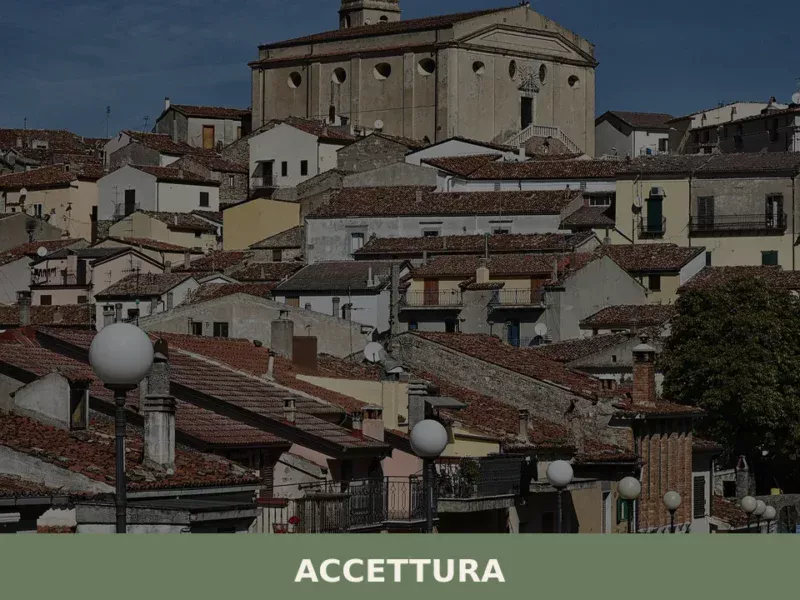
Accettura
Mountain
Discover what to see in Accettura, Basilicata: the Maggio festival, Gallipoli Cognato forest, local food and practical travel tips for this Matera province village.

Garaguso
Mountain
What to see in Garaguso, Italy: a hilltop comune at 460 m with a Greek Heroon, an 18th-century palace, and Iron Age finds. Discover the top attractions now.
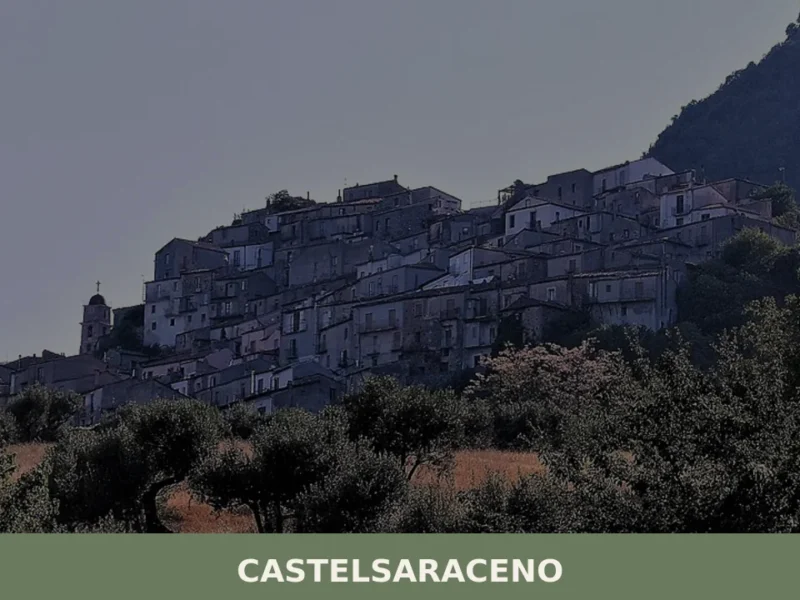
Castelsaraceno
Mountain
What to see in Castelsaraceno, Italy? Explore this mountain village at 916 m (3,005 ft) altitude. Discover the 586 m (1,923 ft) Tibetan Bridge and its historic core. Read our guide.
Bernalda
 Sea
Sea
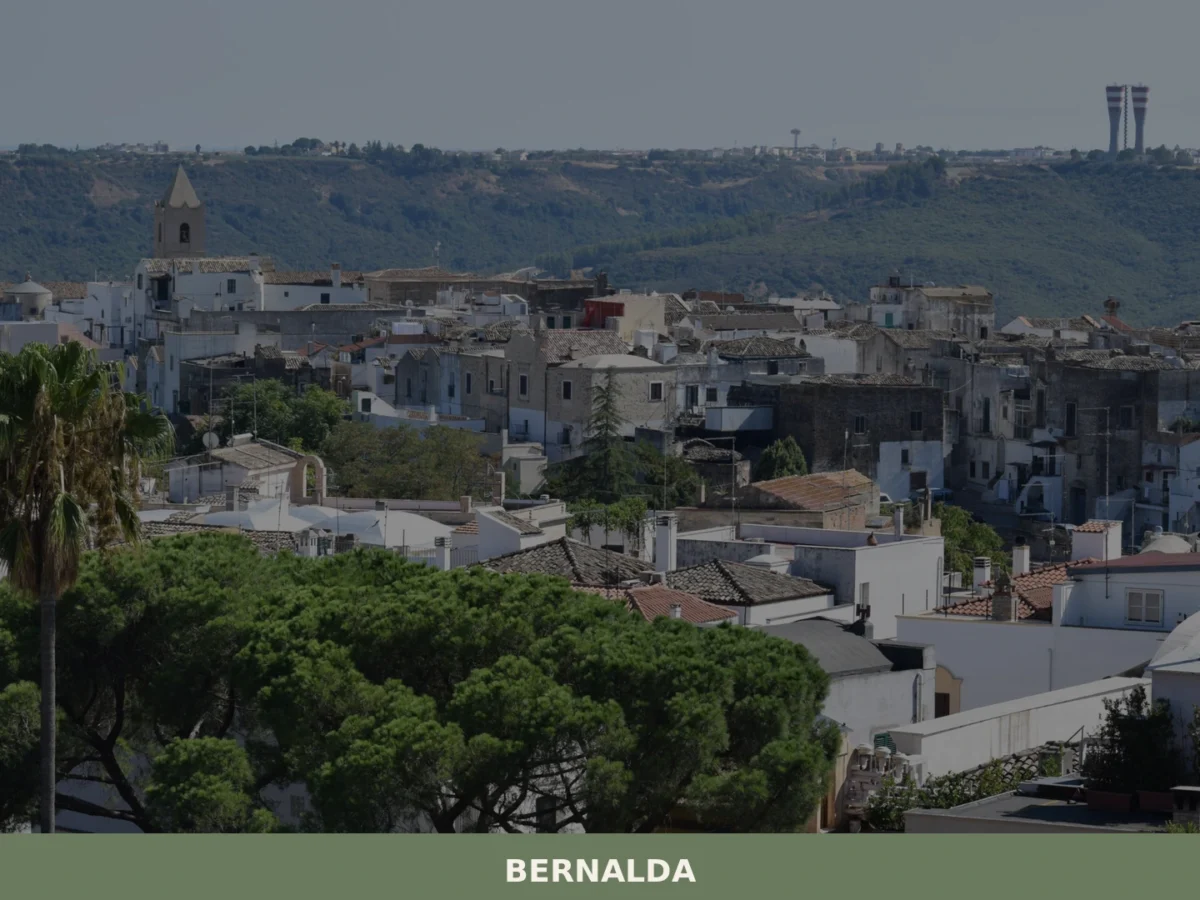
What to see in Bernalda: 5 attractions in this Basilicata village, from the historic center to Metaponto. Discover the complete guide and plan your visit.
Brindisi Montagna
Mountain
Discover Amaro, a picturesque village in Friuli Venezia Giulia, Italy. Explore its history, stunning Alpine scenery, and authentic Italian mountain culture.

🏡 Know Matera better than we do?
If you’re a local or have been there, your knowledge matters: add what’s missing or fix a detail on this page.