


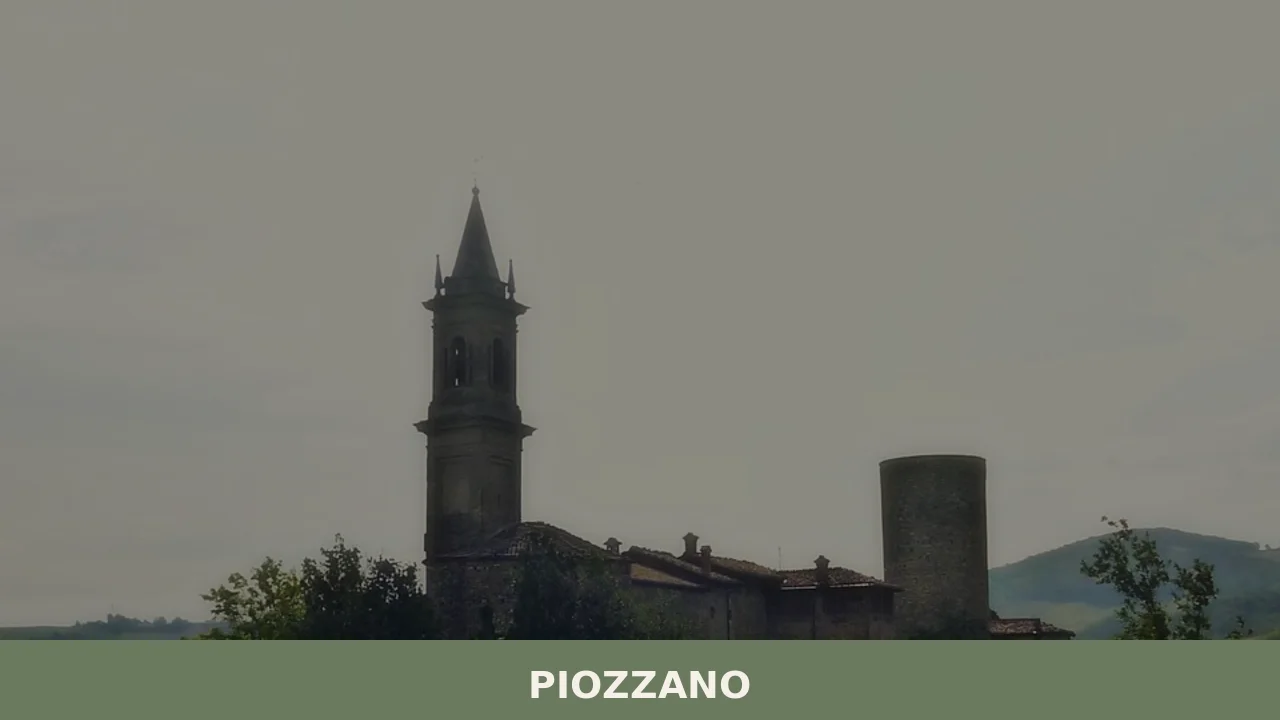
Piozzano
Piozzano, a village in Emilia-Romagna with 645 inhabitants, is situated at an elevation of 222 meters above sea level within the province of Piacenza. This location places it amidst the agricultural landscape of the Piacentine hills, where the transition from the Po Valley to the Apennine foothills is evident. For those considering what to see […]
Discover Piozzano
Piozzano, a village in Emilia-Romagna with 645 inhabitants, is situated at an elevation of 222 meters above sea level within the province of Piacenza. This location places it amidst the agricultural landscape of the Piacentine hills, where the transition from the Po Valley to the Apennine foothills is evident. For those considering what to see in Piozzano, the village offers a perspective on rural life and the characteristic architectural forms of the region, distinct from larger urban centres.
History of Piozzano
The name Piozzano likely derives from Roman land divisions or early settlements, a common etymological pattern in the Emilia-Romagna region, which was extensively colonised during the Roman Republic and Empire. While specific historical records detailing the precise foundation of Piozzano are scarce, its development would have mirrored that of many small rural communities in the Piacenza area, evolving from agricultural nuclei.
During the medieval period, the territory around Piozzano, like much of Emilia-Romagna, experienced a succession of feudal lords and shifting allegiances between powerful families and city-states such as Piacenza. These centuries saw the construction of defensive structures and the consolidation of small hamlets into more defined villages. Piozzano’s modest size suggests it remained primarily an agricultural centre, its economy tied to the cultivation of the surrounding land and the modest trade networks that connected it to larger towns.
What to see in Piozzano: 5 points of interest
The Main Parish Church
The village’s primary place of worship, often dedicated to a local patron saint, typically features architectural elements common to rural Emilia-Romagna. Expect a structure with a simple facade, perhaps incorporating local stone, and a bell tower that serves as a visual reference point for the community. Its interior generally houses religious art and devotional objects collected over centuries of local worship.
The Central Piazza
Every Italian village possesses a central gathering space, and Piozzano is no exception. This open area provides a focal point, often bordered by the main church, municipal buildings, or older residential structures. It functions as a communal space for daily interactions and local events, reflecting the village’s social rhythm.
Traditional Village Architecture
A walk through Piozzano’s lanes reveals residential buildings constructed from materials characteristic of the Piacentine hills, such as rough-hewn stone and plaster. These structures often feature terracotta roof tiles and wooden shutters, displaying a functional aesthetic developed over generations to suit the local climate and available resources. Observing these buildings provides insight into regional construction heritage.
Views of the Piacentine Hills
From its elevation of 222 meters above sea level, Piozzano offers perspectives on the surrounding agricultural landscape. The undulating hills, marked by vineyards and cultivated fields, stretch towards the horizon. These views provide a sense of the region’s topography and its primary economic activities, connecting the village directly to its natural environment.
The Agricultural Landscape
Beyond the immediate cluster of buildings, Piozzano is surrounded by the working farmlands that define its existence. Observing the vineyards, orchards, and fields offers a direct connection to the village’s agricultural roots. The patterns of cultivation and the presence of farmsteads illustrate the ongoing interaction between the community and the land it cultivates.
Local food and typical products
The culinary identity of Piozzano is deeply integrated into the broader gastronomic traditions of the Piacenza province, itself a significant part of Emilia-Romagna’s rich food heritage. The region is renowned for its cured meats, including Salame Piacentino DOP, Coppa Piacentina DOP, and Pancetta Piacentina DOP, all produced according to specific methods. These products are often served as antipasti, accompanied by local bread or the traditional fried dough known as “gnocco fritto.”
Pasta dishes are central to the local diet, with specialties such as “tortelli con la coda” (tortelli with a characteristic twisted shape), “anolini in brodo” (small, filled pasta served in broth), and various risottos. The Piacentine hills are also a wine-producing area, yielding varieties such as Gutturnio, Ortrugo, and Malvasia, which complement the regional cuisine. While Piozzano itself does not host large dining establishments, smaller trattorias or agriturismi in the immediate vicinity often serve these traditional dishes, prepared with local ingredients. For further information on regional produce, consult the Emilia-Romagna Tourism board.
Best time to visit Piozzano
The climate in the Piacentine hills, where Piozzano is situated, is characterised by warm, sometimes humid summers and relatively mild winters. Spring (April to June) and autumn (September to October) generally offer the most pleasant conditions for exploration, with moderate temperatures and the landscape displaying either fresh greenery or autumnal colours. These periods are suitable for walking through the village and observing the surrounding agricultural areas.
Summer months (July and August) can be hot, with temperatures occasionally exceeding 30°C. Winter (November to March) brings cooler temperatures, and while snow is not frequent in the village itself, it can occur in the higher hills. Local festivals celebrating harvest or religious holidays may take place, but specific dates vary annually. Visitors should be prepared for walking on uneven surfaces, and comfortable footwear is advisable.
How to get to Piozzano
Piozzano is accessible primarily by road. The nearest major city is Piacenza, approximately 20-25 kilometres away, from which local roads lead to the village. Piacenza is well-connected by the A1 (Autostrada del Sole) and A21 (Autostrada dei Vini) motorways. For those travelling by train, the closest station is Piacenza, which has regular connections to major Italian cities such as Milan, Bologna, and Turin. From Piacenza station, a rental car or local bus services (though less frequent to smaller villages) would be necessary for the final leg of the journey.
The nearest international airports are Milan Linate (LIN) and Milan Malpensa (MXP), both approximately 80-120 kilometres north of Piacenza, and Bologna Guglielmo Marconi Airport (BLQ), about 150 kilometres to the southeast. Driving from these airports to Piozzano typically takes between 1.5 to 2 hours. For detailed route planning, consult a mapping service or the English Wikipedia page for Piacenza.
More villages to discover in Emilia-Romagna
Emilia-Romagna is home to numerous villages, each presenting its own characteristics shaped by geography, history, and local economy. While Piozzano offers a glimpse into the agricultural heartland of Piacenza, other communities in the region provide different perspectives on Italian rural life.
For instance, Cerignale, another village within Emilia-Romagna, offers a contrasting experience. Situated at a higher altitude within the Trebbia Valley, Cerignale reflects a more mountainous environment and a distinct set of traditions and architectural styles, illustrating the diverse landscapes and human settlements found across this broad northern Italian region. Exploring these varied locations contributes to a comprehensive understanding of Emilia-Romagna’s cultural and environmental fabric.
In Emilia-Romagna More villages to discover
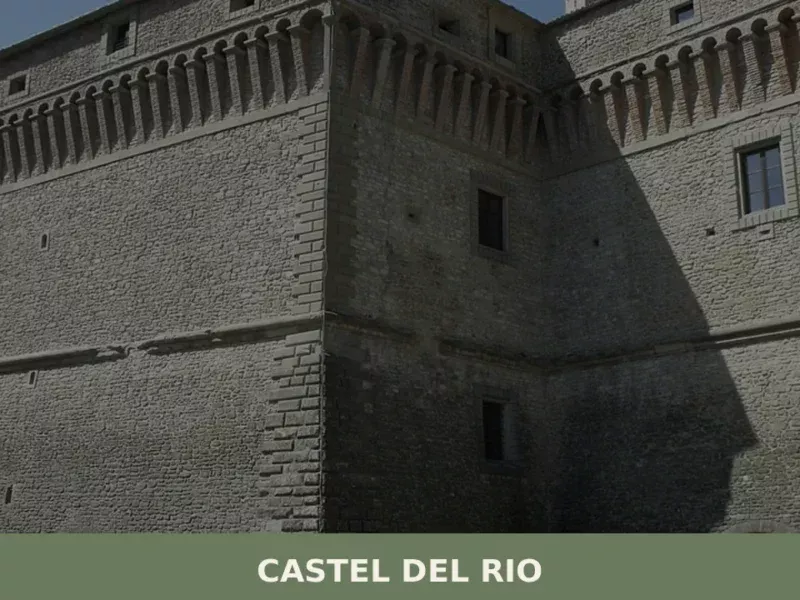
Castel del Rio
In 1290, the Alidosi family obtained imperial control over a fortified outpost in the Santerno valley, a transit point between Romagna and Tuscany. That stronghold, which over the following centuries became a fortress, a village and eventually an autonomous municipality, is now Castel del Rio: 1,215 inhabitants at 215 metres above sea level, in the […]
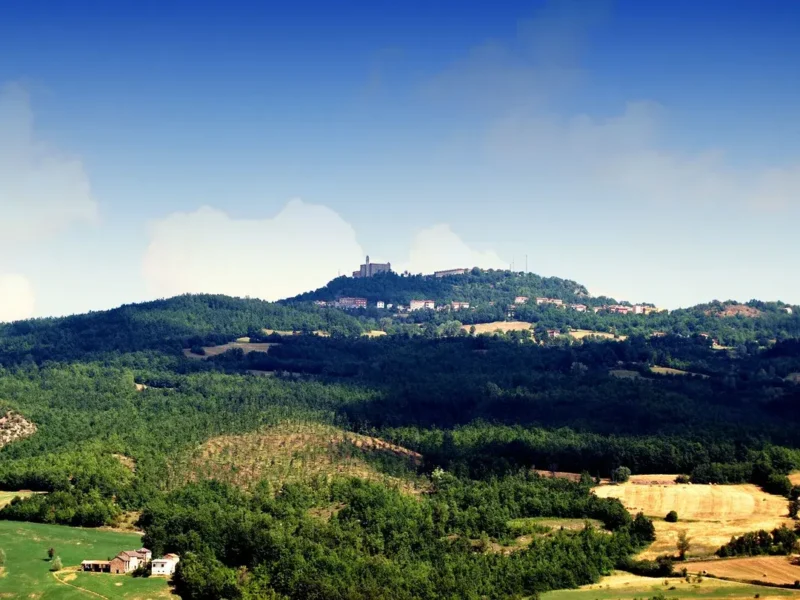
Farini
What to see in Farini, a village at 424 m in Val Nure with 1,043 residents: San Giuseppe Church, Apennine trails, PDO cured meats. Plan your visit and how to get there.
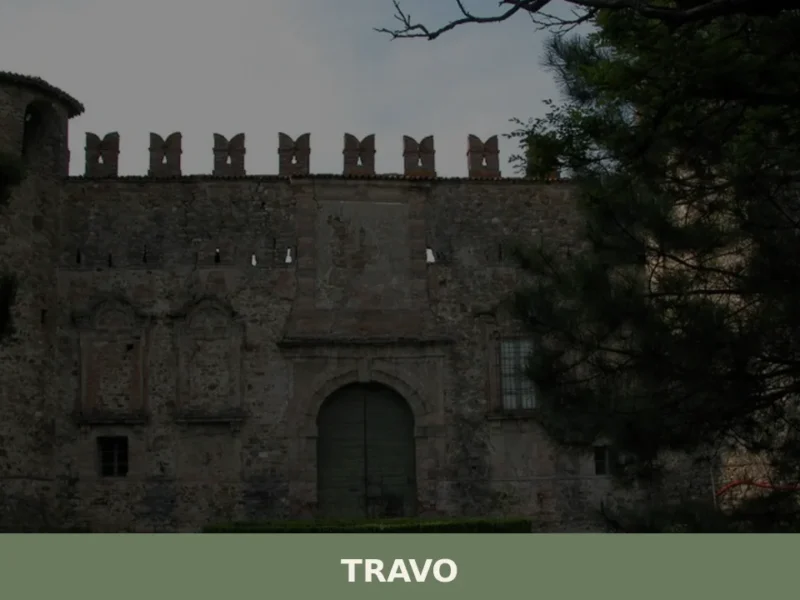
Travo
At 171 metres above sea level, in the lower Val Trebbia, Travo is one of those centres in the province of Piacenza where the historical layers of the past surface in visible, tangible ways: from pre-Roman foundations to the medieval domains of the Malaspina and Landi families, with traces of the Matildine Middle Ages in […]
📝 Incorrect information or updates?
Help us keep the Piozzano page accurate and up to date.