


Roccaromana
Discover what to see in Roccaromana, a Campanian plain village in the province of Caserta. Explore the history, attractions, and typical cuisine of this center with 893 inhabitants.
Discover Roccaromana
With its 893 inhabitants recorded in the most recent census, Roccaromana, in the province of Caserta, is an inhabited center on the Campanian plain, developed at 180 meters above sea level. Its geographical position, not far from the main arteries of the Caserta area, has influenced its historical development, mainly linked to agriculture and the dynamics of the surrounding territory. Exploring its urban fabric allows one to understand the stratifications that define its identity.
Those interested in learning more about what to see in roccaromana will find traces of an agrarian and religious past, elements that still shape its profile today.
History and Origins of Roccaromana
The name “Roccaromana” suggests an etymology referring to a “rocca” or fortification and a connection to the Roman presence, a plausible hypothesis considering the density of Roman-era settlements and communication routes in Campania. Although specific details about its origins are sometimes fragmentary, it is reasonable to place the development of the inhabited nucleus within a context of gradual consolidation, typical of rural centers that emerged to control and cultivate the surrounding lands.
Over the centuries, Roccaromana has shared the historical events of the province of Caserta, passing under various dominations and influences that have left marks on its architecture and social organization. Its status as a plain village determined an economy based on agriculture, an element that shaped the landscape and customs of the community.
The patron saint festivals dedicated to Saint Catald and Our Lady of the Snow, on May 10th and August 5th respectively, highlight the persistence of religious traditions that still mark the civil and spiritual calendar of the place today.
For more information on the history and administrations of Roccaromana, you can consult the dedicated page on Wikipedia Italy or the official website of the Municipality.
What to see in Roccaromana: 5 main attractions
For those wondering what to see in roccaromana, the village offers several points of interest that reflect its history and its identity as an agricultural and religious center.
Parish Church of Saints Catald and Our Lady of the Snow
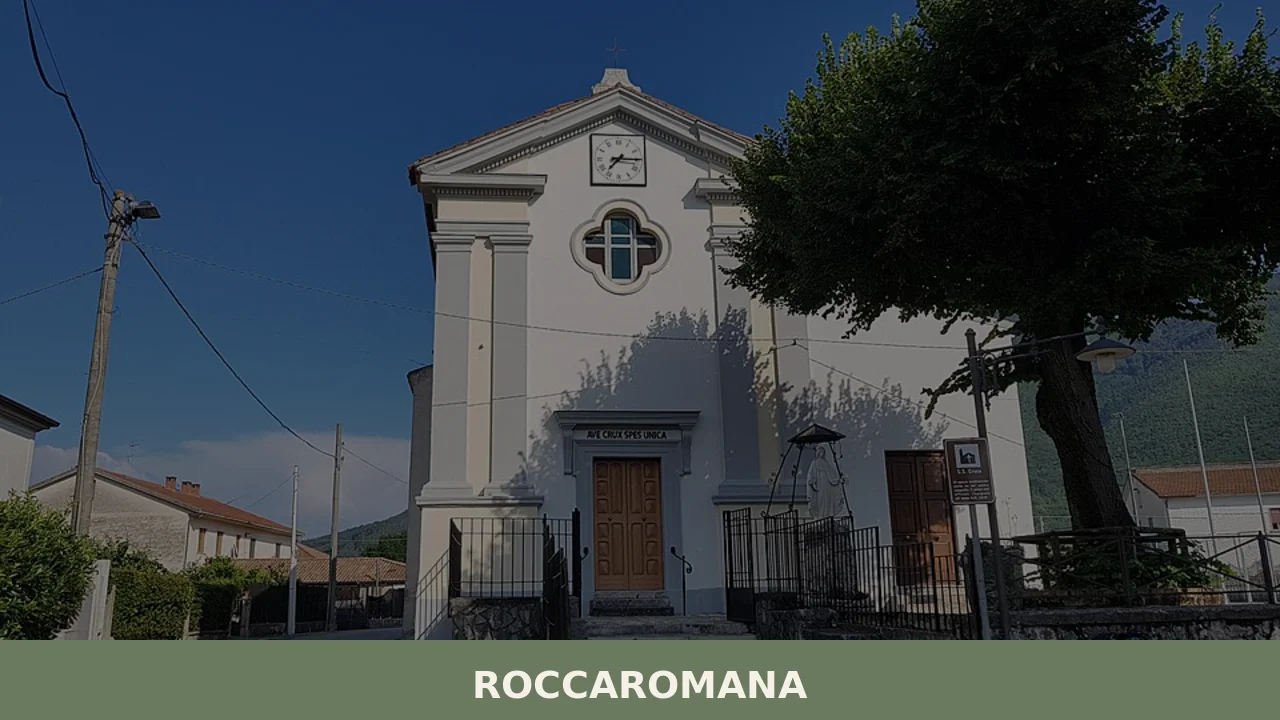
The main church of the village, dedicated to the patron saints, represents the center of religious life.
Its structure, which has probably undergone alterations over the centuries, features architectural elements that testify to the different eras of construction and restoration. The interior houses sacred furnishings and minor artworks linked to local devotion.
The Town Hall
The seat of local institutions, the Town Hall is a building that, despite its simplicity, expresses the civic function of the village. Its architecture reflects the typical style of public buildings in smaller centers, with a facade overlooking one of the most significant spaces in the town.
The Main Square of the Village
Every inhabited center has its focal point, and in Roccaromana, this is represented by the main square. The most important buildings, from the church to the civic palace, face onto it, and much of the community’s social life takes place here. It is the venue for events and celebrations, including moments of the patron saint festivals.
Traces of Ancient Fortifications
The very name of the village, “Roccaromana,” suggests the presence of a defensive structure.
Although there is no intact castle, it is possible to identify fragments of walls or the conformation of the urban fabric that suggest the existence of an original fortification, perhaps a fortress or a watchtower, which once protected the settlement.
The Public Fountain
An essential element in the life of every rural community, the public fountain was once the main water supply point. The one in Roccaromana, with its stone structure, represents an example of functional architecture that has served the population for generations and is still a reference point in the town today.
Typical Cuisine and Local Products
The cuisine of Roccaromana is part of the gastronomic tradition of inland Campania, with a strong connection to local produce. As a plain village in the province of Caserta, the diet has historically been based on cereals, legumes, and vegetables cultivated in the surrounding fields. Hearty and simple dishes characterize the table, with preparations that highlight seasonal ingredients.
Local products include various types of legumes, such as chickpeas and beans, often used in soups and stews.
Local olive oil, obtained from the area’s olive groves, is a fundamental condiment. Wild greens are also common, gathered and prepared according to traditional recipes. The presence of farms contributes to the availability of meats, particularly pork, used for cured meats and homemade preparations. Local cheeses, primarily made from cow’s milk, complete the gastronomic offerings, often served with homemade bread.
When to Visit Roccaromana: The Best Time
The best time to visit Roccaromana is spring (April-June) and early autumn (September-October), when the climate is mild and the agricultural landscape displays its most pleasant hues. Temperatures are ideal for walking in the village and the surrounding countryside, calmly exploring the most evocative spots.
The patron saint festivals offer specific opportunities to experience the village during particularly lively periods.
The festival of Saint Catald, on May 10th, and that of Our Lady of the Snow, on August 5th, enliven the town with religious celebrations, processions, and sometimes, collateral events. Summer, though warmer, can be a good time for those seeking the atmosphere of village festivals and the tranquility of summer evenings.
How to Get to Roccaromana
Roccaromana is located in the province of Caserta, Campania, and can be reached by various modes of transport:
- By car: The village is accessible via the provincial road network. For those coming from the north or south, the A1 motorway (Milan-Naples) is the main reference. The most convenient exit may vary depending on the direction, but generally, one can refer to the Caserta Nord or Capua exit, then continue on provincial roads towards Roccaromana. Caserta is about 30-40 minutes away by car.
- By train: The nearest railway station with significant connections is Caserta. From there, it is possible to continue by bus or taxi to Roccaromana.
- By plane: The nearest international airport is Naples-Capodichino Airport (NAP), which is approximately 60-70 km away.
From the airport, it is possible to rent a car or use public transport services to reach Caserta and then Roccaromana.
Other Villages to Discover in Campania
The Caserta area, and Campania in general, offers a variety of inhabited centers that deserve in-depth exploration, each with its own historical and landscape peculiarities. In the same province of Caserta, or in the immediate vicinity of Roccaromana, there are villages that share aspects of rurality or common historical elements, offering ideas for thematic itineraries.
Among these, one can consider visiting Conca della Campania, another center in the province of Caserta that features a hilly context and traces of ancient settlements, or Ciorlano, which stands out for its location and environmental characteristics. Exploring these villages allows one to appreciate the diversity and richness of the Campanian heritage.
In Campania More villages to discover
Conca della Campania
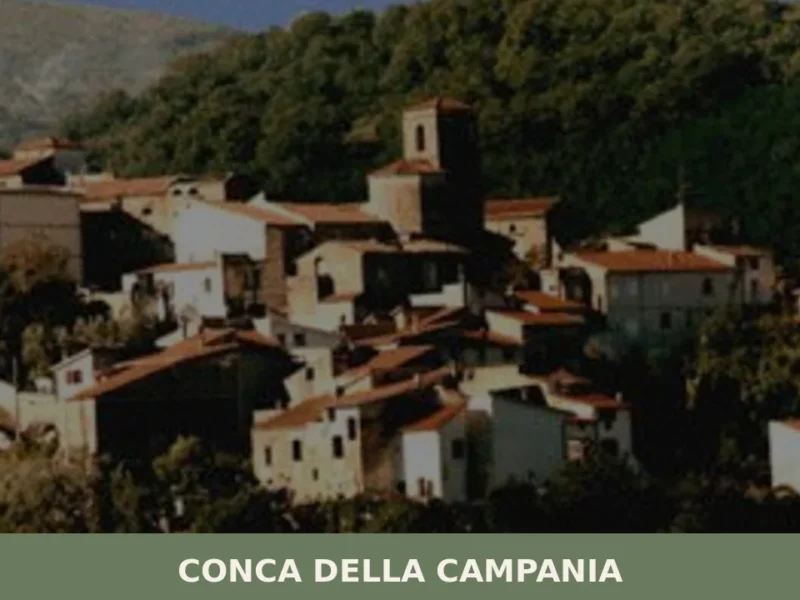
At 420 metres above sea level, on the hilly ridge separating the Volturno valley from the Lazio side, Conca della Campania today has 1,154 inhabitants spread between the main settlement and the hamlets scattered along the ridgelines. The municipal territory falls within the province of Caserta, on the border with Molise and Lazio, a frontier […]
Pignataro Maggiore
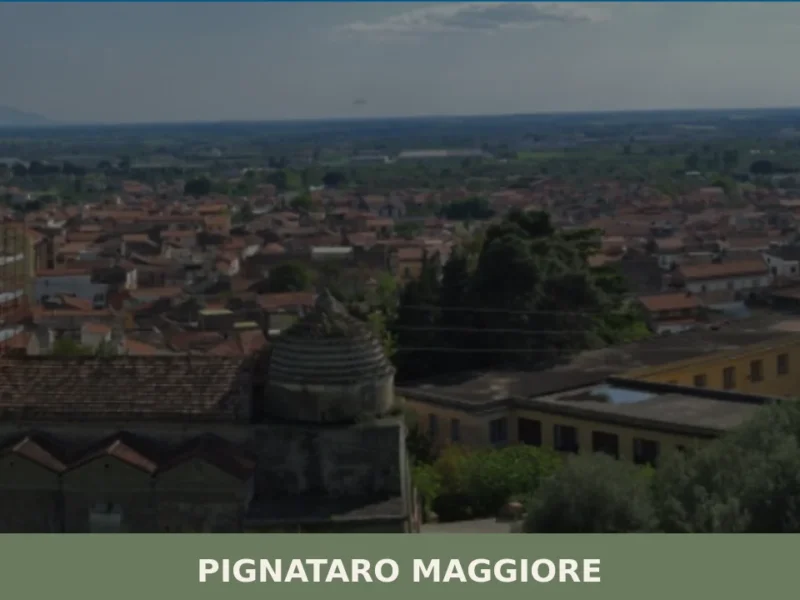
What to see in Pignataro Maggiore: 5,733 residents, 93m above sea level in Caserta province. Visit San Giorgio Church, historic centre, 'Ndunderi PAT gnocchi. Plan your trip now.
Prata Sannita
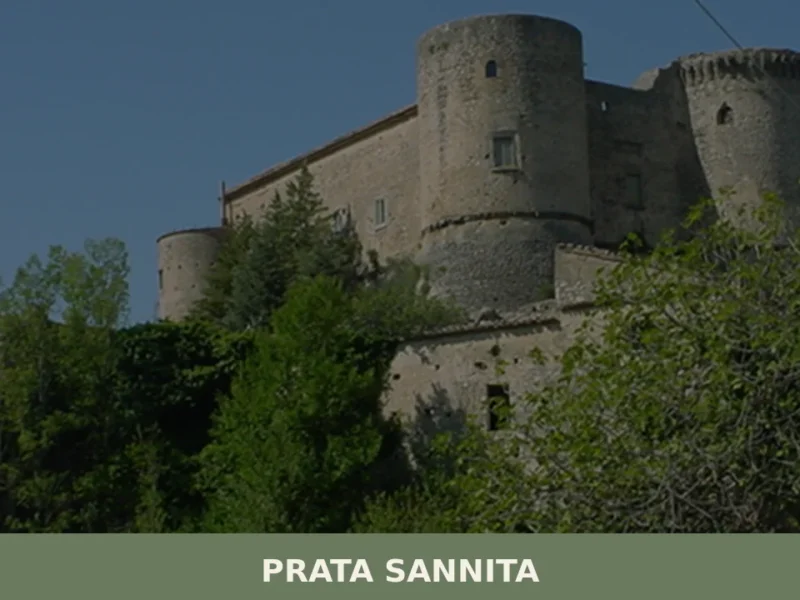
At 333 meters above sea level, in the heart of the Alto Casertano region, Prata Sannita stands, a town with 1,549 inhabitants and whose history is rooted in a territory inhabited since the Samnite era. Its architecture reflects the stratification of different eras, offering visitors an overview of rural and feudal life in southern Italy. […]



📝 Incorrect information or updates?
Help us keep the Roccaromana page accurate and up to date.