


Ruviano
In Ruviano, in the province of Caserta, the first documented reference dates back to 879 AD, when a notarial act mentions the “curtis de Rubiano”, already indicating an organized community and an agricultural center at that time. This small lowland village, with its 1,807 inhabitants and an altitude of 80 meters above sea level, is […]
Discover Ruviano
In Ruviano, in the province of Caserta, the first documented reference dates back to 879 AD, when a notarial act mentions the “curtis de Rubiano”, already indicating an organized community and an agricultural center at that time. This small lowland village, with its 1,807 inhabitants and an altitude of 80 meters above sea level, is part of the historical Terra di Lavoro, a territory with an agricultural calling. For those wondering what to see in ruviano, the town offers a journey through its religious structures and remnants of feudal architecture, elements that define its identity within the Caserta landscape.
History and Origins of Ruviano
The roots of Ruviano extend to the Roman era, with the hypothesis that the toponym derives from “fundus Rubianus”, a land possession of a Rubia family. The actual historical mention, as noted, is found in the 9th century, during a period when the territory was under the influence of the Principality of Capua. Over the centuries, Ruviano saw various feudal lordships succeed one another, including the Pandone, Carafa, and De Silva families, who left their mark on the urban layout and main architectures. These dynasties shaped the village, influencing the arrangement of buildings and the life of the community.
Ruviano’s geographical position, in the Volturno plain, determined its primarily agricultural function and its importance as a crossroads for rural activities. The village has maintained a character linked to the land over time, while evolving through the different dominations that characterized Campania. Its history is an example of the cultural and social stratification typical of smaller centers in Southern Italy, where each era has contributed to defining its current appearance.
What to see in Ruviano: 5 Main Attractions
The Church of San Leone Magno
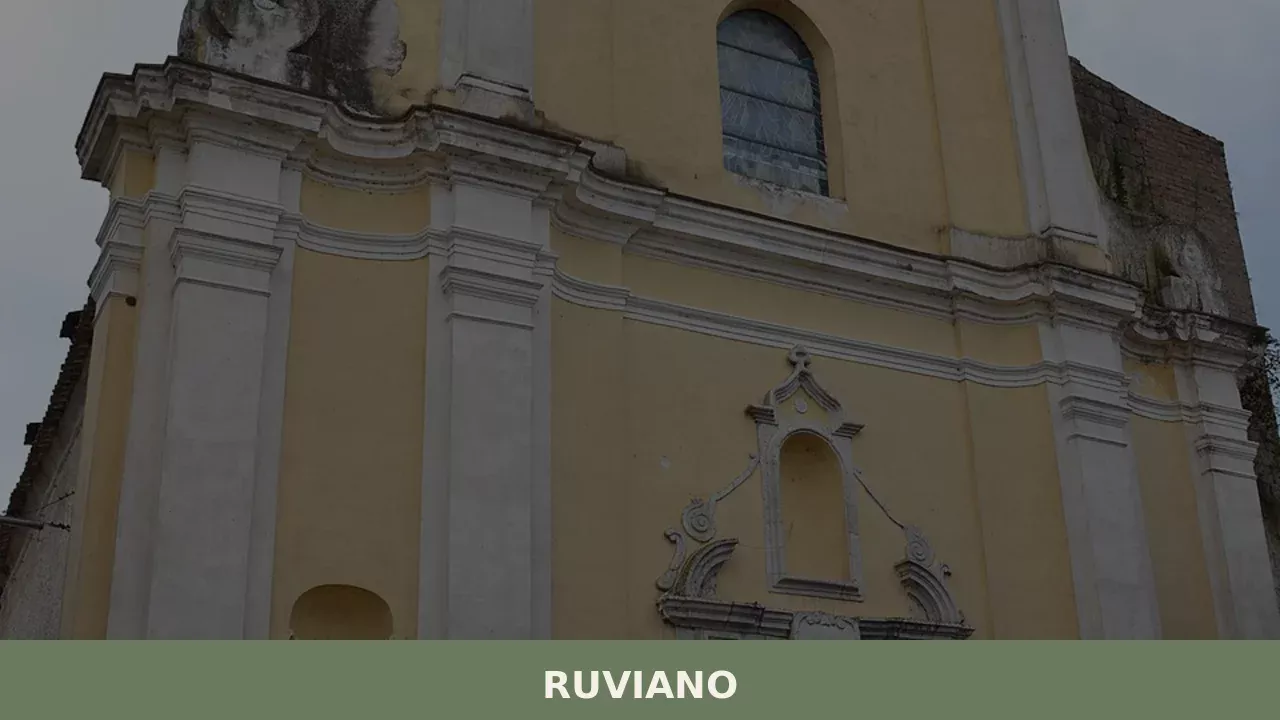
Dedicated to the village’s patron, Pope Leo I, the Church of San Leone Magno represents Ruviano’s main place of worship. Its structure, modified over the centuries, preserves elements that attest to its ancient foundation. Inside, the architecture reflects interventions from different eras, with altars and sacred works that constitute part of the local artistic heritage. The facade features sober lines, with a bell tower that rises above the profile of the surrounding buildings.
The Carafa Palace
The Carafa Palace is a building that evokes Ruviano’s feudal period, when the Carafa family held control of the fiefdom. Although not always entirely accessible to the public, its size and its position in the center of the village indicate its historical importance. The external architecture, with its portals and windows opening onto the square, allows one to imagine the life of the noble families who resided here and administered the territory.
The Church of San Giovanni Battista
Another significant religious building is the Church of San Giovanni Battista. Located in a different area from the main parish church, this church completes the picture of Ruviano’s historical places of worship. Its architecture, more modest than that of San Leone Magno, is characteristic of small rural oratories, with a simple structure yet functional to the community’s needs.
The Church of San Rocco
The Church of San Rocco, dedicated to the saint protector against plagues, is another point of interest. Often, these churches were built on the outskirts of inhabited centers or in positions that facilitated access for the rural population. Its presence in Ruviano indicates popular devotion and the importance of faith in the life of the village, with a structure that, though modest, holds its specific historical-cultural value.
The Streets of the Historic Center
Walking through the streets of Ruviano’s historic center offers a perspective on its urban development. The streets, sometimes narrow, flanked by tuff and masonry buildings, lead to small squares and views that reveal the stratification of constructions. This urban fabric, the result of centuries of settlement, retains an organization that reflects the residential and social needs of past communities.
Typical Cuisine and Local Products
Ruviano’s cuisine is linked to the agricultural tradition of Terra di Lavoro and the products of its plain. Fundamental elements are cereals, olives, and grapes, which form the basis for simple and flavorful dishes. Among the symbolic products of the Caserta area, the Buffalo Mozzarella from Campania PDO holds a place of honor, produced with milk from buffaloes raised in the nearby countryside. The local extra virgin olive oil, obtained from the olive groves surrounding the village, accompanies many preparations.
Events such as the “Chestnut Festival”, which takes place in autumn, highlight one of the most representative fruits of the territory, used in various recipes, from desserts to side dishes. The “Pizza Festival”, in summer, celebrates another pillar of Campanian gastronomy, with variations prepared according to local traditions. The wines of the Caserta area, such as Asprinio di Aversa, a lively and fruity white, pair well with the flavors of the region. Homemade pasta, often seasoned with sauces based on seasonal vegetables or local meats, represents another element of the Ruvianese table.
When to Visit Ruviano: The Best Time
Ruviano can be visited in different seasons, each with its specific characteristics. Spring, particularly the first Sunday of May, allows participation in the celebrations in honor of Pope Leo I, with events that enliven the village. This period is also favorable for walks in the surrounding countryside, when vegetation is lush and temperatures are mild. Summer offers the opportunity to experience the “Pizza Festival”, an occasion to savor local cuisine outdoors.
Autumn is a significant time for Ruviano, thanks to the “Chestnut Festival”, which celebrates one of the typical products of the territory. On November 10, the patron saint’s feast of San Leone Magno is renewed, another date to observe the religious traditions of the village. Autumn and spring temperatures are generally pleasant, while summer can present warm days, typical of Campania’s Mediterranean climate. For those wishing to avoid the summer heat, the months of April, May, and October are the most suitable for a comfortable exploration.
How to Get to Ruviano
Ruviano is accessible via various communication routes. By car, it is possible to reach the village by taking the A1 motorway (Milan-Naples) and exiting at Caserta Nord or Santa Maria Capua Vetere, then continuing on provincial roads towards Ruviano. The distance from Caserta is approximately 25 kilometers, while from Naples it is about 50 kilometers.
For those who prefer the train, the nearest railway station is Caserta. From there, it is possible to use local bus services or taxis to reach Ruviano. The most convenient airport is Naples-Capodichino International Airport (NAP), located approximately 45 kilometers away, from which one can continue by rental car or with public transport services to Caserta and then to Ruviano.
Other Villages to Discover in Campania
The province of Caserta and the Campanian territory are dotted with numerous villages that merit exploration. In the vicinity of Ruviano, the Matese area and the surrounding plain offer other centers that preserve traces of history and traditions. Each village presents its own characteristics, often linked to its geographical position or the historical events that shaped it.
Among these, villages such as Ailano can be considered, also located in the Caserta area, which offers a similar experience of contact with the rural and historical reality of the region. Or Ciorlano, which is situated in a higher position, at the foot of the Matese, offering a landscape and architecture that reflect its mountain location. These centers, despite their individuality, share a connection with the Campanian territory and its evolutions.
In Campania More villages to discover
Ciorlano
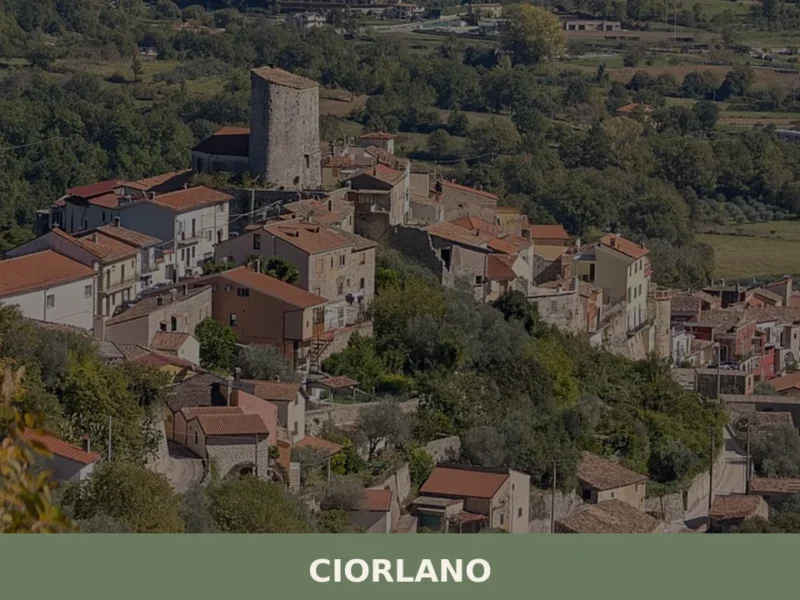
With its 370 inhabitants spread across an elevation of 330 metres above sea level, Ciorlano is one of the least populated municipalities in the province of Caserta. The village sits in the middle Volturno valley, along the hillside that separates the Matese massif from the Alife plain. Anyone wondering what to see in Ciorlano will […]
Raviscanina
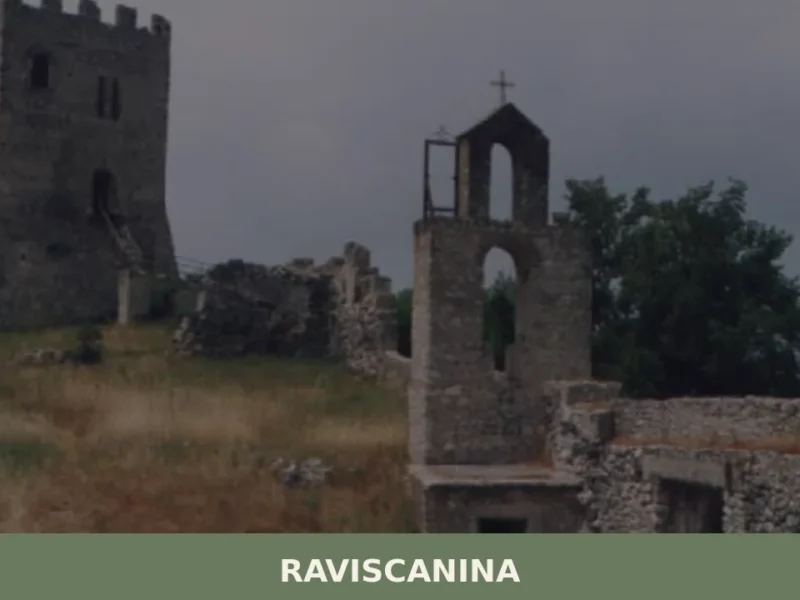
In the heart of Alto Casertano, at 358 meters above sea level, stands Raviscanina, a village whose history is evident through its architecture. Its foundation can be attributed to the Norman period, as evidenced by the imposing Castle, whose first constructions date back to the 11th century. With a population of 1,388 inhabitants, the settlement […]
Pratella
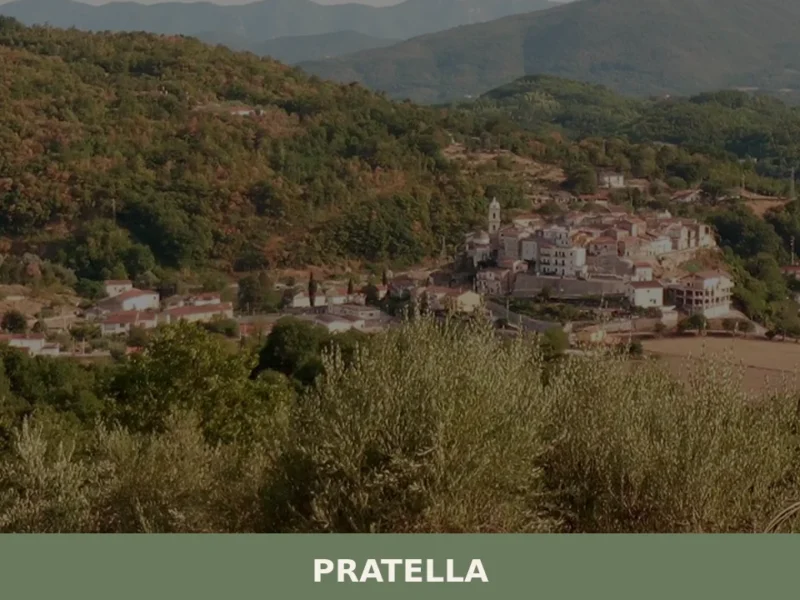
Pratella, a municipality of 1,613 inhabitants in the province of Caserta, extends over an area that reaches 152 meters above sea level. Its location, in the Volturno plain, defines a landscape dominated by cultivated fields and minor waterways, typical of plain villages. For those wondering about what to see in Pratella, the village offers an […]


📝 Incorrect information or updates?
Help us keep the Ruviano page accurate and up to date.