


Barberino di Mugello
 Hills
Hills
What to see in Barberino di Mugello, Italy: explore the Villa Medici of Cafaggiolo, local food traditions, and a town of 10,751 inhabitants. Discover the full guide.
Discover Barberino di Mugello
The road north from Florence climbs steadily through the Apennine foothills, and after 25 kilometres (16 mi) the valley floor opens around a settlement that has marked the boundary between Tuscany and Emilia-Romagna since the medieval era.
At 270 m (886 ft) above sea level, Barberino di Mugello spreads across a broad plain edged by wooded ridges, its skyline defined by a loggia-fronted palazzo rather than a fortress tower.
The population of 10,751 inhabitants keeps this firmly in the category of a working Tuscan town, with a market square that functions on weekdays and a surrounding territory measured in farmland and forest rather than tourist infrastructure.
Deciding what to see in Barberino di Mugello starts with the Villa Medici of Cafaggiolo, a fortified country residence commissioned by the Medici family that anchors the historical identity of the entire Mugello valley.
Visitors to Barberino di Mugello find a compact historic centre surrounded by municipalities including Calenzano, Scarperia, San Piero a Sieve, and Firenzuola, all within easy reach.
The Barberino di Mugello highlights include Medici-era architecture, a well-documented local food tradition rooted in mountain agriculture, and direct transport links that make it a practical day trip from Florence.
History of Barberino di Mugello
The name Barberino derives from a Latin personal name, most likely from the gens Barbaria, a Roman family whose landholding in the Mugello area gave the settlement its toponym. The Mugello valley itself served as a corridor between the Arno basin and the Po plain throughout antiquity, and the territory around what is now Barberino di Mugello was crossed by routes connecting Florence northward through the Apennines.
By the early medieval period the area had consolidated into a rural community under the jurisdiction of the Diocese of Florence, with the surrounding landscape organised around fortified farms and small ecclesiastical holdings.
The decisive chapter in the town’s recorded history began with the rise of the Medici family, who held strong territorial and sentimental ties to the Mugello as the region of their origin.
The Medici commissioned and developed several properties here from the fourteenth century onward, using the valley as both an agricultural base and a location for country retreats.
The Villa of Cafaggiolo, constructed in the fifteenth century on an earlier fortified structure, became one of the most important of these Medici holdings. Cosimo the Elder and Lorenzo de’ Medici both spent time at Cafaggiolo, and the villa functioned as a centre of intellectual and artistic patronage during the height of Florentine Renaissance culture.
This direct Medici presence distinguished Barberino di Mugello from many comparable Tuscan municipalities and gave its built environment a different character from the purely agricultural settlements of the broader province.
After the decline of Medici political dominance in the eighteenth century and the subsequent incorporation of Tuscany into unified Italy in the nineteenth century, Barberino di Mugello followed the administrative path of most Florentine provincial communes.
It is today part of the Metropolitan City of Florence and borders eight municipalities: Calenzano, Cantagallo, Castiglione dei Pepoli, Firenzuola, San Piero a Sieve, Scarperia, Vaiano, and Vernio.
The town has a twin-town relationship with Laurenzana in southern Italy. Travellers exploring the broader Tuscan north may also find useful context in the Apennine village of Bagnone, which shares a similarly documented medieval territorial history in the northern Tuscan corridor.
What to see in Barberino di Mugello, Toscana: top attractions
Villa Medici of Cafaggiolo
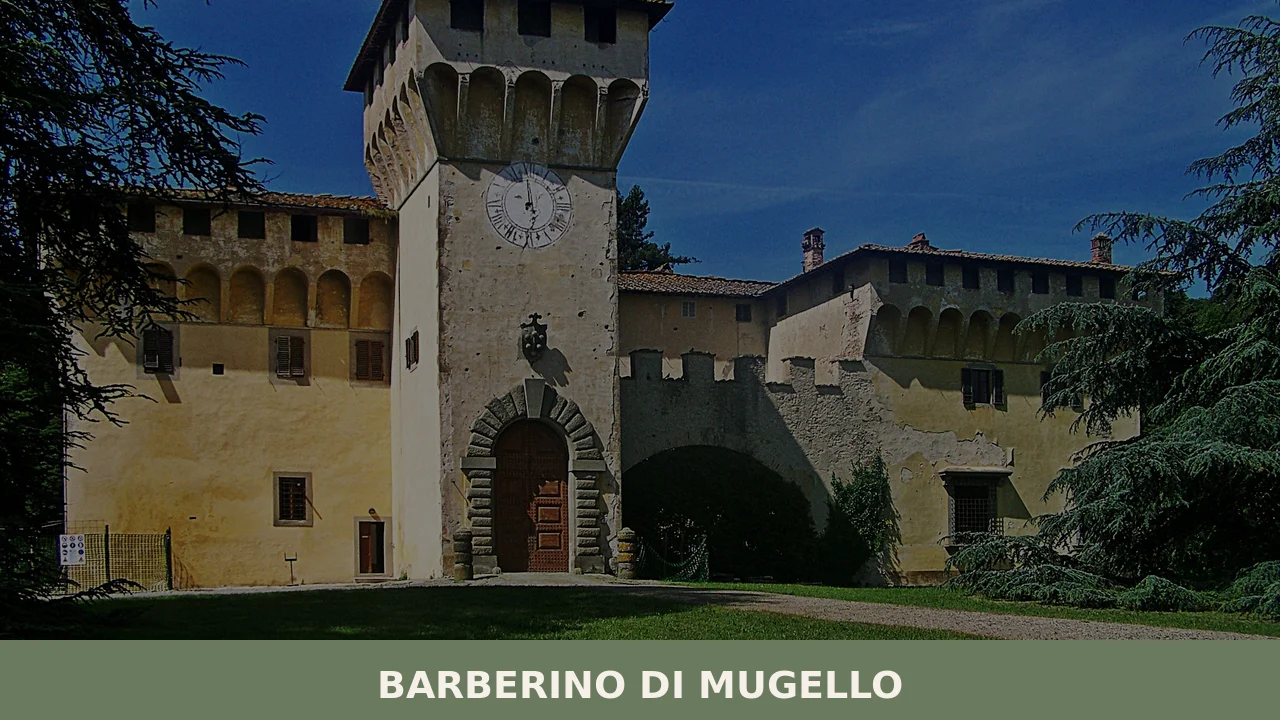
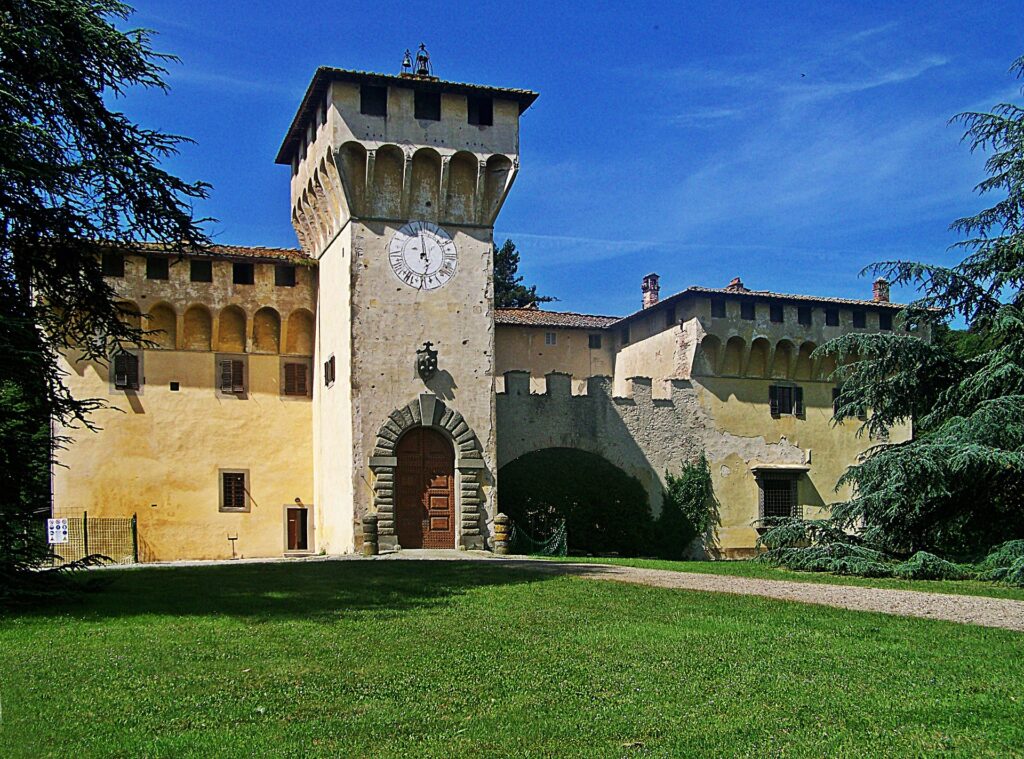
The crenellated tower of Cafaggiolo rises above a farmland plain roughly 4 km (2.5 mi) from the centre of Barberino di Mugello, its brick mass and defensive profile marking it as a structure converted from military use into a residential one.
The villa was remodelled in the fifteenth century, with Michelozzo di Bartolomeo credited with the architectural transformation commissioned by Cosimo de’ Medici.
Standing in front of the main facade, visitors can read the layering of defensive and residential functions in the asymmetric fenestration and the retained tower above the entrance wing.
The surrounding agricultural land formed part of the original Medici estate and the landscape context — flat valley floor, ridgeline backdrop — remains largely as it was when the villa served as a country base for the Florentine ruling family.
Historic Centre and the Loggiato
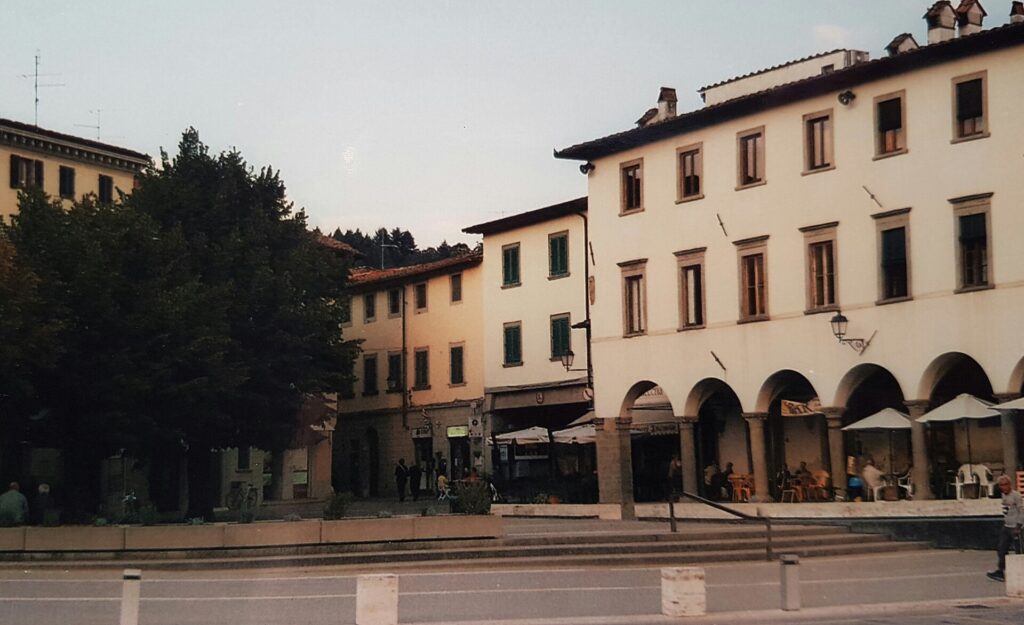
The covered loggia running along one edge of the central piazza in Barberino di Mugello gives the town centre a spatial character different from the typical Tuscan hill village: here the portico faces directly onto the plain rather than commanding a defensive elevation.
The arcade dates to the medieval communal period and its arches frame views across the valley that orient a visitor to the surrounding geography immediately.
The piazza functions as a genuine commercial and civic space rather than a preserved set piece, with the covered walkway providing shelter during the rain-heavy spring and autumn months.
Early morning visits before 9:00 are the most effective time to examine the stonework details of the arcade without obstruction.
The Mugello Valley Landscape and Bordering Territory
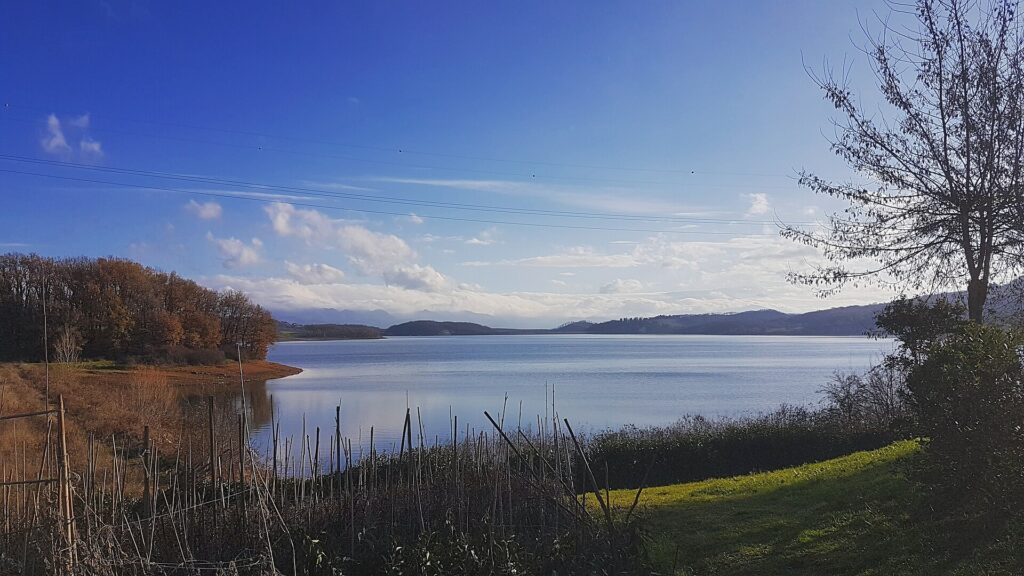
The valley floor around Barberino di Mugello extends between ridges that reach above 900 m (2,953 ft) on the Apennine watershed, creating a contained agricultural basin with distinct visual boundaries.
The eight bordering municipalities — including Firenzuola to the northeast and Calenzano to the south — frame a circuit of local roads that passes through farmland, chestnut woodland, and small hamlets largely unchanged in plan since the early modern period.
Distances are short: the municipal boundary of San Piero a Sieve lies within 10 km (6.2 mi), and the circuit of the immediate Mugello plain can be driven in under two hours. Walking routes across the valley floor and into the lower wooded slopes are accessible without specialist equipment and provide direct views back toward the Cafaggiolo complex.
Churches and Religious Architecture of the Municipality
Several parish churches are distributed across the municipal territory of Barberino di Mugello, representing construction phases from the Romanesque period through the baroque era. The patron saint of the town is San Silvestro, Pope Sylvester I, whose feast falls on 31 December, and the main church dedicated to him occupies a central position in the townscape.
Exterior stonework on some of the older rural churches shows the local sandstone construction typical of the Mugello, with courses of pale grey stone laid in a technique consistent with pre-Renaissance building practice.
Visiting the outlying churches requires a car, as several lie within hamlets spread across the 167 km² (64.5 mi²) municipal area.
Surroundings: Scarperia and the Mugello Circuit
Within 10 km (6.2 mi) of Barberino di Mugello lies Scarperia, one of the bordering municipalities, home to both a fourteenth-century Palazzo dei Vicari and the Mugello Circuit motor racing track.
The circuit, which hosts MotoGP events, sits on the valley’s eastern edge and draws a distinct category of visitor separate from those focused on historical architecture. The proximity of Scarperia means that a single day in the area can combine built heritage in Barberino with the scale and engineering infrastructure of the racing venue.
Checking the Mugello Circuit’s official calendar in advance is recommended, as race weekends substantially increase road traffic on the approach roads from Florence.
Local food and typical products of Barberino di Mugello
The food tradition of the Mugello valley reflects the agricultural reality of an Apennine foothill economy: wheat and chestnut cultivation historically dominated the upland areas, while the valley floor supported cattle farming and vegetable growing. Barberino di Mugello, sitting at 270 m (886 ft) within this basin, inherited a culinary culture centred on cereals, legumes, preserved meats, and dairy products from local herds.
The proximity to Florence — 25 km (16 mi) — meant that urban market connections were always accessible, but the local diet developed its own distinct register based on what the mountain terrain produced rather than what the city consumed.
Among the dishes documented in the Mugello culinary tradition, ribollita occupies a central place: a bread and vegetable soup made with cavolo nero (Tuscan black kale), cannellini beans, stale unsalted Tuscan bread, and olive oil, cooked once and then reheated — the name itself means “reboiled.” Pappardelle al cinghiale, wide egg-pasta ribbons served with wild boar ragù braised with red wine, celery, carrot, and onion, reflects the hunting culture of the wooded slopes surrounding the valley.
Castagnaccio, a flat cake made from chestnut flour, rosemary, pine nuts, and raisins, represents the older mountain economy when chestnut flour substituted wheat across the Apennine zone. These preparations appear in local trattorie — family-run restaurants operating with fixed menus — throughout the Mugello area.
The Mugello valley also produces Vitellone Bianco dell’Appennino Centrale IGP, a protected geographical indication covering white beef cattle raised across a broad Apennine zone that includes parts of the Florentine province.
The meat is characterised by its production from the Chianina, Marchigiana, and Romagnola breeds, animals raised at pasture in the Apennine territories. Local butchers in Barberino di Mugello supply cuts from these breeds, and the preparation most associated with the area is a thick-cut grilled steak, cooked rare over wood embers.
Visitors looking for quality beef in a restaurant context should confirm with the establishment that the product carries the IGP certification rather than assuming its provenance.
For those interested in the food production landscape beyond the town itself, the villages along the northern Tuscan Apennine corridor share overlapping culinary traditions.
The Lunigiana village of Licciana Nardi, further northwest in Toscana, operates within a comparable mountain agricultural economy and produces its own documented local food culture rooted in chestnut and cereal cultivation.
Local markets in Barberino di Mugello are most active in the autumn months, when chestnut harvesting and the new olive oil pressing season bring seasonal products into circulation.
Festivals, events and traditions of Barberino di Mugello
The principal civic and religious celebration of Barberino di Mugello is the feast of San Silvestro, held on 31 December. As the patron saint’s day coincides with New Year’s Eve, the commemoration merges liturgical observance with the civic marking of the year’s end.
The church dedicated to San Silvestro holds a formal religious service on the evening of 31 December, and the piazza around it typically sees public gathering in the hours before midnight.
The dual nature of the date — saint’s day and calendar turning point — gives the celebration a layered character that distinguishes it from patron feast days falling at other points in the year.
Beyond the December feast, the Mugello valley calendar includes a series of local food events and agricultural fairs concentrated in the autumn, when the chestnut harvest and the new season’s olive oil bring communities together around seasonal production.
The sagra, a traditional local food festival tied to a specific ingredient or dish, is a common format across the Mugello municipalities in October and November. Barberino di Mugello’s position at the centre of the valley makes it a natural point of access for visitors combining multiple local events over a weekend.
For the most current programme of municipal events, the official website of the Comune di Barberino di Mugello publishes updated calendars for the year.
When to visit Barberino di Mugello, Italy and how to get there
The best time to visit Barberino di Mugello in practical terms is late spring (May to June) or early autumn (September to October).
In May and June the valley is green, road traffic is moderate, and temperatures at 270 m (886 ft) are consistently milder than in Florence, making the 25 km (16 mi) distance from the city an advantage rather than an inconvenience.
September and October bring the harvest season, the most active period for local food markets and agricultural events, and stable dry weather that suits both driving through the valley and walking in the lower wooded slopes. Midsummer (July to August) sees the highest tourist volumes on the Florence-Bologna axis passing nearby, while winter visits are viable for the San Silvestro feast but require preparation for cold and occasional snow above 400 m (1,312 ft) on the surrounding ridges.
Getting to Barberino di Mugello from Florence is straightforward by road.
The A1 motorway (Autostrada del Sole) runs directly through the Mugello valley; the exit for Barberino di Mugello is approximately 25 km (16 mi) north of the Florence Nord interchange, a drive of around 25 to 30 minutes in normal traffic.
From Bologna the same motorway is used in the southbound direction, with the distance approximately 75 km (46.6 mi) and a journey time of around 45 minutes. Rail access is available via the Trenitalia regional service on the Florence–Bologna line, with a station at Barberino di Mugello serving regional trains.
Florence’s main airport, Aeroporto di Firenze-Peretola (also known as Amerigo Vespucci Airport), lies approximately 35 km (21.8 mi) south of Barberino di Mugello, reachable in around 35 to 40 minutes by car via the A1. International visitors arriving at Bologna Guglielmo Marconi Airport, roughly 90 km (55.9 mi) north, can reach Barberino di Mugello by car or by taking a train to Florence and then a regional connection north.
A practical note for those arriving from abroad: smaller shops and trattorie in the area may have limited English-speaking staff, and carrying euros in cash is advisable for markets and rural establishments.
Travellers planning a wider Tuscan itinerary can use Barberino di Mugello as a base for reaching several bordering municipalities within a 30-minute radius.
Those who also intend to visit the Tyrrhenian coast may find the route westward toward Montignoso, a coastal Tuscan village in the Versilia area, a logical extension of a multi-day circuit through northern Toscana.
The detailed question of what to see in Barberino di Mugello fits well within a broader Florentine province itinerary: the town itself requires a half-day minimum, with the Cafaggiolo villa and town centre covered on foot and by car, and the surrounding Mugello valley territory extending the visit naturally into a full day for those interested in landscape and local food production.
Frequently asked questions about Barberino di Mugello
What is the best time to visit Barberino di Mugello?
Late spring (May–June) and early autumn (September–October) offer mild temperatures, clear skies, and the valley landscape at its most photogenic. Summer is warm but rarely extreme at 270 m, making it pleasant for walks along the valley floor. Winter visits on 31 December coincide with the feast of the patron saint San Silvestro, when the town marks the occasion with local celebrations. Avoid race weekends at the nearby Mugello Circuit — typically a MotoGP date in late May or early June — when approach roads from Florence become significantly congested.
What are the historical origins of Barberino di Mugello?
The name derives from a Latin personal name linked to the gens Barbaria, a Roman family whose landholding gave the settlement its toponym. The Mugello valley was a corridor between the Arno basin and the Po plain since antiquity. The town's most documented chapter began with the Medici family, who held deep ties to the Mugello as their region of origin. From the fourteenth century they developed properties here, most notably the Villa of Cafaggiolo, remodelled in the fifteenth century by Michelozzo for Cosimo de' Medici and frequented by Lorenzo de' Medici.
What to see in Barberino di Mugello? Main monuments and landmarks
The Villa Medici of Cafaggiolo, approximately 4 km from the centre, is the principal sight: a fifteenth-century fortified residence remodelled by Michelozzo for Cosimo de' Medici, with a crenellated tower and layered defensive-residential architecture set against the valley plain. In the historic centre, the medieval loggiato — a covered arcade fronting the central piazza — is the defining architectural feature. The parish church of San Silvestro occupies a central position in the townscape. Scarperia, within 10 km, adds the fourteenth-century Palazzo dei Vicari for those extending their visit.
What are the main natural or scenic attractions of Barberino di Mugello?
The Mugello valley basin, enclosed by Apennine ridges rising above 900 m, forms a compact and visually coherent landscape of farmland, chestnut woodland, and small hamlets. The municipal territory covers 167 km² and offers walking routes on the valley floor and lower wooded slopes accessible without specialist equipment. The circuit of local roads connecting bordering municipalities — including Firenzuola to the northeast and Calenzano to the south — can be driven in under two hours, passing through countryside largely unchanged in plan since the early modern period.
Where to take the best photos in Barberino di Mugello?
The facade of the Villa Medici of Cafaggiolo, with its crenellated tower framed against the flat valley floor and wooded ridgeline backdrop, provides the most historically distinctive image in the area. In the town centre, the medieval loggiato offers strong architectural framing, particularly in early morning before 9:00 when the arcade is unobstructed. The valley floor looking toward the Apennine watershed gives wide landscape compositions with the bowl of ridges clearly visible on clear days in spring and autumn.
Are there museums, churches or historic buildings to visit in Barberino di Mugello?
The Villa Medici of Cafaggiolo is the primary historic building, a fifteenth-century Medici residence remodelled by Michelozzo with retained defensive tower and original estate farmland. The parish church of San Silvestro is centrally located in the historic centre. Several Romanesque-to-baroque rural churches are distributed across the municipal territory, built in the local pale grey sandstone characteristic of the Mugello; reaching them requires a car given the 167 km² spread of the municipality. Specific opening hours and admission fees are best confirmed locally before visiting.
What can you do in Barberino di Mugello? Activities and experiences
Walking routes on the valley floor and lower Apennine slopes are accessible without specialist equipment and offer direct views toward the Cafaggiolo complex. The surrounding circuit of roads connecting eight bordering municipalities suits cycling and driving itineraries. Within 10 km, the Mugello Circuit hosts MotoGP events, appealing to motorsport visitors. Local trattorie serve fixed-menu Mugello cuisine including ribollita, pappardelle al cinghiale, and castagnaccio. The 31 December feast of patron San Silvestro provides a seasonal event with local character for those visiting over New Year.
Who is Barberino di Mugello suitable for? Families, couples, hikers, solo travelers?
Barberino di Mugello suits travellers who prefer working Tuscan towns over tourist-saturated destinations. History enthusiasts and Medici-period architecture followers will find the Villa of Cafaggiolo a worthwhile focus. Couples and slow-travel visitors benefit from the valley landscape, local food culture, and short distances to neighbouring medieval towns like Scarperia. Hikers and cyclists find accessible terrain on the valley floor and lower wooded slopes. Motorsport fans have the Mugello Circuit within 10 km. Day-trippers from Florence — only 25 km away — can cover the main sites comfortably in a single visit.
What to eat in Barberino di Mugello? Local products and specialties
The Mugello culinary tradition centres on mountain agricultural products. Ribollita — a bread, cavolo nero, and cannellini bean soup reheated before serving — is a staple of local trattorie. Pappardelle al cinghiale pairs wide egg-pasta with wild boar ragù from the wooded valley slopes. Castagnaccio, a flat cake of chestnut flour, rosemary, pine nuts, and raisins, reflects the historic Apennine economy. The area also falls within the Vitellone Bianco dell'Appennino Centrale IGP zone; local butchers supply Chianina, Marchigiana, and Romagnola beef, typically served as a thick wood-ember grilled steak.
📷 Photo Gallery — Barberino di Mugello
Nearby Villages near Barberino di Mugello
In Tuscany More villages to discover
Bagni di Lucca
 Plains
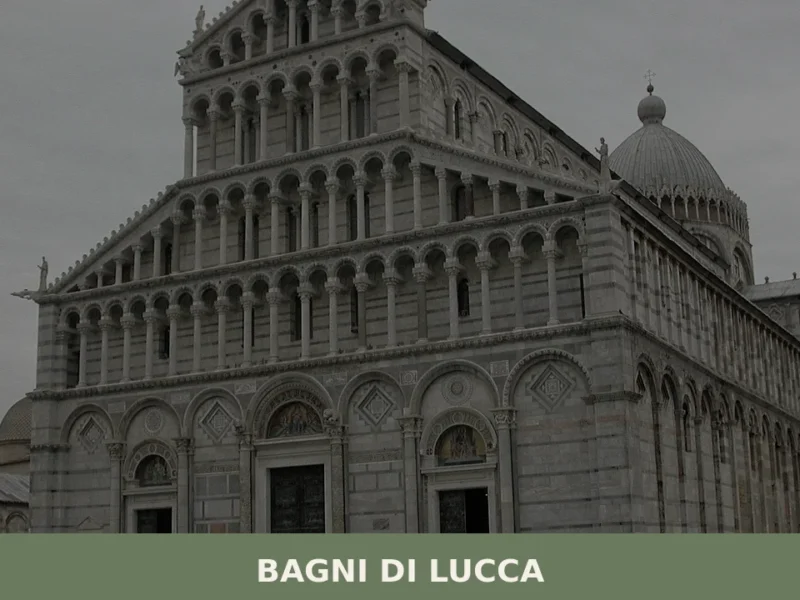
A comune of 5,560 residents in Lucca province, Bagni di Lucca centres on warm springs and the Serchio river corridor. Its identity rests on water and geology.
Podenzana
Hills
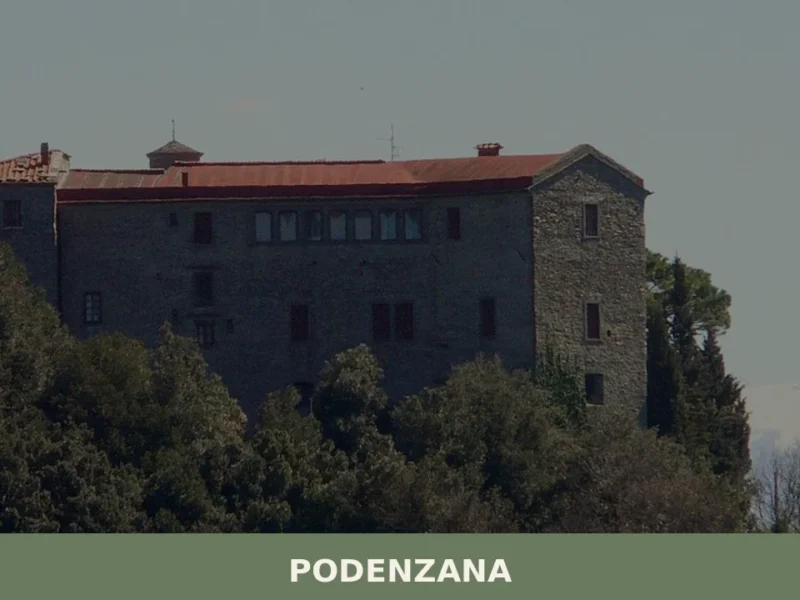
The panigaccio — a disc of unleavened dough cooked between red-hot terracotta moulds — is listed as a Traditional Agri-Food Product of Tuscany and bears the name of Podenzana in the regional specification. Anyone looking into what to see in Podenzana will find a scattered municipality at 350 metres above sea level in eastern Lunigiana, […]
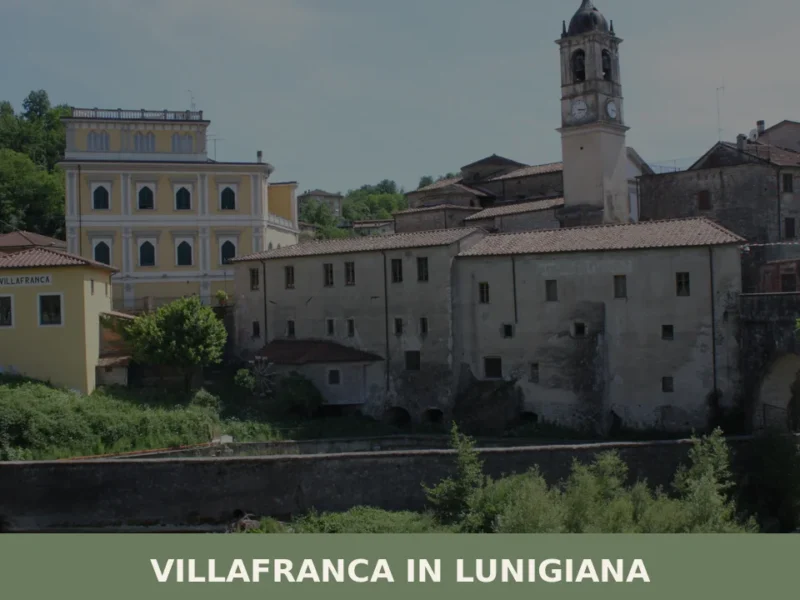
Villafranca in Lunigiana
Plains
What to see in Villafranca in Lunigiana: explore the Via Francigena, medieval churches and local cuisine in Toscana, Italy. Population 4,803. Discover it now.
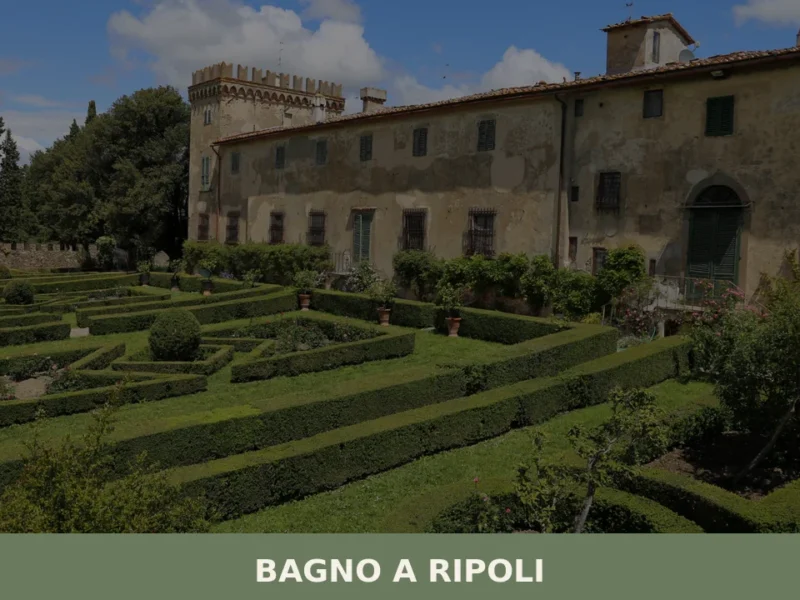
Bagno a Ripoli
Plains
What to see in Bagno a Ripoli, Italy: 25,488 inhabitants, 7 km from Florence. Discover top attractions, local food, and how to get there. Explore now.
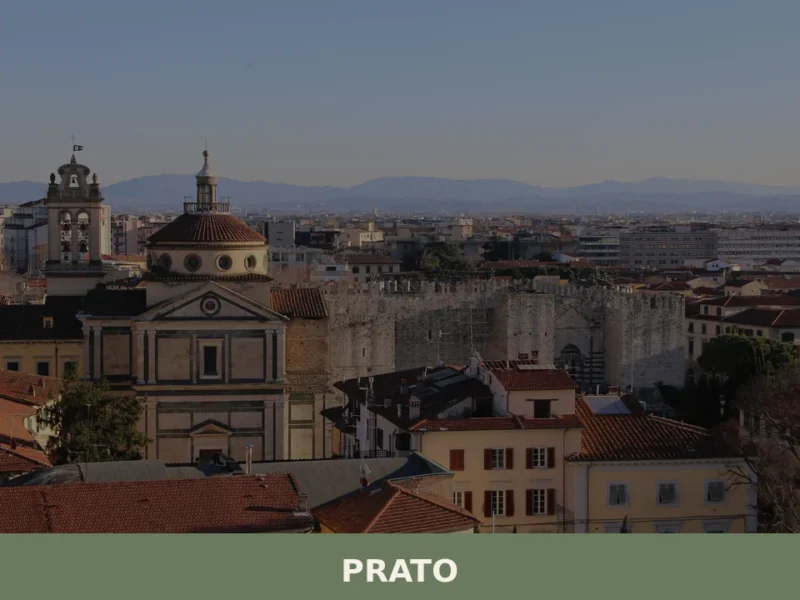
Prato
Plains
With nearly 187,000 inhabitants, Prato is the second most populous city in Tuscany and one of the largest urban centres in central Italy. Located on the plain between the Bisenzio river and the first foothills of the Apennines, the city has built a distinct identity over the centuries, defined by its textile industry, medieval art, […]
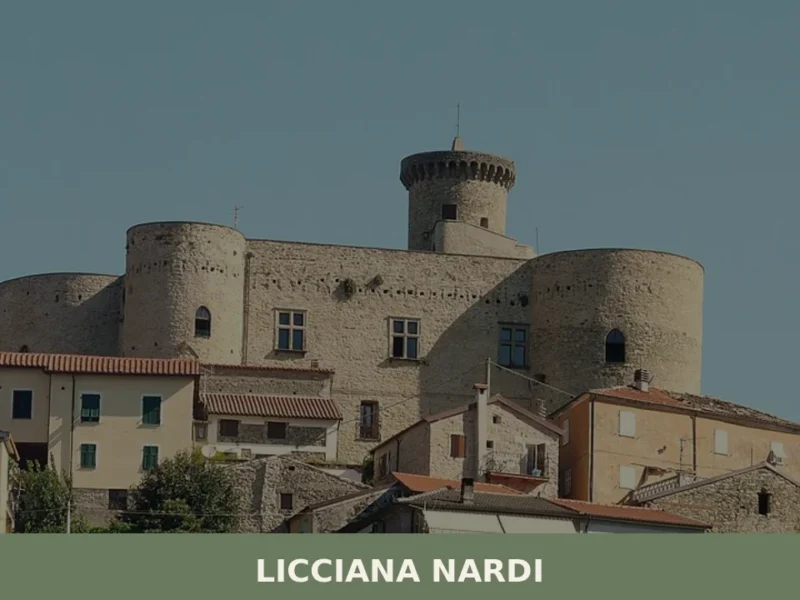
Licciana Nardi
Hills
The territory of Licciana Nardi includes six castles spread between the valley floor and the Apennine slopes, a concentration of defensive structures that documents the strategic role of this stretch of Lunigiana in controlling the routes between the Po Plain and the Tyrrhenian coast. With its 4,894 inhabitants distributed across 55 square kilometres at an […]
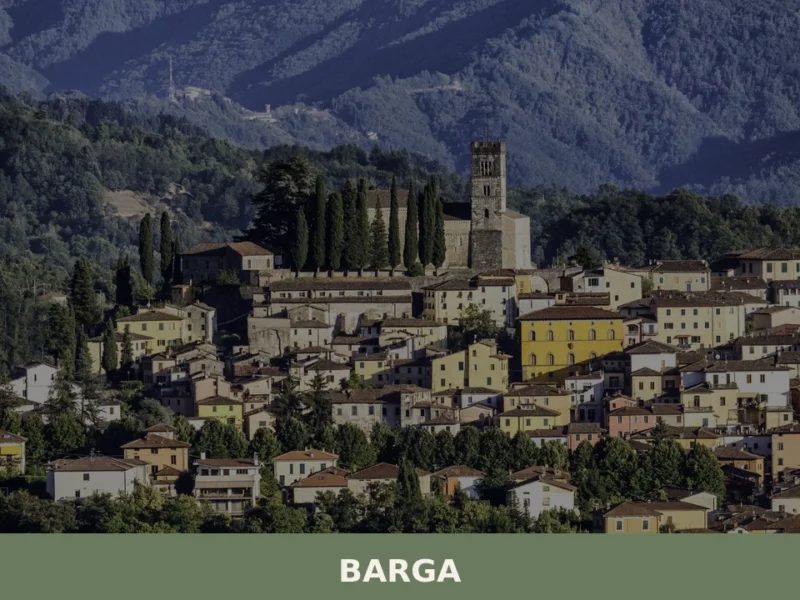
Barga
Hills
what to see a Barga, village toscano a 410 m s.l.m.: Duomo di San Cristoforo, Teatro dei Differenti, cuisine della Garfagnana. guide pratica con consigli su quando andare e how to get there.
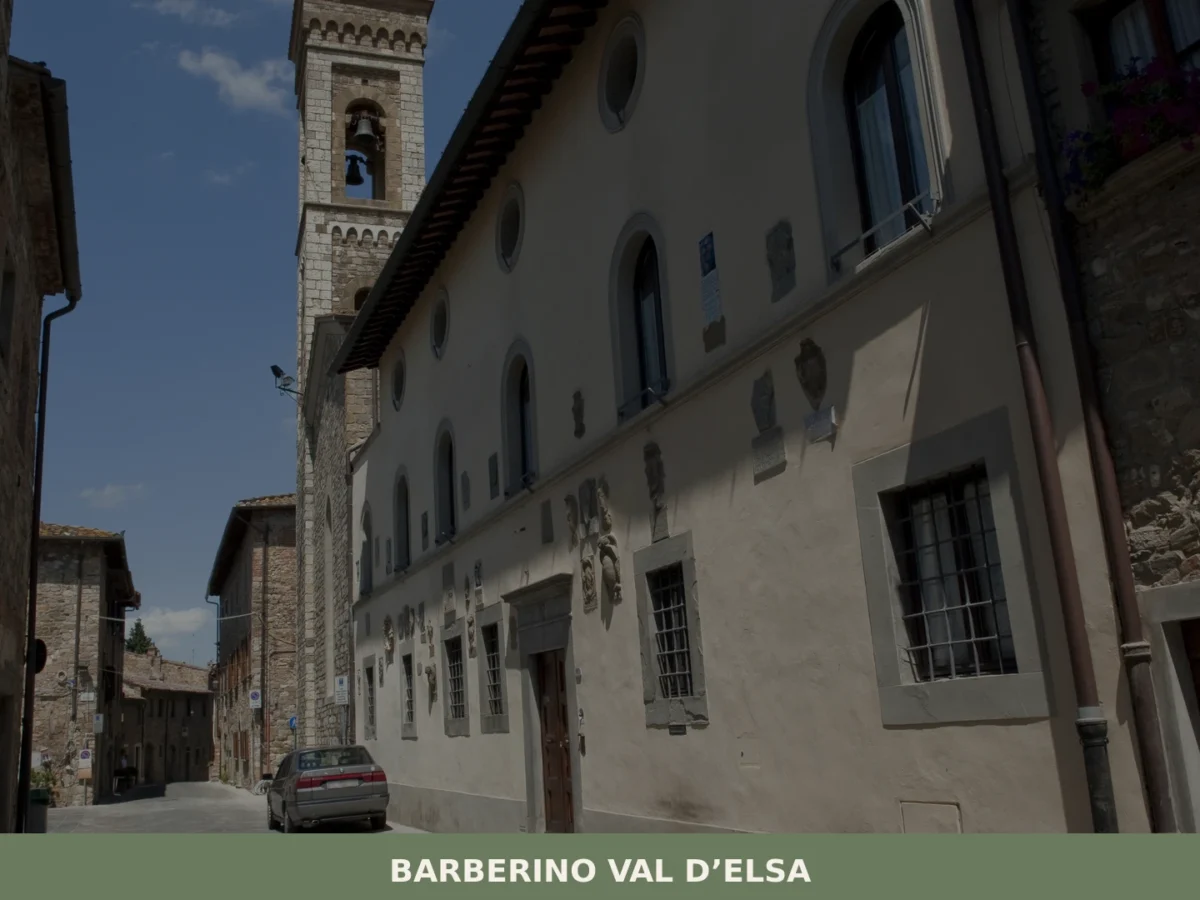
Barberino Val d’Elsa
Plains
The grey sandstone stones of the Palazzo Pretorio still bear the coats of arms of the Florentine families entrusted with governing this medieval outpost: a register carved in stone that tells six centuries of political domination without the need to open a single archive. In this article History and origins of Barberino Val d’Elsa What […]
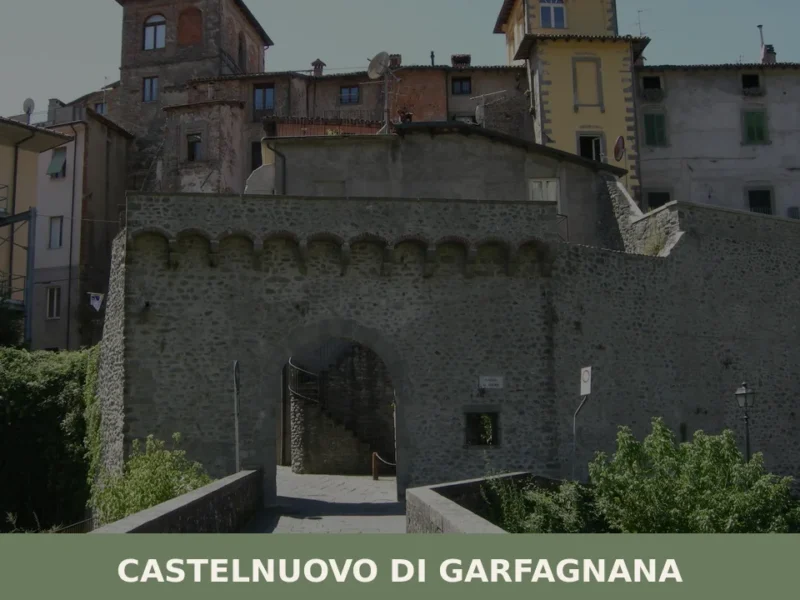
Castelnuovo di Garfagnana
Hills
What to see in Castelnuovo di Garfagnana: Rocca Ariostesca, the Cathedral and the historic centre. Discover the guide to plan your visit to this Tuscan village.
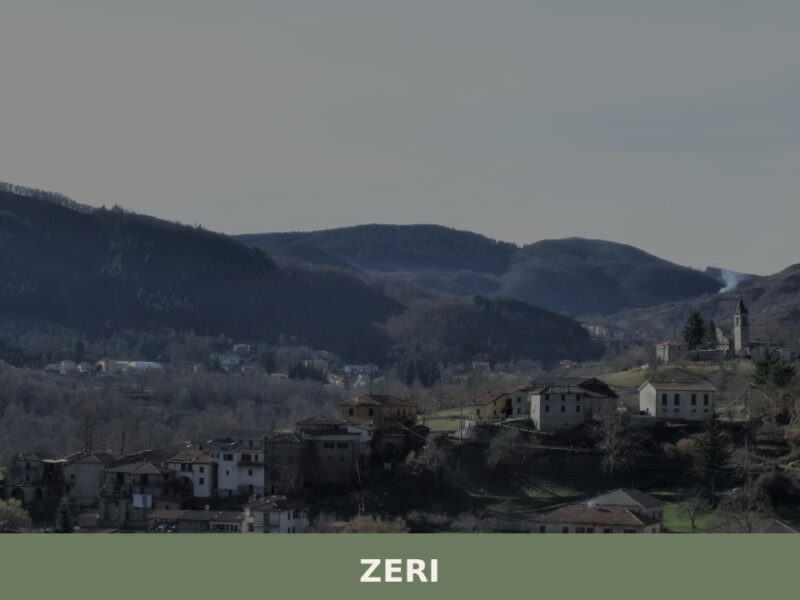
Zeri
 Mountain
Morning mist lifts slowly from the Lunigiana valley floor, revealing a scattering of stone hamlets across green ridgelines that roll toward the Ligurian border. The air carries wood smoke and the distant sound of cowbells — the famed Zerasca breed still grazes these highlands. Zeri, a municipality of 1,166 inhabitants in the province of Massa […]

🏡 Know Barberino di Mugello better than we do?
If you’re a local or have been there, your knowledge matters: add what’s missing or fix a detail on this page.