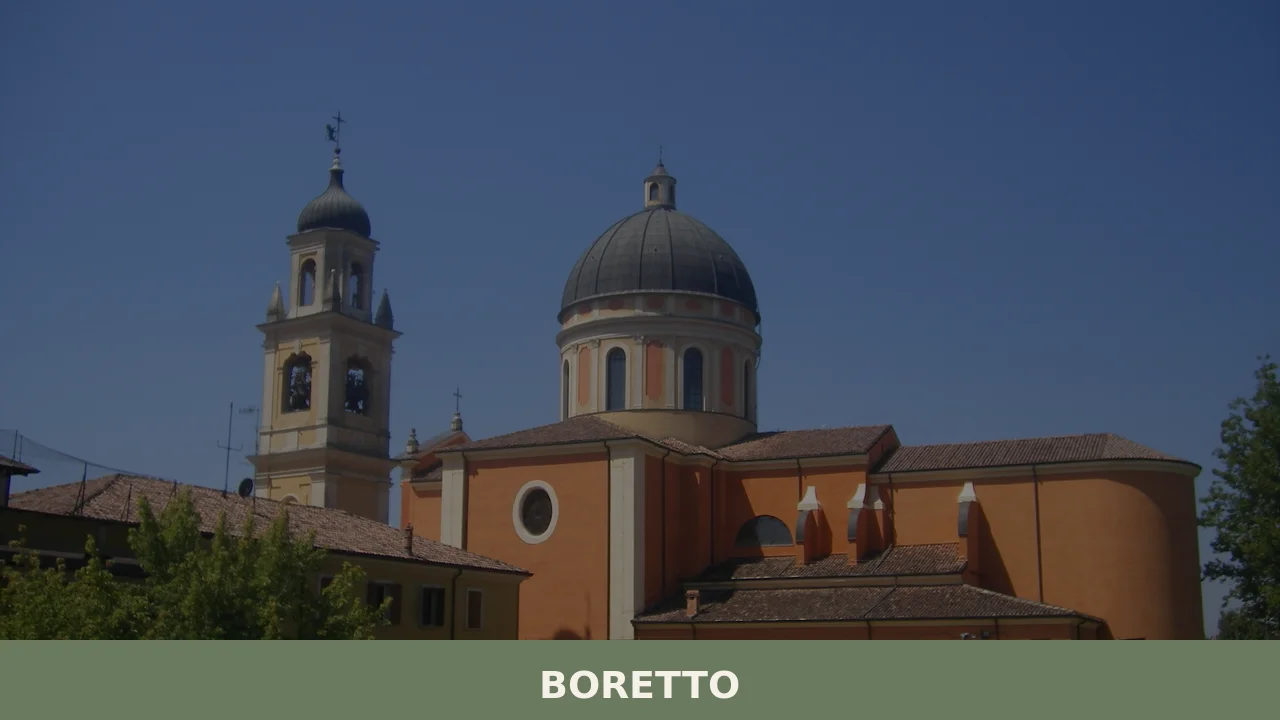
Boretto
What to see in Boretto, Italy: explore the Basilica Minore of San Marco, the Po riverfront, and local food traditions. Population 5,402. Discover Emilia-Romagna.
Discover Boretto
The Po moves wide and slow past the levee at Boretto, its surface reading like hammered grey iron on overcast mornings and turning a flat copper tone at dusk. The river has shaped this stretch of the Emilian plain for centuries, drawing river trade, flooding farmland, and leaving behind a soil dark with silt.
At 23 m (75 ft) above sea level, the land offers no elevation to hide behind, and the village presents itself plainly: a few thousand inhabitants, a basilica at its centre, a riverbank still marked by the working geometry of docks and embankments.
Deciding what to see in Boretto means understanding a place built around two axes — the sacred and the fluvial.
With a population of 5,402, Boretto, Emilia-Romagna, Italy sits approximately 25 km (15.5 mi) northwest of Reggio Emilia and about 80 km (50 mi) northwest of Bologna.
Visitors to Boretto find a Basilica Minore with dual dedications, a patron saint feast anchored to 25 April, and a riverside environment that connects the village directly to the wider Po Valley.
The surrounding municipalities — Brescello, Gualtieri, Poviglio, Castelnovo di Sotto, Viadana, and Pomponesco — frame Boretto within a dense network of plain settlements each with their own documented civic history.
History of Boretto
The name Boretto derives from the local Reggiano dialect form Borèt, a diminutive construction rooted in the Latin term for a settlement or fortified enclosure. The suffix suggests a place that was defined by its boundaries rather than its scale — a characteristic of many small Po Valley communities established during the early medieval period, when control over river crossings and agricultural land determined the strategic value of a site.
The municipality falls within the Province of Reggio Emilia, a territory whose administrative and ecclesiastical organisation has been documented since at least the Lombard period.
During the medieval era, the lower Emilian plain around the Po was contested between rival signorie, with the Este family of Ferrara and the Gonzaga of Mantua exerting influence over river towns and their fiscal revenues.
Boretto’s position on the right bank of the Po made it a point of interest for those controlling navigation and trade along the river.
The village’s ecclesiastical life became formalised over successive centuries, culminating in the elevation of its main church to the status of Basilica Minore, a title conferred by papal authority that placed the church within a specific liturgical and architectural category distinct from ordinary parish churches. Visitors interested in this regional political history can extend their visit to Ferrara, whose Este court shaped much of the lower Po plain’s institutional geography during the Renaissance.
In the modern period, Boretto developed as an agricultural and light-industrial commune consistent with the broader economic pattern of the Reggio Emilia province.
The river remained a working artery well into the twentieth century, with dock infrastructure serving transport functions that later declined as road and rail networks expanded.
Today the municipality of Boretto administers a territory that preserves the civic and ecclesiastical fabric of a plain comune while adapting to contemporary administrative structures within the Province of Reggio Emilia.
What to see in Boretto, Emilia-Romagna: top attractions
Basilica Minore of San Marco and Santa Croce
The Basilica Minore of San Marco and Santa Croce carries a dual dedication that marks it as unusual among the religious buildings of the Reggio Emilia plain.
Its status as a Basilica Minore places it within a formal category established by the Vatican, distinct from cathedrals and ordinary parish churches, and signalling a particular liturgical significance recognised at the level of the Holy See.
The church is dedicated to San Marco, the same patron saint whose feast day on 25 April anchors the village’s annual religious calendar. Inside, the building holds the accumulated devotional heritage of a community that has organised its civic and spiritual life around this space for generations.
The best time to visit is around the feast of San Marco in late April, when the church functions as the focal point of the village’s most attended public gathering.
The Po Riverfront and Embankment
Boretto’s relationship with the Po river is not incidental — the village sits directly on its right bank, and the embankment infrastructure reflects centuries of hydraulic engineering designed to manage seasonal flooding across the lower Emilian plain.
The Po at this point runs wide: at full flow the river can reach widths measurable in hundreds of metres, and the levee system built along both banks represents one of the most extensive civil engineering undertakings in northern Italy.
Standing on the embankment at Boretto, a visitor looks across to the opposite bank of Lombardy, the provincial boundary of Mantua visible as a line of poplars and farmhouses at the water’s edge.
The riverfront is accessible on foot and offers direct views of the fluvial landscape that defined the settlement’s original reason for existing.
The Surrounding Agricultural Plain
At 23 m (75 ft) above sea level, Boretto occupies the flat morphology of the Po Valley without interruption. The agricultural land surrounding the village produces the primary crops of the Emilian plain — wheat, maize, forage crops — alongside the dairy farming that supplies Parmigiano Reggiano production facilities operating within the province.
The geometric road network that extends outward from Boretto in straight lines across the plain reflects the Roman and post-Roman land organisation known as centuriazione, the systematic grid division of territory carried out by Roman surveyors from as early as the second century BCE.
Travelling these roads by bicycle between April and June, when the fields are actively cultivated and the plain has not yet reached summer heat, gives a clear reading of the landscape’s structural logic.
The Neighbouring Municipal Territory and Border Villages
Boretto shares boundaries with six municipalities: Brescello to the northeast, Castelnovo di Sotto to the southeast, Gualtieri to the east, Pomponesco across the river to the north, Poviglio to the south, and Viadana to the northwest.
Each of these comuni maintains its own civic and architectural heritage, and the network they form around Boretto creates a coherent zone for day excursions within a radius of under 15 km (9.3 mi). Gualtieri, directly to the east, holds a documented Renaissance piazza designed under Gonzaga patronage.
Brescello is internationally known for its connections to the fictional Don Camillo stories.
Visitors who want to understand what to see in Boretto in a wider territorial context should plan at least one day for the surrounding municipal network.
Those interested in comparable plain villages elsewhere in Emilia-Romagna may also consider Carpaneto Piacentino, which shares the same flat Po Valley geography and documented civic architecture.
The Civic and Urban Centre
The built fabric of Boretto’s centre follows the pattern common to small Emilian plain comuni: a compact nucleus of brick buildings organised around the church and its piazza, with streets radiating outward to the agricultural periphery. Brick is the defining material — fired clay produced locally since the medieval period, used for walls, arches, and the low cornices of farmhouses.
The scale of the buildings is modest and functional, with no ornamental excess.
Walking the central streets of Boretto takes under an hour at a slow pace, but the spatial sequence from piazza to embankment — from the enclosed civic square to the open river margin — covers the essential character of the settlement in under 1 km (0.6 mi).
For those exploring what to see in Boretto, this short route between the basilica and the Po delivers the clearest sense of how the village is structured.
Local food and typical products of Boretto
The food culture of Boretto is inseparable from the agricultural and dairy economy of the Reggio Emilia plain. The province of Reggio Emilia sits at the centre of one of Europe’s most documented food production zones, where the combination of specific grass-fed dairy herds, local microclimate, and traditional processing techniques has produced products with protected designation status recognised across the European Union.
Boretto, positioned within this province, draws on the same culinary infrastructure that supplies restaurants and markets across the region, with local trattorie and family-run operations serving dishes whose ingredients originate within a few kilometres of the village.
The primo piatto (first course) tradition in this part of Emilia runs through fresh egg pasta: tortelli di erbette, pasta parcels filled with ricotta and local chard, dressed with butter and aged cheese, represent one of the most regionally specific preparations.
Cappelletti in brodo, small folded pasta shapes in capon or beef broth, appear on tables particularly in the winter months and at the Christmas table.
Tagliatelle al ragù made with slow-cooked minced beef and pork, reduced for several hours in a soffritto of carrot, celery, and onion, is the standard by which local cooks are informally judged. Second courses include bollito misto, a mixed boiled meat platter served with salsa verde (a parsley-based green sauce) and mostarda (fruit preserved in mustard syrup), a preparation documented in Emilian cuisine from at least the early modern period.
Two products with formal European certification define the food identity of the Boretto area.
Parmigiano Reggiano (PDO) — a hard, granular cheese aged a minimum of 12 months and produced from raw, partially skimmed cow’s milk — is made in dairies throughout the Province of Reggio Emilia, including facilities within reach of Boretto: municipalities across the provinces of Reggio Emilia, Parma, Modena, Mantua (right bank of the Po), and Bologna (left bank of the Reno).
Lambrusco Reggiano (DOC) — a sparkling red wine produced from Lambrusco grape varieties grown in the Reggio Emilia area — is the canonical accompaniment to the boiled and braised meat dishes of the plain, its light effervescence and moderate tannin structure cutting through the fat of cured pork and slow-cooked ragù.
Local markets and food shops in the Boretto area stock these certified products directly from producers, and the agricultural fairs that punctuate the autumn calendar across the Reggio Emilia plain — typically held between September and November — offer an opportunity to purchase Parmigiano Reggiano at different stages of ageing, from the minimum 12 months to wheels aged beyond 36 months, each stage producing a distinctly different texture and depth of flavour.
Visiting in autumn combines the most active food market calendar with cooler temperatures well suited to driving or cycling between the plain villages.
Festivals, events and traditions of Boretto
The principal civic and religious event of the Boretto calendar is the feast of San Marco, patron saint of the village, celebrated on 25 April.
The date coincides with the Italian national holiday commemorating the Liberation of 1945, which means the feast day is embedded in a public holiday already observed across the country, giving the local celebration additional visibility and ensuring that residents and visitors from surrounding villages are available to attend.
The feast centres on the Basilica Minore of San Marco and Santa Croce, where liturgical observances mark the occasion in the morning, followed by public activities in the piazza and along the main streets in the afternoon.
Beyond the patron saint feast, the village participates in the broader cycle of sagre — traditional food festivals organised at the municipal or inter-municipal level — that characterise the social calendar of the Emilian plain from spring through to late autumn.
These events, typically organised by local associations and volunteer groups, serve as both fundraising mechanisms and occasions for collective cooking and consumption of traditional dishes. The specific calendar of local sagre in and around Boretto is confirmed annually by the municipality; travellers planning a visit around a specific event should consult the for the current programme.
When to visit Boretto, Italy and how to get there
The best time to visit Boretto and the surrounding Emilia-Romagna plain falls between late April and early June, or between September and October.
Spring brings mild temperatures — typically between 14°C and 22°C (57°F and 72°F) — and active agricultural landscapes, with the 25 April feast of San Marco providing a fixed event around which to organise a visit.
Autumn offers cooler cycling and walking conditions, a fuller food market calendar, and the harvest period for the grapes used in Lambrusco production.
July and August are the months of greatest heat on the Po plain, with temperatures regularly exceeding 32°C (90°F) and high humidity that makes extended outdoor activity uncomfortable. International visitors travelling specifically for the food and landscape of Emilia-Romagna will find spring and autumn consistently more practical seasons than summer.
Boretto is accessible by car via the A1 motorway (Autostrada del Sole), with the most practical exit at Reggio Emilia, from which Boretto lies approximately 25 km (15.5 mi) to the northwest along the SS343 road. From Parma, the distance is approximately 30 km (18.6 mi) to the southeast. From Bologna, the drive covers roughly 80 km (50 mi) and takes approximately one hour under normal traffic conditions, making Boretto a realistic day trip from Bologna for those based in the regional capital.
From Milan, the distance is approximately 130 km (80.8 mi) via the A1, placing the village within a comfortable two-hour drive.
The nearest major train station is Reggio Emilia, served by regional and intercity services on the Milan–Bologna main line via Trenitalia; from Reggio Emilia station, Boretto requires onward transport by car or local bus.
The nearest international airport is Bologna Guglielmo Marconi Airport, approximately 90 km (56 mi) to the southeast, with connections to major European hubs. For international visitors, it is worth noting that English is not widely spoken in smaller shops and local trattorie in this part of the plain; carrying euros in cash is advisable, as card payment terminals are not universal in rural Emilian businesses.
Visitors combining Boretto with other destinations in Emilia-Romagna might consider routing through Camugnano, a municipality in the Apennine foothills south of Bologna that offers a contrasting landscape to the flat Po plain, and is accessible within the same regional day-trip radius from Bologna.
Those drawn to the documented medieval and Renaissance architecture of Emilia-Romagna’s smaller comuni may also find the route through Borgo Tossignano, in the Santerno valley east of Bologna, a practical addition to a wider regional itinerary that covers both the river plain and the hill territory of the region.
Getting there
Photo Gallery of Boretto
Do you have photos of Boretto?
Share your photos of the village: the best ones will be added to the official gallery, with your credit.
Send your photosIn Emilia-Romagna More villages to discover
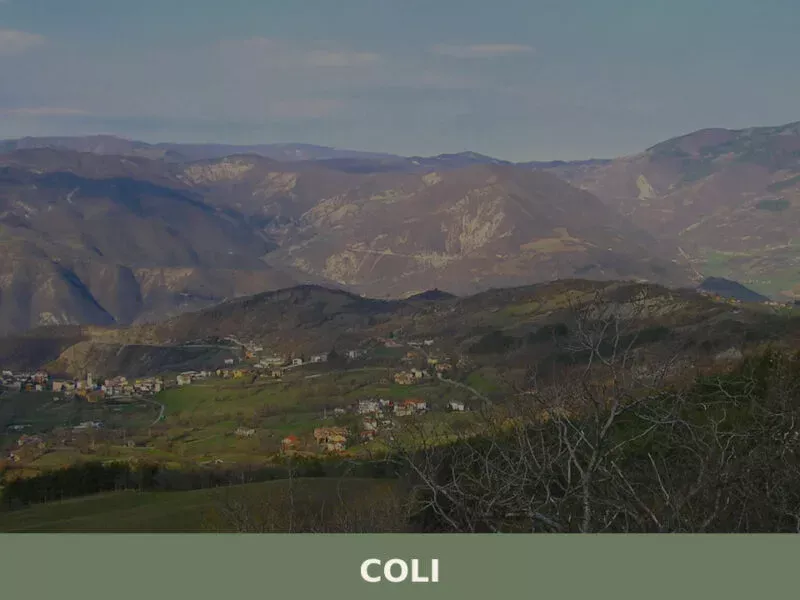
Coli
A documentary-style guide to Coli in the Trebbia valley. History, attractions, local food, and practical tips for visiting this Piacenza Apennine village.
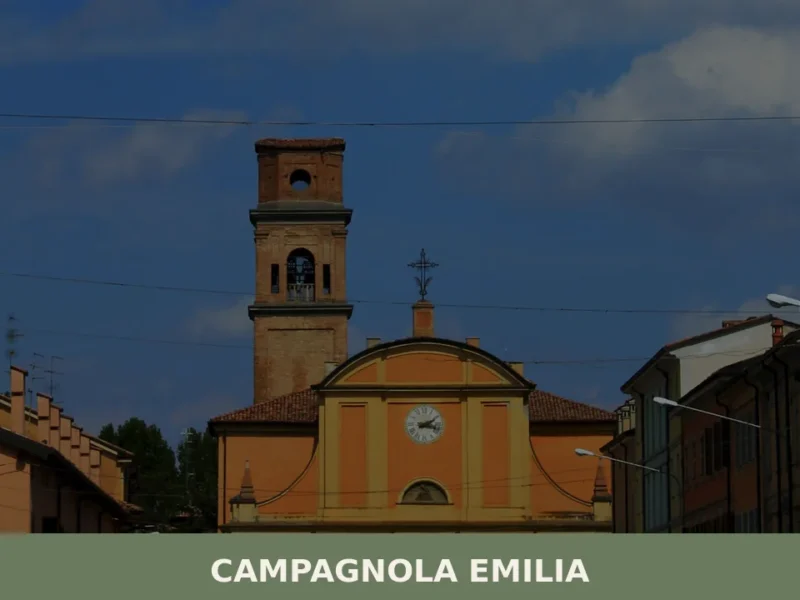
Campagnola Emilia
What to see in Campagnola Emilia, Italy: explore a Po Plain comune at 22 m altitude, 25 km from Reggio Emilia. Discover local festivals and food. Read the guide.
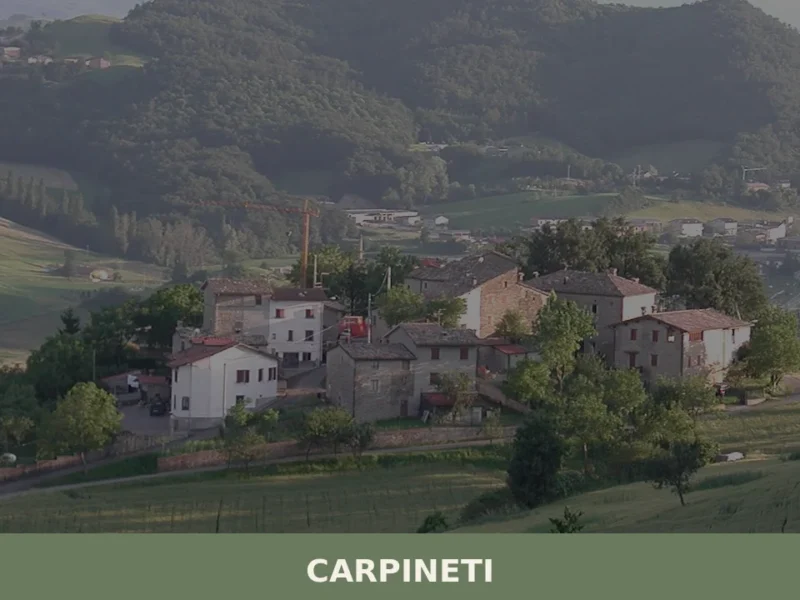
Carpineti
What to see in Carpineti: from the Rocca dei Canossa to the traditional flavors of the Apennines. Find out how to get there and plan your visit.


📝 Incorrect information or updates?
Help us keep the Boretto page accurate and up to date.