


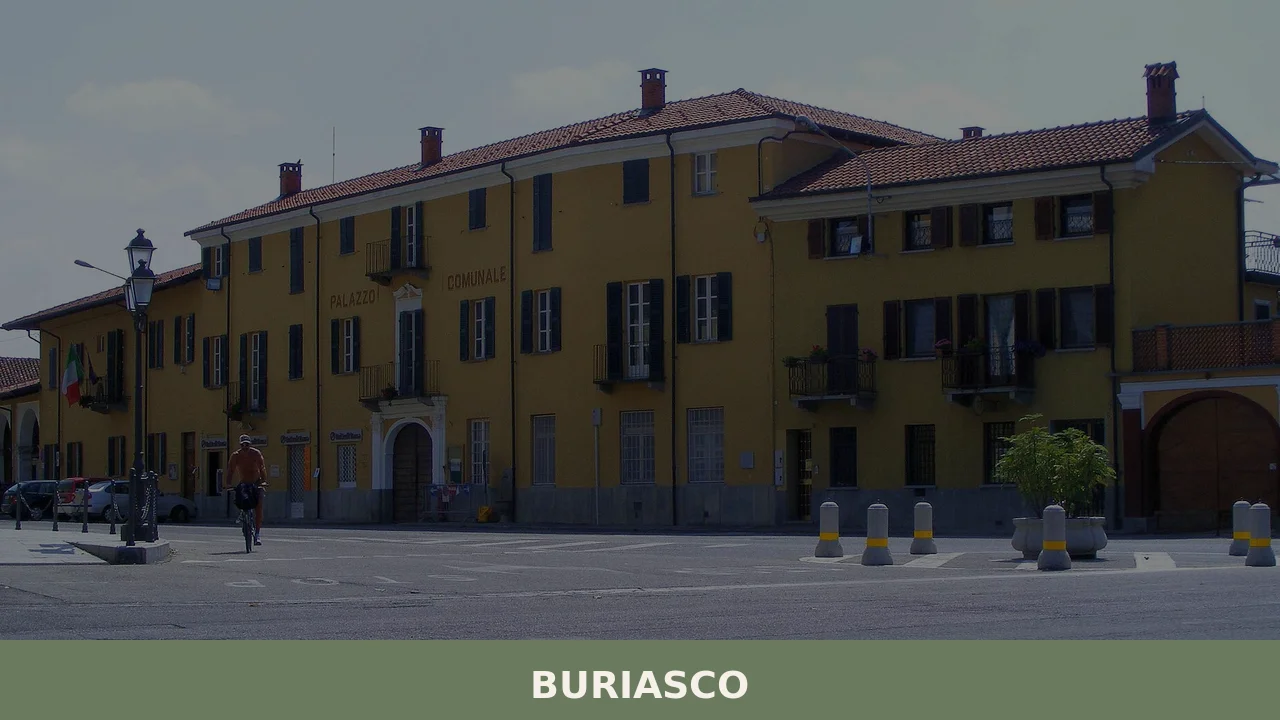
Buriasco
 Hills
Hills
What to see in Buriasco, Italy: 5 top attractions, local food, festivals and how to get to this 301 m village near Turin. Discover Buriasco, Piemonte.
Discover Buriasco
The plain south of Turin opens flat and wide, the fields marked by irrigation channels and rows of poplars that break the horizon line at regular intervals. At 301 m (988 ft) above sea level, Buriasco sits where the foothills of the Pinerolese begin to pull away from the Po plain, placing the village at a precise geographic hinge between the flatlands of the Torinese lowlands and the first ridges that rise toward Pinerolo.
With 1,341 inhabitants, it belongs to the Metropolitan City of Turin, bordering five other municipalities: Pinerolo, Scalenghe, Cercenasco, Macello, and Vigone.
Deciding what to see in Buriasco requires understanding the kind of place this is: a compact agricultural comune where the built fabric, the religious calendar, and the surrounding rural landscape are inseparable from each other.
Located about 30 km (19 mi) southwest of Turin, the village rewards visitors who combine it with the broader Pinerolese area. The Buriasco highlights include its parish church dedicated to the Archangel Michael, the rural streetscape of the historic centre, and the seasonal food traditions tied to the grain and livestock farming that has defined this corner of Piemonte for generations.
History of Buriasco
The earliest documentary traces of Buriasco reach back into the medieval period, when the settlement appeared in records connected to the jurisdictional reorganisation of the territory around Pinerolo. The name itself reflects the layered linguistic history of this part of Piemonte, where Latin administrative terms were absorbed and reshaped by local dialects over centuries of Lombard, Frankish, and then Savoyard governance.
The plain around the village was agricultural land from the earliest recorded times, and control over it passed between local feudal lords and the expanding influence of the House of Savoy as that dynasty consolidated its grip over the Piedmontese territories from the late medieval period onward.
Under Savoyard rule, Buriasco functioned as a rural commune embedded in the administrative network centred on Pinerolo, which served as one of the key towns of the southwestern Piedmontese plain.
The village’s position along routes connecting the plain to the mountain valleys gave it a modest but consistent role in local trade. The construction and successive modifications of the parish church dedicated to the Archangel Michael reflect the successive waves of investment that characterised rural religious architecture in this region from the late medieval period through the Baroque era, when the Savoy territories saw considerable ecclesiastical building activity funded by both noble patrons and local communities.
In the nineteenth century, the unification of Italy brought administrative reorganisation that confirmed Buriasco’s status as an independent comune, a self-governing municipal unit, within what became the Province of Turin.
The population has remained small and relatively stable across the twentieth and twenty-first centuries, with the economy shifting gradually from purely subsistence agriculture toward a mixed structure that retains strong ties to cereal farming, livestock, and the broader agri-food economy of the Torinese plain.
Today, Buriasco is officially part of the Metropolitan City of Turin, the administrative structure that replaced the traditional province following the 2014 Italian institutional reforms. The village also maintains an international twinning with María Juana, a municipality in the Santa Fe Province of Argentina, a relationship that reflects the significant emigration of Piedmontese families to Argentina during the late nineteenth and early twentieth centuries.
What to See in Buriasco, Piemonte: Top Attractions
Parish Church of the Archangel Michael
The parish church stands as the principal religious and architectural focus of the village, dedicated to San Michele Arcangelo, the Archangel Michael, whose feast gives Buriasco its annual patron saint celebration.
The building’s façade faces onto the main square of the historic centre, and its interior accumulates decorative layers from different periods, reflecting the sustained investment of the local community across several centuries. The altar furnishings and devotional paintings document the influence of the broader Piedmontese religious art tradition.
Visit in September when the church becomes the focal point of the patron feast celebrated on the third Sunday of the month.
The Historic Village Centre
The compact grid of Buriasco’s historic streets preserves the proportions and materials of a working agricultural village of the Torinese plain, where brick and render construction predominates over the stone more typical of the nearby hills.
The street pattern reflects the medieval and early modern organisation of a borgo, a rural settlement of modest scale built for function rather than display. Walking the central streets takes less than thirty minutes, but the sequence of courtyard gates, agricultural buildings converted to residential use, and the surviving fragments of older plasterwork repays slow attention. The best light for observing the brick tones falls in the late afternoon between April and October.
The Rural Landscape of the Pinerolese Plain
Buriasco sits at the edge of a flat agricultural landscape that stretches northward toward the Po and eastward toward the city of Turin, 30 km (19 mi) away. The fields around the village are planted with cereals, maize, and fodder crops in a rotation pattern common across the Torinese plain, and the irrigation network of channels and ditches visible from the minor roads dates in its basic structure to medieval land management.
Cycling the flat roads between Buriasco and its neighbouring municipalities — Scalenghe, Cercenasco, and Vigone — covers distances of between 5 km (3.1 mi) and 12 km (7.5 mi) and gives a clear reading of how this agricultural system functions across the landscape.
Views Toward the Alpine Arc
From the higher ground at the edge of the village, on clear days between October and April when the Po Valley haze is reduced by rain and cold air, the western Alpine arc from Monte Viso — which rises to 3,841 m (12,602 ft) — northward through the Cottian and Graian Alps becomes fully visible.
Monte Viso, the source of the Po River, lies approximately 60 km (37 mi) to the southwest and dominates the view on the clearest winter days. This panoramic orientation toward the mountains is a consistent geographical feature of all the settlements on the western edge of the Torinese plain, and Buriasco’s position at 301 m (988 ft) provides an unobstructed sightline across flat terrain.
The Municipal Boundary with Pinerolo
Buriasco shares a direct municipal boundary with Pinerolo, the main town of the Pinerolese area, situated roughly 5 km (3.1 mi) to the southwest. Pinerolo has a documented history as a Savoyard military and administrative centre and contains a substantially larger stock of historical architecture, including its cathedral and the former Savoyard royal stables. For visitors using Buriasco as a base, Pinerolo is reachable by car in under ten minutes and significantly expands the range of historical and cultural sites accessible in a single day.
The road connecting the two municipalities runs straight across the plain and passes through the characteristic agricultural landscape described above.
Local Food and Typical Products of Buriasco
The food culture of Buriasco belongs to the broader culinary tradition of the Torinese plain, a zone where Piedmontese cooking — defined by its reliance on butter, slow braises, fresh egg pasta, and the products of pig and cattle farming — meets the specific agricultural output of a cereal-growing and dairy-producing lowland.
The flat land around the village has historically supported mixed farming, and the diet of the local population reflected a balance between grain-based foods and the meat and dairy products of livestock kept on those same farms. This is not a wine-producing zone: the vineyards of Piemonte begin in earnest further north and east, in the Langhe and Monferrato hills, but those wines travel easily to tables across the region.
Among the dishes most closely associated with this part of the Torinese plain, tajarin al burro occupies a central position: a fresh egg pasta cut into very thin strands, finished with melted butter and sometimes a handful of grated Grana Padano or Parmigiano.
The dough requires a high proportion of egg yolks — traditional recipes call for between ten and forty yolks per kilogram of flour — which gives the pasta its characteristic deep yellow colour and firm bite.
Brasato al Barolo, a beef braise cooked for several hours in Barolo wine with aromatic vegetables, appears on tables throughout the province during the colder months, the collagen-rich cuts of the animal slowly dissolving into a sauce that coats the back of a spoon. Bagna cauda, a hot dip made from anchovies, garlic, and olive oil served with raw and cooked vegetables, is a collective winter dish eaten communally and associated with the whole of rural Piemonte.
The Torinese plain also produces grissini, the thin crisp breadsticks that originated in Turin in the seventeenth century and remain a staple of tables across the metropolitan area. Bakers in the villages around Turin, including those in the Pinerolese zone, have maintained the tradition of hand-rolled grissini torinesi, which are longer, thinner, and more irregular than the industrially produced version.
Local markets and bakeries in the area around Buriasco stock these alongside the standard bread loaves of the Piedmontese tradition.
No products with a specific protected designation of origin certification are recorded exclusively for Buriasco, but many of the certified products of the wider Piemonte region — including Vitello della coscia preparations and dairy products made from the milk of Piedmontese cattle — reach the village through the network of local producers and weekly markets operating across the Torinese plain.
The most direct access to local food products is through the weekly markets held in Pinerolo, 5 km (3.1 mi) away, which draw producers from the surrounding comuni including Buriasco. Autumn is the most productive season at these markets: chestnuts from the Pinerolese hills, pumpkins from the plain farms, and the first pressed oils from the Ligurian suppliers who trade regularly in this part of Piemonte all appear between October and November.
Visitors arriving in September will also find the period immediately following the patron feast to be a good moment for local food events tied to the agricultural calendar.
Festivals, Events and Traditions of Buriasco
The central event of Buriasco’s annual calendar is the feast of the patron saint, San Michele Arcangelo, celebrated on the third Sunday of September.
The celebration follows the format standard across Piedmontese rural communities: a solemn Mass in the parish church in the morning, followed by a procession through the streets of the village in which the statue of the saint is carried by members of the local confraternity. The September timing places the feast at the end of the summer harvest period, which historically made it a moment of collective relief and communal gathering for an agricultural community. Evening celebrations typically include music and outdoor gatherings in the village square.
Beyond the patron feast, Buriasco participates in the broader seasonal rhythm of rural Piemonte, where the agricultural calendar punctuates the year with moments tied to planting, harvest, and livestock management.
The village’s twinning with María Juana in Argentina — a municipality in a region of Argentina settled substantially by Piedmontese emigrants — occasionally generates cultural exchange events that bring the two communities into contact. September, with its combination of the patron feast and the harvest season, represents the most concentrated period of local activity and the most rewarding time to visit for those interested in the living social practices of a working Piedmontese comune.
When to Visit Buriasco, Italy and How to Get There
The best period to visit Buriasco and the surrounding Pinerolese area runs from late April through October, when the weather on the Torinese plain is stable and the Alpine views to the west are clearest in the early morning before any haze develops.
September is particularly well-timed for those interested in the patron feast and the harvest activity in the fields. Winter visits are feasible and the Alpine panorama on clear days between November and February can be exceptional, but the plain itself offers limited outdoor activity in cold, damp weather.
International visitors should note that English is not widely spoken in smaller local shops and service points, and carrying cash in euros is practical for markets and smaller establishments.
Getting to Buriasco is straightforward from Turin. By car, take the A55 motorway toward Pinerolo and exit at Pinerolo, from where Buriasco is approximately 5 km (3.1 mi) by provincial road — total driving time from central Turin is around 45 minutes depending on traffic. Buriasco is not served by a direct train station: the nearest rail stop is Pinerolo, which is connected to Turin Porta Susa station by Trenitalia regional services running several times daily, with journey times of approximately 50 minutes.
From Pinerolo station, a taxi or local bus covers the remaining 5 km (3.1 mi) to the village. The nearest international airport is Turin Airport (Torino Caselle), located approximately 55 km (34 mi) northeast of Buriasco, with a drive time of roughly one hour. Milan’s Malpensa Airport lies about 140 km (87 mi) to the northeast and is reachable in approximately 90 minutes by motorway, making Buriasco viable as part of a longer northern Italy itinerary.
The official municipality website carries local information and contacts useful for planning a visit.
For those making a day trip from Turin, Buriasco combines naturally with Pinerolo and the other comuni of the southwestern plain. The driving loop from Turin through Scalenghe, Buriasco, and back via Vigone covers roughly 80 km (50 mi) of flat roads and can be completed comfortably in a full day. Travellers who enjoy cycling in flat terrain will find the network of minor roads between these villages well-suited to a half-day ride.
Villages in the broader Torinese metropolitan area such as Andezeno, in the hills east of Turin, offer a contrasting landscape of vineyards and elevated viewpoints for those wishing to explore different faces of the same province in consecutive days.
Visitors extending their time in Piemonte toward the mountain valleys north of Turin might also consider Ala di Stura, a mountain village in the Lanzo valleys roughly 60 km (37 mi) north of Buriasco, where the Alpine environment provides a complete contrast to the agricultural plain.
For those interested in the smaller comuni of the Canavese area northeast of Turin, Bairo represents a comparable village-scale experience within the same metropolitan province, set among the moraine hills above the Po plain.
Getting there
Via Generale Da Bormida, 10060 Buriasco (TO)
Nearby Villages near Buriasco
In Piedmont More villages to discover
Monteu da Po
Hills
Scopri Monteu da Po, affascinante borgo piemontese sulle rive del Po. Storia, natura e tradizioni in un angolo autentico del Piemonte da non perdere.
Cuneo
Hills
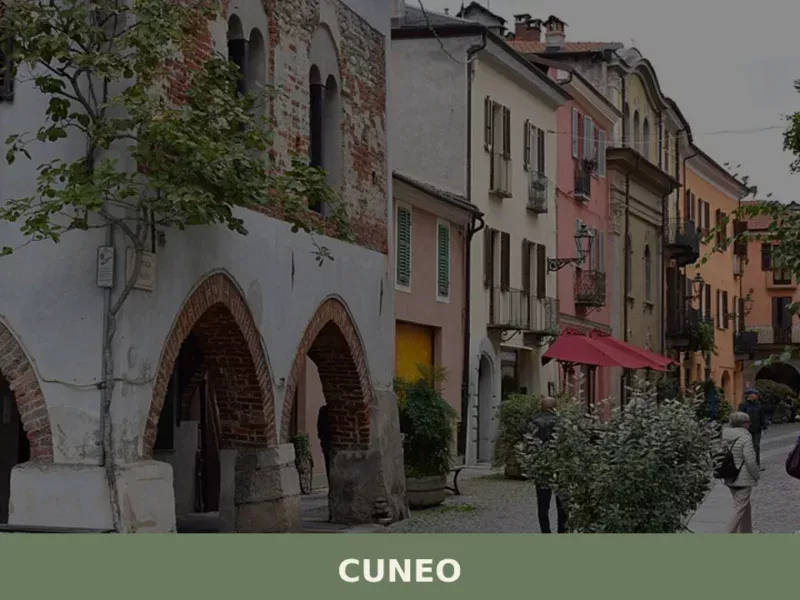
What to see in Cuneo: 55,744 residents at 534m, historic arcades, Piazza Galimberti and the Cuneese al Rum. Plan your visit with this complete city guide.
Scalenghe
Hills
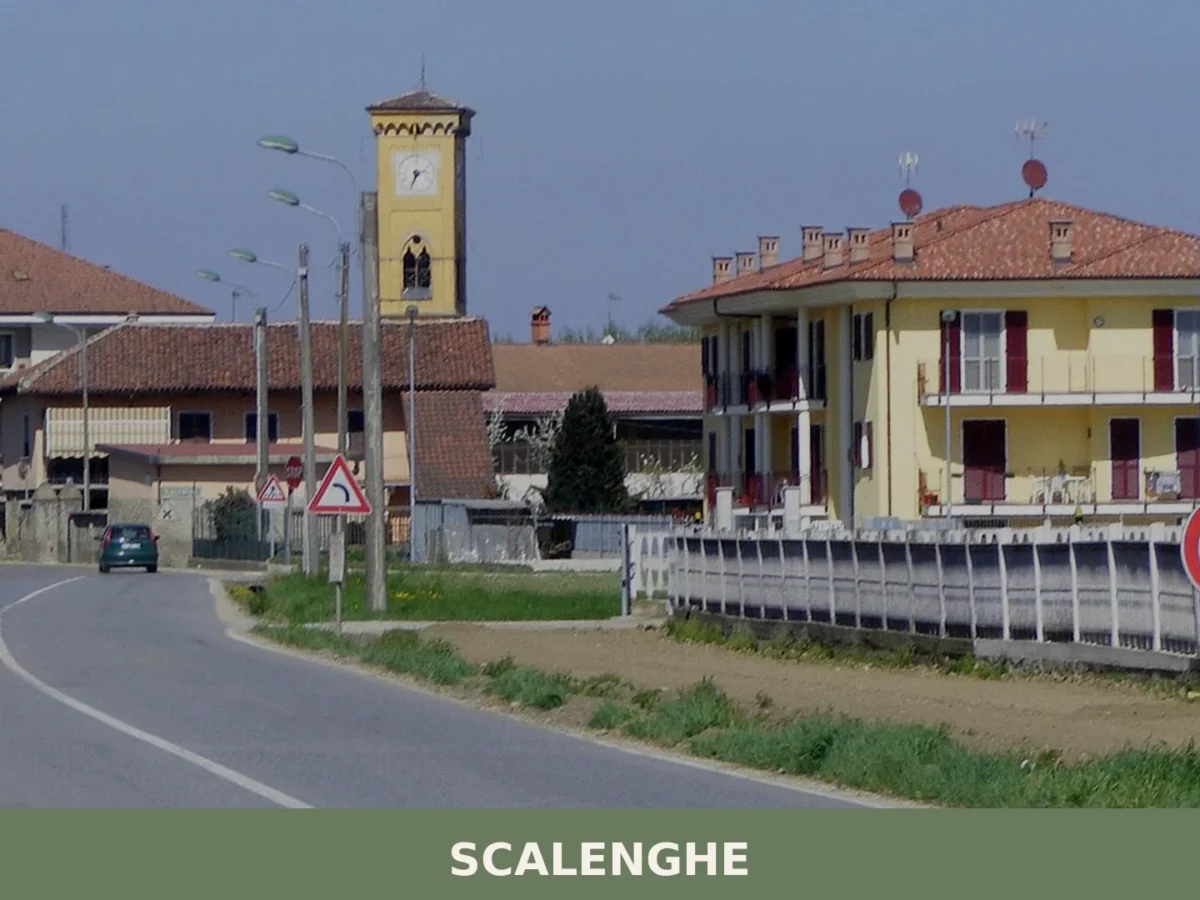
A comune of 3,195 residents where centuries-old churches meet a landscape shaped by cattle and grain. Medieval roots and modern farming define this territorial landmark.
Sauze di Cesana
 Mountain
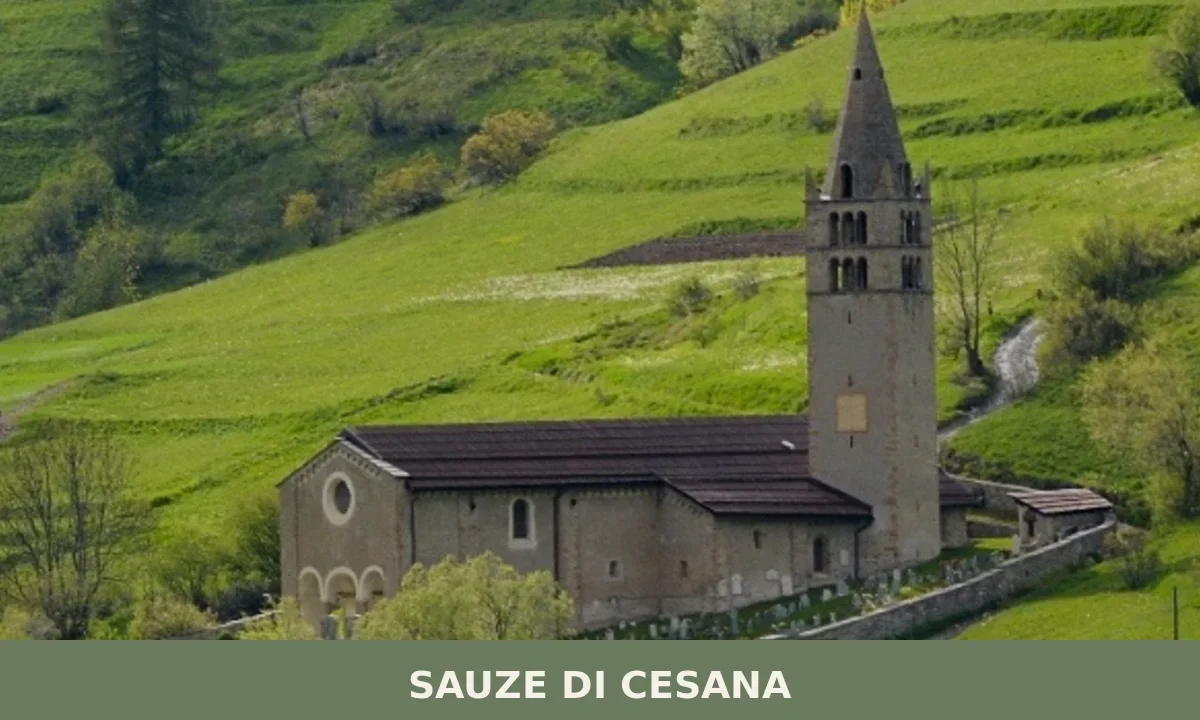
Population 226. A high-altitude mountain village in Val di Susa where stone architecture and a century of territorial struggle have shaped identity more than monuments.

Salbertrand
Mountain
A 627-soul mountain village at 1,032 metres, rooted in Occitan tradition and medieval pilgrimage routes. Stone fountains, frescoed churches and views of the Ambin peaks define its character.

Borgone Susa
Mountain
Borgone Susa offers 5 remarkable attractions including a 14th-century fortified tower and a mysterious Roman rock carving. A compact Val di Susa gem worth exploring.
Piobesi Torinese
 Plains
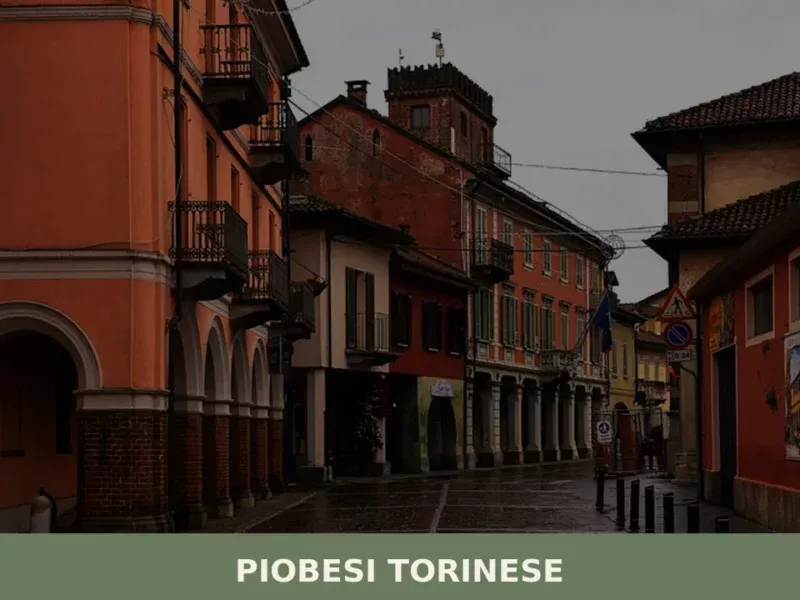
Scopri Piobesi Torinese, affascinante borgo piemontese: storia, attrazioni, tradizioni e consigli pratici per visitarlo al meglio.
Osasco
Plains
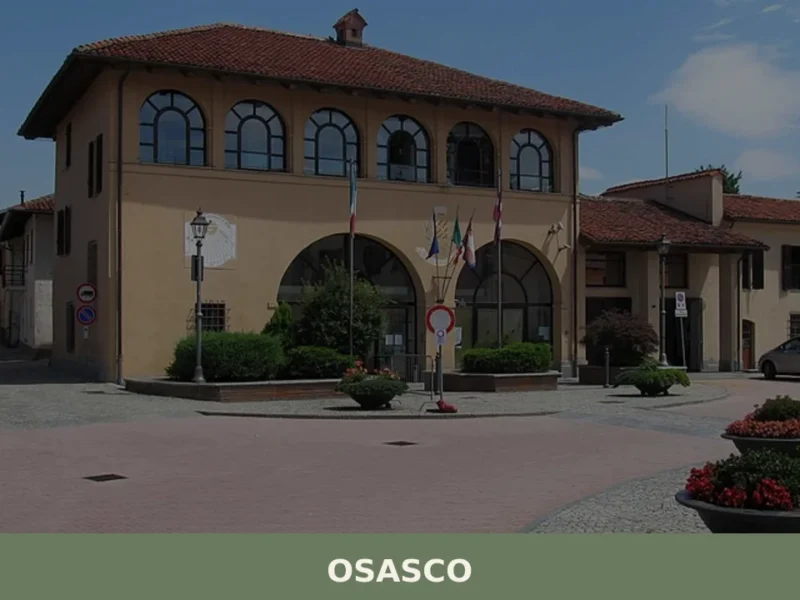
Osasco is a comune of 1,161 inhabitants in the Metropolitan City of Turin, sitting in the Piemonte region of northwestern Italy. Known in the local Piedmontese language as Osasch, the village occupies a modest position in the hills and plains south of Turin, one of dozens of small agricultural and residential communes that form the […]

Pomaretto
Mountain
Discover what to see in Pomaretto, a 937-inhabitant Waldensian village in the Val Chisone near Torino — history, food, travel tips and local culture.
Bairo
Hills
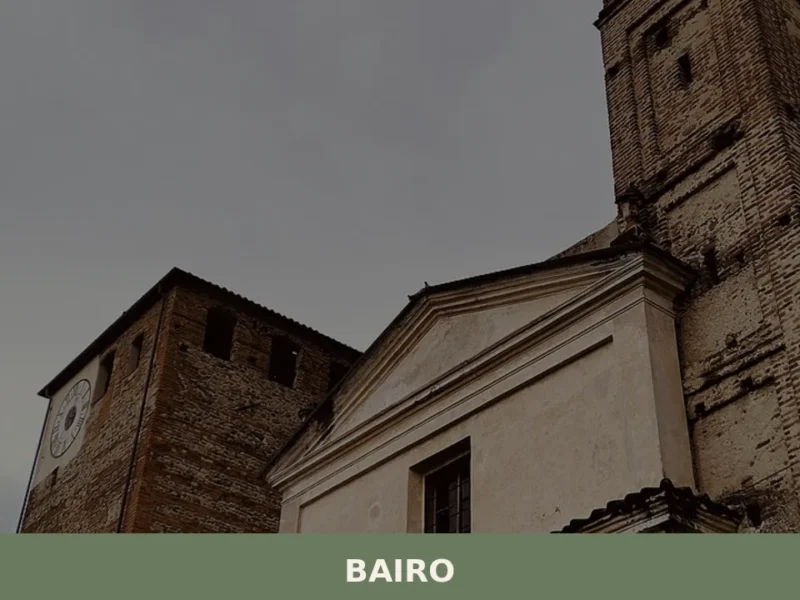
The earliest confirmed record of Bairo dates to a document from 1003, when Marquess Arduino of Ivrea — who would shortly become King of Italy — confirmed landholdings in this portion of the Canavese between the moraine ridge and the foothills of the Graian Alps. Today the municipality has 806 inhabitants, spread across the historic […]



🏡 Know Buriasco better than we do?
If you’re a local or have been there, your knowledge matters: add what’s missing or fix a detail on this page.