


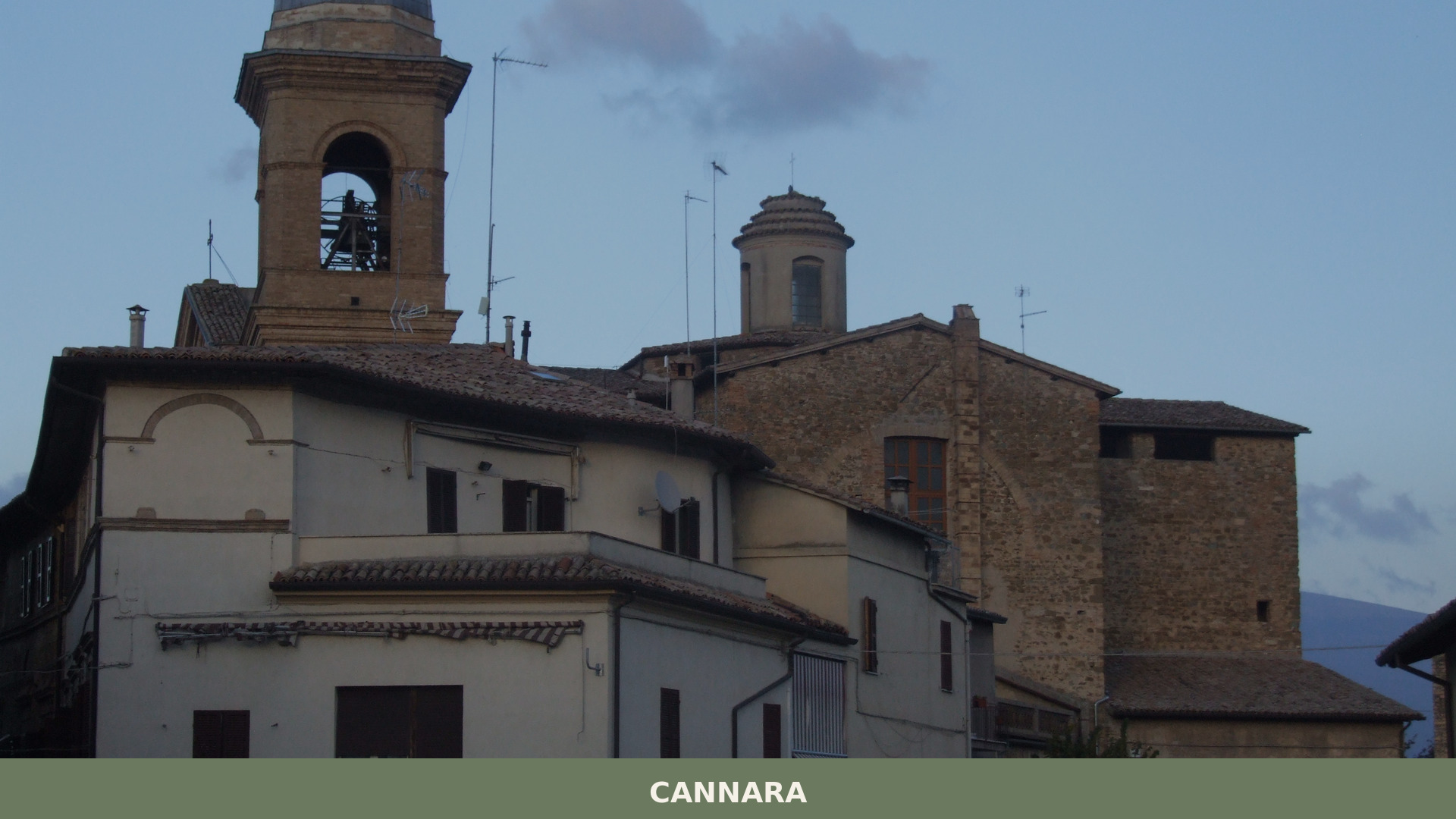
Cannara
 Plains
What to see in Cannara, Umbria, Italy: Roman ruins, medieval churches, and the Festa della Cipolla. Population 4,341. Discover top attractions and how to get there.
Discover Cannara
The Topino River moves slowly through the Umbrian plain here, its current barely ruffling the reeds that gave this place its name. The surrounding soil is clayey and dark, the kind of earth that holds water long after rain and leaves boots heavy at the end of a field walk.
At 191 m (627 ft) above sea level, Cannara sits at the floor of the Umbrian Valley, on land that was still partially submerged in a lake during the early Middle Ages.
A document from 1170 records the settlement as insula Cannaio, the island of Cannaio, because the draining was not yet complete.
Deciding what to see in Cannara means moving between several distinct layers: medieval churches holding 14th-century tempera panels, a Roman archaeological site on a plateau 506 m (1,660 ft) above sea level, and a riverbank shrine marking the spot where Saint Francis preached to birds in 1212 or 1213.
Cannara, Umbria, Italy, has a population of 4,341 and sits roughly 7 km (4.3 mi) west of Spello and 9 km (5.6 mi) north of Bevagna.
Visitors moving through the area find a compact town whose main street opens into small squares flanked by stone buildings, with the agricultural plain stretching flat in every direction beyond the edge of the last house.
History of Cannara
The name itself carries the town’s origin story. Standing in the main piazza today, it is easy to overlook the fact that the ground underfoot was once the bed of the Lacus Clitorius, a lake that stretched across much of the plain between Bastia Umbra and Foligno. Earlier inhabitants of the region had moved to higher ground, clustering around settlements like the Roman town of Urvinum Hortense, located a few hundred metres northeast of what is now the village of Collemancio.
In 545, the Ostrogothic king Totila destroyed Urvinum Hortense, after which the surrounding plain was gradually reclaimed and resettled.
The first written mention of Cannara dates to 1170, when it appears as an island still surrounded by water. The name Cannara derives from cannaria, the Latin term for a place thick with reeds, though an earlier name, Carnerio, linked the settlement to Count Raniero of the Perugian Ranieri family, who reportedly founded it during the era of Frederick Barbarossa.
Medieval Cannara changed hands repeatedly.
In 1212 control passed to Count Napoleone Trinci, and disputes with Assisi over border territories persisted through much of the 13th and 14th centuries. In 1377 the town submitted to Perugia, aligning itself with that city in the ongoing conflict with Assisi. A decade later, in 1387, exiles from Perugia known as the Michelotti occupied the town, forcing its residents to flee north to Perugia itself.
In 1416 the fortunes of Cannara followed those of Perugia under the condottiere Braccio Fortebraccio.
During the 15th century the Baglioni family held lordship over the town. In 1515, the municipality purchased reclaimed marshlands previously seized by the Baglioni, and the 16th century brought urban improvements under Costanza Baglioni. The death of Malatesta V in 1648 ended Baglioni rule, and the territory passed to the Holy See after an acquisition by the Ughi family of Florence.
The 18th and 19th centuries were turbulent.
French troops looted and burned Cannara in 1797, and two years later the town was absorbed into the Department of Trasimeno under a provisional government based in Perugia. Subsequent decades saw the town passed between papal administration and French-influenced governance, with an earthquake in 1832 causing significant physical damage. By the mid-19th century Cannara had 1,873 inhabitants, roughly split between the town and the surrounding countryside.
In November 1860, Umbria was incorporated into the Kingdom of Sardinia, and after Italian unification Cannara became a municipality within the Kingdom of Italy.
Today the economy remains rooted in agriculture, principally the cultivation of wheat and onions, and the freight-only railway station reflects a town that has kept its productive, unhurried pace into the 21st century.
Travellers exploring the wider Umbrian valley who stop at smaller hill towns such as Cerreto di Spoleto, which like Cannara passed through medieval lordships and papal rule, will recognise many of the same institutional patterns shaping the region’s history.
What to see in Cannara, Umbria: top attractions
Church of San Matteo
The church of San Matteo is dedicated to the town’s patron saint, whose feast falls on 21 September, and it holds works spanning more than two centuries of Umbrian religious painting.
Among the pieces documented here is a tempera painting depicting the Virgin with Christ, Saint Francis, and Saint Matthew, attributed to the Umbrian school of the 14th and 16th centuries.
The interior rewards careful examination: the attribution to the Umbrian school places the works within a well-defined regional tradition of panel painting that developed across towns from Perugia to Foligno during the late medieval period.
The church is located within the historic centre of Cannara and is easily reached on foot from the main piazza, making it a natural starting point for visitors mapping out what to see in Cannara.
Church of San Giovanni Battista and the Niccolò Alunno Altarpiece
Inside the church of San Giovanni Battista stands a tempera altarpiece that art historians attribute to Niccolò Alunno, one of the most documented painters of the 15th-century Umbrian school. The panel depicts the Virgin with Christ, Saint John, and Saint Sebastian, its figures rendered in the precise, gold-inflected manner typical of Alunno’s output.
The sacristy preserves a 15th-century embossed copper processional cross, a surviving example of decorative metalwork from the same period.
Alunno, who was active in Foligno and across the Umbrian valley during the second half of the 1400s, left works in several towns along this corridor of the plain, and the Cannara panel is among the pieces that make the town worth including in any art-focused itinerary through the region.
Edicola of Pian d’Arca
The small roadside shrine at Pian d’Arca was built in 1926 to mark the 700th anniversary of the death of Saint Francis, and it stands on the site traditionally identified as the location of his sermon to the birds, delivered between 1212 and 1213.
The structure, protected by a low enclosing wall, contains a fresco showing Saint Francis addressing a gathering of birds, and below it a marble slab carries an inscription recording the event.
Stone steps descend through a gate to a small altar.
A path leaves the shrine and follows the route that tradition associates with Francis’s walk from Cannara toward Bevagna on the day he encountered the birds. The site is modest in scale and easy to reach from the town centre, and it functions as the starting point for that short footpath across the plain.
Urvinum Hortense Archaeological Site and Antiquarium of Collemancio
A few hundred metres northeast of the village of Collemancio, within the municipal territory of Cannara, the plateau at 506 m (1,660 ft) above sea level holds the remains of the Roman town of Urvinum Hortense. The site developed as a planned settlement during the 2nd century BC and achieved the status of Roman municipium in 90 BC, with its citizens enrolled in the Stellatina tribe of Augustus’s Regio VI.
Visible remains include sections of the western perimeter wall, the rectangular podium of a temple measuring 23.8 m (78 ft) by 17.8 m (58 ft), a large cistern, and a bath complex covering more than 400 sq m (4,300 sq ft).
That bath complex yielded a polychrome mosaic pavement with Nilotic scenes.
Systematic excavations began in 1995, and finds from the site are displayed in the Antiquarium of Collemancio and in the Museo della Città e del Territorio di Cannara, which opened in 2008 and covers the history of the territory from its prehistoric origins through the Early Middle Ages and into the modern period.
Church of San Biagio
The earliest documentary reference to the Church of San Biagio dates to 1244, when the monks of San Benedetto del Subasio listed it among their possessions.
The façade preserves the appearance of a late Gothic structure, its facing composed of white and pink stone blocks laid in alternating horizontal rows, a technique that gives the exterior a striped, measured quality characteristic of central Italian ecclesiastical building of that period.
The high altar holds a late 16th-century painting of the Trinity, while flanking panels depict Saints Lawrence and Benedict on one side and Saint Blaise and Blessed Lawrence Justinian on the other.
The combination of the 13th-century documentary record, the Gothic stonework, and the late Renaissance altarpiece makes San Biagio a compact survey of nearly four centuries of Cannara’s religious life within a single building.
Local food and typical products of Cannara
Agriculture has driven the economy of Cannara for centuries, and the range of crops documented here across different periods reflects the fertility of the dark, clayey soil on the left bank of the Topino. Historical records from the 19th century list onions, hemp, flax, fish from local waters, silkworm cocoons, and mulberry cultivation among the town’s traded goods, alongside earthenware production and the distilling of spirits.
Vines and elms were planted extensively across the surrounding territory, and the Saone and Ose streams supplemented the Topino in irrigating the low-lying fields.
That agricultural base has not changed in its essentials, though today the onion dominates as the crop most associated with the town’s identity.
The cipolla di Cannara, the local onion variety, is the ingredient around which the town’s culinary identity is built.
It appears raw in salads and cooked in a range of preparations: sliced and layered onto flatbread dough before baking to produce pizza con la cipolla, a thick-crusted round where the onion softens and sweetens during cooking without losing its structure. The same onion goes into soups thickened with bread, into slow-cooked soffritto bases for meat dishes, and into preparations where it is baked whole until the outer layers caramelise.
The variety grown around Cannara is noted for its relatively mild flavour compared to other Italian onion types, a quality attributed to the moisture-retaining clay soil of the valley floor.
No DOP or IGP certification for the cipolla di Cannara appears in the verified sources for this guide.
What the sources confirm is a long-running local food fair dedicated to the onion: the Festa della Cipolla, held annually, has been running for over forty years and draws around 30,000 visitors across a single weekend. Dishes served at the festival include onion pizza and a range of other onion-based preparations prepared by local associations. The festival represents the most concentrated opportunity to eat dishes centred on the Cannara onion in a single visit.
Visitors who want to take the onion home can look for it at local markets and farm stands on the roads surrounding the town during the harvest season, typically late summer.
The wider Umbrian plain surrounding Cannara also produces wheat, and bread baked without salt, the pane sciocco traditional across Umbria, appears on tables throughout the area.
Local wine production is documented in the historical record through vine cultivation, though the valley floor at 191 m (627 ft) produces table wine rather than the more elevated, controlled-denomination wines associated with hills further from the plain.
For those travelling between Cannara and the Umbrian hill towns, the food offer shifts noticeably with altitude, and the flat-plain cuisine of Cannara offers a distinct contrast to the truffle and cured-meat focus of villages higher in the Apennine foothills, such as Preci, known for its norcineria tradition of pork butchery.
Festivals, events and traditions of Cannara
The town’s patron saint is San Matteo, the Apostle Matthew, whose feast falls on 21 September.
This date marks the principal religious calendar event in Cannara, observed with the customary forms of Central Italian patron-saint celebrations: a solemn Mass in the church of San Matteo, followed by a procession through the historic centre.
The September date places the feast at the end of the harvest season, a coincidence that historically gave the celebration an agricultural dimension alongside its devotional character. The feast is the longest-established annual gathering in the town’s calendar and remains the primary occasion of collective public ceremony within the community.
The Festa della Cipolla is the town’s other defining annual event and the one that reaches the widest audience.
The festival has been held for over forty years as of 2025 and concentrates approximately 30,000 visitors into a single weekend, a figure substantial relative to the town’s population of 4,341.
The programme centres on onion-based dishes prepared and served by local groups, with pizza con la cipolla among the most consistently featured preparations. The event functions as the practical demonstration of the crop’s central role in the local economy and in Cannara’s identity within the broader landscape of Umbrian food culture.
Exact dates vary by year, so visitors planning to attend should verify the current year’s schedule through the before travelling.
When to visit Cannara, Italy and how to get there
The best time to visit Cannara depends primarily on two factors: the Festa della Cipolla, which falls in late summer, and the broader Umbrian climate.
The valley floor around Cannara experiences hot, humid summers due to its low elevation and the moisture retained in the clay soil, making July and August less comfortable for extended outdoor exploration. Late spring, from April through June, brings moderate temperatures and green fields across the plain, while September combines cooler air with the festival and the visual interest of post-harvest activity in the surrounding countryside.
Those asking about the best time to visit Umbria more generally will find that the shoulder seasons, April to June and September to October, offer the most practical combination of weather, open museums, and local events across the region. Winters in the valley are cold and damp, with frequent fog rolling off the Topino, and several churches and smaller sites may have restricted opening hours.
Reaching Cannara from Rome takes approximately two hours by car via the A1 motorway toward Florence, exiting at Orte and continuing north through Terni and Foligno on the E45, then turning toward Cannara, which sits roughly 7 km (4.3 mi) from Spello.
From Perugia the drive covers approximately 30 km (18.6 mi).
For those travelling by train, the nearest passenger rail station is at Spello, served by Trenitalia regional services on the Foligno-Terontola line; from Spello, Cannara is reachable by taxi or local road. The town’s own railway station handles freight only and does not serve passengers.
The nearest airport is the Aeroporto Internazionale dell’Umbria Perugia San Francesco d’Assisi, located approximately 20 km (12.4 mi) to the northwest, with connections to several European cities. A day trip from Rome to Cannara is feasible given the roughly two-hour journey each way, though visitors who want to combine Cannara with Spello, Bevagna, and the Urvinum Hortense site will benefit from at least one overnight stay in the area.
International visitors should note that English is not widely spoken in smaller shops and farm stands around Cannara, and carrying euro cash is advisable since card payment infrastructure can be limited in rural settings.
Travellers with additional time in the Umbrian valley can extend their itinerary to include Paciano, a walled hill village in the province of Perugia that shares the region’s medieval heritage and sits within a comfortable driving distance for those already based in the Umbrian plain.
Those interested in the more remote, forested corners of Umbria might consider a further stop at Poggiodomo, a small village in the Valnerina, which offers a contrasting landscape of gorges and Apennine ridges compared to the open flatlands around Cannara.
Frequently asked questions about Cannara
What is the best time to visit Cannara?
Spring (April–June) and early autumn (September–October) offer mild temperatures and the best conditions for exploring the Umbrian plain on foot. The most significant local event is the feast of San Matteo, patron saint of Cannara, celebrated on 21 September, which animates the historic centre with religious ceremonies. Late summer also coincides with the Cipolla di Cannara festival, celebrating the town's famous onion harvest, typically held in late August or early September. Avoid mid-August when many local businesses close and summer heat across the low-lying valley can be intense.
What are the historical origins of Cannara?
Cannara sits on land that was partially submerged by the Lacus Clitorius, a medieval lake covering much of the Umbrian plain. Its name derives from the Latin cannaria, meaning a place thick with reeds. First documented in 1170 as insula Cannaio, the settlement emerged as the plain was gradually drained. The area's earlier Roman history is represented by Urvinum Hortense, a Roman municipium from 90 BC located northeast of Collemancio, destroyed by the Ostrogoth king Totila in 545 AD. Medieval Cannara passed through the hands of the Trinci, Baglioni, and finally the Holy See.
What to see in Cannara? Main monuments and landmarks
Key sites include: the Church of San Matteo (historic centre, on foot from the main piazza), holding 14th–16th-century Umbrian school tempera paintings; the Church of San Giovanni Battista, with a tempera altarpiece attributed to Niccolò Alunno and a 15th-century embossed copper processional cross; the Church of San Biagio, documented since 1244, with a striped Gothic façade; the Edicola of Pian d'Arca, a 1926 shrine marking where Saint Francis preached to birds; and the Roman site of Urvinum Hortense near Collemancio, with temple remains and a polychrome Nilotic mosaic. The Museo della Città e del Territorio opened in 2008.
Are there museums or archaeological sites to visit in Cannara?
Yes. The Museo della Città e del Territorio di Cannara, opened in 2008, covers the territory's history from prehistoric times through the Early Middle Ages to the modern period. The Antiquarium of Collemancio displays finds from the Roman site of Urvinum Hortense, including material from systematic excavations begun in 1995. Visible remains at the archaeological site itself include a temple podium (23.8 m × 17.8 m), sections of the western perimeter wall, a large cistern, and a bath complex of over 400 sq m that yielded a polychrome mosaic with Nilotic scenes. Check locally for current opening hours.
What to eat in Cannara? Local products and specialties
Cannara is best known for its prized onion, the Cipolla di Cannara, cultivated in the dark, water-retentive clay soil of the Topino plain and recognised as a Prodotto Agroalimentare Tradizionale (PAT) of Umbria. The town has grown onions for centuries; 19th-century records also document hemp, flax, silkworm cocoons, and the distilling of spirits among local traded goods. Vines were also cultivated extensively in the surrounding territory. For broader Umbrian context, local restaurants in the area typically offer truffle-based dishes, cured meats, and Sagrantino and Grechetto wines produced in the nearby DOC zones.
What can you do in Cannara? Activities and experiences
Visitors can walk the short footpath from the Edicola of Pian d'Arca toward Bevagna, following the route traditionally associated with Saint Francis's sermon to the birds. The flat terrain of the Umbrian plain surrounding Cannara is well suited to cycling between nearby towns such as Bevagna (9 km south) and Spello (7 km east). The late summer onion festival provides an authentic local food experience. Art itinerary enthusiasts can trace Niccolò Alunno's works across the Umbrian valley, with the Cannara altarpiece forming part of a documented regional circuit linking Foligno, Spello, and surrounding towns.
Who is Cannara suitable for? Families, couples, hikers, solo travelers?
Cannara suits travellers seeking an unhurried, authentic Umbrian experience away from more tourist-heavy towns. Art history enthusiasts will appreciate the Niccolò Alunno altarpiece and Umbrian school paintings. Families with an interest in archaeology can visit the Roman site of Urvinum Hortense and its antiquarium. Couples and slow-travel devotees will find the flat plain ideal for cycling between medieval villages. The Franciscan connection at Pian d'Arca appeals to pilgrims and those following the routes of Saint Francis. The compact historic centre and level surrounding terrain make Cannara accessible for visitors who prefer gentle walking over strenuous hikes.
Where to take the best photos in Cannara?
The striped white-and-pink stone façade of the Church of San Biagio, with its alternating horizontal courses of stonework, is one of the most visually distinctive subjects in the historic centre. The Edicola of Pian d'Arca, framed by its low enclosing wall and set against the open Umbrian plain, offers a quietly evocative composition, especially in morning light. The plateau of Urvinum Hortense near Collemancio, at 506 m above sea level, provides elevated views over the Umbrian valley. The reeded banks of the slow-moving Topino River, with flat agricultural land stretching beyond, capture the distinctive low-lying landscape that defines Cannara's setting.
Nearby Villages near Cannara
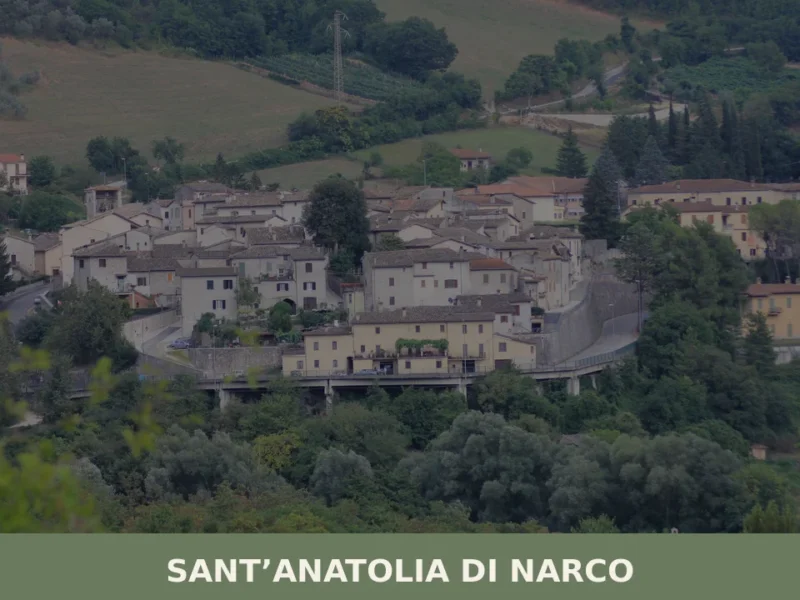
In Umbria More villages to discover
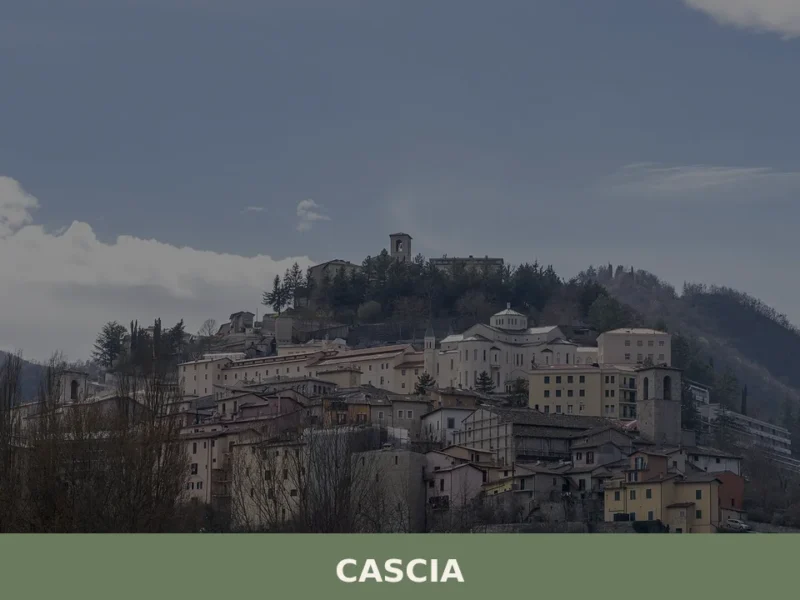
Cascia
 Mountain
What to see in Cascia, Umbria, Italy: explore the Basilica of Santa Rita, medieval churches, and local truffles at 653 m altitude. Discover the full travel guide.
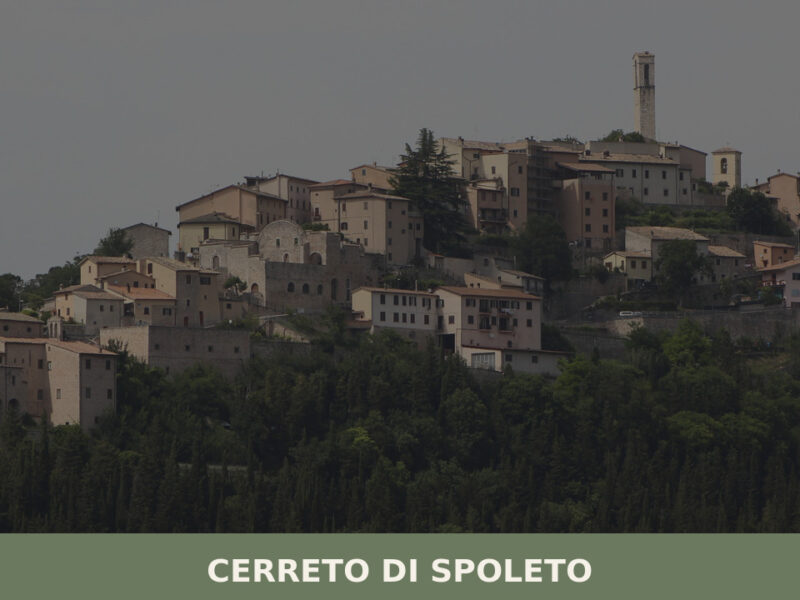
Cerreto di Spoleto
 Hills
Hills
A ridge-top village of 975 inhabitants in the Valnerina, Cerreto di Spoleto holds medieval streets, scattered hamlets, and a centuries-old tradition of itinerant herbalists.
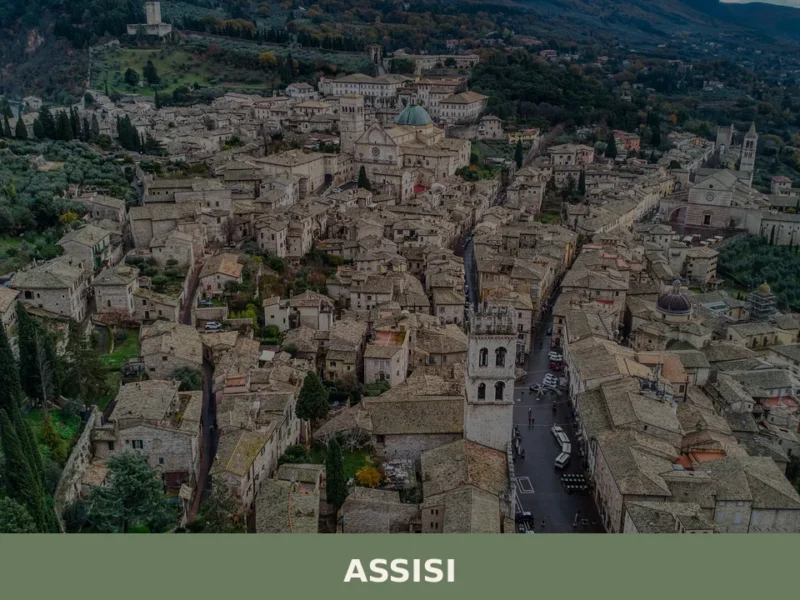
Assisi
Hills
What to see in Assisi, Umbria, Italy: explore the UNESCO Basilica of San Francesco, Rocca Maggiore, and 27,721-inhabitant hilltop town. Discover festivals and travel tips.
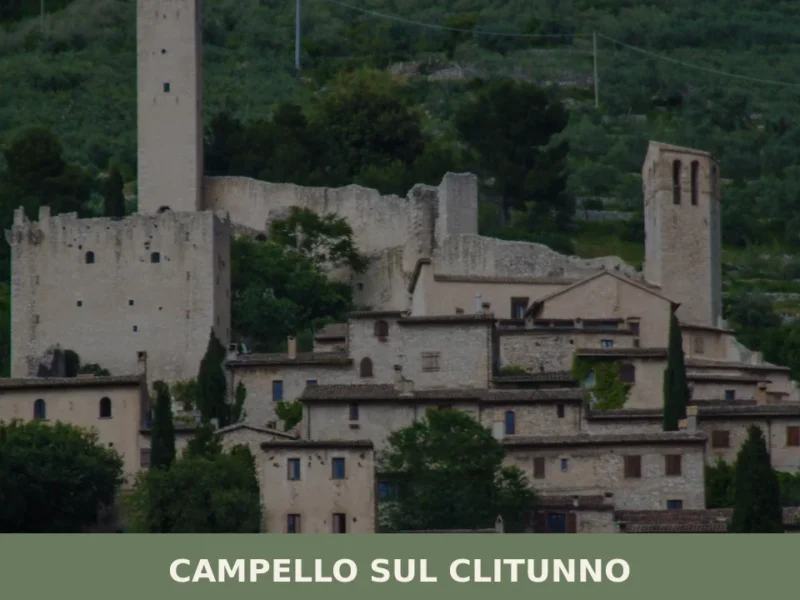
Campello sul Clitunno
Hills
What to see in Campello sul Clitunno, Umbria, Italy: a UNESCO temple, medieval castle, and springs producing 1,500 l/s. Discover the complete travel guide.

Orvieto
Hills
Orvieto stands on a dramatic tufa mesa above the Paglia Valley, home to a great Gothic cathedral and over 3,000 years of layered history. A essential destination in southern Umbria.
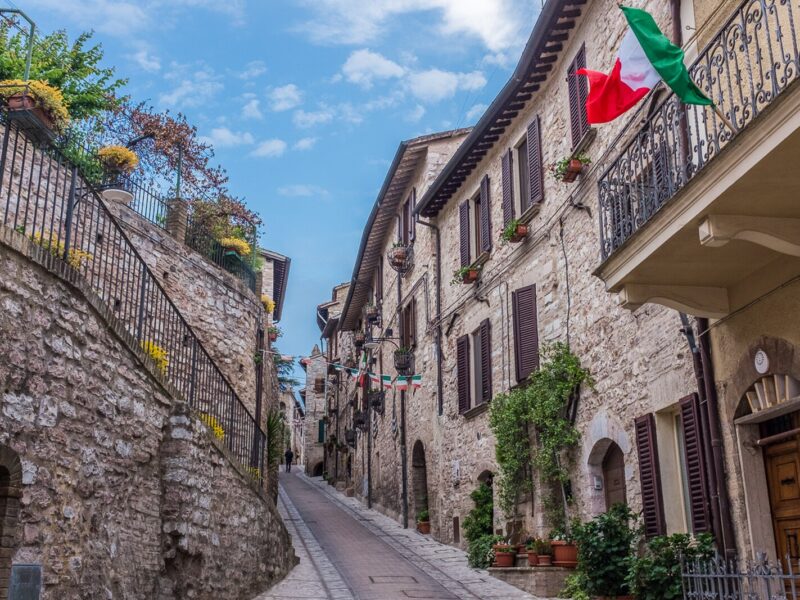
Spello
 Sea
Sea
What to see in Spello, Umbria, Italy: Roman gates, mosaic villa, medieval walls at 314 m. Discover top attractions, local food and how to get there.
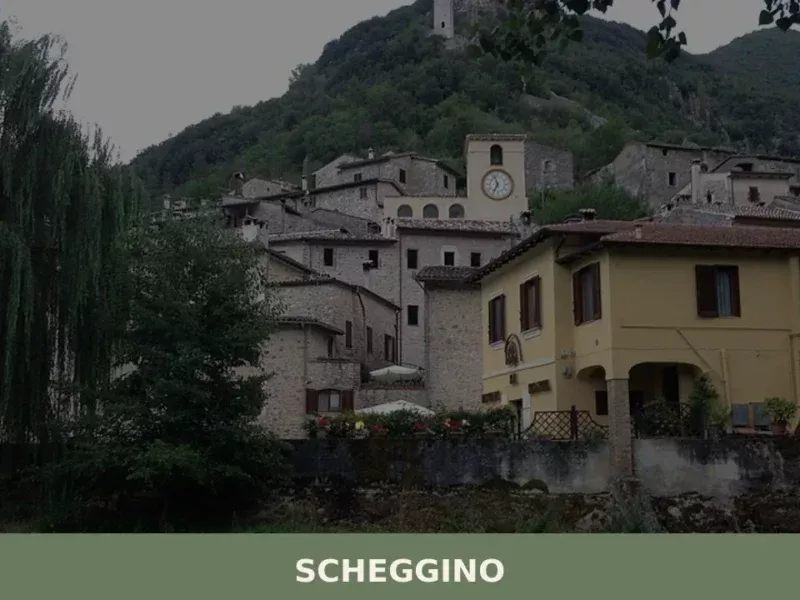
Scheggino
Hills
Situated at an altitude of 282 meters above sea level, Scheggino is a compact village in the Umbrian Apennines, home to 446 inhabitants in the province of Perugia. Its development has been shaped by its proximity to the Nera River, a constant presence that influenced both its economy and defensive structures over centuries. Understanding what […]
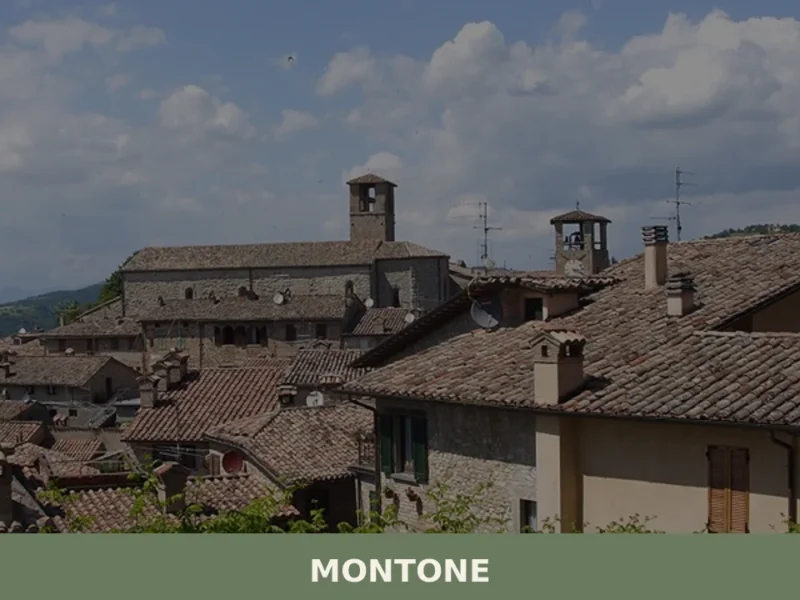
Montone
Hills
What to see in Montone, Italy: Explore this Umbrian village, 482 m high, with its medieval walls and historic Rocca d'Aries. Discover churches and heritage.
Bevagna
Hills
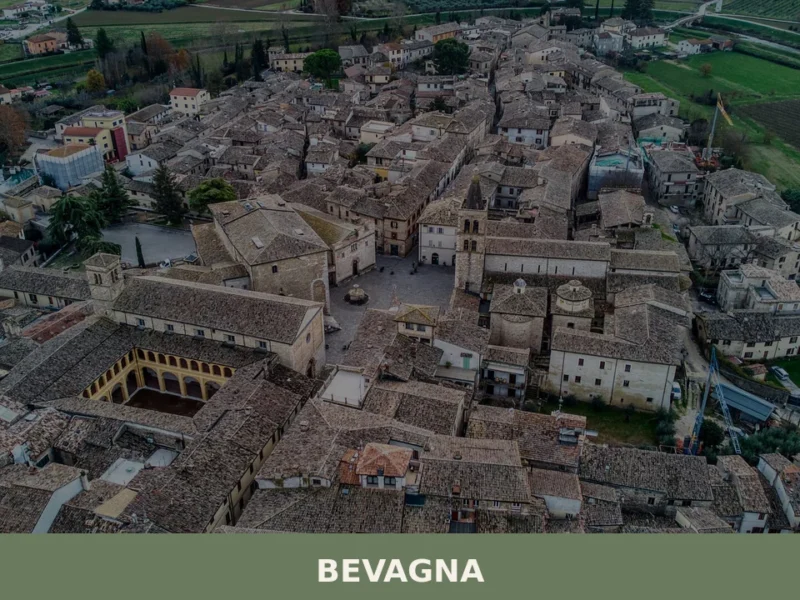
What to see in Bevagna, Umbria, Italy: explore 5 key attractions, Romanesque churches, Roman ruins, and local food. Population 5,130. Discover the full guide.
Terni
 Lake
Plains
Lake
Plains
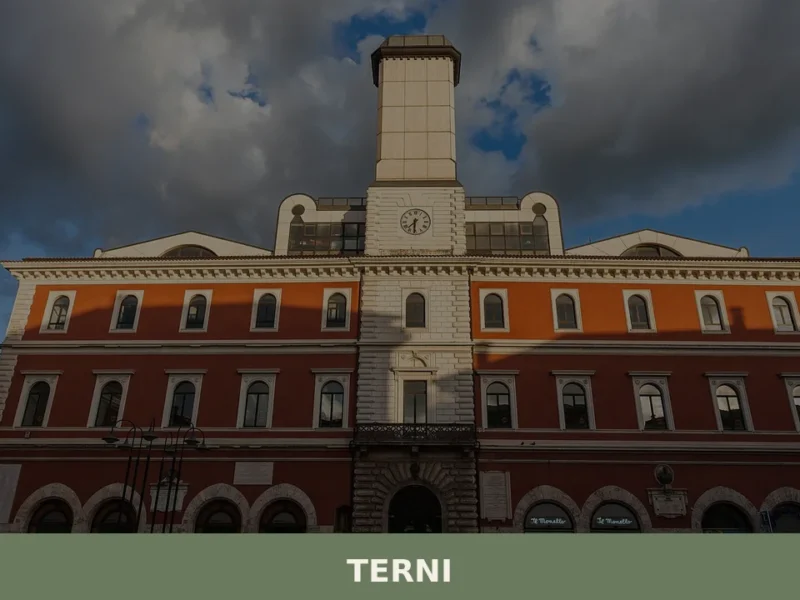
What to see in Terni: from the Marmore Falls to the historic center, discover the 5 top attractions. Plan your visit with the complete travel guide.

🏡 Know Cannara better than we do?
If you’re a local or have been there, your knowledge matters: add what’s missing or fix a detail on this page.