


Casalattico
 Hills
Hills
What to see in Casalattico, Lazio, Italy: a village at 420 m with a Norman tower, a Benedictine monastery from 780 AD and an Irish festival. Discover it now.
Discover Casalattico
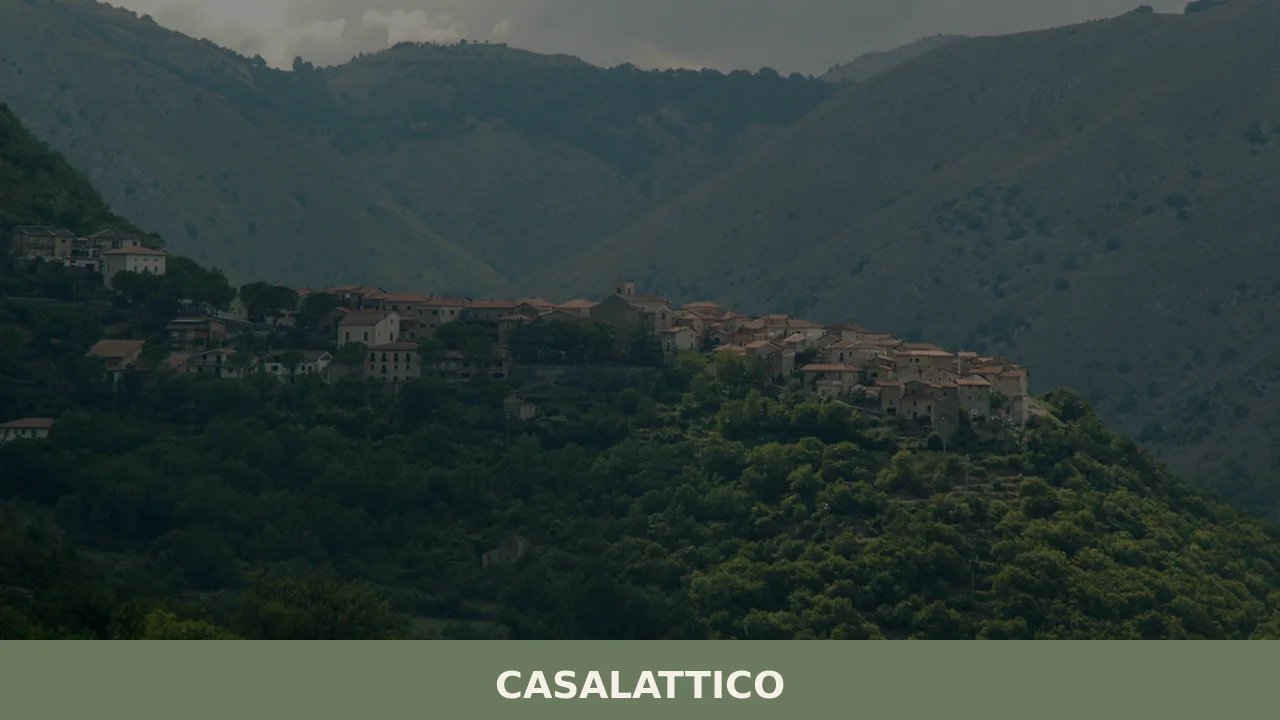
A single winding road climbs through the hillside to reach the centre, passing a graveyard on the left before the houses close in. The Norman-style tower in the central piazza rises from a town with no moat, its stone mass dating to 1200 AD, standing without defensive water on any side.
Surrounding ridges push to 1,700 m (5,577 ft), and the Melfa river, a tributary of the Liri, runs below in the valley.
Six hundred and eighteen people live here, at 420 m (1,378 ft) above sea level, in the Province of Frosinone.
Deciding what to see in Casalattico is straightforward once you know where to look: the medieval ruins of a Benedictine monastery founded in 780 AD, a Roman bridge on the Melfa river, and an archaeological site at San Nazario all lie within the commune boundaries.
Visitors to Casalattico, Lazio, Italy also encounter a summer Irish folk music festival that reflects a documented history of emigration and an active town-twinning with Naas in County Kildare.
The village sits about 110 km (68 mi) southeast of Rome, making it reachable as a day trip from the capital with advance planning.
History of Casalattico
The earliest traceable connection between this territory and the Roman world comes through the figure of Titus Pomponius Atticus, the first-century BC banker, publisher, and correspondent of Cicero. The frazione — a sub-village administrative unit — of Montattico is the site where Atticus is documented to have maintained a villa, placing elite Roman land ownership in this part of the Liri valley well before the medieval period.
The name Casalattico itself is generally read as a derivation from “Casa di Attico,” meaning the house or estate of Atticus, though the linguistic evolution from Latin to the present Italian form followed the typical patterns of southern Lazio place names across many centuries.
The early medieval period left the most physically legible mark on the commune.
In 780 AD, a Benedictine monastery dedicated to Sant’Angelo in Pesco Mascolino was established in the area.
Benedictine communities in this part of Lazio typically managed agricultural land, maintained road connections between settlements, and provided some level of institutional continuity through the political fragmentation of the early medieval centuries.
By 1200 AD a Norman-style tower had been constructed in the settlement’s central piazza, reflecting the administrative and defensive priorities of that era in the Kingdom of Sicily, whose influence extended through much of southern and central Italy at that time. The commune is bordered by Atina, Casalvieri, Colle San Magno, Terelle, Arpino, and Santopadre, a cluster of hill communes that shared broadly similar patterns of feudal organisation.
The twentieth century brought the most acute disruption the commune had experienced in modern times.
In 1944, during the Second World War, the largo San Nazario — the open square within the commune — was commandeered by German forces and converted into a forward emergency hospital, taken from the Fusco family who owned the property. That same occupation saw residents from the Monforte and Casalattico area deported to the concentration camp at Cesano. When hostilities ended in 1945, destruction in the surrounding valley towns was severe enough to trigger a large wave of emigration.
Many families moved to Ireland, a displacement that would later shape the commune’s cultural identity and its formal twinning with the town of Naas in County Kildare.
What to see in Casalattico, Lazio: top attractions
Norman Tower in the Central Piazza
The tower occupies the main square of the hilltop settlement and dates its construction to 1200 AD.
Built in the Norman style that spread through southern and central Italy under the Kingdom of Sicily, the structure rises without the benefit of a surrounding moat, which was never part of the town’s defensive design.
Visitors standing in the piazza can read the stonework directly: no water barrier, a single access road, and the natural elevation of the hill forming the primary line of defence. The tower is the most immediately visible historic structure in the commune and the logical starting point for anyone exploring what to see in Casalattico.
Benedictine Monastery Ruins of Sant’Angelo in Pesco Mascolino
The monastery at Sant’Angelo in Pesco Mascolino was founded in 780 AD, placing it among the earlier documented Benedictine foundations in this part of Lazio. What remains today are medieval ruins, the standing walls and foundations of the original complex now exposed to the surrounding landscape.
The site illustrates the pattern of monastic settlement in the hill territories of the Liri valley, where Benedictine communities occupied elevated or semi-isolated positions.
Reaching the ruins requires navigating the Casalattico area beyond the main settlement, and the terrain is uneven, so appropriate footwear is advisable.
Roman Bridge on the Melfa River
The Melfa river, a tributary of the Liri, flows through the commune and carries on its banks an early example of Roman bridge construction.
The bridge predates the medieval period and represents the kind of infrastructure the Roman road network required across the rivers of the Liri valley system. Standing at the river level, the scale of the original engineering is visible in the arch structure, which has survived the intervening centuries in recognisable form.
The Melfa itself runs through a valley below the main settlement, and the approach to the bridge gives a clear sense of the topography that made this crossing point significant for traffic between the hill communes.
Archaeological Site of San Nazario
Roman remains concentrated at the San Nazario site extend the documented history of human activity in the commune beyond the medieval period into antiquity.
The site corresponds geographically to the largo San Nazario, the same open area that was occupied by German forces in 1944 as a field hospital. Archaeological investigation of the area has confirmed the presence of structural Roman remains, though the full extent of what lies beneath has not been exhaustively published in available sources.
Visitors interested in the layered history of the site can observe it in the context of the broader commune, where the Roman bridge on the Melfa and the Montattico villa tradition of Titus Pomponius Atticus form part of the same historical sequence.
The Irish Festival and the Naas Town Twinning
Every summer, the commune hosts a festival dedicated to the Irish connection that developed from the post-1945 emigration wave.
The event features Irish folk music and performances by local artists, combining both traditions in a programme that documents the social history of the community more directly than any monument. The twinning with Naas, County Kildare, provides the institutional framework for the festival and sustains ongoing exchanges between the two municipalities.
For a visitor arriving in the summer months, the festival represents a documented cultural event specific to Casalattico, one that has no equivalent in the surrounding hill communes of the Province of Frosinone.
Local food and typical products of Casalattico
The culinary tradition of the Casalattico area belongs to the broader food culture of the Ciociaria, the historical sub-region of Lazio that covers much of the Province of Frosinone.
This is a territory where the diet was shaped by altitude, limited arable land, and the resources of the Liri valley: dried legumes, foraged greens, preserved pork, and pasta forms made from durum wheat. The commune sits at 420 m (1,378 ft) and is bounded by mountains rising to 1,700 m (5,577 ft), conditions that historically favoured animal husbandry over intensive cereal cultivation and produced a kitchen oriented around what could be stored through winter.
The dishes associated with this part of Frosinone province follow techniques common across the Ciociaria.
Pasta e fagioli, a thick soup of pasta and dried borlotti or cannellini beans cooked with guanciale or pork rind, appears on tables across the hill communes in this area.
Polenta with sausage or braised pork is another preparation that reflects the altitude and climate of the zone, using coarse-ground maize meal cooked slowly in copper pots until it holds its shape on the board.
Agnello alla cacciatora, lamb pieces cooked with white wine, rosemary, and chilli in a heavy pan, draws on the local tradition of small-scale sheep farming in the surrounding mountain terrain. None of these are delicate preparations; they are built for caloric density and long working days.
No certified DOP or IGP products specific to Casalattico appear in the available documentation for this commune.
The nearest certified products in the broader Frosinone province include Mozzarella di bufala campana (DOP), produced across a defined zone that extends into southern Lazio, and Pecorino di Picinisco (DOP), a sheep’s milk cheese aged in the mountain communities of the upper Comino valley, not far from the Casalattico area.
The Pecorino di Picinisco is made from raw milk, pressed lightly, and aged for a minimum period that varies between the fresh and aged versions; the aged form develops a semi-hard paste with a pronounced lanolin note.
Local markets and small grocers in the hill communes of this part of Frosinone province tend to stock seasonal produce from the valley floor and preserved goods from the surrounding farms.
Autumn brings chestnuts from the higher elevations, and late summer produces the dried peppers and tomatoes that characterise the larder of the Ciociaria zone. Visitors exploring the area between September and November will find the widest range of local seasonal goods in the market towns of the surrounding communes.
Festivals, events and traditions of Casalattico
The patron saint of Casalattico is Barbato di Benevento, a seventh-century bishop venerated across southern Lazio and Campania.
His feast day falls on 19 February each year and is marked in the commune with the observances typical of patron saint celebrations in small hill municipalities of the Province of Frosinone: a religious Mass, a procession through the main streets of the settlement, and communal gathering in and around the central piazza.
The February date places the feast in the coldest part of the year for a commune at 420 m (1,378 ft), and the celebration has a correspondingly concentrated, indoor character compared to the summer festivals.
The summer Irish festival, held annually to mark the town’s connection with Naas in County Kildare, draws on the history of post-war emigration from the Casalattico area to Ireland.
Irish folk music performers and local artists share the programme, and the event functions as both a cultural exchange and a community reunion for families whose members moved between the two countries after 1945.
The festival takes place during the summer months, when the weather at this altitude is at its most reliably stable, and it is the primary event that brings visitors from outside the commune to Casalattico specifically.
When to visit Casalattico, Italy and how to get there
The best time to visit Casalattico, Italy is during the summer months, specifically June through September, for two reasons: the weather at 420 m (1,378 ft) is consistently warm without the heat extremes of the lower Liri valley, and the Irish summer festival takes place during this window.
Spring, from April to early June, offers cooler temperatures suitable for walking to the monastery ruins and the river bridge, with less vehicle traffic on the single winding access road.
February visitors specifically interested in the feast of San Barbato will find the commune in its quietest seasonal mode, with limited facilities operating outside the permanent municipal services.
Casalattico sits about 110 km (68 mi) southeast of Rome, a distance that places it within range of a long day trip from the capital, though the final section of the journey on provincial roads adds time to any estimate based purely on distance.
From Rome, the most direct route follows the A1 motorway south toward Naples, with the exit at Ceprano or Cassino depending on the approach, followed by provincial roads through the Liri valley toward Frosinone province. The nearest major town with a train station on the main Rome-Naples line is Cassino, approximately 30 km (19 mi) from the commune by road.
Frosinone, the provincial capital, lies about 30 km (19 mi) to the west and is served by regional rail connections from Rome Termini via Trenitalia; from Frosinone, a car or taxi is necessary to reach Casalattico, as no direct public bus service into the hill commune is documented in available sources.
The nearest international airport is Rome Fiumicino (Leonardo da Vinci), approximately 150 km (93 mi) from the commune. International visitors should carry euros in cash, as card acceptance in smaller local shops and services in hill communes of this size is not guaranteed, and English is rarely spoken outside the main tourist infrastructure of larger nearby towns.
Travellers based in Rome who want to combine the Casalattico visit with other destinations in the Province of Frosinone might consider routing through the Liri valley, where several hill communes share a comparable scale and historical period.
The province of Latina, which borders Frosinone to the south and west, offers a contrasting coastal and lowland geography for those extending their stay in Lazio beyond the hill zone.
For visitors already exploring northern Lazio, the village of Bassano Romano represents a different type of Lazio settlement — a lowland Etruscan-heritage commune in the Viterbo area — that illustrates how varied the region’s historical geography is across a relatively short distance.
The single access road into Casalattico is navigable by standard car but is narrow in sections and has no footpath for pedestrians making the approach from the lower road.
If you arrive by car, the graveyard on the left as you ascend marks the outer boundary of the settlement; the piazza and the Norman tower are a short distance further.
Parking in the centre is limited given the compact layout of the hilltop town.
Visitors to Casalattico can extend their trip to the hill commune of Accumoli in the Rieti province of Lazio, which shares the broader pattern of small mountain settlement and post-war reconstruction that characterises much of central Italy’s interior.
For those drawn specifically to the medieval monastic heritage of the region, the village of Marcetelli in the Salto lake area of Rieti province offers a further point of comparison within the same regional administrative context of Lazio.
The official municipality website of Casalattico carries current information on local services, administrative contacts, and any updates to the commune’s events calendar for visitors planning ahead.
Frequently asked questions about Casalattico
What is the best time to visit Casalattico?
Late spring (May–June) and early autumn (September–October) offer mild temperatures at 420 m elevation and uncrowded roads through the hill communes. Summer is ideal if you want to catch the Irish folk music festival, the commune's signature annual event held in the warmer months. Winter visits are quieter; the feast of the patron saint Barbato di Benevento falls on 19 February, when the village marks its religious calendar with local celebrations. Avoid August if you prefer cooler conditions, as valley heat can push upward into the hills.
What are the historical origins of Casalattico?
The village name is generally derived from 'Casa di Attico', referring to Titus Pomponius Atticus, the first-century BC Roman banker and friend of Cicero, who maintained a villa at the frazione of Montattico. A Benedictine monastery dedicated to Sant'Angelo in Pesco Mascolino was established in 780 AD. By 1200 AD a Norman-style tower had been built in the central piazza under the influence of the Kingdom of Sicily. In 1944, German forces occupied the largo San Nazario as a field hospital, and residents were deported to the concentration camp at Cesano.
What to see in Casalattico? Main monuments and landmarks
Four documented sites stand out. The Norman tower (1200 AD) in the central piazza is the most immediately visible landmark and the logical first stop. The medieval ruins of the Benedictine monastery of Sant'Angelo in Pesco Mascolino (founded 780 AD) lie beyond the main settlement on uneven terrain — sturdy footwear is recommended. A Roman bridge on the Melfa river survives in recognisable form below the village. The archaeological site of San Nazario contains confirmed Roman structural remains within the commune. No admission fees or fixed opening hours are documented for these sites.
What are the main natural or scenic attractions of Casalattico?
The commune sits in a landscape defined by ridges rising to 1,700 m (5,577 ft) and the Melfa river valley below, a tributary of the Liri. The valley floor and river banks — particularly near the Roman bridge — offer accessible walking through terrain that shaped the area's entire history. The surrounding Comino valley connects Casalattico to the broader mountain environment of the Province of Frosinone. No specific CAI-numbered trails or protected nature reserves are documented within the commune boundaries in available sources.
Who is Casalattico suitable for?
Casalattico suits independent travellers with an interest in layered history: Roman, Benedictine, Norman, and twentieth-century wartime traces all survive within a single small commune. The Irish folk music festival makes it genuinely distinctive for cultural visitors interested in emigration history and Italian-Irish connections. Walkers comfortable with uneven hill terrain will appreciate the monastery ruins and river valley. It is less suited to families seeking organised tourist infrastructure or travellers without a car, as the village is small and services are limited. It works well as a day trip from Rome for those planning carefully.
What to eat in Casalattico? Local products and specialties
The kitchen belongs to the Ciociaria tradition of the Province of Frosinone. Documented dishes from this hill zone include pasta e fagioli with guanciale or pork rind, polenta with sausage or braised pork, and agnello alla cacciatora — lamb cooked with white wine, rosemary, and chilli. No DOP or IGP products are certified specifically for Casalattico. The nearest certified products are Pecorino di Picinisco DOP, a raw-milk sheep's cheese aged in the upper Comino valley, and Mozzarella di bufala campana DOP, produced across a zone that extends into southern Lazio.
What can you do in Casalattico? Activities and experiences
The principal activities are heritage-focused: exploring the Norman tower, visiting the Benedictine monastery ruins at Sant'Angelo in Pesco Mascolino, and walking down to the Roman bridge on the Melfa. In summer, the Irish folk music festival offers live performances combining Italian and Irish traditions, directly tied to the commune's twinning with Naas in County Kildare. The feast of Sant'Antonio di Barbato di Benevento on 19 February provides a winter local event. The hill terrain and valley below suit independent walkers, though no organised guided tour operators are documented for the commune in available sources.
Nearby Villages near Casalattico

In Lazio More villages to discover
Bracciano
Hills
 Lake
Lake
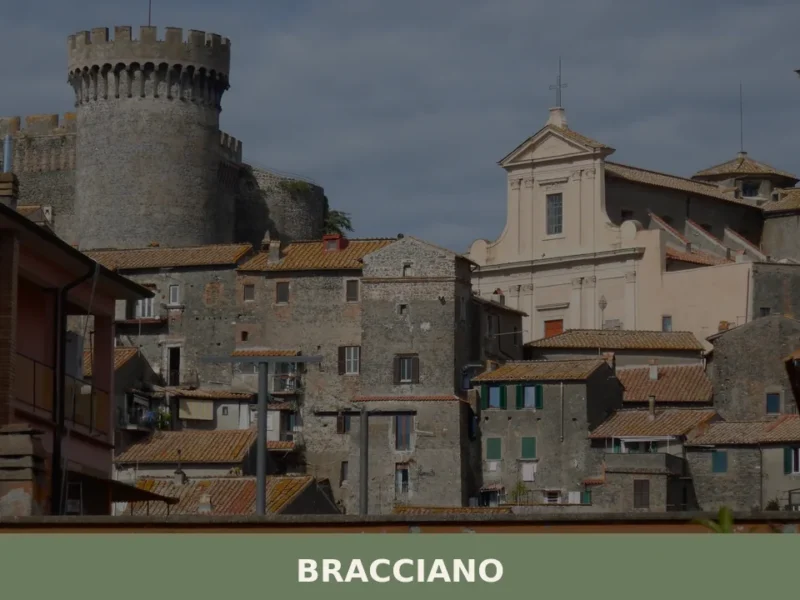
What to see in Bracciano, Italy: Discover its medieval castle and volcanic lake. Located 30 km (19 mi) from Rome, explore this Lazio village for a memorable day trip.
Bassano Romano
Hills
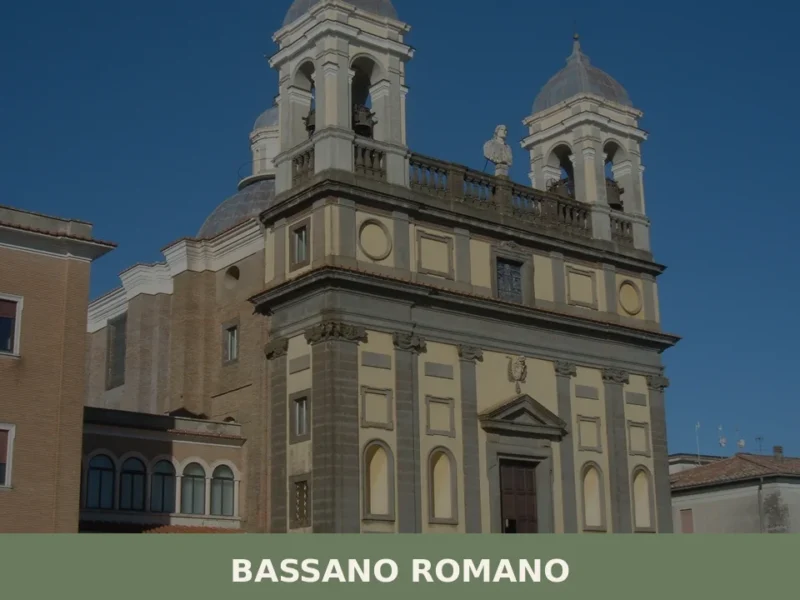
What to see in Bassano Romano, Italy: Palazzo Giustiniani, maiolica heritage, and the feast of San Gratiliano. 4,980 inhabitants at 360 m. Discover it now.
Colle di Tora
Hills
Lake
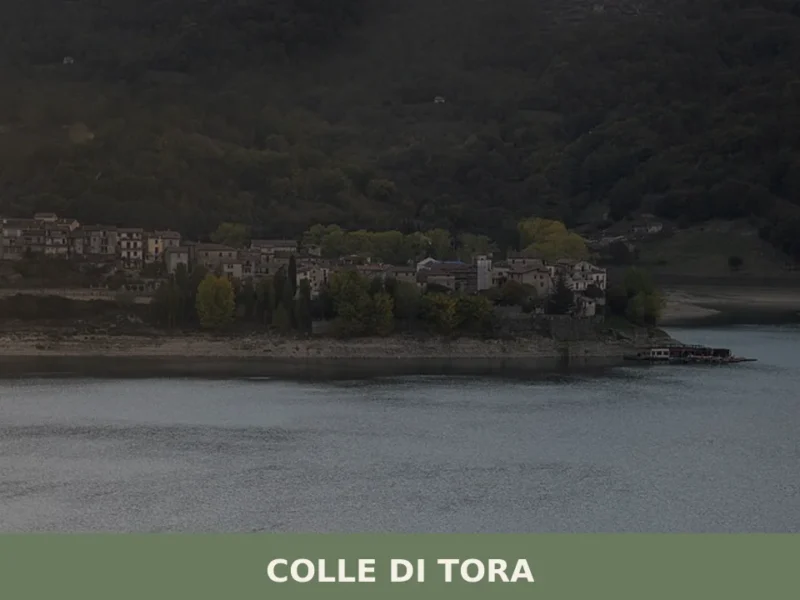
What to see in Colle di Tora: a village at 542 m on Lake Turano with 381 residents, a medieval centre and 3 PAT-certified products. Plan your visit today.
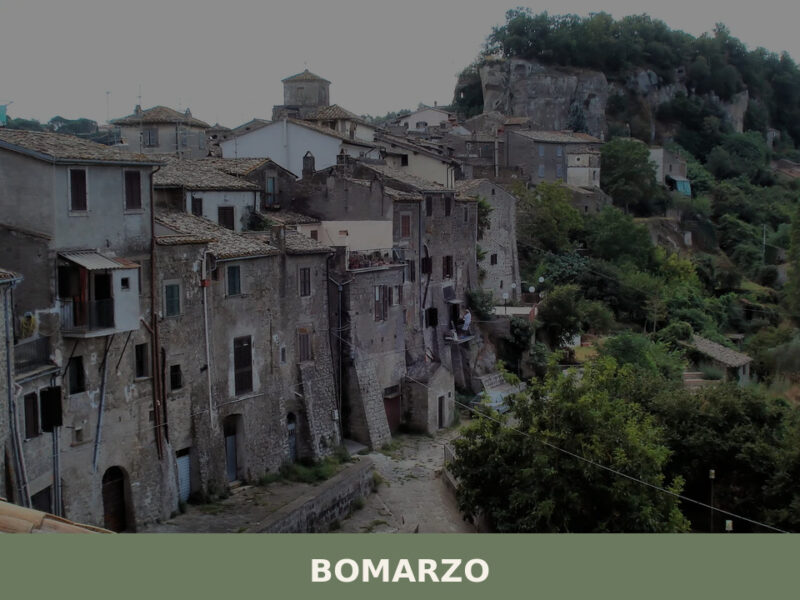
Bomarzo
Hills
Population 1,679. Visit for the Parco dei Mostri and the village's unadorned religious and domestic architecture rooted in the Cimini landscape.
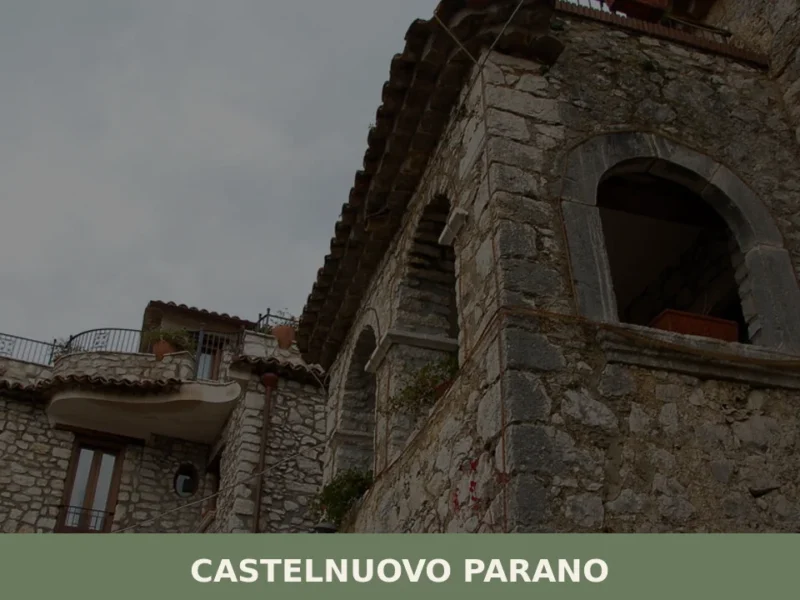
Castelnuovo Parano
Hills
What to see in Castelnuovo Parano, Lazio, Italy: a village of 885 at 310 m. Discover the 1059 castle origins, Gustav Line history and local hilltop culture.
Tessennano
Hills
In the heart of Viterbo’s Tuscia region, 302 meters above sea level, lies Tessennano, a settlement with 284 residents. Its hillside location, distant from major thoroughfares, has defined its profile through the centuries. For those wondering what to see in Tessennano, the village presents a historical layering perceptible in its architecture. The settlement develops around […]
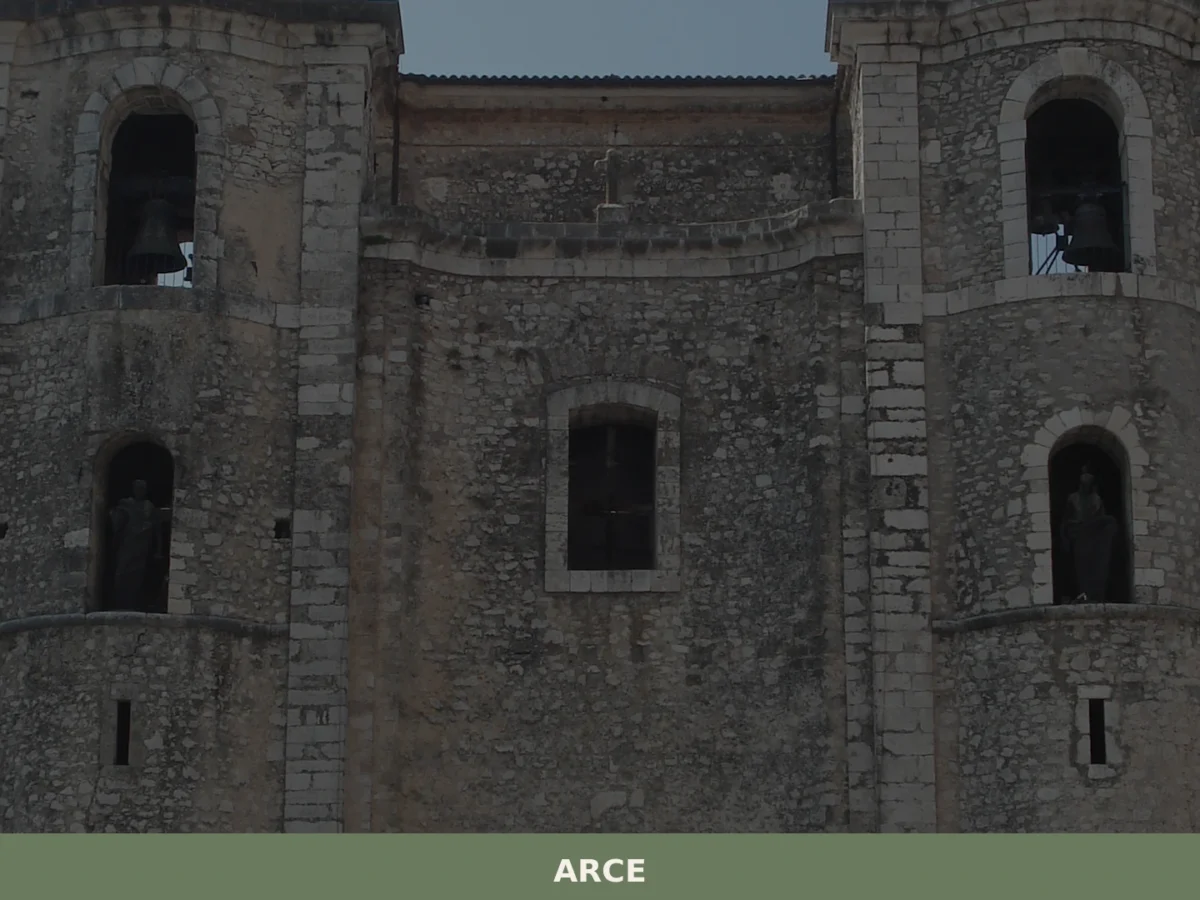
Arce
 Plains
What to see in Arce: discover the 5 unmissable aspects of this Lazio village. From medieval fortresses to scenic views, your complete guide. Plan your visit!
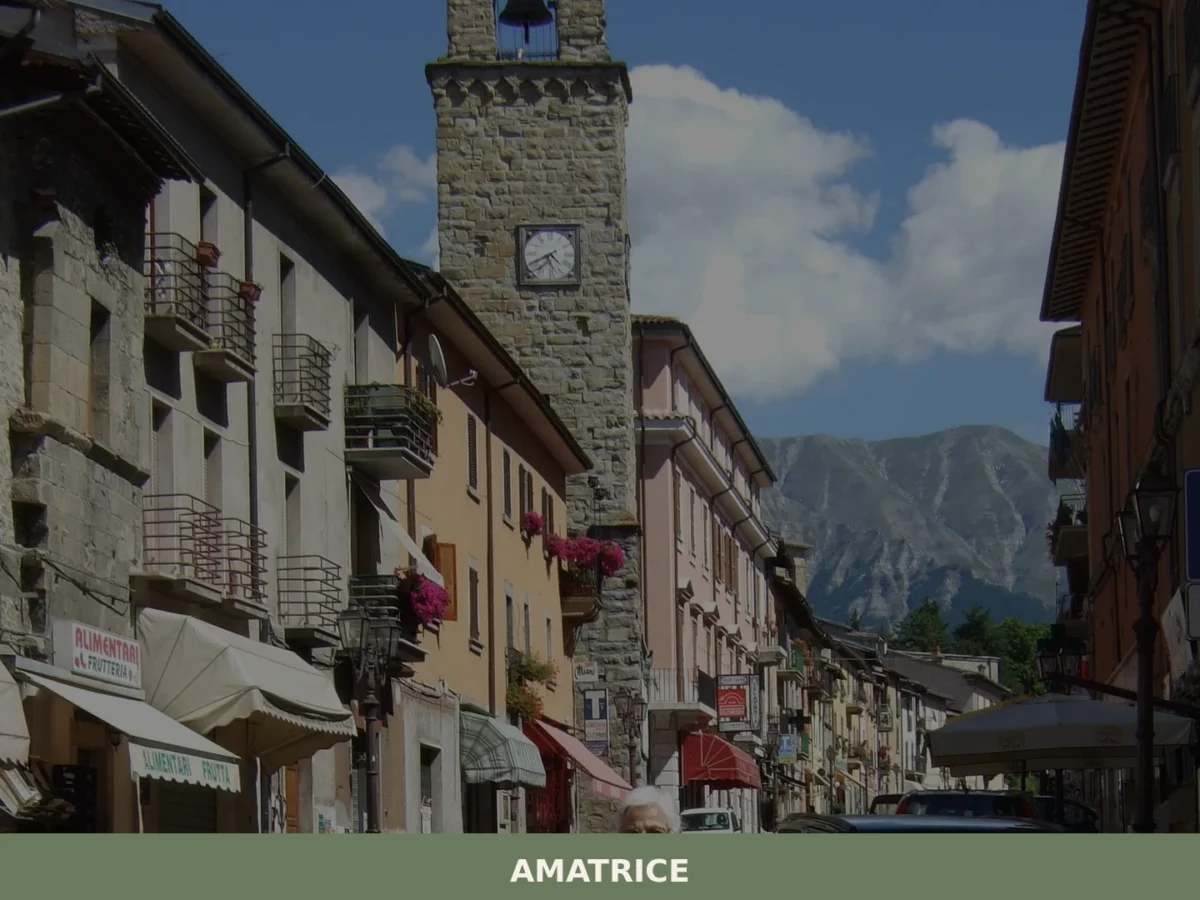
Amatrice
 Mountain
What to see in Amatrice? Explore the 5 main attractions of this village in Lazio. The complete guide awaits you with useful tips. Plan your visit!
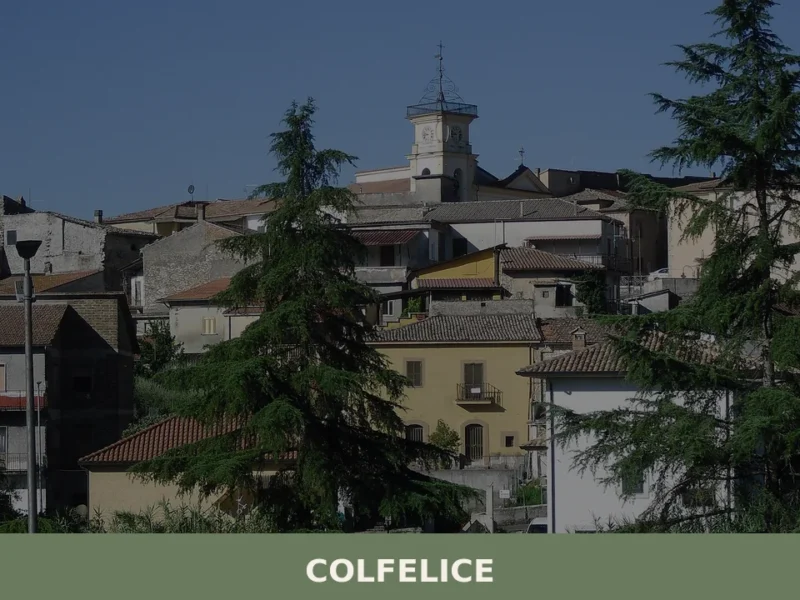
Colfelice
Plains
What to see in Colfelice, Lazio, Italy: 1,910 inhabitants, 158 m altitude, 100 km from Rome. Discover the feast of San Gaetano and the Liri Valley plain. Read more.
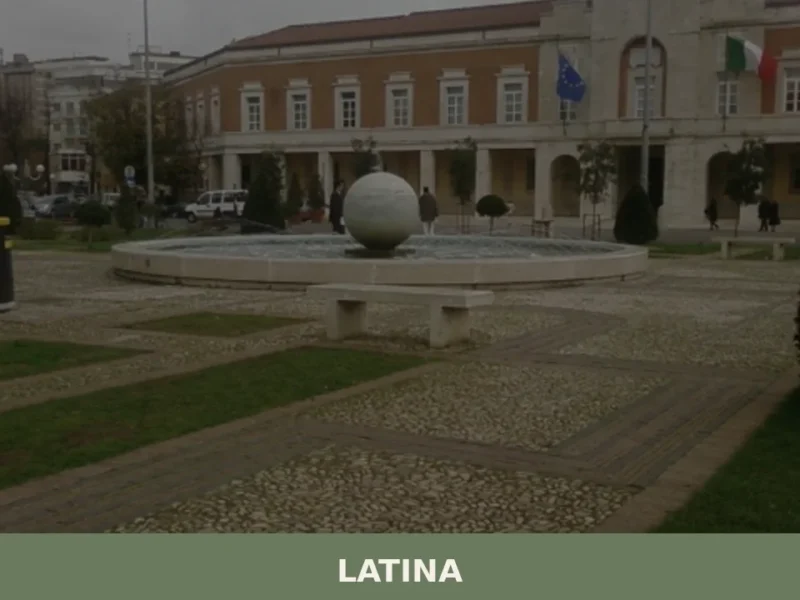
Latina
 Sea
Sea
What to see in Latina: discover the 5 top attractions in this Lazio village, from monuments to the historic centre. Plan your visit with this guide.


🏡 Know Casalattico better than we do?
If you’re a local or have been there, your knowledge matters: add what’s missing or fix a detail on this page.