


Caserta
What to see in Caserta: UNESCO Royal Palace, Casertavecchia and certified PAT products. City of 74,000 at 68m above sea level. Plan your visit with our complete guide.
Discover Caserta
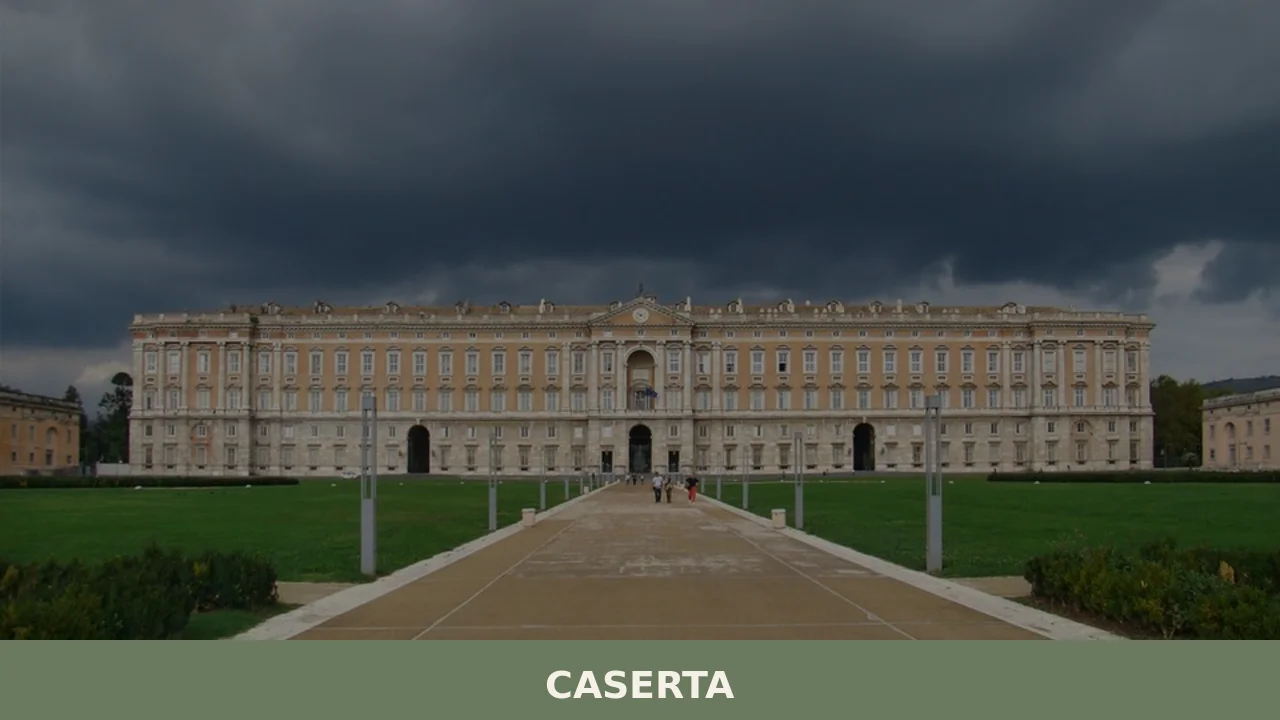
Caserta owes its worldwide reputation to the Royal Palace commissioned by Charles III of Bourbon, whose construction began in 1752 to a design by Luigi Vanvitelli — a complex that was added to the UNESCO World Heritage List in 1997. But visitors who stop at the Royal Palace alone are missing a great deal.
The provincial capital sits at 68 metres above sea level on the fertile Campanian plain and today has a population of over 74,000.
It offers a far wider range of experiences than the standard tourist circuit suggests.
This guide covers everything worth knowing about what to see in Caserta, from Bourbon monuments to medieval churches, from certified agri-food products to the patron saint festivals that mark the civic calendar.
History and Origins of Caserta
The name Caserta most likely derives from the Latin Casa Hirta, meaning “house on the hill”, referring to the medieval settlement that stood on the high ground later called Casertavecchia.
The earliest documented records date to the tenth century, when the territory formed part of the Lombard holdings of the Principality of Capua. In 1062 the Normans seized the county, and the fief passed under the control of Rainulf of Aversa and his successors: from that point Caserta became a significant political node in southern Italy, as recorded in medieval historical sources.
The event that permanently reshaped the local balance of power was the decision of Charles III of Bourbon, King of the Two Sicilies, to move the administrative capital of the kingdom away from Naples, which he considered too exposed to naval attack. In 1750 the sovereign chose the plain of Caserta as the site for the new royal residence and commissioned Luigi Vanvitelli to design a palace that could rival Versailles.
Work officially began on 20 January 1752 and continued for decades, drawing thousands of labourers and craftsmen from across Europe.
The new city grew up around the construction site, gradually supplanting the hilltop medieval village.
In the nineteenth century, following the unification of Italy, the Royal Palace lost its function as a royal residence but continued to serve as a military and ceremonial headquarters.
During the Second World War, in 1943, the Allied Command of Mediterranean Forces established its general headquarters in the Royal Palace of Caserta: it was here, on 29 April 1945, that the surrender of German forces in Italy was signed — an act that ended the conflict on the Italian front before the general capitulation of 2 May. This episode places Caserta at the centre of one of the most significant military events of twentieth-century Europe.
The province shares comparable layers of historical memory with villages such as San Pietro Infine, which was itself indelibly marked by the wartime events of 1944.
What to See in Caserta: Main Attractions
Royal Palace of Caserta
Designed by Luigi Vanvitelli for Charles III of Bourbon and begun in 1752, the Royal Palace of Caserta is the largest royal palace in the world by volume: 1,200 rooms, 1,790 windows, 34 staircases, and a 120-hectare park crossed by a canal three kilometres long.
UNESCO added it to the World Heritage List in 1997, together with the park, the Carolino Aqueduct and the San Leucio complex. It is worth setting aside at least a full day, including visits to the royal apartments, the palatine chapel and the artificial waterfalls in the gardens.
Up-to-date information on opening times and tickets is available through the official portal of the Royal Palace of Caserta.
Casertavecchia
About ten kilometres from the modern city centre, at an altitude of 401 metres, the original medieval core has survived largely intact.
The hilltop settlement retains its Norman urban layout, with the Cathedral of San Michele Arcangelo — built in the twelfth century in the Romanesque-Campanian style — and a cylindrical bell tower from the thirteenth century that incorporates reused Roman elements. The medieval castle, of which the cylindrical tower and sections of wall remain, defines the skyline of the settlement.
For anyone exploring what to see in Caserta beyond the Royal Palace, the contrast between the Bourbon Baroque of the plain and the restrained Romanesque of Casertavecchia makes for one of the most culturally rewarding itineraries in the province.
Carolino Aqueduct
Designed by Luigi Vanvitelli and completed in 1762, the Carolino Aqueduct carried water from Monte Taburno to the gardens of the Royal Palace over a distance of approximately 38 kilometres.
The most dramatic section is the Ponte della Valle, a three-tiered viaduct 529 metres long and up to 55 metres high, spanning the Valle di Maddaloni. The structure is part of the 1997 UNESCO designation.
From an engineering standpoint, it ranks among the most ambitious hydraulic works of the eighteenth century in southern Europe, comparable in technical complexity to the great Roman aqueducts.
Belvedere di San Leucio and the Royal Colony
In 1789, Ferdinand IV of Bourbon established at San Leucio — a few kilometres from the Royal Palace — a silk manufactory and a model colony built on utopian principles: workers received housing, education and healthcare in exchange for their labour.
The complex includes the Palazzo del Belvedere, originally a hunting lodge, and the workers’ cottages, all laid out according to urban planning principles that were advanced for the period. This site also falls within the 1997 UNESCO perimeter.
San Leucio silk is still produced by hand and the manufactory remains active today.
Caserta Cathedral (San Michele Arcangelo e Sant’Anna)
The cathedral of the modern city, dedicated to the patron saints Michael the Archangel and Anne, stands in the nineteenth-century urban centre that grew up around the Royal Palace. The current building dates from the Bourbon period, with later modifications following the unification of Italy. The interior contains works of art from the modern era and several sculptures brought from older churches in the surrounding area.
For visitors working through what to see in Caserta beyond the Royal Palace, the cathedral serves as a key reference point in the city’s civic and religious life.
Local Cuisine and Products of Caserta
The cooking of the Caserta area reflects the province’s geographical position, which brings together a fertile plain, inland hills and proximity to the Tyrrhenian coast.
Agriculture on the Volturno plain has historically supplied tomatoes, pulses, wheat and vegetables, while sheep and buffalo farming in the wetland zones has produced a dairy tradition of the highest order.
Buffalo mozzarella from Campania, made in several municipalities across the province, is the best-known expression of this livestock heritage, though its certified production area extends well beyond the provincial boundaries.
The local cuisine did not originate in royal kitchens but in rural villages: straightforward preparations, long cooking times, seasonal ingredients.
Among the area’s traditional dishes, minestra maritata stands out — a substantial broth made with mixed meats (pork, beef, chicken) and wild greens such as escarole, borage and chicory.
Pasta e fagioli con le cozze represents the meeting point between the grain-growing interior and the Tyrrhenian coast, combining flavours of land and sea in a single preparation.
Neapolitan-style ragù, slow-cooked for hours with whole cuts of meat that then become a second course, features on Caserta tables as often as in Naples itself.
Those who venture into the hilltop municipalities of the province will still find pulse soups made with grass peas and spelt, served with wood-fired country bread.
The following products are certified for this area in the register of traditional agri-food products recognised by the Italian Ministry:
‘Ndunderi (PAT) is one of the oldest egg pasta formats in Campania, made from ricotta and flour, with an elongated ridged shape.
Its history is documented in the culinary traditions of the area.
‘Nfrennula (PAT) is a traditional Campanian confection made from almond paste and dried figs, eaten mainly during the Christmas period and on religious feast days.
Salt-cured anchovies (PAT) represent a coastal processing tradition rooted in the fishing villages of the Tyrrhenian strip and the Campanian shoreline.
White Fig Vinegar (PAT) is produced by fermenting white figs, a variety grown in the inland hill zones of Campania using artisan methods that exclude industrial additives.
Tomato water (PAT) is the liquid extracted during the processing of fresh tomatoes, used as a base for light dressings and summer preparations in Campanian cooking.
Ufita garlic (PAT) comes from the Ufita valley, in the Irpinia area bordering Samnium, and is valued for its intense aromatic note and good keeping qualities.
These products are consistently available at markets in the town centre and in specialist shops across the area, often sold directly by producers at weekend markets in spring and autumn.
Vitulazio, an agricultural municipality a few kilometres from Caserta, also maintains a tradition of fruit, vegetable and olive oil production that belongs to the same gastronomic heritage of the Volturno plain.
Festivals, Events and Traditions of Caserta
The religious calendar of Caserta revolves around two fixed dates.
On 20 January, the city celebrates the feast of San Sebastiano, a Roman martyr whose cult is widespread throughout Campania. The occasion includes solemn masses in the cathedral and, in many parishes across the area, processions carrying the statue of the saint through the streets of the centre. 26 July is the feast of Sant’Anna, patron of expectant and new mothers, marked by religious services and community gatherings in the historic neighbourhoods.
Both celebrations draw worshippers from surrounding municipalities across the province, confirming Caserta’s role as the focal point of the area’s religious calendar.
Alongside the patron saint festivals, the Caserta area hosts events throughout the year tied to agricultural cycles and local produce.
In autumn, initiatives focus on buffalo mozzarella and the dairy products of the plain, while the weeks leading up to Christmas bring traditional sweet stalls to the town-centre markets, selling products such as ‘Nfrennula and items from local craft workshops. The Settimana della Reggia (Royal Palace Week), held annually, opens sections of the Bourbon palace not normally accessible to the public and presents concerts, exhibitions and themed guided tours that extend the cultural programme well beyond the standard visit.
When to Visit Caserta and How to Get There
The most favourable period for visiting Caserta runs from late spring through to autumn.
Between April and June the temperatures on the plain are mild, the gardens of the Royal Palace are in full bloom and the light is ideal for exploring the park. July and August bring intense heat, particularly on the plain: visitors who choose these months should plan their visits for early morning or late afternoon.
September and October offer excellent conditions for both the Royal Palace and excursions to Casertavecchia, where the autumn vegetation transforms the colours of the hilltop settlement. Those looking at what to see in Caserta with fewer crowds should aim for weekdays in April and October, when visitor numbers drop considerably compared to summer weekends.
Caserta is well connected at national level.
By car, the A1 Milan–Naples motorway has both the Caserta Sud and Caserta Nord exits, both a short distance from the city centre and the Royal Palace. Visitors coming from the Amalfi coast or from Naples use the A3 Naples–Salerno motorway or the SS Appia state road. By train, Caserta station is a major rail junction served by Intercity and fast Regional services on the Naples–Rome line, with frequent departures. The journey from Naples Centrale takes approximately 35–40 minutes.
The nearest international airport is Naples Capodichino, around 35 kilometres away and reachable in about 40 minutes by car in normal traffic.
Train timetables can be checked on the Trenitalia website. Visitors arriving from the north who wish to continue into the inland villages can head towards Prata Sannita, about 50 kilometres to the east, or towards Fontegreca, in the Matese hills, for an itinerary that combines the plain with upland terrain.
Where to Stay in Caserta
Caserta has a varied accommodation offer to suit different types of visitor.
The urban centre has mid-range to upscale hotels, many of them concentrated in the area around the Royal Palace and within walking distance of the main attractions.
For those who prefer smaller properties, bed and breakfasts in the historic centre provide direct access to the nineteenth-century urban fabric.
Up-to-date information on accommodation in the city is available on the official website of the Municipality of Caserta. Visitors planning a longer stay who want to explore the province’s hilltop villages can consider farm stays and holiday rentals in the hill districts, with direct access to the walking routes of the Matese and the Samnite area.
In Campania More villages to discover
Giano Vetusto
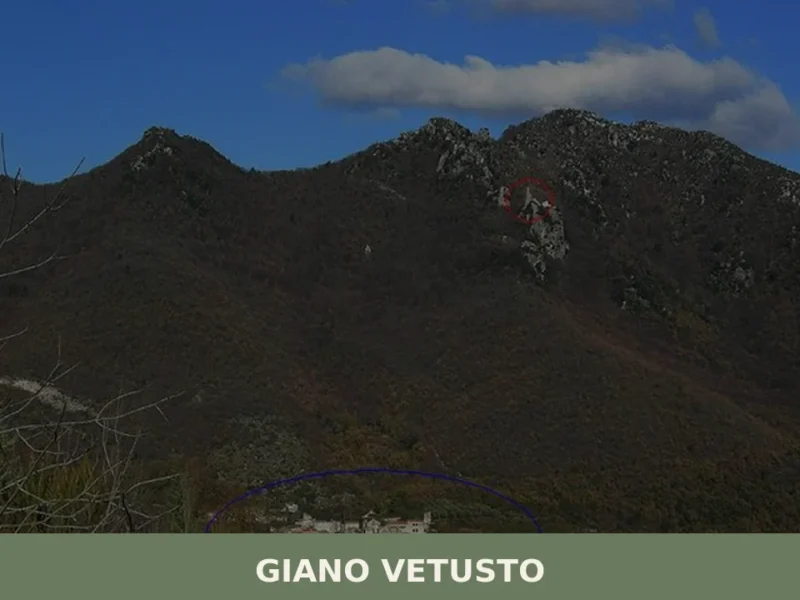
What to see in Giano Vetusto: Church of Sant'Antonio, historic centre, agricultural landscape, local cuisine and how to reach this hillside village near Caserta.
Ciorlano
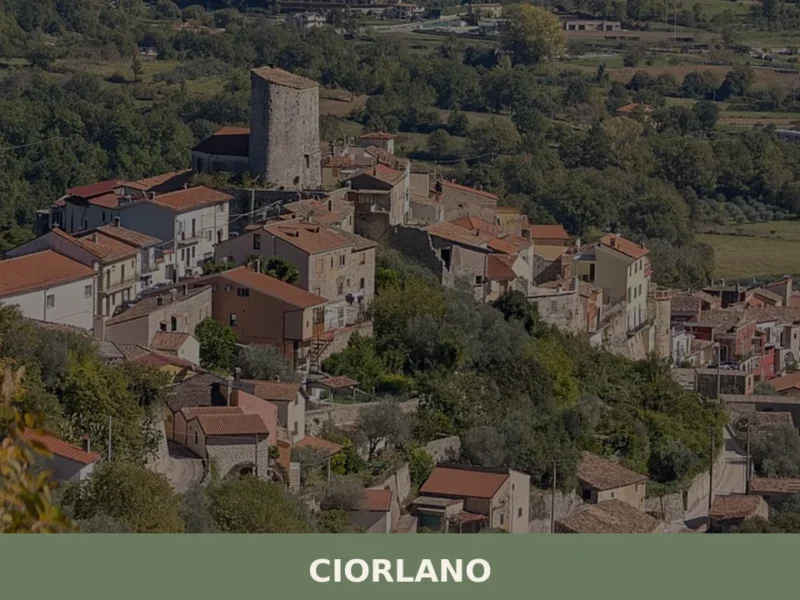
With its 370 inhabitants spread across an elevation of 330 metres above sea level, Ciorlano is one of the least populated municipalities in the province of Caserta. The village sits in the middle Volturno valley, along the hillside that separates the Matese massif from the Alife plain. Anyone wondering what to see in Ciorlano will […]
Pignataro Maggiore
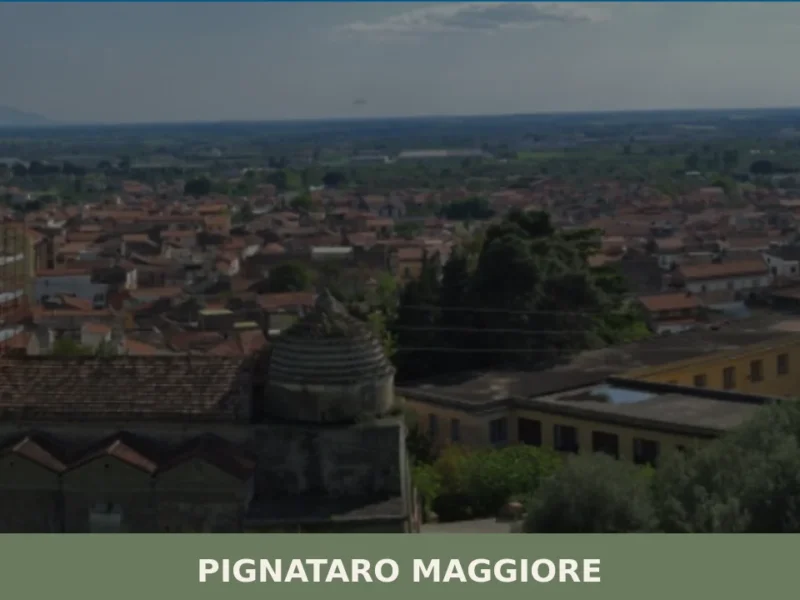
What to see in Pignataro Maggiore: 5,733 residents, 93m above sea level in Caserta province. Visit San Giorgio Church, historic centre, 'Ndunderi PAT gnocchi. Plan your trip now.




📝 Incorrect information or updates?
Help us keep the Caserta page accurate and up to date.