


Chieti
 Hills
Hills
Chieti, an art city in Abruzzo: discover the National Archaeological Museum, Roman monuments and historic districts. Plan your visit with our guide.
Discover Chieti
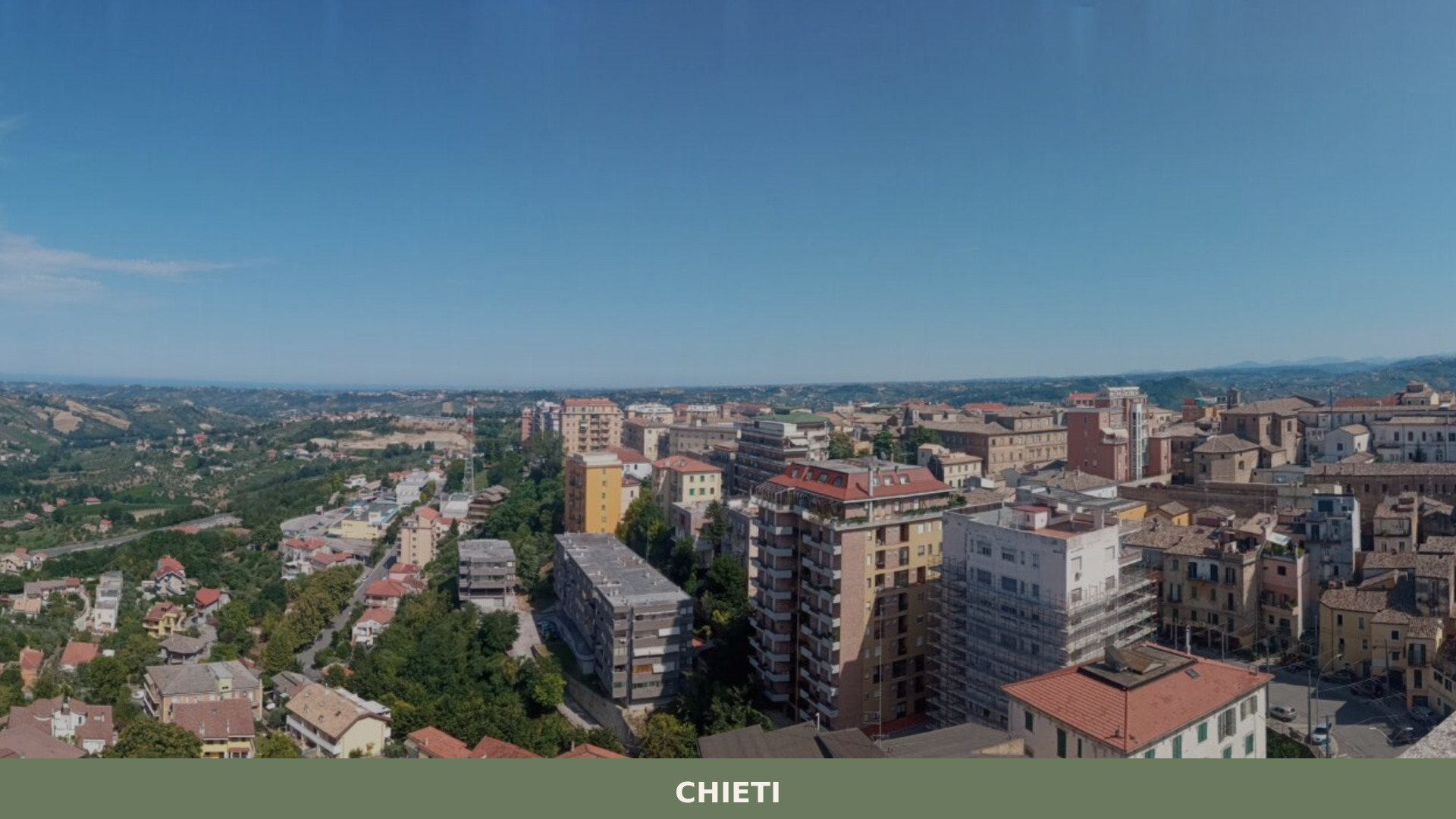
The hill of Chieti Alta reaches 348 metres (1,142 ft) above sea level, and from its flat summit you can see both the Adriatic coast, roughly 10 kilometres (6.2 mi) to the east, and the snow-capped ridgeline of the Gran Sasso and Majella massifs to the west.
The old town sits on that plateau like a layer cake of civilisations: Roman cisterns below street level, Norman cathedral walls rising above them, and Baroque church facades completing the sequence.
Down in the valley, the separate district of Chieti Scalo grew around the railway line, keeping industry and commerce at a distance from the upper city.
Deciding what to see in Chieti is a question of choosing which layer to explore first, because the city — 51,321 inhabitants, 330 m (1,083 ft) altitude, capital of its own province in Abruzzo, Italy — offers a documented sequence of human occupation stretching back to 5,000 BC.
Visitors to Chieti find a functioning Roman amphitheatre, one of the most important archaeological museums in central and southern Italy, and a cathedral whose history runs from the Norman period through fourteen centuries of rebuilding.
The range is significant, and the concentration is tight enough to cover major sites on foot within the upper city.
History of Chieti
The Latin name Teate, which survives in the Italian adjective teatino used for anything connected with the city, also gave the English language an unexpected legacy: the Theatines, a Catholic religious order, take their name directly from Chieti. The city’s origins extend further still. According to the geographer Strabo, it was founded by Arcadians and called Thegeate, named after Tegea.
Mythological accounts attribute the foundation to companions of Achilles, who named it after his mother Thetis.
Leaving legends aside, the first verifiable human presence on the hill dates to around 5,000 BC, and hand axes found at the Madonna del Freddo river terraces place early hominid activity in the territory between 850,000 and 400,000 years ago — finds of direct importance to understanding the prehistory of the whole Abruzzo region.
Around the 10th century BC, the territory passed to the Marrucini, an Italic tribe that had displaced an earlier Oscan population while absorbing their laws and customs.
As Theate Marrucinorum, the settlement became the chief town of this people, whose small strip of territory ran from the Pescara river’s mouth along the Adriatic coast and into the southern Apennine foothills. Rome first came into contact with the Marrucini during the First Samnite War, fought between 343 and 341 BC.
Their land provided a critical corridor to the Adriatic.
After eventual Roman defeat of the Marrucini, the population obtained full Roman citizenship following the Social War, during which the Marrucini general Herius Asinius — a figure from Teate — was defeated and killed in battle. Imperial-era Teate grew to roughly 60,000 inhabitants, supported by the strategic road Via Tiburtina, and was furnished with a forum, a theatre with a diameter of approximately 80 metres capable of seating 5,000 spectators, a 4,000-seat amphitheatre, public baths, and an aqueduct.
The medieval centuries brought successive waves of control — Visigoths, Heruli, Ostrogoths, Byzantines, and Lombards — before Pepin of Italy, son of Charlemagne, destroyed the city in 801.
Recovery came under Norman rule: the cathedral was rebuilt in 1069, the Valignani family arrived among other Norman nobility, and in 1094 Robert Guiscard designated Chieti capital of Abruzzi. Notably, in October 1097, Pope Urban II called for the First Crusade at Chieti. Angevine rule in the late 13th century brought urban expansion under Charles I of Anjou, who divided the region into Abruzzo Citra and Abruzzo Ultra and named Chieti capital of the former.
Alfonso V of Aragon later consolidated the city’s administrative role, and in 1443 Chieti formally received the Latin title Theate Regia Metropolis Utriusque Aprutinae Provinciae Princeps.
In the early 16th century Gian Pietro Carafa — later Pope Paul IV — served as bishop and archbishop of the city. Chieti participated in the Battle of Lepanto in 1571. A plague in 1656 killed large numbers of the population, but the 17th century also produced the configuration of the old town that survives today, shaped largely by the construction programmes of arriving religious orders.
In 1888 the railway station opened, linking Chieti Scalo to the Rome–Sulmona–Pescara line and anchoring the lower city’s subsequent industrial growth.
What to see in Chieti, Abruzzo: top attractions
National Archaeological Museum of Abruzzo
The museum occupies the Villa Comunale, a 19th-century building set in a public garden on the upper plateau, and its collections span the full documented range of Abruzzo’s past — from the prehistoric hand axes found at the Madonna del Freddo terraces to Iron Age necropolises, Marrucinian bronzes, and Roman sculptural fragments recovered from the site of imperial Teate.
The sequence of rooms makes visible the same layered occupation that the hill itself holds underground.
Among the exhibits, objects from the Copper Age and Bronze Age neighbourhoods of Civitella provide specific comparative data for understanding how the Marrucini settled around a pre-existing population.
Visiting the museum before walking the Roman sites in the city gives context to otherwise fragmentary remains; the building itself opens onto one of the better-maintained green spaces in Chieti Alta.
Roman Amphitheatre of Teate
The amphitheatre, which held 4,000 spectators in its active Roman period, has been restored and is currently usable — meaning that seasonal events take place within its original stone structure rather than in a reconstruction. Its presence in the city confirms the scale of imperial Teate, which at its peak housed approximately 60,000 inhabitants. The elliptical form is largely legible from the seating tiers, and the underground service corridors are partially accessible.
In terms of what to see in Chieti from a Roman archaeology perspective, this site sits alongside the museum as one of the two most document-rich locations. The amphitheatre is situated in Chieti Alta, reachable on foot from the cathedral square, and the surrounding streets retain fragments of the ancient urban grid.
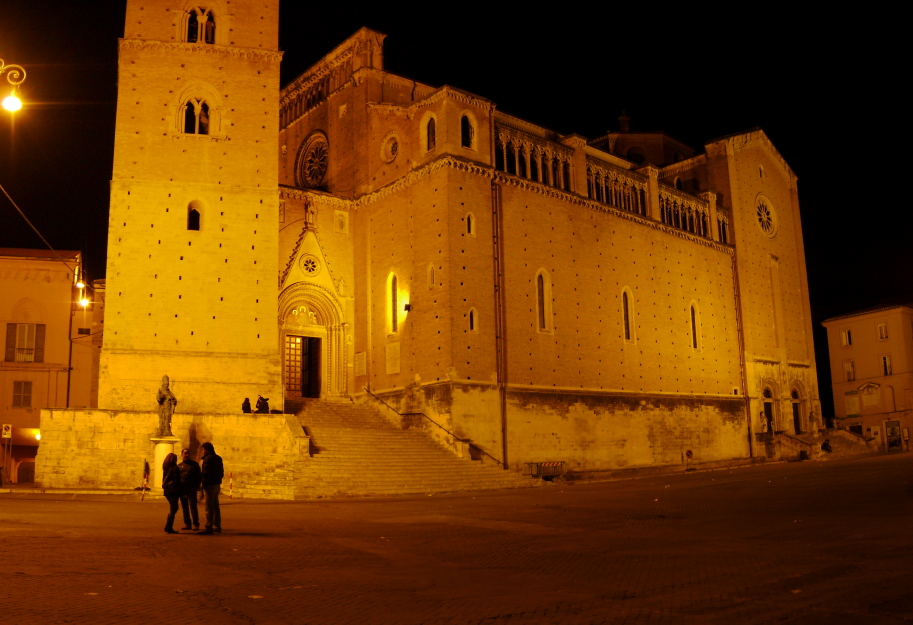
Cathedral of San Giustino
The present cathedral stands on a site of continuous religious use that the sources trace to the early bishop Justin of Chieti, the figure credited with organizing the diocese and establishing its boundaries.
The Norman rebuilding of 1069 established the basic structure; the 14th century brought renovation and the addition of a bell tower, and subsequent centuries left further architectural deposits on the same walls.
Dedicated to San Giustino — the patron saint of Chieti, whose feast falls on 11 May — the building functions simultaneously as the city’s principal active church and as a physical record of its ecclesiastical history. The facade and interior show work from different periods without a single dominant style, which makes reading the building an exercise in chronological detection rather than a single aesthetic experience.
The square in front provides the clearest view of the bell tower’s proportions.
Roman Theatre of Teate
The theatre, with a reported diameter of approximately 80 metres and a capacity of 5,000 seats, was one of the principal public monuments of imperial Teate.
Its remains are distributed across the upper city, with some sections incorporated into later medieval and modern structures — a common pattern in Italian cities where Roman infrastructure was dismantled for building material or simply built over.
What survives above ground includes sections of the cavea and structural walls in opus reticulatum and opus incertum, the Roman masonry techniques using small square stones set diagonally. The site rewards slow examination rather than a quick glance: the join between Roman stonework and later medieval additions is visible in several places, and the scale of the original structure becomes clearer when you measure the modern city blocks against it. Access is from the central streets of Chieti Alta.
Churches of the Old Town
The 14th and 17th centuries produced a concentrated group of religious buildings in Chieti Alta that now define the character of the upper city’s streets.
San Francesco al Corso, Santa Maria della Civitella, San Domenico, and Sant’Agostino were all built or significantly modified during the Angevine and Counter-Reformation periods, and their interiors contain the accumulated material culture of those eras — altarpieces, carved choir stalls, stucco decoration.
The 17th century, when new religious orders arrived under the aegis of the Counter-Reformation, was particularly productive: the current configuration of the old town, including the arrangement of its principal religious buildings, dates substantially from that period.
Walking the main street of Chieti Alta from the cathedral toward the Villa Comunale passes the facades of several of these churches in sequence, making the route a usable itinerary in itself. For those interested in specifically Baroque church interiors, comparing these buildings with the similar output of the same period in nearby Corfinio, a settlement whose own history intersects with Abruzzo’s administrative past, adds useful context to the regional picture.
Local food and typical products of Chieti
The food culture of Chieti province sits at the intersection of Adriatic fishing traditions and inland pastoral and agricultural practices.
The geography makes this almost inevitable: the coast is 10 kilometres (6.2 mi) from the city, while the Majella and Gran Sasso massifs rise behind it.
Historically, Chieti maintained trade relationships with Venice documented from the 16th century, and a Venetian consulate operated in the city from 1555, which brought northern Italian commercial and possibly culinary influences into contact with the existing Marrucinian and later Angevine food traditions of Abruzzo.
The pasta traditions of the Chieti area follow the Abruzzese preference for hand-worked egg-based doughs.
Spaghetti alla chitarra — cut by pressing a sheet of egg pasta against the taut steel wires of a wooden frame called a chitarra, producing square-sectioned strands — is the dominant format in the province and appears across a range of sauces from simple lamb ragù to a sauce based on small meatballs in tomato.
Pallotte cacio e ove are fried balls made from aged sheep’s cheese and egg, sometimes served in tomato sauce, a dish whose economy reflects the pastoral economy of the inland Abruzzo highlands.
Lamb and mutton, grilled or slow-braised with wild herbs gathered from the Majella slopes, have been the dominant meat for centuries. Along the Adriatic corridor, brodetto — a fish stew whose exact composition varies by port — is the standard coastal preparation, built from whatever the day’s catch provides.
The province of Chieti falls within the production zones of several certified Italian products. Olio extravergine d’oliva Colline Teatine (PDO) is produced from olive groves in the hills surrounding Chieti, using local cultivars whose names — Gentile di Chieti, Leccino, Moraiolo — are registered in the production specification.
The oil is characterised by low acidity and a flavour profile that shifts from grassy to slightly bitter depending on harvest timing.
Montepulciano d’Abruzzo (DOC) and Trebbiano d’Abruzzo (DOC) are the principal wines of the region, both produced across vineyards that include the Chieti provincial territory.
Montepulciano d’Abruzzo is a red wine with firm tannins and notable colour depth; Trebbiano d’Abruzzo, when produced from older vines with low yields, can achieve considerable body for a white wine.
Markets in Chieti follow the standard Italian weekly calendar, with the main market in Chieti Scalo drawing producers from the surrounding hill villages.
Spring and early summer bring the first fresh cheeses — pecorino fresco from the flocks that winter in the coastal plain and move to highland pastures as temperatures rise — while autumn is the period for olive pressing and the first release of new oil, which local producers and restaurants typically serve simply on grilled bread to allow comparison with previous vintages.
Festivals, events and traditions of Chieti
The principal civic and religious event of the year in Chieti is the feast of San Giustino, patron saint of the city, celebrated on 11 May.
The feast marks the figure traditionally credited with organising the diocese of Chieti and fixing its territorial boundaries — a historical role that gives the celebration a civic as well as a religious dimension.
Processions move through the streets of Chieti Alta, with the cathedral as the focal point of the liturgical programme.
The feast day draws residents from the surrounding hill municipalities and from Chieti Scalo, and the combination of the religious procession and the public gathering in the cathedral square constitutes the most concentrated moment of collective civic identity in the local calendar.
Chieti’s Holy Week observances, particularly the Processione del Venerdì Santo — the Good Friday procession — are among the oldest and most formally organised in Abruzzo, with documented continuity running back centuries. The procession moves through the darkened streets of the upper city by torchlight, with participants in historical dress following a prescribed route.
This event draws visitors from across the region specifically for the visual and ritual character of the procession itself, which is distinct from the patron saint feast in atmosphere and timing. Together, these two annual events mark the two poles of Chieti’s traditional public ceremonial life.
When to visit Chieti, Italy and how to get there
Chieti has a Mediterranean climate classified as Csa under the Köppen system, with Adriatic Sea influence moderating both summer heat and winter cold compared to the surrounding inland areas.
July is the hottest month, with the highest temperatures recorded in Chieti Scalo at lower elevation; January is the coldest, with temperatures dropping below 0°C (32°F) on winter nights and occasional snowfall.
For most international visitors, the best time to visit Abruzzo and specifically Chieti falls between late April and early June, or September through October — periods when temperatures are moderate, the light on the Adriatic and mountain panorama is clear, and the city’s cultural calendar is active. The 11 May feast of San Giustino provides a specific date anchor for spring visits.
Summer works well for those combining Chieti with the Adriatic coast, though July and August see higher temperatures at Chieti Scalo level.
Getting to Chieti from Rome is the most common international approach: the distance is approximately 200 kilometres (124 miles) by road, and the A25 motorway (exit Chieti-Pescara) connects directly.
Travel time by car from Rome is roughly two hours under normal traffic conditions, making Chieti a practical destination for a day trip from the capital, though the city’s depth of material rewards a longer stay. Trenitalia operates services on the Rome–Sulmona–Pescara line, with Chieti railway station — opened in 1888 — located in Chieti Scalo, the lower district.
From the station, the upper city is accessible by local bus or taxi; the gradient between Chieti Scalo and Chieti Alta is significant. The nearest major airport is Pescara’s Abruzzo Airport, approximately 15 km (9.3 mi) from Chieti, with connections to several Italian and European cities. From Pescara, road transfer to Chieti takes around 20 minutes.
The official municipality website at Comune di Chieti publishes updated local transport and service information.
International visitors should be aware that English is limited in smaller shops and restaurants in Chieti Alta; carrying euro cash is practical, as card acceptance in independent businesses is not universal.
Travellers exploring the broader Chieti province by car can reasonably combine the city with nearby settlements.
The medieval village of Gessopalena, set in the Aventino valley southeast of Chieti, offers a well-preserved upper village and a different scale of experience from the provincial capital.
Those approaching from the northern part of the province might also consider Ancarano, a hill settlement near the border with the Teramo province, as a stop on a wider Abruzzo itinerary.
The road distances across this part of the region are generally short, and the hill terrain between villages is part of what makes what to see in Chieti and its surroundings a coherent travel proposition for those with a few days available.
For those travelling from the northern Abruzzo mountains, the village of Valle Castellana in the Gran Sasso e Monti della Laga National Park provides a natural extension of any Abruzzo itinerary that includes Chieti — the contrast between the coastal hill city and the high mountain settlement is considerable, and the road between them, via Teramo, takes approximately 90 minutes.
Frequently asked questions about Chieti
What is the best time to visit Chieti?
Spring is the ideal season: mild temperatures make exploring Chieti Alta on foot comfortable, and 11 May brings the Festa di San Giustino, the city's patron saint celebration, filling the old town with processions and local life. Early autumn is equally pleasant — skies are often clear enough to see both the Adriatic coast and the Gran Sasso and Majella massifs simultaneously from the hilltop plateau. Summer can be hot at 330 m altitude but the upper city retains some shade. Winter is quiet and less visited, though the Roman and museum sites remain open year-round.
What are the historical origins of Chieti?
Human presence on the hill dates to around 5,000 BC, with hominid activity in the territory documented between 850,000 and 400,000 years ago. Around the 10th century BC the Marrucini established Theate Marrucinorum as their chief town. After Roman conquest and full citizenship following the Social War, imperial Teate grew to roughly 60,000 inhabitants. The city's Latin name Teate gave origin to the word 'teatino' and to the Theatines religious order. Robert Guiscard designated Chieti capital of Abruzzi in 1094, and in 1443 it received the formal Latin title Theate Regia Metropolis Utriusque Aprutinae Provinciae Princeps.
What to see in Chieti? Main monuments and landmarks
The top sites are all walkable within Chieti Alta. The National Archaeological Museum of Abruzzo (Villa Comunale) covers finds from 850,000 years ago to Roman times — visit first to give context to other sites. The Roman Amphitheatre once held 4,000 spectators, is substantially preserved and hosts seasonal events. The Cathedral of San Giustino, rebuilt in 1069 by the Normans and expanded over fourteen centuries, anchors the main square. Remains of the Roman Theatre (80 m diameter, 5,000 seats) are embedded in medieval and modern buildings nearby. Several Angevine and Baroque churches line the main street of the upper city.
Where to take the best photos in Chieti?
The flat summit of Chieti Alta at 348 metres offers one of the most distinctive panoramas in Abruzzo: on clear days you can frame the Adriatic coastline roughly 10 kilometres to the east and the snow-capped ridges of Gran Sasso and Majella to the west in a single wide shot. The square in front of the Cathedral of San Giustino gives the best view of the Norman bell tower's proportions. The Villa Comunale gardens surrounding the archaeological museum provide a quieter setting with well-maintained green spaces and views across the upper plateau.
Are there museums, churches or historic buildings to visit in Chieti?
The National Archaeological Museum of Abruzzo, housed in the 19th-century Villa Comunale, is one of the most important archaeological museums in central and southern Italy, with collections ranging from prehistoric hand axes to Marrucinian bronzes and Roman sculptures. The Cathedral of San Giustino documents fourteen centuries of continuous religious use on the same site, from its Norman 1069 rebuilding onward. The churches of San Francesco al Corso, Santa Maria della Civitella, San Domenico and Sant'Agostino contain Angevine and Baroque interiors with altarpieces, carved choir stalls and stucco decoration. All are located within walking distance in Chieti Alta.
What can you do in Chieti? Activities and experiences
The compact upper city lends itself to self-guided walking itineraries: the route along the main street from the Cathedral of San Giustino to the Villa Comunale passes a sequence of Roman remains, Baroque church facades and the archaeological museum. The restored Roman Amphitheatre hosts seasonal cultural events within its original stone structure. The feast of San Giustino on 11 May is the principal annual event, with processions through the old town. The Adriatic coast is approximately 10 kilometres east, making a combined cultural and coastal day itinerary straightforward for visitors with a car.
Who is Chieti suitable for?
Chieti suits visitors with a strong interest in layered history and archaeology: the sequence from prehistoric finds to Roman monuments to medieval and Baroque churches is unusually dense and well-documented for a city of this size. The compact, walkable upper city works well for couples and solo travellers who prefer depth over breadth. Families with children interested in ancient history will find the amphitheatre and archaeological museum engaging. The hilltop panorama — Adriatic to the east, Gran Sasso and Majella to the west — appeals to landscape photographers. The city is less suited to beach-focused or outdoor-activity-first visitors.
What to eat in Chieti? Local products and specialties
Chieti province sits at the intersection of Adriatic fishing traditions and inland pastoral practices, a geography that shapes its food culture directly. The coast 10 kilometres to the east supplies fish central to local cooking, while the inland Apennine foothills contribute cured meats, cheeses and legumes characteristic of Abruzzo's pastoral economy. Abruzzo as a region is documented for saffron from the L'Aquila plateau, Montepulciano d'Abruzzo DOC wine, and chitarra pasta — the square-sectioned egg pasta cut on a wire frame that appears across the region's trattorias, typically served with lamb ragù or a simple tomato sauce.
📷 Photo Gallery — Chieti
Nearby Villages near Chieti
In Abruzzo More villages to discover
Castiglione Messer Marino
 Mountain
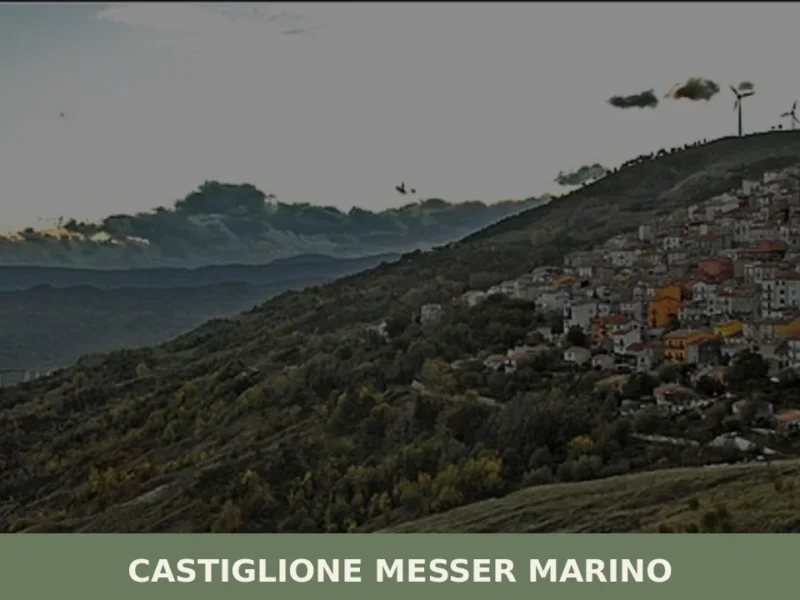
At 1,081 metres above sea level, on the ridge separating the Trigno valley from the Sinello valley, Castiglione Messer Marino has a current population of 1,518 and retains an urban layout that clearly reveals its fortified origins. The village’s very name documents a direct link to the D’Aquino family, feudal lords who controlled its fate […]
San Valentino in Abruzzo Citeriore
Hills
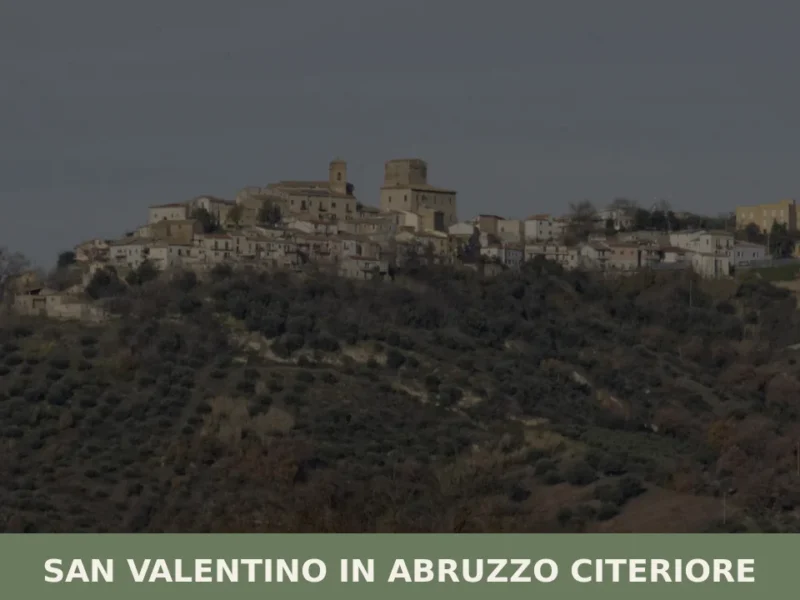
The Apennine peaks rise around San Valentino in Abruzzo Citeriore, a mountain hill town that has maintained its historical character over centuries. Situated on the northern edge of the Majella National Park, this location offers commanding views and a sense of enduring heritage. In this article History of San Valentino in Abruzzo Citeriore What to […]
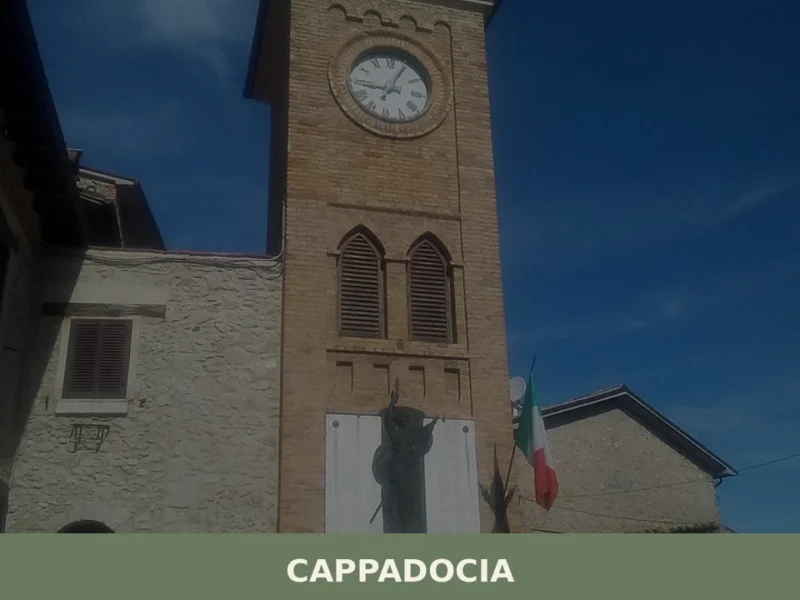
Cappadocia
Mountain
Cappadocia: discover historic churches and natural trails. Plan your visit today and experience the authenticity of this Abruzzo village.
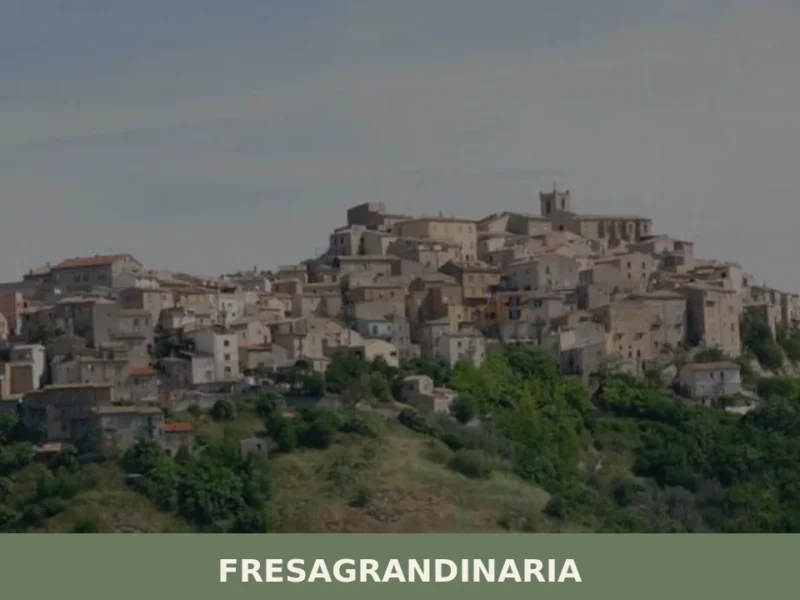
Fresagrandinaria
Hills
Nine hundred and twenty-three inhabitants, a hilltop ridge at 391 metres above sea level, and a double name that joins two distinct medieval communities: Fresa and Grandinaria, merged into a single settlement at least since the fifteenth century. Anyone arriving from the Treste valley floor immediately notices the compact outline of houses built in local […]
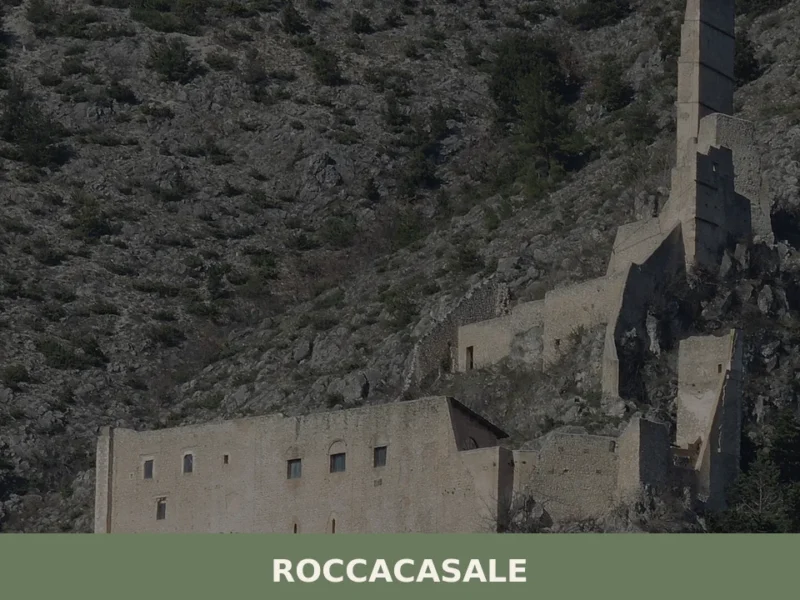
Roccacasale
Mountain
What to see in Roccacasale, Italy: a medieval village of 712 inhabitants above the Peligna Valley. Discover the 1579 church, castle ruins and local cuisine.
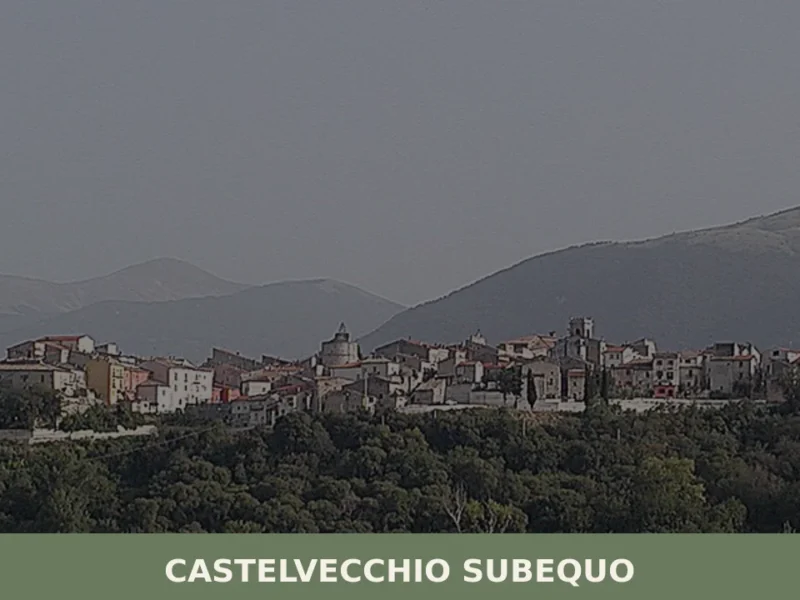
Castelvecchio Subequo
Hills
The convent of San Francesco in Castelvecchio Subequo preserves a cycle of fourteenth-century frescoes attributed to painters of the Giottesque school, among the few surviving examples in the central Apennine area. This fact alone is enough to justify a detour from the nearby A25 motorway towards a town of 832 inhabitants, at 490 metres above […]
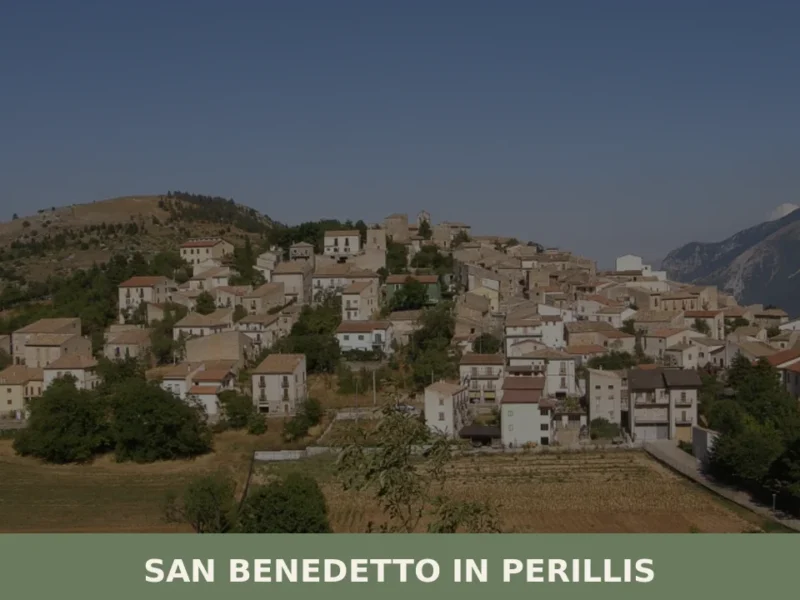
San Benedetto in Perillis
Mountain
What to see in San Benedetto in Perillis, Abruzzo, Italy: 2 churches, a medieval monastery used in a 1985 film. Population 120. Discover top attractions and how to get there.
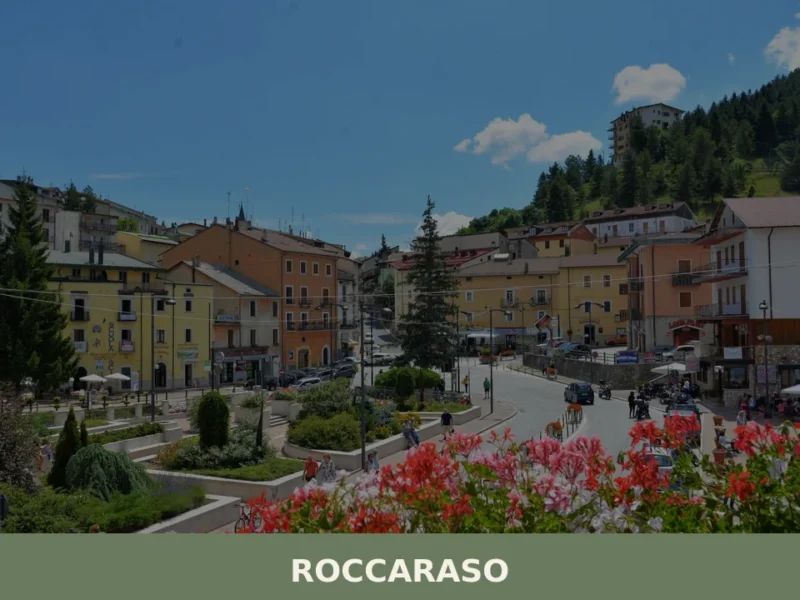
Roccaraso
Mountain
What to see in Roccaraso, Abruzzo, Italy: ski slopes at 1,236 m, the Church of Santa Maria Assunta, and the Alto Sangro ski area. Discover top attractions now.
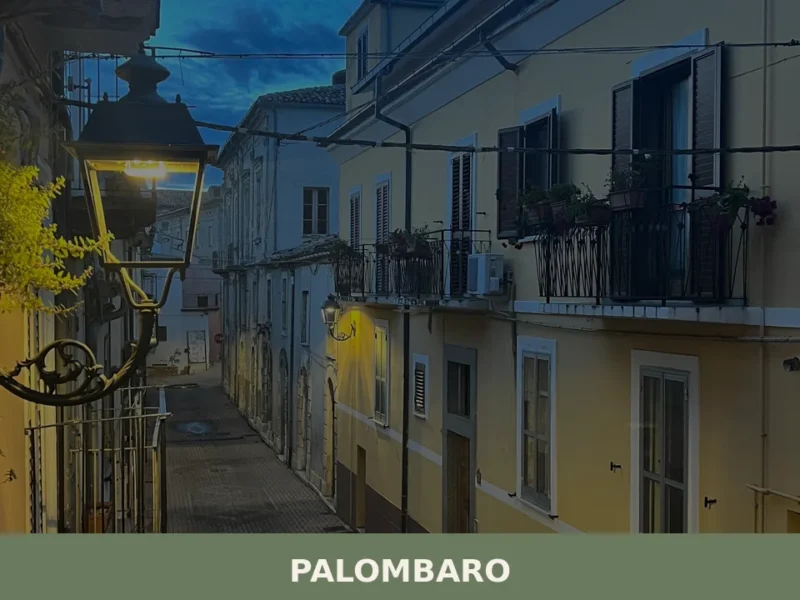
Palombaro
Hills
What to see in Palombaro: 5 attractions in this village at 536 m above sea level in the province of Chieti. Discover the historic centre, the medieval tower and the Madonna della Libera festival.
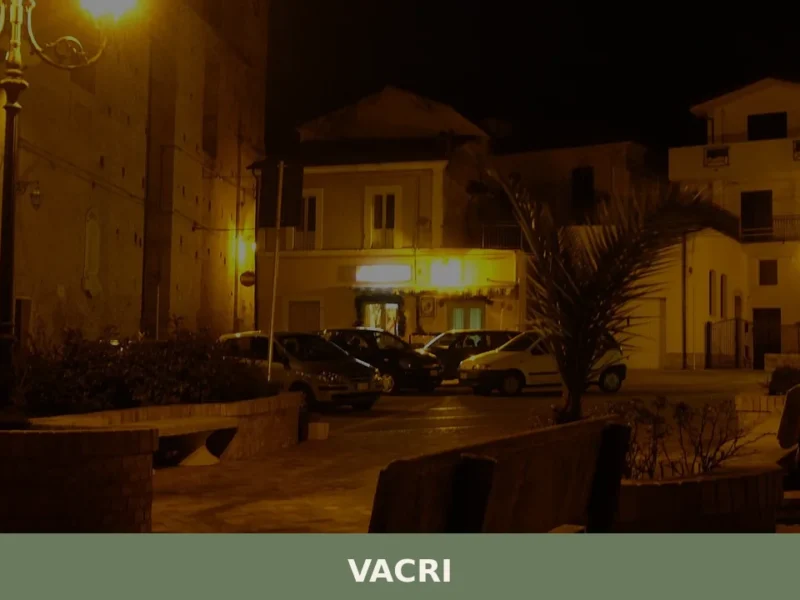
Vacri
 Sea
Sea
What to see in Vacri? Explore the 5 must-see attractions of this Abruzzese village. Discover history and breathtaking views. Read on and plan your itinerary!





🏡 Know Chieti better than we do?
If you’re a local or have been there, your knowledge matters: add what’s missing or fix a detail on this page.