


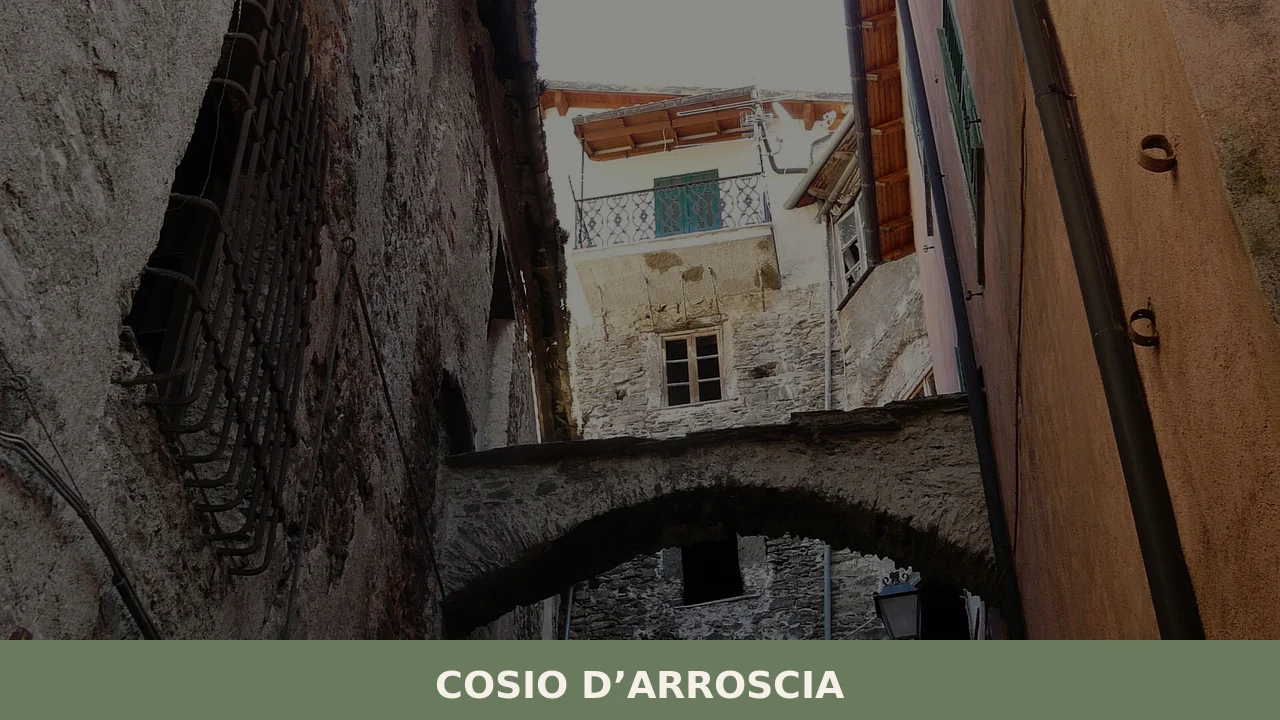
Cosio d’Arroscia
 Mountain
what to see a Cosio d’Arroscia: il village ligure a 721 m s.l.m. con 171 abitanti, la chiesa dei Santi Pietro e Paolo, i hiking trails dell’Alta Via e la festa patronale del 29 giugno.
Discover Cosio d’Arroscia
At an altitude of 721 metres, the Arroscia valley holds the village between its rocky walls and the chestnut woods that tumble steeply down to the valley floor.
The houses of the historic centre are arranged along the ridge with the compact logic of Ligurian mountain villages: exposed grey stone walls, narrow doorways, sloping roofs built to anticipate the snow.
With 171 inhabitants and the isolation of a place that has always looked more to the sky than to the coast, Cosio d’Arroscia belongs to that part of Liguria that remains far from the beaches and harbours, built on different rhythms and different materials.
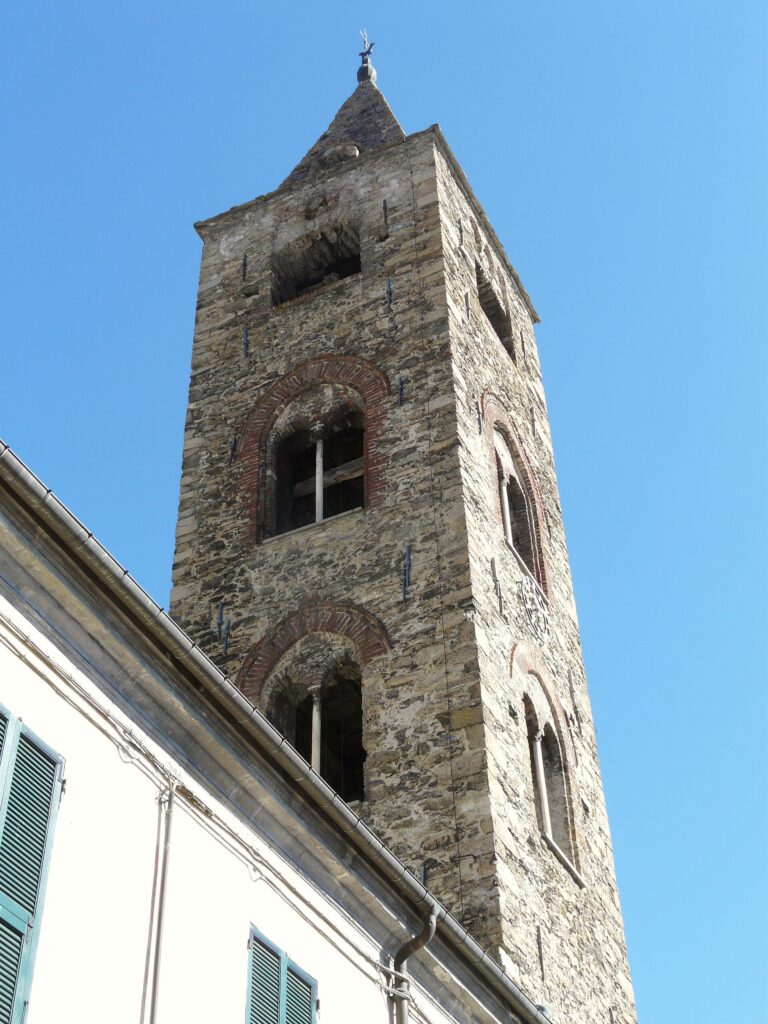
What to see in Cosio d’Arroscia is the right question for anyone who wants to leave the coastal itineraries behind and climb into the Imperia hinterland: the village offers the church dedicated to Saints Peter and Paul with its stone bell tower, the trails that wind through the Arroscia valley towards the Apennine ridges, and a network of historic routes that once connected the inland mountain communities.
At 721 m a.s.l., the village is reached by travelling up the valley and rewards visitors, from the very moment of arrival, with an open view over the hilly, wooded landscape that surrounds it.
Those in search of rural architecture, mountain scenery and genuine silence will find a concrete answer in Cosio d’Arroscia.
History and Origins of Cosio d’Arroscia
The name of the village refers directly to the valley that contains it: the Arroscia is the stream that flows along the valley floor and that gave its name to the entire system of settlements in the area, with Cosio distinguishing itself from the other centres of the same valley through its geographically identifying place name.
The origins of the settlement date back to the medieval period, when the need to control the inland routes between the Ligurian coast and Piedmont led local communities to organise themselves into small hilltop clusters, easy to defend and close to the woodland and water resources of the mountains.
The current urban structure still preserves the logic of that original layout, with dwellings pressed closely together along the ridge in an arrangement that favours compactness over expansion.
During the Middle Ages, the Arroscia valley formed part of the territories contested between local lordships and the influence of the Republic of Genoa, which exercised control over the Ligurian hinterland through a network of agreements, tributes and military garrisons.
Cosio d’Arroscia, like many villages in the Imperia mountain belt, experienced the consequences of these power dynamics, passing under different jurisdictions over the course of the centuries.
Integration into the Genoese sphere brought with it the changes typical of the Superba’s administration: regulation of agricultural activities, control of local trade, and the strengthening of the road network linking the interior to the coast.
These historical transitions have left traces in the architecture and organisation of urban space that are still legible today.
Between the eighteenth and nineteenth centuries, through the administrative transformations brought first by French rule and then by the unification of Italy, Cosio d’Arroscia became part of the modern provincial structure.
The village economy remained tied for a long time to mountain farming, livestock rearing and the exploitation of the forests, with the seasons setting the rhythm of community life.
The gradual depopulation that affected many centres of the Ligurian hinterland during the twentieth century reduced the population to the current 171 inhabitants, but the fabric of the old village has remained substantially intact in its fundamental architectural elements.
Those who walk the streets of Cosio d’Arroscia today can read in this material continuity the history of a mountain community that has maintained its settlement through the centuries.
What to See in Cosio d’Arroscia: Main Attractions
Church of Saints Peter and Paul
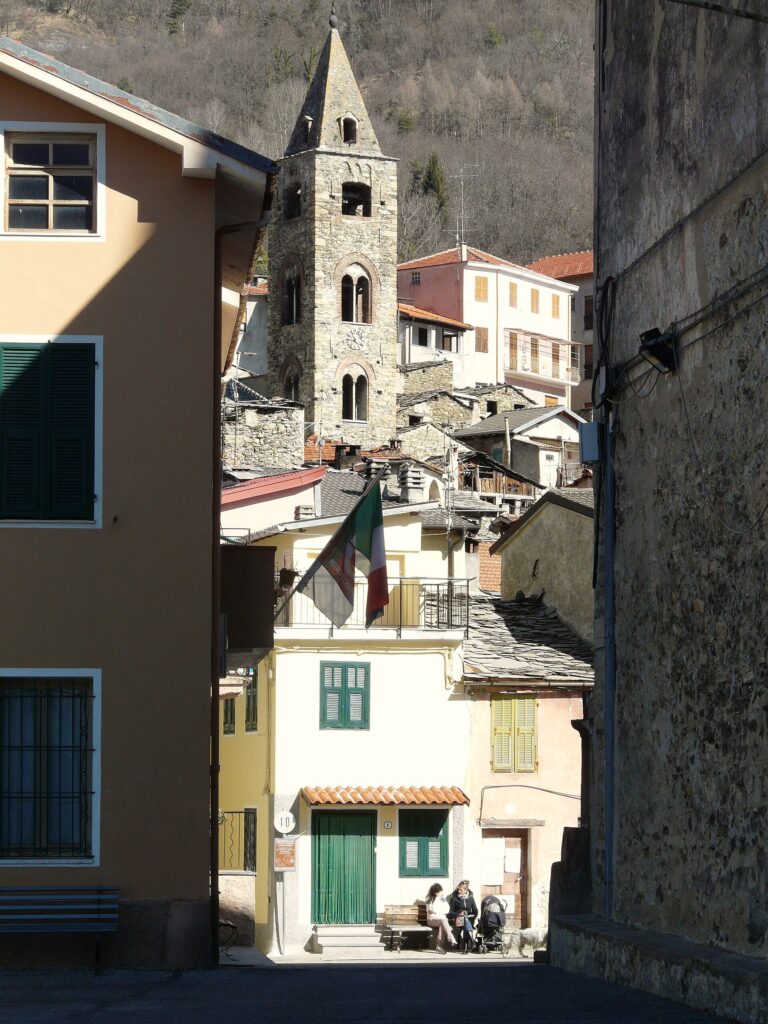
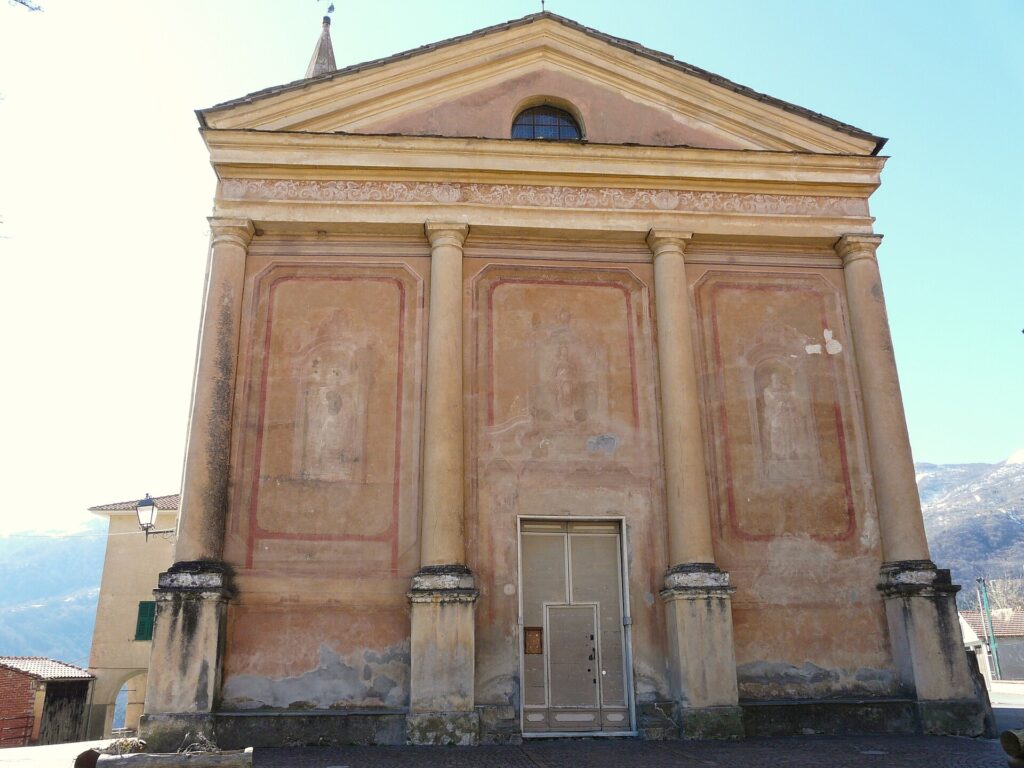
The exterior cladding in local stone and the square-based bell tower rising above the rooftops of the surrounding houses make the church dedicated to Saints Peter and Paul the visual landmark of the village. The building stands in the central core of the settlement and is dedicated to the patron saint Peter the Apostle, whose feast day falls on 29 June, with celebrations that bring the village to life.
The structure reflects the typology of rural Ligurian churches in the hinterland: compact dimensions, a single nave, and an essential façade in which every ornament is reduced to the bare minimum.
Inside, the sacred furnishings and wall decorations document the devotion of the community over the centuries, with elements dating back to different periods that have layered over time.
To check opening hours and visiting arrangements, it is advisable to contact the Municipality of Cosio d’Arroscia or refer to the information displayed on site.
The Historic Core and Stone Streets
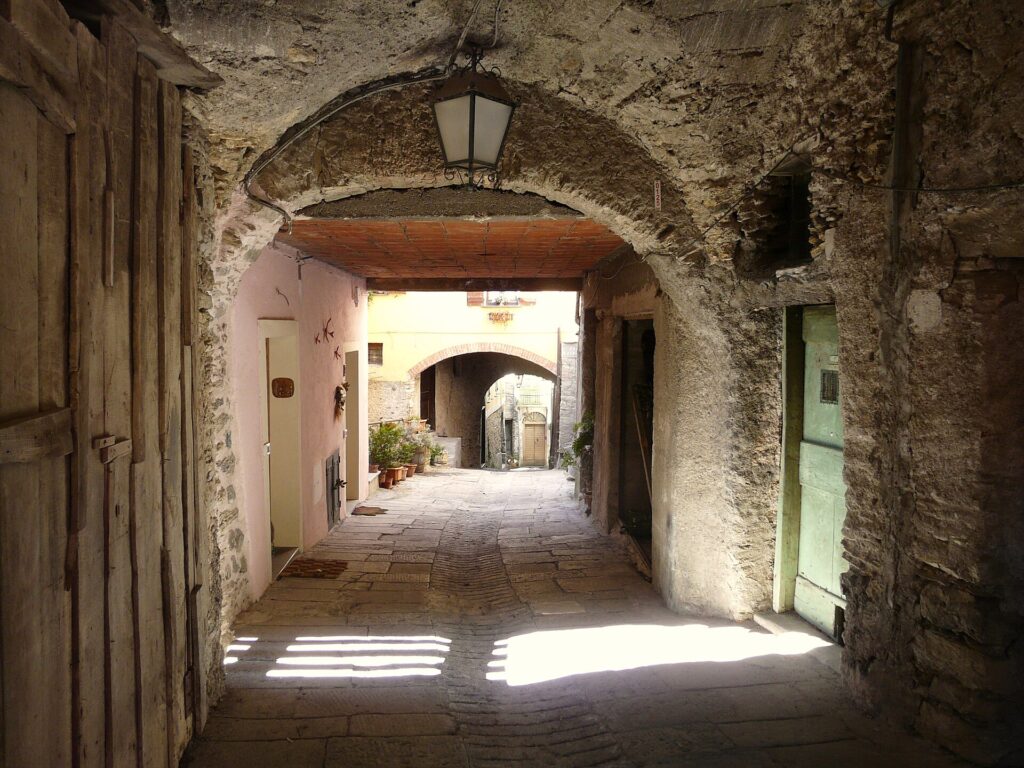
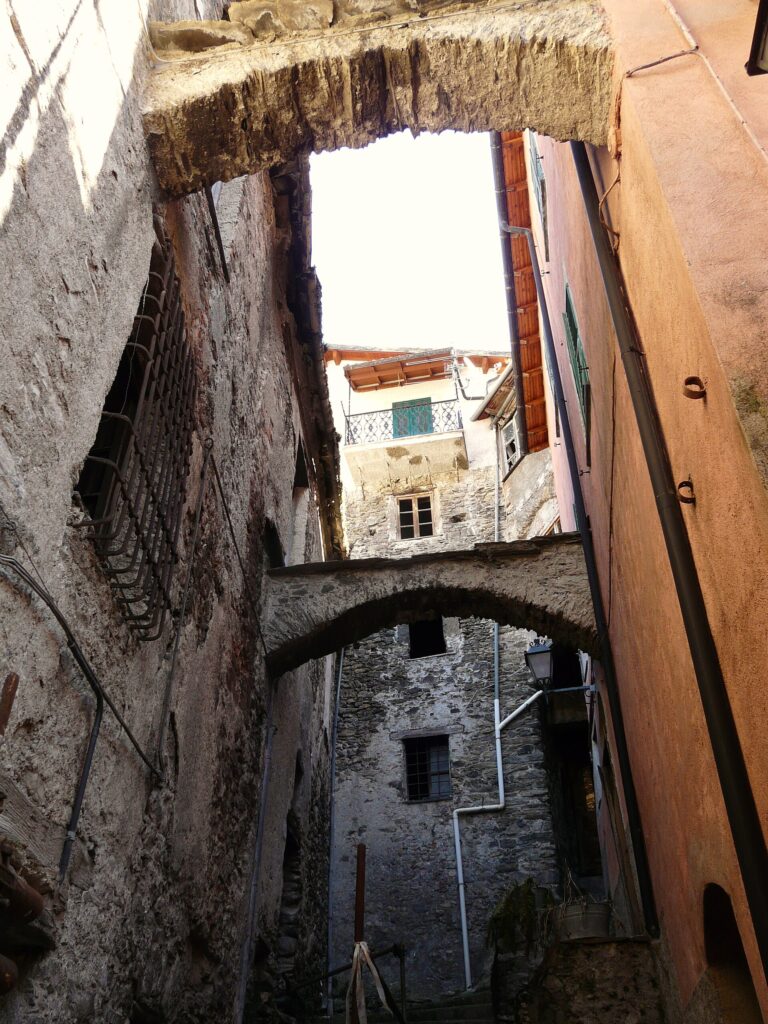
The streets of the historic centre of Cosio d’Arroscia are paved with local stone and descend with irregular gradients between houses that press close on either side with blind walls or arched doorways.
This type of urban layout, common to the mountain villages of the Ligurian interior, follows a precise functional logic: channelling pedestrian and animal traffic along routes that tackle the change in elevation with the shortest possible distance.
The dwellings often feature ground floors used as stables or storerooms, while the upper floors were reserved for domestic life — an arrangement that reflects the centuries-old agro-pastoral economy of the area.
Walking through these alleyways, one encounters architectural details worth observing up close: worn thresholds, carved door jambs, and stone corbels projecting from the walls to support elements that have long since disappeared. The old core can be walked in its entirety in under half an hour, but the density of constructional details justifies spending considerably longer.
The Landscape of the Valle dell’Arroscia
The Valle dell’Arroscia opens up around the village with a landscape that alternates chestnut woods, upland meadows, and rocky slopes marked by water erosion. The Arroscia torrent flows along the valley floor at an elevation significantly lower than the settlement, which stands at 721 m above sea level, creating a visually sharp drop between the waterway and the ridge on which the village is built.
This geographical context historically determined both the defensibility of the site and its limited accessibility — factors that explain the compact structure of the settlement.
The panorama that unfolds from the highest points of the village encompasses the hilly and mountainous system of the Imperia hinterland, with visibility that on clear days extends towards the ridges of the Ligurian Alps.
Those who visit Cosio d’Arroscia in autumn will find the chestnut woods in full colour, with shades of red and yellow covering the hillsides up to the treeline.
The Trails of the Imperia Hinterland
The network of trails departing from Cosio d’Arroscia connects to the broader system of routes that cross the hinterland of the Province of Imperia, linking the villages of the valley and reaching the ridges that divide Liguria from Piedmont. The paths leaving the village wind through chestnut and beech woods, across landscapes that change significantly with altitude.
The elevation difference between the valley floor and the surrounding summits frequently exceeds 600–800 metres, requiring adequate equipment for longer hikes.
Along the routes, one encounters elements of the ancient mountain settlement system: stone fountains, dry-stone walls that once bordered abandoned agricultural terraces, and the remains of rural buildings that attest to the intense use of these slopes in past centuries.
The trails are walkable mainly from spring through to late autumn, while winter snowfall makes specialist equipment necessary. As is the case in other villages of the Ligurian hinterland such as Mezzanego, the trail network represents the primary way to explore the surrounding territory directly.
Rural Architecture and Terraced Fields
The terraces that once wrapped the hillsides around Cosio d’Arroscia represent one of the most eloquent testimonies to the agricultural labour that for centuries transformed these slopes into cultivable fields.
The dry-stone walls, built with stone extracted directly from the ground, reached considerable heights in some places and required continuous maintenance to withstand rain erosion and the weight of snow. Today many of these terraces have been abandoned following the depopulation of the twentieth century and the vege
The rural architecture of the village displays the same constructive logic: use of local stone, slate roofing, absence of superfluous ornamentation. This building style, shared with other inland Ligurian centres such as Isola del Cantone, responds to the climatic conditions and the material resources available in a mountain territory.
Typical cuisine and products of Cosio d’Arroscia
The cuisine of the Imperia hinterland, to which Cosio d’Arroscia belongs, developed on different foundations from that of the coast: no fresh fish, no abundant olive oil as found on the olive-terraced hillsides of the Riviera, but rather ingredients drawn from the forest, the mountain vegetable garden, and livestock farming.
The geographical position of the Arroscia valley, straddling the influences of Liguria and Piedmont, has produced a borderland cuisine that draws from both traditions without belonging entirely to either.
Chestnuts, mushrooms, wild herbs gathered on the hillsides, and the meat of locally raised animals form the basis of a gastronomy that is modest in its means but precise in its methods, built over centuries of adaptation to the seasonal resources available.
Among the dishes that characterise the gastronomic tradition of this mountain area, chestnut soup holds a central place: the fruit of the chestnut tree was dried, pounded or ground to obtain flours and staple ingredients that substituted cereals during times of scarcity.
Chestnut farinata, prepared with chestnut flour, water and a drizzle of oil, represents a simple and direct elaboration of this raw material.
Dried mushrooms, gathered in the surrounding woods and preserved for winter, are used in the preparation of sauces and condiments for hand-made fresh pasta. Goat and lamb meat, often cooked with local aromatic herbs such as rosemary and wild thyme, completes the picture of a gastronomic tradition that favours the preservation and transformation of ingredients over their immediate consumption.
No products with DOP, IGP, PAT or DOC certification specifically attributed to the territory of Cosio d’Arroscia appear in the database.
Local production, as far as can be documented from institutional sources, remains tied to artisanal and family-based circuits rather than certified supply chains.
Those looking for these products can turn to the local markets and village shops of the valley, where availability is seasonal and linked to the agricultural rhythms of the area.
Even in the nearby area of eastern Liguria, villages such as Brugnato preserve mountain gastronomic traditions that share with the Arroscia valley an intensive use of woodland and pastoral resources.
The most favourable season for finding fresh local products is autumn, when the harvest of mushrooms and chestnuts reaches its peak. During this period, some municipalities in the valley organise local events tied to seasonal products, with direct sales and tastings.
For up-to-date information on any gastronomic events, it is advisable to consult the website of the .
Festivals, events and traditions of Cosio d’Arroscia
The most important festival in the local calendar is the one dedicated to the patron saint Saint Peter the Apostle, celebrated on 29 June in accordance with Catholic liturgical tradition.
On this date the village gathers around the Church of Saints Peter and Paul for religious services, with the procession carrying the statue of the saint through the streets of the historic centre.
As in other mountain communities of inland Liguria, the patron saint’s feast has historically represented not only a moment of devotion but also an occasion for the families of the valley to come together, with communities from neighbouring villages taking part in the celebrations. The late June date coincides with the summer period when the village sees its greatest presence of visitors and temporary residents, making the festival a particularly lively occasion for a village with a stable population of 171 inhabitants.
Beyond the patron saint’s feast, the calendar of Cosio d’Arroscia follows the rhythms of the mountain seasons: the phases of the autumn harvest, the traditions associated with livestock farming, and the religious festivities of the liturgical calendar mark the passing of the year for the community.
For information on any specific events scheduled throughout the year, updates on local gatherings and municipal initiatives, the institutional point of reference remains the official website of the municipal authority.
Those wishing to explore what to see in Cosio d’Arroscia will find that the village’s traditions and seasonal celebrations offer an authentic insight into the life of this mountain community.
When to Visit Cosio d’Arroscia and How to Get There
The best time to visit Cosio d’Arroscia runs from May to October. In spring, the woodlands surrounding the village burst into full bloom and the trails become passable again after the winter thaw. Summer brings temperatures noticeably cooler than those on the coast, with the altitude of 721 metres above sea level ensuring pleasant nights even during the hottest months.
Autumn is perhaps the most rewarding time of all: the colours of the chestnut forests, the mushroom season and the availability of fresh local produce make this period especially rich.
Winter, with its possible snowfall, requires adequate preparation and may limit access to the trails; the village lanes remain walkable nonetheless, and the snow-covered landscape offers a completely different perspective on the stone architecture of the settlement.
Visitors arriving by car travel along the A10 Genova–Ventimiglia motorway, exiting at the Albenga toll gate and then heading up the Centa valley and subsequently the Arroscia valley along the provincial road.
The distance from the Albenga toll gate to Cosio d’Arroscia is approximately 35–40 km, with an estimated travel time of 45–60 minutes depending on traffic and road conditions.
The nearest railway station is Albenga, on the Genoa–Ventimiglia line; from there it is necessary to continue by car or local bus service.
The reference airport is the Cristoforo Colombo Airport in Genoa, located approximately 130 km away and reachable in around 1 hour and 45 minutes via the motorway. For local public transport timetables, which are subject to seasonal variations, it is advisable to check directly on the Municipal website or on regional public transport portals.
| Starting point | Distance | Estimated time |
|---|---|---|
| Albenga toll gate (A10) | approx. 38 km | approx. 50 minutes |
| Albenga railway station | approx. 38 km | approx. 50 minutes by car |
| Genoa Airport | approx.
130 km |
approx. 1 hour and 45 minutes |
| Imperia (provincial capital) | approx. 45 km | approx. 55 minutes |
Those planning a wider itinerary through the Ligurian hinterland may consider a stop in Savona, the provincial capital that serves as a hub for access to several valleys of western Liguria, approximately 60 km from Cosio d’Arroscia along the coast. By planning the trip in advance and checking mountain road conditions during the shoulder seasons, a visit to what to see in Cosio d’Arroscia fits naturally into a route that crosses the Imperia hinterland from east to west, touching villages and landscapes at very different altitudes yet united by the same mountain settlement logic.
Frequently asked questions about Cosio d’Arroscia
What is the best time to visit Cosio d'Arroscia?
Spring (April–June) and autumn (September–October) are the ideal seasons. Spring brings mild temperatures and wildflowers along the valley trails, while autumn transforms the chestnut woods into vivid shades of red and gold. The patron saint feast of Saints Peter and Paul falls on 29 June, animating the village with local celebrations — a worthwhile occasion to visit in summer. Winter snowfall can make trails and some roads difficult to access without adequate equipment.
What are the historical origins of Cosio d'Arroscia?
Cosio d'Arroscia traces its roots to the medieval period, when hilltop settlements were established to control inland routes between the Ligurian coast and Piedmont. Over the centuries the village passed through various local lordships before coming under the influence of the Republic of Genoa, which regulated trade and agriculture across the Ligurian hinterland. Its name derives directly from the Arroscia torrent running through the valley below. The compact ridge layout of its historic centre survives largely intact from that original medieval settlement logic.
What to see in Cosio d'Arroscia? Main monuments and landmarks
The Church of Saints Peter and Paul is the visual and spiritual landmark of the village, recognisable by its local-stone façade and square bell tower rising above the rooftops. The historic centre itself merits a careful walk: stone-paved alleyways, arched doorways, carved door jambs and corbelled walls document centuries of mountain building culture. The panoramic viewpoints from the upper part of the ridge offer broad views over the wooded Arroscia valley and the summits of the Imperia hinterland. Entry to the village streets is free and unrestricted.
What are the main natural or scenic attractions of Cosio d'Arroscia?
The Valle dell'Arroscia provides the primary natural setting: chestnut woods, upland meadows, rocky slopes and the Arroscia torrent on the valley floor create a layered mountain landscape. A network of trails departs from the village and connects to the wider route system of the Province of Imperia, reaching the Ligurian–Piedmontese ridges through beech and chestnut forests. Elevation differences of 600–800 metres are common on longer hikes. Trails are accessible from spring through late autumn; winter use requires specialist equipment.
Where to take the best photos in Cosio d'Arroscia?
The upper ridge of the historic centre offers the clearest views over the Arroscia valley and the surrounding forested hills, making it the most rewarding vantage point. The bell tower of the Church of Saints Peter and Paul, rising above the compact roofscape, provides a strong foreground subject against the mountain backdrop. Autumn is particularly photogenic, when the chestnut woods coat the hillsides in warm reds and yellows. The stone alleyways of the old core, with their worn thresholds and carved details, are excellent for close-up architectural photography.
Are there churches or historic buildings to visit in Cosio d'Arroscia?
The Church of Saints Peter and Paul is the principal historic building open to visitors. Built in local stone with a compact single-nave plan typical of rural Ligurian mountain churches, it contains sacred furnishings and wall decorations accumulated over several centuries. The church is dedicated to the patron saint Peter the Apostle, whose feast is celebrated on 29 June. For current opening hours and access arrangements, it is advisable to contact the Municipality of Cosio d'Arroscia directly or check notices displayed at the site.
What can you do in Cosio d'Arroscia? Activities and experiences
Hiking is the main activity: trails from the village wind through chestnut and beech woods towards the ridges dividing Liguria from Piedmont, passing stone fountains, dry-stone terrace walls and ruins of rural buildings. The historic centre itself rewards slow exploration on foot, with its dense fabric of medieval stone architecture. The patronal feast of Saints Peter and Paul on 29 June offers a direct encounter with local village traditions. The surrounding valley is also suited to photography, birdwatching and simply experiencing the quiet rhythms of an authentic mountain community.
Who is Cosio d'Arroscia suitable for? Families, couples, hikers, solo travellers?
Cosio d'Arroscia is best suited to hikers seeking mountain trails away from the coastal crowds, and to travellers interested in rural architecture, medieval village layouts and authentic Ligurian hinterland culture. Couples and solo visitors who value genuine silence and slow travel will find the village rewarding. The terrain and trail gradients require reasonable physical fitness for longer walks, making it less ideal for families with very young children. It is an excellent destination for anyone wishing to explore an inland Liguria that has little in common with the Riviera resorts.
What to eat near Cosio d'Arroscia? Local products and specialties
The cuisine of the Arroscia valley belongs to the Imperia mountain tradition, shaped more by forest and pasture than by the sea. Chestnuts, wild mushrooms, mountain herbs and locally raised meat are the foundational ingredients. The geographical position between Liguria and Piedmont produces a borderland gastronomy that draws on both regional traditions. Given the village's small size and limited on-site services, visitors are advised to seek out trattorias in the broader Arroscia valley or nearby centres for a full experience of the local table.
📷 Photo Gallery — Cosio d’Arroscia
Nearby Villages near Cosio d’Arroscia
In Liguria More villages to discover
Garlenda
 Hills
Hills
What to see in Garlenda, Liguria, Italy: explore a village of 1,200 inhabitants 80 km from Genoa. Discover top attractions, local food, and how to get there.
Giustenice
 Sea
Sea
The Scaincio stream cuts through the Maremola Valley floor, and the path that follows it northward from San Lorenzo climbs steadily toward a ridgeline where the elevation crosses 1,200 m (3,937 ft). Above, the bulk of Monte Carmo reaches 1,389 m (4,557 ft), its limestone flanks visible for much of the valley. In this article […]
Calice Ligure
 Plains
What to see in Calice Ligure, Italy: explore top attractions, local food and how to reach this Savona village of 1,727 people. Discover Liguria's inland.
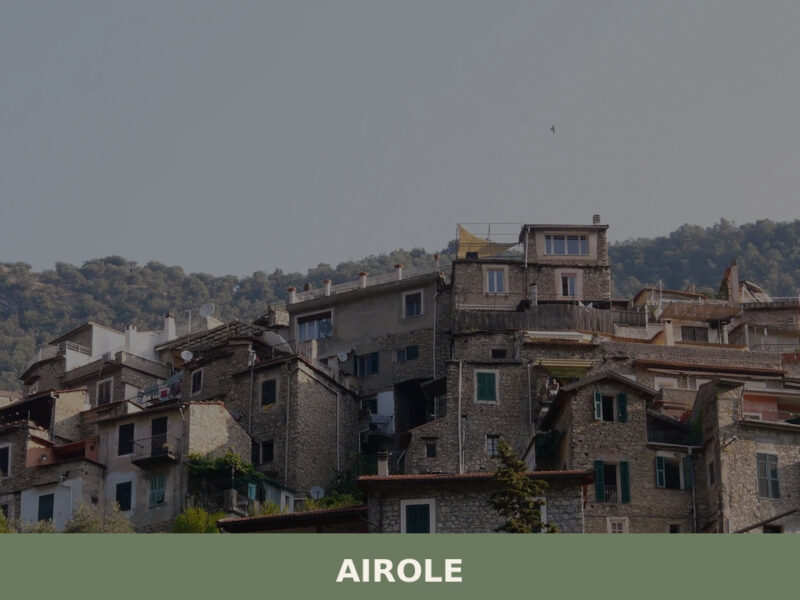
Airole
Plains
A compact Ligurian hill village of 365 inhabitants in the Roia valley. Discover what to see in Airole, from medieval stone alleys to terraced olive groves.
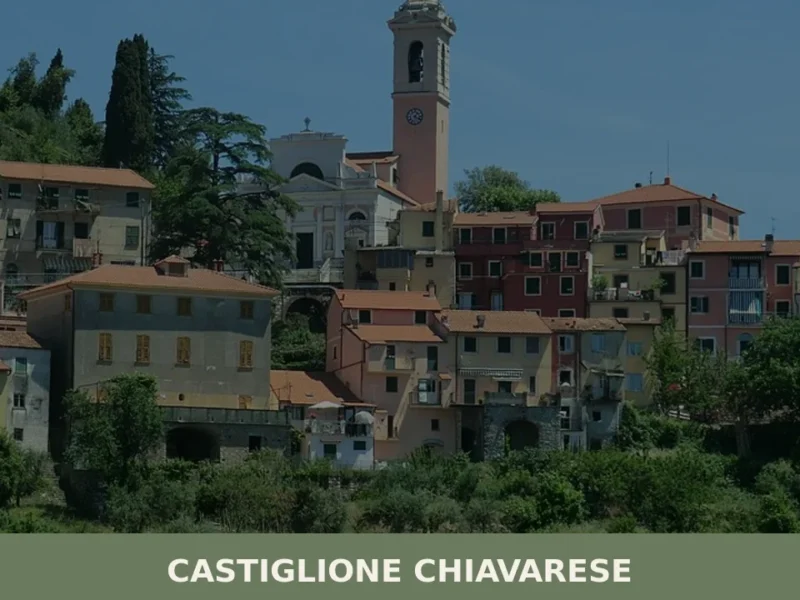
Castiglione Chiavarese
Hills
Castiglione Chiavarese sits at 271 metres above sea level in the province of Genova, its 1,586 inhabitants spread across a constellation of hamlets — or frazioni — that dot the hillsides above the Petronio valley. The comune’s territory stretches from the Ligurian ridge down toward the coast between Sestri Levante and Moneglia, covering a patchwork […]
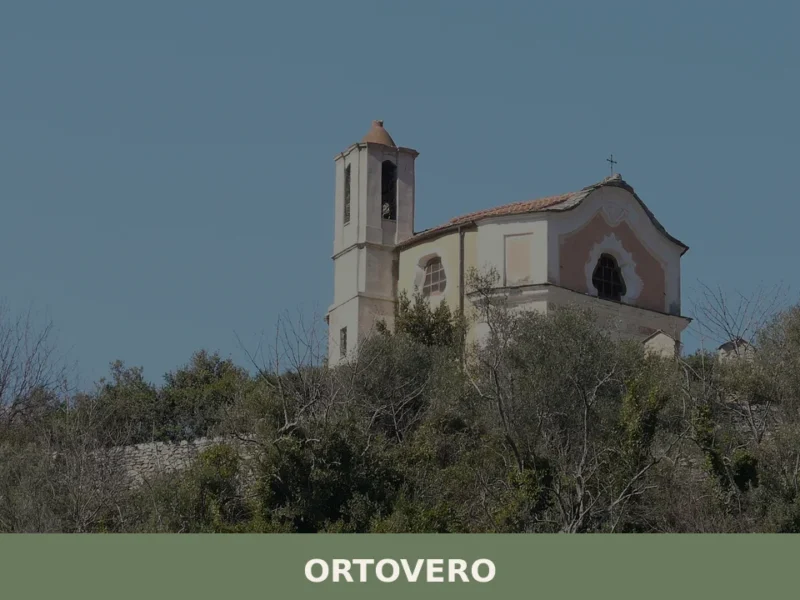
Ortovero
Hills
what to see in ortovero: Explore Italy's Ligurian coast. Located 40 km (25 mi) from Savona, discover historic Ligurian architecture and regional culinary traditions. Read on for travel tips.

Arenzano
Sea
What to see in Arenzano, Liguria, Italy: explore a 16th-century patrician villa, a Saracens' Tower, and a coastal sanctuary. Population 11,445. Discover it all.
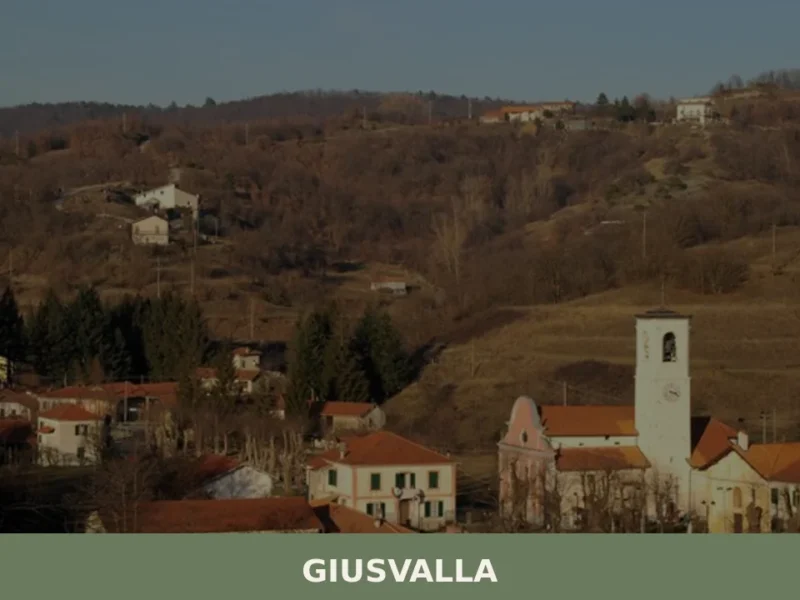
Giusvalla
Mountain
What to see in Giusvalla, Italy: 465 inhabitants, 45 km from Genoa. Discover the Festa Patronale di S. Matteo, Bricco della Croce, and local Ligurian food traditions.
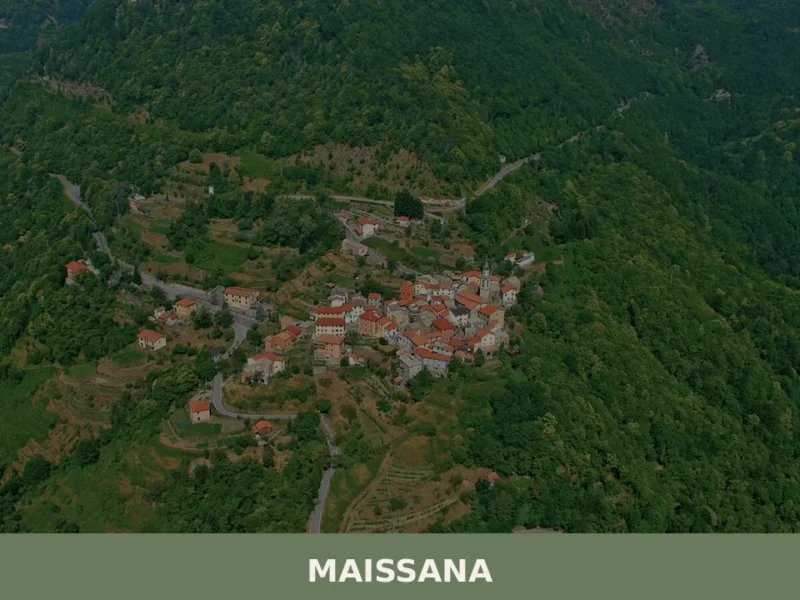
Maissana
Mountain
What to see in Maissana, Italy: 644 inhabitants, 50 km from Genoa. Discover top attractions, local food, festivals and how to get there. Explore now.
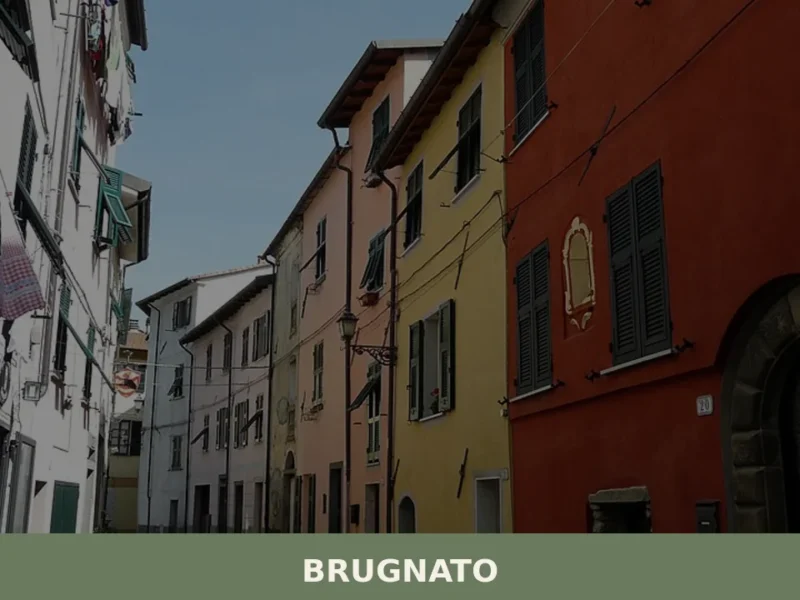
Brugnato
Plains
What to see in Brugnato, a Ligurian village 115m above sea level? Explore the Co-Cathedral of San Pietro Apostolo and taste typical Val di Vara products. Discover its rich history!

🏡 Know Cosio d’Arroscia better than we do?
If you’re a local or have been there, your knowledge matters: add what’s missing or fix a detail on this page.