


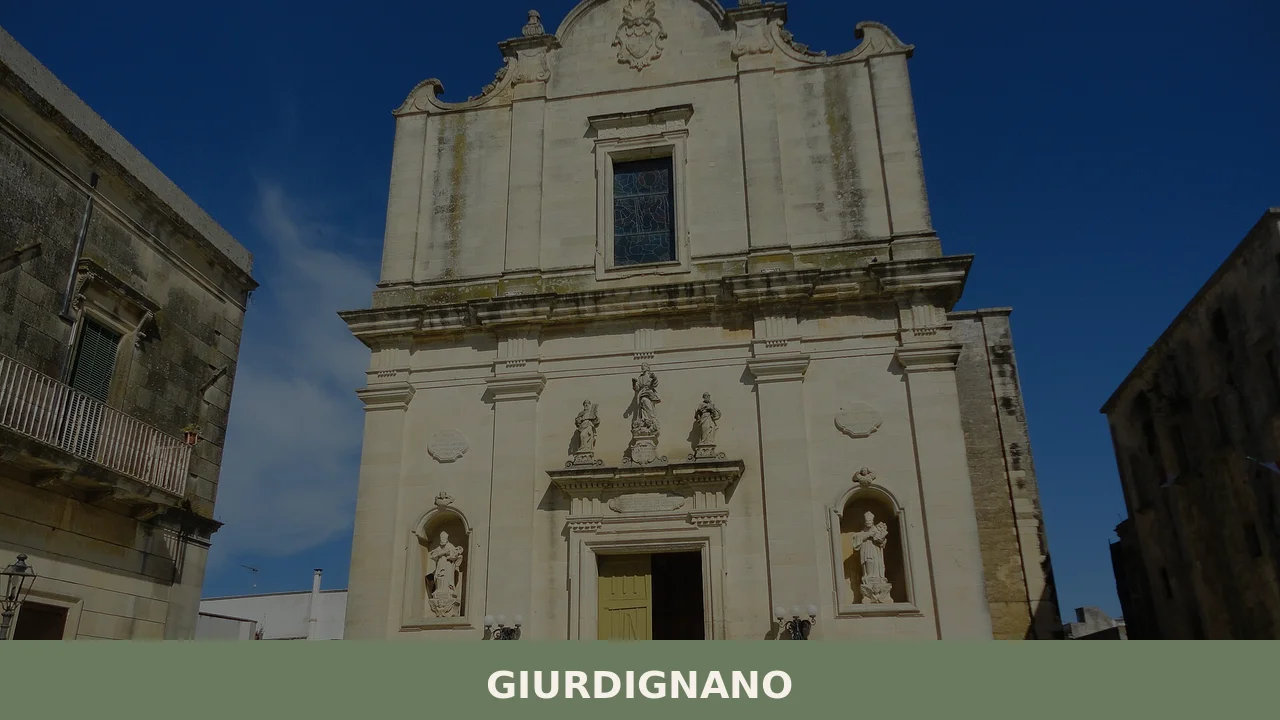
Giurdignano
 Plains
More than 25 standing stones rise from the flat farmland around this comune in the province of Lecce, some tilting slightly after three millennia, others still vertical and sharp against the sky. The territory of Giurdignano, at 78 m (256 ft) above sea level, holds the highest concentration of menhirs and dolmens in all of […]
Discover Giurdignano
More than 25 standing stones rise from the flat farmland around this comune in the province of Lecce, some tilting slightly after three millennia, others still vertical and sharp against the sky.
The territory of Giurdignano, at 78 m (256 ft) above sea level, holds the highest concentration of menhirs and dolmens in all of Italy — a density that no other municipality in the country matches.
Beneath that same soil, Roman archaeologists have recovered a necropolis dated to the 2nd and 3rd centuries AD, confirming that this plateau in the southern Salento has been continuously occupied since the Bronze Age.
Deciding what to see in Giurdignano is, in practice, a matter of choosing between layers of time rather than competing attractions.
The village, with a population of 1,957, sits in the flat agricultural plain of the Salento, the heel of Italy’s boot, about 30 km (18.6 mi) southeast of Lecce. Visitors to Giurdignano find a combination of prehistoric open-air monuments, a Byzantine rock-carved crypt, an 18th-century mother church, and the ruins of a medieval abbey — all within a territory small enough to cover in a single day.
The Giurdignano highlights are documented and measurable; they do not require exaggeration.
History of Giurdignano
The earliest confirmed human presence in Giurdignano’s territory dates to the Bronze Age. The evidence is structural: menhirs and dolmens erected in the agricultural plain point to organised communities capable of quarrying and transporting large limestone blocks. These communities left no written records, but the monuments themselves are datable through archaeological comparison with similar megalithic cultures across the Mediterranean.
The sheer number of surviving structures — exceeding 25 — indicates that this was not a marginal site but a place of documented ritual or communal importance across an extended period.
Roman occupation brought the settlement into a wider administrative network. Archaeological findings in the area include a necropolis from the 2nd and 3rd centuries AD, a standard feature of Roman-era communities large enough to require formalised burial grounds outside inhabited areas.
After the Western Roman Empire’s fragmentation, the territory passed into the orbit of the Byzantine Empire, which left its most visible mark in the form of rock-carved religious architecture.
The crypt of San Salvatore, datable to between the 8th and 10th centuries, belongs to this period — a subterranean chapel cut directly from the bedrock in the manner typical of Byzantine communities throughout Apulia and Basilicata. Similar Byzantine-era settlements developed across the broader Puglia region; the village of Ordona, further north in the same region, also preserves traces of that long Byzantine administrative presence in the south of the Italian peninsula.
The Norman conquest of southern Italy in the 11th century brought Giurdignano under new feudal control.
The Normans reorganised land ownership and religious structures across the entire region, and Giurdignano was no exception. The Abbey of Centoporte, whose ruins survive today, likely reflects the consolidation of ecclesiastical property that followed Norman rule.
By the 16th century, the village had a baronial class substantial enough to commission a formal palace — the baronial Palace that still stands in the historic centre.
The 18th century brought further religious investment in the form of the Mother Church, which replaced or expanded earlier places of worship as the village’s main parish building. These successive layers of construction — prehistoric, Byzantine, Norman-era, Renaissance, Baroque — are all still present in Giurdignano, Puglia, Italy, and traceable on foot within the commune’s compact boundaries.
What to see in Giurdignano, Puglia: top attractions
The Megalithic Park — Menhirs and Dolmens of Giurdignano
Limestone monoliths, some reaching several metres in height, stand at intervals across the agricultural land surrounding the village centre.
Italy’s highest concentration of prehistoric megalithic monuments is documented here, with more than 25 individual structures — menhirs (single upright stones) and dolmens (table-like funerary or ritual structures formed by horizontal slabs resting on uprights) — distributed across Giurdignano’s territory.
The stones date to the Bronze Age, and while many have been integrated into the boundaries of working farmland, their positions remain readable in the landscape.
Visitors exploring what to see in Giurdignano typically follow a circuit that connects the principal menhirs; the terrain is flat throughout, making access straightforward in any season.
Crypt of San Salvatore
Cut directly from the bedrock, the Crypt of San Salvatore is a subterranean chapel whose walls carry the marks of Byzantine stone-carvers working between the 8th and 10th centuries.
Rock-carved churches of this type are distributed across Apulia and Basilicata, but the San Salvatore example is among the more accessible in the Lecce province. The interior preserves the spatial logic of Byzantine worship: a low ceiling, the orientation toward the east, and carved surfaces that once held painted decoration. Access is through a narrow entrance that opens directly from the surrounding flat land.
The crypt is cool even in summer, which makes it a practical afternoon stop during the hotter months.
Ruins of the Abbey of Centoporte
The name Centoporte — literally “one hundred doors” in Italian — suggests a structure of considerable scale, though what survives today is fragmentary. The abbey’s construction likely post-dates the Norman reorganisation of ecclesiastical property in the 11th century, and its ruins now stand in open countryside outside the village nucleus. The remaining masonry gives a sense of the original volume and wall thickness, consistent with monastic building conventions of the Norman and early medieval period in southern Italy.
The site is an exterior visit; the scale of the remaining walls can be read clearly from ground level, and the surrounding flat terrain allows a full perimeter view.
The 16th-Century Baronial Palace
The baronial Palace in Giurdignano’s historic centre was constructed in the 16th century, during a period when feudal families across the Salento were consolidating their local authority through architectural display.
The building’s stone façade, typical of southern Italian Renaissance construction, uses the local pale limestone that appears throughout the village’s older structures.
The palace’s position within the settlement reflects its original function as a centre of administrative and social power. It remains one of the more complete examples of feudal residential architecture in this part of the Lecce province, and its exterior can be examined from the street during any visit to the village centre.
The 18th-Century Mother Church
The Mother Church of Giurdignano was built in the 18th century, replacing or substantially enlarging an earlier place of worship as the village’s principal religious building. Its construction belongs to the same period of church-building activity that transformed dozens of Salentine villages following the religious reforms and economic recovery of the 1700s.
The façade faces the main square of the historic centre, and the church’s interior proportions reflect the standard chiesa madre layout — a nave with lateral chapels — common across small Apulian comuni.
The feast of the patron saint San Rocco, celebrated on 16 August each year, centres on this building and the square in front of it.
Local food and typical products of Giurdignano
The cooking of the Salento — the sub-peninsula that forms the heel of Italy — has been shaped by the same geographic isolation that preserved its prehistoric monuments.
Giurdignano sits within an agricultural zone where wheat, olive oil, legumes, and vegetables have historically formed the dietary base. The influence of Byzantine, Norman, and later Spanish rule left traces in the spice combinations and preserved-food techniques still used in village kitchens today.
This is not a coastal fishing economy; the cuisine is inland and agricultural, built around dried pasta, slow-cooked pulses, and locally pressed olive oil.
Among the dishes associated with this part of the Lecce province, ciceri e tria is the most historically documented: a combination of chickpeas with fresh pasta, part of which is fried until crisp and added to the remainder cooked in the chickpea broth. The textural contrast is intentional and structurally important to the dish.
Pittule are fried dough pockets, typically made with leavened wheat dough dropped by spoonfuls into hot oil, served plain or with a filling of anchovies, olives, or capers.
Fave e cicoria — a purée of dried broad beans paired with sautéed wild chicory — represents the legume-and-bitter-green pairing that runs through the entire Apulian culinary tradition.
Each of these dishes relies on technique and proportion rather than expensive ingredients.
The territory around Giurdignano falls within the production area of Olio Extra Vergine di Oliva Terra d’Otranto (PDO), a designation covering olive oil produced from specific cultivars — primarily Ogliarola Salentina and Cellina di Nardò — grown in the southern part of the Lecce province. The oil is cold-pressed and characterised by a low acidity and a moderately bitter finish. Local producers sell directly from their farms, and the oil appears in every context of the local kitchen, from bread-dipping to finishing cooked vegetables.
The olive groves around the village include old-growth trees whose gnarled trunks are visible from the roads between the megalithic sites.
The agricultural calendar still shapes when certain products are available.
Autumn, from October through November, is the olive harvest period, when presses operate and freshly milled oil — olio nuovo — is available directly from producers. Small local markets in the surrounding comuni offer seasonal vegetables, dried legumes, and handmade pasta.
Visitors specifically interested in food production will find the autumn months the most informative season for understanding the agricultural economy of this part of the Salento.
Festivals, events and traditions of Giurdignano
The central annual event in Giurdignano is the feast of San Rocco, the village’s patron saint, celebrated on 16 August. The feast follows the structure common to Salentine patron saint festivals: a religious procession carries the saint’s statue through the streets of the historic centre, accompanied by the village band and attended by residents and visitors who return specifically for the occasion.
The 16 August date places the feast in the middle of the Ferragosto period, Italy’s peak summer holiday, which means the village sees its highest visitor numbers during and immediately around this celebration.
The procession concludes near the Mother Church, and the evening continues with music in the main square.
Fireworks are a standard component of Salentine patron saint feasts, and the San Rocco celebration follows this regional convention.
The August heat means that the main outdoor activities take place after sunset, when the flat surrounding territory cools enough for open-air gatherings. For visitors planning their trip around the festival, accommodation in the nearby city of Lecce or in the larger towns of the southern Salento is advisable, as Giurdignano itself is a small comune of under 2,000 inhabitants.
When to visit Giurdignano, Italy and how to get there
The best time to visit Giurdignano and the wider Salento area is between April and June, or in September and October. Spring offers mild temperatures — typically between 15°C and 24°C (59°F and 75°F) — and the agricultural landscape is at its most active, with wildflowers growing between the megalithic stones and the olive groves showing new foliage.
September and October bring cooler evenings, the olive harvest, and significantly fewer visitors than July and August.
July and August are the hottest months, with temperatures regularly exceeding 35°C (95°F) in the Salento interior; the San Rocco feast on 16 August draws visitors specifically for that weekend, but the heat makes daytime outdoor exploration of the menhir circuit demanding.
Winter is mild by northern European standards — rarely below 5°C (41°F) — and the sites are accessible year-round, though some local businesses operate reduced hours between November and March.
Giurdignano is reachable by car from Lecce in approximately 30 minutes, covering around 28 km (17.4 mi) via the SP363 provincial road. From Brindisi, the nearest international airport, the drive takes approximately 50 minutes, covering about 55 km (34.2 mi). Brindisi Airport — officially Aeroporti di Puglia — handles connections from several European cities, including direct routes from the UK, Germany, and the Netherlands, making it the most practical entry point for international visitors.
Lecce’s train station connects to Brindisi and the main Italian rail network; from Lecce, local buses serve the Salento peninsula, though frequency to smaller comuni like Giurdignano is limited.
If you arrive by car, the most practical approach is to park at the edge of the historic centre and walk; the village is compact and all major sites are within easy walking distance of one another.
For those travelling from Rome, the journey by high-speed train to Lecce takes approximately 3.5 to 4 hours, making a two-night base in Lecce the most efficient approach for combining the city with a day visit to Giurdignano and the surrounding Salento. English is not widely spoken in smaller local shops and restaurants; carrying euros in cash remains practical, as card payment terminals are not universal in this part of the province.
The official municipality website of Giurdignano provides current information on local services and events.
Visitors who want to extend their time in Puglia beyond the immediate Lecce area might consider combining Giurdignano with other villages in the region.
The village of Conversano, in the Bari metropolitan area roughly 120 km (74.6 mi) to the north, offers a complementary perspective on Puglia’s Norman and medieval heritage, with a well-preserved castle and cathedral that contrast with Giurdignano’s prehistoric and Byzantine character.
For those travelling along the Ofanto river valley in northern Puglia, the Roman-era settlement of provides direct archaeological comparison with the Roman necropolis evidence found at Giurdignano, making the two sites a coherent pairing for visitors specifically interested in the pre-medieval history of the region.
Frequently asked questions about Giurdignano
What is the best time to visit Giurdignano?
Spring (April–June) and early autumn (September–October) are ideal: temperatures are mild, the flat agricultural plain is at its most scenic, and the megalithic circuit is comfortable to walk. August brings peak summer heat but also the Festa di San Rocco on 16 August, the village's main religious and community celebration, centred on the Mother Church and the main square. October and November are worth considering for the olive harvest season, when freshly pressed olio nuovo is available directly from local farms.
What are the historical origins of Giurdignano?
Human presence in Giurdignano's territory dates to the Bronze Age, evidenced by more than 25 menhirs and dolmens still standing in the surrounding plain. Roman occupation left a 2nd–3rd century AD necropolis. Byzantine rule produced the rock-carved Crypt of San Salvatore (8th–10th centuries). The Norman conquest of the 11th century reorganised feudal and ecclesiastical structures, likely prompting construction of the Abbey of Centoporte. By the 16th century a baronial class had emerged, commissioning the palace that still stands in the historic centre.
What to see in Giurdignano? Main monuments and landmarks
The main attractions are: the Megalithic Park, with over 25 Bronze Age menhirs and dolmens distributed across flat farmland and walkable via a circuit; the Byzantine Crypt of San Salvatore, a rock-carved subterranean chapel from the 8th–10th centuries accessible from ground level; the ruined Abbey of Centoporte, viewable from outside in open countryside; the 16th-century Baronial Palace in the historic centre, readable from the street; and the 18th-century Mother Church facing the main square. All sites lie within a compact territory coverable in a single day.
Where to take the best photos in Giurdignano?
The most photogenic spots are the megalithic sites scattered across the agricultural plain: individual menhirs rising against an open sky offer unobstructed compositions, particularly in the low light of early morning or late afternoon. The gnarled trunks of old-growth olive groves visible along the roads between the megalithic sites provide additional subjects. The façade of the Mother Church facing the main village square and the remaining walls of the Abbey of Centoporte, set in open countryside, are also strong architectural subjects.
Are there museums, churches or historic buildings to visit in Giurdignano?
Yes. The Crypt of San Salvatore is a Byzantine rock-carved chapel from the 8th–10th centuries, accessible through a narrow entrance opening onto flat land. The 18th-century Mother Church, dedicated to the village's liturgical life and the focus of the San Rocco feast on 16 August, faces the historic centre square. The 16th-century Baronial Palace, built in local pale limestone, can be examined from the street. The Abbey of Centoporte ruins are an exterior site in open countryside. For current opening hours and any admission fees, contact the Giurdignano municipal office or local pro loco.
What can you do in Giurdignano? Activities and experiences
The primary activity is walking the megalithic circuit connecting the menhirs and dolmens across the flat Salento plain — accessible in all seasons and requiring no special equipment. Visiting the Byzantine Crypt of San Salvatore and the Abbey of Centoporte ruins adds an archaeological layer to the route. Autumn visits can include direct purchase of freshly pressed extra virgin olive oil from local producers within the Terra d'Otranto PDO zone. The San Rocco patronal feast on 16 August offers a direct experience of local religious and community tradition.
Who is Giurdignano suitable for? Families, couples, hikers, solo travelers?
Giurdignano suits anyone with an interest in archaeology, prehistory, or rural southern Italy. The flat terrain and short distances between sites make it accessible for families with children and visitors of all fitness levels. History enthusiasts and photographers will find the megalithic landscape and Byzantine crypt particularly rewarding. Couples and solo travellers seeking an uncrowded, authentic Salento experience away from coastal resorts will find it a worthwhile day trip from Lecce, roughly 30 km (18.6 mi) to the northwest. It is not oriented toward beach tourism or nightlife.
What to eat in Giurdignano? Local products and specialties
The cuisine is inland Salentino: ciceri e tria (chickpeas with fresh pasta, part of which is fried crisp) is the area's most historically documented dish. Pittule are fried leavened dough morsels served plain or with anchovies, olives, or capers. Fave e cicoria pairs a purée of dried broad beans with sautéed wild chicory. The dominant local product is extra virgin olive oil under the Terra d'Otranto PDO designation, pressed from Ogliarola Salentina and Cellina di Nardò olives; olio nuovo is available directly from farms during the October–November harvest.
Nearby Villages near Giurdignano
In Apulia More villages to discover
Putignano
 Hills
Hills
What to see in Putignano: hilltop town at 372m in the Murgia Barese. Grotta del Trullo, 6-century-old Carnival, PAT cuisine. Plan your visit now.
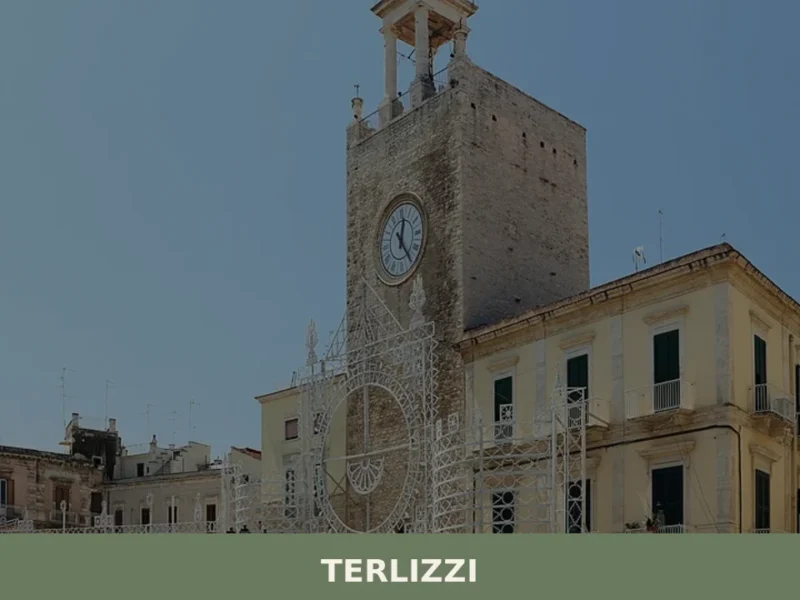
Terlizzi
Plains
What to see in Terlizzi: discover the 5 top attractions, from the Cathedral to the Clock Tower. Plan your visit and taste the local specialities.
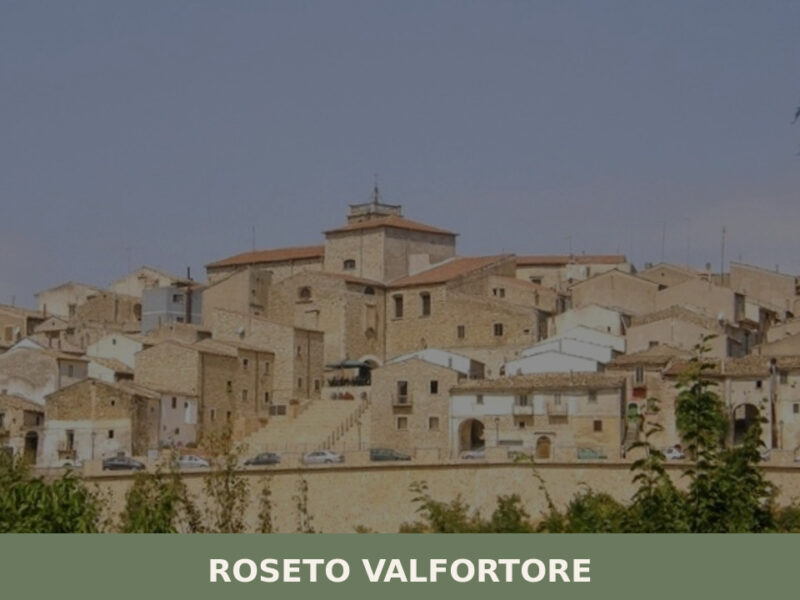
Roseto Valfortore
 Mountain
A stone village of 993 inhabitants at 658 metres in the Fortore valley. Roseto Valfortore preserves medieval architecture, mountain cooking traditions, and the quiet of inland Puglia.
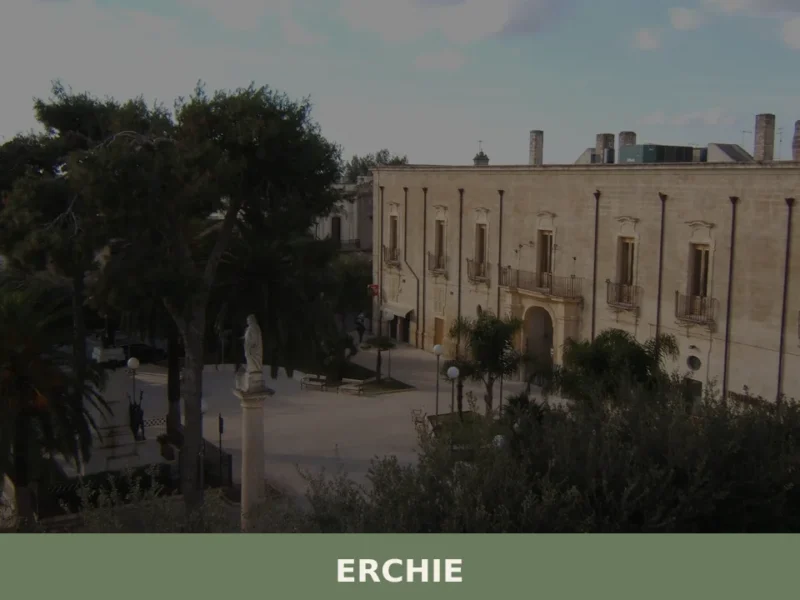
Erchie
Plains
Discover what to see in Erchie, Puglia u2014 a village at the crossroads of three provinces, with Baroque churches, masserie, and authentic Salento cuisine.
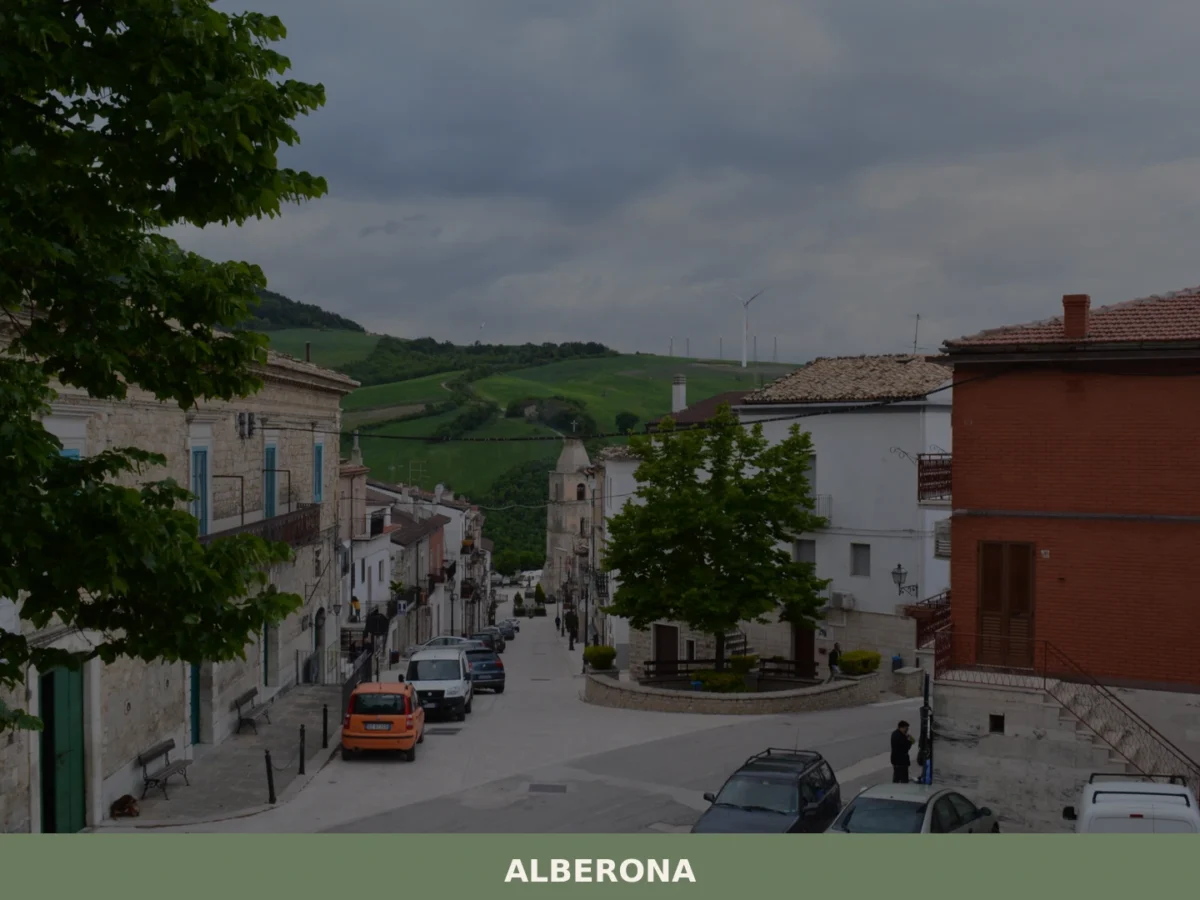
Alberona
Mountain
What to see in Alberona, Italy? Discover this upland village at 732 m (2,303 ft) a.s.l., one of I Borghi più belli d'Italia. Explore its historic core and traditional architecture.
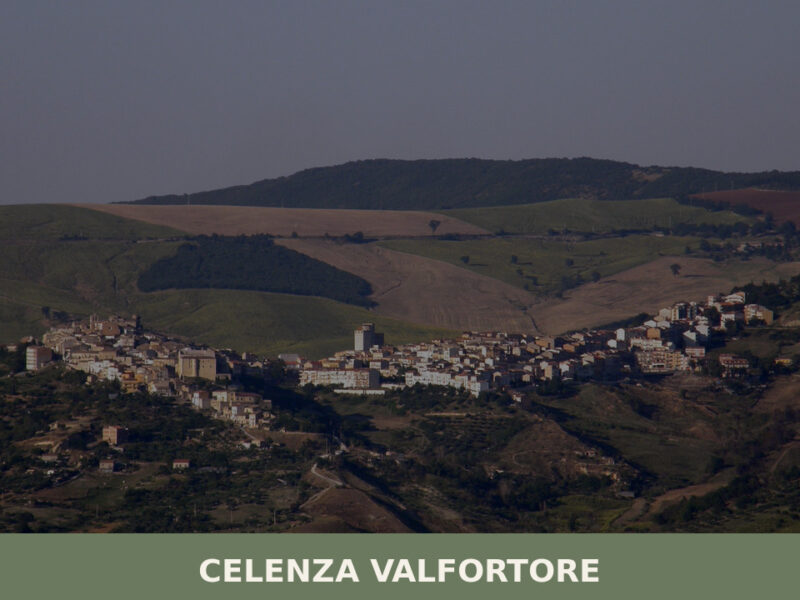
Celenza Valfortore
Hills
A hill village of 1,363 people above the Fortore valley in Puglia's Daunia highlands. Castle, churches, stone lanes, and a working landscape far from the tourist coast.
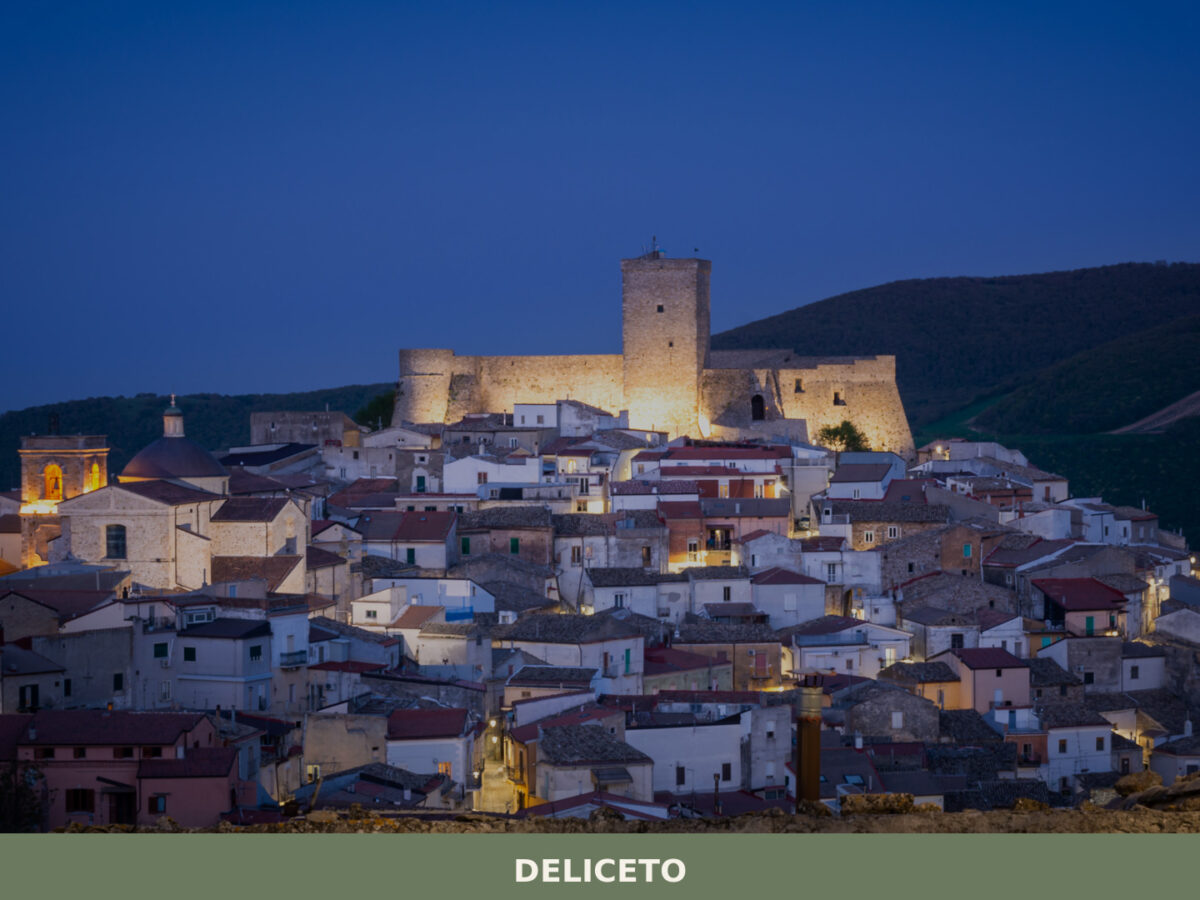
Deliceto
Hills
Deliceto rises at 575 metres on a ridge of the Subappennino Dauno, commanding the Tavoliere plain. A Norman castle, layered churches, and a stone-built historic centre define this compact Puglia hill village.
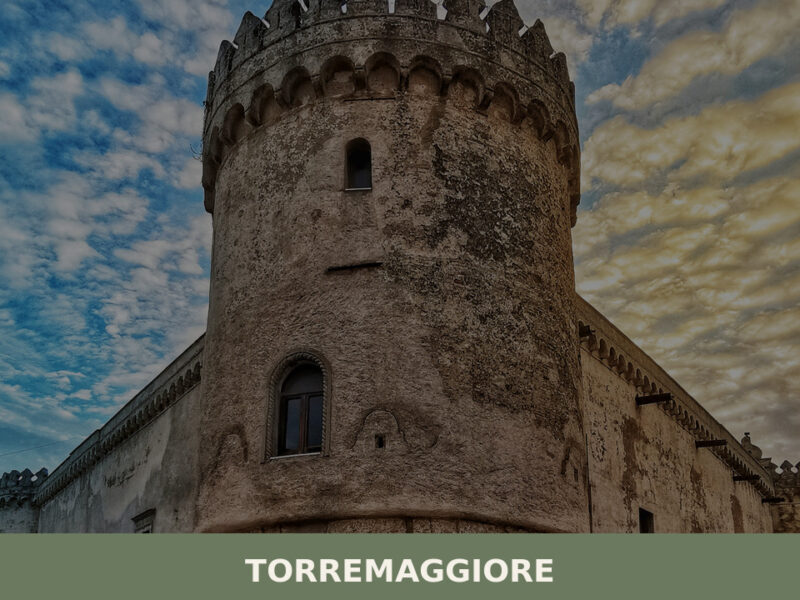
Torremaggiore
Plains
A complete guide to Torremaggiore in northern Puglia — its medieval castle, the ruins of Fiorentino, local food traditions, and practical travel information.
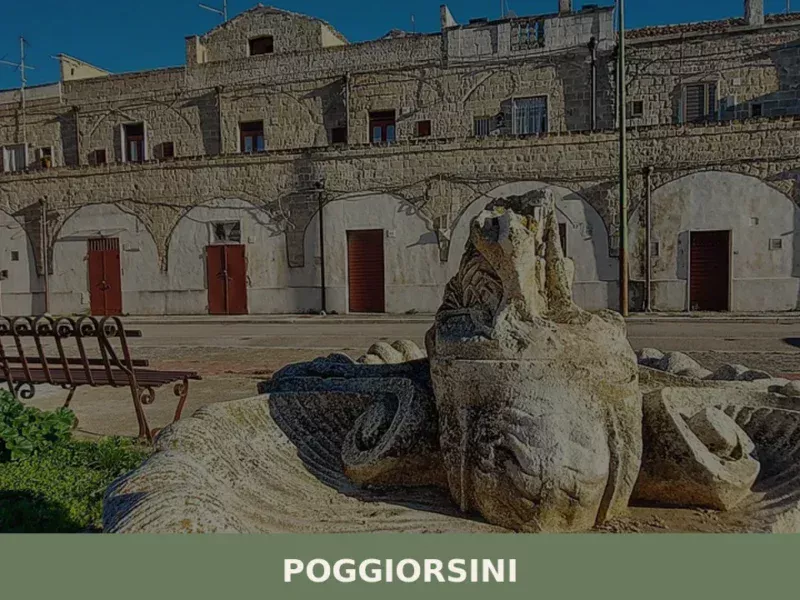
Poggiorsini
Hills
What to see in Poggiorsini: from trulli to the streets of the old town. Discover attractions, practical tips and how to plan your visit to this Puglia village.
Carovigno
 Sea
Sea
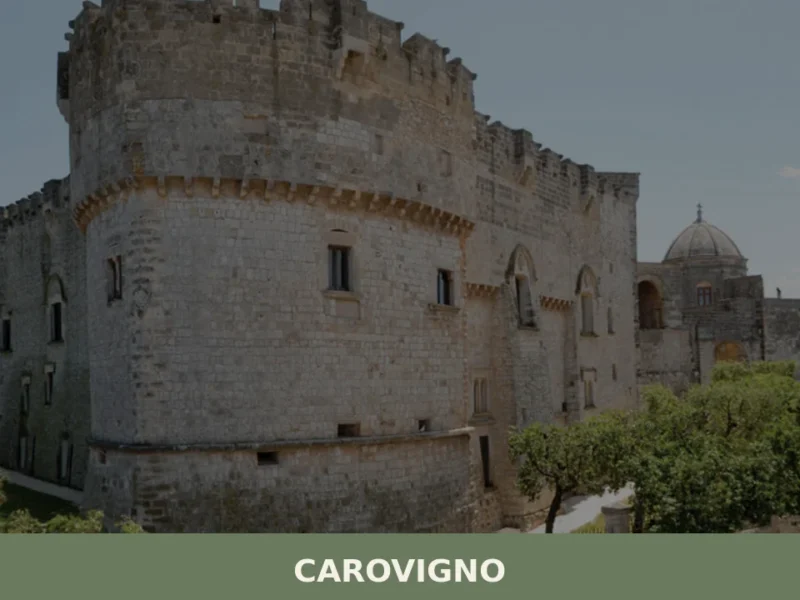
Discover what to see in Carovigno, Puglia: medieval castle, rupestrian churches, Torre Guaceto nature reserve, olive oil traditions and practical travel tips.


🏡 Know Giurdignano better than we do?
If you’re a local or have been there, your knowledge matters: add what’s missing or fix a detail on this page.