


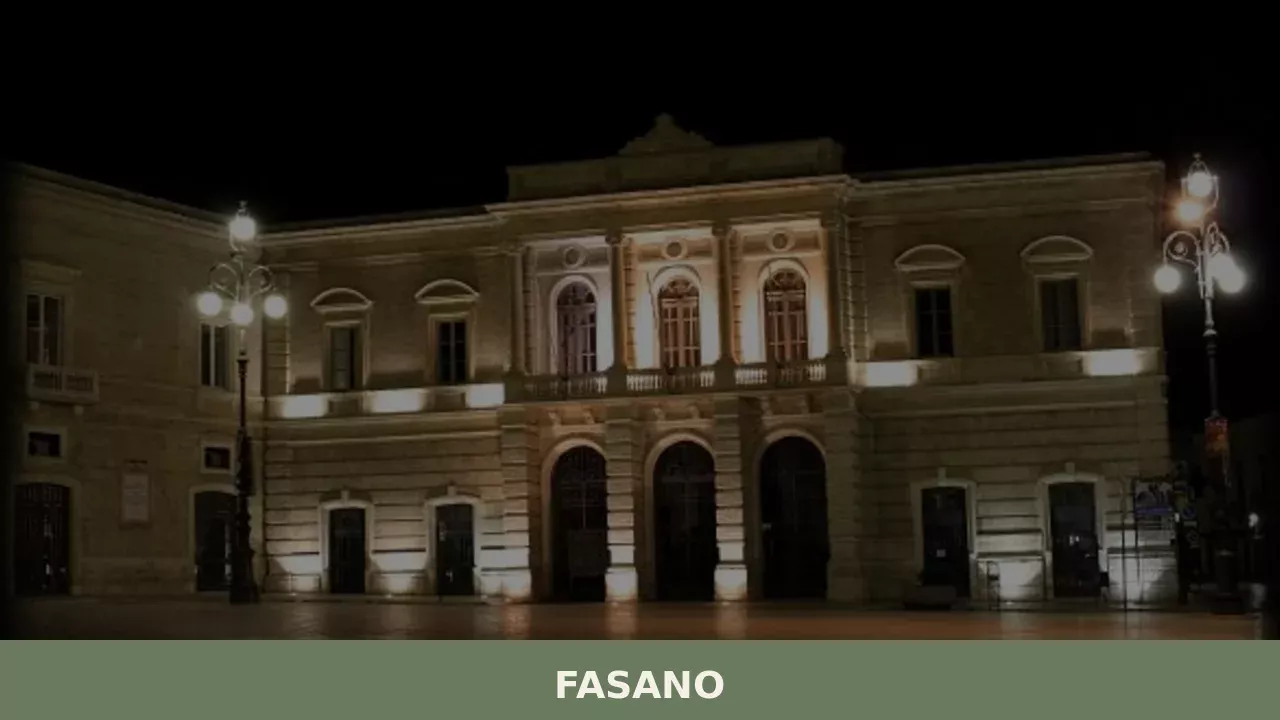
Fasano
 Sea
Sea
Discover what to see in Fasano, Puglia: ancient Egnazia ruins, the Valle d’Itria, Adriatic coast, local food and practical tips for visiting this Brindisi-province town.
Discover Fasano
Fasano is a comune of 38,730 inhabitants in the province of Brindisi, Puglia, positioned at the geographic centre of an ideal triangle formed by the cities of Bari, Brindisi and Taranto — each approximately 50 kilometres away. This placement is not incidental: it defines the town’s identity as a border territory between the Salento region to the south and the Terra di Bari to the north. For anyone planning what to see in Fasano, that dual character — Adriatic coastline to the east, the limestone plateau and Valle d’Itria to the west — is the essential framework.
History of Fasano
The territory of present-day Fasano was inhabited long before the medieval town took shape. Archaeological evidence from the area, including findings at the site of Egnazia — the ancient Messapian and later Roman city of Gnathia — confirms continuous settlement from at least the Bronze Age. Gnathia was an important coastal trading port, producing the distinctive ceramic ware known as Gnathian pottery, which has been documented and collected in museums across Europe. The city’s eventual decline and partial abandonment contributed to the gradual shift of population inland toward what would become the nucleus of modern Fasano.
During the medieval period, the territory passed under Norman and later Angevin feudal control, in keeping with the broader political history of the Kingdom of Naples, which administered much of Puglia for several centuries. The town’s administrative identity was formalised progressively, and its relationship with neighbouring centres was often contested. A significant administrative event occurred in 1927, when Fasano, together with the nearby town of Cisternino, was incorporated into the newly reorganised province of Brindisi — a change that repositioned the town institutionally within Puglia’s modern provincial structure. As recently as 1955, a parliamentary proposal was presented to the Italian Chamber of Deputies by the MP Maria Chieco Bianchi to return Fasano to the province of Bari, reflecting ongoing debate about the town’s geographic and cultural affinities.
Economically, Fasano developed around olive cultivation and the processing of agricultural goods, a pattern shared with much of the Murge plateau and the Valle d’Itria. The town’s historic centre retains the dense, whitewashed architecture characteristic of Apulian inland settlements, while its coastal strip — extending for some 15 kilometres along the Adriatic — developed later as a separate economic pole tied to fishing, then to summer tourism. The municipality today encompasses several distinct frazioni, each with its own character, from the hilltop core to the coastal locality of Savelletri and the marina settlements further north.
What to see in Fasano: 5 must-visit attractions
The Archaeological Zone and Museum of Egnazia
The ruins of ancient Gnathia, a Messapian city later absorbed into the Roman road network along the Via Traiana, sit on a rocky promontory just south of the modern coastline. The on-site Museo Nazionale Archeologico di Egnazia displays ceramics, votive objects, inscriptions and urban remains spanning from the Bronze Age through late antiquity, including a well-preserved section of Roman road surface.
The Historic Centre of Fasano
The old town is organised around a compact grid of narrow limestone streets and small piazzas, with the Cathedral of Sant’Giovanni Battista as its principal ecclesiastical monument. The cathedral, rebuilt in its current form during the eighteenth century, incorporates a Romanesque bell tower that predates the later reconstruction, providing a visible record of the site’s layered building history.
Fasanolandia and the Zoosafari
Fasano is home to one of Italy’s largest drive-through safari parks, the Zoosafari, which operates within a large forested area west of the town. Established in the second half of the twentieth century, it covers several hundred hectares and houses African and exotic species in open enclosures. It remains one of the most visited family attractions in Puglia by visitor numbers.
The Valle d’Itria and the Trulli Landscape
The western portion of the Fasano municipal territory extends into the Valle d’Itria, the landscape defined by the conical dry-stone roofed structures known as trulli. While Alberobello holds UNESCO World Heritage status for its trulli concentration, the rural countryside around Fasano contains working and restored examples of these limestone constructions, many dating to the seventeenth and eighteenth centuries and still embedded in functioning agricultural plots.
The Coastal Strip: Savelletri and Torre Canne
Fasano’s Adriatic coastline runs for approximately 15 kilometres and includes the fishing village of Savelletri, where a small working harbour handles both local fishing boats and leisure craft. Torre Canne, further north, is named for the Spanish watchtower that once formed part of the coastal defence network built across Puglia during the sixteenth century to monitor Adriatic approaches.
Local food and typical products
Fasano sits within one of Puglia’s most productive olive-oil territories. The province of Brindisi, and the broader area of the Murge and Valle d’Itria, produces extra-virgin olive oil under protected designations, with centuries-old cultivars including Ogliarola and Coratina forming the backbone of local production. Local cooking makes direct and frequent use of this oil: orecchiette with cime di rapa (turnip tops), fave e cicoria (broad bean purée with wild chicory), and grilled vegetables dressed simply with cold-pressed oil are all standard items on tables in the area. Along the coast, raw shellfish — sea urchins when in season and mussels farmed in the Adriatic — feature prominently in restaurants at Savelletri and Torre Canne. For further orientation on regional food products, Viaggiare in Puglia, the official regional tourism portal, provides updated listings of local producers and markets.
Focaccia barese — the thick, olive-oil-soaked flatbread topped with tomatoes and olives — appears in local bakeries across the Fasano area, reflecting the town’s geographic position on the cultural border between Bari and Salento traditions. Seasonal vegetables and legumes, particularly chickpeas and broad beans grown on the plateau, are fixtures in home cooking and in the more traditional trattorie of the historic centre. The summer coastal season brings a broader range of seafood-oriented menus to the marina restaurants, with grilled orata and branzino caught locally alongside the ubiquitous raw seafood platters.
Best time to visit Fasano
The most comfortable period for visiting Fasano and exploring the full range of what the territory offers — coast, historic centre, archaeological site and countryside — falls between late April and mid-June, and again in September and October. Temperatures during these windows are moderate, coastal water temperatures in September remain warm from the summer, and the main sites are accessible without the density of visitors that peaks in July and August. The olive harvest, which typically begins in October and runs into November depending on the year and cultivar, is a period of particular agricultural activity in the countryside around Fasano and gives an accurate picture of the economy that has sustained the area for centuries.
Summer — July and August — brings significant numbers of Italian holidaymakers to the coastal frazioni, which fills accommodation quickly and raises prices substantially. Visitors arriving in this period should book well in advance and expect the historic centre to be quieter than the coast. Winter sees most coastal businesses close, but the town itself remains fully operational, and the Egnazia archaeological site and museum are open year-round. The official website of the Comune di Fasano publishes current information on local events, opening hours and seasonal schedules.
How to get to Fasano
Fasano is well connected by both road and rail within the Apulian transport network. The principal access points are as follows:
- By motorway: The A14 Autostrada Adriatica (Bologna–Taranto) passes close to the area; the exit for Fasano is at Ostuni-Fasano, approximately 10 kilometres from the town centre. From Bari, the drive covers roughly 50 kilometres and takes around 45 minutes. From Brindisi, the distance is similar.
- By train: Fasano has its own railway station on the Adriatic coastal line (Bari–Lecce), operated by Trenitalia. Regional trains connect Fasano directly to Bari (approximately 50 minutes) and to Brindisi (approximately 35 minutes). The station sits on the coastal edge of the municipality, about 3 kilometres from the historic centre.
- By air: The nearest airports are Brindisi–Papola Casale (approximately 40 kilometres to the south-east) and Bari–Karol Wojtyła (approximately 55 kilometres to the north-west). Both are served by domestic and European low-cost carriers. Car hire at either airport provides the most flexible option for exploring Fasano’s dispersed territory.
- From Taranto: Approximately 50 kilometres to the south-west via the SS172 or connecting road network; travel time by car is around one hour depending on traffic.
Where to stay in Fasano
Accommodation in the Fasano area divides clearly along geographic lines. The historic centre offers smaller guesthouses and B&B options within walking distance of the cathedral and old town streets — practical for visitors prioritising the cultural and gastronomic character of inland Fasano. The coastal frazioni of Savelletri, Torre Canne and the marina area concentrate the larger hotel stock, which is heavily oriented toward summer beach tourism and includes several high-end resort properties that have developed along this stretch of Adriatic coast over the past two decades. These fill rapidly in July and August and operate at substantially higher prices during those months.
For visitors interested in the rural territory — the Valle d’Itria edge, the trulli landscape, the olive groves — agriturismi in the countryside between the town and the valley offer a practical base with direct exposure to the agricultural setting. Some of these operate converted farmhouses with working olive groves. A practical booking note: regardless of accommodation type, the gap between shoulder-season and peak-summer pricing in this area is considerable, and booking three to four months ahead for August is advisable if any coastal accommodation is preferred.
More villages to discover in Puglia
Fasano’s position on the border between two distinct Apulian sub-regions makes it a natural starting point for exploring the broader territory. To the south, the Salento interior holds towns with their own distinct architectural and historical character. Avetrana, a small centro storico in the Taranto province, illustrates the quieter, more enclosed urban form of the inner Salento. Further into the peninsula, Bagnolo del Salento represents the smaller-scale settlement pattern of the deep south, where villages have maintained a concentrated historic fabric largely unchanged in its street plan.
To the north, along the Adriatic coast and toward the regional capital, the territory transitions into the different landscape and urban culture of the Terra di Bari. Cellamare sits just south-east of Bari and offers a compact example of the hilltop settlement type common to this zone. Further north along the coast, Barletta — a city rather than a village in scale — carries one of the most significant concentrations of medieval and Norman heritage in the entire region, including the famous Colossus of Barletta, a late-antique bronze statue that has stood in the city since the medieval period.
Frequently asked questions about Fasano
What is the best time to visit Fasano?
The ideal times to visit Fasano are late April to mid-June and September to October. During these periods, the weather is pleasantly mild, perfect for exploring the historic centre, archaeological sites, and the Valle d'Itria. Sea temperatures remain comfortable for swimming in September, and attractions are less crowded than in peak summer. The festive atmosphere of the patron saint, Giovanni Battista, is celebrated on the third Sunday of June, offering a vibrant cultural experience. While July and August are popular for beach holidays, they bring higher prices and larger crowds, especially along the coast.
What to see in Fasano? Main monuments and landmarks
Fasano presents a rich array of sights. Begin with the Archaeological Zone and Museum of Egnazia, where you can explore ancient Messapian and Roman ruins and artifacts. Check the official Egnazia website for current opening hours and admission fees, as these can vary seasonally. In the heart of Fasano, visit the historic centre and its principal monument, the Cathedral of Sant'Giovanni Battista, generally open daily for visitors outside of service times. For family fun, the Zoosafari and Fasanolandia amusement park are major attractions; consult their official websites for ticket information and seasonal operating schedules.
What are the main natural or scenic attractions of Fasano?
Fasano's natural beauty spans from its Adriatic coastline to the picturesque Valle d'Itria. Along the eastern front, enjoy the 15-kilometre coastal strip, featuring the charming fishing village of Savelletri with its working harbour and the historic Torre Canne. These areas are perfect for seaside strolls, enjoying fresh seafood, or simply relaxing by the sea. To the west, the municipal territory extends into the Valle d'Itria, characterized by its rolling hills, olive groves, and the iconic trulli. Exploring this rural landscape offers scenic drives and photo opportunities amidst the unique dry-stone constructions.
Where to take the best photos in Fasano?
Fasano offers numerous picturesque spots for photography. Capture the charm of the historic centre with its whitewashed limestone streets, small piazzas, and the impressive Cathedral of Sant'Giovanni Battista. For unique landscape shots, head west into the Valle d'Itria to photograph the iconic trulli structures nestled among olive groves and rolling hills. Along the coast, the working harbour of Savelletri provides vibrant scenes of fishing boats, while the ancient ruins at Egnazia offer dramatic backdrops combining history and sea views. Torre Canne’s Spanish watchtower also makes for a striking subject against the Adriatic.
Are there museums, churches or historic buildings to visit in Fasano?
Fasano is rich in cultural heritage. The Museo Nazionale Archeologico di Egnazia, located within the Archaeological Zone, houses significant artifacts from the Bronze Age through late antiquity. For current opening hours and ticket information, it's advisable to check the official museum website. In the historic centre, the Cathedral of Sant'Giovanni Battista stands as the main ecclesiastical monument, open for visits outside of liturgical services. Additionally, the coastal area of Torre Canne features a historic Spanish watchtower, a testament to Puglia's past coastal defences, which can be admired from the exterior.
What can you do in Fasano? Activities and experiences
Fasano offers a diverse range of activities. Families can enjoy a thrilling day at the Zoosafari and Fasanolandia amusement park, one of Italy's largest safari parks. Explore ancient history at the Archaeological Zone of Egnazia, or wander through Fasano's charming historic centre, discovering its whitewashed architecture. Along the 15-kilometre coastline, indulge in fresh seafood at Savelletri or relax on the beaches of Torre Canne. Food enthusiasts can savour local specialties like olive oil, orecchiette, and raw shellfish, or even experience the olive harvest in autumn, connecting with the region's agricultural traditions.
Who is Fasano suitable for? Families, couples, hikers, solo travelers?
Fasano caters to a wide range of visitors. Families will particularly enjoy the Zoosafari and Fasanolandia, a major attraction offering entertainment for all ages. Couples and those seeking relaxation will appreciate the high-end resorts and charming fishing villages along the beautiful Adriatic coast, such as Savelletri and Torre Canne. Cultural explorers and solo travellers can delve into the rich history at the Egnazia archaeological site and museum, or wander the picturesque historic centre. Food and wine enthusiasts will find delight in the local gastronomy, while those interested in scenic drives can explore the unique trulli landscape of the Valle d'Itria.
What to eat in Fasano? Local products and specialties
Fasano's cuisine is a celebration of Puglian flavours, deeply rooted in its agricultural and coastal traditions. The region is renowned for its extra-virgin olive oil, made from cultivars like Ogliarola and Coratina, forming the base of many dishes. Must-try specialties include orecchiette with cime di rapa, and the hearty fave e cicoria. Along the coast, indulge in fresh raw shellfish, especially sea urchins and mussels when in season, or enjoy grilled local fish like orata and branzino. Don't miss the focaccia barese, a thick, olive-oil-soaked flatbread, found in local bakeries.
Nearby Villages near Fasano
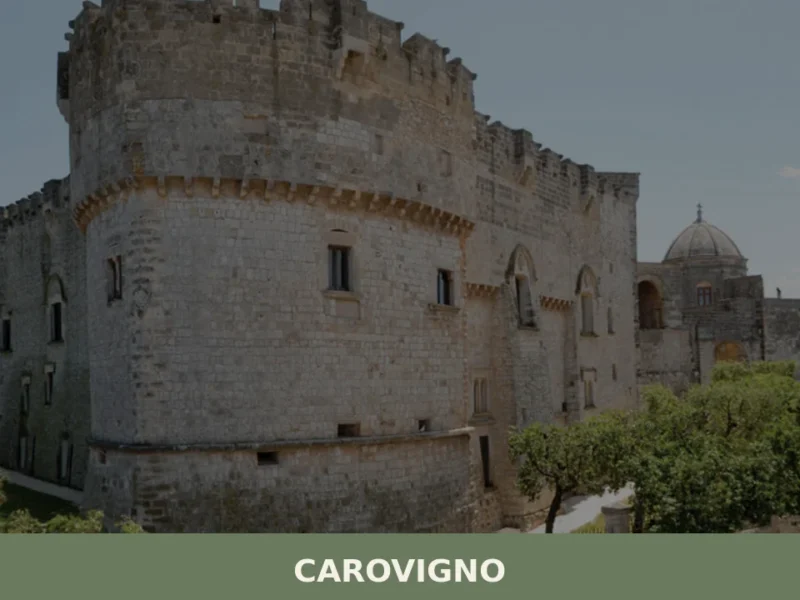
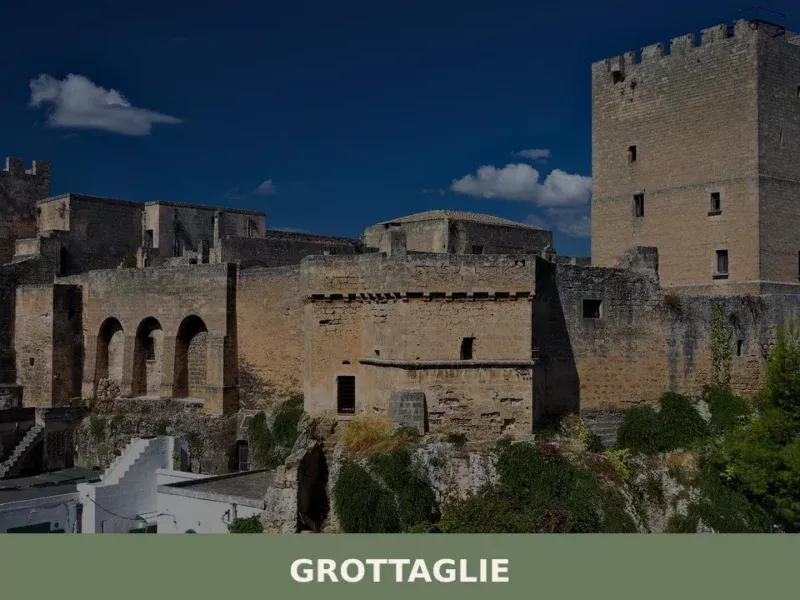
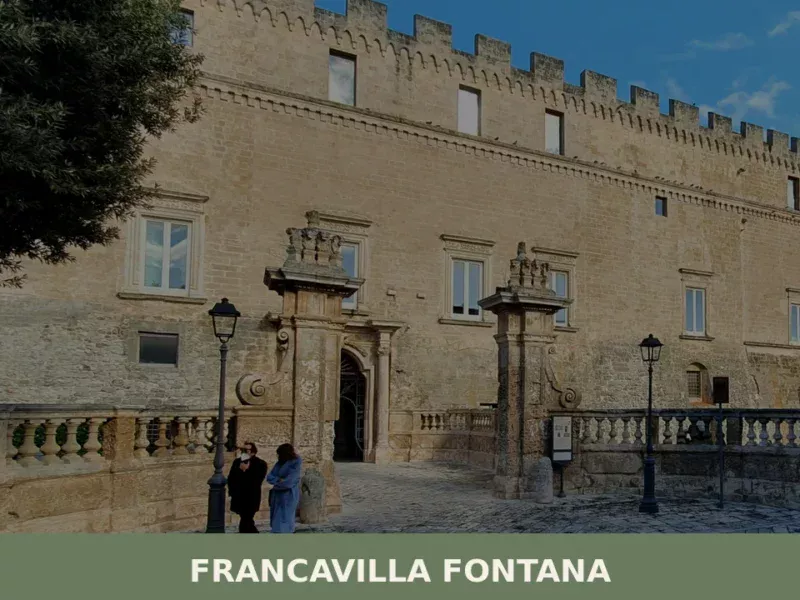
In Apulia More villages to discover
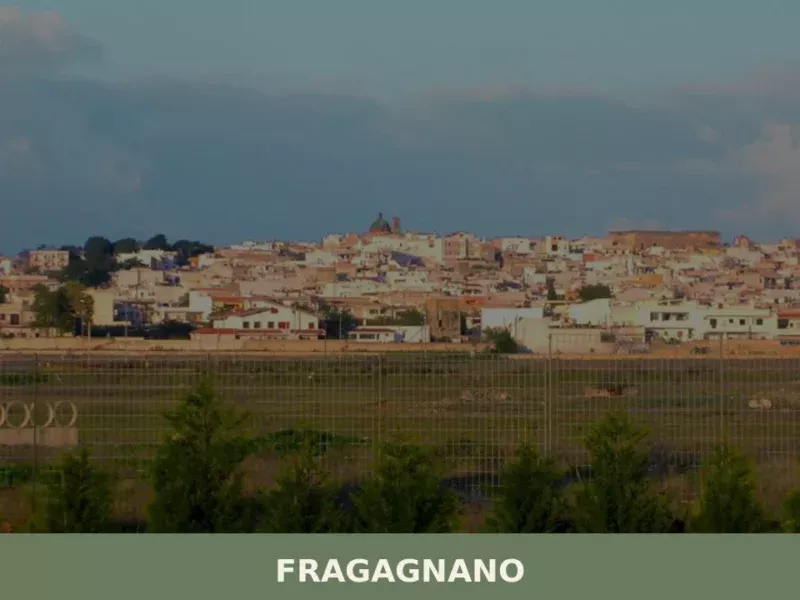
Fragagnano
 Plains
Discover what to see in Fragagnano, a village in Taranto province and part of the Terre del Mare e del Sole. History, food, travel tips and nearby villages.
Carosino
Plains
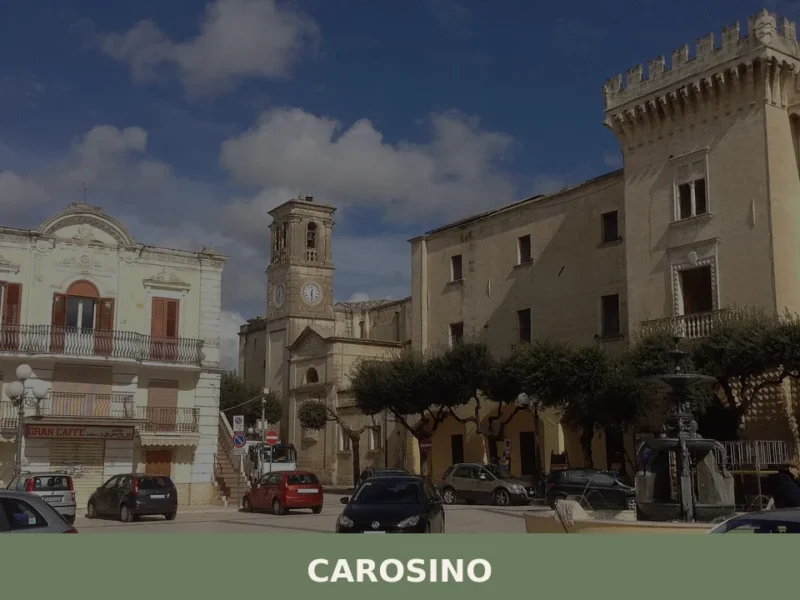
Carosino is a comune of 6,371 inhabitants in the province of Taranto, positioned in the Ionian arc of Puglia where the landscape flattens into olive groves and vineyards before reaching the coast. Known locally by its Salentine dialect name Carusinu, the town sits within a territorial context defined by centuries of agricultural production and the […]
Bitonto
Plains
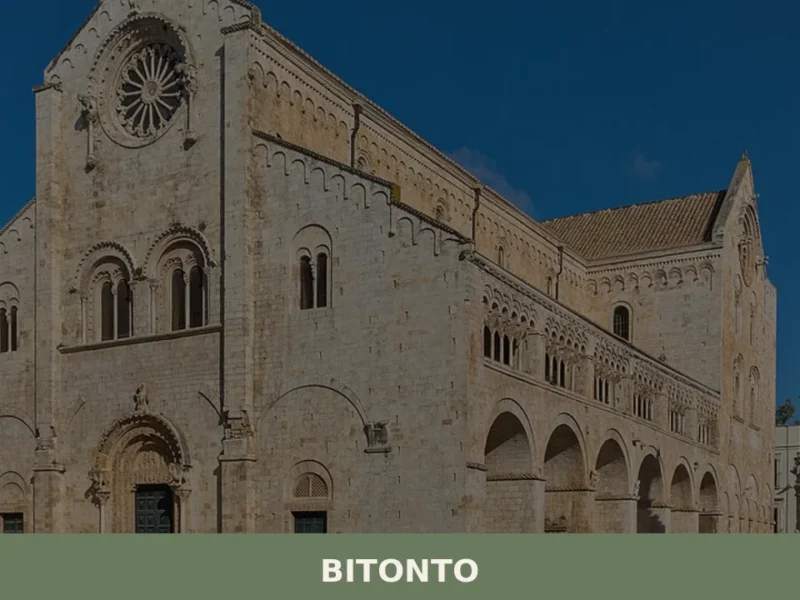
In 1089, Pope Urban II consecrated the cathedral of Bitonto, a building in local limestone that still dominates Piazza Cattedrale today with its sixteen-spoke rose window and its sculpted portal. That ceremony marked the city’s definitive entry into the network of major Apulian episcopal seats, confirming a political and religious role that Bitonto had maintained […]
Volturara Appula
 Hills
Hills
A hill village of 378 residents at 489 metres in the Daunian Subapennines. Volturara Appula offers medieval lanes, panoramic views over the Tavoliere, and the quiet of a place most travellers never find.
Modugno
Plains
In 1316, King Robert of Anjou confirmed Modugno’s privilege of holding a free fair, recognising this community on the Bari plain as a commercial hub that few centres of similar size could claim. Today, first-time visitors find a compact old town, gathered around Romanesque churches and noble palaces, surrounded by the orderly expanse of olive […]
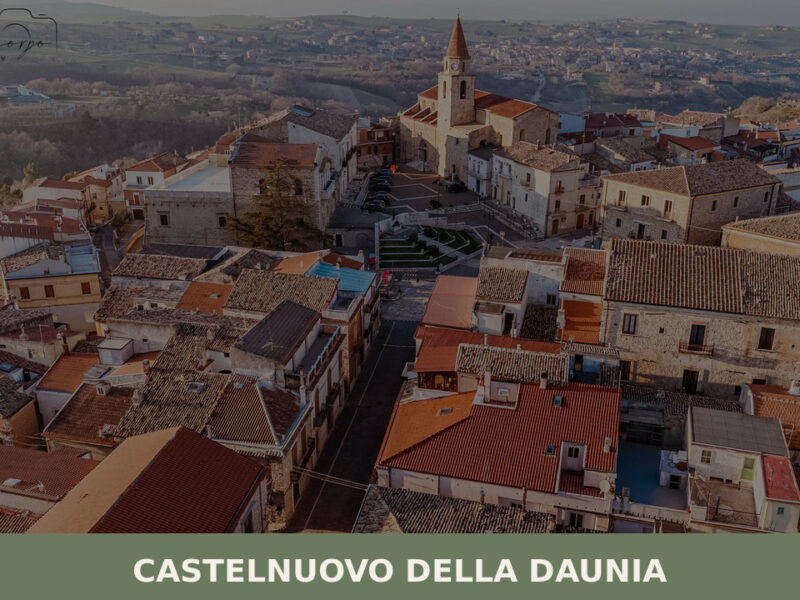
Castelnuovo della Daunia
Hills
A compact hill village at 543 metres in Puglia's Subappennino Dauno, Castelnuovo della Daunia offers medieval lanes, panoramic views over the Tavoliere, and the quiet rhythms of inland southern Italy.
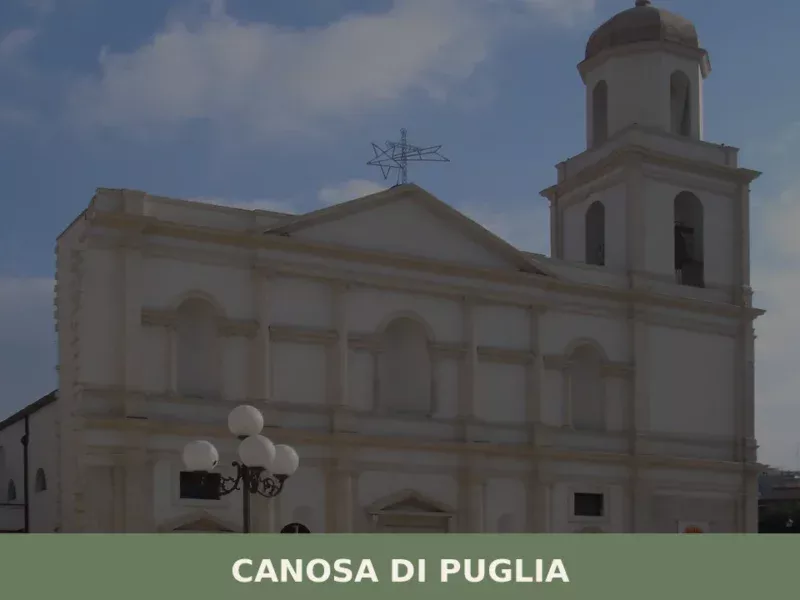
Canosa di Puglia
Hills
Discover what to see in Canosa di Puglia: Roman hypogea, Norman mausoleum, cathedral, archaeology museum and local food in northern Puglia.
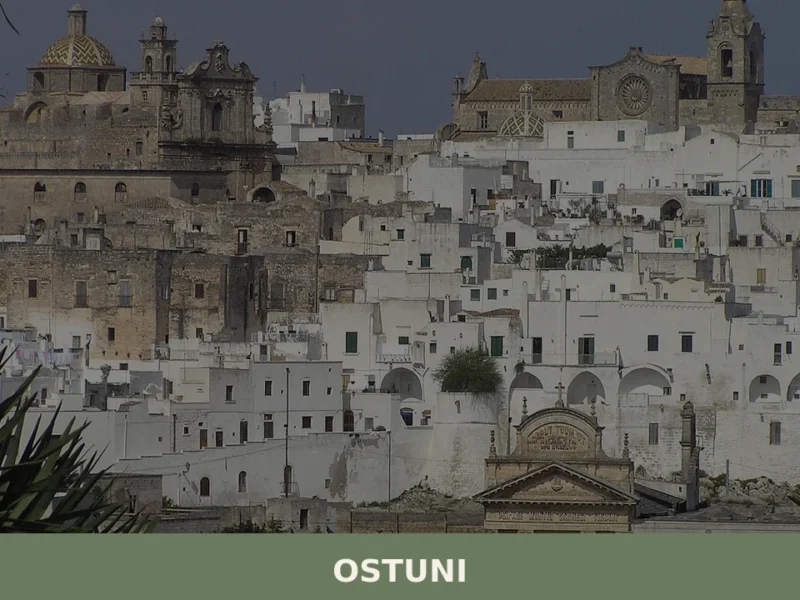
Ostuni
Sea
What to see in Ostuni, Italy: Discover the 'White Town' with its 30,143 residents and explore 5 key historical sights. Read our guide for top attractions and travel tips.
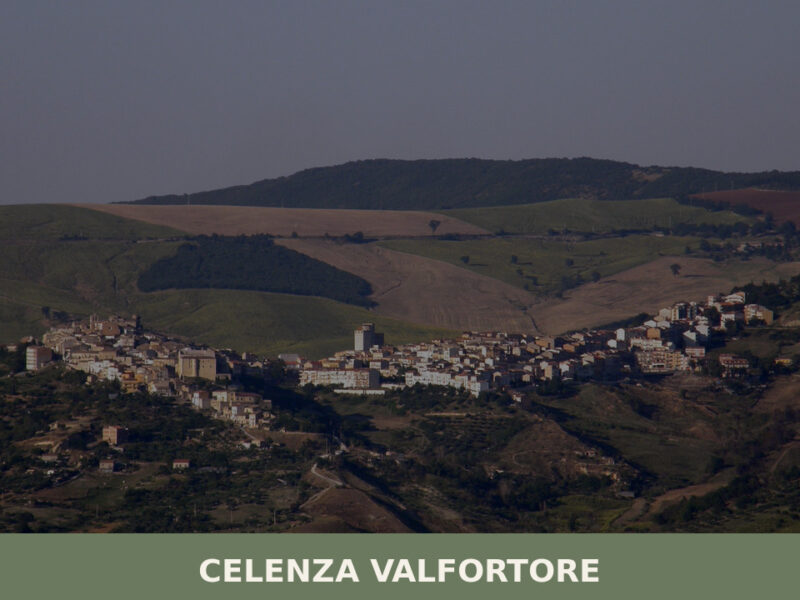
Celenza Valfortore
Hills
A hill village of 1,363 people above the Fortore valley in Puglia's Daunia highlands. Castle, churches, stone lanes, and a working landscape far from the tourist coast.
Cassano delle Murge
Hills
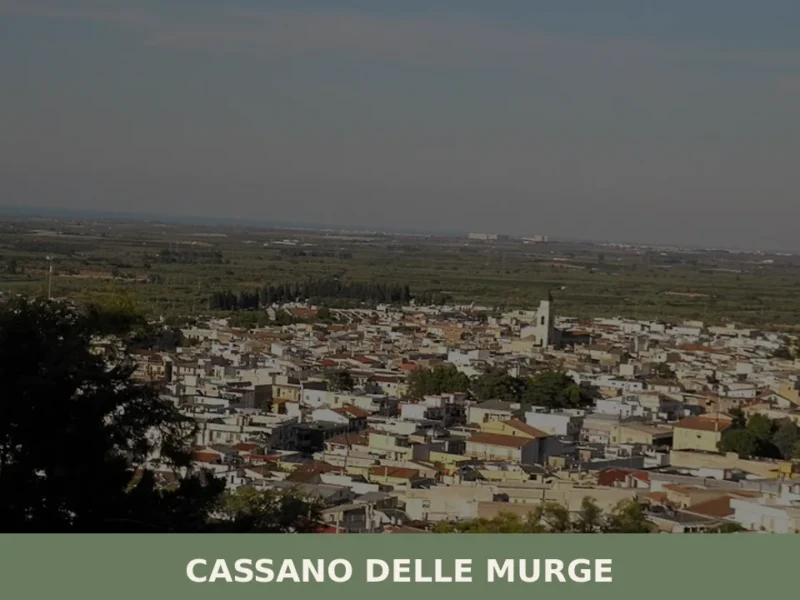
Cassano delle Murge, a municipality in Puglia located in the Metropolitan City of Bari, stands at 341 meters above sea level, positioned on the Murge plateau. Its territory, spanning approximately 89 km², includes a significant portion of the Bosco di Mercadante, a forest area important for the local ecosystem. With a population of 14,395 inhabitants, […]


🏡 Know Fasano better than we do?
If you’re a local or have been there, your knowledge matters: add what’s missing or fix a detail on this page.