


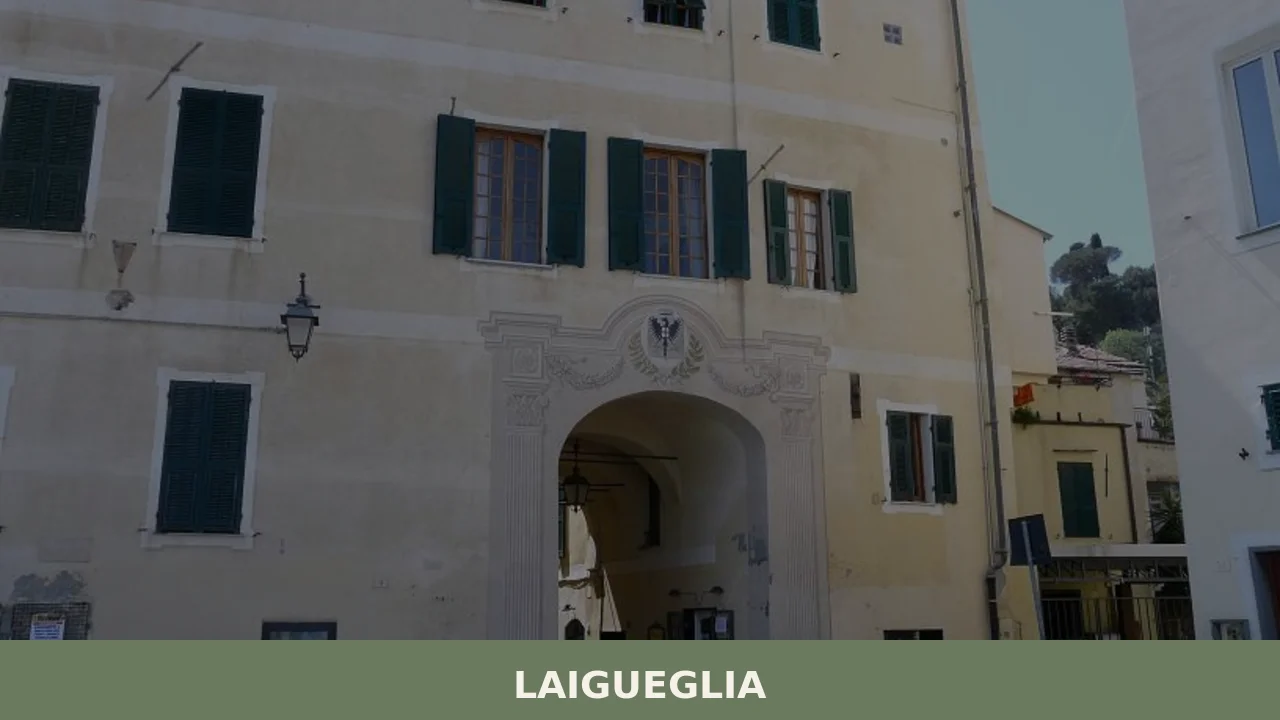
Laigueglia
 Sea
Sea
What to see in Laigueglia, Italy: explore 5 top attractions, local food, and festivals in this Ligurian coastal village of 1,738 inhabitants. Discover the guide.
Discover Laigueglia
The light off Capo Mele arrives before any road sign does. The lighthouse that marks this western point of the Ligurian Riviera has guided sailors since the late nineteenth century, and its beam still sweeps across the same pale limestone facades that face the sea from Laigueglia’s waterfront. The village counts 1,738 inhabitants and sits in the province of Savona, where the Ligurian Apennines press close enough to the coast that the strip of flat land between ridge and shore is narrow and deliberate.
Deciding what to see in Laigueglia starts with understanding the village’s double identity: a working fishing settlement that earned its place among I Borghi più belli d’Italia, the national circuit of Italy’s most beautiful villages.
Visitors to Laigueglia find a tightly ordered historic centre, the Baroque dome of Sant’Matteo visible from the beach, a coastal path that runs toward Andora, and a local food culture shaped by centuries of maritime trade. The comune borders the Tyrrhenian Sea roughly 90 km (56 mi) southwest of Genova and 40 km (25 mi) from the French border at Ventimiglia.
History of Laigueglia
The toponym Laigueglia derives from the Ligurian word for water — a root shared with the local Ligurian dialect name L’Aigheuja — which points toward the village’s foundational relationship with the sea rather than with any inland agricultural territory. Medieval documents record the settlement as a dependency of the bishops of Albenga, the ancient Roman city 10 km (6.2 mi) to the east that served as the ecclesiastical and administrative capital of this stretch of the Riviera di Ponente throughout the early medieval period. By the high Middle Ages, Laigueglia had developed into a recognized maritime community with its own coral-fishing fleet operating in the western Mediterranean.
Coral fishing defined Laigueglia’s economy and its social structure for several centuries.
Boats from this village worked grounds as far as Sardinia and North Africa, and the wealth generated by that trade is still legible in the architecture of the historic centre, where the scale of the parish church and the quality of the carved stone portals on several palazzi exceed what a purely subsistence fishing village would have produced. The seventeenth and eighteenth centuries marked the apex of this prosperity, and it was during this period that the present form of the church of Sant’Matteo was completed in the Baroque style that dominates the skyline today.
In 1972, Laigueglia established its first international municipal twinning, with Höhr-Grenzhausen in Germany, a relationship that formalized cultural exchanges that had been developing through postwar reconstruction-era contacts along the Ligurian coast. Further twinnings followed: with Semur-en-Auxois in France in 2000, and with La Thuile in the Aosta Valley in 2013. The three partnerships reflect a deliberate orientation toward European cultural dialogue that the comune has maintained for over five decades. Today, with 1,738 residents, Laigueglia functions primarily as a coastal resort and residential commune while retaining the physical fabric of its fishing-port origins.
What to see in Laigueglia, Liguria: top attractions
Church of Sant’Matteo Apostolo
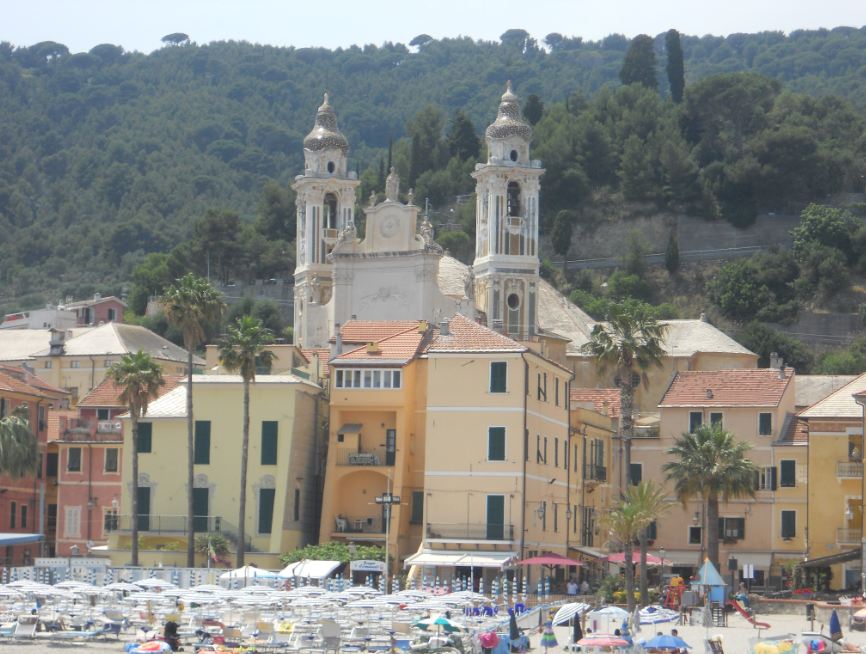
The church’s Baroque dome, covered in polychrome glazed tiles, rises over the rooftops and remains the single most immediately recognizable element of Laigueglia’s silhouette when viewed from the sea.
Construction of the current structure was completed in the eighteenth century, replacing an earlier sacred building on the same site. Inside, the nave follows a Latin-cross plan with side chapels containing gilded altarpieces and decorative stucco work typical of the Ligurian Baroque tradition. The bell tower stands separately from the main body of the church and offers a useful orientation point when navigating the old centre’s compact alleyways. Visit the interior in the morning hours when the light through the south-facing windows illuminates the vault most clearly.
Capo Mele Lighthouse
The Capo Mele Lighthouse sits on the rocky promontory that gives the comune its geographical anchor on Ligurian navigational charts. The headland projects into the sea at a point where the coastline shifts direction, which made it a critical navigational reference for westbound shipping throughout the nineteenth and twentieth centuries. The road that leads toward Capo Mele offers a sequence of views back toward the village’s waterfront and forward toward Andora, with the cliff dropping directly into the sea on the western side.
The lighthouse itself is not routinely open to the public, but the surrounding coastal terrain is accessible on foot via the path that connects Laigueglia to Andora, a section of roughly 4 km (2.5 mi) along the shore.
Historic centre and Caruggi
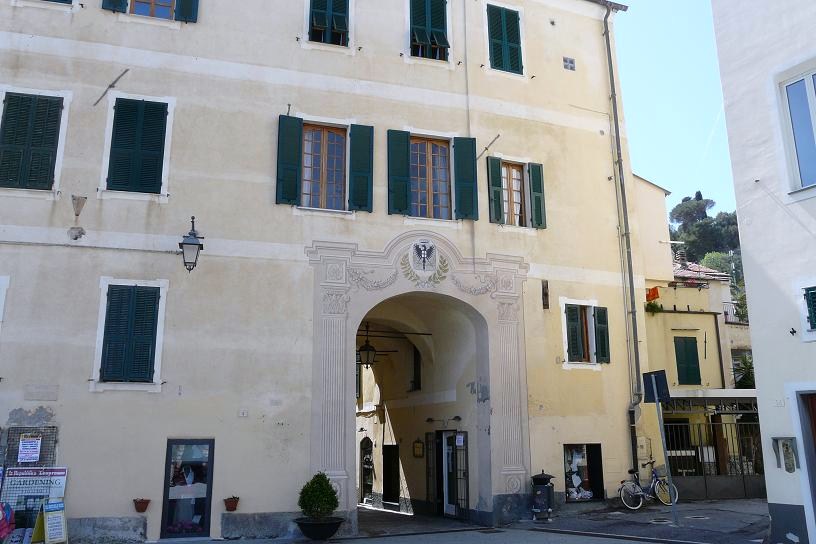
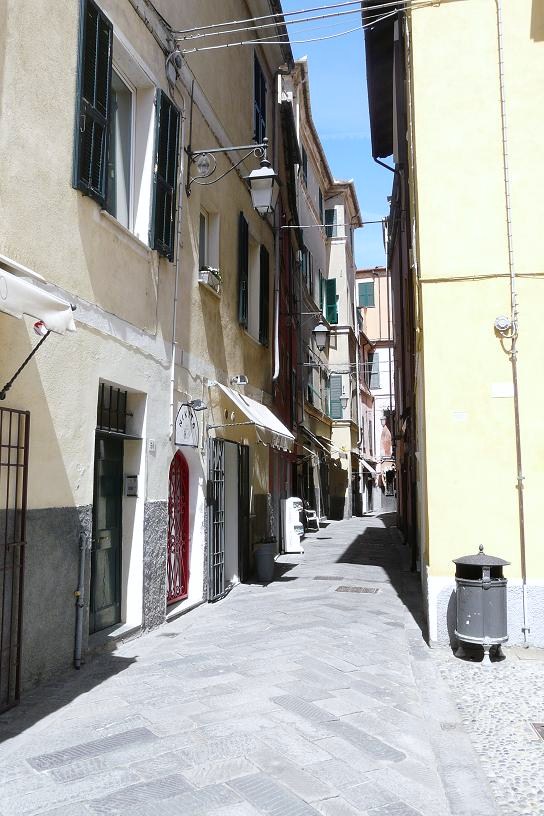
Laigueglia’s caruggi — the narrow covered alleyways that characterize the urban fabric of Ligurian coastal villages — run perpendicular to the shoreline and connect the seafront promenade to the slightly elevated residential streets behind. The painted facades of the buildings lining these passages date from the seventeenth and eighteenth centuries and display the ochre, terracotta, and pale yellow tones characteristic of western Liguria. Several doorways retain their original carved stone frames, with shell and rope motifs that reference the village’s maritime occupation. Walking the full circuit of the historic centre takes approximately 30 to 40 minutes at a steady pace, but the detail density rewards a slower approach.
Seafront promenade and beach
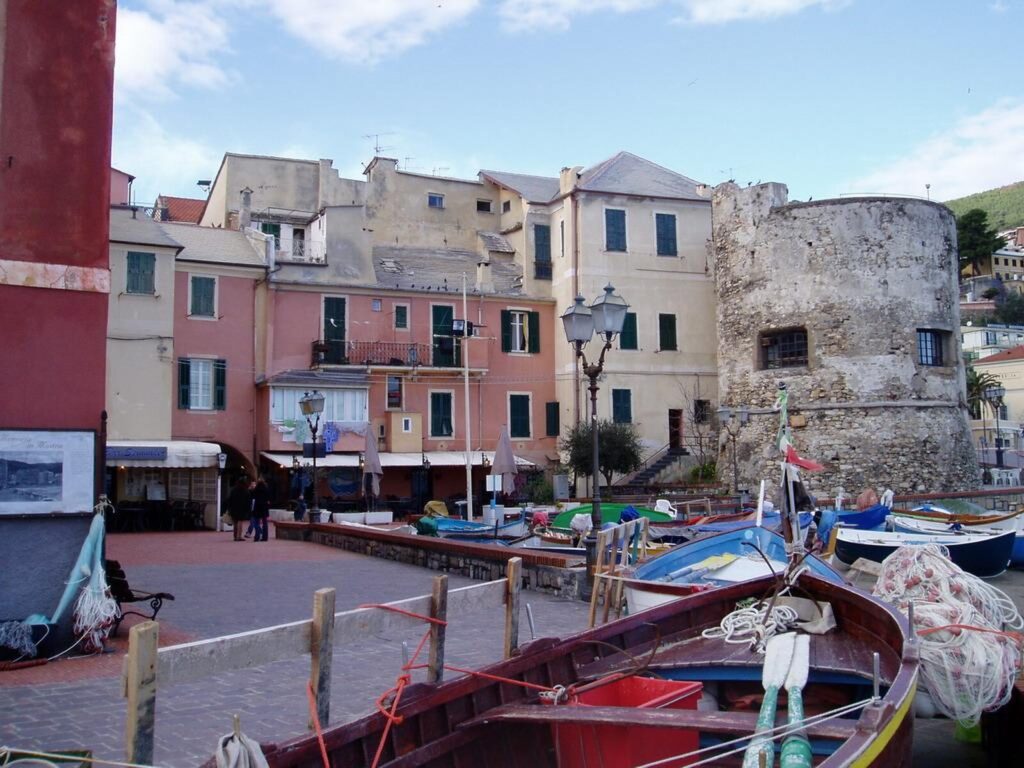
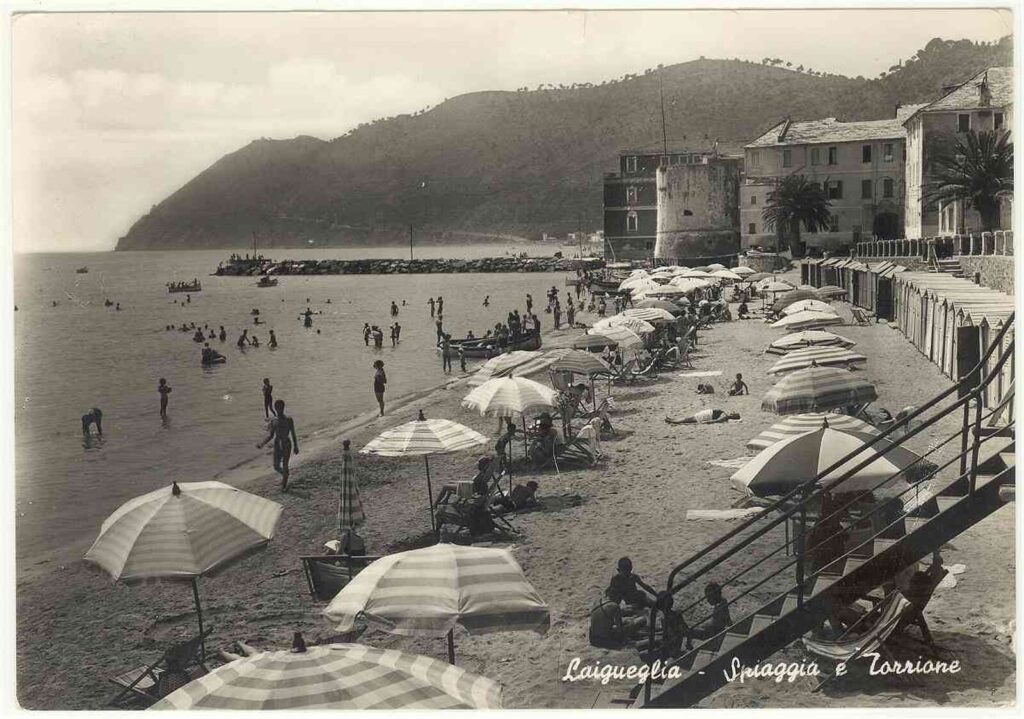
The promenade running along Laigueglia’s seafront connects the fishing harbour at the northern end to the sandy beach that extends south toward the boundary with Andora. The beach is approximately 1 km (0.6 mi) long and consists of both free public sections and areas managed by established beach concessions. The harbour end retains its working character, with the equipment and nets of the remaining fishing operators visible on the quay. For those planning a full coastal day, the path between Laigueglia and Andora, roughly 4 km (2.5 mi) in total, provides continuous sea views with minimal elevation change, making it accessible to most visitors regardless of fitness level.
Membership in I Borghi più belli d’Italia
Laigueglia holds certified membership in I Borghi più belli d’Italia, the association that selects Italian villages on the basis of architectural quality, historical continuity, urban maintenance standards, and territorial management criteria.
Fewer than 350 Italian communes have qualified for inclusion since the programme was established in 2001 by the National Association of Italian Municipalities. The designation provides a practical filter for visitors: villages on the list have passed a documented quality assessment that covers the state of public spaces, façade conservation, and signage. For anyone planning what to see in Laigueglia, the certification confirms that the historic centre meets measurable standards and is not simply promoted on the basis of local promotional literature. The village’s inclusion places it in the same catalogue as other recognized Ligurian communes, including Crocefieschi, which also holds the designation and sits inland in the Ligurian Apennines east of Genova.
Local food and typical products of Laigueglia
The food culture of Laigueglia reflects the dual economy of the western Ligurian coast: fishing as the primary source of protein and a thin strip of cultivated land between the mountains and the sea producing olive oil, herbs, and vegetables. The Riviera di Ponente, the stretch of Ligurian coast running west from Genova toward France, has historically relied on olive cultivation as its main agricultural activity, and the small-fruited cultivars grown on the terraced hillsides above Laigueglia yield oils with a delicate, low-bitterness profile that differs noticeably from the more assertive oils of inland Liguria. This agricultural context shapes the cooking at every level, from the simplest dressed vegetables to the more elaborate preparations served in the village’s restaurants.
Fish remains the central ingredient across the local table. Bagnun di acciughe, a thick anchovy soup cooked with tomatoes, onions, and local olive oil in a shallow terracotta pan, is documented as a dish of the Riviera di Ponente and has specific associations with the fishing communities between Laigueglia and Finale Ligure.
The anchovies are typically small, fat specimens caught during the summer season, and the dish is cooked uncovered so that the liquid reduces to a dense, concentrated sauce rather than a broth. Focaccia genovese, the flat bread made with flour, water, olive oil, and coarse salt pressed into dimples across the surface before baking, appears at every meal and in every bakery in the village; the Ligurian variant uses significantly more olive oil than inland Italian flatbreads, giving the crumb a soft, almost collapsing texture beneath a crisp surface. Trofie al pesto, the short twisted pasta served with basil sauce made from Ligurian Denominazione di Origine Protetta basil, pine nuts, garlic, Parmigiano Reggiano, Pecorino, and olive oil, is the standard first course across the entire region and appears consistently on local menus.
The olive oils produced in the hills above Laigueglia fall under the Riviera Ligure DOP designation, which covers the entire Ligurian coastal zone and is divided into sub-zones. The western sub-zone, Riviera dei Fiori, covers the area from Savona to the French border and specifies a minimum 90 percent content of the Taggiasca cultivar, a small black olive that produces oil with particularly low acidity and a mild, buttery flavour.
Purchasing directly from producers located in the olive-growing terraces above the village remains the most reliable way to obtain oil of documented local origin, and small-volume production means that quantities available to visitors are limited outside the harvest period from October to December.
The local fish market and the weekly general market provide the most direct access to seasonal ingredients. Summer months bring the anchovy catch to its peak, and July and August are the periods when bagnun appears most frequently as a daily special in the smaller family-run restaurants along the seafront. Those visiting outside the summer season will find the olive oil harvest period — October through November — equally worthwhile, as newly pressed oil appears in shops and at producers’ gates within days of pressing.
Festivals, events and traditions of Laigueglia
The village’s principal religious festival centres on San Matteo, the patron saint to whom the parish church is dedicated, celebrated on 21 September each year according to the Roman Catholic liturgical calendar. The feast involves a solemn procession through the caruggi of the historic centre, during which the statue of the saint is carried from the church through the principal streets of the village and returned via the seafront, a route that covers the full perimeter of the historic nucleus.
The church façade is illuminated in the evening, and the celebration traditionally includes a display of fireworks over the sea.
Beyond the patron saint’s day, Laigueglia participates in the broader calendar of Ligurian coastal traditions that includes blessings of the fleet at the start of the fishing season and a sagra — a traditional local food festival — dedicated to the anchovy in summer, reflecting the centrality of that fish to the local economy across several centuries. The village’s twinning relationships with Höhr-Grenzhausen, Semur-en-Auxois, and La Thuile have also generated periodic exchange events and cultural gatherings, though the specific scheduling of these varies by year.
When to visit Laigueglia, Italy and how to get there
The most practical period for a visit to Laigueglia, Italy depends on what the visitor prioritizes. June and September offer the most balanced conditions: sea temperatures suitable for swimming — typically 22 to 24 degrees Celsius (72 to 75 degrees Fahrenheit) in September — without the full pressure of the Italian August holiday period, when both accommodation and road access along the Riviera di Ponente become congested.
The months of April, May, and October suit visitors focused on the historic centre, the coastal path, and food, when the village functions at its residential pace rather than as a resort. Winter months are mild by northern European standards — average January temperatures around 9 degrees Celsius (48 degrees Fahrenheit) — and the village remains open and inhabited, though most beach-facing businesses close between November and March.
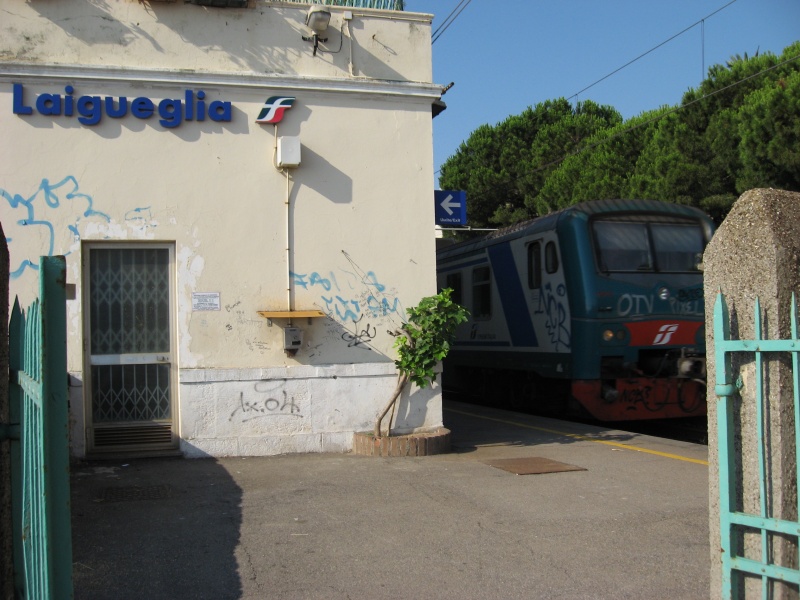
Reaching Laigueglia by road means taking the A10 motorway (Genova-Ventimiglia), exiting at Andora, then following the coastal SP1 for approximately 3 km (1.9 mi) westward into the village centre. From Genova, the drive covers roughly 90 km (56 mi) and takes between 55 and 70 minutes depending on traffic. From Milan, the distance is approximately 210 km (130 mi), with a travel time of around 2 hours 15 minutes by car via the A26 and A10 motorways, making Laigueglia practical as a day trip from Lombardy. The nearest Trenitalia station is Laigueglia-Andora, served by regional trains on the Genova-Ventimiglia line, with connections from Genova Principe taking approximately 70 to 80 minutes.
The nearest international airport is Genova Cristoforo Colombo Airport, roughly 95 km (59 mi) to the east, from which a combination of airport bus to Genova Principe station and regional train to Laigueglia-Andora takes about 2 hours in total. International visitors arriving from Nice Côte d’Azur Airport in France, approximately 100 km (62 mi) to the west, can reach the village by train via Ventimiglia in a similar time frame. Cash in Euros is useful for smaller purchases in the historic centre, as card acceptance in the smallest shops and at market stalls is not universal.
Visitors based in Genova can reach Laigueglia as a straightforward day trip, using the regional train service that runs frequently along the entire Ligurian coast and avoids the summer parking difficulties on the A10 approach roads. Those with more time might combine Laigueglia with a stop at nearby Andora or extend further west along the Riviera di Ponente.
Where to stay near Laigueglia
Accommodation in and around Laigueglia ranges from small hotels along the seafront promenade to holiday apartment rentals in the historic centre and agriturismi — farm-stay establishments — on the olive-growing hillsides above the village.
The concentration of seafront hotels makes it practical to stay directly in the village for visits focused on the beach and historic centre. For those travelling as part of a wider Ligurian itinerary, Andora immediately to the east offers a larger range of accommodation options, while remaining within 3 km (1.9 mi) of Laigueglia’s attractions.
Travellers with an interest in inland Liguria might also consider using Laigueglia as a coastal base and combining it with day excursions to villages in the Ligurian Apennines. The inland valleys of the Savona province are within 30 to 50 km (19 to 31 mi) of the coast, and the contrast between the maritime character of Laigueglia and the mountain villages of the interior — such as Fascia, situated in the higher Ligurian Apennines — makes for a varied two-day combination accessible without a major change of base.
Frequently asked questions about Laigueglia
What is the best time to visit Laigueglia?
The best time to visit Laigueglia is from late May to early September, when the sea is warm and the beach is at its most accessible. July and August bring the highest number of visitors and the liveliest atmosphere along the seafront promenade. For a quieter experience with pleasant temperatures and uncrowded caruggi, June and September are ideal. The village's patron saint is San Matteo, whose feast day falls on 21 September — a period when the summer crowds thin and the Ligurian coast takes on a more authentic, local character.
What are the historical origins of Laigueglia?
The name Laigueglia derives from the Ligurian word for water, reflecting its foundational maritime identity. In the Middle Ages the village was a dependency of the bishops of Albenga, the ancient Roman city 10 km to the east. From the high medieval period onward, Laigueglia developed a coral-fishing fleet that operated as far as Sardinia and North Africa. The wealth this trade generated shaped the village's architecture, including the Baroque church of Sant'Matteo completed in the eighteenth century. Today Laigueglia is a certified member of I Borghi più belli d'Italia.
What to see in Laigueglia? Main monuments and landmarks
The top attraction is the church of Sant'Matteo Apostolo, whose polychrome glazed Baroque dome dominates the skyline and is best viewed from the sea or beach. Inside, gilded altarpieces and decorative stucco work line the Latin-cross nave — visit in the morning for the best natural light. The historic centre's caruggi, narrow covered alleyways with painted seventeenth- and eighteenth-century facades, reward slow exploration; a full circuit takes 30–40 minutes. The Capo Mele Lighthouse marks the western promontory and is accessible on foot via the 4 km coastal path to Andora. The working fishing harbour at the northern end of the promenade is also worth a visit.
What are the main natural or scenic attractions of Laigueglia?
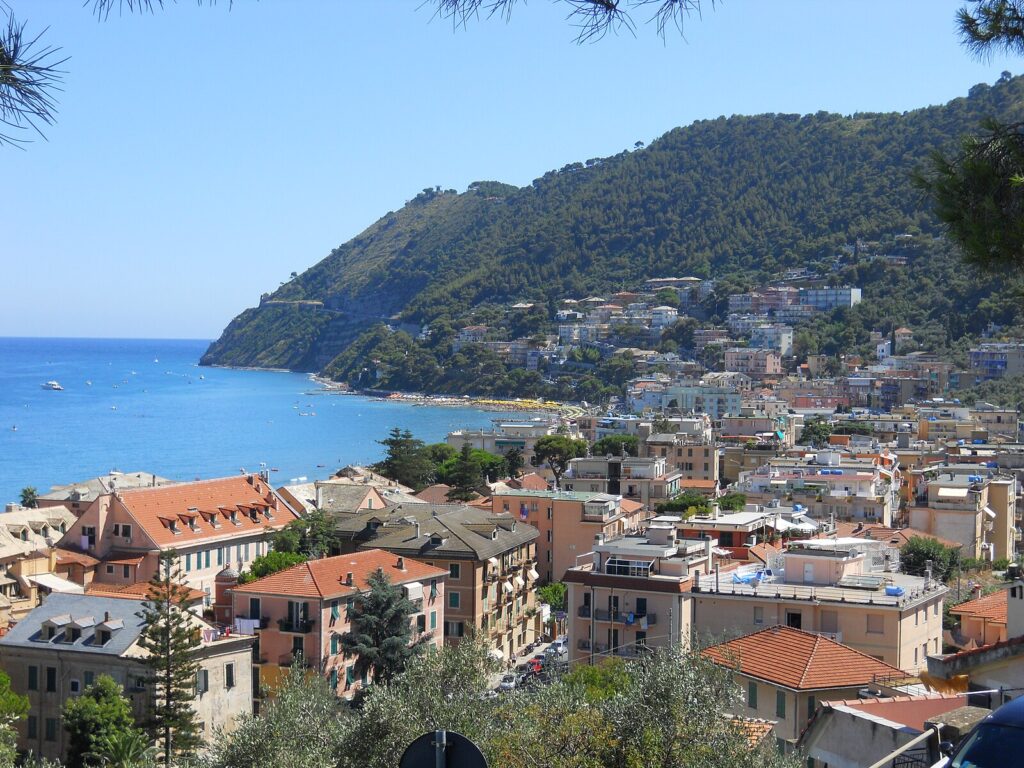
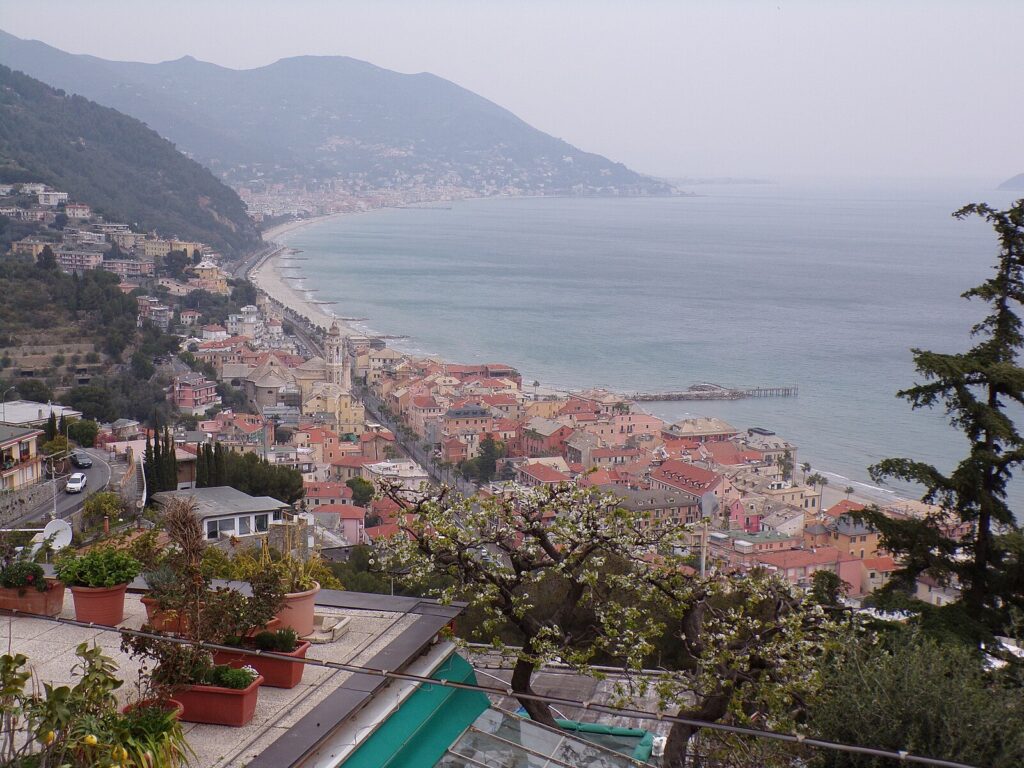
The most documented natural feature is Capo Mele, a rocky headland where the coastline changes direction and cliffs drop directly into the Tyrrhenian Sea. A coastal footpath of roughly 4 km connects Laigueglia to Andora with minimal elevation change, offering continuous sea views and access to the lighthouse promontory. The approximately 1 km sandy beach, extending south toward Andora, includes free public sections alongside managed beach concessions. The narrow strip between the Ligurian Apennines and the shore, visible from the seafront, gives the landscape its characteristic compressed, dramatic quality.
Where to take the best photos in Laigueglia?
The most photographed view is the Baroque dome of Sant'Matteo rising above the painted facades of the historic centre, best captured from the beach or the seafront promenade in the early morning before the crowds arrive. The road and footpath toward Capo Mele offers a classic backward view of the entire village waterfront against the Ligurian Apennines. Inside the caruggi, the ochre, terracotta, and pale yellow painted facades with carved stone doorways provide strong architectural detail shots. The fishing harbour at the northern end of the promenade is particularly photogenic in the early morning light.
Are there museums, churches or historic buildings to visit in Laigueglia?
The primary historic building open to visitors is the church of Sant'Matteo Apostolo, with its polychrome glazed Baroque dome, gilded altarpieces, decorative stucco work, and a separate bell tower. The nave follows a Latin-cross plan and houses side chapels typical of the Ligurian Baroque tradition. The historic centre itself functions as an open-air architectural museum, with caruggi lined by seventeenth- and eighteenth-century palazzi retaining original carved stone portals featuring shell and rope motifs that reference the village's coral-fishing past. Specific opening hours for the church are best confirmed locally or via the Laigueglia municipality.
What can you do in Laigueglia? Activities and experiences
Swimming and beach activity are the primary summer draws, with roughly 1 km of sandy beach offering both free public access and organized beach concessions. The 4 km coastal footpath to Andora is the main walking itinerary, requiring minimal fitness and offering uninterrupted sea views. The historic centre rewards slow exploration on foot, particularly the caruggi alleyways and the church of Sant'Matteo. Local restaurants along the promenade and in the old centre serve the traditional Ligurian coastal menu. The Capo Mele promontory area is accessible for an informal coastal walk with views toward both Andora and the open western Mediterranean.
Who is Laigueglia suitable for? Families, couples, hikers, solo travelers?
Laigueglia is particularly well-suited to families seeking a calm beach resort with a genuine historic centre rather than a purely commercial seafront. The sandy beach, flat promenade, and low-gradient coastal path to Andora make it accessible for visitors with children or limited mobility. Couples will appreciate the compact, photogenic caruggi and the quality of the Baroque architecture. Architecture and history enthusiasts benefit from the village's I Borghi più belli d'Italia certification, which guarantees a maintained historic fabric. Casual hikers can use the Capo Mele coastal trail. It is less suitable for those seeking nightlife or large-scale resort amenities.
What to eat in Laigueglia? Local products and specialties
The most locally distinctive dish is bagnun di acciughe, a thick anchovy soup cooked with tomatoes, onions, and olive oil in a terracotta pan, documented specifically in the fishing communities between Laigueglia and Finale Ligure. Focaccia genovese — flat bread made with abundant local olive oil — appears at every bakery and meal. Trofie al pesto with Ligurian DOP basil is the standard first course across the region. Local olive oils fall under the Riviera Ligure DOP designation, with the western sub-zone Riviera dei Fiori specifying a minimum 90 percent Taggiasca cultivar content, producing a delicate, low-bitterness oil distinct from inland Ligurian varieties.
📷 Photo Gallery — Laigueglia

Nearby Villages near Laigueglia
In Liguria More villages to discover
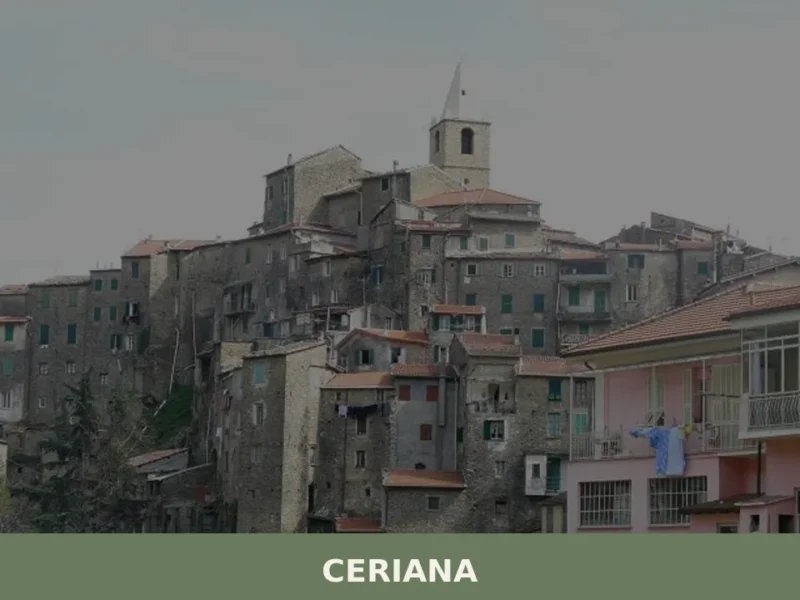
Ceriana: A Ligurian Hill Village Guide
 Hills
Hills
What to see in Ceriana, Italy: Explore this Ligurian village at 369 m (1,211 ft) altitude. Discover historical sites and lively festivals. Read our guide.
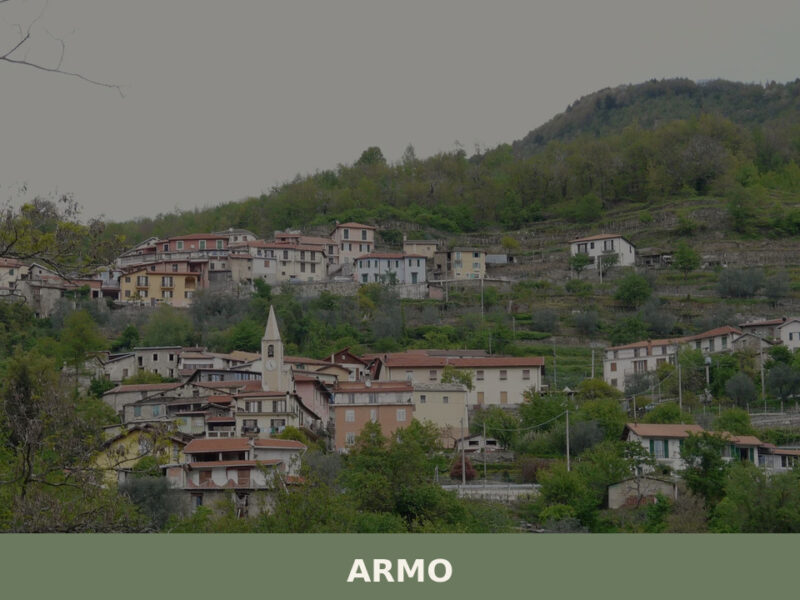
Armo
Hills
Armo, a village of 120 inhabitants above the Petrace valley in Calabria, rewards visitors with stone lanes, ancient olive terraces, and Aspromonte trails.
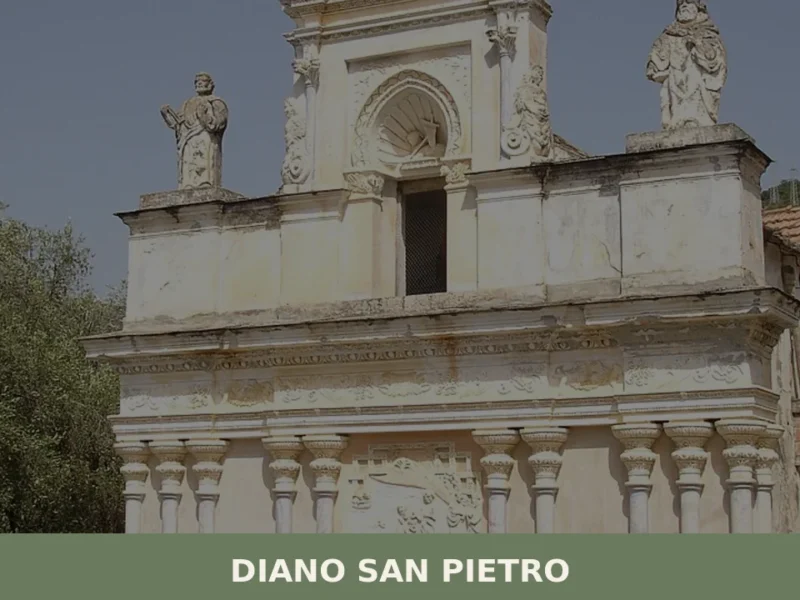
Diano San Pietro
 Plains
What to see in Diano San Pietro: a village of 1,081 at 83m in the Diano Valley. Discover the Church of San Pietro, olive terraces and nearby villages. Plan your visit.
Bergeggi
Sea
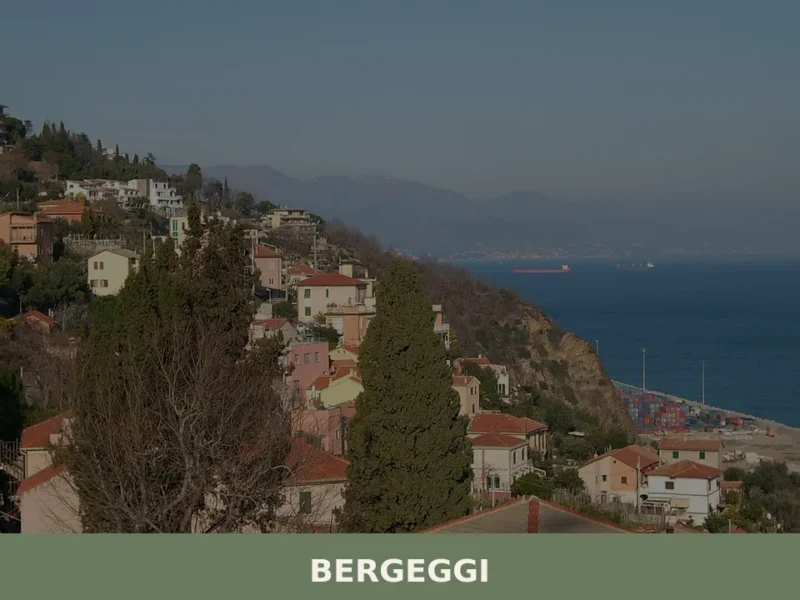
The limestone bluffs that drop into the Ligurian Sea west of Savona do not ease the traveller in gently. The coastline here is direct: rock, water, and the smell of salt on warm stone. Bergeggi sits at roughly 10 km (6.2 mi) from Savona, at a point where the Via Aurelia, the ancient Roman road […]
Monterosso al Mare
Sea
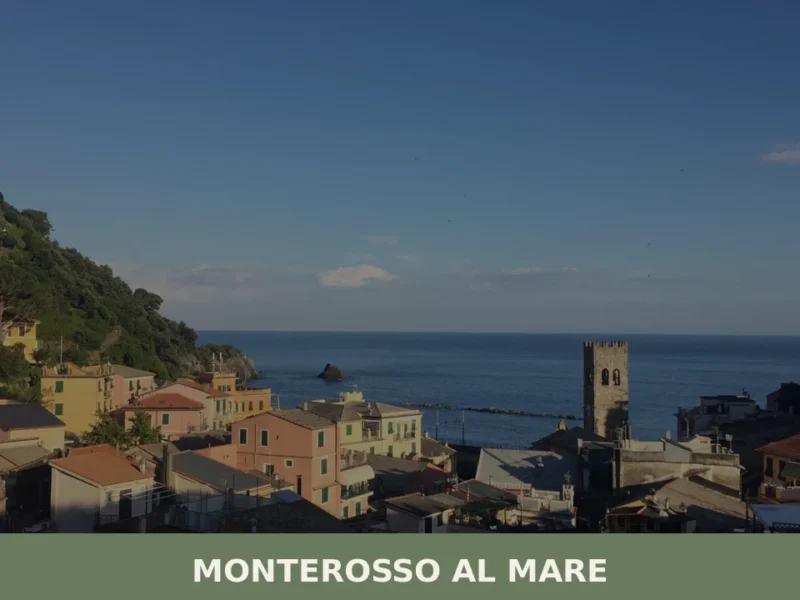
What to see in Monterosso al Mare, Italy: explore a 14-metre Neptune statue, a church built in 1282, and Cinque Terre's only sand beach. Discover the complete guide.
Lorsica
Hills
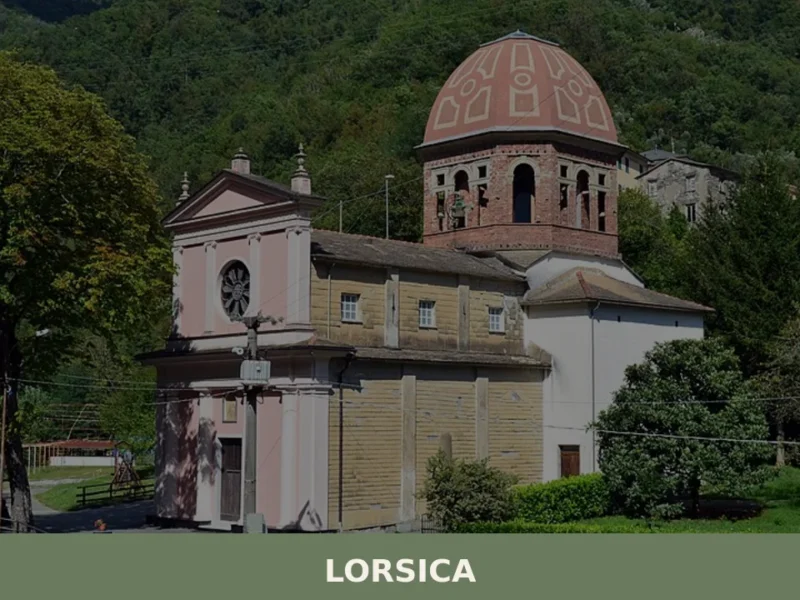
What to see in Lorsica: a Ligurian village at 343 m with 395 residents. Explore historic churches, Val Sturla trails and local food. Plan your visit today.
Carpasio
 Mountain
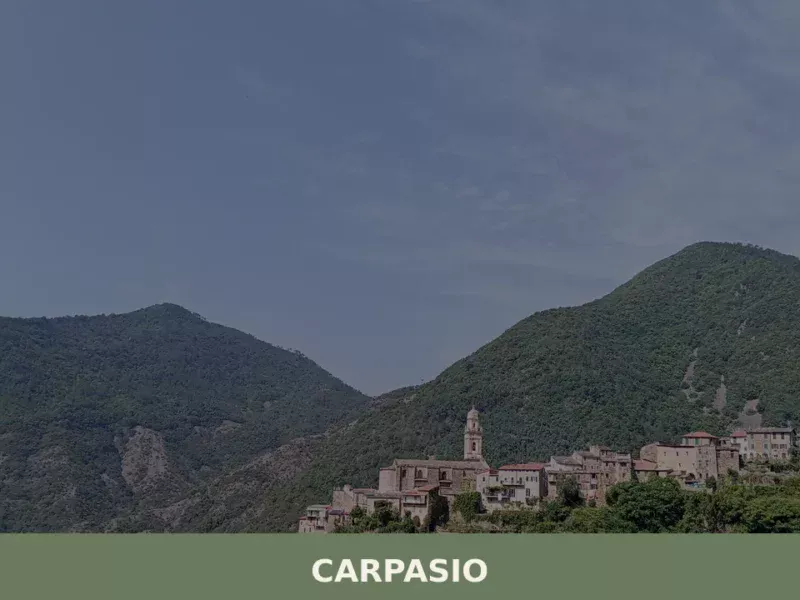
A faint scent of wild thyme drifts on the crisp mountain air as the morning light, still soft and golden, spills over the terracotta rooftops of Carpasio. Here, at 720 meters above sea level, life unfolds at a rhythm dictated by the sun and the seasons, far removed from the coastal bustle of Imperia. This […]
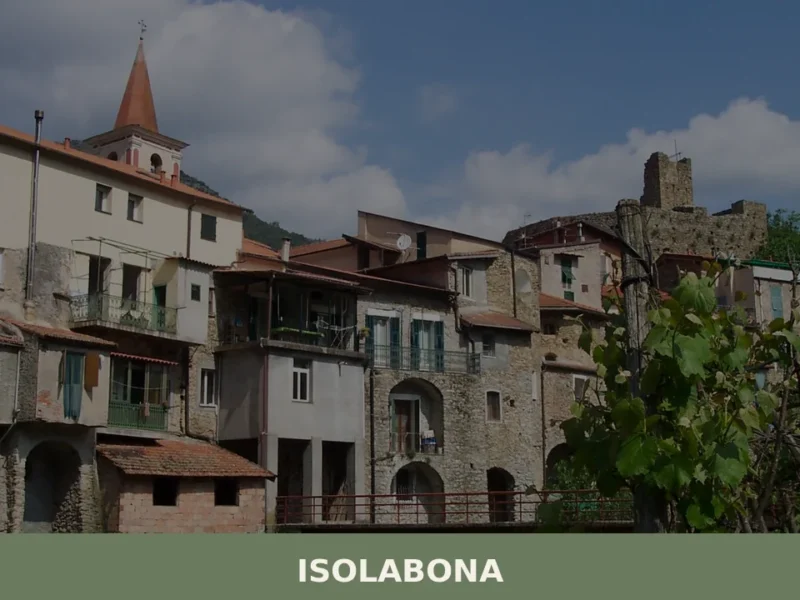
Isolabona
Mountain
What to see in Isolabona, Liguria, Italy: explore a village of 674 people set 30 km from Imperia. Discover top attractions, local food, and how to get there.
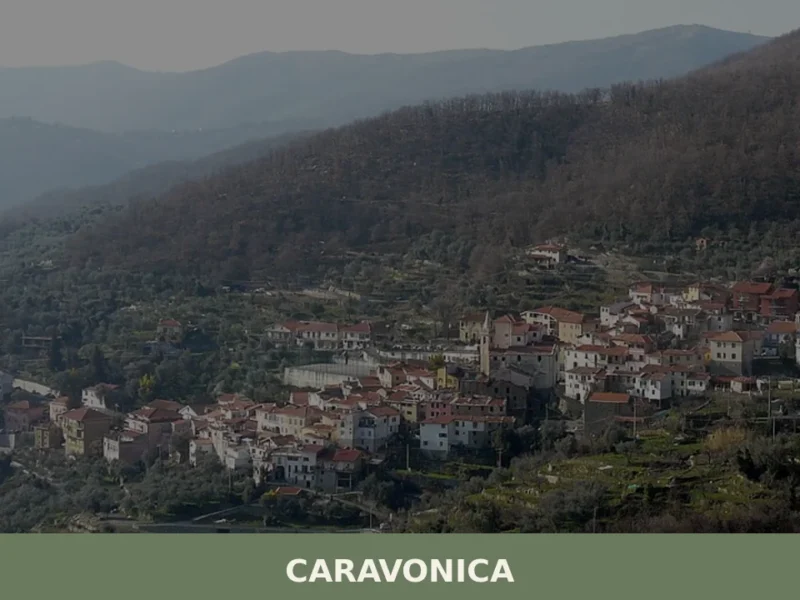
Caravonica
Hills
The scent of wild rosemary drifts on the morning air, carried by a breeze that has travelled from the Ligurian Sea and across the terraced olive groves. Morning light, still soft, begins to illuminate the ochre and terracotta facades of Caravonica “”, a village clinging to a hillside in the Imperia province. At 360 meters […]
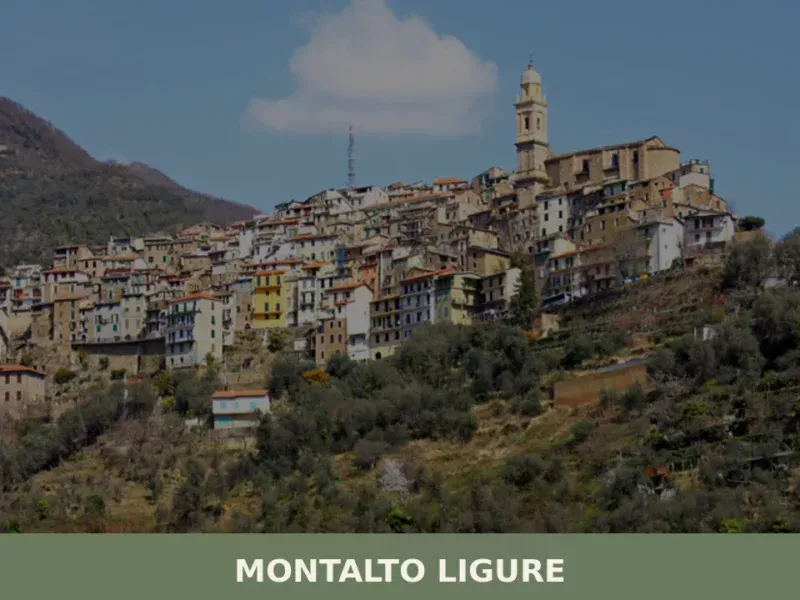
Montalto Ligure
Hills
What to see in Montalto Ligure, Italy: Explore its 13.9 km² former territory and administrative history. Discover its unification in 2018.

🏡 Know Laigueglia better than we do?
If you’re a local or have been there, your knowledge matters: add what’s missing or fix a detail on this page.