


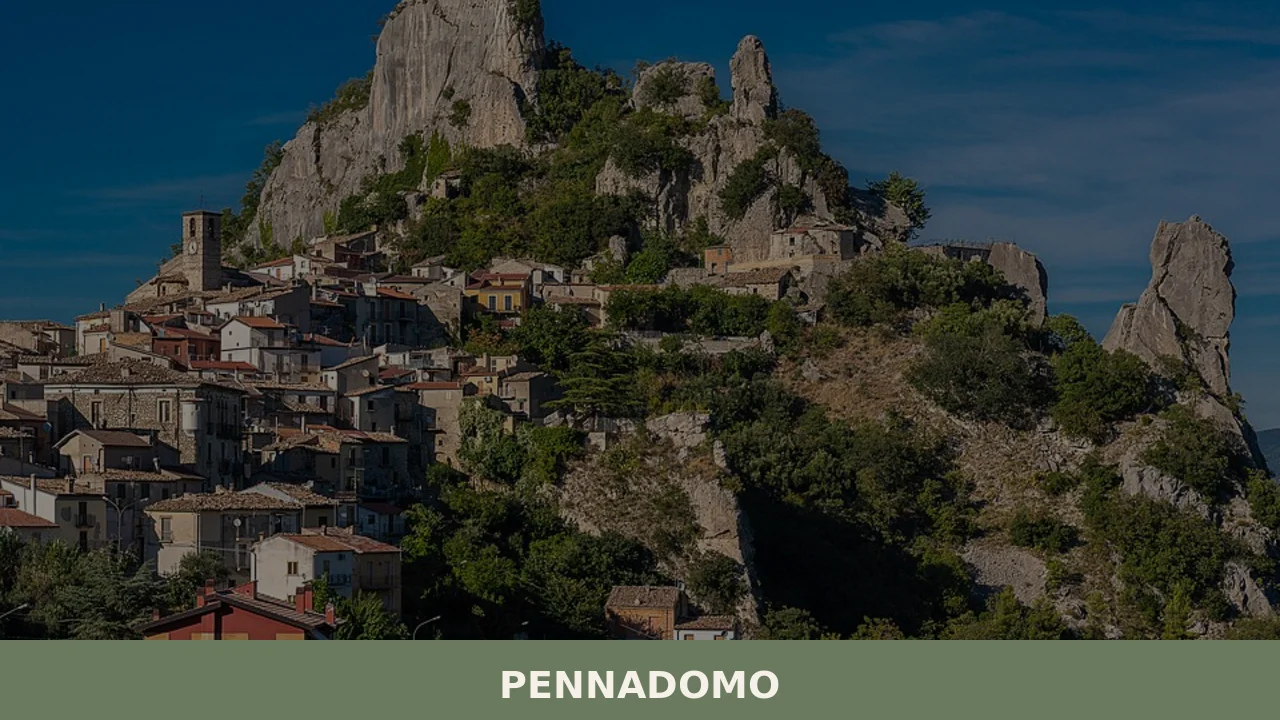
Pennadomo
 Hills
Hills
What to see in Pennadomo, Italy: 5 attractions at 460 m in Chieti province. Discover the feast of San Lorenzo, local food traditions and how to get there.
Discover Pennadomo
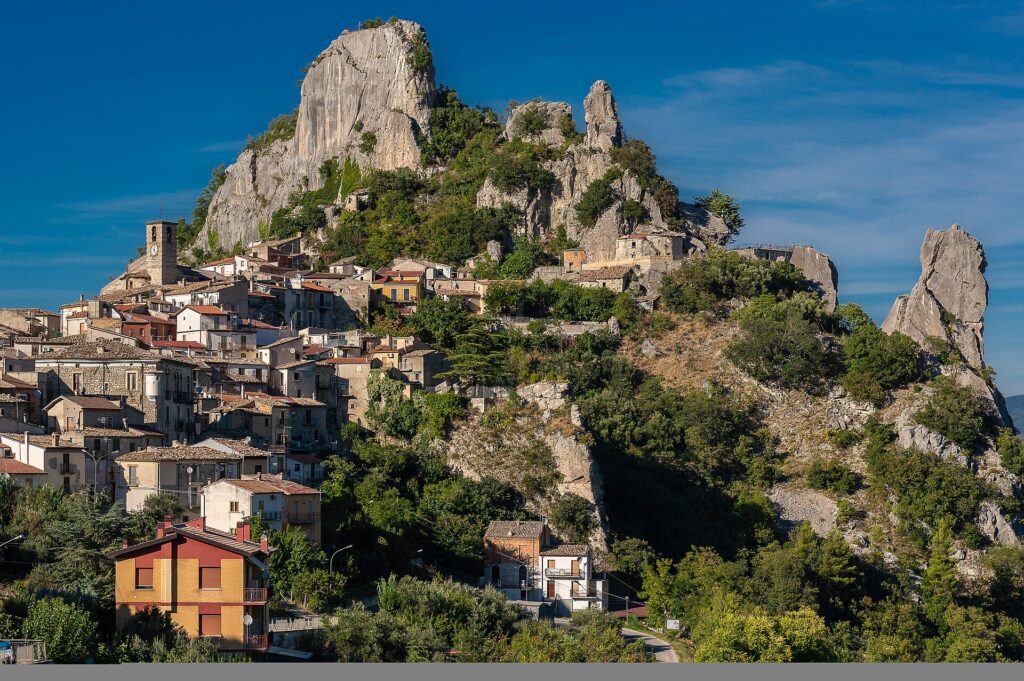
The hill road into Pennadomo levels off at 460 m (1,509 ft) above sea level, where the village of around 211 inhabitants sits compact against the Abruzzo sky. The settlement covers 11.3 square kilometres (4.4 sq mi) of Chieti province hill country, a terrain of pale limestone slopes and scattered oak cover that defines the visual character of everything here: the building materials, the colours, the sightlines.
By the 2001 national census, the population stood at 358 — a figure that had already fallen 14 percent from the 1991 count of 415, a trajectory that many inland Abruzzo hill communes know well.
Knowing what to see in Pennadomo starts with understanding its scale and setting.
At 460 m (1,509 ft) in the province of Chieti, this is a compact hill commune with a street plan that rewards careful walking rather than driving. Visitors to Pennadomo find a medieval settlement fabric, the parish church dedicated to San Lorenzo, the surrounding agricultural landscape shaped by centuries of cereal and livestock farming, and direct access to the broader Aventino river valley. The population today numbers around 211, which means the village functions at a pace that larger centres do not.
History of Pennadomo
The name Pennadomo derives from the Latin pinna, meaning a rocky spur or projecting height, combined with domus, suggesting a fortified or inhabited place on elevated ground. This etymology places the settlement within a broader pattern of hill-top foundation common across Abruzzo during the early medieval period, when communities sought defensible positions above river valleys subject to seasonal flooding and military incursion.
The local Abruzzese dialect name, La Pènne, preserves a phonetic trace of this Latin root, compressed and adapted over generations of oral use.
The commune’s territorial extent of 11.3 square kilometres (4.4 sq mi) corresponds to a land unit that would have supported a mixed economy of arable farming on the lower slopes and pastoral activity on the higher ground.
The Chieti provincial area in which Pennadomo falls was historically part of the Kingdom of Naples, and the administrative and ecclesiastical structures of that kingdom left their mark on the settlement’s layout: a parish church at or near the topographic high point of the village, a nucleus of residential buildings organised around a central open space, and a surrounding belt of agricultural plots. These patterns, established during the medieval and early modern periods, remained largely intact through the nineteenth century unification of Italy.
The twentieth century brought demographic pressure of a different kind.
Records from the 1991 national census placed the population at around 415 persons, a figure that had dropped to 358 by 2001 — a loss of 57 inhabitants, or 14 percent, within a single decade. This contraction reflects the broader rural exodus affecting inland Abruzzo after World War II, as employment opportunities in coastal cities and northern industrial centres drew working-age residents away from hill communes. By the time of more recent counts, the resident population had fallen further to approximately 211 people, supported by 12 businesses and 2 administrative offices that between them employed 53 of the local workforce at the turn of the millennium.
What to see in Pennadomo, Abruzzo: top attractions
Parish Church of San Lorenzo
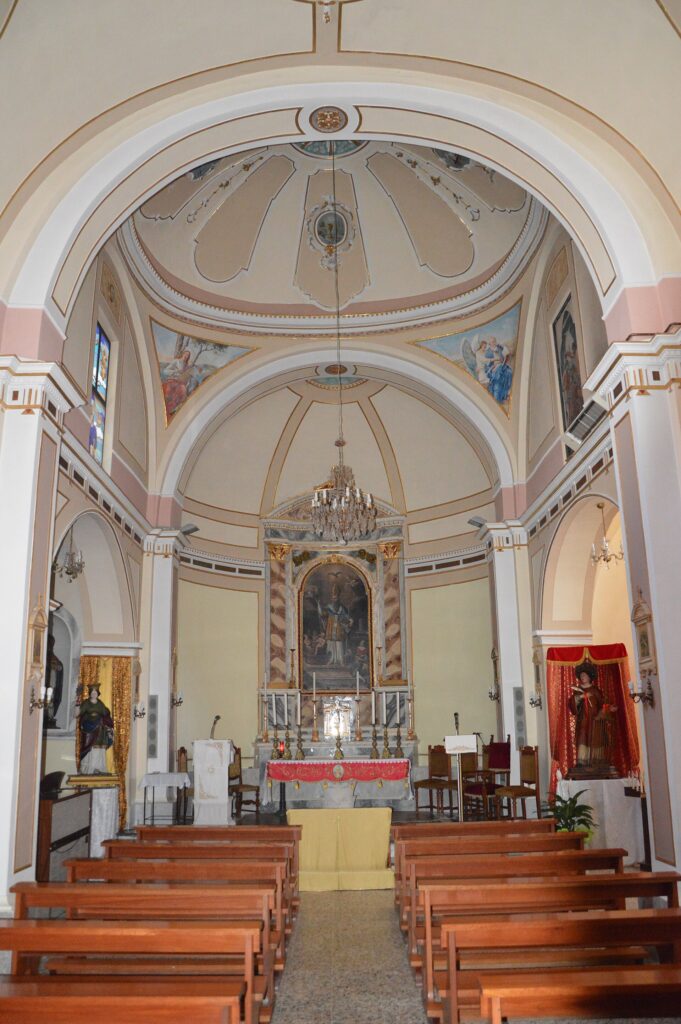
The parish church dedicated to San Lorenzo stands as the primary ecclesiastical structure in the village, positioned according to the typical medieval convention of occupying the highest or most central point of the settlement.
San Lorenzo, martyred in Rome in 258 AD, is the patron saint of Pennadomo, and the church bearing his name has organised the liturgical and civic calendar of the community for centuries. The feast day falls on 10 August, which means the building sees its most concentrated use in summer, when the village fills with returning residents and visitors from surrounding communes.
Look at the stonework of the facade and the proportions of the nave for evidence of successive interventions across different construction periods.
The Historic Village Core
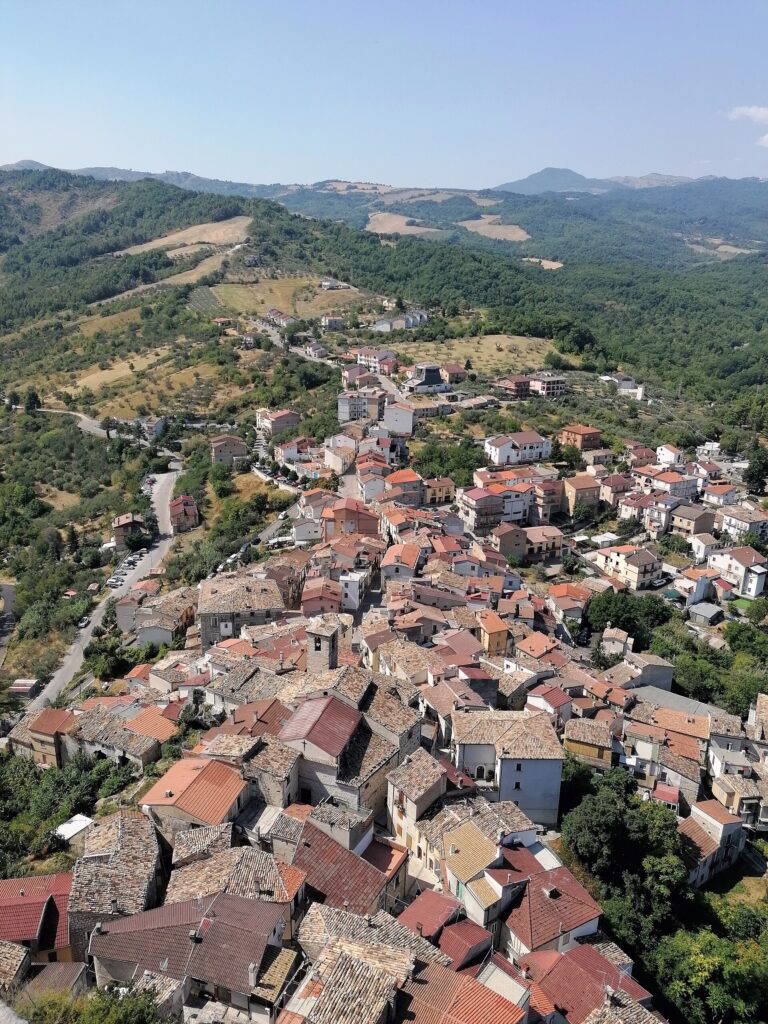
The built fabric of central Pennadomo follows the logic of a hill-top settlement in Chieti province: tight lanes between residential blocks, load-bearing walls in local limestone, and minimal open ground between buildings, since every usable surface at this altitude was historically too valuable to leave unbuilt. Walking the core takes no more than 20 to 30 minutes at a measured pace, but the compression of the layout rewards slow movement. At 460 m (1,509 ft), the village commands clear views over the surrounding hill terrain, with the Aventino river valley visible on clear days at a distance of several kilometres to the south.
The best light for observing the street texture falls in the morning, when the sun reaches the eastern-facing walls directly.
The Surrounding Agricultural Landscape
Pennadomo’s 11.3 sq km (4.4 sq mi) of communal territory extends well beyond the built core into a working agricultural landscape of cereal fields, olive groves on the lower slopes, and rough grazing on the higher ground.
This is the terrain that sustained the village economically for most of its documented history, and it remains actively farmed today. Walking the unpaved tracks that radiate outward from the village perimeter gives a direct reading of the topography: the slope angles, the soil colour shifting from pale clay to darker loam as elevation decreases, and the visibility across to neighbouring ridge-top settlements of the same provincial area. Stout footwear is advisable, as the tracks become muddy after autumn and winter rainfall.
Views Toward the Aventino Valley
From the upper edges of the village, the ground drops toward the Aventino river valley, a geographical feature that has defined the economic and communication axis of this part of Chieti province for centuries.
The valley floor lies several hundred metres below the village in elevation, and the visual relationship between the two — built settlement on the ridge, cultivated floor below — is one that recurs throughout inland Abruzzo.
For visitors interested in the regional geography, standing at the southern edge of Pennadomo and reading the landscape layer by layer is a more informative exercise than any map. The distance between the village and the valley floor, combined with the angle of the slopes, explains why road access to the commune follows a winding route rather than a direct descent.
The Feast of San Lorenzo: Civic and Religious Infrastructure
The physical spaces associated with the annual feast of San Lorenzo — the church forecourt, the main open area of the village, the processional route — constitute an attraction in their own right when understood as designed civic infrastructure. The feast falls on 10 August each year, and the layout of the village becomes legible as a sequence of ceremonial spaces: a route from the church outward, a gathering point, and a return.
Even outside the feast period, tracing this sequence on foot gives a structural understanding of how the village was organised for collective life.
The stone surfaces, steps, and open areas along this route show the wear of regular use across multiple generations of residents.
Local food and typical products of Pennadomo
The food culture of Pennadomo sits within the broader culinary tradition of inland Chieti province, where the distance from the Adriatic coast and the elevation of the hill terrain historically made the diet dependent on cereals, legumes, preserved meats, and seasonal vegetables rather than fish. The agricultural landscape of the commune — cereal fields on the slopes, olive groves at lower altitudes — corresponds directly to the ingredients that appear in local cooking. This is a kitchen built around storage and preservation: dried pasta, cured pork, dried legumes, and olive oil cold-pressed in the weeks following the October harvest.
Among the dishes associated with this inland Abruzzo tradition, pasta e fagioli — pasta cooked directly in a broth of borlotti or cannellini beans with garlic, rosemary, and a thread of local olive oil — represents the most direct expression of the hill commune pantry.
Maccheroni alla chitarra, a square-section egg pasta cut on a wire-strung wooden frame, is the format most commonly used for meat-based sauces; in the inland provinces, the sauce typically involves slow-cooked lamb or mutton rather than the pork-forward versions found closer to the coast.
Arrosticini, small skewers of castrated sheep meat grilled over charcoal at high heat for a short time, are a fixture of outdoor gatherings and markets throughout Chieti province and appear regularly at local events in villages of this size.
The area surrounding Pennadomo falls within the production zone of several certified Italian food products associated with Abruzzo. Pecorino di Farindola (PDO candidate) is produced from raw sheep’s milk in the Gran Sasso area of Pescara province, though the broader Abruzzo sheep-rearing tradition that underlies it extends across the inland hill communes of Chieti as well.
Olive oil from the Chieti hill zone benefits from the Aprutino Pescarese DOP classification in adjacent production areas.
For locally produced salumi — cured and dried pork products — the tradition of on-farm pig slaughter and preservation remains active in villages of this type, producing items like ventricina, a coarse-ground salume seasoned with sweet and hot peppers and fennel pollen, which is the most distinctive product of the Chieti-Vasto inland area.
For those wishing to purchase local products, the most reliable point of access in a village of Pennadomo’s size is the weekly market of the nearest larger centre. The autumn period — October through November — corresponds to the olive harvest and the pig-slaughter season, making it the period when fresh products and newly pressed oil are most available from producers directly. The feast of San Lorenzo on 10 August also brings food stalls and local producers into the village, representing the most concentrated opportunity within the summer calendar to encounter produce from the immediate area.
Festivals, events and traditions of Pennadomo
The central event of the Pennadomo calendar is the feast of San Lorenzo, held each year on 10 August.
San Lorenzo was a deacon of the early Christian church executed in Rome in 258 AD, and his feast day has been observed in the Western church on 10 August since late antiquity.
In Pennadomo, as in other communes of Chieti province with San Lorenzo as patron, the day is marked by a religious mass in the parish church, a procession through the village along the traditional route, and communal gathering in the open spaces of the centre. The date falls in the peak of the Italian summer, which in agricultural terms was historically the period immediately after the wheat harvest — a moment of relative abundance that made festivity practical.
The evening of 10 August is associated across Italy with the Perseid meteor shower, known in Italian tradition as le lacrime di San Lorenzo — the tears of San Lorenzo — a coincidence of the liturgical calendar with an annual astronomical event that has given the feast an added popular dimension.
In hill-top villages at altitude with limited light pollution, the night sky on or around 10 August offers conditions that make this astronomical connection observable rather than purely symbolic.
Local traditions in inland Abruzzo communes of this type also include sagre — traditional food festivals organised around a specific local product or dish — typically held in late summer or early autumn, though specific events in Pennadomo beyond the patron feast are not separately documented in available sources.
When to visit Pennadomo, Italy and how to get there
The best period to visit Pennadomo, Italy is between late May and early October, when road conditions on the hill approaches are reliable and the agricultural landscape is at its most legible. August brings the San Lorenzo feast on the 10th, which is the single most active day in the village calendar and the occasion when the commune is most animated by returning residents and visitors. Spring — particularly April and May — offers the advantage of lower temperatures at 460 m (1,509 ft) and the visible contrast between the greening slopes and the pale limestone of the built fabric.
Winter visits are possible but offer less in practical terms, as the hill roads can become difficult after snowfall and many local businesses operate at reduced hours.
Pennadomo sits in the province of Chieti in inland Abruzzo, and the most practical arrival route for visitors coming by road is via the A25 motorway (the Pescara-Roma axis), exiting at Lanciano or Casoli and continuing on provincial roads toward the Aventino valley.
From Lanciano, the distance to Pennadomo is approximately 25 km (15.5 mi). From Pescara, the regional capital and main transport hub of Abruzzo, the distance is approximately 80 km (50 mi), a journey of around one hour by car. Trenitalia serves Pescara Centrale with connections from Rome (approximately 2.5 hours on the fastest services), making a day trip from Rome feasible with a rented car from Pescara.
The nearest airport is Aeroporto Internazionale di Pescara (Pescara International Airport), located approximately 75 km (46.6 mi) from Pennadomo. International visitors should note that English is not widely spoken in shops and offices in villages of this size, and carrying cash in euros is advisable since card payment infrastructure may be limited. The official municipality website of Pennadomo provides current administrative contacts for the commune.
For those travelling as part of a wider Abruzzo itinerary, Pennadomo works well as one point in a sequence of hill-commune visits across Chieti province.
The nearby commune of Casacanditella, situated in the same provincial area, shares the same hill-country topography and can be combined with Pennadomo in a single-day circuit by car.
Visitors already exploring the L’Aquila provincial area may find that Navelli, known for its saffron production in the Gran Sasso foothills, offers a complementary inland Abruzzo experience at a different altitude and with a distinct agricultural product at its centre.
Those extending their itinerary further into the inland Abruzzo lake and mountain zone might consider passing through Gioia dei Marsi, a commune in the Marsica area near the Fucino plain, which sits within a different geographical subregion but is reachable from Pennadomo in under two hours by car and adds a contrasting lowland perspective to the hill-commune experience.
📷 Photo Gallery — Pennadomo
Nearby Villages near Pennadomo
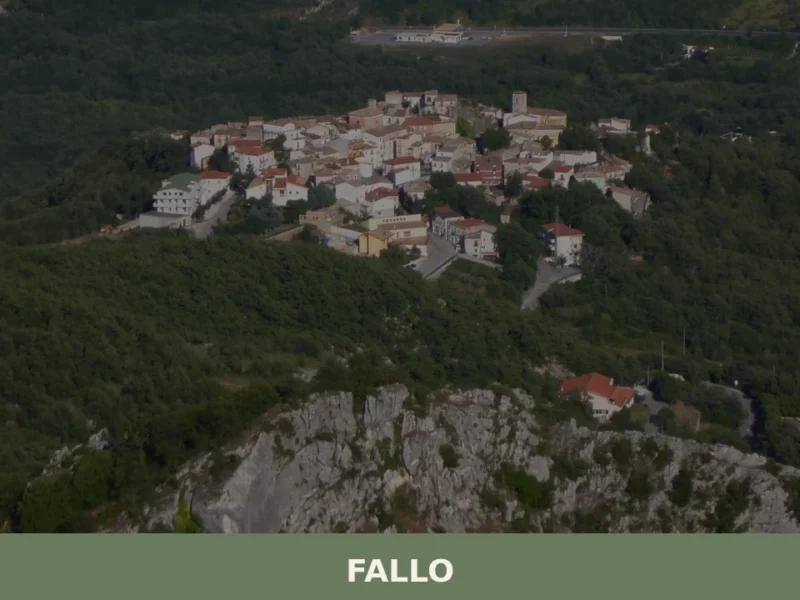
In Abruzzo More villages to discover
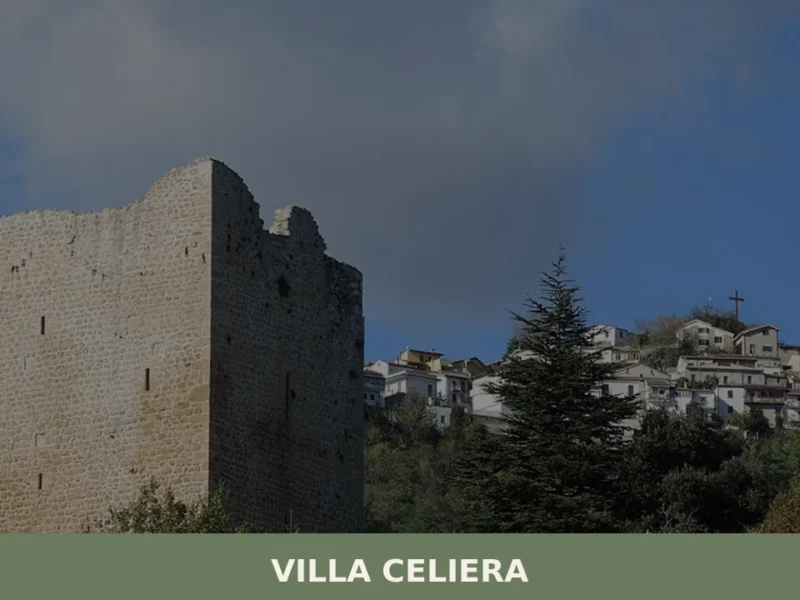
Villa Celiera
 Mountain
At 714 metres above sea level, with 557 registered residents and an economy still tied to sheep farming and timber harvesting, Villa Celiera occupies a step on the eastern slope of the Gran Sasso, in the province of Pescara. The village overlooks the Fino valley from a position exposed to northeast winds for much of […]
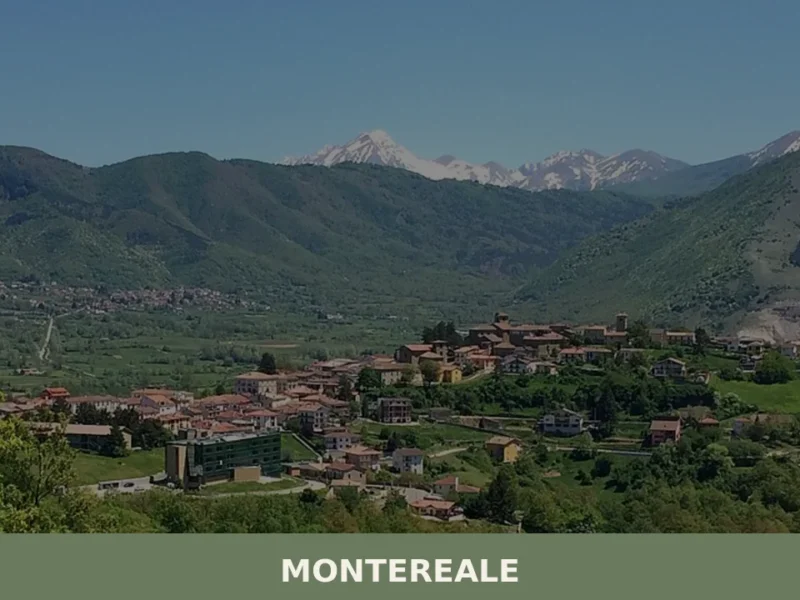
Montereale
Mountain
What to see in Montereale in Abruzzo: Romanesque churches, medieval walls, mountain cuisine and Laga trails. Complete guide to the village at 948 m.
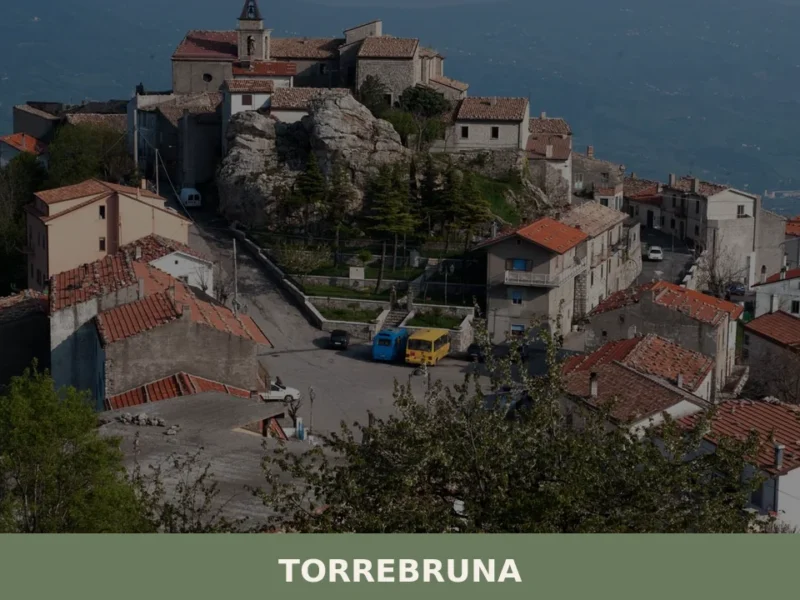
Torrebruna
Mountain
What to see in Torrebruna, Italy: 3 historic monuments, 879 inhabitants, fortified boroughs and a 17th-century church. Discover how to get there and when to visit.
Poggiofiorito
 Sea
Sea
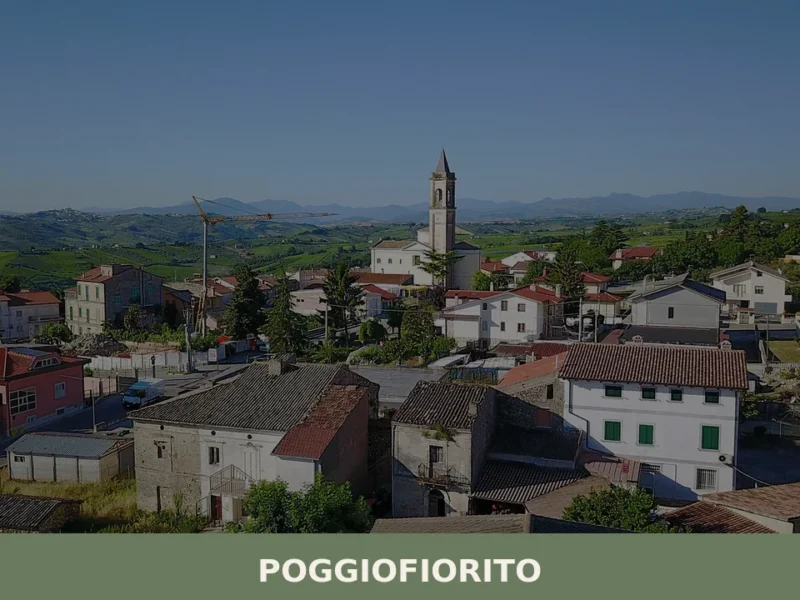
What to see in Poggiofiorito: 5 attractions in this Abruzzo village, from the main church to the historic centre. Discover the complete visitor's guide.
Fraine
Mountain
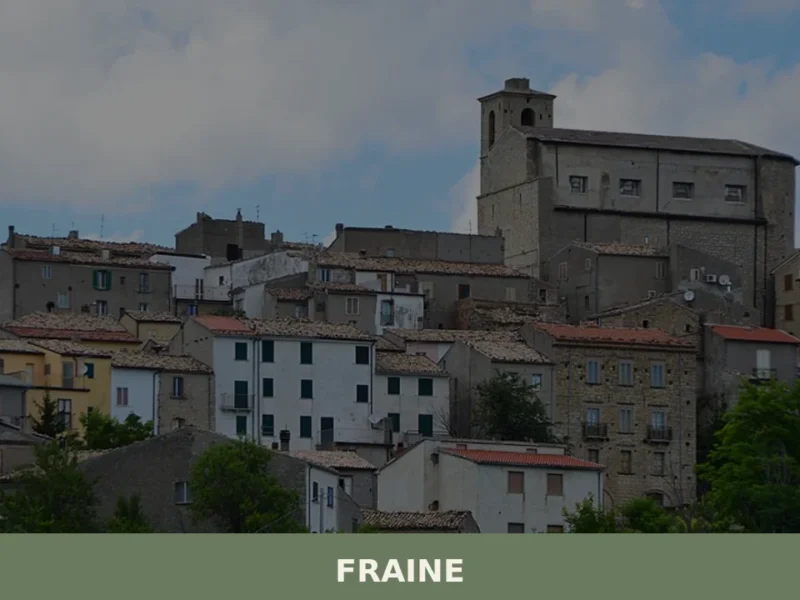
At 751 meters above sea level, in the Chieti area, lies Fraine, a municipality with a population of 261 inhabitants. This village, whose history dates back to the 10th-11th century, serves as an observation point over the Alto Vastese territory. For those wondering what to see in fraine, the town offers a journey through the […]
Tornareccio
Hills
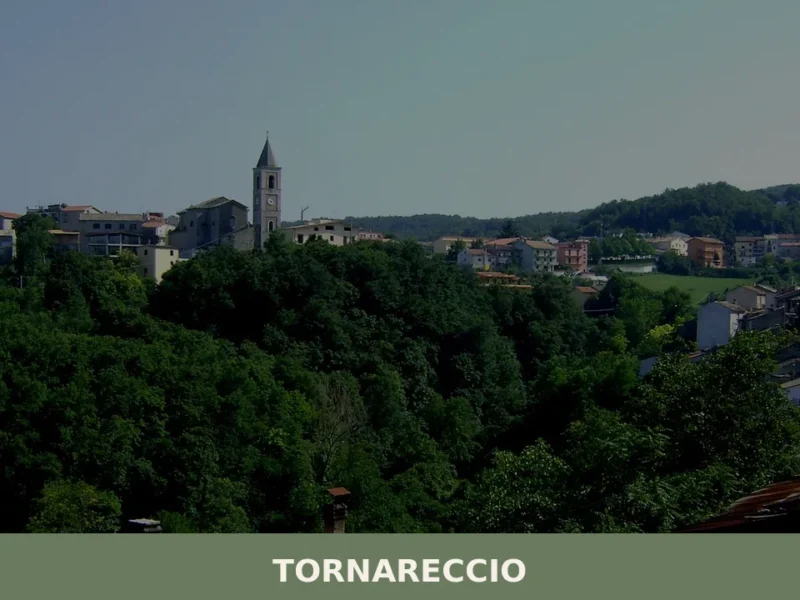
What to see in Tornareccio, Italy? Discover this Abruzzo village known for its apiaries and Palaeolithic history, home to 1,895 inhabitants. Explore its archaeological sites and honey production.
Altino
Hills
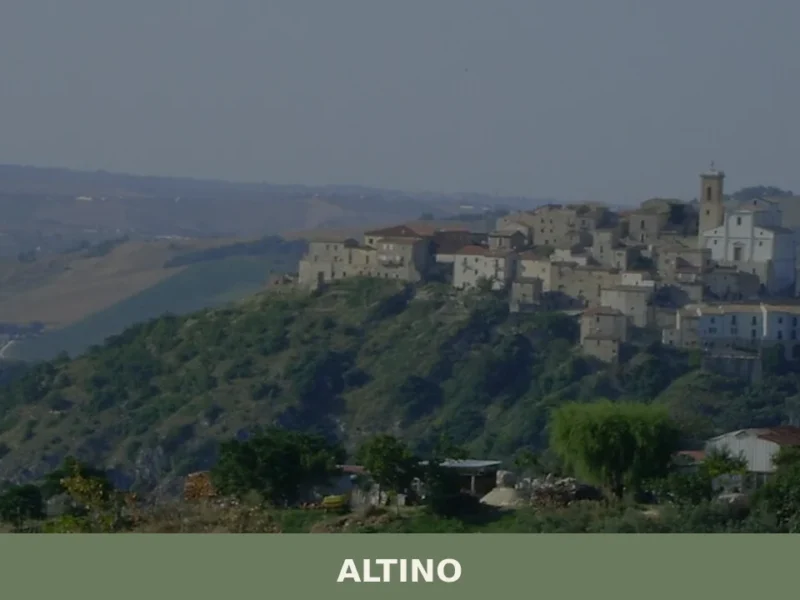
What to see in Altino? Explore the 5 main attractions of this village with 3,067 inhabitants, from the Sweet Pepper Museum to the Mother Church. Plan your visit!
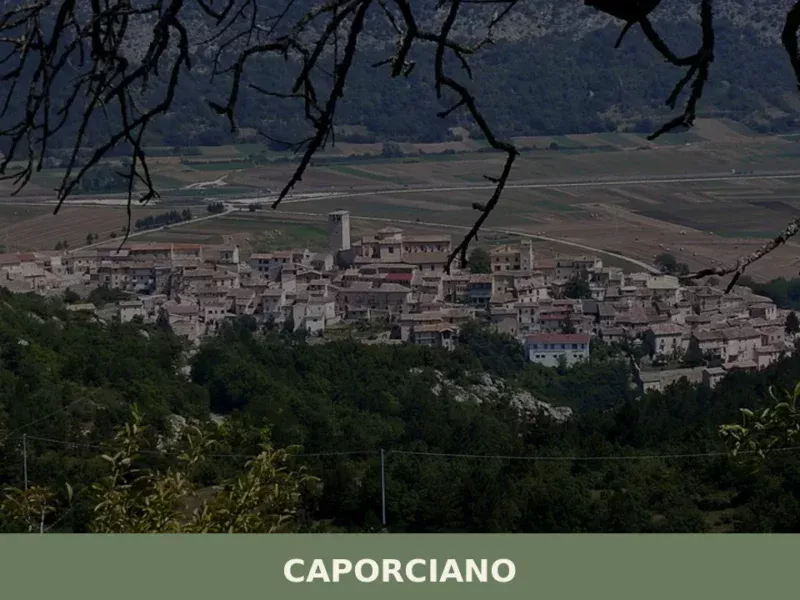
Caporciano
Mountain
Caporciano, a small village near L'Aquila between history and nature: discover what to see, how to get there and the top places to visit. Plan your trip.
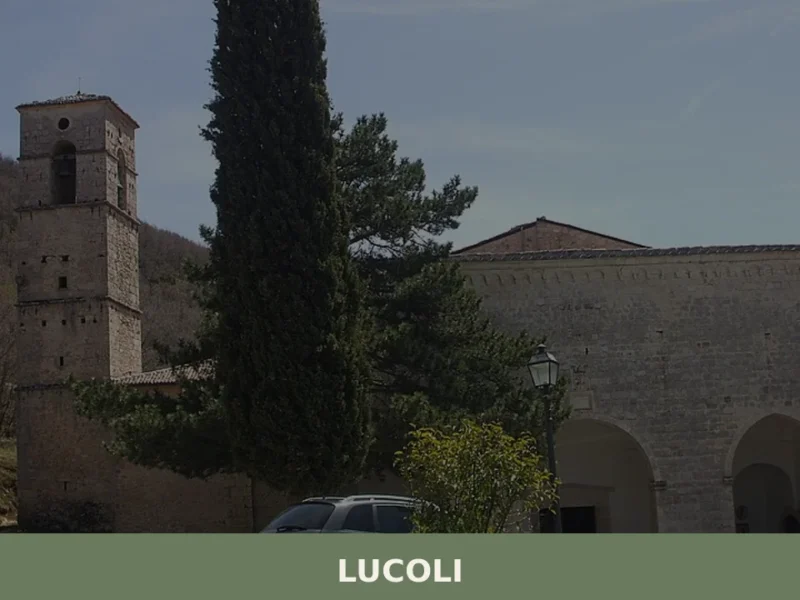
Lucoli
Mountain
Lucoli is not a compact town centre but a scattered municipality: 839 inhabitants spread across seventeen hamlets along the southern slopes of the Gran Sasso and the Velino-Sirente mountain group, at 956 metres above sea level in the province of L’Aquila. Understanding what to see in Lucoli means crossing a vast, fragmented territory where each […]
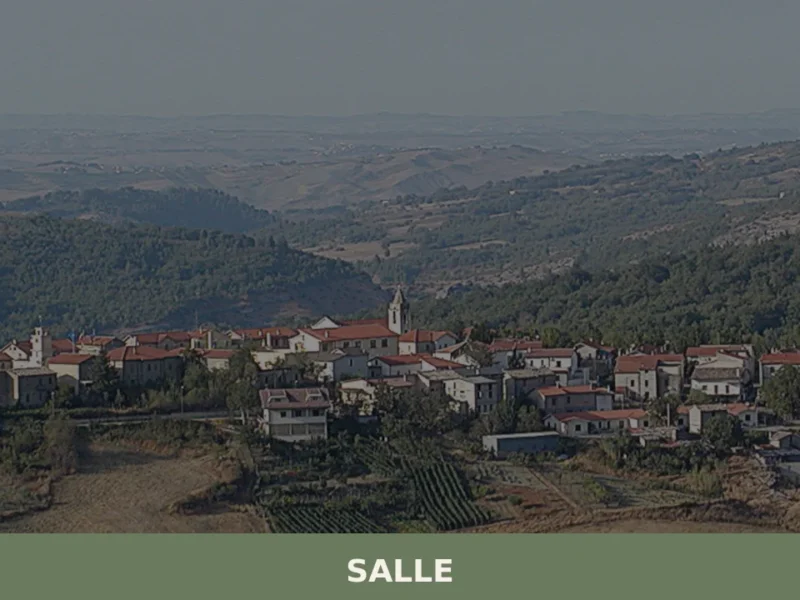
Salle
Mountain
From its elevation of 680 m (2,231 ft) above sea level, the village of Salle overlooks the Orta Valley, where the river carves through limestone gorges towards the Majella massif. Stone houses, built from local materials, cluster tightly along ancient pathways, revealing centuries of human habitation in this mountainous landscape. The air often carries the […]


🏡 Know Pennadomo better than we do?
If you’re a local or have been there, your knowledge matters: add what’s missing or fix a detail on this page.