


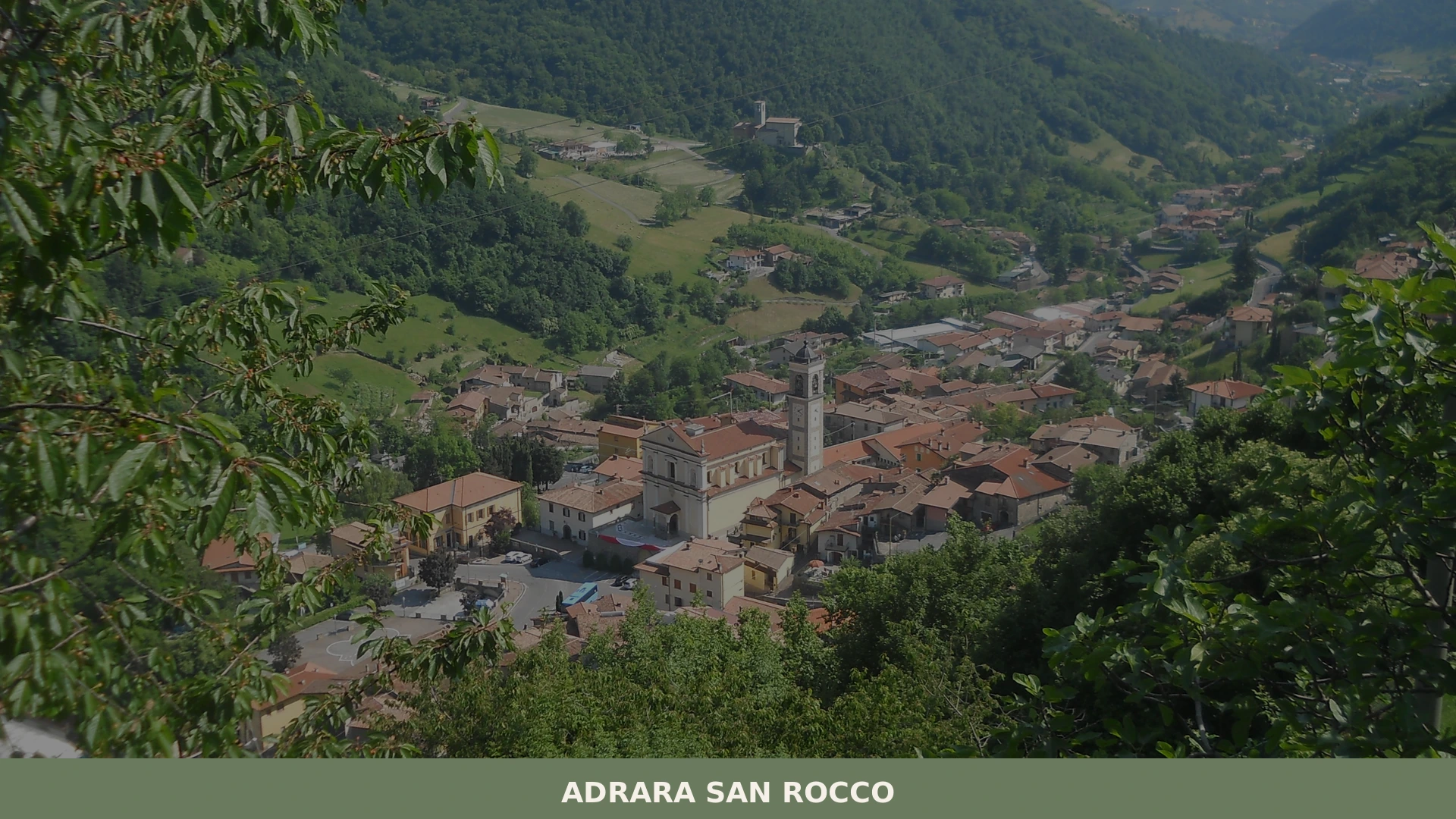
Adrara San Rocco
 Hills
Hills
The long external staircase of the church of San Rocco rises above the Guerna river valley, its stone steps worn by five centuries of use since the building was consecrated in 1539. The valley cuts eastward from Bergamo, 25 kilometres (16 mi) away, deep into the territory of Monte Bronzone Sebino. A castle once stood […]
Discover Adrara San Rocco
The long external staircase of the church of San Rocco rises above the Guerna river valley, its stone steps worn by five centuries of use since the building was consecrated in 1539. The valley cuts eastward from Bergamo, 25 kilometres (16 mi) away, deep into the territory of Monte Bronzone Sebino. A castle once stood here to protect inhabitants from factional violence during the medieval Guelph and Ghibelline conflicts.
The land divides into five ninths and four ninths — the formal split of 1754 that ended nearly a century of territorial dispute between two communities.
Deciding what to see in Adrara San Rocco begins with two principal religious buildings and extends outward through the hills.
The village sits about 25 kilometres (16 mi) east of Bergamo in Lombardia, Italy, and belongs to the Mountain Community of Monte Bronzone Sebino. Visitors to Adrara San Rocco find a parish church with documented frescoes, a fourteenth-century shrine known as the sanctuary of the dead of Bondo, and the hills of San Fermo, which draw mountain bikers, trekkers and paragliders. The literary figure Eugenio Donadoni, born here in 1870, adds a biographical dimension to any visit.
History of Adrara San Rocco
The settlement that would eventually become Adrara San Rocco began as a single undivided village called Adrara.
Its earliest documented history places it at the centre of Lombardy’s medieval upheavals, when the province of Bergamo suffered prolonged conflict between Guelfi and Ghibellini — the rival factions whose struggle for political dominance tore apart communities across northern Italy for generations. Refugees fleeing the violence arrived in Adrara in significant numbers, drawn by the relative isolation of the Guerna valley.
The influx did not bring peace: fighting broke out locally, and the inhabitants constructed a castle to defend themselves from further incursions.
In the fourteenth century, the Calepio family extended their territorial control over most of the valley, establishing a feudal dominance that shaped the area’s political structure for decades.
The situation changed decisively in the following century, when the Venetian Republic absorbed the region. Venetian rule brought an end to factional warfare and introduced a period of documented peace and economic growth, accompanied by population increase. This relative prosperity created the conditions for a new conflict — not military but administrative — between the upstream community gathered around the parish of San Rocco and the downstream village of San Martino.
In 1668, the territory of Adrara was formally divided into two separate entities: Adrara San Rocco and Adrara San Martino. The division did not immediately settle matters.
Disputes over land allocation continued for nearly a century until 1754, when a definitive resolution awarded five ninths of the territory to the community of San Rocco and the remaining four ninths to San Martino.
Villages elsewhere in Lombardia experienced comparable fragmentation during this era; the village of Casalzuigno, further north in the region, similarly consolidated its communal identity across medieval and early modern boundaries. Eugenio Donadoni, literary critic and biographical author, was born in San Rocco in 1870, giving the village a documented place in Italian intellectual history.
What to see in Adrara San Rocco, Lombardia: top attractions
Parish Church of San Rocco
The church’s most immediately visible feature is its long external staircase, which climbs to the entrance door from the lane below and gives the building a raised, isolated profile against the valley backdrop. The structure dates from 1539, making it one of the older religious buildings in the Guerna valley, and underwent restoration work during both the seventeenth and nineteenth centuries.
Inside, the walls carry frescoes attributed to the workshop of Francesco Capella, a documented Bergamasque painter. When visiting, look for the transition between different phases of decoration — later restorations often left visible joins with the earlier plasterwork.
The church is dedicated to Saint Rocco, whose name the community has carried since the 1668 territorial division.
Shrine of Saint Faustino and Saint Giovita
Known locally as the sanctuary of the dead of Bondo, this shrine was built in the fourteenth century and carries a double dedication to Saints Faustino and Giovita, patron saints of Brescia whose cult spread widely through the Alpine foothills of Lombardia during the medieval period. The building’s origin in the 1300s places its construction within the era of Calepio family dominance over the valley, and it predates the parish church of San Rocco by at least a century.
The popular name — sanctuary of the dead of Bondo — suggests a connection to a specific local event or funerary tradition, though the dedication to the two Brescian martyrs gives the site broader regional resonance. It rewards close attention to its architectural fabric, which reflects construction methods common in fourteenth-century Lombard ecclesiastical building.
The Hills of San Fermo
The hills of San Fermo rise above the Guerna valley and provide the physical setting for most of the outdoor activity Adrara San Rocco attracts. The terrain supports mountain biking, trekking and paragliding — three disciplines that require markedly different sections of the hillside and different seasonal conditions.
Trekking routes here give direct access to views over the valley floor and toward the wider Monte Bronzone Sebino landscape.
Paragliding requires suitable wind conditions and an adequate launch elevation; the San Fermo hills provide both. For those who prefer ground-level routes, mountain biking trails cross terrain that combines forested sections with more open ridge lines. Spring and early autumn offer the most stable conditions for all three activities, when the ground is firm and visibility across the valley is at its clearest.
The Guerna River Valley
The Guerna valley frames the entire settlement of Adrara San Rocco and constitutes the geographic reason for the village’s existence at this particular point on the map. The river runs west toward Bergamo, 25 kilometres (16 mi) distant, connecting the village to the provincial capital through a corridor that historically carried both trade and military pressure.
The valley’s shape — enclosed on both sides by the hills of the Monte Bronzone Sebino community — concentrates the village’s built fabric along a relatively narrow floor.
Walking the valley floor in either direction from the village centre allows visitors to read the landscape as the medieval inhabitants would have done: a defensible position, well-watered, with higher ground close enough to retreat to. The Mountain Community of Monte Bronzone Sebino, of which Adrara San Rocco is a member, administers the wider natural territory surrounding the valley.
The Historical Division Landscape of 1754
Few Italian villages carry such a precisely documented territorial boundary as Adrara San Rocco. The 1754 resolution that awarded five ninths of the land to San Rocco and four ninths to San Martino effectively drew a line across a landscape that visitors can still read today, moving between the two communities.
The upstream position of San Rocco and the downstream position of San Martino follow the logic of the river, and the distance between the two centres makes the original 1668 division — and the century of dispute that followed it — physically legible on foot.
This is not a reconstructed historical route but the actual spatial relationship between two settlements whose administrative separation required a century to formalise. The parallel with Brezzo di Bedero in northern Lombardia is instructive: that village also carries a layered history of communal boundary-making across a river-valley setting.
Local food and typical products of Adrara San Rocco
The food culture of the Guerna valley and the wider Bergamo province draws on Alpine and sub-Alpine ingredients shaped by centuries of transhumance, river-valley agriculture and Venetian trade influence. During the period of Venetian dominance from the fifteenth century onward, the region absorbed commercial connections that introduced goods and techniques from the eastern Mediterranean into a fundamentally upland economy.
The result is a cuisine that combines the practical requirements of mountain life — preserved meats, aged cheeses, dense grain preparations — with a broader palette of spices and preserved ingredients that arrived through Venetian trading networks.
In the Bergamo area, polenta — ground maize cooked slowly in a copper paiolo (a traditional deep-handled pot) until it pulls away from the sides — serves as the foundational carbohydrate at most traditional tables.
It is eaten with braised meats, with local cheeses melted over the surface, or allowed to cool and set before being sliced and grilled. Casoncelli alla bergamasca, a filled pasta whose dough is rolled thin and crimped around a stuffing of breadcrumbs, sausage meat, pear and spices, represents the most technically specific dish of the province; the combination of sweet and savoury in the filling reflects medieval cooking conventions that persisted long after they disappeared from urban Italian tables.
Locally produced cheeses, particularly those made from the milk of cows pastured on Alpine hillsides, accompany both dishes.
The broader Bergamo province falls within production zones for several certified Italian products. Salva Cremasco (PDO) and Taleggio (PDO) are both soft washed-rind cheeses produced in Lombardia, with Taleggio in particular associated with the valleys descending from the Bergamo Alps. While the specific production boundaries of individual certified products require verification against current consortium registers, these cheeses represent the dominant certified dairy tradition of the area immediately surrounding Adrara San Rocco.
Both reward purchase directly from a local casaro (cheesemaker) rather than from large-format retail, where maturation and temperature conditions often differ from those maintained in specialist shops.
Local markets in the Bergamo province typically operate on a weekly cycle and offer seasonal produce alongside cured meats and dairy goods.
Autumn brings the freshest supply of locally pressed olive oil from lower-altitude groves in the Lake Iseo area, as well as the first aged cheeses from the summer Alpine pastures. For visitors arriving in late summer or early September, the period coincides with end-of-season harvests and the preparations for autumn fairs (sagre, traditional local food festivals tied to the harvest or a patron saint) across the wider Monte Bronzone Sebino territory.
Festivals, events and traditions of Adrara San Rocco
The parish of Adrara San Rocco takes its name from Saint Rocco, whose feast day falls on 16 August in the Catholic liturgical calendar. This date anchors the village’s principal annual celebration, which centres on the parish church built in 1539 and dedicated to the same saint. The feast typically involves a solemn mass, a procession through the village, and communal gathering in the area around the long external staircase of the church.
Saint Rocco is invoked across Lombardia as a protector against plague and epidemic disease, a role that gave his cult particular urgency during the medieval and early modern periods when the region suffered repeated outbreaks.
The Shrine of Saint Faustino and Saint Giovita — the sanctuary of the dead of Bondo, built in the fourteenth century — provides a second focus for devotional practice in the village.
Saints Faustino and Giovita are celebrated on 15 February, a date observed with particular solemnity in Brescia but with local resonance across the Bergamo foothills as well. The presence of both feast days in the village calendar means that religious observance extends across different seasons, with the August feast of San Rocco drawing the larger summer gathering and the February feast of the two Brescian martyrs marking the end of the coldest part of the year.
When to visit Adrara San Rocco, Italy and how to get there
The best time to visit Adrara San Rocco depends on the type of activity planned.
For outdoor pursuits on the hills of San Fermo — trekking, mountain biking, paragliding — late spring (May to June) and early autumn (September to October) offer the most reliable combination of dry ground, moderate temperatures and clear sightlines across the Guerna valley. The August feast of San Rocco on 16 August brings the highest concentration of local visitors and represents the most active single day in the village calendar.
Winter closes some higher trails and can bring frost to the valley floor, though the religious monuments remain accessible year-round. International visitors planning a day trip to Adrara San Rocco from Milan will find the journey of approximately 65 kilometres (40 mi) to Bergamo straightforward, with the village a further 25 kilometres (16 mi) east; the full route from Milan to the village takes roughly 90 minutes by car depending on traffic on the A4 motorway.
By road, the most direct approach uses the A4 Milan–Venice motorway, exiting at Bergamo and then following provincial roads eastward toward the Guerna valley.
The exit at Bergamo places drivers approximately 25 kilometres (16 mi) from Adrara San Rocco. By rail, the nearest major station is Bergamo railway station, served by regional trains from Milan Centrale with journey times of around 50 minutes; from Bergamo, onward travel to Adrara San Rocco requires a local bus or a car.
The nearest international airport is Milan Bergamo Orio al Serio, approximately 8 kilometres (5 mi) from Bergamo city centre, which handles a substantial volume of low-cost European traffic and places the village within roughly 35 kilometres (22 mi) of an international gateway.
International visitors should be aware that English is not widely spoken in smaller village shops and services; carrying a supply of euro cash is practical, as card payment terminals are not universal in this part of the Bergamo foothills.
Those arriving from further afield within Italy can use the high-speed rail network to reach Milan and connect to a regional service to Bergamo. Venice, approximately 130 kilometres (81 mi) to the east, also offers a viable starting point for visitors touring the Lombard-Veneto border area.
The village of Brenta in Lombardia lies in the same broader regional arc and can be combined with an Adrara San Rocco visit for those covering the western Bergamo area over two or more days.
Visitors to Adrara San Rocco who want to extend their stay in the wider area may also find it worth noting that Arcisate, in the Varese province of Lombardia, represents another well-documented example of a Lombard village whose communal identity and religious heritage developed across the same medieval and early modern centuries that shaped the Guerna valley settlements.
Frequently asked questions about Adrara San Rocco
What is the best time to visit Adrara San Rocco?
The ideal time to visit Adrara San Rocco is during spring and early autumn. These seasons offer stable weather conditions, firm ground for outdoor activities, and clear visibility across the Guerna valley, making them perfect for trekking, mountain biking, and paragliding in the Hills of San Fermo. Additionally, visitors in mid-August can experience the vibrant local festivities for the patron saint, San Rocco, whose feast day is celebrated annually on August 16th, providing a unique cultural insight into the village's traditions.
What are the historical origins of Adrara San Rocco?
Adrara San Rocco originated from a single undivided village called Adrara, rooted in Lombardy's medieval period amidst Guelf and Ghibelline conflicts. A castle was built to defend against factional violence, and the Calepio family later exerted feudal control. Venetian rule brought peace and prosperity, but administrative disputes led to the formal division of Adrara into San Rocco and San Martino in 1668. A definitive resolution in 1754 allocated five ninths of the territory to San Rocco, marking its distinct historical and geographical identity that remains legible today.
What to see in Adrara San Rocco? Main monuments and landmarks
Begin your visit with the Parish Church of San Rocco, consecrated in 1539, notable for its striking external staircase and interior frescoes attributed to Francesco Capella's workshop. Explore the Shrine of Saint Faustino and Saint Giovita, locally known as the sanctuary of the dead of Bondo, a fourteenth-century building predating the parish church. Beyond religious sites, the Hills of San Fermo offer panoramic views and are a hub for outdoor activities. The Guerna River Valley frames the village, and the Historical Division Landscape of 1754, marking the boundary with Adrara San Martino, provides unique historical insight.
What are the main natural or scenic attractions of Adrara San Rocco?
Adrara San Rocco is embraced by compelling natural beauty. The Hills of San Fermo rise above the village, offering extensive trekking routes with direct access to breathtaking views over the Guerna valley and the wider Monte Bronzone Sebino landscape. This area is also popular for mountain biking and paragliding. The Guerna River Valley itself is a significant scenic attraction, framing the settlement and providing picturesque walks along its floor, allowing visitors to appreciate the historical geography and tranquil environment of this Lombardian setting.
Where to take the best photos in Adrara San Rocco?
For memorable photographs in Adrara San Rocco, focus on the Parish Church of San Rocco. Its distinctive long external staircase, climbing from the lane below, offers a unique architectural subject and a raised profile against the valley backdrop. Additionally, ascend to the Hills of San Fermo. From various points along the trekking routes, you can capture sweeping panoramic views of the Guerna valley below and the majestic Monte Bronzone Sebino landscape, especially during spring and early autumn when visibility is at its clearest.
Are there museums, churches or historic buildings to visit in Adrara San Rocco?
Yes, Adrara San Rocco offers significant historic religious buildings. The Parish Church of San Rocco, consecrated in 1539, is a key attraction, featuring an impressive external staircase and documented frescoes. Another notable site is the Shrine of Saint Faustino and Saint Giovita, known locally as the sanctuary of the dead of Bondo, a fourteenth-century structure predating the parish church by at least a century. These buildings provide a deep dive into the village's rich architectural and spiritual heritage. No museums are explicitly documented for the village.
What can you do in Adrara San Rocco? Activities and experiences
Adrara San Rocco provides a range of activities for visitors. The Hills of San Fermo are a prime location for outdoor enthusiasts, offering excellent opportunities for mountain biking, trekking, and paragliding, particularly in spring and early autumn. You can also enjoy leisurely walks along the Guerna River Valley, experiencing the landscape as medieval inhabitants would have. Beyond outdoor pursuits, explore the historical sites like the Parish Church and the Shrine, and indulge in the rich local food culture, savouring authentic Bergamasque cuisine and regional products.
Who is Adrara San Rocco suitable for? Families, couples, hikers, solo travelers?
Adrara San Rocco is particularly suitable for active travelers and those seeking a blend of nature, history, and authentic local culture. It's ideal for hikers, trekkers, mountain bikers, and paragliders drawn to the Hills of San Fermo. History enthusiasts will appreciate the medieval origins, the unique territorial division, and the historic religious buildings. Literary tourists might find interest in Eugenio Donadoni's birthplace. Couples and solo travelers looking for tranquil village life, scenic beauty, and traditional Lombardian food experiences will also find Adrara San Rocco a rewarding destination.
What to eat in Adrara San Rocco? Local products and specialties
The cuisine of Adrara San Rocco, nestled in the Guerna valley, reflects Bergamo province's rich traditions. A foundational dish is polenta, often served with braised meats or melted local cheeses, or grilled after cooling. A must-try specialty is Casoncelli alla bergamasca, a filled pasta with a unique sweet and savoury stuffing of breadcrumbs, sausage meat, pear, and spices. Local cheeses, particularly those from Alpine pastured cows, are abundant. The wider Bergamo area is also renowned for certified products like Salva Cremasco (PDO) and Taleggio (PDO), both exquisite soft washed-rind cheeses.
📷 Photo Gallery — Adrara San Rocco
Getting there
Via Guglielmo Marconi, 24060 Adrara San Rocco (BG)
Nearby Villages near Adrara San Rocco
In Lombardy More villages to discover
Brusimpiano
Hills
 Lake
Lake
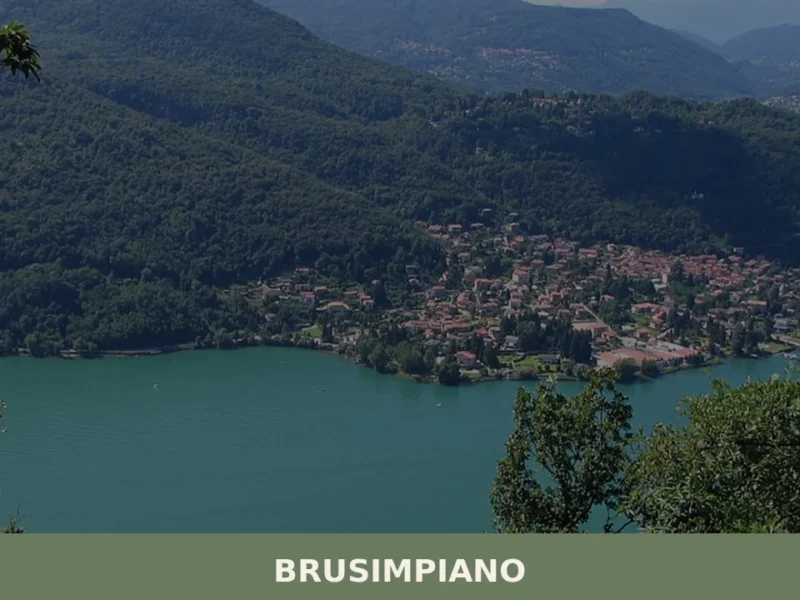
What to see in Brusimpiano: 1,229 inhabitants, 289m above Lake Lugano. Discover the Church of the Nativity, lakeside promenade and nature trails. Plan your visit now.
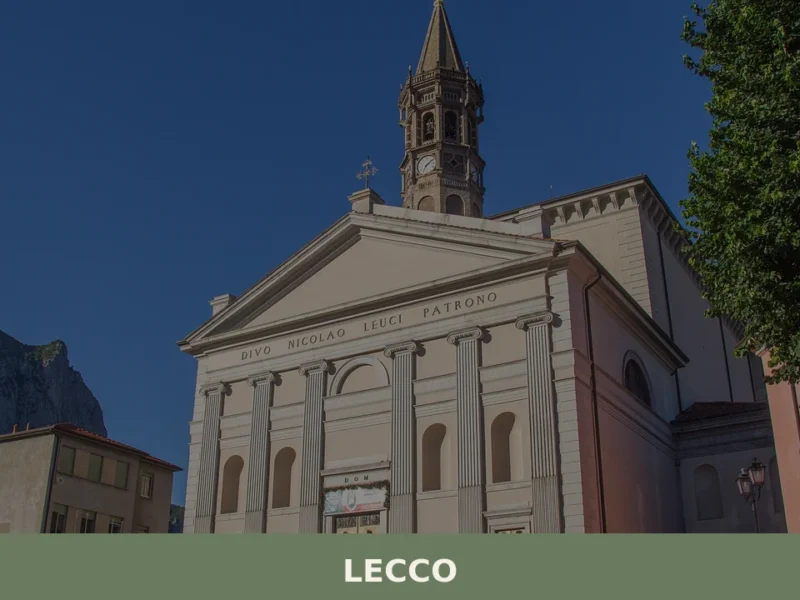
Lecco
Lake
 Mountain
what to see in lecco, Italy: Explore the 5 essential attractions of this Lombard city, from the historic Azzone Visconti Bridge to the towering Mount Resegone. Discover its 47,240 inhabitants.

Losine
Mountain
622 residents, three medieval churches and a dialect nickname that survives centuries. Losine rewards visitors who look beyond Lake Garda for Lombard mountain identity.
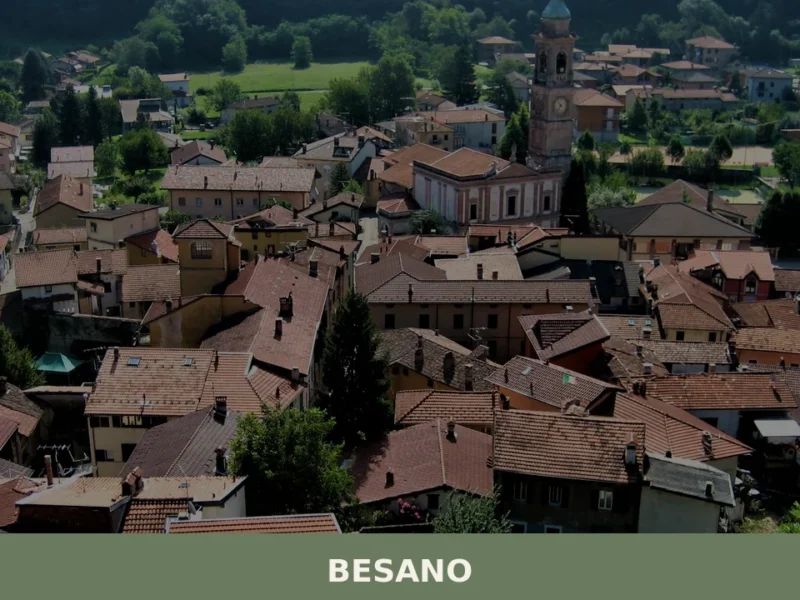
Besano
Hills
What to see in Besano, Italy: Explore the paleontological site and discover village life at 350 m (1,148 ft) a.s.l. Read our guide to Lombardy's unique corners.
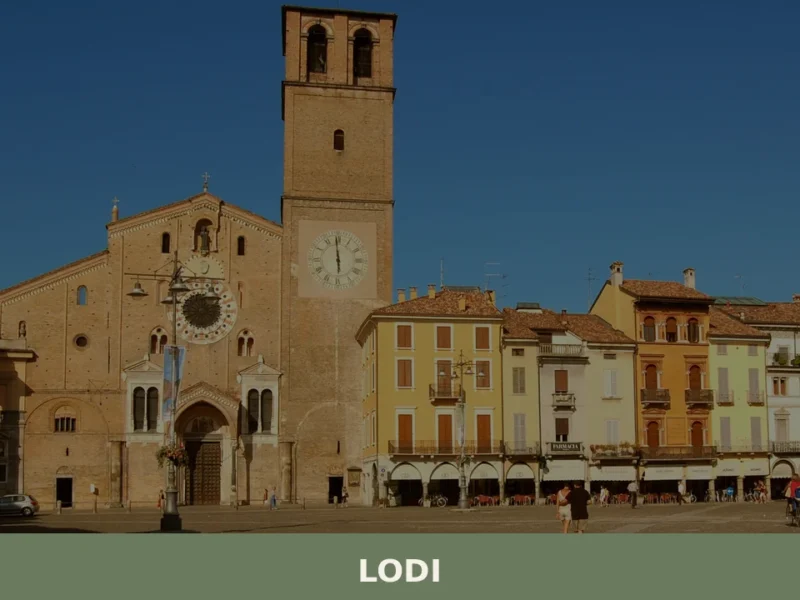
Lodi
 Plains
What to see in Lodi, Italy: Discover its 1454 Treaty legacy and 1796 Battle site. Explore this Lombard city, 87 m (285 ft) above sea level, for a unique historical day trip.
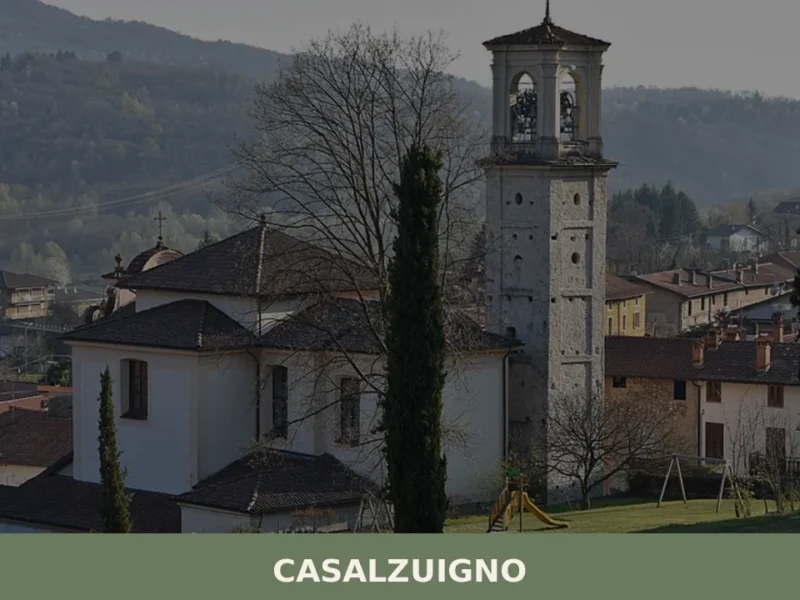
Casalzuigno
Hills
Cosa vedere a Casalzuigno: borgo a 350m nel Varesotto con Villa della Porta Bozzolo (FAI), chiesa di San Vittore e Parco Campo dei Fiori. Guida completa.
Bedero Valcuvia
Plains
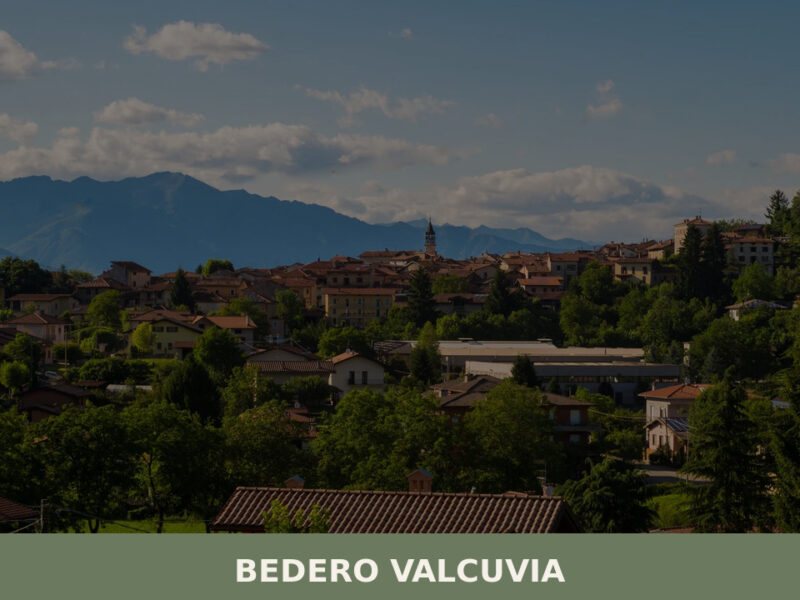
Morning light reaches Bedero Valcuvia in stages — first the bell tower of the parish church, then the stone walls along Via Roma, and finally the gardens where fig trees press against iron railings. The village holds 680 residents in the broad green trough of the Valcuvia, a valley running between Lake Maggiore and Lake […]

Milano
Plains
Over 1.3 million residents and 2,600 years of history make Milano Lombardia one of Europe's most compelling destinations. Art, opera, fashion and extraordinary food await every visitor.
Desenzano del Garda
Lake
Plains
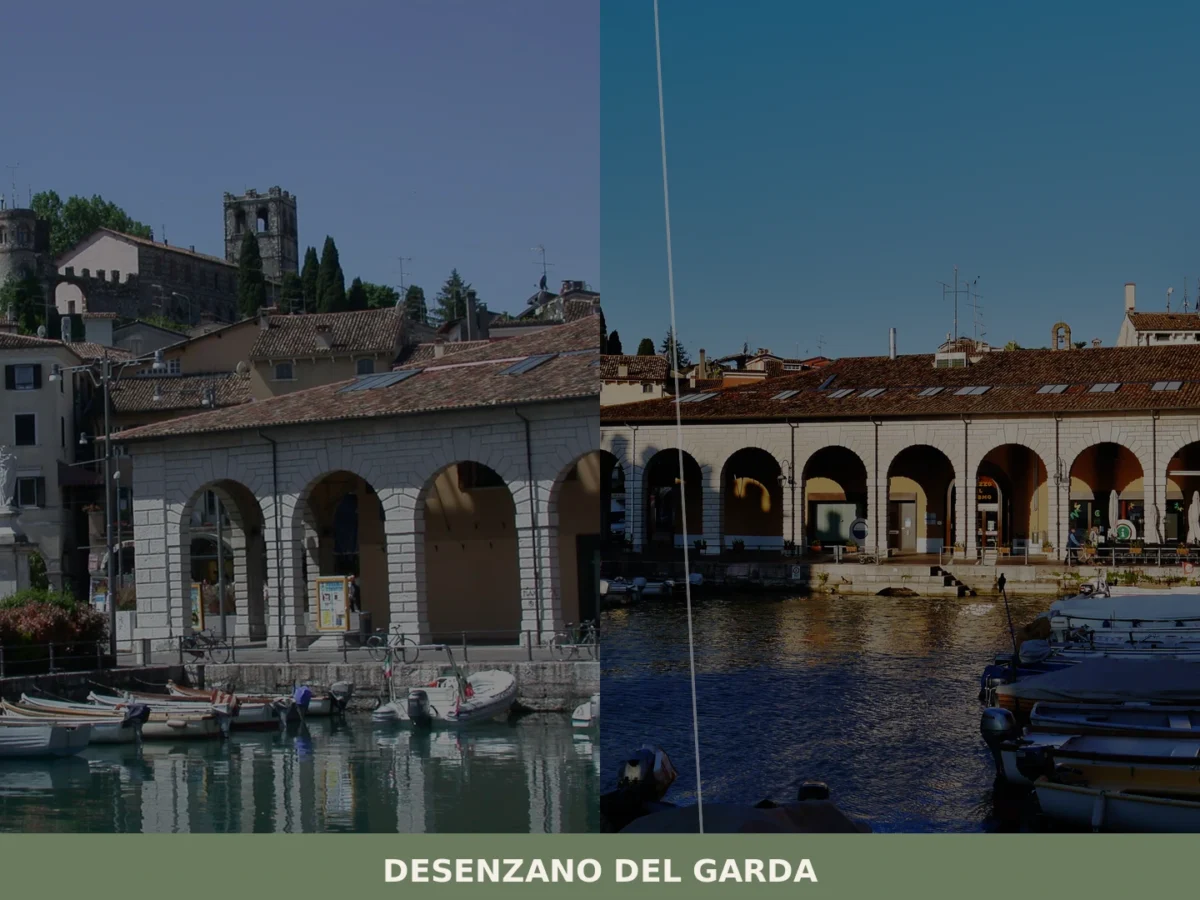
what to see in desenzano del garda in Italy. Explore Desenzano del Garda, Lombardia, Italy, at 67 m a.s.l., from its Roman Villa to the Old Port. Discover its history and attractions.
Arsago Seprio
Hills
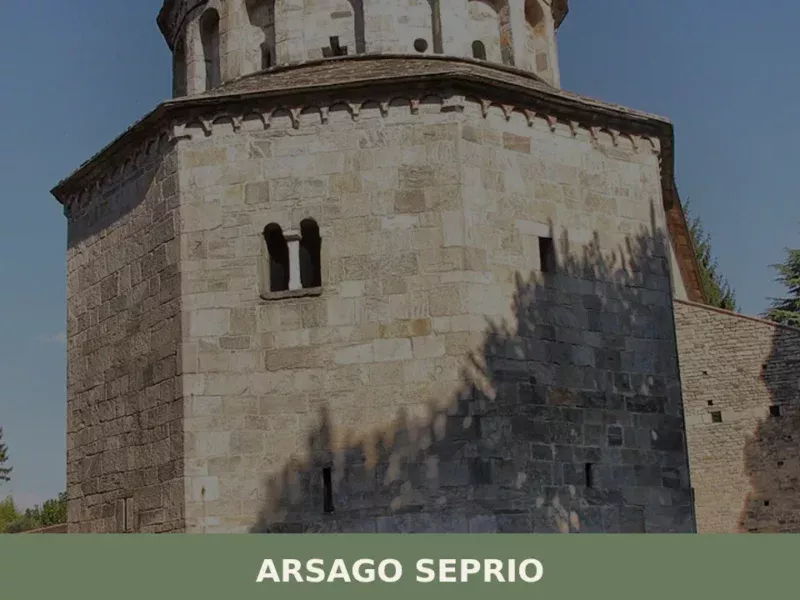
In Arsago Seprio, located in the province of Varese, the ancient Basilica of San Vittore Maggiore features structures dating back to the 9th century, indicating continuous settlement rooted in Roman times. This specific detail introduces a village of 4,869 inhabitants, located 290 meters above sea level, where historical layering is a tangible element. For those […]

🏡 Know Adrara San Rocco better than we do?
If you’re a local or have been there, your knowledge matters: add what’s missing or fix a detail on this page.