


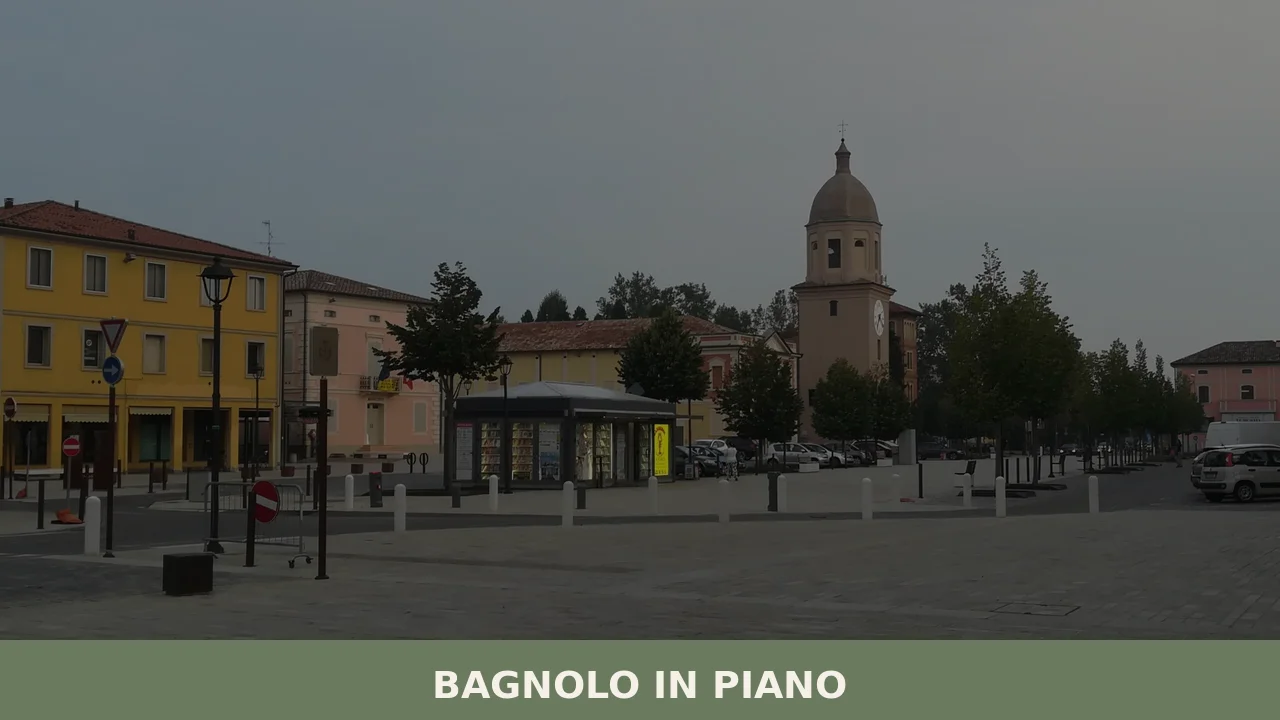
Bagnolo in Piano
 Plains
What to see in Bagnolo in Piano, Emilia-Romagna, Italy: explore the medieval Torrazzo tower, the Pieve Rossa church, and local Po Valley cuisine. Discover now.
Discover Bagnolo in Piano
A medieval tower stands at the centre of Bagnolo in Piano, its brickwork the sole surviving fragment of a castle demolished during the War of Spanish Succession. The flat agricultural land of the Po Valley spreads out around it, broken only by the profiles of farmhouses and the occasional line of poplars.
At 32 m (105 ft) above sea level, the terrain here offers no dramatic elevation, but the historical layering — Norman, Gonzaga, Este — is dense enough to give the place considerable weight.
Deciding what to see in Bagnolo in Piano is straightforward once you know what the village actually contains.
The town has a population of 9,591 inhabitants and sits about 8 km (5 mi) northeast of Reggio nell’Emilia in the province of Reggio Emilia, Emilia-Romagna, Italy.
Visitors to Bagnolo in Piano find two primary historical monuments — the Torrazzo tower and the medieval pieve (pleban church) of Pieve Rossa — alongside the gastronomic culture of the wider Reggio Emilia area.
The what to see in Bagnolo in Piano question has a focused, practical answer: the monuments are walkable, the distances are short, and the agricultural plain around the town rewards those who take time to understand it.
History of Bagnolo in Piano
The origins of Bagnolo in Piano are recorded from 946, when the bishop of Reggio founded a church on the site, establishing the settlement as an ecclesiastical outpost in the flatlands south of the Po. The local pieve — a pleban church serving a rural parish district — is documented in written sources from 1144, making it one of the older continuously recorded religious sites in this section of the Emilian plain.
The name “Bagnolo” derives from the Latin balneum, suggesting the presence of water features or marshy ground in the area’s early topography, while “in Piano” straightforwardly describes the flat terrain that defines it.
In 1335, Bagnolo in Piano was acquired by the House of Gonzaga together with Reggio Emilia and the nearby town of Novellara.
The Gonzaga family — rulers of Mantua and an influential force across northern Italy — rebuilt the local rocca (fortified castle) in 1354 under Feltrino Gonzaga.
This period of Gonzaga rule gave the village its most substantial architectural investment: the castle complex that would later be partially destroyed. Bagnolo subsequently became part of the independent County of Novellara and Bagnolo, a small but formally recognised territorial state that maintained a degree of autonomy for several centuries.
The shared history between Bagnolo and Novellara during this period is a significant thread in the local historical record, and travellers interested in the Gonzaga influence across the region may also find it worth exploring Villanova sull’Arda, another Emilian settlement shaped by the same network of northern Italian noble families.
The County of Novellara and Bagnolo came to an end in 1728, when the territory reverted to the control of Charles VI, Holy Roman Emperor.
Charles VI subsequently transferred the lands to Rinaldo III, Duke of Modena, of the House of Este, in 1737. The final phase of the castle’s story came during the War of Spanish Succession, when French forces destroyed much of the fortified complex. What remained standing was the Torrazzo, the main tower, which survives today as the most visible medieval structure in the village.
This sequence — episcopal foundation, Gonzaga expansion, Este absorption, French military destruction — gives Bagnolo a historical arc that spans roughly eight centuries of documented activity.
What to see in Bagnolo in Piano, Emilia-Romagna: top attractions
The Torrazzo — Medieval Tower
The Torrazzo is a brick tower of medieval construction, rising above the flat roofline of the village as the last standing element of the rocca built by Feltrino Gonzaga in 1354.
French forces destroyed the surrounding castle during the War of Spanish Succession in the early eighteenth century, leaving only this tower intact.
Standing at its base, visitors can read the phases of its construction in the brickwork — the lower sections carry the heavier, older masonry, while later repairs are visible in the bonding pattern. It is worth climbing up to the tower’s viewing level where access permits, as the flat Po Valley plain extends without interruption to the horizon.
The structure sits in the historic centre of the village and serves as the primary point of orientation for anyone exploring Bagnolo in Piano on foot.
Pieve di Pieve Rossa — Medieval Pleban Church
Located in the frazione (hamlet) of Pieve Rossa, this church carries one of the earliest documented histories of any structure in the municipality: it appears in written records from 1144, placing its active use at nearly nine centuries ago.
The building represents the Romanesque ecclesiastical architecture typical of rural Emilia, with the modest proportions and solid masonry that characterise parish churches built to serve scattered agricultural communities rather than urban populations.
The interior preserves elements consistent with its medieval foundation. Pieve Rossa lies a short distance from the main village centre, making it an accessible extension of any visit. Those who want to understand what to see in Bagnolo in Piano beyond the town centre should plan time to reach this frazione specifically.
The Historic Village Centre
The central area of Bagnolo in Piano preserves the street pattern and building scale of a medieval market settlement on the Po Valley plain.
Low-rise brick construction dominates, consistent with the building traditions of the Reggio Emilia area, where fired terracotta brick has been the primary material since at least the twelfth century.
The main square and its surrounding streets form a compact grid that can be covered on foot in under an hour. The geometry of the plan reflects the town’s function as an agricultural and administrative centre during the Gonzaga and Este periods. For international visitors arriving from Reggio Emilia, only 8 km (5 mi) to the southwest, the centre offers a legible contrast to the larger city’s more elaborate urban fabric.
The Surrounding Agricultural Plain
At 32 m (105 ft) above sea level, Bagnolo in Piano sits on the dead-flat terrain of the Po Valley, where the visual field is defined by field geometry rather than topography.
The land immediately surrounding the village has been farmed continuously since at least the medieval period, with the agricultural system closely tied to the Gonzaga-era land organisation.
Cycling routes cross the plain in multiple directions, following straight roads between fields of wheat, fodder crops, and the Parmigiano-Reggiano cattle pastures that underpin the regional economy.
Distances between points of interest in this landscape are measured in kilometres of flat road rather than altitude change, making the area accessible by bicycle for visitors of average fitness. The plain also connects Bagnolo directly to the municipality of Correggio to the northeast, one of its immediate neighbouring communes.
The Parish Church of San Francesco di Paola
The parish church dedicated to San Francesco di Paola — the patron saint of Bagnolo in Piano — anchors the religious life of the community and marks the liturgical calendar’s most significant local date, 2 April, the feast day of the saint.
The church functions as the focal point of the annual patronal celebrations and represents the clearest link between the village’s institutional identity and its built fabric.
San Francesco di Paola, founder of the Minim Friars, is venerated in multiple communities across southern and central Italy, but the dedication here reflects the broader diffusion of his cult in the post-Tridentine period.
The church interior and façade follow the conventions of post-medieval Emilian ecclesiastical building and are best seen in morning light, when the brick absorbs and returns the flat eastern illumination of the plain.
Local food and typical products of Bagnolo in Piano
Bagnolo in Piano sits within the Reggio Emilia food production zone, one of the most documented and legally protected areas of Italian gastronomy. The flat terrain and the dairy farming tradition of the Po Valley have shaped local eating habits for centuries, producing a cuisine built primarily on fresh pasta, cured pork, and aged cheese.
The village shares its culinary reference points with the surrounding comuni of the Reggio Emilia province, where the same raw materials — locally raised cattle, handmade pasta dough, preserved meats from free-range pigs — recur across every table.
Understanding the food here means understanding the land: flat, fertile, and organised around animal agriculture since at least the medieval period.
The pasta traditions of the area centre on fresh egg-based doughs rolled thin and filled or cut by hand.
Tortelli d’erbetta, a filled pasta with a mixture of ricotta and cooked greens enclosed in thin egg pasta, appears on tables throughout the Reggio Emilia area. Tagliatelle al ragù is prepared with a slow-cooked meat sauce using locally raised beef or pork, combined with a soffritto of onion, celery, and carrot cooked down in lard or butter before the meat is added.
Erbazzone, a savoury pie made with Swiss chard, lard, onion, and Parmigiano-Reggiano enclosed in a pastry crust rendered flaky by the use of rendered pork fat, is a staple of the entire Reggio Emilia province and widely available in local bakeries.
These dishes reflect the region’s reliance on preserved animal fats and seasonal vegetables, not abstract notions of tradition.
The most significant certified product associated with Bagnolo in Piano and its surrounding territory is Parmigiano-Reggiano (PDO — Protected Designation of Origin), produced in the provinces of Parma, Reggio Emilia, Modena, Mantua, and Bologna.
The cheese requires a minimum ageing period of 12 months, with 24-month and 36-month wheels available for those who want a more pronounced flavour profile and a grainier, crystalline texture.
Bagnolo in Piano falls within the Reggio Emilia production zone, meaning the milk used in wheels stamped with the Reggio Emilia mark comes from cattle grazing pastures in this immediate area. A second certified product of the broader zone is Prosciutto di Parma (PDO), dry-cured pork leg aged for a minimum of 400 days, produced in the hill zone south of Parma but widely distributed and consumed throughout the province.
Local markets and farm shops in the Reggio Emilia area typically stock both products directly from producer cooperatives.
The autumn months — October and November — bring food-oriented events across the Emilian plain, including sagre (local food festivals) focused on cured meats and aged cheese. Travellers visiting in this season will find the greatest concentration of local food activity, with producers sometimes opening their facilities to visitors.
Spring and early summer offer the fresh pasta and green vegetable dishes at their best, when Swiss chard and spinach are at peak season in local kitchen gardens.
Festivals, events and traditions of Bagnolo in Piano
The central annual event in Bagnolo in Piano is the feast of the patron saint, San Francesco di Paola, celebrated on 2 April.
San Francesco di Paola (1416–1507) was the Calabrian founder of the Minim Friars and was canonised in 1519. The feast day on 2 April marks the anniversary of his death and is observed in Bagnolo with religious ceremonies centred on the parish church.
The celebrations follow the standard format of Italian patronal feasts: a solemn Mass, a procession through the village streets with the image of the saint carried by members of the community, and public gathering in the central square after the religious rites conclude.
The date falling in early spring means the celebrations take place as the agricultural plain emerges from winter, a timing that historically aligned the religious calendar with the opening of the farming season.
Beyond the patronal feast, Bagnolo in Piano participates in the broader cycle of Emilian food and agricultural fairs that mark the calendar across the province of Reggio Emilia. These events, rooted in the marketing cycles of agricultural communities, bring together local producers and buyers in formats ranging from weekly markets to larger seasonal fiere (trade fairs).
The village’s position within the Parmigiano-Reggiano production zone means that dairy-related events at the provincial level are directly relevant to its economic and cultural calendar.
Specific dates for recurring local events are best confirmed with the Municipality of Bagnolo in Piano, whose official website carries the updated annual programme.
When to visit Bagnolo in Piano, Italy and how to get there
The best time to visit Bagnolo in Piano and the wider Emilia-Romagna region is between April and June and again in September and October.
Spring brings mild temperatures in the range of 15–22°C (59–72°F), with the agricultural plain in active growth and the 2 April patronal feast providing a fixed cultural reference point.
Autumn offers cooler, stable weather, harvest activity in the fields, and the food-fair season across the Reggio Emilia province.
Summer in the Po Valley is hot and humid — July and August regularly see temperatures above 33°C (91°F) — and the flat terrain provides no shade on the road between sites. Winter is cold and occasionally foggy, a characteristic condition of the plain that muffles sound and limits visibility but gives the landscape a distinctive, low-contrast quality that some visitors find compelling.
Reaching Bagnolo in Piano from Reggio Emilia is straightforward.
The town lies 8 km (5 mi) northeast of Reggio Emilia, accessible by local bus services operated from the Reggio Emilia city bus network or by car via the provincial road SP 10. If you arrive by car from the A1 motorway (Autostrada del Sole), exit at Reggio Emilia and follow the provincial road northeast toward Bagnolo in Piano; the drive from the motorway exit takes approximately 15 minutes. From Bologna, located about 60 km (37 mi) to the southeast, the journey by car takes roughly 50 minutes via the A1.
Reggio Emilia is served by the high-speed rail line connecting Milan and Bologna, with Trenitalia running frequent services; from Reggio Emilia railway station, local bus connections or a short taxi ride cover the remaining 8 km (5 mi) to Bagnolo.
The nearest major international airport is Aeroporto di Bologna Guglielmo Marconi, approximately 70 km (43 mi) from Bagnolo in Piano, with a journey time of around one hour by car.
For international visitors, it is practical to carry some euro cash, as smaller shops and local markets in the village may not accept international credit cards. English is not widely spoken in everyday commerce, so a few basic phrases in Italian facilitate transactions considerably.
For those planning a day trip from Reggio Emilia, Bagnolo in Piano pairs efficiently with a visit to the nearby town of Correggio — one of Bagnolo’s bordering municipalities — or with the broader circuit of Gonzaga-connected sites in the southern Po Valley.
Travellers coming from Piacenza, another significant Emilian city to the northwest, can read about the regional context at the Piacenza guide, which covers the western arc of the same plain.
The flat terrain means that cycling between Bagnolo and neighbouring villages is feasible for most visitors; the roads are level and traffic is moderate outside the morning and evening commuter windows.
Visitors who want to extend their time in the area can consider a stop at Castel del Rio, a hillside village in the Apennine foothills to the south of Bologna, which offers a contrasting landscape to Bagnolo’s open plain and preserves significant Renaissance architecture associated with the Alidosi family. The two villages represent opposite ends of Emilia-Romagna’s physical geography — flat valley floor against Apennine slope — and together give a more complete picture of the region’s territorial variety.
Frequently asked questions about Bagnolo in Piano
What is the best time to visit Bagnolo in Piano?
Spring and early autumn offer the most pleasant conditions for visiting Bagnolo in Piano. April is particularly meaningful: on 2 April the village celebrates its patronal feast of San Francesco di Paola, the most significant event in the local calendar, with religious ceremonies centred on the parish church. Late April and May bring mild temperatures ideal for cycling the flat Po Valley roads. Summer is warm and humid on the plain; winter is cold and often foggy, as is typical of the Emilian lowlands, but the agricultural landscape has a spare, atmospheric quality in the low winter light.
What are the historical origins of Bagnolo in Piano?
Bagnolo in Piano is documented from 946, when the Bishop of Reggio founded a church on the site. The local pieve appears in written records from 1144. The name derives from the Latin balneum, referencing marshy or water-rich terrain. In 1335 the Gonzaga family acquired the village alongside Reggio Emilia, rebuilding the local rocca in 1354 under Feltrino Gonzaga. It later formed part of the independent County of Novellara and Bagnolo until 1728, when it passed to Charles VI and subsequently to Rinaldo III, Duke of Modena of the House of Este, in 1737.
What to see in Bagnolo in Piano? Main monuments and landmarks
The two primary monuments are the Torrazzo, a medieval brick tower and the sole surviving element of the 1354 Gonzaga rocca, located in the historic centre, and the Pieve di Pieve Rossa, a Romanesque pleban church documented from 1144, situated in the hamlet of the same name a short distance from the village. The parish church of San Francesco di Paola, which anchors the patronal feast on 2 April, is also worth visiting. The compact historic centre can be explored on foot in under an hour. No ticket is required to view the Torrazzo externally.
What are the main natural or scenic attractions of Bagnolo in Piano?
The surrounding Po Valley plain is the defining natural feature of Bagnolo in Piano. At 32 m above sea level, the flat agricultural landscape stretches to the horizon, broken only by farmhouses and rows of poplars. Cycling routes cross the plain on straight, level roads through fields of wheat, fodder crops and Parmigiano-Reggiano cattle pastures. The terrain connects directly to neighbouring Correggio to the northeast. The landscape rewards unhurried exploration by bicycle and offers a clear visual introduction to the organisation of Gonzaga-era agricultural land management in the Emilian lowlands.
Where to take the best photos in Bagnolo in Piano?
The Torrazzo tower photographed against the open Po Valley sky is the most distinctive image Bagnolo in Piano offers, particularly effective in the low morning or evening light that characterises the flat plain. The Pieve di Pieve Rossa, with its Romanesque brick facade set within the rural hamlet, provides a quieter, more intimate subject. The straight rural roads lined with poplars that radiate outward from the village are characteristic of the Emilian agricultural plain and reward wide-angle photography, especially in spring when the fields are green or in early morning fog.
Are there museums, churches or historic buildings to visit in Bagnolo in Piano?
The main historic structures are the Torrazzo, the medieval tower of the former Gonzaga rocca at the centre of the village, and the Pieve di Pieve Rossa, a Romanesque church documented from 1144 in the hamlet of Pieve Rossa. The parish church of San Francesco di Paola, built in the post-medieval Emilian ecclesiastical tradition, is best seen in morning light. Specific opening hours and admission details for these sites are not centrally published; checking with the Bagnolo in Piano municipality or local pro loco before visiting is advisable for interior access.
What can you do in Bagnolo in Piano? Activities and experiences
Cycling is the most practical activity in and around Bagnolo in Piano: the flat Po Valley terrain is accessible to riders of average fitness, with straight agricultural roads connecting the village to Correggio and the wider Reggio Emilia plain. The patronal feast of San Francesco di Paola on 2 April provides an opportunity to observe a traditional Emilian village celebration. Food and wine experiences centred on Parmigiano-Reggiano, Lambrusco and cured meats are available throughout the Reggio Emilia province, with the village itself serving as a base for exploring local producers and markets in the surrounding area.
Who is Bagnolo in Piano suitable for?
Bagnolo in Piano suits travellers who value historical depth over visual spectacle. History enthusiasts drawn to Gonzaga and Este heritage will find the Torrazzo and the medieval pieve rewarding. Cyclists looking for flat, uncrowded routes through authentic Po Valley agricultural landscape will find ideal terrain. Food-focused visitors benefit from proximity to the Parmigiano-Reggiano and Lambrusco production heartland of Reggio Emilia. The compact, walkable historic centre and short distances between sites make it manageable for families and older travellers. It is not suited to those seeking mountain scenery, beaches or large-scale tourist infrastructure.
What to eat in Bagnolo in Piano? Local products and specialties
Bagnolo in Piano lies within the Reggio Emilia DOP production zone for Parmigiano-Reggiano, one of Italy's most protected and documented cheeses. Local tables feature tortelli d'erbetta (fresh egg pasta filled with ricotta and cooked greens), tagliatelle al ragù with slow-cooked local beef or pork, and erbazzone, a savoury pie of Swiss chard, lard, onion and Parmigiano-Reggiano in a lard-based pastry. Lambrusco Reggiano DOC, the lightly sparkling red wine of the province, is the standard table wine pairing. Culatello and other cured pork products from the broader Emilian tradition are also widely available.
Nearby Villages near Bagnolo in Piano
In Emilia-Romagna More villages to discover
Corte Brugnatella
 Hills
Hills
Corte Brugnatella scatters its stone hamlets above the Trebbia River in the Piacenza Apennines. A guide to its medieval settlements, river gorge, and mountain food.
Camugnano
 Mountain
In 1911, when the construction of the Suviana Dam transformed the course of the Limentra torrent, Camugnano changed its appearance forever. The water submerged farmland and footpaths, creating an artificial reservoir that now defines the landscape of the upper Bolognese Apennines at an altitude of 692 metres. This municipality of 1,948 inhabitants, spread across scattered […]
Bobbio
Hills
What to see in Bobbio: a town of 3,710 at 272 m in the Trebbia valley, with a 614 AD abbey, the medieval Ponte Gobbo and a hilltop castle. Plan your visit now.
Baiso
Hills
The ridge road into Baiso levels out at 542 m (1,778 ft) above the Po Plain and delivers a view across the Apennine foothills that is measurable rather than vague: the valley floors of the Secchia drainage basin lie several hundred metres below, and the profiles of Carpineti and Castellarano mark the horizon to the […]
Argelato
Plains
What to see in Argelato? Explore the 5 main attractions of this Emilian village. Our complete guide awaits for your trip. Read now!
San Giorgio Piacentino
Plains
What to see in San Giorgio Piacentino: 5,533 residents at 103 m altitude, Renaissance villas, PDO cured meats, and the 23 April patron feast. Plan your visit now.
Castel di Casio
Hills
In February 1944, during the German retreat along the Gothic Line, the bridges over the Limentra di Treppio torrent were blown up one by one, cutting the territory of Castel di Casio in two. That act of destruction left a lasting mark on the collective memory of a mountain municipality that, as far back as […]
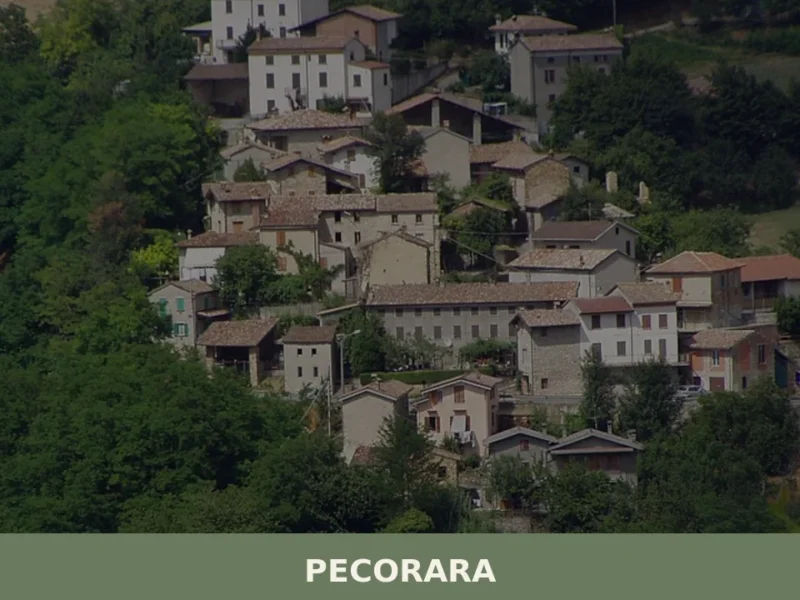
Pecorara
Hills
What to see in Pecorara? Discover 5 must-see attractions in this Emilia-Romagna village. Read the full guide and plan your visit!
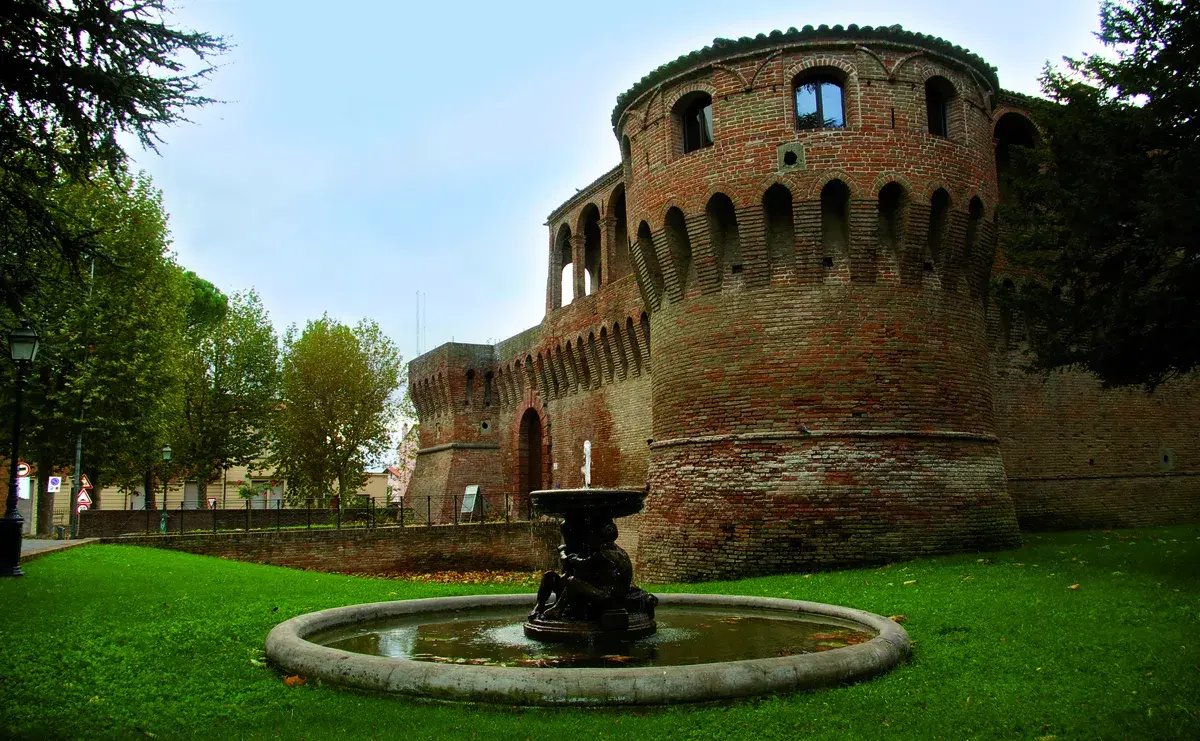
Bagnara di Romagna
Plains
What to see in Bagnara di Romagna, Italy? Explore this 'Borgo più bello' at 22 m (72 ft) altitude. Discover its historical charm and annual Patron Saint's Feast.
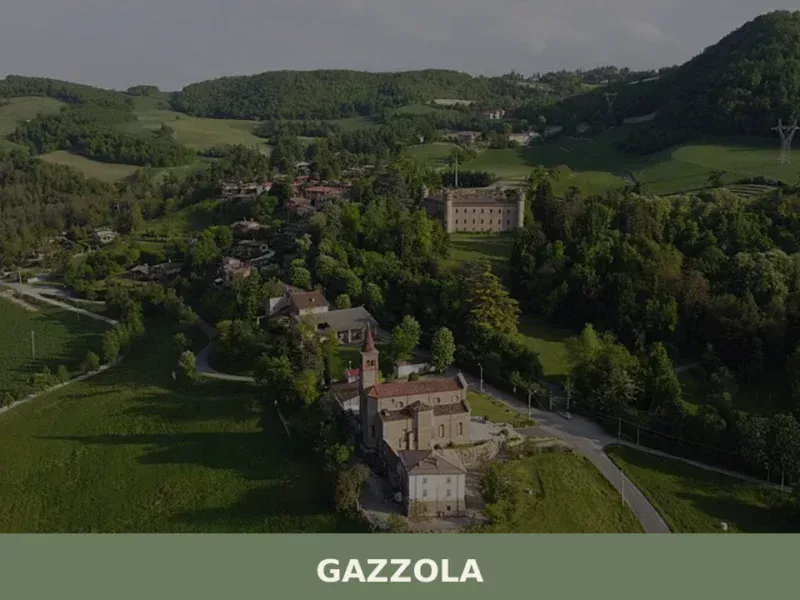
Gazzola
Plains
What to see in Gazzola, a Piacenza hill village at 146 m with 2,050 residents. Explore Rivalta Castle, the Luretta valley and Colli Piacentini DOC wines. Plan your visit.

🏡 Know Bagnolo in Piano better than we do?
If you’re a local or have been there, your knowledge matters: add what’s missing or fix a detail on this page.