


Balestrino
 Hills
Hills
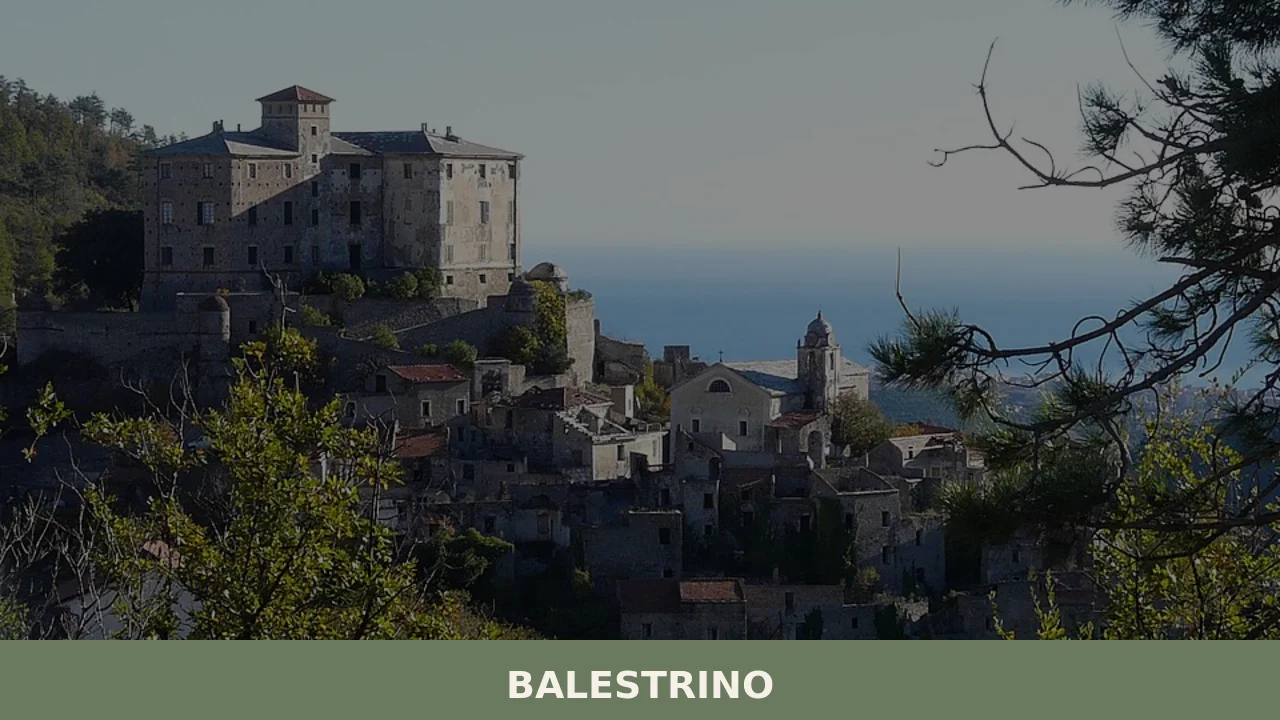
In 1963 a landslide forced the evacuation of the upper part of Balestrino, leaving the old village uninhabited and intact in its sixteenth- and seventeenth-century structure. Today the municipality has 530 residents, spread between the modern settlement in the valley below and the hillside hamlets, at 371 metres above sea level on the ridge separating […]
Discover Balestrino
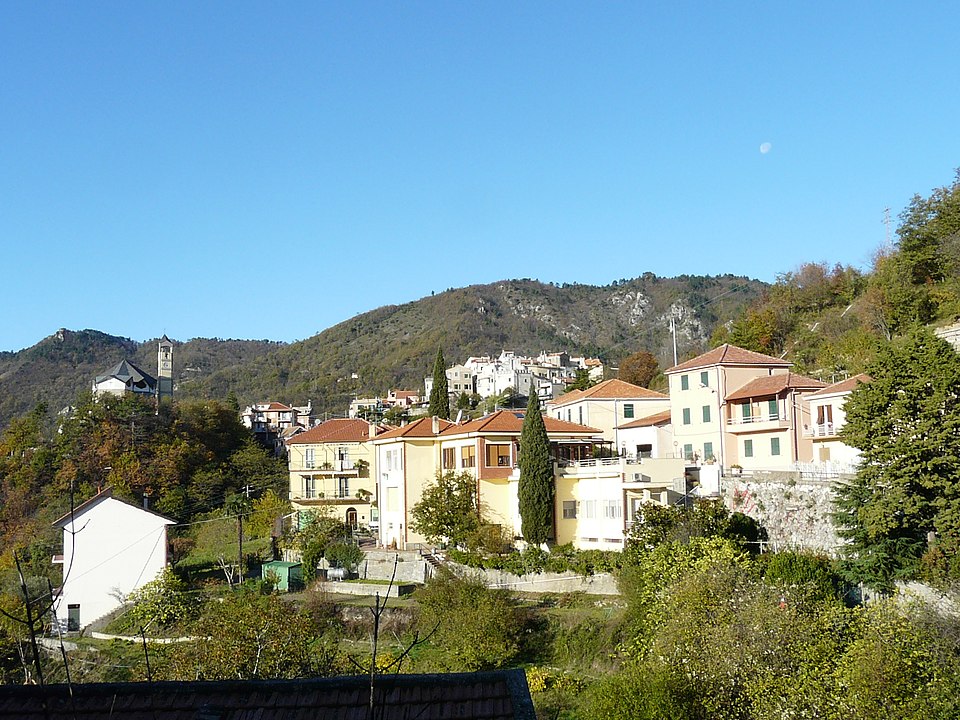
In 1963 a landslide forced the evacuation of the upper part of Balestrino, leaving the old village uninhabited and intact in its sixteenth- and seventeenth-century structure. Today the municipality has 530 residents, spread between the modern settlement in the valley below and the hillside hamlets, at 371 metres above sea level on the ridge separating the Neva valley from the coast of Loano. Anyone wondering what to see in Balestrino will find a rare case in the Italian landscape: an abandoned historic centre that preserves its original urban layout — accessible but not habitable — alongside a living community that continues to occupy the surrounding territory.
History and origins of Balestrino
The place name Balestrino appears in medieval documents from the eleventh century onwards, when the territory fell under the jurisdiction of the Marquises of Clavesana. The etymology remains debated: some theories connect it to “balestrieri” (crossbowmen) who guarded the hill pass, while others trace it to a corruption of the Latin balistrum, referring to a fortification site. In 1270 the fief passed to the Marquises Del Carretto, who held it until the sixteenth century, when the Marquises of Zuccarello took over. The construction of the Del Carretto castle, still visible at the top of the old village, dates to this period of feudal transition.
With the transfer to the Republic of Genoa in the seventeenth century, Balestrino became a minor agricultural centre, tied to olive cultivation and oil production. The parish church dedicated to Saint Andrew, patron of the village, was enlarged in the eighteenth century. The earthquake of 1887, which hit western Liguria hard, damaged several structures in the upper village, but it was the hydrogeological instability of the twentieth century that sealed its fate: the evacuation orders of the 1960s shifted the population toward the valley floor, creating the divide between old and new village that defines the identity of the place today.
Since 2005 the Municipality and the Soprintendenza have launched survey and safety-consolidation campaigns for the abandoned centre, with the aim of making some sections walkable. The work is proceeding in phases, constrained by the structural complexity of the buildings and the morphology of the slope.
What to see in Balestrino: 5 main attractions
1. The abandoned old village
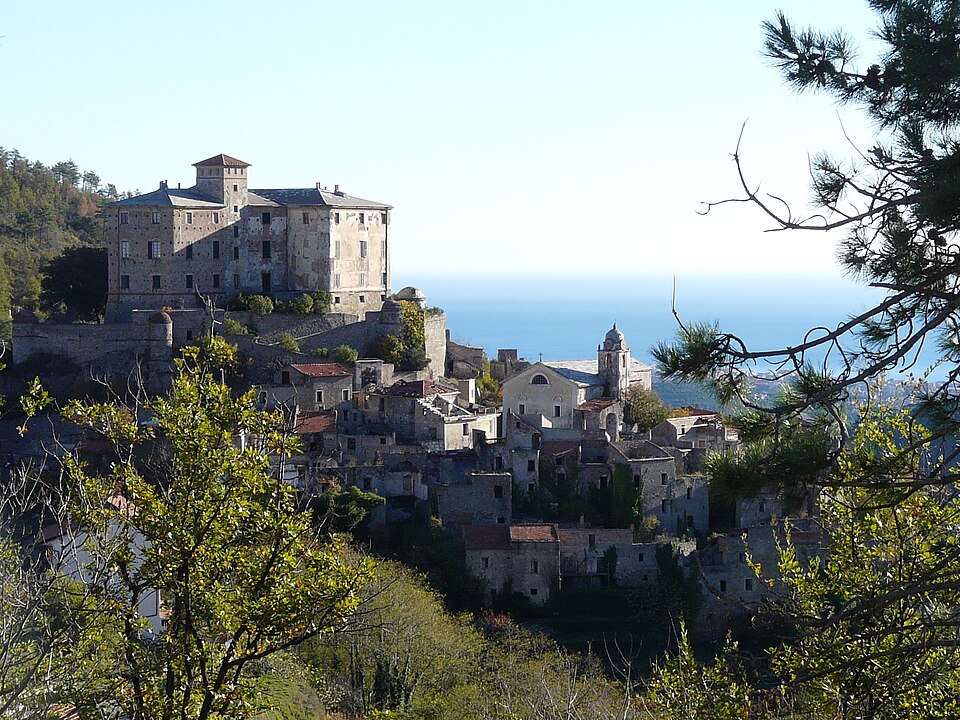
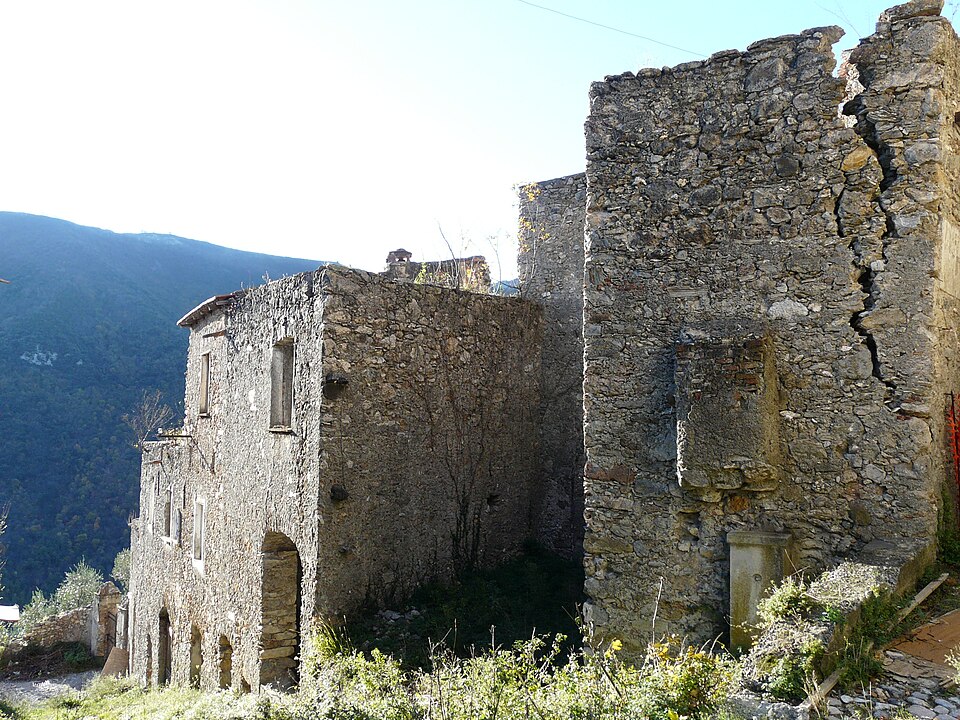
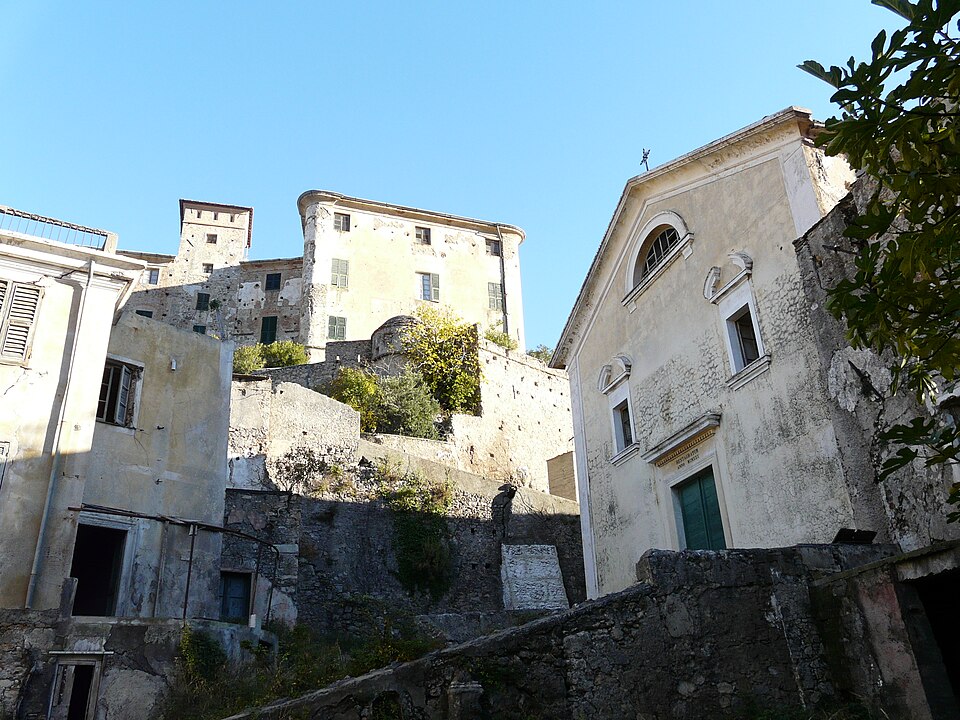
The historic centre evacuated in the 1960s presents façades in local stone, slate doorways and collapsed roofs that reveal the interiors of the houses. Access is partially regulated: some perimeter streets can be walked, while the core of the village remains off-limits for structural safety reasons. The view from outside reveals a compact building mass, layered between the fifteenth and eighteenth centuries.
2. The castle of the Marquises Del Carretto
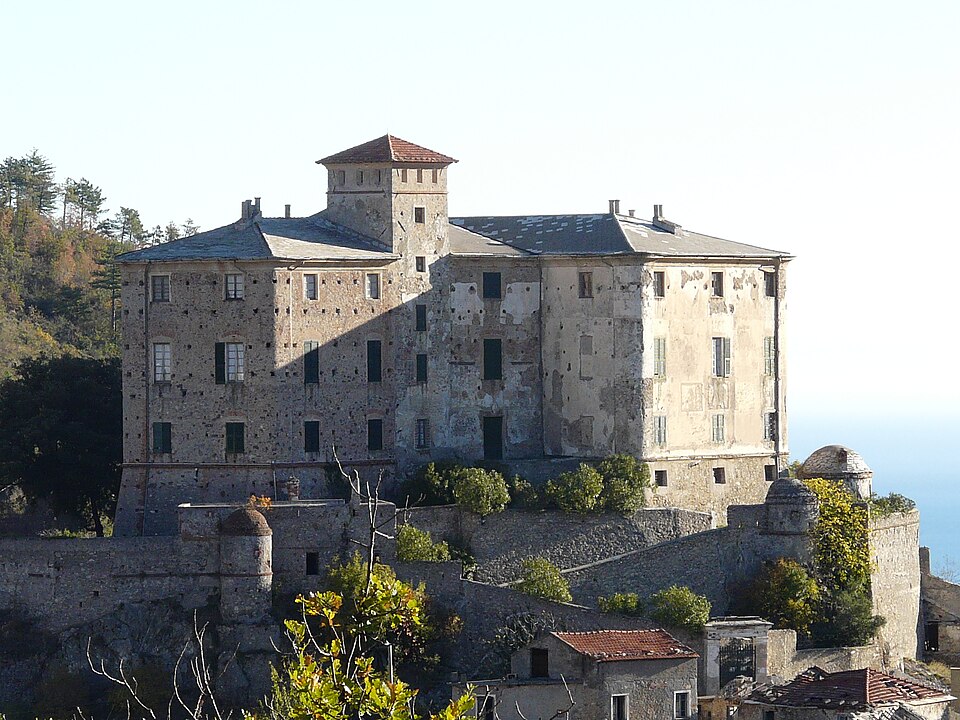
Positioned at the highest point of the old village, the castle has an irregular plan adapted to the rock and perimeter walls in limestone ashlar blocks. The main tower, still recognisable in the skyline, served as a lookout over the Neva valley. The building is currently undergoing structural consolidation and cannot be visited inside, but its bulk dominates every view of the village.
3. Church of Sant’Andrea Apostolo
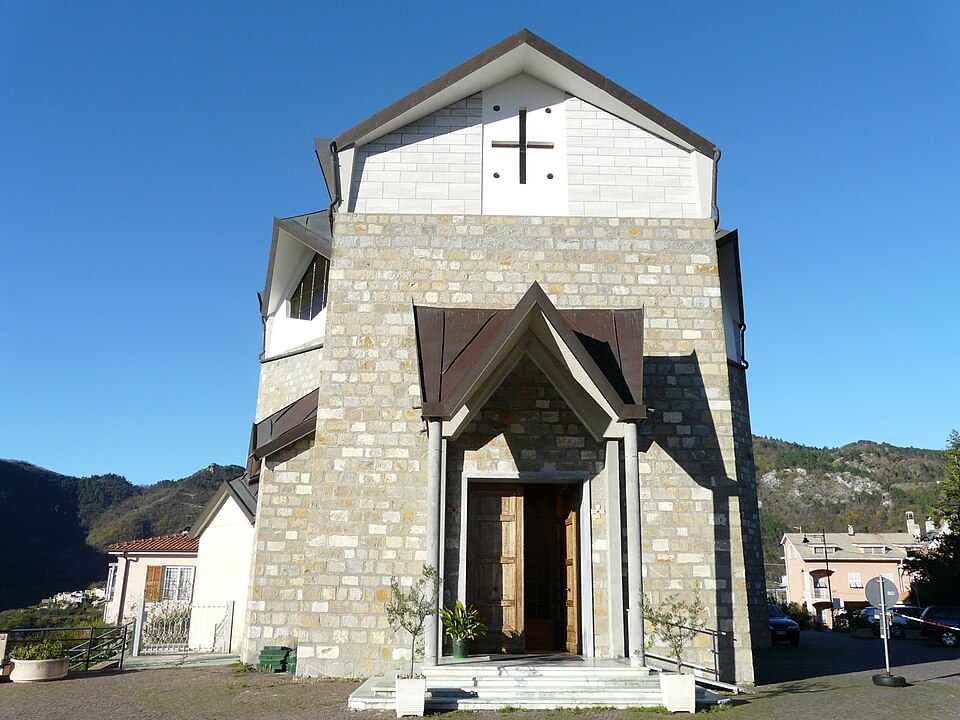
The parish church, located in the new village, retains its eighteenth-century layout with a single nave and polychrome marble side altars. The façade is plain, plastered, with a stone portal. Inside there are liturgical furnishings dating from the eighteenth and nineteenth centuries. The patronal feast is celebrated on 30 November and is the main community event in the village.
4. The hill trails towards Monte Acuto
From the hamlet of Balestrino, hiking trails climb the ridge towards Monte Acuto (867 m), passing through strips of abandoned olive groves and woods of holm oak and downy oak. The moderate elevation gain — around 500 metres from the starting point — makes the walks accessible to occasional hikers as well. Along the route you encounter dry-stone walls and the ruins of agricultural shelters.
5. The terraces and historic olive groves
The terraced strips surrounding the village document centuries of Ligurian hillside farming. Some are still cultivated with Taggiasca olives, while others show the signs of gradual abandonment, with wild vegetation reclaiming the dry-stone walls. The agrarian landscape is particularly easy to read in the winter months, when the olive canopy thins out and the structure of the terraces stands out sharply.
Local cuisine and regional products
Balestrino’s food economy revolves around extra virgin olive oil from the Taggiasca cultivar, the same variety that characterises the entire Riviera di Ponente and falls within the DOP Riviera Ligure designation. Local production is limited in volume — a few hundred quintals per year — but follows the traditional method of hand-picking and cold pressing. In the area’s olive mills, active between November and January, it is possible to buy fresh oil directly from the producer.
The table reflects the cuisine of the Savona hinterland: Ligurian-style rabbit with Taggiasca olives and pine nuts, green pie with chard and prescinseua, Recco-style focaccia in local variations, and Genoese minestrone in its thick version, with pesto added at the end of cooking. Dining options in the municipality are limited to a few trattorias and agriturismos in the hamlets; for a wider choice you head down to Loano or Borghetto Santo Spirito, both reachable in fifteen minutes by car.
When to visit Balestrino: the best time of year
Spring, between April and June, offers the most favourable conditions: mild temperatures at altitude, dry trails, olive groves in bloom. Autumn is the other recommended window, especially October and November, when the olive harvest brings the countryside to life and the low afternoon light picks out the volumes of the abandoned village with precision. Summer brings heat even on the hills, with peaks above 30 degrees, and the valley floor becomes muggy. Winter is mild compared to the Po Valley hinterland — temperatures rarely drop below zero — but the short days limit the useful time for excursions.
The feast of Sant’Andrea, on 30 November, is the occasion when the community gathers for a procession and a communal lunch. There are currently no structured events linked to the old village, although in recent years some guided tours have been organised during FAI Open Days or one-off municipal initiatives. It is advisable to check the official website of the Municipality for any special openings.
What to see in Balestrino and in nearby Ligurian villages
The Savona hinterland and the Ligurian Levante share a network of smaller centres worth exploring in combination. To the east, along the coast towards Genoa, Coreglia Ligure lies in the hinterland of Chiavari, in the Fontanabuona valley: a municipality of just a few dozen permanent residents, with a compact building layout and a panoramic position over the valley. The distance from Balestrino is significant — over 120 kilometres — but comparing the two villages reveals similar dynamics of depopulation and recovery efforts.
Closer by, still in the province of Imperia but easily reachable from the Savona coast, Diano Arentino occupies the hills above Diano Marina. The landscape is dominated by Taggiasca olive groves, with terracing similar to that of Balestrino but in a more actively cultivated state. Visitors to Balestrino can add Diano Arentino as part of a day trip along the Riviera di Ponente, covering around 40 kilometres by coast road or motorway.
Frequently asked questions about Balestrino
What is the best time to visit Balestrino?
Spring (April-June) is ideal: mild temperatures, dry trails and olive blossoms. Autumn is the second recommended window, especially October and November, when olive harvesting animates the countryside and afternoon light highlights the volumes of the abandoned village. On November 30th, the patronal feast of Sant'Andrea is celebrated, with procession and community lunch: an opportunity to experience the local community. Summer is hot even at higher elevations, with temperatures exceeding 30 degrees; winter is mild but short days limit hiking excursions.
What is there to see in Balestrino? Main monuments and attractions
The main attractions are the old abandoned village from the Sixties, with facades in local stone and slate portals partially accessible from the outer perimeter; the castle of the Marquises Del Carretto, at the top of the historic village, recognizable by its main tower but not internally visitable due to consolidation work; the parish church of Sant'Andrea Apostolo in the new nucleus, with single nave and polychrome marble altars from the eighteenth century. For any extraordinary openings of the ancient village, it is advisable to check the official municipal website or FAI initiatives.
What are the natural and scenic attractions of Balestrino?
From the town, hiking trails climb along the ridge towards Monte Acuto (867 m), with a height difference of approximately 500 meters accessible even to occasional hikers. The route crosses abandoned terraced olive groves and holm oak and downy oak forests, with dry stone walls and ruins of agricultural shelters. The agricultural landscape of terraces with Taggiasca olives is particularly legible in winter, when the canopy thins and the structure of the terracing emerges clearly. The position on the ridge between the Neva valley and the Loano coast offers views of both sides.
Where to take the most beautiful photographs in Balestrino?
The most effective observation point for photographing the abandoned village is the outer perimeter of the carriage roads that flanked its nucleus, where stone facades with collapsed roofs are presented frontally. The tower of the Del Carretto castle dominates the village profile in every frame from below. The Taggiasca olive terraces on the surrounding slopes offer ideal landscape subjects between October and January, with raking light. From the ridge towards Monte Acuto, on clear days, a simultaneous view opens up of the Loano coast and the Neva valley.
Are there churches or historic buildings to visit in Balestrino?
The parish church of Sant'Andrea Apostolo, in the modern part of the town, is open to the public and preserves the eighteenth-century layout with a single nave, side altars in polychrome marble and liturgical furnishings from the seventeenth and eighteenth centuries. The castle of the Marquises Del Carretto, at the top of the historic village, is currently undergoing structural consolidation work and is not internally visitable. The ancient village is partially accessible along some perimeter streets, but the central nucleus remains off-limits for safety reasons. It is advisable to check for any extraordinary openings on the municipal website.
What to do in Balestrino? Activities and experiences
The main activities are exploring the abandoned village on foot along permitted perimeter routes, hiking on the ridge towards Monte Acuto along moderate difficulty trails, and visiting the terraced olive groves with Taggiasca olives. Between November and January local oil mills are active and allow direct purchase of fresh extra virgin oil. On the occasion of FAI Days or municipal initiatives, guided tours of the historic village are organized: it is advisable to monitor the municipal website. The feast of Sant'Andrea on November 30th offers an opportunity to participate in community life.
Who is Balestrino suitable for? Families, couples, hikers, solo travelers?
Balestrino is particularly suitable for medium-level hikers attracted by trails towards Monte Acuto and the terraced landscape, and for those interested in abandoned villages and rural industrial archaeology. Couples seeking destinations off the beaten path find here an authentic and little-frequented atmosphere. Landscape and architecture photographers have notable subjects in the historic village and olive groves. Families with small children find limited service offerings; the town is better suited to independent travelers with cultural or naturalistic interests.
What to eat in Balestrino? Local products and specialties
The central product is Taggiasca extra virgin olive oil, included in the Riviera Ligure DOP, obtained with manual harvesting and cold pressing in mills active between November and January. The cuisine of the Savona hinterland features rabbit Ligurian style with Taggiasca olives and pine nuts, green pie with chard and prescinseua, local variations of Recco focaccia and dense Genoese minestrone with pesto at the end of cooking. Dining options in the municipality are limited to a few trattorias and farmhouses in the outlying areas; for a wider choice you go down to Loano or Borghetto Santo Spirito, reachable in about fifteen minutes.
📷 Photo Gallery — Balestrino
Nearby Villages near Balestrino
In Liguria More villages to discover
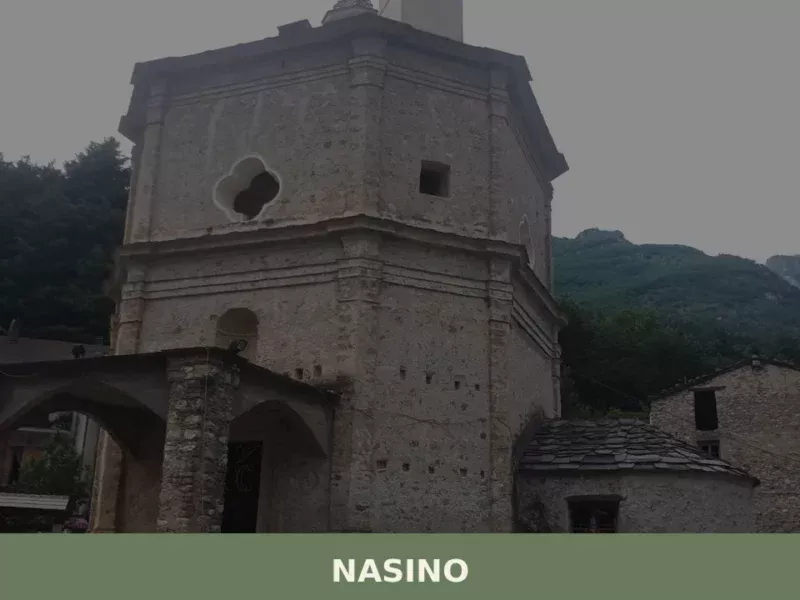
Nasino
 Mountain
What to see in Nasino, Italy: a village of 212 inhabitants southwest of Savona. Explore its Ligurian character and scenic surroundings. Discover its unique charm.
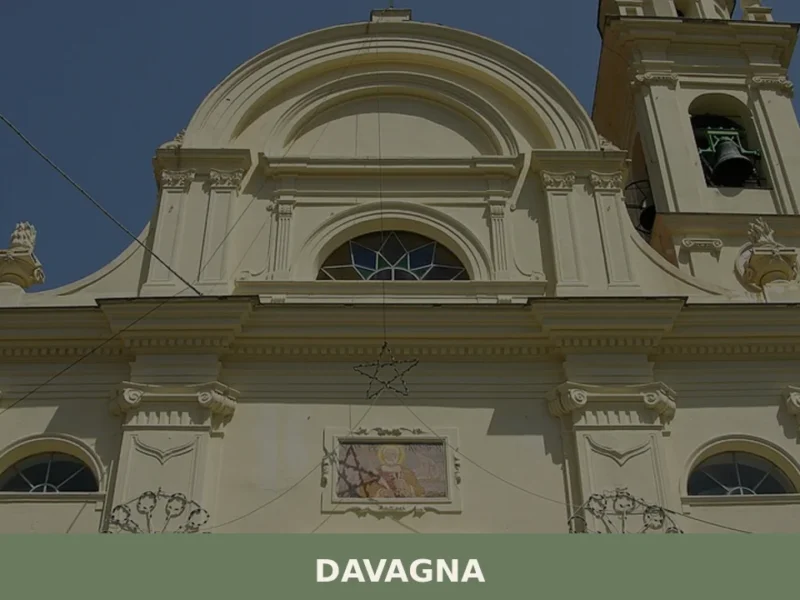
Davagna
Hills
At 552 meters above sea level, Davagna is a scattered municipality in the Genoese hinterland, comprising a main town and numerous hamlets spread across the slopes of the Bisagno Valley. Its geographical location, a short distance from the Ligurian capital, has historically influenced the economic and social dynamics of the area. For those wishing to […]
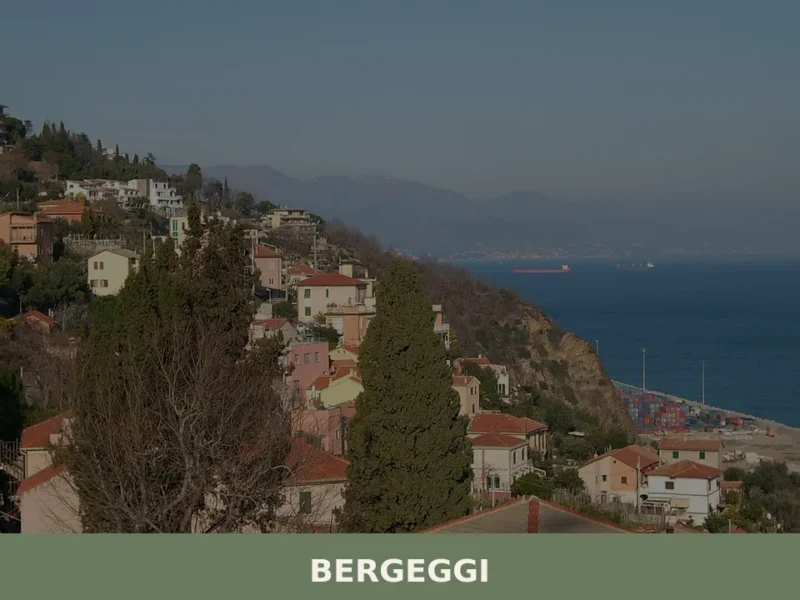
Bergeggi
 Sea
Sea
The limestone bluffs that drop into the Ligurian Sea west of Savona do not ease the traveller in gently. The coastline here is direct: rock, water, and the smell of salt on warm stone. Bergeggi sits at roughly 10 km (6.2 mi) from Savona, at a point where the Via Aurelia, the ancient Roman road […]
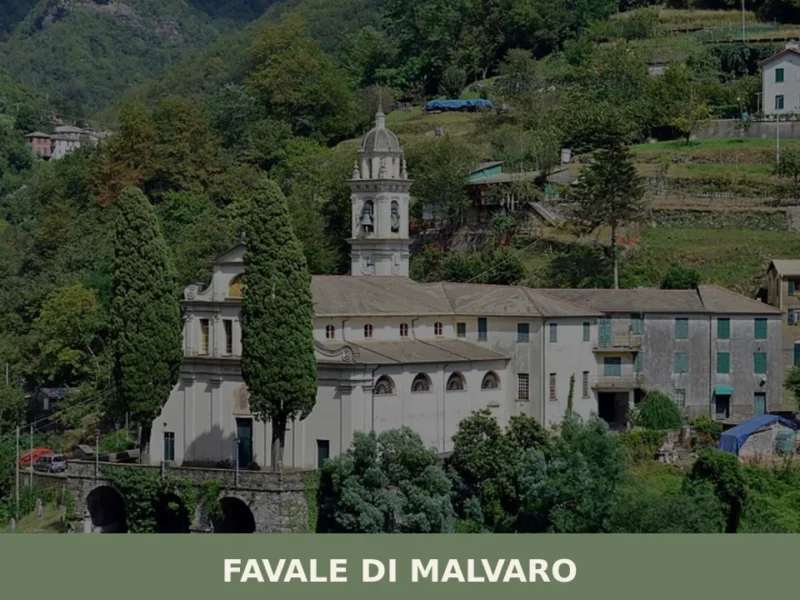
Favale di Malvaro
Hills
In 1892, Amadeo Pietro Giannini left Favale di Malvaro for America. The son of Ligurian emigrants, he went on to found the Bank of Italy in San Francisco in 1904, which later became Bank of America — for decades the largest banking institution in the world. This small village in the Fontanabuona valley, home to […]
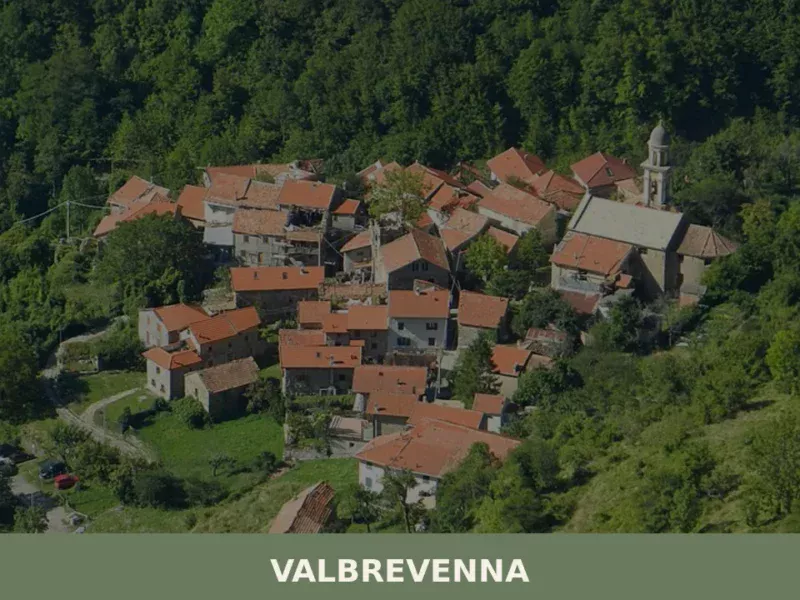
Valbrevenna
Mountain
what to see in valbrevenna, Italy: Explore the Ligurian Apennines. With 817 inhabitants, discover hiking in Antola Park and traditional hamlets. Read our guide.
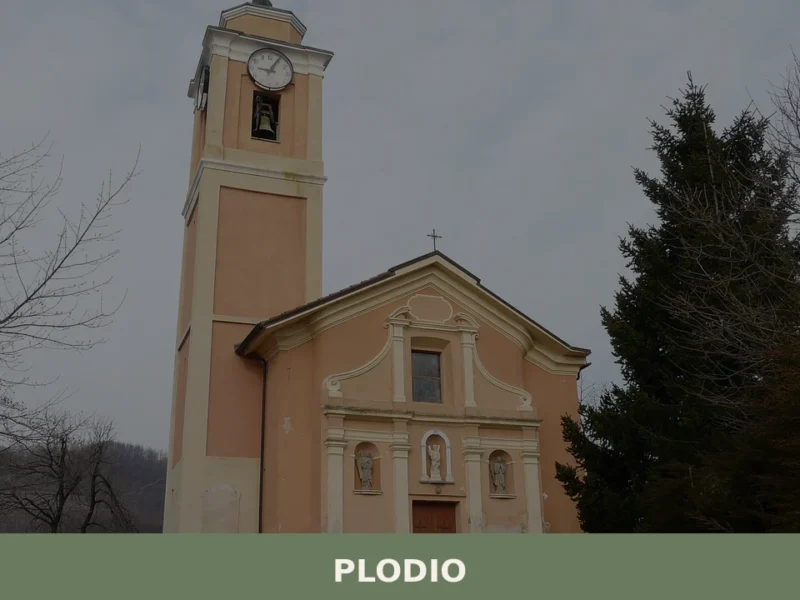
Plodio
Mountain
What to see in Plodio, Liguria, Italy: explore Val Bormida, Col di Cadibona and local traditions in a village of 640 inhabitants. Discover the full travel guide.
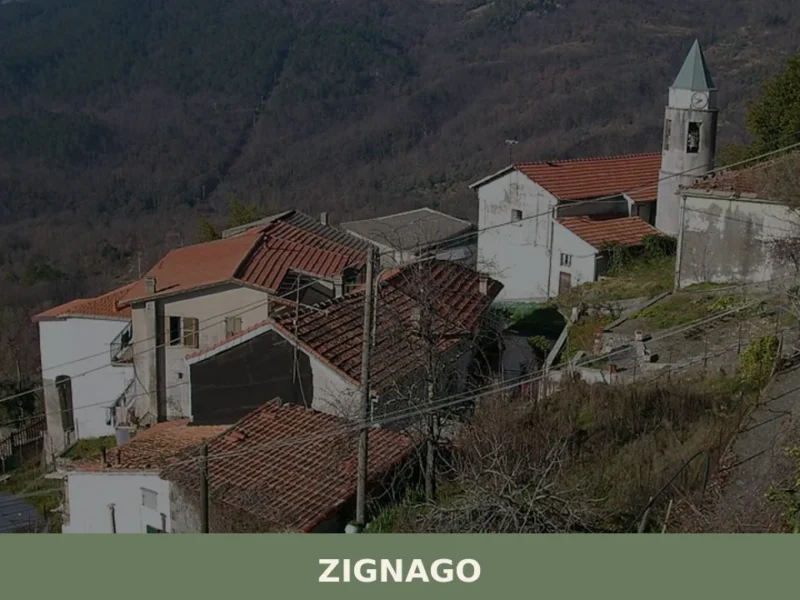
Zignago
Mountain
what to see in zignago in Italy. Explore this Ligurian comune of 542 residents, located 20 km (12 mi) from La Spezia, and discover its administrative heart and surrounding valleys.

Arenzano
Sea
What to see in Arenzano, Liguria, Italy: explore a 16th-century patrician villa, a Saracens' Tower, and a coastal sanctuary. Population 11,445. Discover it all.
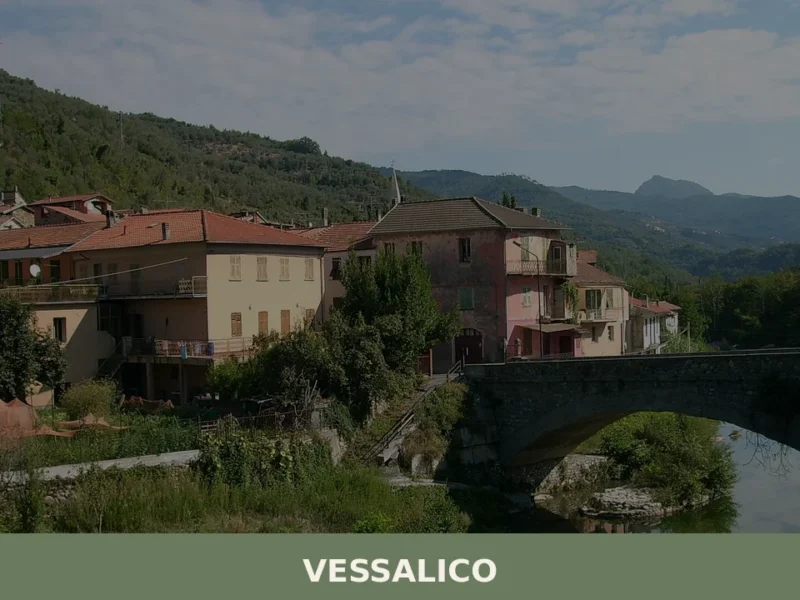
Vessalico
 Plains
what to see in vessalico, Italy: Explore this Ligurian village at 197m. Discover its history and the patron saint festival on July 22. Read more.
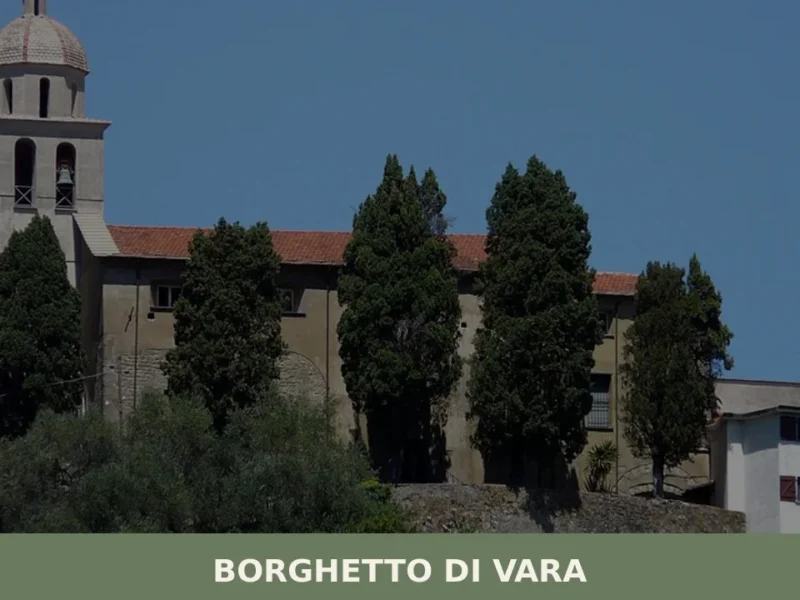
Borghetto di Vara
Plains
What to see in Borghetto di Vara, Italy: Discover a village of 870 inhabitants at 104 m altitude. Explore its plain landscape and the Parish Church of San Carlo Borromeo.




🏡 Know Balestrino better than we do?
If you’re a local or have been there, your knowledge matters: add what’s missing or fix a detail on this page.