


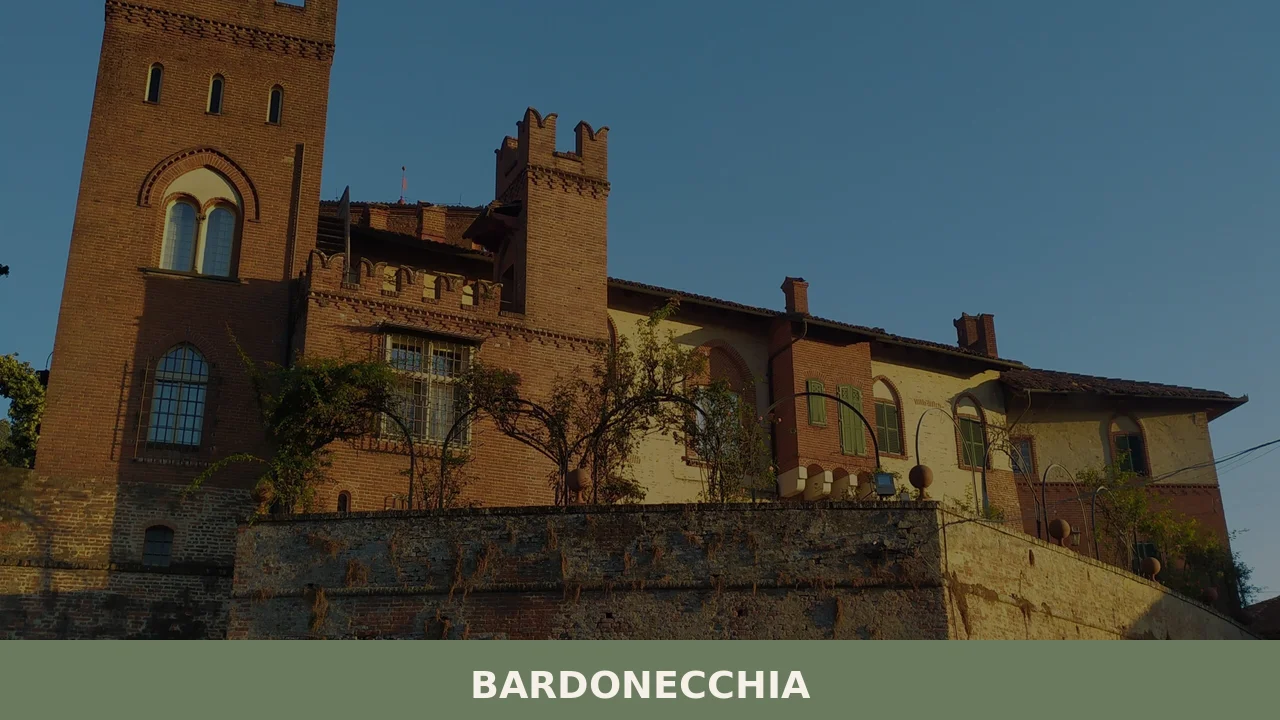
Bardonecchia
 Mountain
Bardonecchia is the westernmost municipality in Piedmont and one of the historic Alpine crossing points into France, via the Colle della Scala and the Fréjus pass. Located in the upper Val di Susa at an altitude of over 1,300 metres, the town can be reached from Turin in around an hour and a half by […]
Discover Bardonecchia
Bardonecchia is the westernmost municipality in Piedmont and one of the historic Alpine crossing points into France, via the Colle della Scala and the Fréjus pass. Located in the upper Val di Susa at an altitude of over 1,300 metres, the town can be reached from Turin in around an hour and a half by train — a connection that dates back to the opening of the Fréjus railway tunnel in 1871, one of the first major Alpine tunnels in Europe. Those wondering about what to see in Bardonecchia will find a territory where the history of Alpine transit overlaps with a high-altitude landscape of pastures, conifer forests and peaks exceeding 3,000 metres.
History and Origins of Bardonecchia
The name Bardonecchia most likely derives from the Latin personal name Bardo, or from a pre-Roman Ligurian-Celtic root, combined with the suffix -ecca typical of western Alpine place names. The earliest documented records date to the early Middle Ages: the territory formed part of the holdings of the Dauphins of Viennois, lords of the Dauphiné region, who held authority over the Val di Susa before the Treaty of Paris of 1343 formalised the transfer of the Dauphiné to the French crown. The transition to the Duchy of Savoy took place gradually over the fourteenth and fifteenth centuries, culminating in the full Savoyard integration of the Alpine territories.
Bardonecchia’s strategic role as a transalpine transit point is documented at least from the Roman period, when the road leading to the Mons Matrona (today’s Montgenèvre) passed through the area. During the Middle Ages, control of the pass was contested between local and supra-local powers. A defining moment in the town’s modern history was the construction of the Fréjus railway tunnel, inaugurated on 17 September 1871 after thirteen years of work. Stretching over 12 kilometres in length, it was the longest railway tunnel in the world for several decades and transformed Bardonecchia from an Alpine transit settlement into an infrastructure hub of European significance.
During the twentieth century, Bardonecchia established itself as a ski resort. The Jafferau lift system, one of the first in the area, helped redirect the local economy towards mountain tourism, permanently altering both the built environment and the demographic makeup of the town. During the Second World War, the town’s border position made it the scene of military operations and clandestine crossings into France — events documented in local archives and in testimonies collected from the partisan front in the Val di Susa. Today, the official website of the Municipality of Bardonecchia provides up-to-date information on the administrative structure and local services.
What to See in Bardonecchia: 5 Key Attractions
1. Forte Bramafam
Built between 1874 and 1880 to a design by Savoyard military engineers, Forte Bramafam stands on a promontory to the north of the town at around 1,450 metres above sea level. Designed to control the Fréjus pass following Italian unification, it is now open to visitors and houses the National Mountain Museum — a dedicated branch focused on Alpine military history and nineteenth-century defensive systems.
2. Parish Church of Sant’Ippolito
Dedicated to Saint Hippolytus of Rome, the town’s patron saint whose feast day falls on 13 August, the parish church in the historic centre retains structural elements datable to the seventeenth and eighteenth centuries. The single-nave interior includes a seventeenth-century wooden altar and votive frescoes associated with Alpine devotion, offering evidence of the continuity of local religious practice throughout the centuries of Savoyard rule.
3. Les Arnauds Village
Les Arnauds is a hamlet of Bardonecchia that has preserved its original urban layout, with stone and timber houses typical of the rural Alpine architecture of the Val di Susa. The barns with larch-wood balconies and the stables built against the dwellings reflect a construction approach shaped by the practical demands of traditional mountain farming and pastoral life.
4. Campo Smith and Jafferau Ski Area
Bardonecchia’s ski area is divided into two main sectors: Campo Smith, on the south-facing slope, and Jafferau, accessible by gondola lift rising to around 2,500 metres. The Jafferau sector is known for more reliable snow cover and for its FIS-homologated runs, including a downhill course that has hosted European Cup competitions.
5. Bardonecchia Civic Museum
The Civic Museum holds ethnographic and documentary materials relating to the history of the local community: agricultural and pastoral tools, traditional costumes, cartographic documents concerning the border with France, and historical photographs covering the period from the late nineteenth century to the post-war years. It provides the most coherent starting point for understanding the historical layering of the territory. For further historical and geographical information about the municipality, the Wikipedia entry offers a well-documented overview.
Local Cuisine and Regional Products
The cuisine of Bardonecchia belongs to the gastronomic tradition of the Val di Susa and the Alpine areas of Piedmont, with influences drawn from the nearby Franco-Provençal region. Among the staple dishes of the local kitchen are polenta concia — made with maize flour and enriched with butter, milk and locally produced stretched-curd cheeses — and barley soup with lard, a winter dish of peasant origin that relies on storable ingredients typical of mountain communities. Piedmontese fonduta, prepared with Fontina Valle d’Aosta PDO or local variants of soft-paste cheeses, features on the menus of many restaurants in the area. Among cured meats, Colonnata lard IGP is widely served in local restaurants as a starter, despite originating from a geographically distant area.
The Val di Susa is a production area for Toma Piemontese PDO, a semi-hard cheese made from whole or partially skimmed cow’s milk, aged anywhere from fifteen days to several months. Another local dairy product is Murianengo, a Piedmontese blue-veined cow’s milk cheese, produced in cylindrical form and characterised by blue-green internal mould. On the spirits side, the Piedmontese Alpine tradition includes Grappa di Barolo and various herbal preparations, among them artisan liqueurs made with artemisia and gentian. The network of mountain huts and restaurants across the area offers seasonal menus that vary considerably between summer, when boards of local products and cold dishes predominate, and winter, when the focus shifts to more elaborate hot preparations.
When to Visit Bardonecchia: the Best Time to Go
Bardonecchia operates as a two-season destination, with each season following a very different logic. Winter, from December to March, sees the highest visitor numbers: the ski area is in full operation, accommodation is running at capacity and prices peak over Christmas, New Year and the February school holiday week. During this period, booking well in advance is essential, particularly for weekend stays. The summer season, from June to September, offers a more relaxed way to experience the area: the trails in the Gran Bosco di Salbertrand nature park and those leading to the Colle della Scala are open and walkable, temperatures remain moderate even on the warmest days, and visitor numbers are lower than in winter. On 13 August, the feast day of Sant’Ippolito, the town centre comes alive with religious and folk celebrations drawing both residents and visitors.
May and November are the quietest months: the ski lifts are closed and summer tourism has not yet begun. Those who prefer to avoid crowds may find lower prices and more direct access to the territory in these months, though some facilities and services may operate on reduced hours or close temporarily. For up-to-date information on local events and the area’s calendar, the Touring Club Italiano publishes regularly updated territorial guides covering the Val di Susa and its destinations.
How to Get to Bardonecchia
Bardonecchia has direct connections to Turin both by rail and by road. The train is the most practical option: Bardonecchia station is the terminus of the Turin–Modane railway line, with departures from Turin Porta Nuova and a journey time of around 1 hour and 40 minutes. Regional trains on the line are operated by Trenitalia and run throughout the year, with increased frequency on winter weekends.
- By car from Turin: take the A32 Turin–Bardonecchia motorway (Fréjus tunnel), exit at Bardonecchia; approximately 80 km, around 1 hour and 15 minutes under normal conditions.
- By car from France: via the Fréjus motorway tunnel from Modane (toll tunnel) or via the Montgenèvre Pass (seasonal, open mainly from May to October).
- Nearest airport: Turin Caselle Airport (TRN), approximately 100 km away; from there you can continue by car on the A32 or take a train with a change at Turin Porta Nuova.
- From Milan: take the A4 motorway to Turin, then the A32 towards Bardonecchia; total distance approximately 170 km, around 2 hours and 30 minutes.
Where to Stay in Bardonecchia
Accommodation in Bardonecchia is shaped primarily by the needs of winter ski tourism, which is reflected in the dominant types on offer: small and medium-sized hotels, residence-style apartments and holiday lets. The historic centre and the flat area near the railway station concentrate most of the traditional hotels, many of which operate year-round. The higher-lying hamlets, such as Melezet and Les Arnauds, are home to smaller establishments — bed and breakfasts and rooms for rent — that provide a quieter stay with more direct contact with the surrounding Alpine landscape. During the summer season, prices drop considerably compared to winter and availability is generally good without advance booking.
In peak winter season — particularly over Christmas, New Year and the February weeks that coincide with school holidays — it is necessary to book at least two to three months ahead to secure accommodation in the centre and avoid having to stay in lower Val di Susa towns with a daily commute. Residence-style apartments on a weekly basis are the most popular arrangement for families on extended stays, while weekend visitors tend to prefer hotels with half-board included. There are no agriturismi in the strict sense within the municipality, given the nature of the terrain and the dominance of tourism over agriculture in the local economy.
Other Villages to Explore in Piedmont
Piedmont offers a territorial variety that extends well beyond the Alpine valleys. Those who have visited Bardonecchia and wish to explore a different side of Piedmont — the rolling, wine-growing hills of the Turin area — might consider Moriondo Torinese, a small municipality in the hills east of Turin, or Bairo, in the Canavese, a fine example of a rural foothill settlement with architectural and landscape characteristics very different from the Alpine model. Both villages illustrate how dramatically the Piedmontese landscape can change by moving just a few kilometres in altitude and latitude.
For those interested in religious history and the Waldensian minority communities that have left their mark on the Val Pellice and the Alpine valleys of Piedmont, Angrogna stands as a leading geographical and cultural reference point, with a heritage of Reformed history that has no parallel elsewhere in Italy. Rounding out the picture of the plain and the Canavese, Banchette, a municipality in the province of Ivrea, shows how the Piedmontese territory organised itself around industrial and manufacturing centres as far back as the nineteenth century, with an urban fabric that reflects that productive history.
Frequently asked questions about Bardonecchia
What is the best time to visit Bardonecchia?
The best time to visit Bardonecchia depends on your interests. For skiing and winter sports enthusiasts, December to March is ideal, when the ski areas are in full operation. Summer, from June to September, is perfect for hiking and enjoying the cooler mountain temperatures. A notable event is the patronal feast on 13 August, dedicated to Saint Hippolytus, which brings festive celebrations to the town.
What to see in Bardonecchia? Main monuments and landmarks
Don't miss the Forte Bramafam, a military fort turned museum focusing on Alpine military history. The Parish Church of Sant'Ippolito, with elements from the 17th century, is also noteworthy. Both sites provide insights into Bardonecchia's historical significance and cultural heritage.
Who is Bardonecchia suitable for?
Bardonecchia is a versatile destination appealing to diverse groups. It's perfect for families seeking winter sports experiences, couples looking for a romantic mountain getaway, and solo travelers interested in hiking and exploring historical sites. The area offers both recreational activities and cultural insights, catering to a wide array of preferences.
What can you do in Bardonecchia? Activities and experiences
In Bardonecchia, skiing and snowboarding in the Campo Smith and Jafferau areas are winter highlights. In summer, trekking in the Gran Bosco di Salbertrand or the trails leading to Colle della Scala offer scenic outdoor experiences. The town also hosts cultural events, especially around the feast day of Sant'Ippolito on 13 August.
What to eat in Bardonecchia? Local products and specialties
Savor local dishes like polenta concia, enriched with butter and local cheeses, and barley soup with lard, reflecting the area's peasant origins. Don't miss the Piedmontese fonduta and Toma Piemontese PDO cheese. Local dining also includes regional cured meats and artisan Alpine spirits such as Grappa di Barolo.
Getting there
Piazza Alcide De Gasperi, 10052 Bardonecchia
Nearby Villages near Bardonecchia

In Piedmont More villages to discover

Acceglio
Mountain
Discover what to see in Acceglio, a 170-resident mountain village at the head of Valle Maira in Cuneo, Piemonte — trails, churches, alpine pastures and local food.

San Bernardino Verbano
Mountain
San Bernardino Verbano unites 3 historic hamlets at 304 m above Lake Maggiore, offering Val Grande trails, partisan history, and genuine Piedmontese cuisine.

Rocca Canavese
 Hills
Hills
Population 1,718. A fortified valley settlement with castle ruins, 11th-century religious architecture and a landscape of green hills rimmed by the Malone torrent.
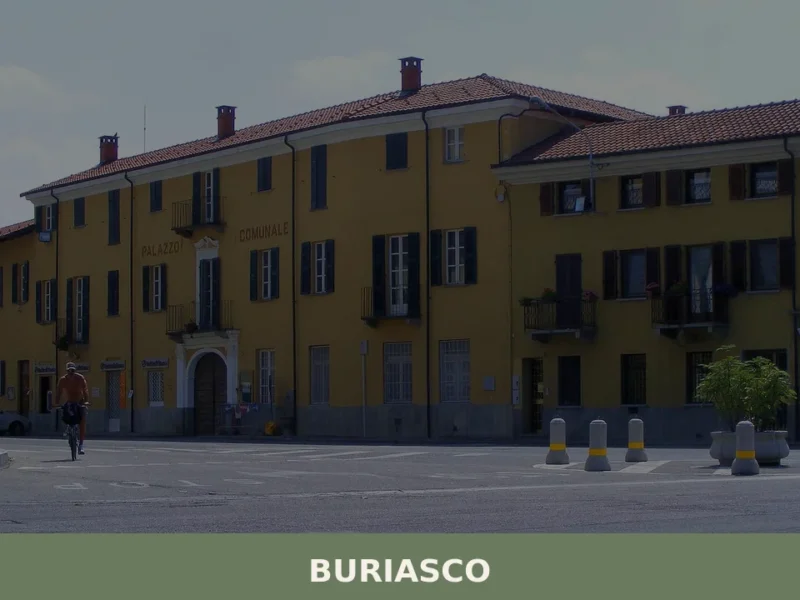
Buriasco
Hills
What to see in Buriasco, Italy: 5 top attractions, local food, festivals and how to get to this 301 m village near Turin. Discover Buriasco, Piemonte.

Pralormo
Hills
Population 1,852. A hilltop comune marked by its 13th-century castle, a 1930s parish church sheltering Renaissance art, and a medieval tower that once guarded Asti's trade routes.

Volpiano
 Plains
3 Baroque churches and a Roman centuriation grid still visible in the fields make Volpiano a rewarding stop in the Canavese between Turin and the Alps.

Salerano Canavese
Plains
Population 462. A rural comune in Turin province with two documented religious landmarks and a civic identity affirmed through its heraldic symbols.

Porte
Hills
Discover what to see in Porte, a 1,108-inhabitant comune in the Metropolitan City of Turin with Occitan heritage, foothill walks, and Piedmontese food culture.

Pont-Canavese
Hills
A village of 3,020 people where two rivers meet and medieval towers dominate the skyline. Ancient churches, ethnographic collections and industrial heritage reveal centuries of mountain life.
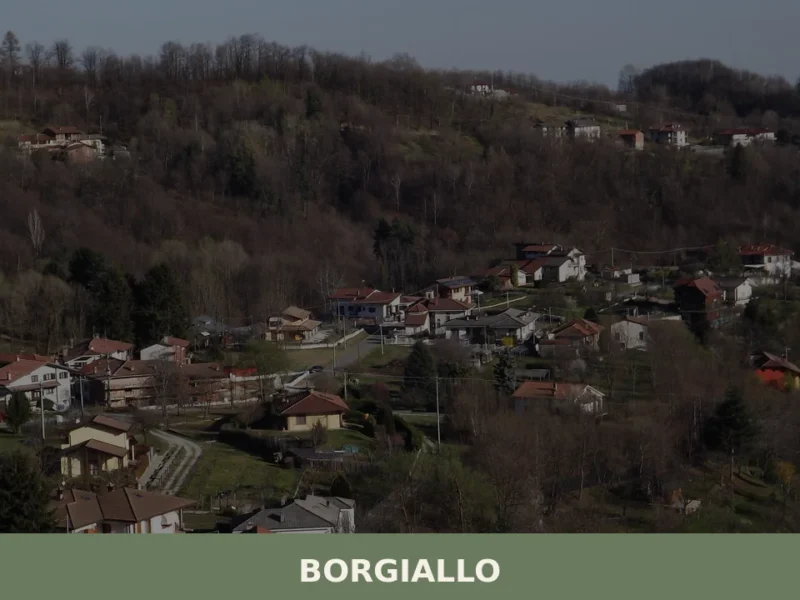
Borgiallo
Hills
Borgiallo has 579 inhabitants and sits at 540 metres above sea level on the hills of the Valle Sacra, in the province of Turin. Travellers who take the road climbing from Castellamonte towards the Canavese uplands find a compact settlement of stone and brick houses that follow the line of the ridge. Understanding what to […]
🏡 Know Bardonecchia better than we do?
If you’re a local or have been there, your knowledge matters: add what’s missing or fix a detail on this page.