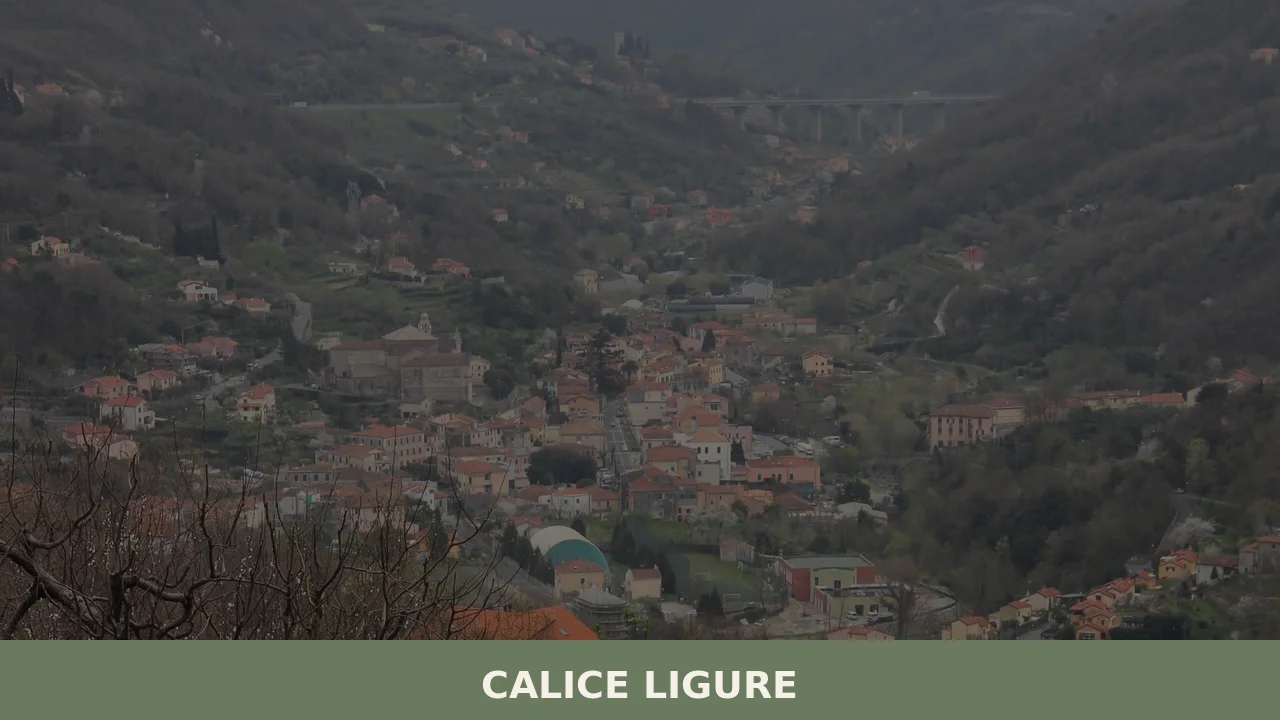
Calice Ligure
What to see in Calice Ligure, Italy: explore top attractions, local food and how to reach this Savona village of 1,727 people. Discover Liguria’s inland.
Discover Calice Ligure
The valley floor between Calice Ligure and its six bordering municipalities — Bormida, Finale Ligure, Mallare, Orco Feglino, Rialto, and Tovo San Giacomo — registers a particular stillness in the late morning, when the hills of inland Liguria hold the light close before releasing it down toward the coast. Stone lanes connect the compact residential core to the surrounding agricultural land, and the Province of Savona unfolds in every direction from the village’s position in the Ligurian hinterland, 60 kilometres (37 mi) southwest of Genoa.
For visitors planning a trip, what to see in Calice Ligure extends from its documented medieval fabric to the natural corridors running between adjacent communes, with the municipality itself covering a corner of Liguria where the Apennine ridgeline begins its descent toward the Riviera di Ponente.
With a resident population of 1,727 inhabitants, Calice Ligure, Liguria, Italy operates on a scale where distances between the historic centre and outlying hamlets are short. Visitors to Calice Ligure find a compact inland commune that rewards systematic exploration on foot, with proximity to both the Ligurian coast and the forested Apennine slopes making it viable as a base or a day stop.
History of Calice Ligure
The name Calice Ligure carries a dual identity in the linguistic record: in the Ligurian regional language, the settlement is recorded as Carxi or Corxi, two phonetic variants that reflect the pre-Romance substrate still present in Ligurian place-name formations. The distinction between these two forms points toward a long oral transmission across communities that were largely isolated from the administrative Latin of the coast. The suffix conventions in Ligurian toponymy tend to preserve consonant clusters that later Italian standardisation simplified, and both Carxi and Corxi follow this pattern, suggesting a deep pre-medieval stratum beneath the current name.
As a comune — the basic administrative unit of Italian territorial governance — Calice Ligure has functioned within the Province of Savona through successive reorganisations of Ligurian territory.
The province itself was constituted as a distinct administrative zone during the Napoleonic reorganisation of northern Italy in the early nineteenth century, when the Ligurian Republic, which had been a client state of France since 1797, was dissolved and its territory divided into French-style departments before passing under the Kingdom of Sardinia. Within that sequence of administrations, municipalities like Calice Ligure were formally registered, their boundaries negotiated against those of neighbouring settlements including Finale Ligure to the southeast and Rialto to the west. The village of Calice al Cornoviglio, a distinct comune in the Province of La Spezia, shares the same root element in its name, indicating the wider geographic spread of the Ligurian toponym across the region’s inland territory.
Throughout the nineteenth and twentieth centuries, Calice Ligure followed the demographic trajectory common to many Ligurian inland municipalities: a gradual reduction in agricultural population as the coastal economy, particularly tourism and port-related industry centred on Savona and Genoa, drew working-age residents away from the hills. The current population of 1,727 reflects this long-term contraction from higher historical counts, though the commune has maintained its administrative continuity and its spatial relationship with its six bordering municipalities without significant boundary changes in the modern period.
What to see in Calice Ligure, Liguria: top attractions
The Historic Village Centre
The built core of Calice Ligure presents the compact geometry typical of inland Ligurian settlement: narrow lanes running between two- and three-storey residential buildings whose walls show exposed stone courses in local grey limestone.
The street widths in the oldest section rarely exceed 2 metres (6.5 ft), a measurement dictated by the requirements of pack-animal passage rather than wheeled traffic. Walking through the centre, visitors can read the successive phases of construction — older ground floors with irregular stone bonding giving way to later brick additions on upper storeys. The best time to visit the historic centre is in the morning, before midday heat concentrates in the enclosed lanes during summer months.
The Commune Borders and Natural Boundary Routes
Calice Ligure shares land boundaries with six distinct municipalities, and each border zone corresponds to a different landscape type that can be reached on foot or by vehicle within a short distance of the village centre. The border with Finale Ligure to the southeast connects the inland commune to one of the Riviera di Ponente’s most documented coastal towns, approximately 10 km (6.2 mi) by road. The border with Mallare to the north leads into the higher Apennine slopes, where the elevation gain from the village is measurable and the vegetation transitions from Mediterranean scrub to mixed deciduous woodland. For visitors interested in what to see in Calice Ligure beyond the built centre, these natural corridors represent the primary outdoor offering.
The Surrounding Agricultural Landscape
The agricultural territory of Calice Ligure includes the type of terraced hillside cultivation that defines the inland Ligurian economy across multiple centuries.
Stone retaining walls — locally called fasce, the horizontal terraces that run along contour lines to prevent soil erosion — are visible on the slopes surrounding the village, some of them still maintained for olive cultivation. Olive trees in this part of the Province of Savona produce fruit that feeds into the Ligurian olive oil tradition, one of the most documented in northern Italian gastronomy. Visitors approaching the village from the provincial road in late October or November will see the harvest activity on these terraces, as nets are spread beneath the trees to catch falling fruit during manual picking.
Views Toward the Ligurian Apennine Ridgeline
From the elevated points within and around Calice Ligure, the view extends across the Apennine ridge that separates the Ligurian coastal strip from the Po Valley to the north. The ridge at this latitude reaches elevations between 800 m (2,625 ft) and 1,000 m (3,281 ft), and its profile is visible from the village on clear days, particularly between October and April when atmospheric clarity is highest.
The position of Calice Ligure at approximately 60 km (37 mi) southwest of Genoa places it in a section of the Ligurian Apennine where the mountain mass is relatively close to the sea, creating a compressed landscape where altitude changes rapidly over short horizontal distances. Standing at the upper part of the village, a visitor can orient themselves between the coastal direction — southeast toward Finale Ligure — and the mountain interior to the north and northwest.
Proximity to Finale Ligure and the Coastal Connection
Calice Ligure’s position relative to Finale Ligure, roughly 10 km (6.2 mi) to the southeast, gives the inland commune a practical connection to a coastal centre with a documented medieval borgo — the enclosed historic quarter of Finalborgo — that has been the subject of architectural study and conservation. Finalborgo was designated as one of Italy’s borghi più belli (most beautiful villages) by the national association of the same name, and its fortifications include the Castelfranco tower complex, whose construction dates are documented to the medieval period.
For visitors staying in the Calice Ligure area, the drive to the coast takes under 20 minutes by car and opens access to the Ligurian shoreline along the Riviera di Ponente.
Local food and typical products of Calice Ligure
The food culture of Calice Ligure is rooted in the broader Ligurian inland kitchen, which developed over centuries as a response to the agricultural constraints of terraced hillside farming rather than coastal fishing. Inland Ligurian cooking relies on what the fasce produce: olives, vegetables cultivated in small plots, dried legumes, and foraged herbs including rosemary, marjoram, and wild thyme. The absence of a river of significant size near Calice Ligure historically limited freshwater fish in local cooking, placing greater emphasis on preserved ingredients and vegetable preparations that could sustain households through winter months.
The dishes that visitors encounter in the trattorias and family-run kitchens of the Savona hinterland reflect this agricultural base directly. Trofie al pesto — the short, hand-rolled pasta twisted into a tight spiral and dressed with a sauce of basil, garlic, Ligurian extra-virgin olive oil, pine nuts, and aged Pecorino or Parmigiano — is the reference preparation across the region, including inland areas where the basil grows at slightly higher elevation and develops a different aromatic intensity than the coastal variety.
Coniglio alla ligure, rabbit braised with olives, pine nuts, white wine, and rosemary, is the inland meat dish most consistently documented across the Savona province, and it reflects the tradition of small-animal husbandry that characterised hill villages throughout Liguria. Farinata, a thin pancake of chickpea flour, water, olive oil, and salt baked in a wide copper or iron pan at high heat, is available in the larger nearby centres and is eaten as a street food or appetiser.
Extra-virgin olive oil from the Ligurian Riviera di Ponente, produced from the Taggiasca olive cultivar, is the dominant fat in local cooking and is available for purchase directly from producers in the Savona hinterland. The Taggiasca olive produces a mild, low-bitterness oil with a pale gold colour, and the cultivar is the same that yields the small cured olives served as table olives throughout western Liguria.
While no specific certified product (DOP, IGP) has been documented by the available sources as exclusive to Calice Ligure, the commune falls within the production zone of Riviera Ligure DOP olive oil, specifically the Riviera del Ponente Savonese sub-denomination, which covers the territory of the Savona province and specifies minimum Taggiasca content of 50 percent in the blended oil.
Local markets in the Province of Savona, including those in nearby Finale Ligure, operate on a weekly schedule and carry seasonal produce from the surrounding hill communes during spring and summer. Visitors looking to purchase olive oil directly from producers in the Calice Ligure area will find that the harvest period runs from late October through December, and this window coincides with the availability of freshly pressed olio novo — new oil, characterised by a greener colour and more pronounced herbaceous notes than oil that has been stored for several months.
Festivals, events and traditions of Calice Ligure
The available documented sources do not specify the name or date of the patron saint festival of Calice Ligure with the precision required to report the details with certainty.
What the municipal and regional record confirms is that Ligurian inland communes in the Province of Savona observe the festa patronale — the patron saint’s day — as the central annual community event, typically organised around a religious procession through the historic centre, followed by an outdoor meal and, in many cases, a fireworks display in the evening. The specific calendar date for Calice Ligure’s patron saint observance has not been verified in the sources available for this guide, and reporting an approximate date would risk providing inaccurate information to visitors planning their trip around the event.
The broader festival calendar of the Province of Savona includes several documented events accessible from Calice Ligure during the warmer months. Finale Ligure, 10 km (6.2 mi) to the southeast, hosts an annual medieval festival in Finalborgo, with documented historical re-enactments and market activities concentrated in the late summer period. The agricultural cycle in the Calice Ligure area follows the standard Ligurian inland pattern: olive harvest in late autumn represents the most visually active period of the year, and the communal dimension of that work — with multiple households working adjacent terraces simultaneously — functions as an informal collective event even when it is not framed as a festival.
When to visit Calice Ligure, Italy and how to get there
The best time to visit Calice Ligure depends on what a visitor expects from the trip.
Late spring — from mid-April through June — offers mild temperatures, reduced tourist pressure compared to the coastal resorts, and full vegetation on the Apennine slopes. Early autumn, particularly September and October, combines stable weather with the beginning of the agricultural harvest season and lower accommodation prices in the surrounding area than during August. July and August bring the highest temperatures across inland Liguria, with daytime highs frequently reaching 32–34°C (90–93°F) in sheltered valley positions; the village’s elevation provides some relief, but the heat is present. Winter visits are viable for those interested in the landscape under different conditions, though some local businesses reduce their hours between November and March.
Calice Ligure sits approximately 60 km (37 mi) southwest of Genoa and 20 km (12 mi) southwest of Savona, two reference points that define the practical options for reaching the village. If you arrive by car from Genoa, the A10 motorway running west from the city connects to the Finale Ligure exit, from which provincial roads lead north into the hinterland toward Calice Ligure — a total driving time of approximately 50 to 60 minutes from central Genoa under normal traffic conditions. From Savona, the journey is shorter, covering roughly 25 km (15.5 mi) by road in approximately 30 minutes.
The nearest train station with regular service is Finale Ligure Marina, served by Trenitalia on the coastal line between Genoa and Ventimiglia; from the station, the village is accessible by local road approximately 10 km (6.2 mi) inland, requiring a taxi or car hire as no direct public bus connection is confirmed in the available sources. The nearest international airport is Genova Cristoforo Colombo Airport, located approximately 75 km (46.6 mi) northeast of Calice Ligure, with a driving time of roughly 60 to 70 minutes. For international visitors arriving at this airport, renting a car at the terminal is the most direct option for reaching the village. Carrying euro cash is advisable, as smaller local shops and rural producers in inland Ligurian communes frequently do not accept card payments, and English-language service may be limited in village-level establishments.
Visitors doing a day trip from Genoa will find the distance manageable: departing in the morning allows time to visit the historic centre, drive to the Finale Ligure coastline, and return to Genoa in the evening without requiring an overnight stay. Those coming from further afield — Milan is approximately 170 km (105.6 mi) by motorway, a journey of around two hours — may prefer to combine Calice Ligure with a night on the Riviera di Ponente. The village of Davagna, located in the Genoa metropolitan hinterland, represents a comparable inland Ligurian destination for visitors wanting to extend their exploration of the Ligurian interior before or after visiting the Savona province.
Visitors to Calice Ligure can extend their trip toward other Ligurian interior settlements documented in regional travel sources.
The village of Lumarzo, situated in the Ligurian hinterland east of Genoa, shares the inland Apennine character of Calice Ligure and offers a further point of reference for understanding how Ligurian hill communes developed in geographic isolation from the coast. For those moving northeast through the region, Isola del Cantone, in the Scrivia Valley, provides a different landscape register — the river corridor rather than the hillside terrace system — that complements the Savona province itinerary.
In Liguria More villages to discover
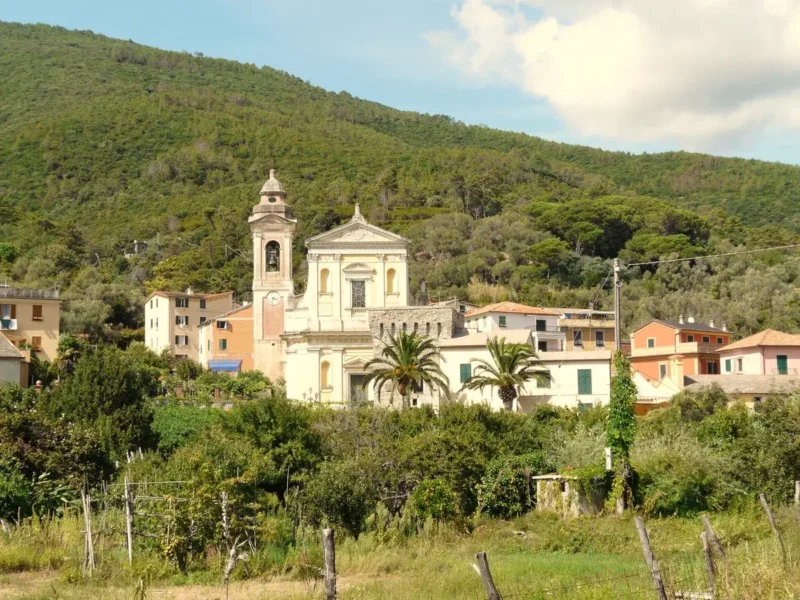
Deiva Marina
What to see in Deiva Marina, Italy: 5 top attractions, hiking trails, Cinque Terre day trips, and travel tips for this Ligurian village of 1,409 inhabitants. Discover now.
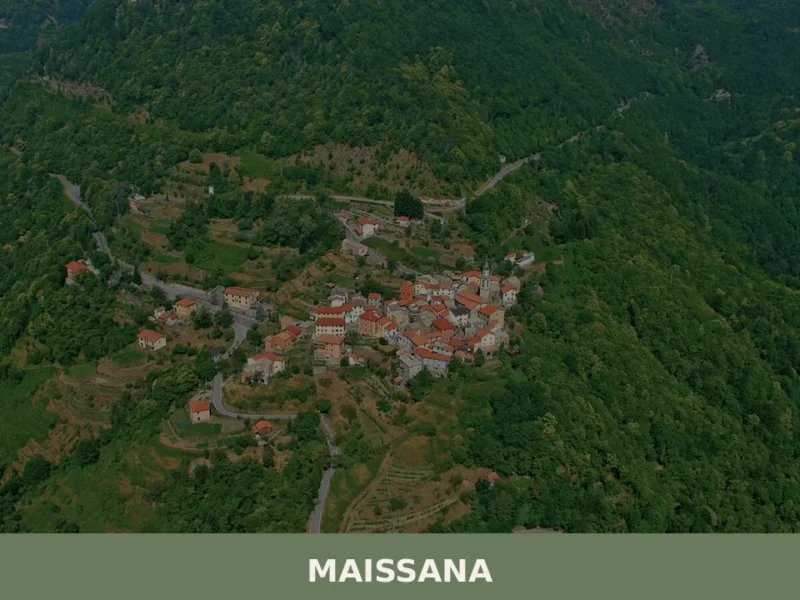
Maissana
What to see in Maissana, Italy: 644 inhabitants, 50 km from Genoa. Discover top attractions, local food, festivals and how to get there. Explore now.
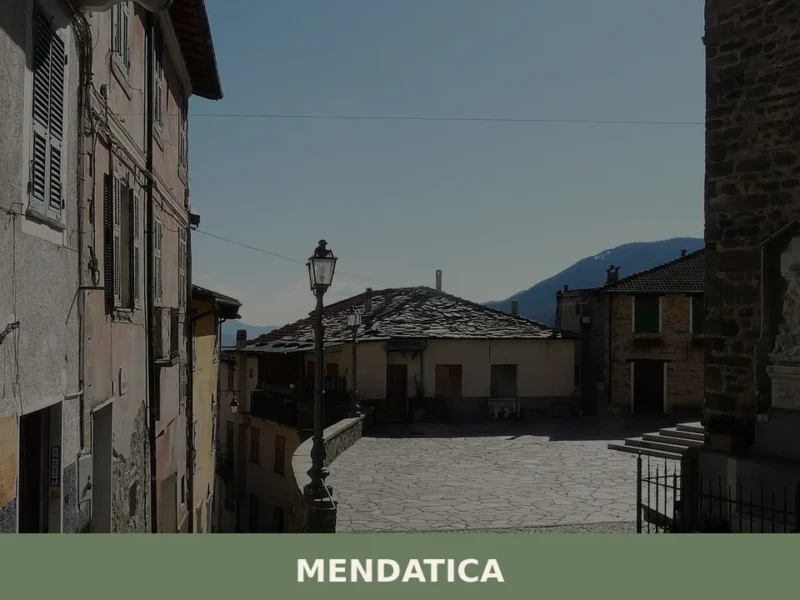
Mendatica
What to see in Mendatica, Liguria, Italy: 190 inhabitants, mountain village 100 km from Genoa. Discover Colle San Bernardo, Alpi Liguri Park and local cuisine.



📝 Incorrect information or updates?
Help us keep the Calice Ligure page accurate and up to date.